
Complete Guide to Trailer Types
Commercial trailers are the backbone of the freight transportation industry. While trucks provide the power to move freight, trailers are responsible for carrying, protecting, and transporting cargo safely and efficiently. Every day, millions of tons of goods move across North America using specialized trailer designs built to handle specific freight types, loading requirements, and operating environments.
From dry goods and refrigerated products to heavy machinery, fuel, livestock, and agricultural commodities, selecting the proper trailer is one of the most important decisions in commercial transportation.
This guide explores the major trailer types used throughout the trucking industry, their common applications, advantages, limitations, and the freight they are designed to haul.
What Is a Commercial Trailer?
A commercial trailer is a non-powered vehicle designed to be pulled by a truck tractor. Most freight trailers are semi-trailers, meaning part of their weight is supported by the tractor through a fifth wheel connection.
Trailers come in many different configurations depending on the type of cargo being transported. Some are fully enclosed to protect freight from weather and theft, while others are open to accommodate oversized cargo that cannot fit inside an enclosed trailer.
The right trailer can improve operational efficiency, increase profitability, enhance safety, and reduce transportation costs.
Why Trailer Selection Matters
Choosing the proper trailer affects nearly every aspect of a trucking operation.
Factors influenced by trailer selection include:
- Freight compatibility
- Cargo protection
- Loading and unloading efficiency
- Payload capacity
- Regulatory compliance
- Fuel efficiency
- Maintenance costs
- Operational flexibility
A trailer designed for one type of freight may be completely unsuitable for another, making trailer selection a critical business decision.
Major Trailer Categories
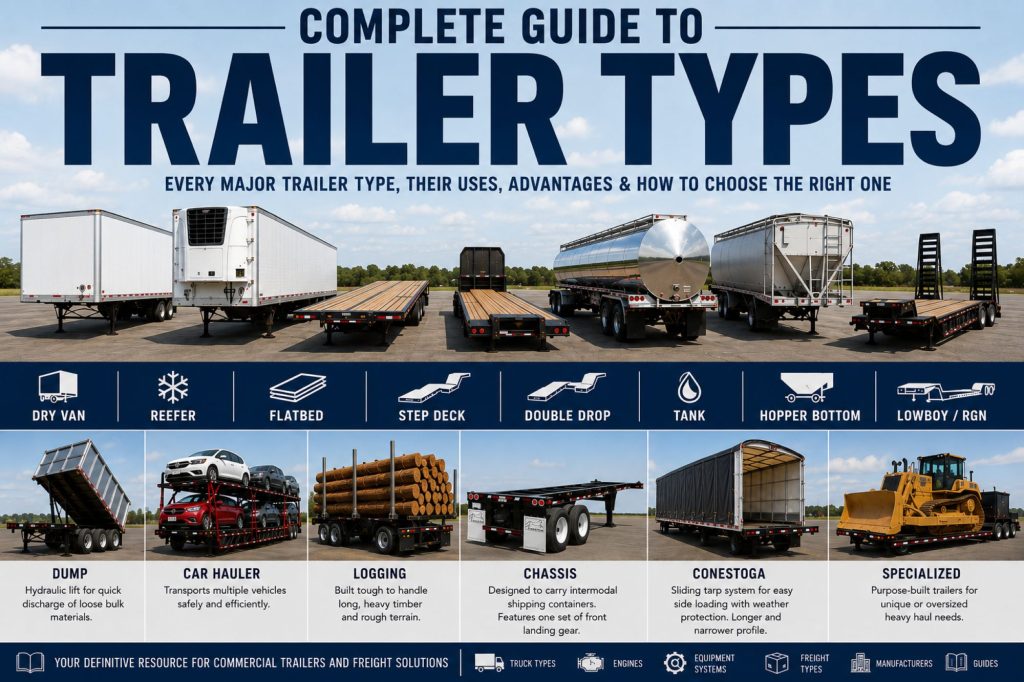
The most common trailer types used throughout North America include:
- Dry Van Trailers
- Refrigerated Trailers
- Flatbed Trailers
- Step Deck Trailers
- Double Drop Trailers
- Lowboy Trailers
- RGN Trailers
- Tank Trailers
- Hopper Bottom Trailers
- Dump Trailers
- Car Hauler Trailers
- Logging Trailers
- Chassis Trailers
- Conestoga Trailers
Each trailer type serves a unique purpose within the transportation industry.
Dry Van Trailers
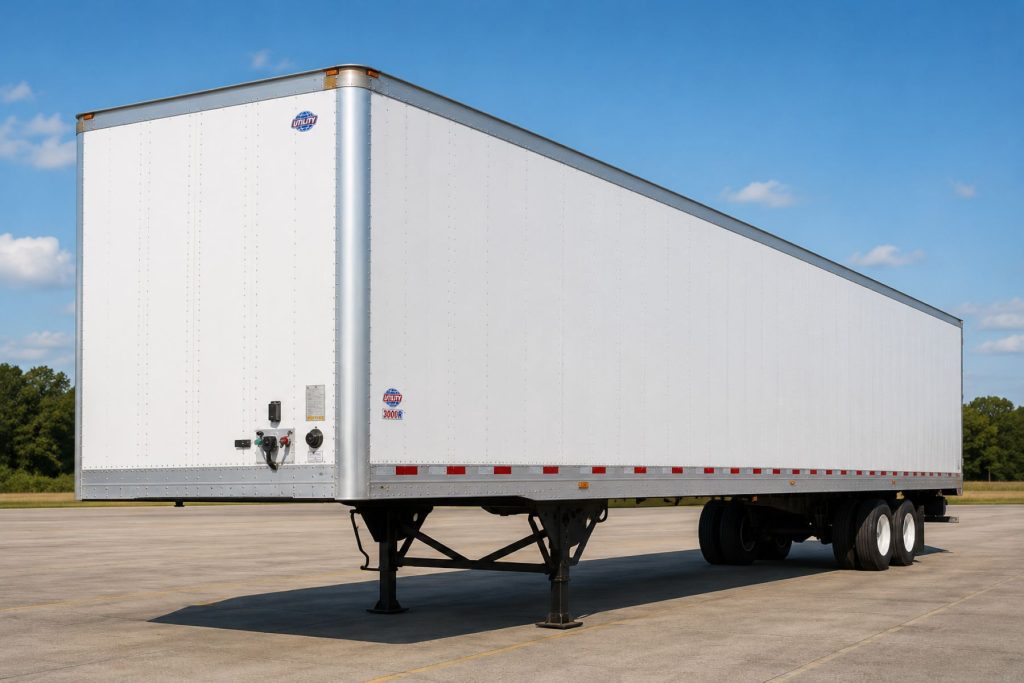
Dry Van Trailers are the most common trailers operating on North American highways. These enclosed trailers provide protection from weather, theft, and road debris while transporting a wide variety of freight.
Common Freight
- Consumer goods
- Retail merchandise
- Electronics
- Palletized products
- Packaged food products
- Household goods
Advantages
- Excellent cargo protection
- Widely available
- Versatile freight compatibility
- Lower operating costs compared to specialized trailers
Limitations
- Cannot transport oversized freight
- Requires dock access for many operations
Best Fit For
General freight transportation and everyday commercial hauling.
Refrigerated Trailers
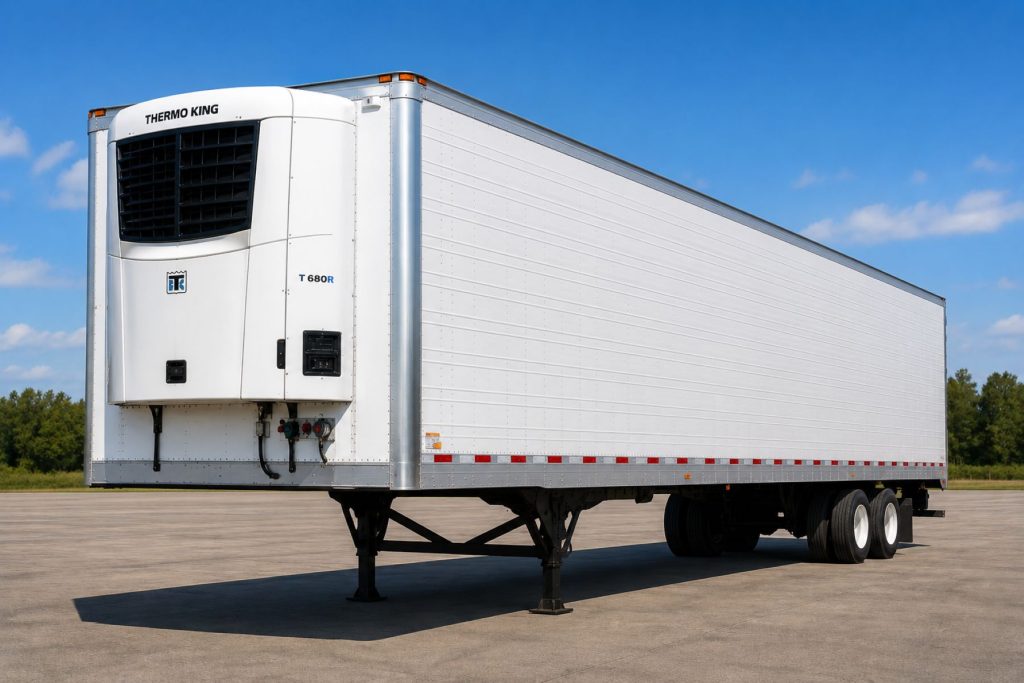
Refrigerated Trailers (often called reefers) use onboard refrigeration units to maintain controlled temperatures during transport.
Common Freight
- Produce
- Frozen foods
- Dairy products
- Pharmaceuticals
- Temperature-sensitive products
Advantages
- Temperature control
- Cargo protection
- High freight demand
Limitations
- Higher purchase costs
- Increased maintenance requirements
- Fuel consumption from refrigeration units
Best Fit For
Temperature-controlled freight operations.
Flatbed Trailers
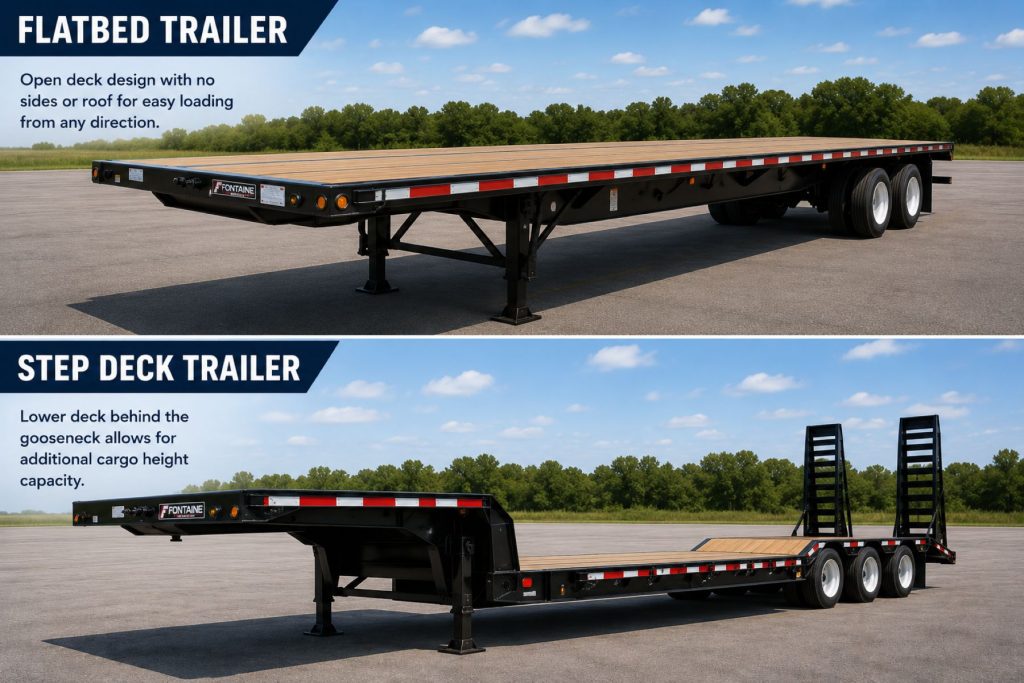
Flatbed Trailers feature an open-deck design that allows freight to be loaded from the sides, rear, or top.
Common Freight
- Lumber
- Steel
- Building materials
- Machinery
- Construction equipment
Advantages
- Easy loading access
- Versatile freight handling
- Oversized cargo capability
Limitations
- No weather protection
- Requires cargo securement
Best Fit For
Construction, industrial, and oversized freight.
Step Deck Trailers
Step Deck Trailers feature a lowered deck behind the tractor, providing additional cargo height capacity.
Common Freight
- Tall machinery
- Industrial equipment
- Construction materials
Advantages
- Greater cargo height clearance
- Easier loading than some specialized trailers
Limitations
- Less deck space than standard flatbeds
Best Fit For
Freight that exceeds standard flatbed height restrictions.
Double Drop Trailers
Double Drop Trailers include a lowered center section known as a well deck.
Common Freight
- Tall industrial equipment
- Construction machinery
- Large fabricated components
Advantages
- Maximum cargo height capability
- Suitable for oversized freight
Limitations
- Specialized applications
- Reduced deck flexibility
Best Fit For
Tall freight requiring lower deck heights.
Lowboy Trailers
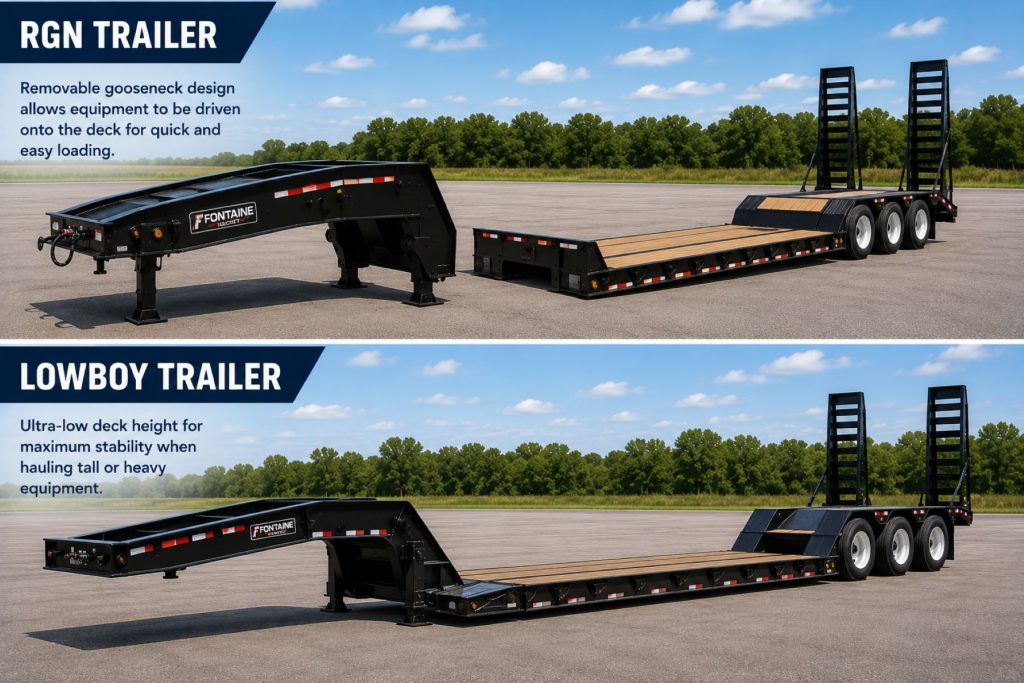
Lowboy Trailers are designed to transport extremely heavy equipment and oversized machinery.
Common Freight
- Bulldozers
- Excavators
- Mining equipment
- Heavy construction equipment
Advantages
- High weight capacity
- Extremely low deck height
Limitations
- Specialized freight only
- Permit requirements often apply
Best Fit For
Heavy equipment transportation.
RGN Trailers
RGN Trailers (Removable Gooseneck Trailers) allow equipment to be driven directly onto the trailer deck.
Common Freight
- Construction equipment
- Agricultural equipment
- Industrial machinery
Advantages
- Easy equipment loading
- Heavy haul capability
- Versatile configurations
Limitations
- Higher acquisition costs
Best Fit For
Heavy haul and oversized freight operations.
Tank Trailers
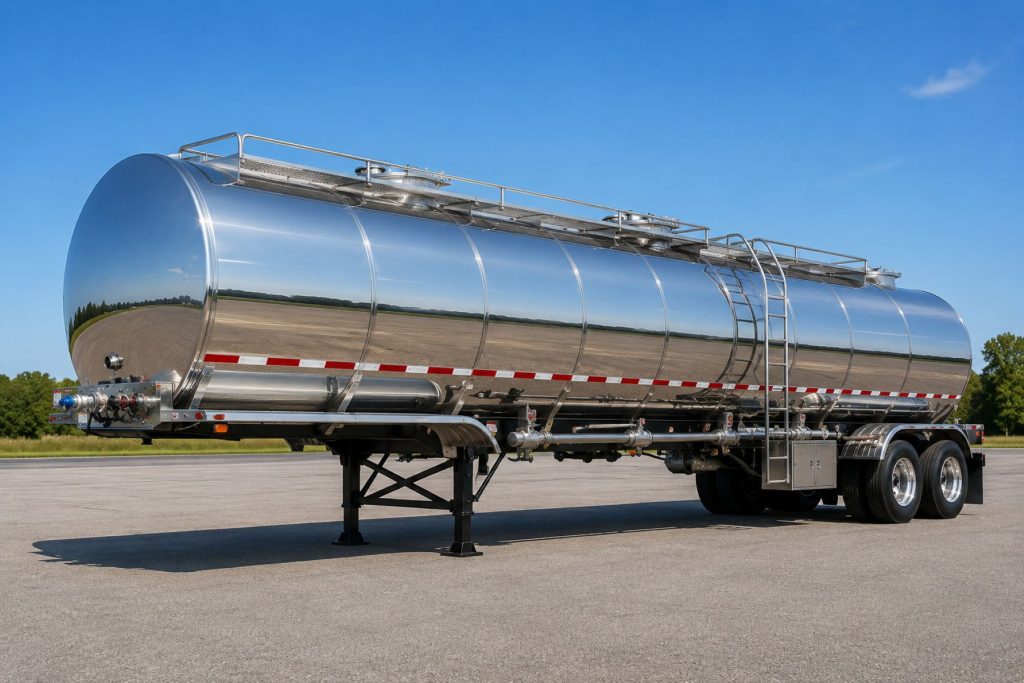
Tank Trailers transport liquids, gases, and bulk commodities.
Common Freight
- Fuel
- Chemicals
- Milk
- Water
- Food-grade liquids
- Industrial liquids
Advantages
- Efficient bulk liquid transport
- Specialized commodity handling
Limitations
- Specialized cleaning requirements
- Regulatory compliance requirements
Best Fit For
Liquid and bulk commodity transportation.
Hopper Bottom Trailers
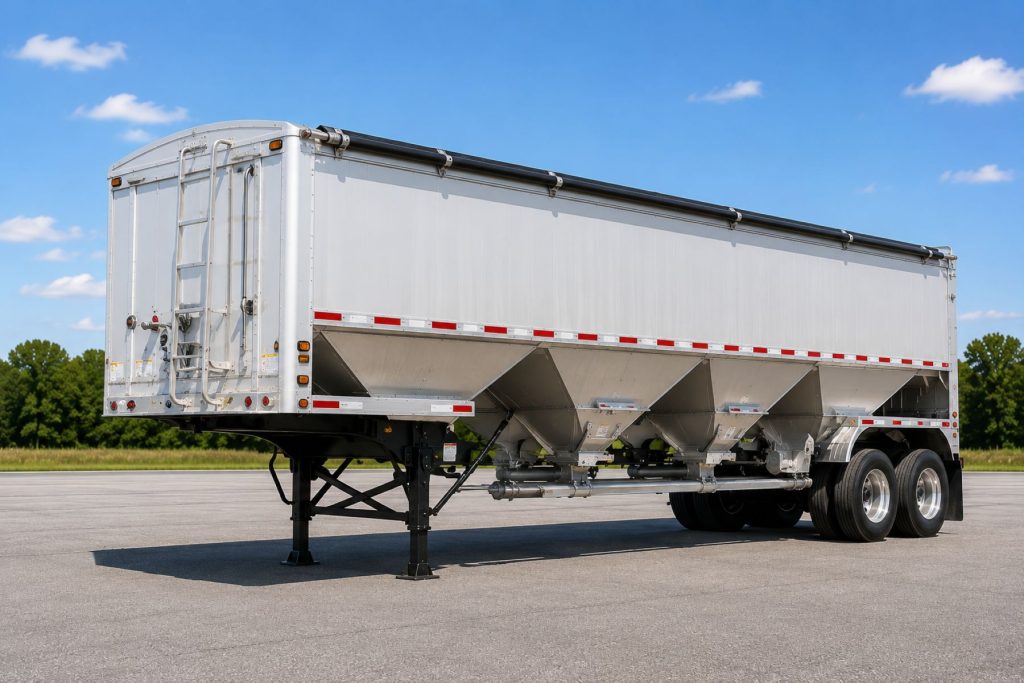
Hopper Bottom Trailers are designed to transport dry bulk commodities and unload through gravity-fed hopper openings.
Common Freight
- Grain
- Corn
- Soybeans
- Fertilizer
- Feed products
Advantages
- Fast unloading
- High commodity capacity
Limitations
- Limited freight versatility
Best Fit For
Agricultural transportation.
Dump Trailers
Dump Trailers transport loose bulk materials and unload using hydraulic lift systems.
Common Freight
- Gravel
- Sand
- Dirt
- Asphalt
- Demolition debris
Advantages
- Rapid unloading
- Heavy material capability
Limitations
- Specialized applications
Best Fit For
Construction and aggregate industries.
Car Hauler Trailers
Car Hauler Trailers transport automobiles, light trucks, and specialty vehicles.
Common Freight
- Passenger vehicles
- Fleet vehicles
- Dealer inventory
Advantages
- Multi-vehicle transport
- High efficiency
Limitations
- Specialized loading requirements
Best Fit For
Automotive transportation.
Logging Trailers
Logging Trailers are designed to transport harvested timber and forestry products.
Common Freight
- Logs
- Timber
- Forestry products
Advantages
- Designed for long loads
- Rugged construction
Limitations
- Specialized freight applications
Best Fit For
Forestry operations.
Chassis Trailers
Chassis Trailers transport shipping containers used in intermodal freight operations.
Common Freight
- ISO containers
- Port freight
- Rail freight
Advantages
- Efficient container transport
- Intermodal compatibility
Limitations
- Limited use outside container transportation
Best Fit For
Port and rail operations.
Conestoga Trailers
Conestoga Trailers combine the accessibility of a flatbed with the weather protection of an enclosed trailer.
Common Freight
- Machinery
- Building materials
- High-value freight
Advantages
- Cargo protection
- Easy side loading
Limitations
- Higher operating costs
Best Fit For
Freight requiring both protection and loading flexibility.
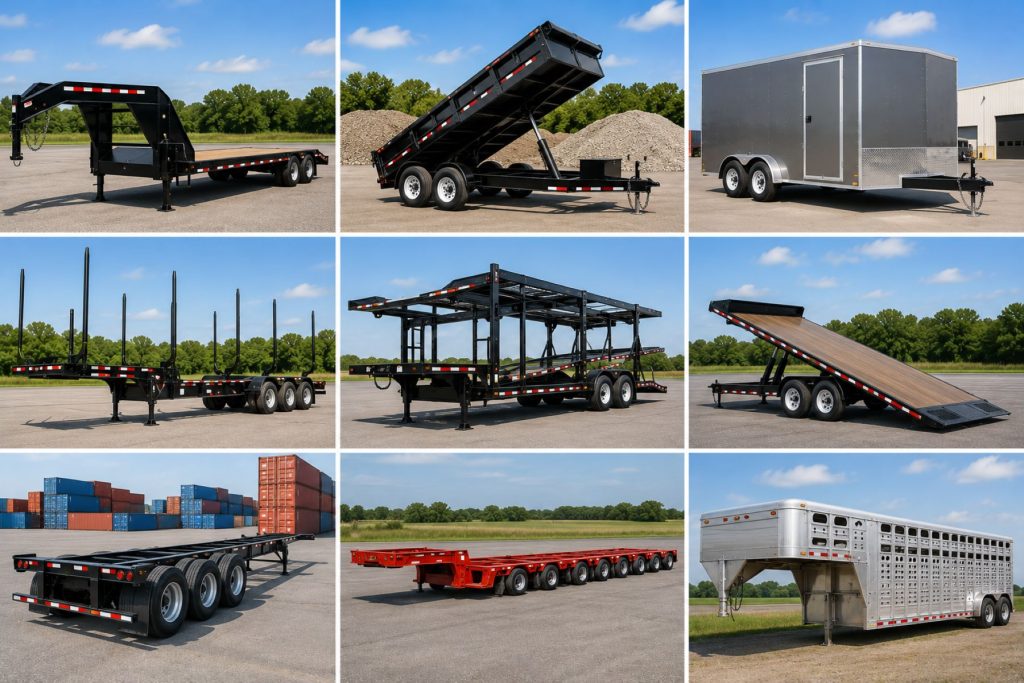
Other Specialized Trailer Types
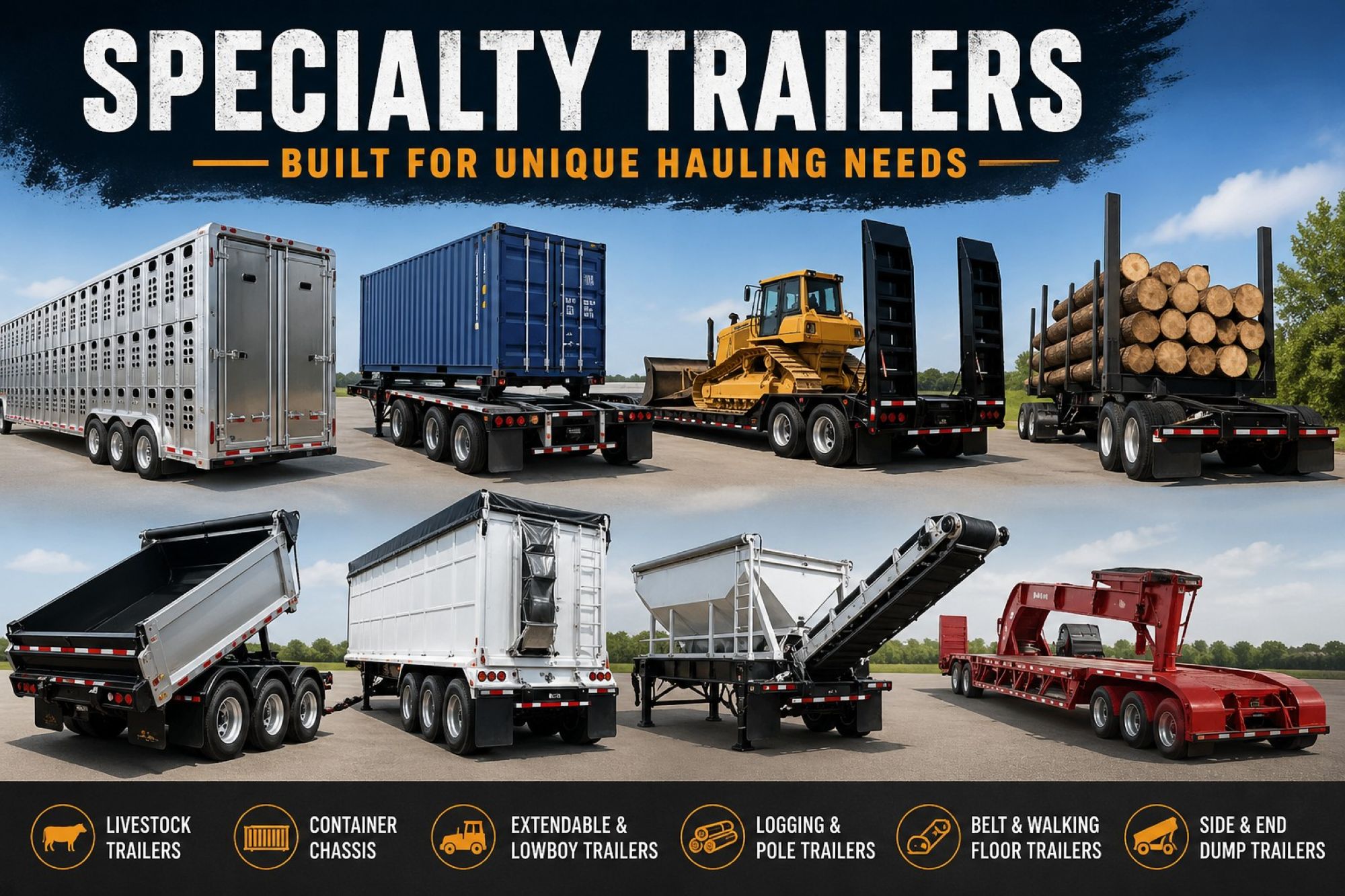
In addition to the major trailer categories, the transportation industry utilizes many specialized trailer designs.
These include:
- Extendable Trailers
- Traveling Axle Trailers
- Belt Trailers
- Walking Floor Trailers
- Livestock Trailers
- Specialized Heavy Haul Trailers
These trailers are designed for unique freight requirements and often serve highly specialized industries.
Choosing the Right Trailer
Selecting the proper trailer depends on several key factors.
Freight Type
The cargo being transported is the most important factor in trailer selection.
Cargo Dimensions
Height, width, and length restrictions often determine trailer requirements.
Weight Requirements
Heavy freight may require specialized equipment.
Loading Method
Some freight must be loaded from the side, top, rear, or ground level.
Cargo Protection
Certain commodities require weather protection or temperature control.
Regulatory Considerations
Oversized and overweight freight may require permits and specialized equipment.
Trailer choice also affects the towing truck’s operating weight and duty cycle. Use the commercial truck transmission selection guide when matching the tractor’s gearing and approved powertrain ratings to the trailer and load.
Trailer Comparison Quick Reference
| Trailer Type | Common Cargo | Best For |
|---|---|---|
| Dry Van | General Freight | Everyday freight |
| Refrigerated | Food & Pharmaceuticals | Temperature-controlled cargo |
| Flatbed | Building Materials | Open-deck freight |
| Step Deck | Tall Equipment | Height-sensitive cargo |
| Tank | Liquids | Bulk liquid transportation |
| Hopper Bottom | Grain & Fertilizer | Agricultural freight |
| Lowboy | Heavy Equipment | Construction machinery |
| RGN | Oversized Machinery | Heavy haul operations |
Frequently Asked Questions
What is the most common trailer type?
Dry van trailers are the most common trailer type operating throughout North America.
What is the difference between a lowboy and an RGN?
An RGN features a removable gooseneck that allows equipment to be driven onto the trailer, while lowboys typically require alternative loading methods.
When should I choose a step deck instead of a flatbed?
Step decks are preferred when cargo height exceeds standard flatbed limitations.
What trailer is best for refrigerated freight?
Refrigerated trailers are specifically designed for temperature-controlled cargo.
Which trailer type is best for heavy equipment?
Lowboy and RGN trailers are the most common choices for transporting heavy construction equipment.
Related Truck Equipment Atlas Resources
Continue exploring Truck Equipment Atlas by visiting:
- Trailer Types
- Truck Types
- Commercial Truck Engines
- Equipment Systems
- Freight Types
- Manufacturers
- Trailer Guides
Final Thoughts
Commercial trailers play a vital role in freight transportation, with each trailer type serving specific industries, cargo requirements, and operating environments. Understanding the strengths, limitations, and applications of different trailer configurations helps carriers, owner-operators, fleet managers, and equipment buyers make informed transportation decisions.
As freight demands continue to evolve, trailer technology and specialization will remain essential components of the commercial trucking industry.
Related Trailer Types
- Dry Van Trailers
- Refrigerated Trailers
- Flatbed Trailers
- Step Deck Trailers
- Lowboy Trailers
- Tank Trailers
- Hopper Bottom Trailers
- Dump Trailers
Related Freight Types
- Dry Van Freight
- Refrigerated Freight
- Flatbed Freight
- Heavy Haul & Oversized Freight
- Construction & Aggregate Freight
- Tanker Freight
- Bulk Freight
- Agricultural Freight
Related Guides
- Complete Guide to Semi Truck Types
- Complete Guide to Freight Types
- Dry Van vs Refrigerated Trailer
- Flatbed vs Step Deck Trailer
- Lowboy vs RGN Trailer
- Air Brake Systems Explained
- How Diesel Truck Engines Work
- How Commercial Truck Transmissions Work
- How to Choose the Right Commercial Truck
- Choosing the Right Trailer for Your Freight