
Step Deck Trailers
Quick Facts
- Common Type: Lowered Deck Trailer
- Typical Length: 48 ft – 53 ft
- Cargo Type: Tall, Oversized, and Equipment Freight
- Primary Use: Transporting Freight Exceeding Standard Height Limits
- Deck Design: Upper Deck + Lower Main Deck
- Loading Method: Forklift, Crane, or Drive-On (with ramps)
Overview
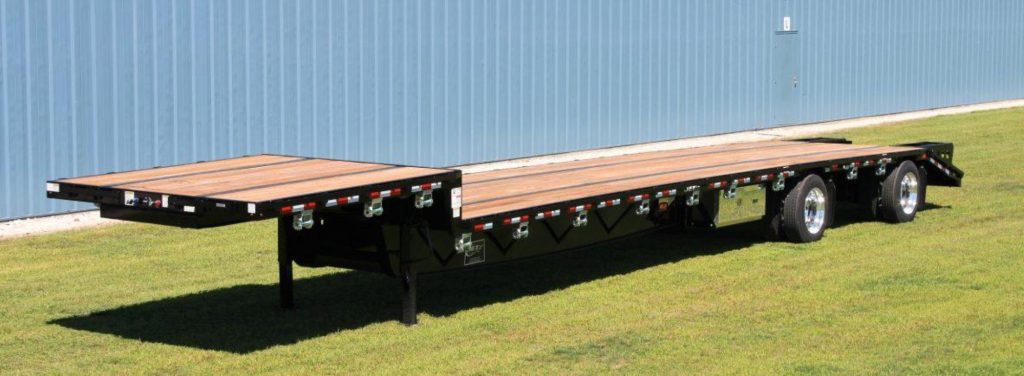
Step deck trailers, also known as drop deck trailers, are designed to transport freight that exceeds the height limitations of standard flatbed trailers. By lowering the main deck below the height of the upper deck, these trailers allow for taller cargo while remaining within legal height restrictions.
They are commonly used in construction, industrial, and heavy equipment transport where height clearance is a key concern.
Key Characteristics
Step deck trailers feature a two-level deck design, consisting of a shorter upper deck and a longer lower deck. This configuration allows for increased vertical clearance, making them ideal for transporting taller freight that would otherwise exceed legal limits on a standard flatbed.
The lowered main deck enables more flexibility in hauling equipment and oversized materials while maintaining compliance with roadway height regulations.
Common Specifications
Length Options
Step deck trailers are typically available in 48-foot and 53-foot lengths, with variations depending on configuration and use.
Deck Heights
The upper deck sits higher near the tractor, while the main deck is lowered to allow for increased cargo height capacity.
Width and Deck Space
Standard width is 102 inches, with the lower deck providing the primary cargo area.
Axle Configurations
Most step deck trailers use tandem axle setups, with spread axle options available for improved weight distribution.
Ramp Options
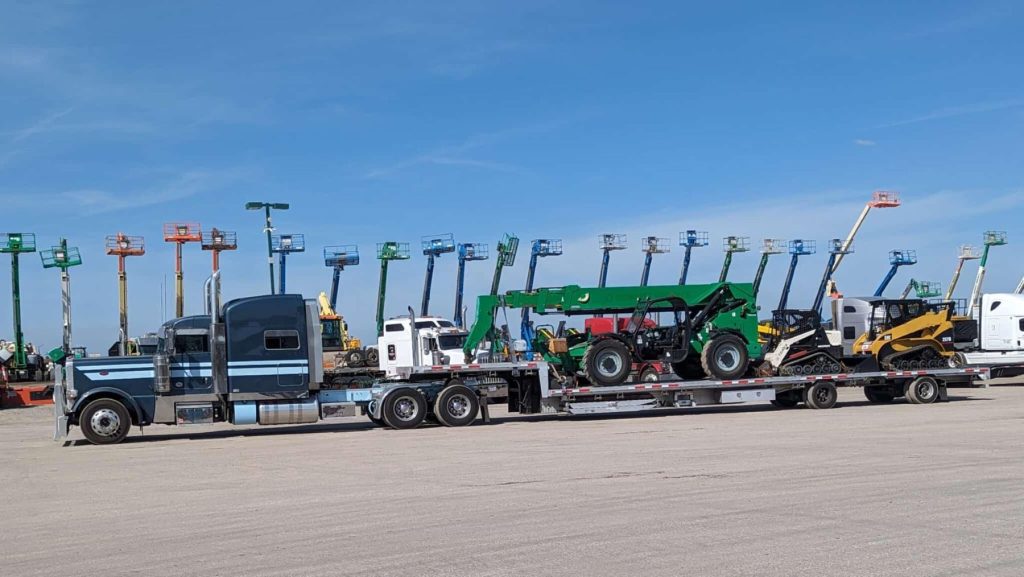
Many step deck trailers are equipped with ramps, allowing for drive-on loading of equipment and machinery.
Types of Step Deck Trailers
- Standard Step Deck Trailers
- Extendable Step Deck Trailers
- Double Drop Step Deck Variants
- Heavy Duty Step Deck Trailers
Common Uses
Step deck trailers are used when freight exceeds standard height limits but does not require specialized heavy haul equipment.
• Construction equipment transport
• Machinery and industrial equipment
• Tall palletized loads
• Large containers and materials
• Agricultural equipment
Operational Use
Advantages
Step deck trailers provide increased height capacity while maintaining flexibility for loading and transport.
• Allows transport of taller freight within legal limits
• More versatile than standard flatbeds for height-sensitive loads
• Supports drive-on loading with ramps
• Widely available and adaptable
• Suitable for a variety of industries
Limitations or Drawbacks
Step deck trailers still have limitations compared to more specialized heavy haul equipment and require careful planning for certain loads.
- Less capacity than lowboy or RGN trailers for extreme loads
- Requires planning for load distribution across two deck levels
- More complex loading than flatbeds in some scenarios
- May still require permits for oversized freight
Driver and Operator Considerations
Operating a step deck trailer requires awareness of load height and placement across both deck levels. Drivers must ensure proper securement and understand how to distribute weight effectively to maintain stability and compliance.
Maintenance and Ownership Notes
Step deck trailers require regular inspection of decking, ramps, structural components, and securement points. Maintenance is important to ensure safety and longevity, especially when hauling heavy or tall equipment.
Buying Considerations
When selecting a step deck trailer, buyers should consider deck height, ramp options, weight capacity, and intended freight types. The ability to handle taller loads efficiently is a key factor.
Common Brands or Manufacturers
- Fontaine Trailer Company
- Transcraft
- Great Dane Trailers
- Dorsey Trailer
Variants and Related Configurations
Step deck trailers can be configured in several ways depending on load requirements and operational needs.
• Extendable step decks for longer loads
• Heavy-duty reinforced configurations
• Ramp-equipped trailers for equipment loading
• Double drop configurations for increased height clearance
Comparison to Similar Trailers
Step deck trailers offer more height capacity than flatbeds but less than lowboy or RGN trailers. They provide a balance between flexibility and specialized hauling capability.
Best Fit For
Step deck trailers are best suited for transporting taller freight that exceeds flatbed height limits but does not require heavy haul equipment.
- Construction and industrial equipment
- Tall machinery and components
- Oversized palletized freight
- Agricultural equipment
- Equipment requiring ramp loading
Regulatory and Compliance Notes
Step deck trailers must comply with federal and state height, weight, and securement regulations. While they allow for taller loads, oversized freight may still require permits depending on dimensions.
Real World Operating Notes
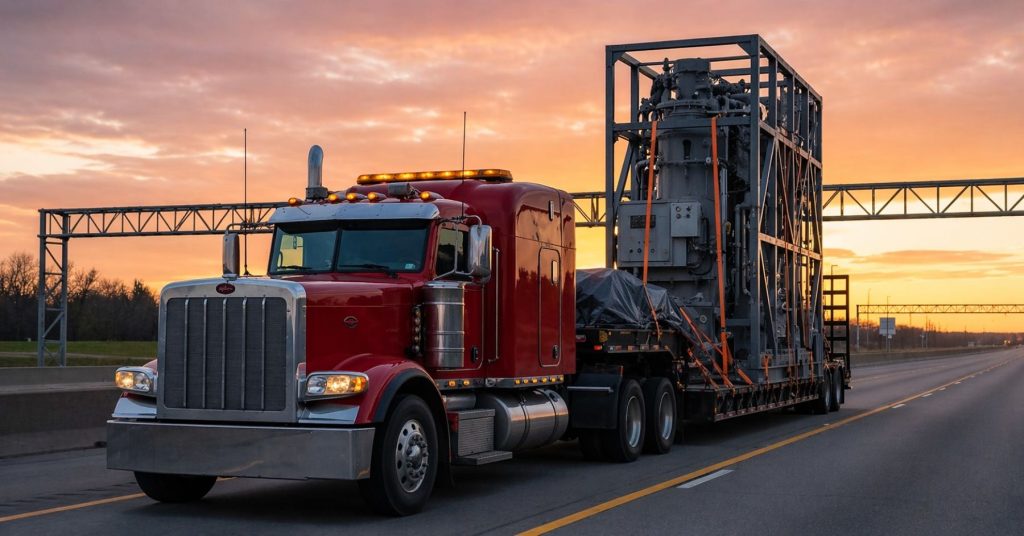
In real-world operations, step deck trailers provide a practical solution for height-restricted freight. Drivers must plan loads carefully and ensure proper securement across both deck levels for safe transport.
Step Deck Trailer Models on Truck Equipment Atlas
Truck Equipment Atlas includes a growing collection of step deck trailer profiles covering equipment designed to transport machinery, construction materials, industrial equipment, building products, and taller freight that benefits from a lower main deck height.
Explore the step deck trailer models currently available on Truck Equipment Atlas:
- Fontaine Velocity Step Deck Trailer
- MAC Step Deck
- Reitnouer Step Deck
- Transcraft Eagle II Step Deck Trailer
- Wilson Step Deck Trailer
Additional step deck trailer manufacturers and models will be added as the Truck Equipment Atlas trailer library continues to expand.
Freight & Industry Sectors
• Flatbed Freight
• Heavy Haul / Oversized Freight
• Construction & Aggregate Freight
• Specialty & Niche Freight
Related Truck Types
• Sleeper Trucks
• Day Cab Trucks
• Heavy Haul Trucks
Related Equipment
• Suspension Systems
• Brake Systems
• Axles & Differentials
• Tires & Wheels
• Safety Systems
Related Trailer Types
- Dump Trailers
- Flatbed Trailers
- Dry Van Trailers
- Refrigerated Trailers
- Lowboy / RGN Trailers
- Conestoga Trailers
- Tanker Trailers
- Hopper / Bulk Trailers
- Chassis Trailers
- Log Trailers
- Specialty Trailers
- Car Hauler Trailers
Related Guides
- Flatbed vs Step Deck vs Double Drop
- Choosing the Right Trailer for Your Freight
- Complete Guide to Trailer Types
Frequently Asked Questions
What is a step deck trailer used for?
Step deck trailers are used to haul taller freight that cannot fit on a standard flatbed.
What is the difference between a flatbed and a step deck?
A step deck has a lower main deck, allowing for taller cargo within legal limits.
Do step deck trailers have ramps?
Many do, allowing equipment to be driven onto the trailer.
Availability and Where to Find
Step deck trailers are available through major manufacturers and equipment dealers, with both new and used options depending on operational needs.
Support Trucking Families
Truck Equipment Atlas supports the mission of Grey Cross, a nonprofit dedicated to helping families of truck drivers who lose their lives while on the road. As the site grows, part of its mission is to bring awareness and support to these families.
Podcast or Video Section
Learn More Through Audio and Video
Truck Equipment Atlas will continue expanding with podcast episodes, interviews, and equipment breakdowns to help drivers and fleets better understand trucks and equipment.
Follow the Growth of Truck Equipment Atlas
Truck Equipment Atlas continues to expand with new truck profiles, trailer coverage, diesel engine pages, equipment system resources, manufacturer information, freight-sector content, and educational guides.
Visit our Site Updates page to follow major milestones, newly published resources, and future projects as we continue building one of the industry’s growing commercial trucking equipment reference libraries.
From commercial trucks and specialized trailers to diesel engines, equipment systems, and future Truck Stop Atlas resources, new content is being added regularly to help drivers, owner-operators, fleets, technicians, students, and industry professionals better understand the equipment that keeps freight moving.