
How to Choose the Right Commercial Truck
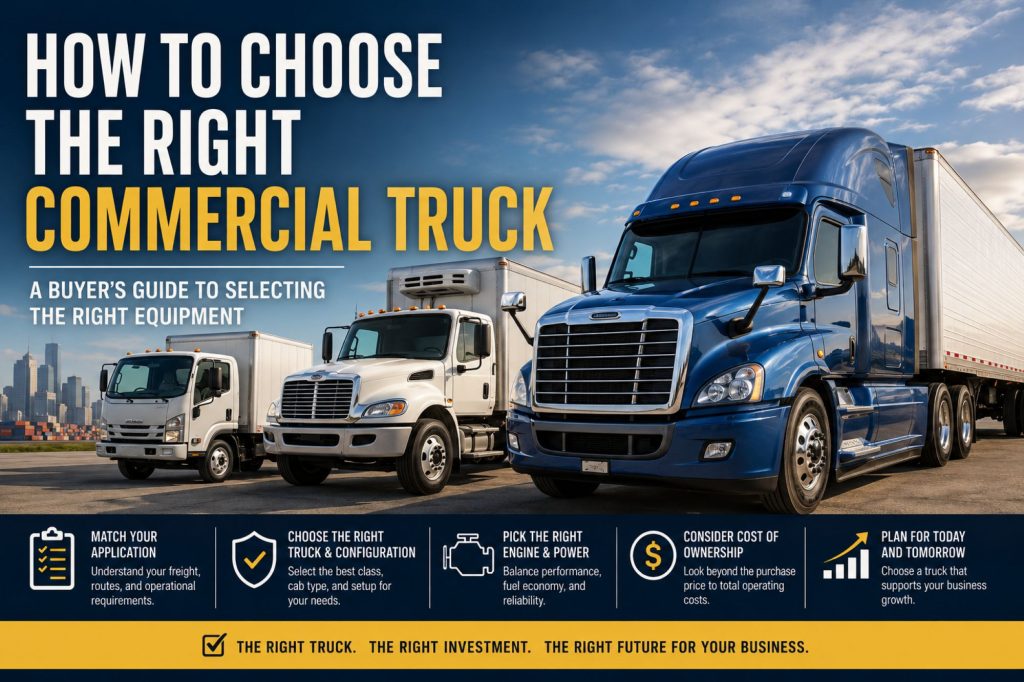
Selecting the right commercial truck is one of the most important decisions a business owner, fleet manager, or owner-operator can make. The wrong truck can lead to higher operating costs, reduced productivity, driver dissatisfaction, and equipment limitations.
The right truck should match your freight, operating environment, payload requirements, routes, budget, and long-term business goals.
This guide walks through the key factors to consider when choosing a commercial truck and helps identify which type of equipment may best fit your operation.
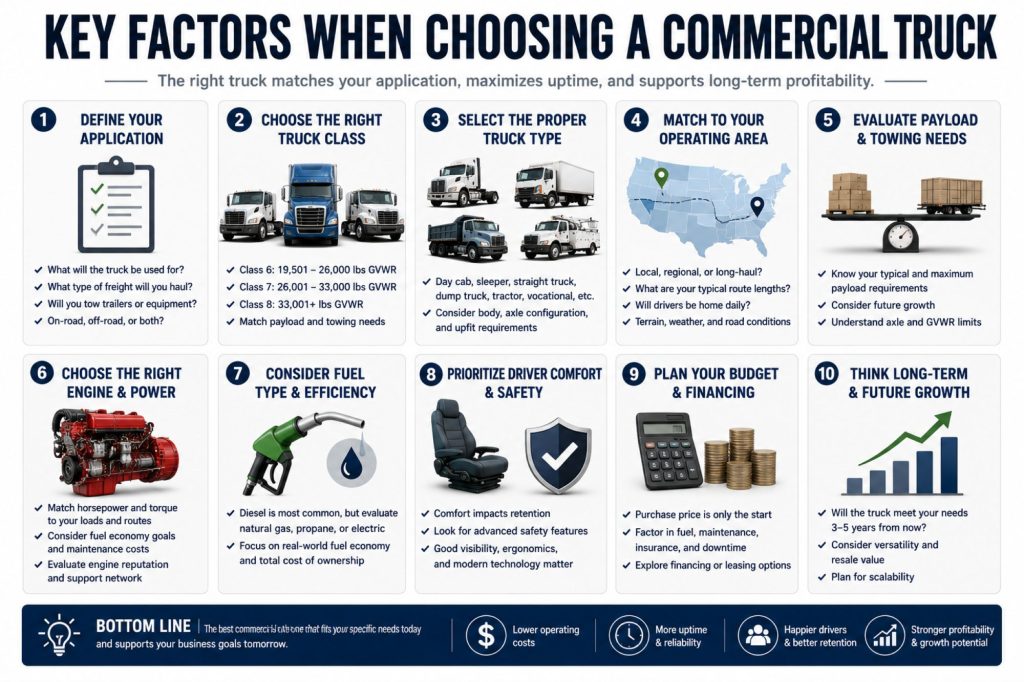
Start With Your Intended Application
Before comparing truck brands, engines, or features, determine exactly how the truck will be used.
Questions to ask include:
- What type of freight will be hauled?
- Will trailers be pulled?
- How much weight will be transported?
- Will the truck operate locally or long-haul?
- Will the truck operate on highways, job sites, or both?
- Will drivers return home daily?
The answers to these questions help narrow down truck classes and configurations.
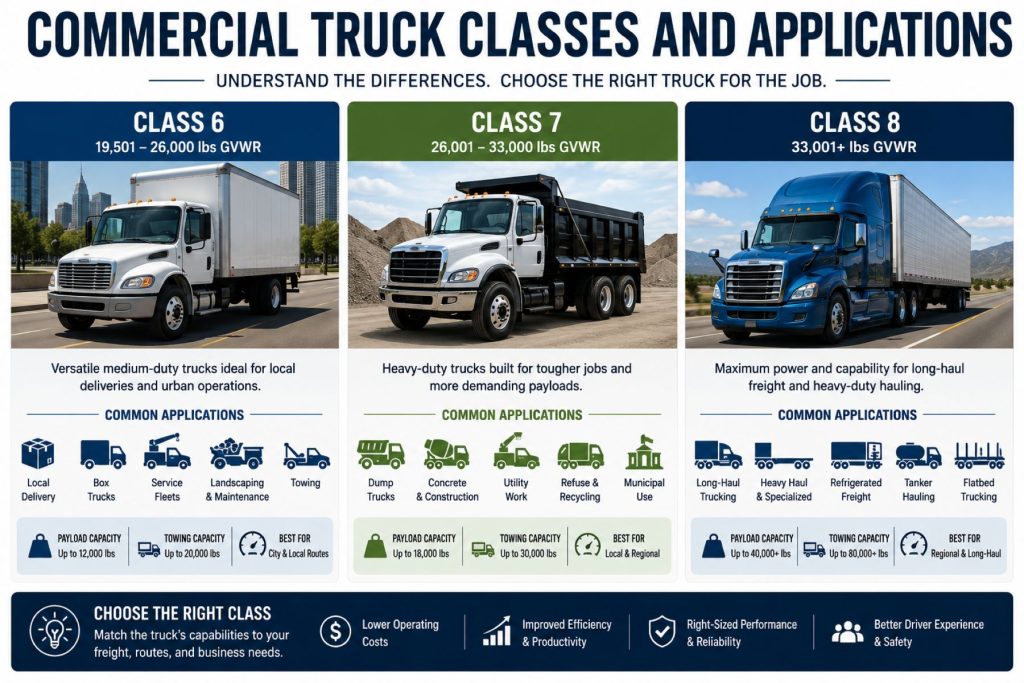
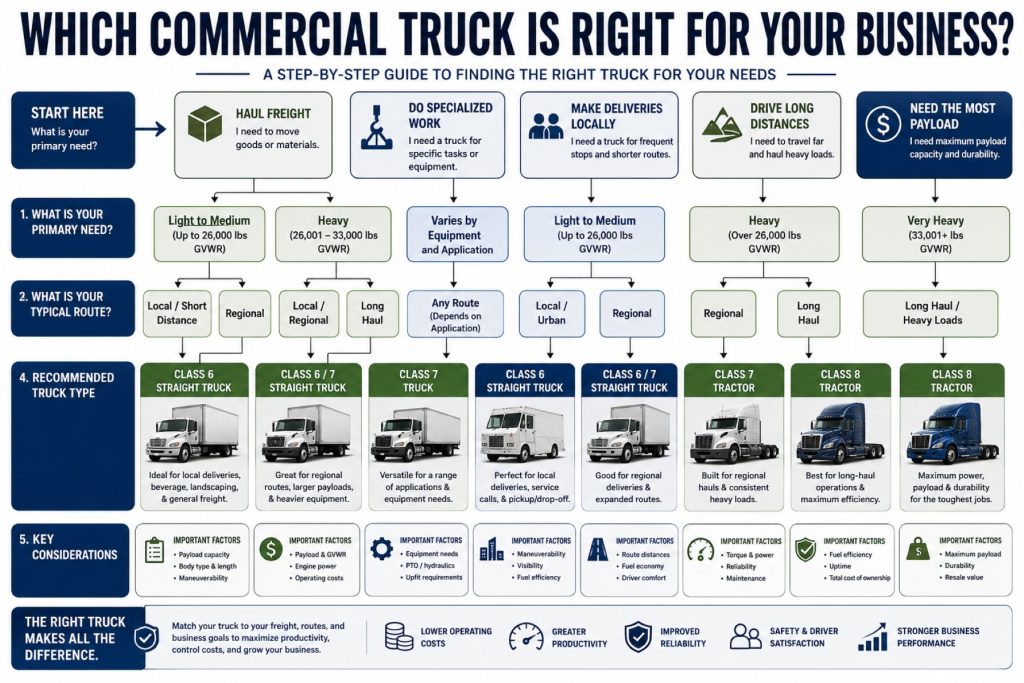
Consider Truck Weight Class
One of the first decisions is selecting the proper truck class.
| Truck Class | GVWR | Common Applications |
|---|---|---|
| Class 6 | 19,501–26,000 lbs | Delivery, service fleets, box trucks |
| Class 7 | 26,001–33,000 lbs | Dump trucks, municipal fleets, utility trucks |
| Class 8 | 33,001+ lbs | Semi tractors, freight hauling, heavy haul |
Smaller trucks generally offer:
- Lower purchase costs
- Better fuel economy
- Easier maneuverability
Larger trucks typically provide:
- Higher payload capacity
- Greater towing capability
- Increased versatility
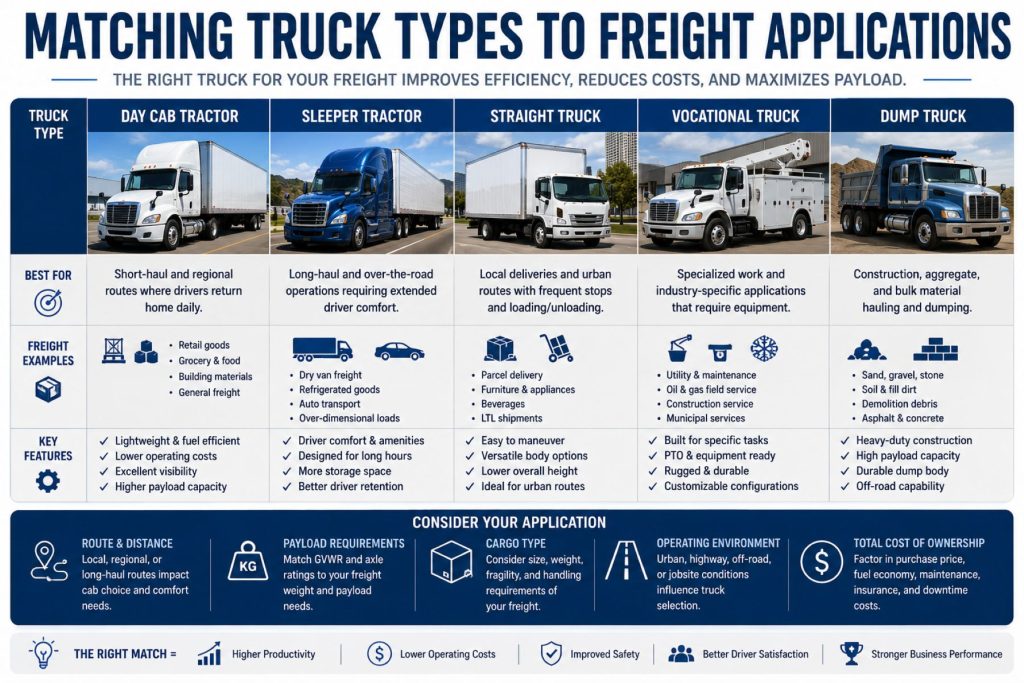
Choose the Right Truck Type
Different operations require different truck configurations.
Day Cab Trucks
Best for:
- Local delivery
- Regional freight
- Port operations
- Dedicated routes
Sleeper Trucks
Best for:
- Long-haul freight
- Regional multi-day routes
- Team driving operations
Straight Trucks
Best for:
- Box truck delivery
- Moving companies
- Service operations
Dump Trucks
Best for:
- Construction
- Aggregate hauling
- Municipal work
Vocational Trucks
Best for:
- Utility fleets
- Public works
- Specialized operations
Match the Truck to Your Freight
The type of freight being transported plays a major role in truck selection.
| Freight Type | Typical Truck Choice |
|---|---|
| Dry Van Freight | Day Cab or Sleeper |
| Refrigerated Freight | Sleeper Truck |
| Flatbed Freight | Day Cab or Sleeper |
| Tanker Freight | Day Cab or Sleeper |
| Heavy Haul Freight | Class 8 Sleeper |
| Construction Materials | Dump Truck or Vocational Truck |
| Local Delivery | Class 6 Straight Truck |
Understanding freight requirements helps prevent under-specifying or over-specifying equipment.
Consider Route Length and Operating Area
Local Operations
Local routes often benefit from:
- Day cabs
- Class 6 trucks
- Straight trucks
- Smaller wheelbases
Regional Operations
Regional fleets often use:
- Day cabs
- Smaller sleepers
- Class 7 and Class 8 equipment
Long-Haul Operations
Long-haul operations generally require:
- Sleeper trucks
- Larger fuel capacity
- Enhanced driver comfort features
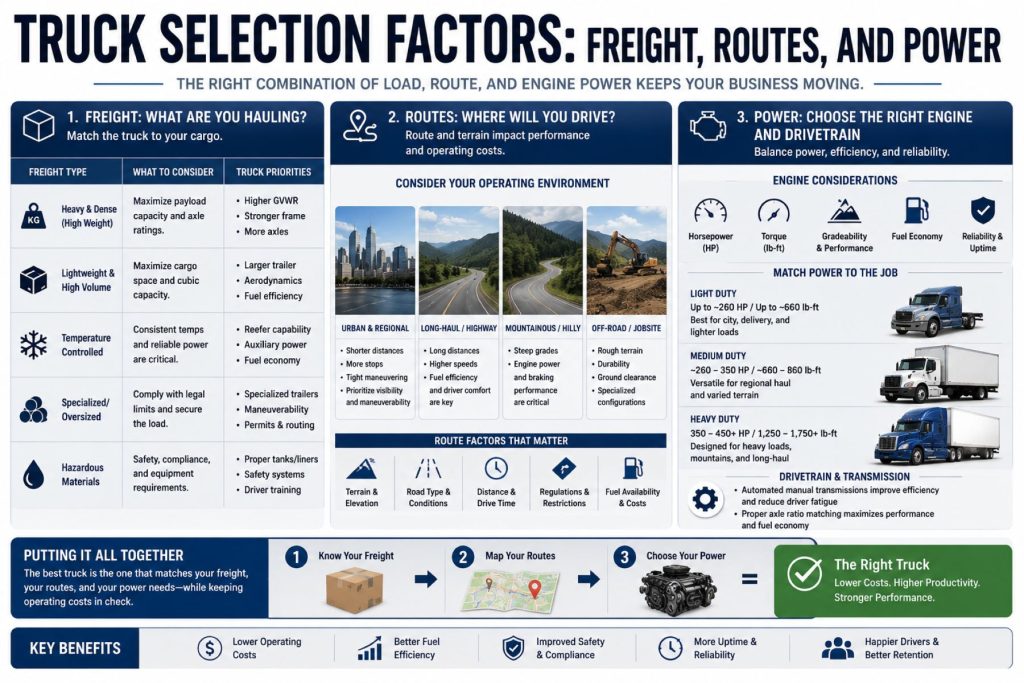
Evaluate Engine and Power Requirements
Not every operation requires maximum horsepower.
Moderate-Duty Applications
Common engines:
Heavy-Duty Applications
Common engines:
Consider:
- Payload weight
- Terrain
- Operating speeds
- Fuel economy goals
Evaluate the transmission with the engine, axle ratio, tires, and intended duty cycle. Compare manual, automated manual, and automatic transmissions and review commercial truck transmission selection.
Determine Your Budget
Purchase price is only part of ownership cost.
Additional considerations include:
- Fuel costs
- Maintenance expenses
- Insurance costs
- Driver wages
- Licensing requirements
- Financing costs
A lower-priced truck is not always the least expensive truck to own long-term.
New vs Used Commercial Trucks
New Trucks
Advantages:
- Warranty coverage
- Latest technology
- Improved fuel economy
- Lower initial maintenance
Used Trucks
Advantages:
- Lower acquisition cost
- Reduced depreciation
- Greater inventory availability
The right choice depends on operating budget and business objectives.
Driver Comfort and Retention
For fleets employing drivers, truck selection can directly impact recruitment and retention.
Features often valued by drivers include:
- Comfortable seating
- Quality suspension systems
- Spacious sleepers
- Modern safety technology
- Improved visibility
Driver satisfaction often contributes to lower turnover and increased productivity.
Questions to Ask Before Buying
Before purchasing a commercial truck, ask:
- What freight will I haul?
- How much weight will I carry?
- Will I pull trailers?
- How far will I travel?
- What licensing requirements apply?
- What is my budget?
- What level of driver comfort is needed?
- Will my operation grow in the future?
Answering these questions helps narrow equipment choices and avoid costly mistakes.
Frequently Asked Questions
What is the best commercial truck for beginners?
The best truck depends on the intended application. Many local delivery operations begin with Class 6 or Class 7 equipment, while freight-hauling businesses often require Class 8 trucks.
Is a day cab or sleeper better?
Day cabs are typically better for local operations, while sleepers are preferred for long-haul operations.
Should I buy new or used?
Both can be good options. New trucks provide warranty protection while used trucks often reduce acquisition costs.
How much horsepower do I need?
Horsepower requirements depend on freight weight, terrain, and operating conditions.
What is the most common commercial truck class?
Class 8 trucks are the most common trucks used in freight transportation.
Bottom Line
Choosing the right commercial truck begins with understanding your freight, routes, payload requirements, and business goals.
The best truck is not necessarily the biggest or most expensive option. The best truck is the one that efficiently matches the work you need it to perform while supporting profitability, reliability, and future growth.
Related Truck Types
Related Freight Types
Related Guides
- Complete Guide to Semi Truck Types
- Complete Guide to Trailer Types
- Complete Guide to Freight Types
- Day Cab vs Sleeper Truck
- Class 6 vs Class 7 vs Class 8 Trucks
- How Diesel Truck Engines Work
- How Commercial Truck Transmissions Work
- Buying Your First Semi Truck
- New vs Used Commercial Trucks
- How to Inspect a Used Semi Truck
- Choosing the Right Trailer for Your Freight
- Air Brake Systems Explained
- Dry Van vs Refrigerated Trailer