
Dry Van vs Refrigerated Trailer
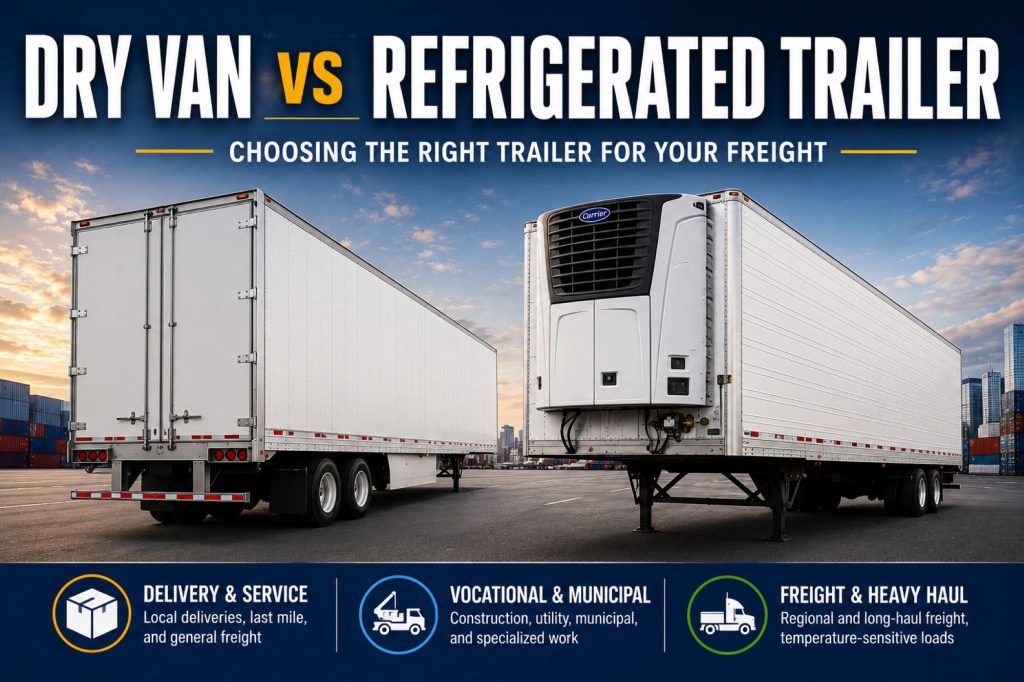
A dry van trailer and a refrigerated trailer are two of the most common trailer types used throughout the commercial transportation industry. While they may appear similar from the outside, they serve very different purposes and are designed for different freight requirements.
Choosing the right trailer can impact operating costs, freight opportunities, payload capacity, maintenance expenses, and overall profitability.
This guide explains the differences between dry van and refrigerated trailers, compares their strengths and limitations, and helps determine which trailer is best suited for your freight operation.
Understanding the Difference
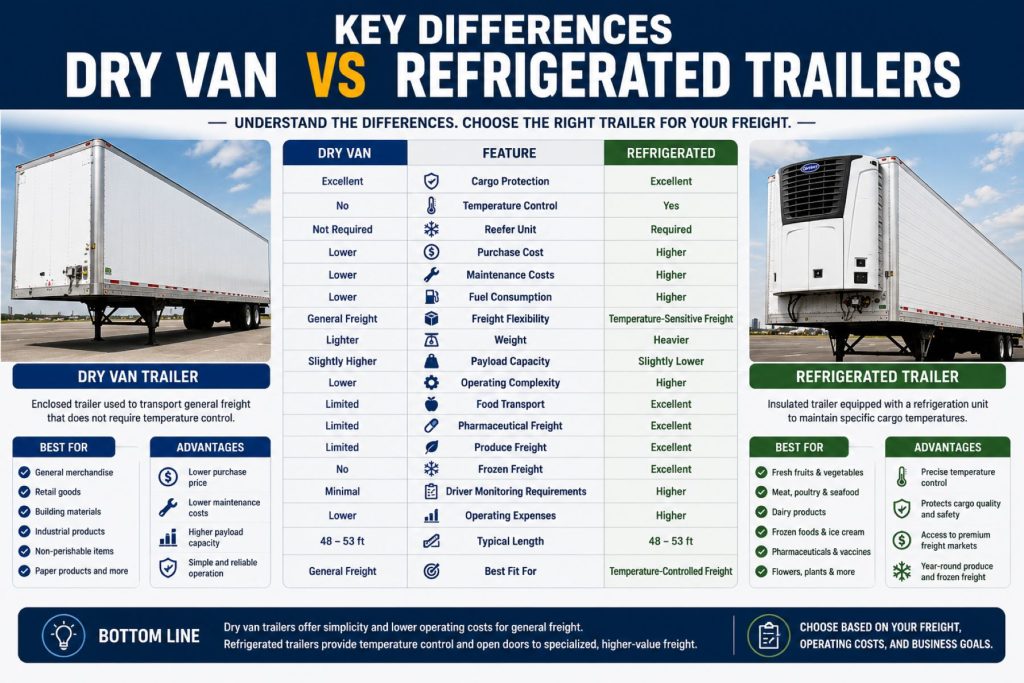
At first glance, dry van and refrigerated trailers look nearly identical. Both are enclosed box-style trailers designed to protect freight from weather and road conditions.
The major difference is that a refrigerated trailer contains an insulated trailer body and an onboard refrigeration unit capable of maintaining specific cargo temperatures.
Dry vans simply protect cargo from the elements, while refrigerated trailers actively control temperature throughout transit.
What Is a Dry Van Trailer?
A dry van trailer is an enclosed trailer used to transport general freight that does not require temperature control.
Dry vans are the most common trailer type in North America and are used by carriers ranging from owner-operators to large national fleets.
Common Characteristics
- Fully enclosed trailer body
- Rear swing doors
- No refrigeration equipment
- Lower purchase price
- Lower maintenance costs
- Higher payload capacity
Typical Lengths
- 28-foot pup trailers
- 48-foot dry vans
- 53-foot dry vans
What Is a Refrigerated Trailer?
A refrigerated trailer, often called a reefer trailer, is an insulated trailer equipped with a refrigeration unit that can maintain cargo at specific temperatures.
Reefers are used to transport temperature-sensitive products that must remain frozen, chilled, or temperature-controlled throughout transit.
Common Characteristics
- Insulated trailer walls
- Refrigeration unit
- Temperature monitoring systems
- Higher purchase cost
- Increased maintenance requirements
- Specialized freight capabilities
Typical Lengths
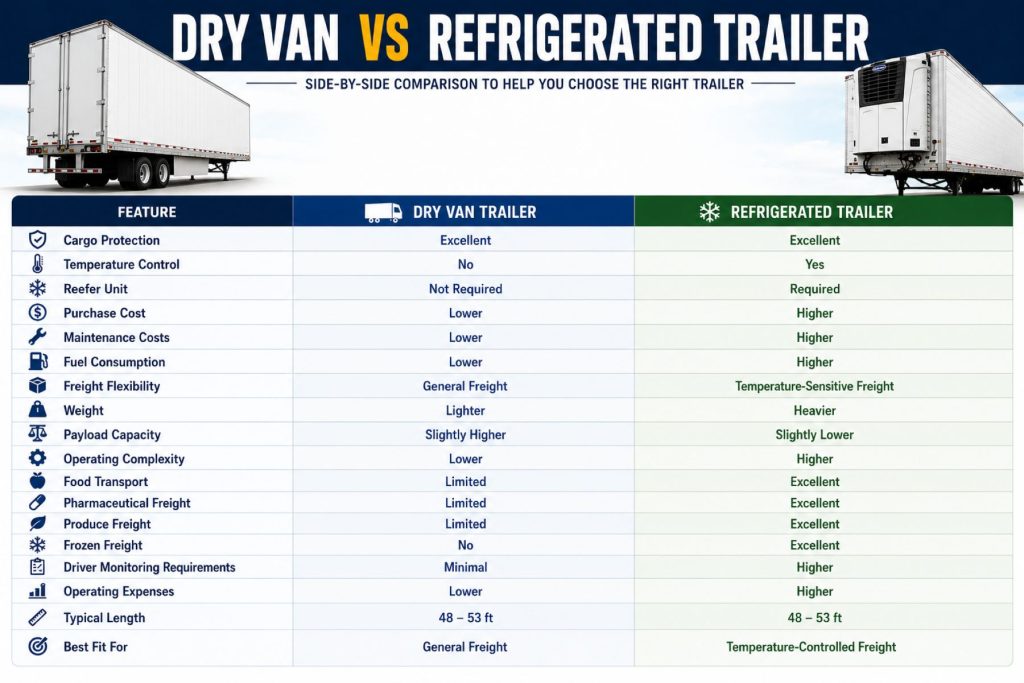
Dry Van vs Refrigerated Trailer Comparison
| Feature | Dry Van Trailer | Refrigerated Trailer |
|---|---|---|
| Cargo Protection | Excellent | Excellent |
| Temperature Control | No | Yes |
| Reefer Unit | Not Required | Required |
| Purchase Cost | Lower | Higher |
| Maintenance Costs | Lower | Higher |
| Fuel Consumption | Lower | Higher |
| Freight Flexibility | General Freight | Temperature-Sensitive Freight |
| Weight | Lighter | Heavier |
| Payload Capacity | Slightly Higher | Slightly Lower |
| Operating Complexity | Lower | Higher |
| Food Transport | Limited | Excellent |
| Pharmaceutical Freight | Limited | Excellent |
| Produce Freight | Limited | Excellent |
| Frozen Freight | No | Excellent |
| Driver Monitoring Requirements | Minimal | Higher |
| Operating Expenses | Lower | Higher |
| Typical Length | 48–53 ft | 48–53 ft |
| Best Fit For | General Freight | Temperature-Controlled Freight |
Advantages of Dry Van Trailers
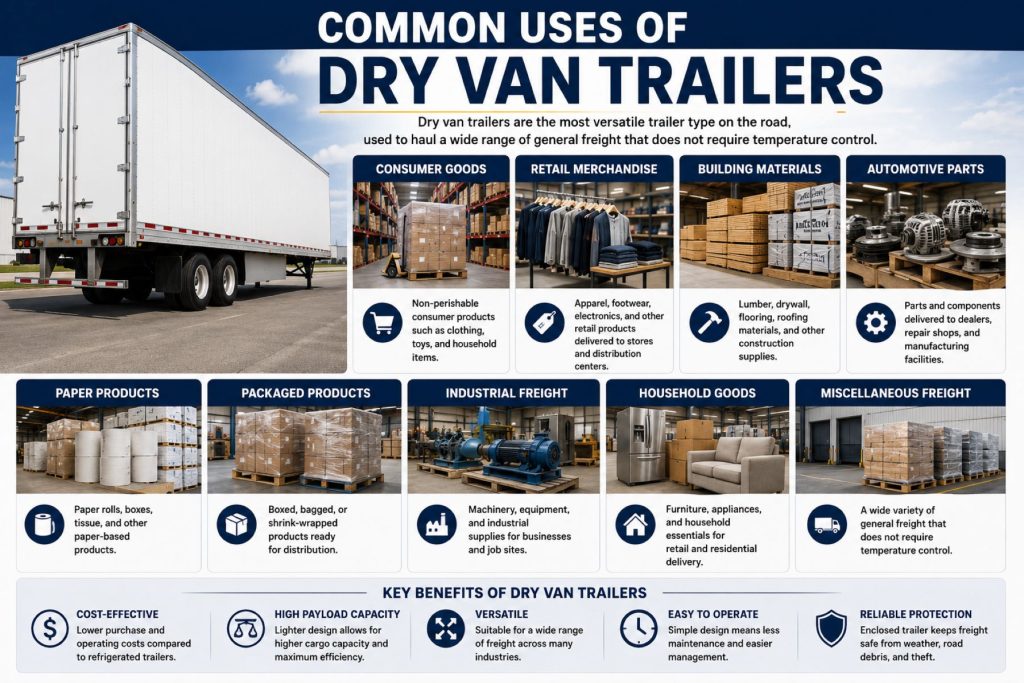
Dry van trailers dominate freight transportation because of their simplicity and versatility.
Advantages
- Lower acquisition cost
- Lower maintenance expenses
- Simpler operation
- Higher payload capacity
- Broad freight compatibility
- Easier equipment management
Common Dry Van Freight Types
- Consumer goods
- Retail merchandise
- Building materials
- Automotive parts
- Paper products
- Packaged products
- Industrial freight
- Household goods
Advantages of Refrigerated Trailers
Refrigerated trailers provide access to specialized freight markets that require temperature control.
Advantages
- Temperature-controlled transportation
- Food-grade freight capability
- Pharmaceutical transportation
- Expanded freight opportunities
- Premium freight rates in some markets
- Year-round produce transportation
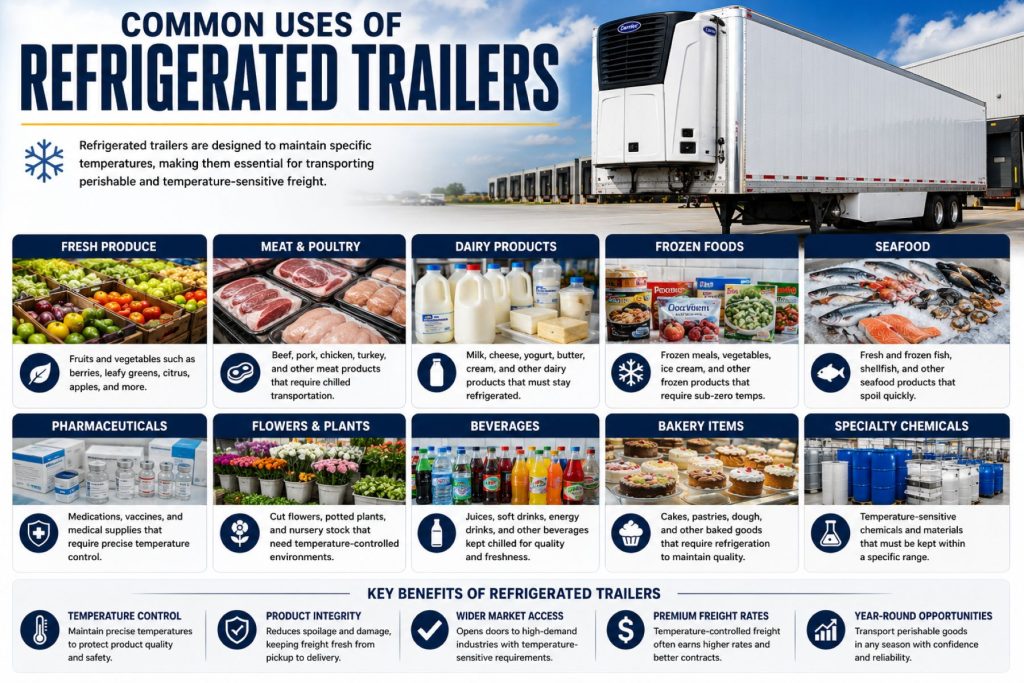
Common Refrigerated Freight Types
- Fresh produce
- Frozen foods
- Dairy products
- Meat and poultry
- Seafood
- Pharmaceuticals
- Vaccines
- Flowers and plants
- Specialty chemicals
Cost, Maintenance, and Operating Considerations
The largest differences between dry vans and refrigerated trailers often involve ownership costs and operational complexity.
Purchase Cost
Dry van trailers typically cost less than refrigerated trailers because they do not require insulation systems or refrigeration equipment.
Maintenance Costs
Dry vans generally have lower maintenance expenses.
Refrigerated trailers require:
- Reefer unit servicing
- Temperature monitoring maintenance
- Additional electrical components
- Insulation repairs when needed
Fuel Consumption
Dry vans have no refrigeration unit and therefore consume less fuel.
Refrigerated trailers require fuel to operate the reefer unit, increasing overall operating expenses.
Payload Capacity
Because refrigeration equipment and insulation add weight, refrigerated trailers typically provide slightly lower payload capacity than comparable dry vans.
Freight Rates
Refrigerated freight often commands higher rates due to specialized equipment requirements and stricter cargo handling standards.
Which Trailer Is Right for Your Freight?
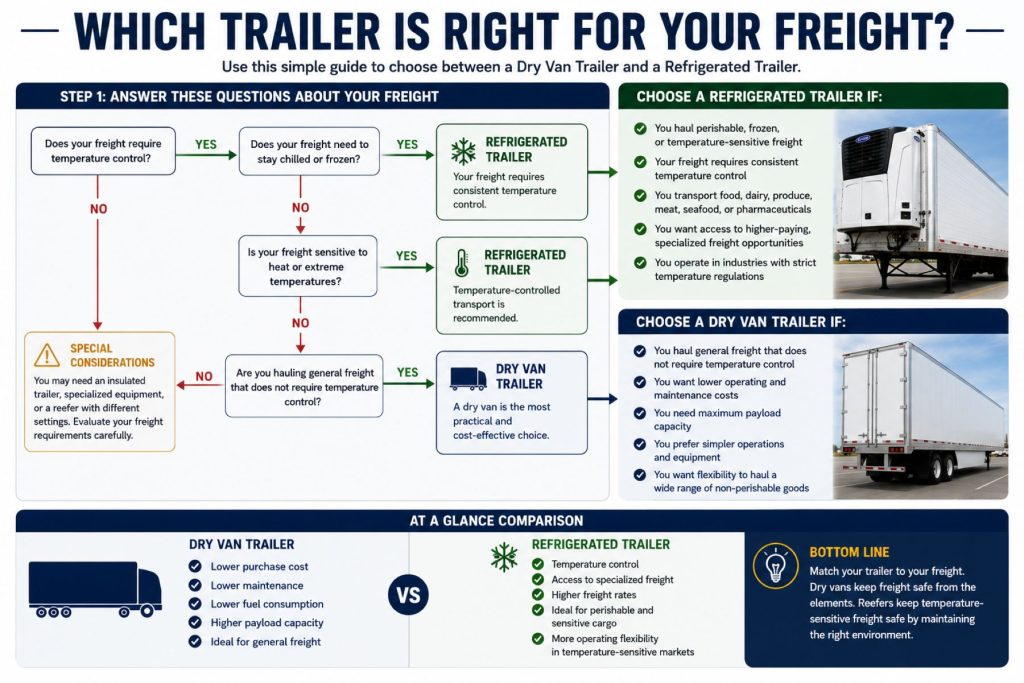
Choose a Dry Van Trailer If:
- You haul general freight
- Temperature control is not required
- Lower operating costs are important
- Maximum payload capacity is preferred
- Simplicity is a priority
Choose a Refrigerated Trailer If:
- You transport food products
- You haul pharmaceuticals
- Temperature-sensitive freight is common
- Specialized freight opportunities are desired
- Higher operating complexity is acceptable
Frequently Asked Questions
Is a refrigerated trailer the same as a dry van?
No. While both are enclosed trailers, refrigerated trailers contain insulation and refrigeration equipment that allow them to maintain cargo temperatures.
Why are refrigerated trailers more expensive?
Refrigerated trailers include insulation systems, refrigeration units, temperature controls, and additional maintenance requirements.
Can a reefer trailer haul dry freight?
Yes. Many carriers use refrigerated trailers to haul dry freight when temperature control is not required.
Which trailer has higher operating costs?
Refrigerated trailers generally have higher operating costs due to reefer fuel consumption and maintenance requirements.
Which trailer is most common?
Dry van trailers are the most common trailer type used in North American freight transportation.
Bottom Line
Dry van and refrigerated trailers both play essential roles in modern freight transportation.
Dry van trailers offer simplicity, lower operating costs, and broad freight compatibility, making them ideal for general freight operations.
Refrigerated trailers provide temperature-controlled transportation capabilities that are required for food products, pharmaceuticals, and other sensitive cargo.
Choosing the right trailer depends primarily on the type of freight being transported and the operational requirements of your business.
Related Trailer Types
- Dry Van Trailers
- Refrigerated Trailers
- Insulated Trailers
- Flatbed Trailers
- Conestoga Trailers
Related Freight Types
- Dry Van Freight
- Refrigerated Freight
- Food Freight
- Consumer Goods Freight
- Pharmaceutical Freight
Related Guides
- How Diesel Truck Engines Work
- Complete Guide to Trailer Types
- Complete Guide to Freight Types
- How to Choose the Right Commercial Truck
- Choosing the Right Trailer for Your Freight
- New vs Used Commercial Trailers
- Flatbed vs Step Deck Trailer
- Lowboy vs RGN Trailer
- Air Brake Systems Explained
- How Semi Truck Transmissions Work