
Electrical Systems
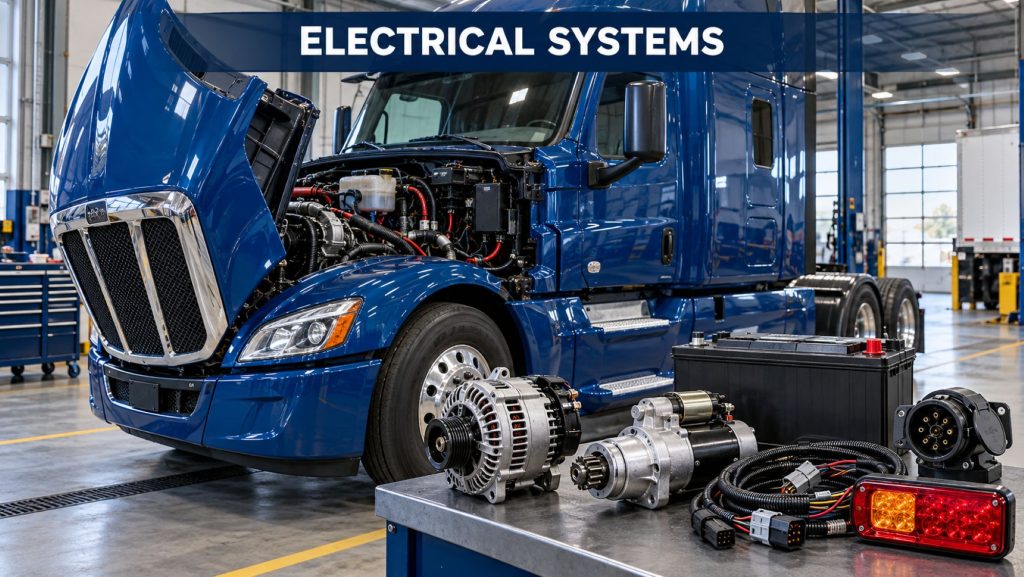
Electrical systems generate, store, distribute, control, and deliver the electrical power required to start commercial trucks, operate vehicle systems, illuminate trucks and trailers, and power auxiliary equipment.
Truck Equipment Atlas covers commercial-truck batteries, alternators, charging systems, starter motors, wiring, connectors, power-distribution equipment, truck and trailer lighting, inverters, converters, and auxiliary electrical-power systems used throughout highway, regional, vocational, construction, heavy-haul, and specialized commercial operations.
The Electrical Systems Library includes individual product profiles, equipment categories, application information, operating specifications, maintenance considerations, manufacturer coverage, and educational guides designed to help readers understand commercial-truck and trailer electrical equipment.
Explore Commercial Truck and Trailer Electrical Categories
Commercial electrical equipment can be classified by its role in starting, charging, energy storage, power distribution, lighting, electrical connection, voltage conversion, and auxiliary-equipment operation. Explore the major electrical-system categories on Truck Equipment Atlas:
Commercial Truck Batteries & Energy Storage
Commercial-truck batteries store electrical energy for engine starting, lighting, electronic controls, cab accessories, hotel loads, liftgates, and other vehicle equipment. This category covers flooded lead-acid batteries, AGM batteries, auxiliary battery banks, battery boxes, isolation equipment, and energy-management systems.
Alternators & Charging Systems
Alternators convert mechanical engine power into electrical energy while the engine is running. This category covers heavy-duty alternators, voltage regulators, remote-sense charging, high-output systems, brushless designs, mounting configurations, and charging-system controls.
Starters & Starting Systems
Starting systems use stored battery power to crank the engine and support reliable startup. This category covers heavy-duty starter motors, gear-reduction starters, solenoids, magnetic switches, starting cables, over-crank protection, and related control equipment.
Wiring, Connectors & Power Distribution
Wiring and power-distribution equipment routes electricity between batteries, charging systems, controls, lighting, trailers, and auxiliary components. This category covers harnesses, cables, seven-way connections, junction boxes, circuit protection, relays, switches, connectors, grounds, and power-distribution modules.
Truck & Trailer Lighting Systems
Truck and trailer lighting systems provide forward illumination, vehicle identification, turn signaling, braking indication, conspicuity, work-area lighting, and equipment-status information. This category covers LED lamps, marker lights, stop-turn-tail lamps, headlights, work lights, warning lights, harnesses, and lighting controls.
Inverters, Converters & Auxiliary Electrical Power
Power-conversion and auxiliary electrical systems provide usable power for sleeper-cab equipment, tools, refrigeration accessories, liftgates, work-truck equipment, and other electrical loads. This category covers inverters, converters, battery chargers, shore-power systems, auxiliary power controls, and low-voltage protection.
Electrical System Guides
The Electrical System Guides section provides educational resources covering commercial-truck batteries, alternators, starters, wiring, connectors, power distribution, truck and trailer lighting, electrical inspection, maintenance, troubleshooting, and equipment selection.
Commercial Truck and Trailer Electrical Products on Truck Equipment Atlas
Truck Equipment Atlas includes a growing library of individual electrical-system and component profiles from manufacturers serving the commercial trucking and trailer industries.
Explore the electrical products and equipment families being added to the library:
Delco Remy
- Delco Remy 40SI Heavy-Duty Brushless Alternator
- Delco Remy 36SI High-Output Alternator
- Delco Remy 28SI High-Output Alternator
- Delco Remy 24SI Heavy-Duty Alternator
- Delco Remy 39MT Heavy-Duty Gear-Reduction Starter
- Delco Remy 38MT Heavy-Duty Starter
Leece-Neville and Prestolite
- Leece-Neville IdlePro Alternator
- Leece-Neville IdlePro Extreme Alternator
- Prestolite PowerPro Starter
- Prestolite PowerPro Extreme Starter
Deka
Odyssey Battery
NorthStar Battery
Phillips Industries
- Phillips STA-DRY QCS2 Electrical Connection System
- Phillips QCP Quick-Change Electrical Plug
- Phillips STA-DRY S7 Seven-Way Connection System
- Phillips 3-in-1 Electrical and Air Combo Assembly
- Phillips STA-DRY QCMS2 Junction Box
- Phillips STA-DRY SLIM-7 Electrical System
Truck-Lite
Grote
Additional batteries, alternators, starters, wiring harnesses, electrical connectors, junction boxes, circuit-protection equipment, truck and trailer lighting, inverters, converters, chargers, and auxiliary-power products will be added as the Truck Equipment Atlas Electrical Systems Library continues to expand.
Electrical System Guides on Truck Equipment Atlas
Truck Equipment Atlas is also developing educational guides that explain how commercial-truck and trailer electrical systems operate and how they affect starting, charging, lighting, accessory operation, reliability, maintenance, and equipment selection.
- How Commercial Truck Electrical Systems Work
- Commercial Truck Batteries Explained
- Commercial Truck Alternators and Charging Systems Explained
- Commercial Truck Starters and Starting Systems Explained
- How to Inspect and Maintain Truck Wiring and Electrical Connections
- Commercial Truck and Trailer Lighting Systems Explained
How Commercial Truck Electrical Systems Work
A commercial-truck electrical system begins with stored energy in the batteries. When the driver activates the starting circuit, battery current flows through the starting controls and starter motor to crank the engine.
After the engine starts, the alternator supplies electrical power to vehicle loads and replenishes energy removed from the batteries. A voltage regulator manages alternator output to maintain an appropriate charging voltage under changing engine speeds and electrical demands.
Wiring harnesses, cables, connectors, relays, switches, fuses, circuit breakers, control modules, and grounding paths distribute and control electrical power throughout the tractor, truck body, trailer, and auxiliary equipment.
Batteries and Electrical Energy Storage
Commercial trucks commonly use multiple batteries connected to supply the voltage, cranking current, reserve capacity, and accessory power required by the vehicle.
Important battery considerations include:
- Battery chemistry and construction
- Group size and physical dimensions
- Cold-cranking performance
- Reserve capacity
- Terminal arrangement
- Vibration resistance
- Deep-cycle capability
- Battery-bank configuration
- Charging-system compatibility
- Auxiliary and hotel-load requirements
Battery capacity should be matched to the engine, starting system, climate, accessory load, duty cycle, and vehicle manufacturer’s requirements.
Alternators and Charging Systems
Alternators produce electrical power whenever the engine is operating. Output requirements depend on engine speed, battery condition, lighting, climate-control equipment, electronic systems, refrigeration equipment, liftgates, sleeper accessories, and other connected loads.
High-output and brushless alternators may be selected for vehicles that operate extensive electrical equipment, spend long periods at idle, or require improved durability in severe-service environments.
Charging-system performance depends on the alternator, regulator, drive belt, pulleys, batteries, cables, grounds, terminals, and electrical-load management working together correctly.
Starters and Starting Systems
A heavy-duty starter converts electrical energy from the batteries into mechanical rotation needed to crank the engine. Gear-reduction starters use internal gearing to produce the required cranking torque while controlling starter size and weight.
Starting performance can be affected by battery condition, cable size, terminal resistance, ground quality, starter mounting, solenoid operation, engine temperature, oil viscosity, and engine mechanical condition.
Modern starting systems may include over-crank protection, electrical soft-start features, integrated magnetic switches, electronic controls, and diagnostic monitoring.
Truck and Trailer Electrical Connections
Electrical connections between tractors, trucks, trailers, and vocational equipment must carry power and control signals while resisting moisture, corrosion, vibration, road debris, temperature changes, and repeated coupling cycles.
Common connection equipment includes:
- Seven-way tractor and trailer connectors
- Coiled electrical cables
- Straight electrical cables
- Sealed plugs and sockets
- Trailer nose boxes
- Junction boxes
- Weather-resistant harnesses
- Electrical and air combo assemblies
- Single-pole auxiliary-power connections
- Liftgate charging connections
Correct connector pin assignments, cable capacity, sealing, routing, strain relief, and grounding are necessary for dependable operation.
Truck and Trailer Lighting
Commercial lighting systems help drivers see the roadway and allow other road users to recognize the vehicle’s presence, dimensions, direction, braking, and intended movement.
Common commercial lighting equipment includes:
- Headlamps
- Fog and driving lamps
- Stop-turn-tail lamps
- Clearance and marker lamps
- Identification lamps
- Backup lamps
- License-plate lamps
- Work lamps
- Warning and beacon lights
- Interior and cargo-area lighting
LED lighting is widely used because of its efficiency, service life, visibility, vibration resistance, and reduced maintenance requirements. Compatibility with the vehicle’s wiring, controls, monitoring circuits, voltage, mounting, and regulatory requirements must still be verified.
Inverters and Auxiliary Electrical Power
Inverters convert direct-current battery power into alternating-current power for equipment such as appliances, chargers, tools, computers, and sleeper-cab accessories. DC-to-DC converters change one direct-current voltage into another for compatible vehicle equipment.
Auxiliary electrical systems may also include shore-power connections, battery chargers, low-voltage disconnects, auxiliary battery banks, isolation devices, power-management controllers, and electrical equipment supplied by auxiliary power units.
Power-conversion equipment must be sized according to continuous load, surge demand, input voltage, wiring capacity, grounding requirements, ventilation, heat production, battery capacity, and intended duty cycle.
Common Commercial Electrical-System Configurations
Commercial electrical systems vary according to vehicle class, engine, body equipment, trailer type, accessory load, climate, and operating application.
Common configurations include:
- 12-volt truck electrical systems
- 24-volt heavy-equipment electrical systems
- Multiple-battery starting banks
- Separate starting and auxiliary battery banks
- Flooded lead-acid batteries
- AGM batteries
- High-output alternators
- Brushless alternators
- Gear-reduction starters
- Seven-way trailer electrical systems
- LED truck and trailer lighting
- Liftgate charging circuits
- Sleeper-cab inverter systems
- Shore-power and onboard charging systems
- Vocational-equipment control circuits
Voltage alone does not establish compatibility. Batteries, alternators, starters, cables, connectors, circuit protection, controllers, lighting, and auxiliary equipment must be matched to the complete vehicle and its electrical architecture.
Highway, Regional, and Vocational Applications
Long-haul tractors may require dependable engine starting, high-efficiency charging, sleeper-cab power, trailer connections, extensive exterior lighting, and electrical capacity for onboard electronics and driver-comfort equipment.
Regional and delivery vehicles may experience frequent starting cycles, extended idling, liftgate operation, repeated trailer connections, and heavy stop-and-go electrical demand.
Vocational trucks may power dump-body controls, hydraulic equipment, cranes, warning lights, work lamps, pumps, winches, refrigeration accessories, refuse equipment, utility bodies, and specialized controls. These applications can require higher electrical capacity, additional circuit protection, and severe-service components.
Advantages of Modern Electrical Systems
Modern commercial electrical equipment can provide several operational advantages:
- Improved engine-starting reliability
- Higher charging output at low engine speed
- Improved electrical efficiency
- Reduced alternator and starter weight
- Longer component service life
- Improved resistance to vibration and contamination
- Reduced lighting power consumption
- Improved vehicle visibility
- Better support for sleeper and hotel loads
- Improved auxiliary-equipment operation
- Enhanced diagnostics and electrical monitoring
- Serviceable and replaceable connection components
Actual benefits depend on proper component selection, system capacity, installation quality, operating environment, inspection, maintenance, and electrical-load management.
Electrical-System Limitations and Considerations
No single battery, alternator, starter, wiring system, connector, lamp, or power-conversion product is appropriate for every commercial vehicle.
Important considerations include:
- System voltage
- Starting-current requirements
- Battery capacity and chemistry
- Alternator output at idle and road speed
- Total connected electrical load
- Cable size and circuit length
- Ground-path condition
- Connector type and pin configuration
- Circuit-protection requirements
- Heat and ventilation
- Moisture and corrosion exposure
- Vibration and severe-service operation
- Electronic-control compatibility
- Trailer and body-equipment requirements
- Inspection and maintenance needs
An electrical component with a higher advertised capacity is not automatically the correct replacement. Mounting, voltage, connections, regulation, control communication, cable capacity, and complete-system compatibility must also be confirmed.
Driver and Operator Considerations
Electrical-system condition directly affects engine starting, lighting, accessory operation, vehicle reliability, roadside safety, and equipment uptime.
Drivers should watch for:
- Slow or inconsistent engine cranking
- Repeated no-start conditions
- Low-voltage warnings
- Charging-system warning lights
- Dim or flickering lamps
- Intermittent trailer lighting
- Hot cables, terminals, or connectors
- Corroded or damaged connections
- Blown fuses or repeatedly tripped breakers
- Unusual starter or alternator noise
- Inverter or auxiliary-power shutdowns
- Electrical or burning odors
Electrical warnings and intermittent failures should be investigated promptly because a developing connection, charging, starting, or wiring problem can lead to a breakdown, lighting failure, damaged equipment, or fire risk.
Maintenance and Ownership
Commercial electrical systems require regular inspection and testing to provide dependable service.
Important maintenance areas can include:
- Testing battery condition and state of charge
- Inspecting battery cases, hold-downs, and boxes
- Cleaning and tightening battery connections
- Testing alternator output and charging voltage
- Inspecting belts, pulleys, and alternator mounts
- Performing starter-circuit voltage-drop tests
- Inspecting cables, harnesses, and grounds
- Checking connectors for corrosion and moisture
- Protecting wiring from abrasion and heat
- Testing truck and trailer lighting
- Inspecting fuses, breakers, relays, and distribution panels
- Checking inverter wiring, ventilation, and shutdown settings
- Verifying trailer electrical-cable support and strain relief
- Investigating repeated electrical faults instead of repeatedly replacing protection devices
Maintenance requirements vary between manufacturers, system voltages, battery technologies, alternator and starter designs, connector systems, lighting products, and auxiliary electrical equipment. Owners and technicians should follow the procedures specified for the exact product and vehicle.
Major Commercial Electrical-System Manufacturers
Truck Equipment Atlas covers batteries, alternators, starters, wiring, connectors, lighting, power-distribution equipment, and auxiliary electrical systems from manufacturers that play important roles throughout the commercial trucking industry.
Current and planned coverage includes:
- Delco Remy
- Leece-Neville
- Prestolite
- East Penn Manufacturing and Deka
- Odyssey Battery
- NorthStar Battery
- Phillips Industries
- Truck-Lite
- Grote
- Peterson Manufacturing
- Eaton
- Littelfuse
- Kussmaul Electronics
- Xantrex
- Vanner
Manufacturer coverage will continue to expand as additional batteries, rotating electrical equipment, wiring products, connectors, lighting systems, power-distribution components, inverters, converters, chargers, and auxiliary-power systems are added.
Related Truck Equipment Resources
Electrical systems operate as part of the complete commercial truck, trailer, engine, transmission, brake, steering, safety, telematics, and auxiliary-equipment system.
Explore related Truck Equipment Atlas resources:
- Commercial Trucks
- Commercial Trailers
- Diesel Engines
- Transmissions
- PTO & Hydraulic Systems
- Drivelines & Steering Systems
- Brake Systems
- Tires & Wheels
- Telematics & ELD Systems
- Safety Systems
- Equipment Systems
- Equipment System Guides
Understanding how batteries, alternators, starters, cables, grounds, connectors, controls, lighting, auxiliary equipment, and electronic systems work together is essential when evaluating commercial-vehicle electrical equipment.
How to Use the Electrical Systems Library
Individual Truck Equipment Atlas electrical-system profiles provide deeper information about specific models and product families.
Depending on the equipment, these pages may include:
- Product overview
- Manufacturer information
- Electrical-system function
- Voltage, amperage, and capacity information
- Construction and component design
- Truck, trailer, engine, and equipment applications
- Mounting and connection requirements
- System and component compatibility
- Operating and performance considerations
- Driver and operator considerations
- Inspection and maintenance information
- Common electrical problems
- Buying and ownership considerations
- Availability and replacement information
Readers can begin with one of the electrical-system categories above or explore individual product profiles by manufacturer.
Electrical Systems Library Expansion
The Truck Equipment Atlas Electrical Systems Library will continue to grow with additional commercial batteries, alternators, starters, wiring harnesses, cables, connectors, junction boxes, power-distribution equipment, circuit-protection components, truck and trailer lighting, inverters, converters, battery chargers, shore-power systems, and auxiliary electrical equipment.
Future development will also expand the connections between electrical products and the trucks, trailers, engines, transmissions, vocational equipment, safety systems, telematics platforms, manufacturers, freight sectors, and operating applications in which they are used.
The goal is to build an organized commercial electrical-equipment reference that helps drivers, owner-operators, fleets, technicians, students, equipment buyers, and industry professionals understand how these products work and where different electrical-system platforms fit within the trucking industry.
Follow the Growth of Truck Equipment Atlas
Truck Equipment Atlas continues to expand with new trucks, trailers, diesel engines, transmissions, axles, differentials, suspension systems, brakes, fifth wheels, tires, wheels, electrical equipment, manufacturer information, freight resources, and educational guides.
Visit our Site Updates page to explore recent additions, project milestones, and upcoming resources as we continue building one of the industry’s growing commercial trucking equipment reference libraries.