
Equipment Systems
Overview
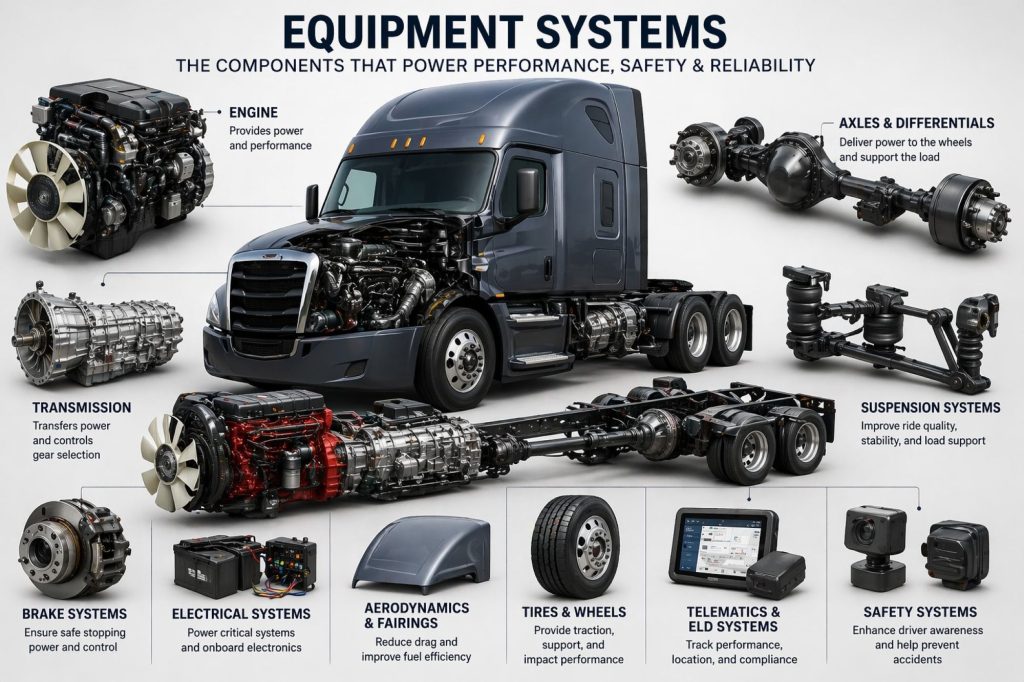
Equipment systems are the core mechanical and operational components that power and support trucks and trailers across the transportation industry. These systems determine performance, efficiency, safety, and long-term reliability.
Understanding how these systems work helps drivers, fleet owners, and operators make better decisions when selecting, maintaining, and operating equipment.
Core Equipment System Categories
Truck Equipment Atlas organizes equipment systems into key categories based on their role in vehicle operation and performance.
Engines
Engines are the primary power source of a truck, determining horsepower, torque, fuel efficiency, and overall performance.
Transmissions
Transmissions control how power is delivered from the engine to the drivetrain, affecting drivability, efficiency, and control.
Drivelines & Steering Systems
Driveline and steering systems transfer power from the transmission to the drive axles while providing the directional control needed to steer and maneuver commercial vehicles. These systems include driveshafts, universal joints, center bearings, steering gears, power-steering pumps, steering linkage, columns, and advanced steering technologies.
PTO & Hydraulic Systems
PTO and hydraulic systems transfer power from the truck’s engine or transmission to pumps, cylinders, motors, and other equipment used to operate dump bodies, refuse systems, towing equipment, cranes, trailers, and vocational attachments.
Axles & Differentials
Axles and differentials distribute power to the wheels and support the weight of the vehicle and its load.
Suspension Systems
Suspension systems provide ride stability, load support, and driver comfort while absorbing road impacts.
Fifth Wheels & Coupling Equipment
Fifth wheels and coupling equipment connect trucks and tractors to trailers, transfer towing and vertical forces, allow articulation during turns, and maintain a secure connection between commercial vehicles and towed equipment.
Brake Systems
Brake systems are critical for safety, controlling stopping power and maintaining stability under load.
Electrical Systems
Electrical systems manage lighting, sensors, onboard electronics, and communication systems within the vehicle.
Aerodynamics & Fairings
Aerodynamic systems reduce drag and improve fuel efficiency, especially in highway operations.
Tires & Wheels
Tires and wheels support the vehicle and impact traction, fuel efficiency, and ride quality.
Telematics & ELD Systems
Telematics and ELD systems track vehicle performance, driver activity, and compliance with regulations.
Refrigeration Units
Refrigeration units, commonly known as reefer units, maintain controlled temperature environments inside trailers, allowing the safe transport of perishable and temperature-sensitive freight such as food, pharmaceuticals, and chemicals.
Safety Systems
Safety systems include technologies and equipment designed to prevent accidents and improve driver awareness.
How Equipment Systems Work Together
Each system plays a role in overall vehicle performance, and their interaction determines how a truck operates in real-world conditions.
• Engines generate power
• Transmissions deliver power
• Axles transfer power to the ground
• Suspension stabilizes the load
• Brakes control motion and stopping
• Electronics and safety systems enhance operation
Choosing the Right Equipment Systems
Selecting the right combination of systems depends on application, load type, terrain, and operational demands.
• Long-haul operations prioritize efficiency and durability
• Vocational work requires strength and reliability
• Heavy haul demands high torque and reinforced systems
• Regional operations focus on balance and cost efficiency
How to Use This Section
Each equipment system listed above links to a dedicated page that breaks down components, configurations, and real-world performance considerations.
This allows users to explore individual systems while understanding how they fit into the overall vehicle.
What You’ll Find in Equipment System Pages
Each system page follows a structured format to provide consistent and useful information.
• System overview and function
• Key components and configurations
• Performance considerations
• Maintenance and ownership insights
• Real-world applications
Looking Ahead
This section will expand with deeper technical breakdowns, comparisons, and real-world performance insights.
Future expansion may include:
• Component-level breakdowns
• Brand and model comparisons
• Performance tuning insights
• Maintenance best practices
Follow the Growth of Truck Equipment Atlas
Truck Equipment Atlas continues to expand with new truck profiles, trailer coverage, diesel engine pages, equipment system resources, manufacturer information, freight-sector content, and educational guides.
Visit our Site Updates page to follow major milestones, newly published resources, and future projects as we continue building one of the industry’s growing commercial trucking equipment reference libraries.
From commercial trucks and specialized trailers to diesel engines, equipment systems, and future Truck Stop Atlas resources, new content is being added regularly to help drivers, owner-operators, fleets, technicians, students, and industry professionals better understand the equipment that keeps freight moving.
Explore the Latest Site Updates
Stay Connected
As new equipment system content is added, this section will continue to grow into a complete reference for truck performance and mechanical systems.