
Suspension System Guides
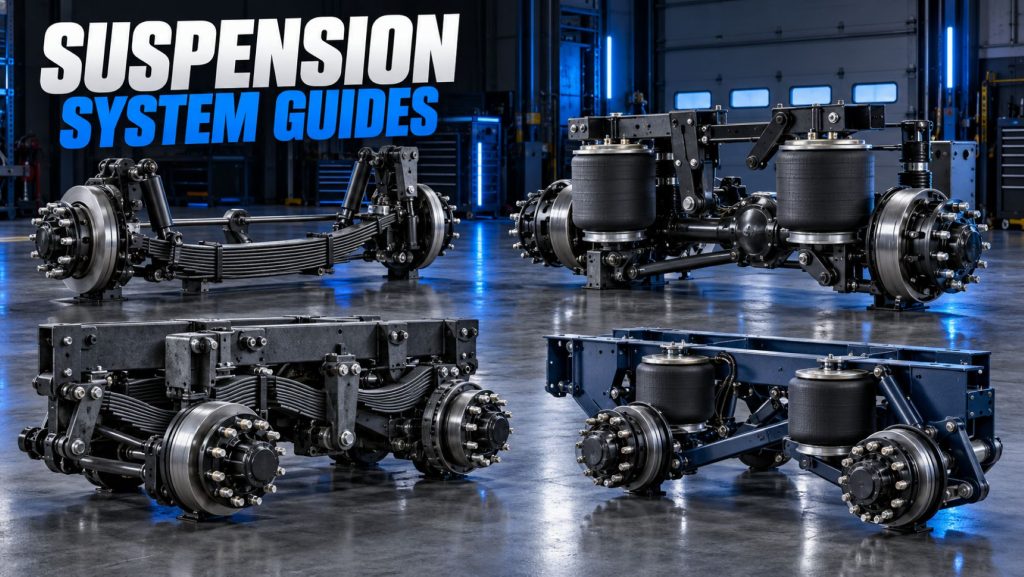
Commercial truck and trailer suspension systems support vehicle weight, control axle movement, absorb road shock, maintain ride height, and help keep tires in contact with the road.
The Truck Equipment Atlas Suspension System Guides explain how these systems work, compare major suspension types, help readers choose and identify suspension equipment, and cover common problems affecting trucks, tractors, trailers, and vocational vehicles.
Explore Suspension System Guides
How Commercial Truck Suspension Systems Work
Learn how commercial truck and trailer suspension systems support the vehicle, connect the frame to the axles, control movement, absorb road shock, and help maintain stability.
This guide explains the roles of air springs, leaf springs, suspension beams, torque rods, shock absorbers, bushings, hangers, height-control valves, equalizers, and other major suspension components.
Air Suspension vs Leaf Spring Suspension
Compare air and mechanical suspension systems used on commercial trucks, tractors, vocational vehicles, and trailers.
This guide covers differences in ride quality, durability, weight, maintenance, cargo protection, articulation, operating cost, and application suitability.
How to Choose a Commercial Truck Suspension
Learn how to match a suspension system to vehicle capacity, axle configuration, operating terrain, freight, ride-quality requirements, and maintenance priorities.
This guide helps fleets, operators, and equipment buyers evaluate air, mechanical, vocational, auxiliary, steer-axle, and trailer suspension options.
Truck Suspension Components Explained
Learn about the air springs, leaf springs, shock absorbers, torque rods, trailing arms, bushings, equalizers, hangers, height-control valves, mounting hardware, and other major components used in commercial truck and trailer suspensions.
This guide explains what each component does, how the parts work together, common signs of wear, and what information may be needed when inspecting or replacing suspension components.
Truck vs Trailer Suspension Systems
Compare the suspension systems used on commercial trucks, tractors, and trailers and understand how their operating requirements differ.
This guide explains steer and drive axle suspensions, fifth-wheel load transfer, trailer axle arrangements, ride height, cargo protection, traction, tracking, stability, and the different maintenance considerations for truck and trailer suspension systems.
What These Guides Cover
The Suspension System Guides provide educational information across the major suspension categories used throughout the commercial trucking industry.
Topics include:
- Air suspension systems
- Mechanical and leaf-spring suspensions
- Vocational and severe-duty suspensions
- Auxiliary and lift-axle suspensions
- Steer-axle and front suspensions
- Trailer suspension systems
- Fixed and sliding suspensions
- Tandem, tridem, and spread-axle arrangements
- Suspension identification
- Ride-height adjustment
- Axle alignment
- Common suspension problems
- Inspection and maintenance considerations
- Truck, tractor, trailer, and axle compatibility
Air Suspension Information
Air suspensions use pressurized air springs to support the vehicle or trailer and help isolate the frame, cab, cargo, and driver from road shock.
The suspension guides explain:
- How air springs support vehicle weight
- How height-control valves maintain ride height
- How air lines and valves control suspension pressure
- How shock absorbers limit suspension movement
- How air suspensions respond to changing loads
- Why correct ride height is important
- How leaks and damaged components affect operation
- Where air suspensions are commonly used
Readers can explore individual systems through the Air Suspension Systems library.
Mechanical and Leaf-Spring Information
Mechanical suspension systems use steel springs, equalizers, walking beams, torque rods, or related components to support weight and control axle movement.
The suspension guides explain:
- How leaf springs carry vehicle weight
- How equalizers distribute weight between axles
- How walking-beam suspensions allow axle articulation
- How mechanical suspensions respond to rough terrain
- Why bushings, pins, and mounting hardware require inspection
- How mechanical systems compare with air suspensions
- Where leaf-spring and severe-duty systems are commonly used
Readers can explore these systems through the Mechanical & Leaf Spring Suspensions library.
Vocational and Severe-Duty Information
Vocational suspensions are designed for vehicles that regularly operate under heavy loads, on uneven surfaces, or in applications involving frequent starts, stops, loading cycles, and frame articulation.
The guides help readers understand suspension considerations for:
- Dump trucks
- Concrete mixers
- Refuse trucks
- Logging trucks
- Heavy-haul tractors
- Construction vehicles
- Mining equipment
- Oilfield vehicles
- Severe-service trucks
Readers can explore application-specific systems through the Vocational & Severe-Duty Suspensions library.
Auxiliary and Lift-Axle Information
Auxiliary suspension systems support additional axles used to distribute vehicle weight and increase legal carrying capacity where regulations permit.
The suspension guides explain:
- How auxiliary axles support additional weight
- How lift-axle suspensions raise and lower an axle
- How steerable and non-steerable auxiliary axles differ
- How air pressure affects axle loading
- Why axle position and spacing matter
- How lift axles interact with tires, brakes, and steering systems
Readers can explore these systems through the Auxiliary & Lift Axle Suspensions library.
Steer-Axle and Front Suspension Information
Front suspensions support the steer axle and influence steering response, vehicle stability, ride quality, alignment, and front-tire wear.
The guides explain the differences among:
- Conventional leaf-spring front suspensions
- Tapered-leaf suspensions
- Front air suspensions
- Integrated steer-axle and suspension systems
- Lightweight front suspension designs
- Vocational front suspensions
Readers can explore front suspension equipment through the Steer Axle & Front Suspensions library.
Trailer Suspension Information
Trailer suspensions connect the trailer frame to its axle group while supporting the load and controlling axle movement.
The suspension guides cover:
- Trailer air suspensions
- Mechanical trailer suspensions
- Fixed suspension systems
- Sliding-tandem suspensions
- Integrated axle-and-suspension systems
- Spread-axle arrangements
- Tandem and tridem suspensions
- Ride-height and alignment considerations
Readers can explore these systems through the Trailer Suspension Systems library.
Who These Guides Are For
The Suspension System Guides are designed for:
- Commercial truck drivers
- Owner-operators
- Fleet managers
- Maintenance technicians
- Trailer technicians
- Equipment buyers
- Truck and trailer dealers
- Vocational fleet operators
- CDL students
- Heavy-haul operators
Anyone learning about commercial vehicle suspension systems
How to Use the Suspension Guides
- Begin with How Commercial Truck Suspension Systems Work for an overview of suspension components and operating principles.
- Use Air Suspension vs Leaf Spring Suspension when comparing the two primary suspension approaches.
- Review How to Choose a Commercial Truck Suspension when specifying a truck, tractor, trailer, or vocational vehicle.
Suspension Systems Library
The Suspension Systems hub provides access to commercial truck and trailer suspension categories, individual product profiles, comparison information, and related educational resources.
Explore the suspension library by category:
- Air Suspension Systems
- Mechanical & Leaf Spring Suspensions
- Vocational & Severe-Duty Suspensions
- Auxiliary & Lift Axle Suspensions
- Steer Axle & Front Suspensions
- Trailer Suspension Systems
Related Guide Libraries
Related Equipment Systems
Suspension Guide Library Expansion
Truck Equipment Atlas will continue expanding its suspension educational library as additional suspension systems, manufacturers, maintenance topics, and vehicle applications are added.
Future suspension guides may cover:
- Understanding suspension ride height
- Commercial truck suspension maintenance
- Truck and trailer axle alignment
- Walking-beam suspensions explained
- Sliding trailer suspensions explained
- Common causes of uneven suspension height
- How suspension problems affect tire wear
- How lift-axle controls work
- Suspension considerations for vocational trucks
- Suspension considerations for heavy-haul equipment
Follow the Growth of Truck Equipment Atlas
Truck Equipment Atlas continues to expand with new truck profiles, trailer coverage, diesel engine pages, equipment-system resources, manufacturer information, and educational guides.
Visit our Site Updates page to explore recent additions, project milestones, and upcoming resources as we continue building one of the industry’s growing commercial trucking equipment reference libraries.
View the Latest Site Updates: Truck Equipment Atlas Site Updates