
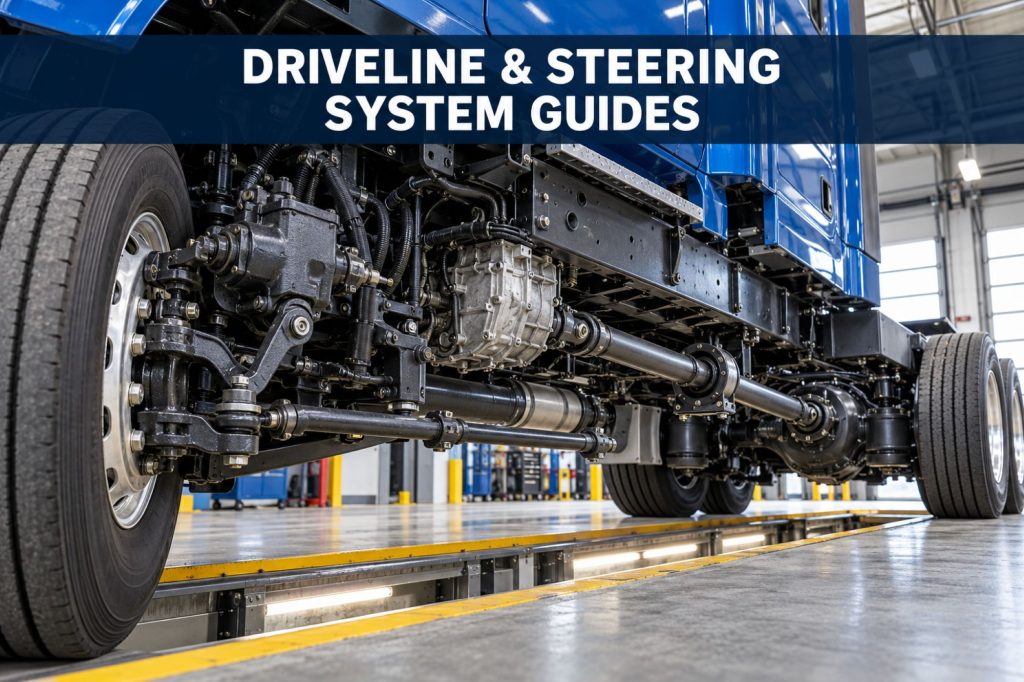
Commercial truck driveline systems transfer power from the transmission to the drive axles, while steering systems allow the driver to control vehicle direction, maintain lane position, and maneuver safely under changing road and load conditions. Their design and condition directly affect power delivery, steering response, tire wear, vibration, stability, driver effort, and vehicle reliability.
The Truck Equipment Atlas Driveline & Steering System Guides explain how commercial driveshafts and steering systems work, compare important component configurations, outline inspection and maintenance practices, and examine common vibration, steering, alignment, and control problems.
These guides are designed for commercial drivers, owner-operators, fleet managers, technicians, equipment buyers, CDL students, vocational operators, and anyone who wants to better understand the driveline and steering equipment used on commercial trucks.
Explore Driveline & Steering System Guides
How Commercial Truck Driveline Systems Work
Learn how power travels from a commercial truck’s transmission to its drive axles and wheels.
This guide explains driveshafts, universal joints, slip yokes, center bearings, companion flanges, axle input connections, operating angles, torque transfer, suspension movement, and the differences between single-piece and multi-piece driveline arrangements.
How Commercial Truck Steering Systems Work
Learn how driver input at the steering wheel is transferred to the truck’s steer tires.
This guide covers steering columns, intermediate shafts, steering gears, power steering pumps, pitman arms, drag links, steering arms, tie rods, steering knuckles, hydraulic assistance, alignment geometry, and electronically assisted steering technologies.
Single-Piece vs Multi-Piece Truck Driveshafts
Compare the principal driveshaft arrangements used on commercial trucks and vocational vehicles.
This guide examines driveline length, shaft diameter, center bearings, slip movement, critical speed, operating angles, vehicle packaging, maintenance requirements, vibration risks, and application considerations for single-piece and multi-piece systems.
How to Inspect and Maintain Driveshafts and Universal Joints
Review the principal inspection and maintenance areas associated with commercial-truck driveline components.
This guide covers universal-joint wear, lubrication, bearing-cap movement, slip-yoke condition, center bearings, shaft damage, missing balance weights, loose fasteners, driveline angles, vibration, phasing, corrosion, and warning signs requiring professional evaluation.
Hydraulic vs Electric-Assisted Commercial Truck Steering
Compare conventional hydraulic power steering with newer electrically assisted commercial steering technologies.
This guide examines steering effort, hydraulic pumps, electric motors, fluid systems, energy consumption, driver-assistance integration, steering feel, maintenance requirements, system complexity, failure behavior, and application suitability.
Common Commercial Truck Driveline Vibrations and Steering Problems
Learn how driveline, steering, suspension, axle, tire, and wheel problems can create similar vehicle symptoms.
This guide covers speed-related vibration, torque-related vibration, driveline shudder, steering-wheel movement, wandering, pulling, shimmy, excessive free play, difficult steering, uneven tire wear, abnormal noises, and the importance of diagnosing the complete vehicle rather than replacing parts by assumption.
What These Guides Cover
The Driveline & Steering System Guides provide educational information about the components, configurations, operating principles, inspection areas, maintenance requirements, diagnostic concerns, and selection considerations associated with commercial-truck driveline and steering systems.
Topics include:
- Commercial-truck driveline operation
- Driveshaft construction and torque transfer
- Single-piece and multi-piece driveshafts
- Universal joints and bearing caps
- Slip yokes and slip splines
- Center bearings and supporting crossmembers
- Driveshaft balance and critical speed
- Driveline operating angles and phasing
- Commercial-truck steering operation
- Steering gears and steering linkage
- Power steering pumps and hydraulic assistance
- Steering columns and intermediate shafts
- Pitman arms, drag links, tie rods, and steering knuckles
- Hydraulic and electrically assisted steering
- Steering-angle sensors and electronic controls
- Lane-departure warning and lane-keeping assistance
- Driveline vibration and steering diagnostics
- Inspection and preventive maintenance
- Vehicle and component compatibility
How Commercial Truck Driveline Systems Transfer Power
A commercial-truck driveline transfers rotating power from the transmission output to the drive-axle input. The driveshaft must carry engine torque while accommodating changes in length and angle caused by suspension movement, frame movement, powertrain positioning, and chassis configuration.
Universal joints allow power to pass through changing operating angles. Slip yokes or slip splines allow the driveline to change length as the axles move relative to the transmission. Multi-piece systems use center bearings to support intermediate shaft sections and control their position beneath the chassis.
Correct shaft balance, universal-joint phasing, operating angles, lubrication, fastener condition, and component alignment are essential. Problems in any of these areas can create vibration, noise, bearing wear, seal damage, or driveline failure.
Begin with How Commercial Truck Driveline Systems Work for a complete overview of driveline operation.
Single-Piece and Multi-Piece Driveshaft Information
Driveshaft configuration is influenced by wheelbase, chassis layout, transmission position, axle placement, shaft diameter, operating speed, required torque capacity, and available clearance.
Single-Piece Driveshafts
A single-piece driveshaft connects the transmission or transfer case directly to the drive axle without an intermediate center bearing.
Potential single-piece characteristics include:
- Fewer driveline joints and supporting components
- Simpler component arrangement
- No center-bearing assembly
- Length limited by critical-speed and packaging requirements
- Application-specific shaft diameter and wall thickness
Multi-Piece Driveshafts
A multi-piece driveline uses two or more shaft sections supported by one or more center bearings. This arrangement is common on trucks with longer wheelbases or chassis layouts that prevent the use of one driveshaft.
Potential multi-piece characteristics include:
- Supports longer wheelbase configurations
- Uses center bearings and mounting brackets
- Requires correct alignment between shaft sections
- Adds universal joints and additional wear points
- Requires careful operating-angle and phasing control
Read Single-Piece vs Multi-Piece Truck Driveshafts for the complete configuration comparison.
How Commercial Truck Steering Systems Control Direction
A commercial-truck steering system transfers movement from the steering wheel through the steering column and intermediate shaft to the steering gear. The steering gear moves the pitman arm, drag link, steering arm, knuckles, tie rod, and steer tires.
Hydraulic or electric assistance reduces the physical effort required to steer heavily loaded axles. Correct alignment geometry helps the truck track predictably, return toward center, maintain tire contact, and avoid excessive tire wear.
Modern trucks may integrate steering-angle sensors, active steering assistance, lane-departure warning, lane-keeping assistance, stability control, collision mitigation, and other electronically controlled safety systems.
Visit How Commercial Truck Steering Systems Work for the complete steering-system guide.
Hydraulic and Electric-Assisted Steering Information
Hydraulic Power Steering
Hydraulic steering systems use an engine-driven pump to circulate pressurized fluid through the steering gear. These systems are established across highway, vocational, heavy-haul, bus, and specialty-vehicle applications.
Hydraulic-system service areas may include pumps, reservoirs, filters, pressure lines, return hoses, steering gears, assist cylinders, fluid condition, operating pressure, and trapped air.
Electric-Assisted Steering
Electric-assisted systems use an electric motor or electronically controlled actuator to add steering assistance. Depending on the design, the system may work with a conventional hydraulic steering gear or form part of a more highly integrated steering architecture.
Electric assistance can support speed-sensitive steering, lane-keeping technologies, crosswind compensation, driver-assistance functions, and reduced demand on an engine-driven hydraulic pump.
Read Hydraulic vs Electric-Assisted Commercial Truck Steering for the full comparison.
Driveshaft and Universal-Joint Inspection Information
Regular driveline inspection can help identify conditions that may lead to vibration, component wear, loss of power transfer, or driveline separation.
Important inspection areas include:
- Universal-joint bearing caps and retaining hardware
- Universal-joint looseness, binding, or corrosion
- Required lubrication points
- Slip-yoke and slip-spline movement
- Center-bearing rubber support and mounting bracket
- Driveshaft dents, bends, cracks, and corrosion
- Missing or damaged balance weights
- Loose flange, yoke, and companion-flange fasteners
- Driveline operating angles and shaft phasing
- Contact with frame, suspension, exhaust, or body components
- Unusual vibration, clunking, squeaking, or shudder
Visit How to Inspect and Maintain Driveshafts and Universal Joints for the complete inspection and maintenance guide.
Driveline Vibration and Steering Problem Information
Driveline and steering complaints should be evaluated as complete vehicle problems. Tires, wheels, brakes, suspension components, wheel bearings, axles, ride height, alignment, engine mounts, transmission mounts, and vehicle loading can produce symptoms similar to failed driveline or steering components.
Common concerns include:
- Vibration that changes with road speed
- Vibration that changes with engine speed or torque
- Driveline shudder during acceleration
- Clunking during acceleration or deceleration
- Steering-wheel shimmy
- Vehicle wandering or pulling
- Excessive steering-wheel free play
- Heavy or inconsistent steering effort
- Poor return-to-center behavior
- Uneven or rapid steer-tire wear
- Power steering noise, leakage, or overheating
- Steering or lane-assistance warning messages
Read Common Commercial Truck Driveline Vibrations and Steering Problems for a structured overview of possible causes and diagnostic considerations.
Who These Guides Are For
The Driveline & Steering System Guides are designed for:
- Commercial truck drivers
- Owner-operators
- Fleet managers
- Truck technicians
- Alignment and steering specialists
- Driveshaft and driveline repair specialists
- Maintenance managers
- Truck inspectors
- Equipment buyers
- Truck dealers and body builders
- Safety managers and driver trainers
- Highway and regional carriers
- Vocational and severe-service operators
- Heavy-haul operators
- CDL students
- Anyone learning about commercial driveline and steering systems
How to Use the Driveline & Steering System Guides
- Begin with How Commercial Truck Driveline Systems Work to understand how power moves from the transmission to the drive axles.
- Use How Commercial Truck Steering Systems Work to understand steering columns, gears, linkage, hydraulic assistance, and electronic steering technology.
- Read Single-Piece vs Multi-Piece Truck Driveshafts when comparing driveline configurations and component arrangements.
- Consult How to Inspect and Maintain Driveshafts and Universal Joints for inspection areas, lubrication points, wear indicators, and warning signs.
- Use Hydraulic vs Electric-Assisted Commercial Truck Steering when comparing conventional and electronically assisted steering designs.
- Read Common Commercial Truck Driveline Vibrations and Steering Problems when researching vibration, wandering, pulling, shimmy, noise, or steering-effort concerns.
Related Guide Libraries
- Truck Guides
- Transmission Guides
- Axle and Differential Guides
- Suspension System Guides
- Brake System Guides
- Tire & Wheel Guides
- PTO & Hydraulic System Guides
- Equipment System Guides
Related Equipment Systems
- Drivelines & Steering Systems
- Transmissions
- Axles & Differentials
- Suspension Systems
- Tires & Wheels
- Brake Systems
- Electrical Systems
- Safety Systems
Driveline & Steering Guide Library Expansion
Truck Equipment Atlas will continue expanding its driveline and steering guide library as additional technologies, manufacturers, maintenance subjects, diagnostic procedures, operating practices, and vehicle applications are added.
Future guides may cover:
- Commercial-truck driveline operating angles
- Driveshaft balance and critical speed
- Driveline phasing explained
- Universal-joint types and lubrication
- Slip-yoke and slip-spline inspection
- Center-bearing diagnosis and replacement considerations
- Commercial-truck steering geometry explained
- Caster, camber, toe, and axle alignment
- Single vs dual steering gears
- Power steering fluid, filtration, and cooling
- Steering-angle sensor calibration
- Lane-departure warning vs lane-keeping assistance
- Adaptive and active steering systems
- Heavy-haul and severe-service steering configurations
- Common steer-tire wear patterns related to alignment
Follow the Growth of Truck Equipment Atlas
Truck Equipment Atlas continues to expand with new truck profiles, trailer coverage, diesel engine pages, equipment-system resources, manufacturer information, and educational guides.
Visit the Truck Equipment Atlas Site Updates page to explore recent additions, project milestones, and upcoming resources.