
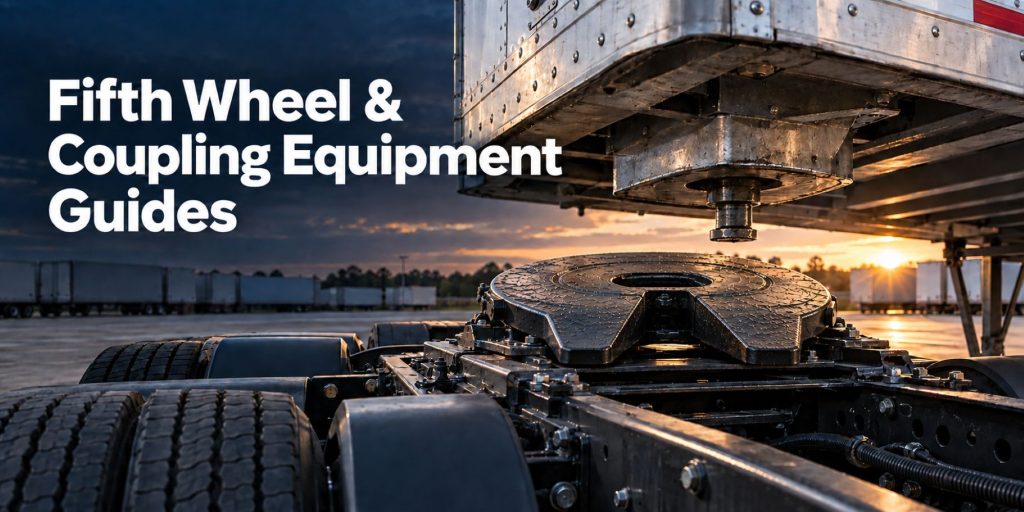
Commercial truck fifth wheels and trailer coupling equipment create the critical connection between a tractor and semitrailer. The system supports part of the trailer’s weight, transfers pulling and braking forces, and allows the tractor and trailer to articulate while turning and traveling over uneven surfaces.
The Truck Equipment Atlas Fifth Wheel & Coupling Equipment Guides explain how commercial fifth wheels operate, compare fixed and sliding designs, outline the coupling and uncoupling process, identify important inspection and maintenance areas, and examine the factors involved in selecting a fifth wheel for a specific truck and application.
These guides are designed for commercial drivers, owner-operators, fleet managers, technicians, equipment buyers, CDL students, trailer operators, and anyone who wants to better understand the equipment that connects tractors and semitrailers.
Explore Fifth Wheel & Coupling Equipment Guides
How Commercial Truck Fifth Wheels Work
Learn how a commercial truck fifth wheel connects a tractor to a semitrailer while supporting vertical load, transferring pulling and braking forces, and allowing controlled articulation.
This guide explains the fifth-wheel plate, throat, locking mechanism, jaws, release handle, mounting system, trailer kingpin, upper coupler, pivot points, and the sequence that creates a secure tractor-trailer connection.
Fixed vs Sliding Fifth Wheels
Compare fixed fifth wheels with sliding fifth-wheel assemblies used on highway tractors, vocational trucks, and specialized commercial vehicles.
This guide explains mounting differences, weight-distribution adjustments, tractor and trailer clearance, slider rails, locking plungers, air-release mechanisms, operating flexibility, maintenance requirements, weight, cost, and common applications for each design.
How to Couple and Uncouple a Semi-Trailer Safely
Review the major checks and general sequence involved in connecting and disconnecting a tractor and semitrailer.
This guide covers trailer approach and alignment, trailer height, fifth-wheel condition, kingpin engagement, visual lock verification, tug testing, landing gear, air and electrical connections, clearance checks, secure parking, and common coupling errors. Drivers must follow employer procedures, equipment-manufacturer instructions, training requirements, and applicable regulations.
How to Inspect and Maintain a Fifth Wheel and Kingpin
Learn how drivers and qualified technicians evaluate the tractor-mounted fifth wheel, trailer kingpin, upper coupler, mounting system, locking components, slider assembly, and related hardware.
This guide covers wear, damage, looseness, cracks, lubrication, jaw operation, release components, mounting brackets, fasteners, pivot points, slider rails, locking plungers, kingpin condition, upper-coupler condition, adjustment, preventive maintenance, and warning signs that require further evaluation.
How to Choose a Commercial Truck Fifth Wheel
Explore the factors involved in matching a fifth wheel to a tractor, trailer, operating environment, and duty cycle.
This guide explains vertical-load and drawbar ratings, fixed and sliding configurations, mounting height, frame and mounting compatibility, trailer clearance, weight-distribution needs, release options, oscillation, lubrication systems, vocational requirements, maintenance support, and manufacturer specifications.
What These Guides Cover
The Fifth Wheel & Coupling Equipment Guides provide educational information about the components, operating principles, configurations, inspection areas, and selection considerations associated with commercial tractor-trailer coupling systems.
Topics include:
- Commercial truck fifth-wheel operation
- Tractor and semitrailer coupling
- Fifth-wheel plates and throats
- Locking jaws and lock bars
- Release handles and release mechanisms
- Trailer kingpins
- Trailer upper couplers
- Fixed fifth wheels
- Sliding fifth wheels
- Slider rails and brackets
- Locking plungers and pins
- Air-release slider systems
- Mounting brackets and fasteners
- Fifth-wheel height
- Tractor-trailer clearance
- Weight distribution between tractor axles
- Coupling and uncoupling checks
- Lubrication and low-lube systems
- Inspection and preventive maintenance
- Wear limits and adjustment
- Common coupling problems and warning signs
- Fifth-wheel selection and application matching
How Commercial Truck Fifth Wheels Connect Tractors and Trailers
A fifth wheel is a load-bearing coupling device mounted behind the cab of a tractor or on the frame of another commercial vehicle. Its top plate contains a tapered throat that guides the semitrailer kingpin into the locking mechanism as the tractor backs under the trailer.
When the kingpin enters the throat correctly, the locking mechanism closes around it. The trailer’s upper-coupler plate rests on the fifth-wheel plate, allowing the two surfaces to rotate against one another as the combination turns. The fifth wheel also pivots on its mounting supports so the tractor and trailer can move over grades, dips, and uneven road surfaces.
A correct connection depends on more than the jaws closing. The trailer must be positioned at the proper coupling height, the kingpin must enter the lock rather than pass over or behind it, the upper-coupler plate must sit against the fifth wheel without an improper gap, and the lock must be verified according to established procedures.
Begin with How Commercial Truck Fifth Wheels Work for a complete overview of the system.
Fifth-Wheel Components and Coupling Equipment
Commercial fifth-wheel systems combine tractor-mounted and trailer-mounted components. Their exact construction varies by manufacturer, model, capacity, mounting arrangement, and intended application.
Fifth-Wheel Top Plate
The top plate supports the trailer upper coupler and provides the surface across which the trailer rotates. Its throat guides the kingpin toward the locking mechanism. Traditional fifth wheels require grease on the contact surface, while some systems use replaceable low-lube liners or other application-specific lubrication arrangements.
Locking Mechanism
The locking mechanism captures the trailer kingpin and prevents it from leaving the fifth-wheel throat during operation. Depending on the design, the system may use one or two jaws, a lock bar, wedge, cam, or other internal components. The mechanism must close fully and remain within the manufacturer’s adjustment and wear limits.
Release System
A release handle or approved remote-release system allows the locking mechanism to open during uncoupling. Bent, damaged, obstructed, or improperly adjusted release components can interfere with locking or unlocking.
Mounting and Pivot Components
Brackets, pins, bushings, pivots, fasteners, rails, and frame attachments secure the fifth wheel to the tractor while permitting its designed movement. These components must match the fifth-wheel assembly, vehicle frame, load rating, and application.
Trailer Kingpin and Upper Coupler
The kingpin is mounted beneath the front of the semitrailer and enters the fifth-wheel locking mechanism. The surrounding upper-coupler structure transfers trailer load into the fifth wheel. Excessive wear, deformation, cracks, looseness, or structural damage can affect coupling security and require evaluation under the applicable manufacturer procedures and inspection standards.
Fixed Fifth-Wheel Information
A fixed fifth wheel is mounted in one established position on the truck frame. The mounting arrangement may still allow the top plate to pivot, but the complete assembly does not slide forward and rearward during normal adjustment.
Potential characteristics include:
- Simple mounting arrangement
- Fewer slider-related components
- Reduced maintenance associated with rails and locking plungers
- Consistent fifth-wheel position
- Suitability for trucks with predictable trailer and load configurations
- Limited ability to adjust tractor axle loading by moving the fifth wheel
A fixed design may fit dedicated, vocational, severe-duty, or specialized applications in which the correct coupling position is established during vehicle configuration. It is not automatically the correct choice for every truck.
Sliding Fifth-Wheel Information
A sliding fifth wheel allows the coupling assembly to move forward or rearward along a rail system. Repositioning the fifth wheel changes the relationship between the trailer kingpin and the tractor axles, which can affect axle loading and tractor-trailer clearance.
The guides explain:
- How slider rails guide fifth-wheel movement
- How locking plungers or pins secure the selected position
- How air-release systems retract locking components
- How fifth-wheel position can affect steer- and drive-axle loading
- Why axle weights must be verified rather than assumed
- How position affects cab, frame, landing-gear, and trailer clearance
- Why all locking devices must be fully engaged before travel
- How dirt, corrosion, damage, and inadequate lubrication can restrict movement
Read Fixed vs Sliding Fifth Wheels for the full comparison.
Coupling and Uncoupling Information
Coupling and uncoupling are safety-critical procedures. A connection that appears complete may still be unsafe if the trailer is too high, the kingpin has not entered the lock correctly, the jaws have not closed fully, or the connection has not been visually and functionally verified.
The coupling guide covers:
- Inspecting the fifth wheel, kingpin, and upper coupler before connection
- Aligning the tractor with the trailer
- Checking trailer height before backing under it
- Confirming contact between the fifth wheel and upper coupler
- Verifying the locking mechanism around the kingpin
- Performing an appropriate tug test
- Connecting air lines and the electrical cable
- Raising and securing the landing gear
- Checking tractor, trailer, landing-gear, and frame clearance
- Parking and supporting the trailer before uncoupling
- Disconnecting lines and releasing the fifth wheel in the proper sequence
- Recognizing high coupling, false coupling, and incomplete locking
How to Couple and Uncouple a Semi-Trailer Safely provides general educational information. It does not replace hands-on driver training, company procedures, manufacturer instructions, or applicable laws and regulations.
Fifth-Wheel and Kingpin Inspection Information
Regular inspection helps identify wear, damage, improper adjustment, inadequate lubrication, loose mounting hardware, and other conditions that could affect the coupling system.
Inspection areas include:
- Top-plate cracks, distortion, or damage
- Throat and locking-component condition
- Jaw closure and lock operation
- Release-handle position and condition
- Wear adjustment and allowable movement
- Pivot pins and bushings
- Mounting brackets and fasteners
- Slider rails and stops
- Locking plungers and complete engagement
- Air lines and actuators on air-release systems
- Lubrication of required contact and pivot points
- Low-lube liners, when equipped
- Kingpin wear, damage, looseness, or deformation
- Upper-coupler cracks, distortion, and structural condition
- Unusual movement, noise, binding, or difficult release
Wear must be measured and evaluated using the correct gauges, procedures, and limits for the equipment. Inspection, adjustment, component replacement, and repair must follow applicable requirements and the instructions published by the truck, trailer, fifth-wheel, and coupling-equipment manufacturers.
Visit How to Inspect and Maintain a Fifth Wheel and Kingpin for the complete inspection and maintenance guide.
Fifth-Wheel Selection Information
A fifth wheel must be properly rated and configured for the truck, trailer, load, duty cycle, mounting system, and operating environment. Selection should be based on verified application requirements rather than appearance or general familiarity with a particular design.
Important considerations include:
- Maximum imposed vertical load
- Maximum drawbar or pulling load
- Gross combination weight and operating conditions
- Highway, vocational, severe-duty, or off-road service
- Fixed or sliding mounting configuration
- Required slide length and adjustment increments
- Fifth-wheel mounting height
- Truck-frame and mounting compatibility
- Trailer kingpin and upper-coupler compatibility
- Cab, sleeper, frame, landing-gear, and trailer clearance
- Tractor axle ratings and weight-distribution needs
- Articulation and oscillation requirements
- Manual or air-release options
- Traditional lubrication or approved low-lube equipment
- Inspection and maintenance capabilities
- Replacement-parts and service support
- Manufacturer application and installation requirements
No fifth wheel is automatically correct for every tractor or operation. Use How to Choose a Commercial Truck Fifth Wheel to review the complete selection framework.
Who These Guides Are For
The Fifth Wheel & Coupling Equipment Guides are designed for:
- Commercial truck drivers
- Owner-operators
- Fleet managers
- Maintenance technicians
- Truck and trailer inspectors
- Equipment buyers
- Truck and trailer dealers
- Safety managers and driver trainers
- Highway and regional carriers
- Vocational and severe-duty operators
- Heavy-haul operators
- CDL students
- Anyone learning about tractor-trailer coupling systems
How to Use the Fifth Wheel & Coupling Equipment Guides
- Begin with How Commercial Truck Fifth Wheels Work to understand the system’s components and operating sequence.
- Use Fixed vs Sliding Fifth Wheels when comparing the two principal mounting configurations.
- Read How to Couple and Uncouple a Semi-Trailer Safely for the major connection, verification, and disconnection checks.
- Consult How to Inspect and Maintain a Fifth Wheel and Kingpin for inspection areas, maintenance considerations, and warning signs.
- Use How to Choose a Commercial Truck Fifth Wheel when evaluating ratings, configuration, mounting, clearance, and application fit.
Related Guide Libraries
- Truck Guides
- Trailer Guides
- Brake System Guides
- Suspension System Guides
- Axle and Differential Guides
- Equipment System Guides
Related Equipment Systems
Fifth Wheel & Coupling Guide Library Expansion
Truck Equipment Atlas will continue expanding its fifth-wheel and coupling-equipment library as additional technologies, manufacturers, maintenance subjects, operating practices, and vehicle applications are added.
Future guides may cover:
- Common fifth-wheel coupling problems
- Fifth-wheel wear and adjustment
- Fifth-wheel lubrication systems
- Low-lube fifth-wheel systems
- Fifth-wheel mounting height and trailer compatibility
- Air-release fifth-wheel systems
- Fifth-wheel slider troubleshooting
- Trailer kingpin wear and inspection
- Upper-coupler inspection and repair considerations
- Fifth wheels for vocational and severe-duty trucks
- Fifth wheels for heavy-haul applications
- Fully oscillating fifth wheels
- Terminal-tractor and yard-tractor coupling systems
Follow the Growth of Truck Equipment Atlas
Truck Equipment Atlas continues to expand with new truck profiles, trailer coverage, diesel engine pages, equipment-system resources, manufacturer information, and educational guides.
Visit the Truck Equipment Atlas Site Updates page to explore recent additions, project milestones, and upcoming resources.