
Complete Guide to Freight Types
[FEATURE IMAGE – Multiple Freight Types Being Transported]
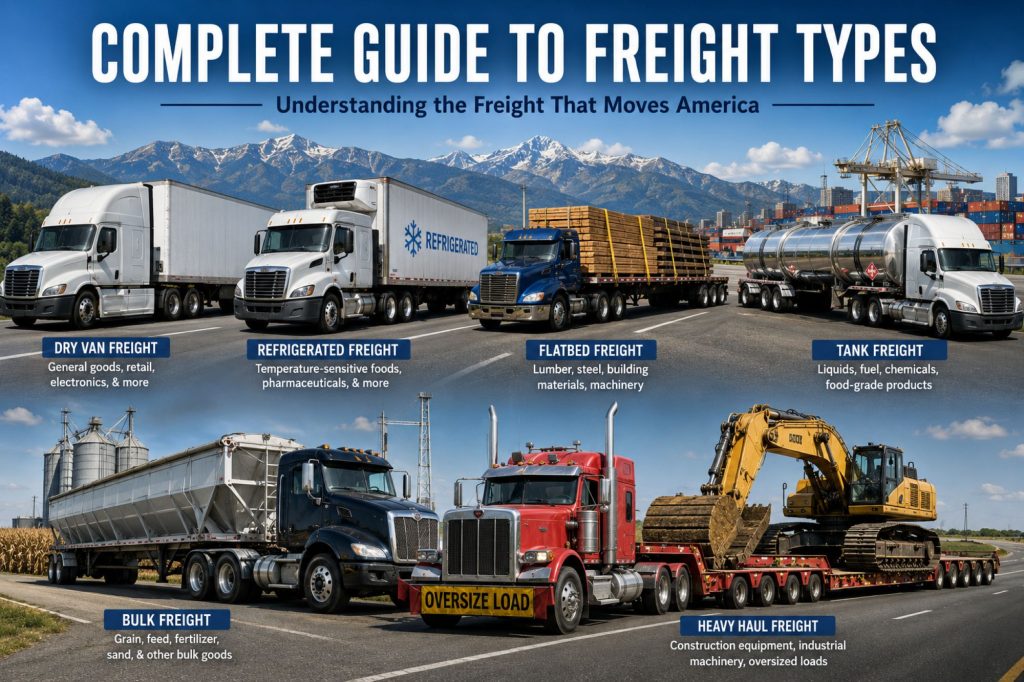
Freight is the foundation of the trucking industry. Every truck, trailer, engine, and equipment system is ultimately selected based on the type of freight being transported. From consumer products and refrigerated food to heavy equipment and bulk agricultural commodities, freight determines nearly every operational decision made by carriers, owner-operators, shippers, and logistics providers.
Understanding freight types is essential for selecting the right equipment, complying with regulations, maximizing efficiency, and safely delivering cargo.
This guide explores the major freight categories used throughout North America, the equipment commonly used to transport them, and the industries that depend on them.
What Is Freight?
Freight refers to goods, commodities, products, materials, or cargo being transported from one location to another for commercial purposes.
Freight can range from palletized consumer goods and refrigerated food products to construction equipment, fuel, grain, chemicals, and oversized industrial machinery.
Several terms are commonly used within the freight industry:
Cargo
The actual goods being transported.
Commodity
A specific type of product or material being moved.
Shipper
The company or individual sending the freight.
Carrier
The trucking company responsible for transporting the freight.
Consignee
The person or business receiving the shipment.
Why Freight Classification Matters
Different freight types require different transportation solutions.
Proper freight classification helps determine:
- Truck selection
- Trailer selection
- Cargo securement requirements
- Driver qualifications
- Regulatory compliance
- Permit requirements
- Freight rates
- Insurance considerations
Selecting the wrong equipment for a particular freight type can create safety risks, operational inefficiencies, and regulatory violations.
Major Freight Categories
The trucking industry commonly divides freight into several major categories:
- Dry Freight
- Refrigerated Freight
- Flatbed Freight
- Oversized Freight
- Bulk Freight
- Liquid Freight
- Heavy Haul Freight
- Specialized Freight
Each category presents unique transportation challenges and equipment requirements.
Dry Freight
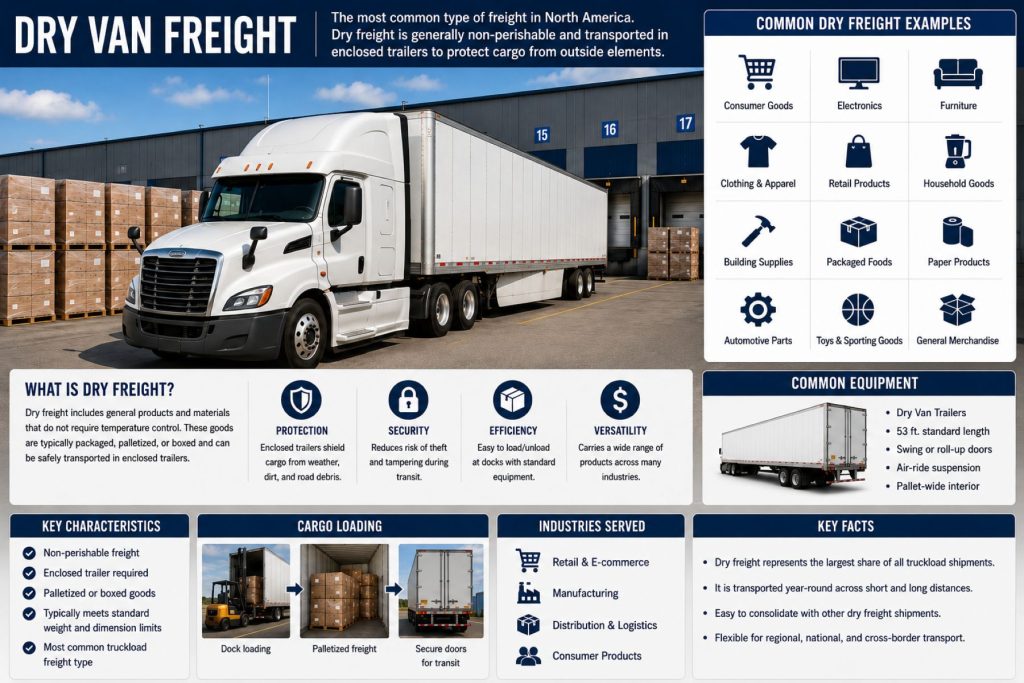
Dry Freight is the most common freight category in North America.
Dry freight includes general consumer and commercial products that do not require temperature control and can be transported inside enclosed trailers.
Common Dry Freight Examples
- Consumer goods
- Electronics
- Furniture
- Clothing
- Retail products
- Household goods
- Building supplies
- Packaged food products
Common Equipment
Industries Served
- Retail
- Manufacturing
- Distribution
- Consumer products
Dry freight represents a significant portion of all truckload transportation activity.
Refrigerated Freight
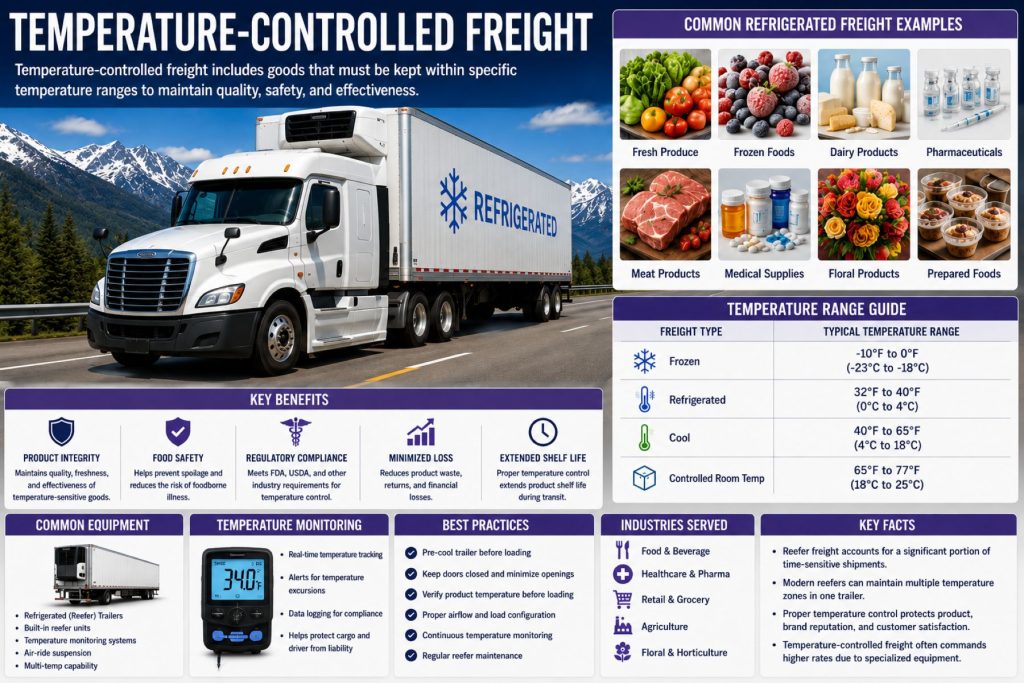
Refrigerated Freight includes commodities that require temperature-controlled transportation.
These products must remain within specific temperature ranges throughout transit to prevent spoilage, contamination, or product degradation.
Common Refrigerated Freight Examples
- Fresh produce
- Frozen foods
- Dairy products
- Meat products
- Pharmaceuticals
- Medical supplies
- Floral products
Common Equipment
Industries Served
- Food distribution
- Agriculture
- Healthcare
- Pharmaceuticals
Refrigerated freight often commands higher transportation rates due to specialized equipment requirements.
Flatbed Freight
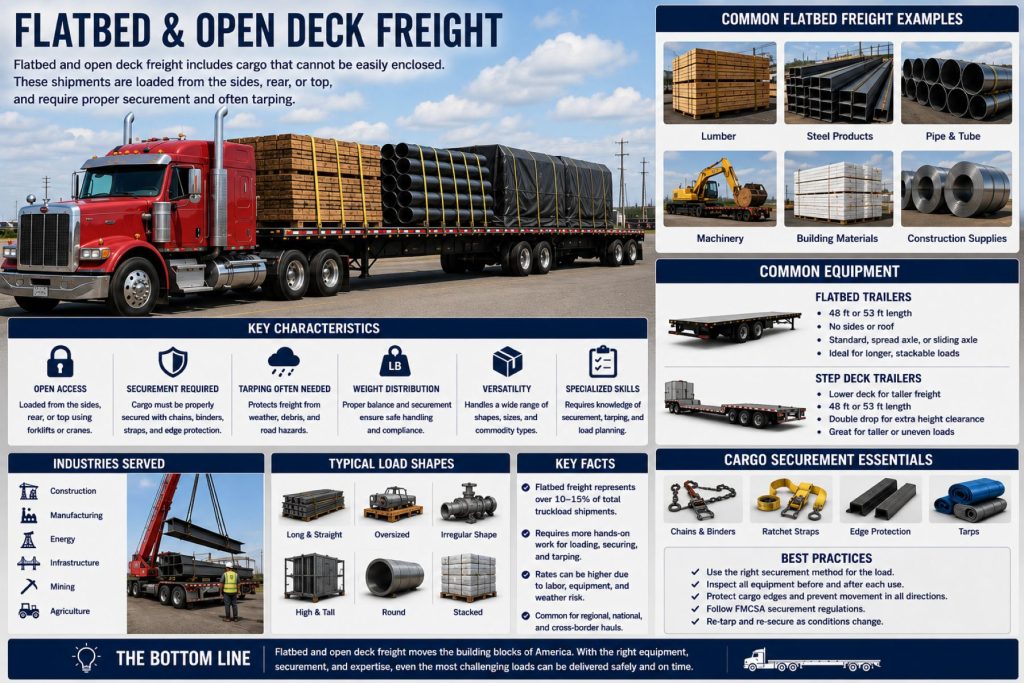
Flatbed Freight includes cargo that cannot easily be loaded into enclosed trailers.
Open-deck trailers allow freight to be loaded from the sides, rear, or top.
Common Flatbed Freight Examples
- Lumber
- Steel products
- Pipe
- Building materials
- Machinery
- Construction supplies
Common Equipment
- Flatbed Trailers
- Step Deck Trailers
- Cargo securement equipment
Industries Served
- Construction
- Manufacturing
- Energy
- Infrastructure
Flatbed freight requires specialized cargo securement knowledge and often involves tarping requirements.
Oversized Freight
Oversized Freight exceeds standard legal dimensions for width, height, length, or weight.
Common Oversized Freight Examples
- Construction equipment
- Industrial machinery
- Large tanks
- Fabricated structures
- Manufacturing equipment
Common Equipment
- RGN Trailers
- Lowboy Trailers
- Double Drop Trailers
Industries Served
- Construction
- Mining
- Manufacturing
- Energy
Oversized freight frequently requires permits, route planning, and escort vehicles.
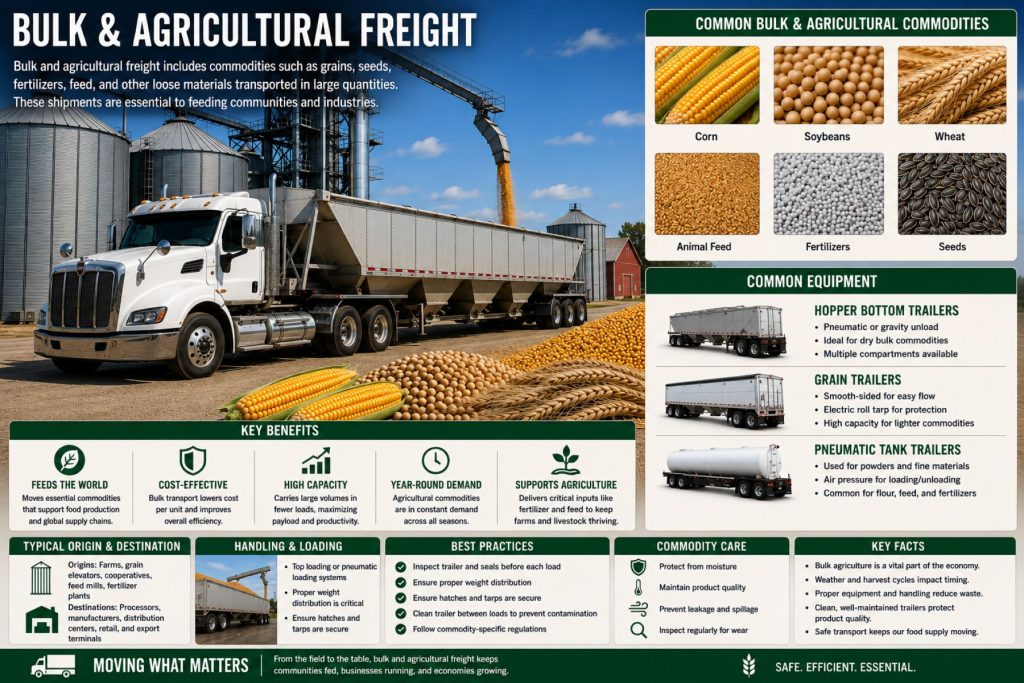
Bulk Freight
Bulk Freight consists of loose commodities transported without individual packaging.
Common Bulk Freight Examples
- Grain
- Corn
- Soybeans
- Feed
- Fertilizer
- Agricultural products
Common Equipment
- Hopper Bottom Trailers
- Pneumatic trailers
- Agricultural transport equipment
Industries Served
- Agriculture
- Food processing
- Commodity trading
Bulk freight plays a vital role in agricultural supply chains throughout North America.
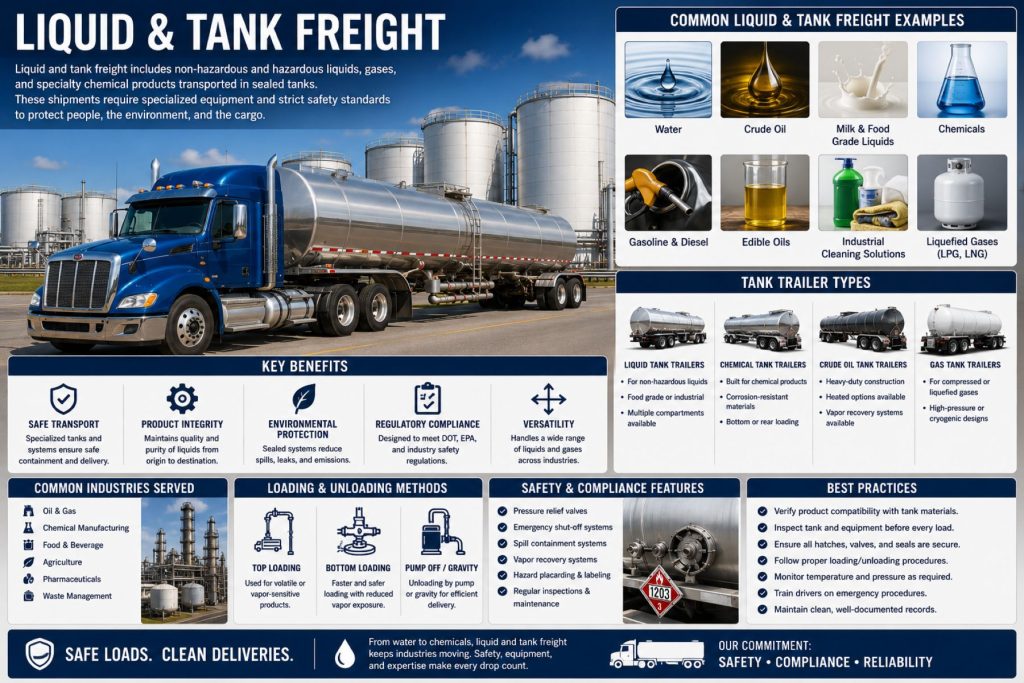
Liquid Freight
Liquid Freight includes commodities transported in specialized tank equipment.
Common Liquid Freight Examples
- Fuel
- Gasoline
- Diesel fuel
- Chemicals
- Water
- Food-grade liquids
- Milk
Common Equipment
- Tank Trailers
- Specialized pumping systems
Industries Served
- Energy
- Agriculture
- Manufacturing
- Food production
Liquid freight often involves strict regulatory compliance and specialized driver training.
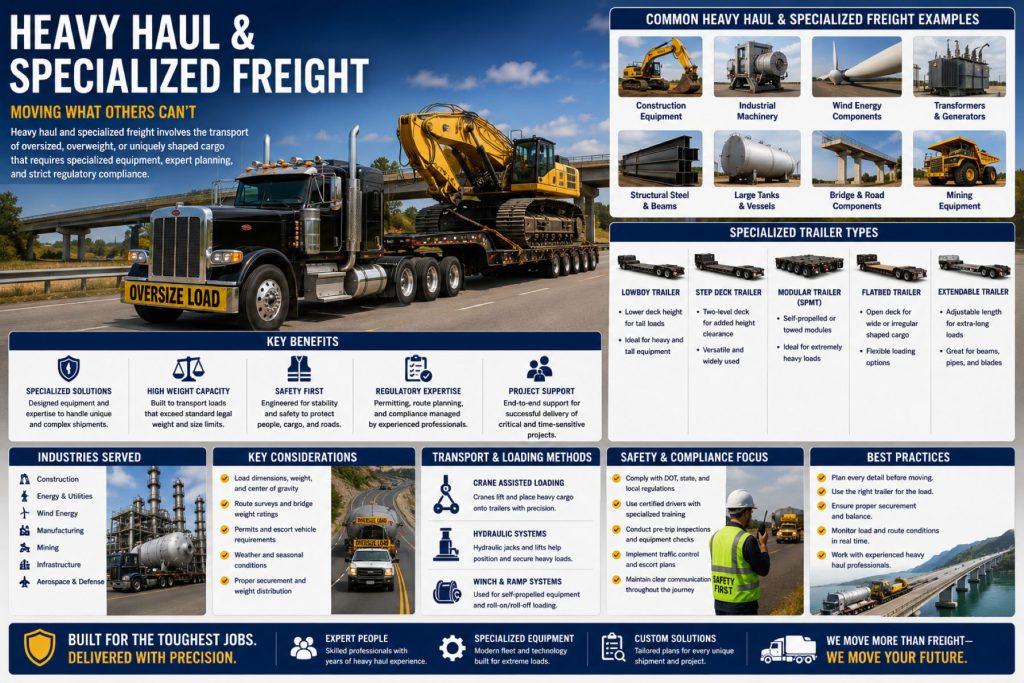
Heavy Haul Freight
Heavy Haul Freight refers to extremely heavy cargo that exceeds normal transportation weights.
Common Heavy Haul Freight Examples
- Bulldozers
- Excavators
- Cranes
- Transformers
- Mining equipment
- Industrial machinery
Common Equipment
- Lowboy Trailers
- RGN Trailers
- Multi-axle heavy haul equipment
Industries Served
- Construction
- Mining
- Energy
- Infrastructure
Heavy haul transportation often requires extensive planning and permit coordination.
Specialized Freight
Some freight categories require highly specialized transportation solutions.
Common Specialized Freight Examples
- Wind turbine components
- Aircraft parts
- Military equipment
- Project cargo
- Industrial modules
- Custom fabricated equipment
Common Equipment
- Specialized heavy haul trailers
- Extendable trailers
- Traveling axle trailers
- Project cargo equipment
Industries Served
- Energy
- Aerospace
- Defense
- Infrastructure
Specialized freight often represents some of the most complex transportation projects in the industry.
How Freight Determines Equipment Selection
Freight type drives nearly every equipment decision within trucking operations.
Truck Selection
Different freight categories may require:
Trailer Selection
Freight characteristics determine trailer requirements.
Examples include:
Cargo Securement
Each freight type has unique cargo securement requirements.
Improper securement can result in:
- Cargo damage
- Accidents
- Regulatory violations
Route Planning
Oversized and specialized freight often require route analysis and permit approvals.
Regulatory Compliance
Different freight categories may require:
- Hazmat endorsements
- Oversize permits
- Weight permits
- Temperature monitoring
- Special inspections
Freight Comparison Table
| Freight Type | Common Equipment | Typical Industries |
|---|---|---|
| Dry Freight | Dry Van Trailer | Retail & Distribution |
| Refrigerated Freight | Reefer Trailer | Food & Healthcare |
| Flatbed Freight | Flatbed Trailer | Construction |
| Oversized Freight | RGN & Lowboy | Heavy Equipment |
| Bulk Freight | Hopper Trailer | Agriculture |
| Liquid Freight | Tank Trailer | Energy & Manufacturing |
| Heavy Haul Freight | Multi-Axle Equipment | Infrastructure |
| Specialized Freight | Specialty Trailers | Project Cargo |
Frequently Asked Questions
What is the most common freight type?
Dry freight is the most common freight category transported throughout North America.
What is considered oversized freight?
Oversized freight exceeds legal width, height, length, or weight limits established by transportation authorities.
What is temperature-controlled freight?
Temperature-controlled freight includes products that require specific temperature ranges during transportation.
What trailer is used for liquid freight?
Tank trailers are the most common equipment used for liquid freight transportation.
What freight typically pays the highest rates?
Heavy haul, oversized, hazardous materials, and specialized project cargo often command higher freight rates due to equipment and expertise requirements.
Related Truck Equipment Atlas Resources
Continue exploring Truck Equipment Atlas:
- Freight Types
- Truck Types
- Trailer Types
- Commercial Truck Engines
- Equipment Systems
- Freight Guides
- Dry Van Trailers
- Refrigerated Trailers
- Flatbed Trailers
- Tank Trailers
- RGN Trailers
- Lowboy Trailers
Final Thoughts
Freight is the driving force behind every transportation decision in the trucking industry. Understanding freight categories helps carriers, drivers, fleet managers, and equipment buyers select the proper trucks, trailers, engines, and support systems needed for safe and efficient operations.
As supply chains continue to evolve, freight specialization will remain a critical part of commercial transportation. Matching the right equipment to the right freight helps improve safety, efficiency, profitability, and long-term operational success.
Related Truck Types
Related Freight Types
- Dry Van Freight
- Refrigerated Freight
- Flatbed Freight
- Heavy Haul & Oversized Freight
- Construction & Aggregate Freight
- Tanker Freight