
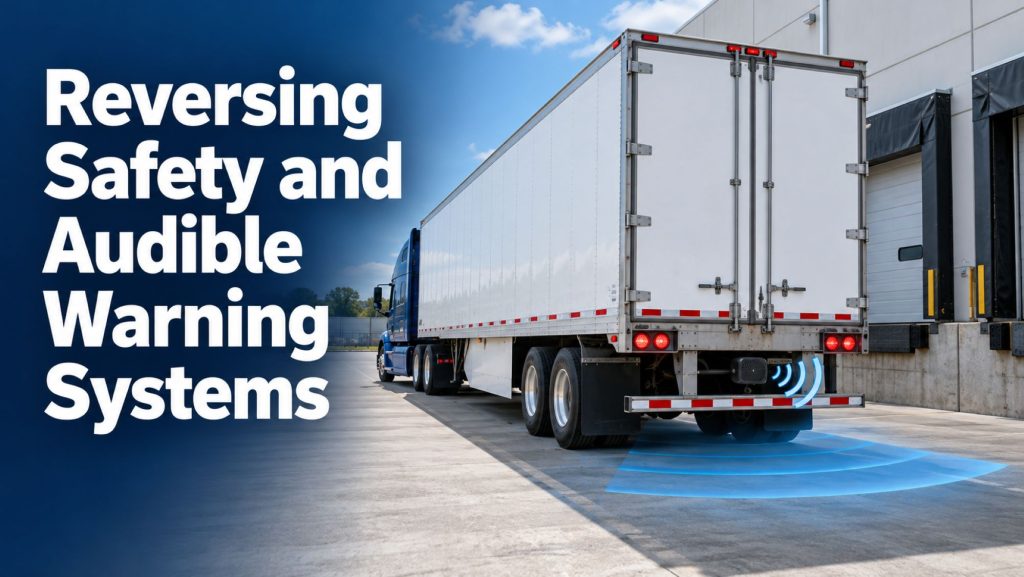
Reversing safety and audible warning systems help commercial fleets manage the visibility challenges associated with backing trucks and trailers. This equipment can warn people near a reversing vehicle, alert the driver to detected obstacles, or provide braking assistance when supported by a compatible installation.
This category includes exterior reversing alarms, rear obstacle detection, in-cab proximity warnings, and reversing collision avoidance systems. Cameras and surround-view equipment can complement these products by helping the driver see the maneuvering area.
Use this page to explore equipment for loading docks, delivery locations, fleet yards, and vocational operations. Compare each product’s actual functions, coverage, and integration requirements before selecting a system for a truck or trailer.
Reversing Safety and Audible Warning Products on Truck Equipment Atlas
The products below perform different tasks. An exterior alarm warns people nearby, while a reversing detection system monitors a defined area and provides information or assistance to the driver.
ZF WABCO
- ZF WABCO TailGUARD Reversing Safety System — rear obstacle detection and warnings, with active braking available through compatible vehicle or trailer configurations.
Brigade Electronics
- Brigade SA-BBS-107 White Sound Reversing Alarm — a self-adjusting broadband exterior alarm that warns people near a reversing vehicle.
How Reversing Safety Systems Work
Reversing equipment commonly uses a reverse-gear signal or another approved activation input. What happens after activation depends on the equipment: an alarm emits sound, a camera displays a view, or detection sensors monitor the area behind the vehicle.
A detection controller evaluates sensor information and issues warnings according to its programmed behavior. Some compatible systems can also request braking when defined intervention conditions are met.
- An approved vehicle input activates the reversing function.
- Exterior alarms warn people in the surrounding area.
- Detection equipment monitors its configured coverage zones.
- In-cab indicators communicate detected conditions to the driver.
- Active braking operates only when specifically supported and correctly integrated.
Exterior Alarms and In-Cab Warnings
Exterior Reversing Alarms
An exterior reversing alarm communicates that a vehicle is reversing. It is intended for people outside the cab and normally does not determine whether an obstacle is present.
In-Cab Detection Warnings
An in-cab warning communicates information from a detection system. Depending on the product, indicators may show a detected object, proximity, an urgent warning, or a system fault.
Complementary Functions
A truck can use both types of warning. An exterior alarm does not establish that the driver has detected a person, and a driver warning does not establish that people outside the vehicle can hear an alarm.
Tonal and Broadband Reversing Alarms
Tonal alarms produce a recognizable repeating tone. Broadband alarms use sound across multiple frequencies. The sound characteristics, mounting arrangement, and operating environment influence how people hear and locate the warning.
Brigade’s White Sound alarms use broadband sound intended to help people identify the source of a reversing warning while reducing unnecessary sound spread beyond the immediate hazard area. Actual audibility still depends on the installation and surrounding conditions.
- Compare the alarm’s sound pattern and intended application.
- Evaluate audibility where people may approach the vehicle.
- Consider walls, parked vehicles, and equipment that can affect sound transmission.
- Review the site’s background noise and operating procedures.
Fixed-Output and Self-Adjusting Alarms
Fixed-output alarms operate at a specified sound output. Self-adjusting alarms respond to surrounding noise within their designed operating range.
The Brigade SA-BBS-107 is offered as a self-adjusting White Sound alarm. Confirm the current part number, electrical requirements, and installation instructions when ordering, particularly when comparing regional catalogs or similarly named fixed-output products.
Neither alarm type should be selected solely by choosing the highest advertised sound level. Evaluate the complete installation in the fleet’s actual operating environment.
Rear Obstacle Detection Technologies
Reversing detection equipment can use ultrasonic sensors, radar, or camera processing. Each approach has defined target capabilities and operating limits. A sensor’s position and orientation determine which areas it can monitor.
TailGUARD trailer configurations use ultrasonic sensing and require compatible electronic braking equipment for autonomous braking. Other reversing products may provide warnings without a connection to the braking system.
- Ultrasonic detection: Uses reflected sound to monitor nearby objects within the configured sensing area.
- Radar detection: Uses reflected radio signals, with target capabilities determined by the specific equipment.
- Camera-based detection: Processes images to identify supported objects or people.
- Camera visibility: Provides a live view; automatic detection is a separate function.
Warning-Only Systems and Active Braking
Warning-only systems require the driver to respond to an alert. Active reversing systems can additionally apply braking when their operating conditions and integration requirements are satisfied.
Do not assume that adding rear sensors creates automatic braking. The controller, braking hardware, software, and vehicle or trailer configuration must support that function. Check the installed system’s documentation for activation conditions and limitations.
Major System Components
- Exterior alarm: A sound-producing unit mounted to warn people near the reversing vehicle.
- Detection sensors: Rear-mounted sensing equipment selected for the application.
- Controller: Electronics that process detection information and manage supported outputs.
- Driver interface: A display, warning indicator, or audible device inside the cab.
- Activation inputs: Approved signals indicating reverse operation or other required vehicle conditions.
- Wiring and connectors: Protected connections for power, communication, and warning outputs.
- Braking interface: Compatible equipment required by systems with active intervention.
Truck and Trailer Coverage
Coverage must be evaluated at the rear of the vehicle that is actually reversing. Equipment mounted on the tractor does not automatically monitor the area behind a connected trailer.
Trailer interchange also matters. A fleet should identify which trailers have detection equipment, how warnings reach the driver, and whether each tractor-trailer pairing supports the intended functions.
- Review rear corners and the area directly behind the vehicle.
- Check coverage around liftgates, underride guards, and projecting equipment.
- Consider changes caused by doors or movable body equipment.
- Confirm compatibility across the fleet’s tractor and trailer combinations.
- Identify areas outside the sensors’ documented coverage.
Loading Dock and Distribution Applications
Distribution operations involve backing toward docks, navigating parked trailers, and maneuvering near employees and other vehicles. Rear detection and camera visibility can provide additional information during these tasks.
Review how the equipment behaves near dock structures and during the final approach. Detection warnings should be understood alongside the fleet’s docking procedure, including any manufacturer-approved settings for the application.
Delivery and Vocational Applications
Delivery trucks, dump trucks, refuse vehicles, and utility fleets may reverse in locations with changing traffic, pedestrians, and background noise. Body design and mounted equipment can affect both sensor coverage and alarm performance.
Select equipment around the actual vehicle layout and operating conditions. A reversing installation on a dry van trailer may require a different arrangement from one on a dump body or a truck with a rear liftgate.
Common Specifications to Compare
- Warning, detection, visibility, and braking functions actually included.
- Sensor coverage, supported targets, and operating conditions.
- Alarm sound pattern and fixed or self-adjusting output.
- Electrical supply and activation requirements.
- Environmental protection and mounting requirements.
- Driver display and audible warning options.
- Brake-system compatibility for active reversing equipment.
- Setup procedures, diagnostic support, and replacement parts.
Installation and System Setup
Follow the manufacturer’s mounting and wiring instructions. Exterior alarms need an appropriate sound path, while detection sensors need the specified position, orientation, and clearance.
Protect wiring from abrasion, road debris, water exposure, and moving equipment. Active braking installations require the approved integration and commissioning process rather than a general accessory installation.
After installation, verify activation, warnings, fault indications, and detection coverage using the manufacturer’s approved test procedure.
Operating Limits and Safe Backing Procedures
An alarm does not guarantee that people hear it or move away. A detection system does not guarantee that every person or obstacle will be detected. A clear camera image also does not establish that the entire maneuvering area is visible.
- Assess the backing area before beginning the maneuver.
- Use mirrors, direct observation, and available camera views.
- Follow the fleet’s spotter procedures when a spotter is used.
- Stop when visibility or communication is lost.
- Understand system faults and unavailable functions.
- Maintain control of the vehicle throughout the maneuver.
Common Problems and Inspection Points
- An exterior alarm that does not activate during the required operating condition.
- Blocked sound outlets or poorly positioned alarms.
- Dirty, damaged, or obstructed detection sensors.
- Loose brackets or changed sensor alignment.
- Damaged wiring, corroded connectors, or poor power connections.
- Missing activation signals or incorrect configuration.
- Driver display faults or unavailable braking assistance.
Maintenance and Driver Familiarization
Include reversing equipment in the fleet’s inspection and maintenance process. Check visible condition, secure mounting, alarm operation, and system status using appropriate procedures.
Drivers should understand the difference between an exterior alarm, a proximity warning, and active braking. Training should cover warning meanings, coverage limits, fault reporting, and the procedures to follow when equipment is unavailable.
Related Vehicle and Trailer Types
- Day Cab Trucks
- Sleeper Trucks
- Vocational Trucks
- Dry Van Trailers
- Refrigerated and Reefer Trailers
- Flatbed Trailers
- Tanker Trailers
Selecting a Reversing Safety or Audible Warning System
Start by identifying the task the equipment must perform. Warning people outside the truck, detecting obstacles behind a trailer, and displaying a camera image are separate needs that may call for complementary products.
- Identify the vehicle, body, and trailer configurations involved.
- Define whether the installation needs an alarm, detection, visibility, or active braking.
- Review coverage and audibility in representative operating locations.
- Confirm electrical and brake-system compatibility.
- Evaluate mounting locations around doors, liftgates, and rear equipment.
- Plan commissioning, inspection, driver training, and service support.
- Assess a representative installation before expanding across the fleet.
Related Camera and Detection Products
These products address related visibility or detection needs. Confirm the supported viewing areas and warning functions rather than assuming every product provides dedicated rear obstacle detection.
- Brigade Backeye 360 Camera System
- Brigade Backeye 360 AI Camera System
- Stoneridge MirrorEye Camera Monitor System
- Mobileye Shield+ Blind-Spot Detection System
Related Safety System Categories
- Safety Systems
- Collision Warning and Automatic Emergency Braking Systems
- Adaptive Cruise Control Systems
- Lane Departure Warning and Lane Keeping Systems
- Blind-Spot and Vulnerable Road User Detection Systems
- Camera Monitor and Surround-View Systems
Related Safety System Guides
- Safety System Guides
- How Commercial Truck Safety Systems Work
- How to Choose a Commercial Truck Safety System
- Blind-Spot Detection and Camera Monitor Systems Explained
- Collision Warning and Automatic Emergency Braking Explained
- Lane Departure Warning and Lane Keeping Assistance Explained
- Adaptive Cruise Control for Commercial Trucks Explained
Related Truck Equipment Resources
- Equipment Systems
- Electrical Systems
- Brake Systems
- ABS and Electronic Braking Systems
- Telematics and ELD Systems
- AI Dash Cameras and Video Telematics
Reversing Safety and Audible Warning Library Expansion
This library will expand with additional reversing alarms, rear detection products, installation information, and application guides. Product pages will distinguish exterior warnings, driver alerts, camera visibility, and active braking capabilities.
Explore the Complete Safety Systems Library
- Explore Safety Systems
- Explore Safety System Guides
- Explore Commercial Trucks
- Explore Commercial Trailers
Follow the Growth of Truck Equipment Atlas
Truck Equipment Atlas continues to grow with new equipment profiles, system categories, and guides for commercial trucking.