
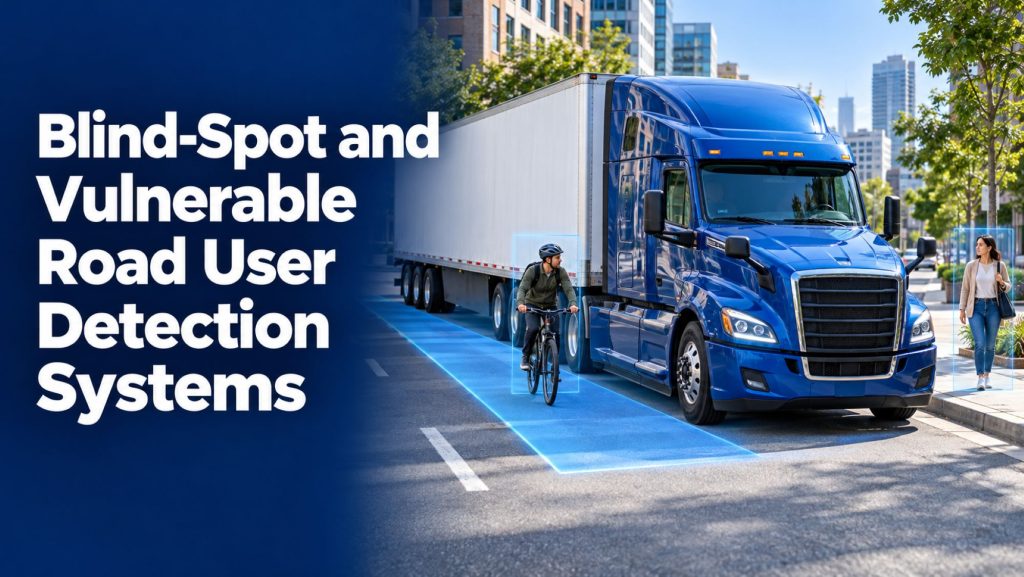
Blind-spot and vulnerable road user detection systems help commercial truck drivers monitor areas that can be difficult to see directly or through mirrors. Depending on the equipment, these systems can warn about vehicles in adjacent lanes, pedestrians beside the cab, cyclists near a turning truck, or people around a vehicle during low-speed maneuvering.
This category includes side-mounted radar systems, camera-based pedestrian and cyclist detection, and camera systems with automatic human detection. Coverage, operating conditions, warning behavior, and installation requirements vary by product and vehicle configuration.
Use this page to explore related products, understand the differences between detection technologies, and compare equipment for highway tractors, delivery trucks, and vocational fleets. These systems support an attentive driver and must be used alongside mirrors, direct observation, and established operating procedures.
Blind-Spot and Vulnerable Road User Detection Products on Truck Equipment Atlas
The products below represent different approaches to monitoring blind spots. A side-object warning system should not be assumed to provide the same pedestrian recognition or coverage as a dedicated vulnerable road user detection system.
Bendix
- Bendix BlindSpotter Radar System — radar-based side-object detection that supports driver awareness during lane changes and other maneuvers.
ZF WABCO
- ZF WABCO OnSideALERT Blind-Spot Detection System — radar-based warnings for monitored side zones, with functions dependent on the installed configuration.
Mobileye
- Mobileye Shield+ Blind-Spot Detection System — camera-based pedestrian and cyclist warnings for large commercial vehicles.
Brigade Electronics
- Brigade Backeye 360 AI Camera System — surround-view imaging with human form recognition and driver alerts in configured detection zones.
How Blind-Spot Detection Systems Work
External sensors monitor defined areas around the truck. A controller processes the sensor information and determines whether a warning condition exists. An indicator, display, or speaker then alerts the driver.
Some systems change their warning behavior according to vehicle speed, turn-signal use, or the movement of a detected target. Others use camera processing to recognize people in a monitored area. The operating logic must be checked for the specific system rather than inferred from its general product category.
- Sensors monitor their installed coverage zones.
- The controller evaluates detected objects or recognized road users.
- Vehicle inputs may influence when and how warnings are issued.
- Visual or audible alerts provide information to the driver.
- The driver checks the surroundings and takes the appropriate action.
Blind-Spot Detection and Vulnerable Road User Detection
Blind-spot detection describes monitoring an area that is difficult for the driver to see. Vulnerable road user detection describes identifying road users such as pedestrians or cyclists. A system can provide one function, both functions, or different functions in different operating modes.
Side-Object and Adjacent-Lane Detection
These systems help the driver recognize traffic or objects beside the vehicle. Highway applications commonly focus on adjacent-lane awareness during passing and lane changes. Target recognition and low-speed performance depend on the sensor generation and configuration.
Pedestrian and Cyclist Detection
Dedicated systems can use camera processing or appropriately designed radar equipment to detect vulnerable road users in specified zones. Confirm which targets the product is designed to detect and whether its functions remain available under the expected lighting, speed, and maneuvering conditions.
Radar-Based and Camera-Based Detection
Radar-Based Systems
Radar systems transmit radio signals and analyze their reflections to detect targets. Side-mounted radar equipment can support adjacent-lane monitoring without requiring the driver to watch a live camera image. Detection behavior depends on sensor position, target characteristics, and the system’s processing logic.
Camera-Based Systems
Camera-based detection analyzes images from external cameras. Some products identify pedestrians or cyclists and provide warnings, while others recognize human forms around the vehicle. Camera visibility can be affected by contamination, obstruction, glare, and environmental conditions.
Combined Equipment
A fleet may use radar warnings alongside camera views to support different tasks. Installing both technologies does not automatically create a fused system. Confirm whether the products exchange information or operate independently.
Major System Components
- External sensors: Side radar units, cameras, or other approved detection hardware.
- Processing equipment: A dedicated controller or processing electronics incorporated into a sensor or camera.
- Driver indicators: Warning lamps or displays positioned within the driver’s normal viewing area.
- Audible warnings: Speakers or warning outputs that communicate defined alert conditions.
- Wiring and interfaces: Power connections, vehicle inputs, and communication links required by the installation.
- Mounting hardware: Brackets and protective components that maintain the specified sensor position.
Detection Zones and Vehicle Coverage
A detection zone is the area monitored by a particular sensor or system configuration. Coverage should be reviewed against the complete vehicle, including the cab, body, trailer, and equipment that may obstruct a sensor.
A tractor-mounted sensor should not be assumed to monitor the full length of every trailer. Articulation changes the relationship between the tractor and trailer, and different trailer lengths or body designs can change the areas that require attention.
- Check which side or sides of the vehicle are monitored.
- Review coverage near the cab and along the vehicle body.
- Identify gaps near wheels, steps, mounted equipment, and trailer corners.
- Confirm whether front or rear detection requires additional equipment.
- Evaluate the configuration with the trailers and bodies actually used by the fleet.
Highway and Regional Truck Applications
Highway tractors and regional trucks frequently operate beside passenger vehicles that can remain outside the driver’s direct view. Side detection can provide additional information during merging, passing, and lane changes.
For these applications, compare adjacent-lane coverage, warning placement, turn-signal behavior, and the system’s treatment of stationary roadside objects. Confirm the operating modes available at highway and lower speeds.
Urban Delivery and Turning Applications
Delivery trucks may encounter pedestrians and cyclists near intersections, loading areas, and curbside stops. The area beside the cab and the path followed by the truck body during a turn deserve particular attention.
Evaluate whether the selected equipment is designed to recognize vulnerable road users in these situations. An adjacent-lane warning system intended primarily for moving vehicles may have different capabilities from a dedicated pedestrian and cyclist detection system.
Vocational and Worksite Applications
Dump trucks, utility trucks, refuse vehicles, and service fleets often operate close to workers and parked equipment. Vehicle bodies and accessories can create additional visibility challenges, especially during low-speed maneuvering.
Review mounting locations around toolboxes, tanks, outriggers, and other equipment. Coverage should be evaluated in the vehicle’s relevant operating configurations, including situations where mounted equipment changes position.
Common Specifications to Compare
- Supported target types, including vehicles, pedestrians, and cyclists.
- Detection-zone dimensions and sensor field of view.
- Operating speeds and maneuver-specific functions.
- Visual and audible warning behavior.
- Required vehicle inputs and communication interfaces.
- Electrical supply requirements and environmental ratings.
- Mounting, alignment, and calibration procedures.
- Diagnostic tools, replacement parts, and service support.
Vehicle Integration and Retrofit Installation
Some systems are offered through vehicle manufacturers, while others can be installed on approved vehicles already in service. Retrofit suitability depends on the specific truck, body layout, electrical system, and available mounting locations.
Verify compatibility before selecting equipment. Do not assume that a product used on one model year or cab configuration can be transferred to another vehicle without revised wiring, mounting, programming, or setup.
Sensor Mounting and Calibration
Sensor height, angle, orientation, and surrounding clearance influence the monitored area. Follow the manufacturer’s installation procedure and use the required setup tools.
Body repairs, bracket replacement, collision damage, or changes to nearby accessories may require inspection and renewed alignment or calibration. A sensor that appears secure can still be positioned incorrectly.
Warning Systems and Active Intervention
A warning system alerts the driver to a detected condition. Active intervention involves a separate capability, such as steering correction or braking, that must be specifically supported by the installed equipment.
Do not assume a blind-spot warning will steer the truck away from traffic or stop it before contact. Detection, warning, and vehicle control are distinct functions. The product documentation should identify exactly which functions are present.
Operating Limits and Driver Responsibilities
Detection equipment has defined operating limits. A target can be outside the coverage zone, obscured by another object, or difficult for the system to recognize. The absence of an alert does not establish that a maneuver is safe.
- Continue checking mirrors and the surrounding area before maneuvering.
- Understand the system’s supported targets and operating conditions.
- Keep sensor faces and camera lenses clear.
- Recognize fault indications and report unavailable functions.
- Follow established procedures for spotters and restricted-visibility maneuvers.
Common Problems and Inspection Points
- Contamination or obstruction on a sensor or camera.
- Loose, damaged, or incorrectly positioned mounting brackets.
- Damaged wiring, poor connections, or water intrusion.
- Missing or incorrect vehicle inputs.
- Display or speaker faults that prevent warnings from reaching the driver.
- Changed bodywork or accessories that interfere with coverage.
- Incorrect configuration following repairs or component replacement.
Maintenance and Driver Training
Include visible sensor condition, mounting security, and warning-system status in the fleet’s inspection process. Clean components using the manufacturer’s approved methods and arrange service when damage or faults are found.
Driver familiarization should cover indicator meanings, audible alerts, unavailable-system messages, and coverage limits. Use the manufacturer’s approved demonstration procedure to explain operation without exposing people to a moving vehicle.
Related Vehicle and Trailer Types
- Day Cab Trucks
- Sleeper Trucks
- Vocational Trucks
- Dry Van Trailers
- Refrigerated and Reefer Trailers
- Flatbed Trailers
Selecting a Blind-Spot or Vulnerable Road User Detection System
Begin with the fleet’s operating environment and the areas that require monitoring. Highway lane-change awareness, urban cyclist detection, and worker recognition around a vocational truck can require different equipment.
- Identify the maneuvers and road users the system must address.
- Review documented coverage on the actual truck and body configuration.
- Confirm target recognition and operation at the required speeds.
- Evaluate warning visibility and audibility in the cab.
- Confirm installation, calibration, and ongoing service requirements.
- Plan driver training and a process for reporting faults.
- Review a representative installation before expanding across the fleet.
Related Visibility Products
Camera visibility products can complement detection equipment. A live camera view alone does not establish that automatic object recognition or warnings are included.
Related Safety System Categories
- Safety Systems
- Collision Warning and Automatic Emergency Braking Systems
- Adaptive Cruise Control Systems
- Lane Departure Warning and Lane Keeping Systems
- Reversing Safety and Audible Warning Systems
- Camera Monitor and Surround-View Systems
Related Safety System Guides
- Safety System Guides
- How Commercial Truck Safety Systems Work
- Blind-Spot Detection and Camera Monitor Systems Explained
- How to Choose a Commercial Truck Safety System
- Collision Warning and Automatic Emergency Braking Explained
- Lane Departure Warning and Lane Keeping Assistance Explained
- Adaptive Cruise Control for Commercial Trucks Explained
Related Truck Equipment Resources
- Equipment Systems
- Electrical Systems
- Brake Systems
- Drivelines and Steering Systems
- Telematics and ELD Systems
- AI Dash Cameras and Video Telematics
Blind-Spot and Vulnerable Road User Detection Library Expansion
This library will expand with additional side-detection products, pedestrian and cyclist warning equipment, installation information, and application guides. Product pages will distinguish detection coverage, warning functions, and any separately supported vehicle intervention features.
Explore the Complete Safety Systems Library
- Explore Safety Systems
- Explore Safety System Guides
- Explore Commercial Trucks
- Explore Commercial Trailers
Follow the Growth of Truck Equipment Atlas
Truck Equipment Atlas continues to grow with new equipment profiles, system categories, and guides for commercial trucking.