
Day Cab Trucks
Overview
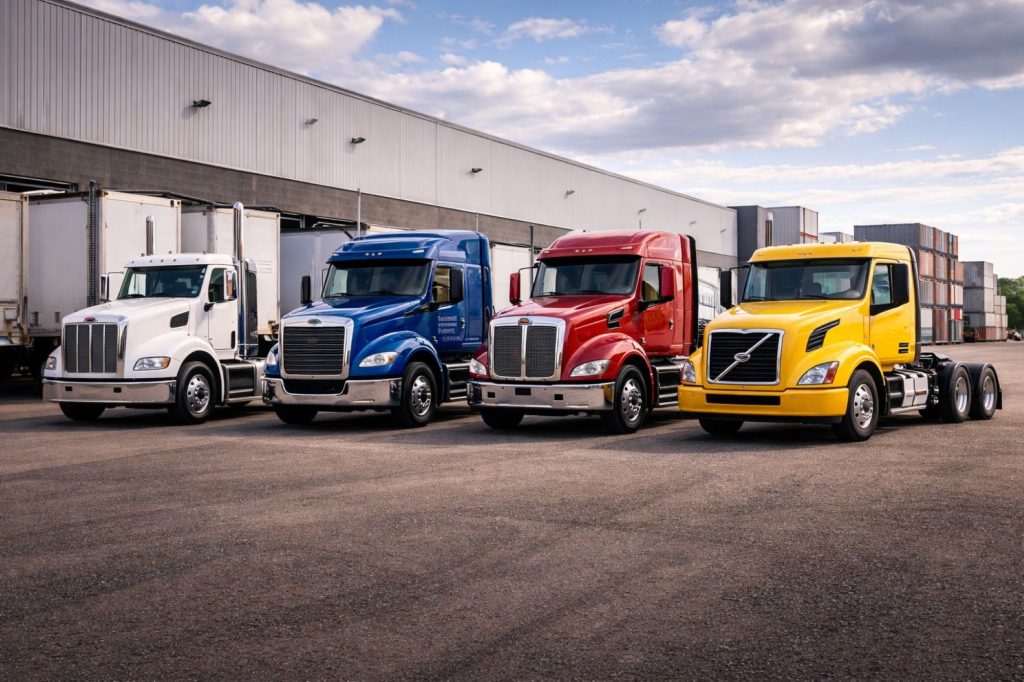
Day cab trucks are designed for operations where drivers return home at the end of each shift. Unlike sleeper trucks, day cabs do not include a sleeping compartment, making them lighter, more maneuverable, and better suited for short haul and regional applications.
These trucks are widely used in local delivery, port operations, and dedicated regional routes where overnight travel is not required.
As logistics networks continue to rely on efficient short distance freight movement, day cab trucks play a critical role in keeping goods moving within cities and between nearby regions.
Key Characteristics
Day cab trucks are built for efficiency, accessibility, and ease of operation in tighter environments.
• No sleeper compartment behind the cab
• Shorter wheelbase for improved maneuverability
• Lighter overall weight compared to sleeper trucks
• Optimized for frequent stops and shorter routes
• Easier access to cab for drivers entering and exiting frequently
Common Configurations
Day cab trucks come in a variety of configurations depending on the type of work and trailer pairing.
• Single axle or tandem axle setups
• Aerodynamic highway day cabs
• Vocational-style day cabs for specialized work
• Yard and terminal tractors for short distance movement
Common Uses
Day cab trucks are used in operations where efficiency and turnaround time are more important than long distance comfort.
• Local delivery routes
• Regional freight operations
• Port and drayage work
• LTL (less than truckload) distribution
• Dedicated routes with same-day return
Advantages
Day cab trucks offer several advantages for operations focused on short haul efficiency and urban mobility.
• Lower initial cost compared to sleeper trucks
• Reduced weight allows for higher payload capacity
• Better maneuverability in tight spaces and cities
• Improved fuel efficiency on shorter routes
• Easier maintenance access due to simpler cab design
Limitations
While day cabs are highly efficient for short routes, they are not suited for long haul operations.
• No onboard sleeping area for extended trips
• Limited storage space inside the cab
• Not practical for team driving
• Reduced driver comfort for long hours compared to sleepers
Driver and Operator Considerations
Day cab trucks are ideal for drivers who prefer consistent schedules and returning home daily. Comfort is still important, but the focus shifts toward ergonomics, visibility, and ease of operation rather than long term living space.
Operators should consider route density, stop frequency, and urban driving conditions when selecting a day cab configuration. The right setup can significantly improve efficiency and reduce operational costs.
Maintenance and Ownership Notes
Day cab trucks typically experience frequent start and stop cycles, which can impact wear on certain components.
• Brake systems may wear faster due to frequent stops
• Engine performance should be monitored for stop-and-go conditions
• Regular inspections help maintain uptime in high-use environments
• Simpler cab structure can reduce long term maintenance costs
Fleet operations often favor day cabs for their lower cost of ownership and reliability in regional applications.
Day Cab Truck Models
The following trucks covered by Truck Equipment Atlas are available in, or commonly associated with, day cab configurations. Availability may vary by model year and application.
Freightliner Day Cab Trucks
- Freightliner 114SD
- Freightliner 122SD
- Freightliner Cascadia
- Freightliner Classic
- Freightliner Coronado
- Freightliner M2 106
International Day Cab Trucks
- International HX Series
- International HX620
- International LoneStar
- International LT Series
- International MV Series
Kenworth Day Cab Trucks
Mack Day Cab Trucks
Peterbilt Day Cab Trucks
Volvo Day Cab Trucks
Western Star Day Cab Trucks
Freight & Industry Sectors
• Dry Van Freight
• Intermodal & Container Freight
• Construction & Aggregate Freight
• Bulk & Pneumatic Freight
• Liquid & Tanker Freight
Related Trailer Types
Related Truck Types
Related Equipment
• Engines
• Transmissions
• Brake Systems
• Suspension Systems
• Electrical Systems
How to Use This Section
Each truck category leads to more detailed pages that break down specific models, configurations, and real world applications.
As the platform grows, this section will serve as a central reference point for understanding how day cab trucks compare to other truck types and where they fit within different freight operations.
What You’ll Find on Day Cab Truck Pages
Each individual day cab truck page on Truck Equipment Atlas follows a standardized structure to ensure consistency across the platform.
This includes:
• Overview and real world use
• Key characteristics and specifications
• Advantages and limitations
• Driver and operator considerations
• Maintenance and ownership insights
• Comparison to similar trucks
• Best fit applications and industries
This structure allows users to quickly evaluate which trucks best match their needs.
Looking Ahead
The Day Cab Trucks section will continue to expand as new models and configurations are added.
Future expansion will include:
• Detailed model breakdowns
• Regional performance comparisons
• Fuel efficiency analysis
• Operational cost comparisons
Follow the Growth of Truck Equipment Atlas
Truck Equipment Atlas continues to expand with new truck profiles, trailer coverage, diesel engine pages, equipment system resources, manufacturer information, freight-sector content, and educational guides.
Visit our Site Updates page to follow major milestones, newly published resources, and future projects as we continue building one of the industry’s growing commercial trucking equipment reference libraries.
From commercial trucks and specialized trailers to diesel engines, equipment systems, and future Truck Stop Atlas resources, new content is being added regularly to help drivers, owner-operators, fleets, technicians, students, and industry professionals better understand the equipment that keeps freight moving.
Explore the Latest Site Updates
Stay Connected
As new truck types and models are added, this section will continue to evolve into a comprehensive reference for trucking equipment.