
Wilson Step Deck Trailer
Quick Facts
- Manufacturer: Wilson Trailer Company
- Trailer Type: Step Deck Trailer
- Model: Wilson Step Deck Trailer
- Common Lengths: 48 ft, 53 ft
- Common Width: 102 inches (8.5 ft)
- Trailer Construction: All-Aluminum Construction
- Common Axle Configurations: Tandem Axle, Spread Axle, Closed Tandem, Triple Axle
- Upper Deck Length: Approximately 10 ft to 11 ft
- Lower Deck Length: Approximately 37 ft to 43 ft
- Typical Deck Height: Approximately 36–40 inches
- Typical GVWR: Up to 80,000 lbs Combined Vehicle Weight (subject to applicable regulations)
- Typical Cargo Capacity: Up to 50,000+ lbs depending on configuration
- Flooring Types: Apitong Hardwood Flooring
- Primary Applications: Construction Equipment, Machinery, Agricultural Equipment, Industrial Freight, Steel Products
- Common Freight Types: Tractors, Skid Steers, Machinery, Building Materials, Industrial Equipment, Steel Products
- Load Securement Options: Stake Pockets, Winches, Chain Tie Downs, Rub Rails, D-Rings
- Production Status: In Production
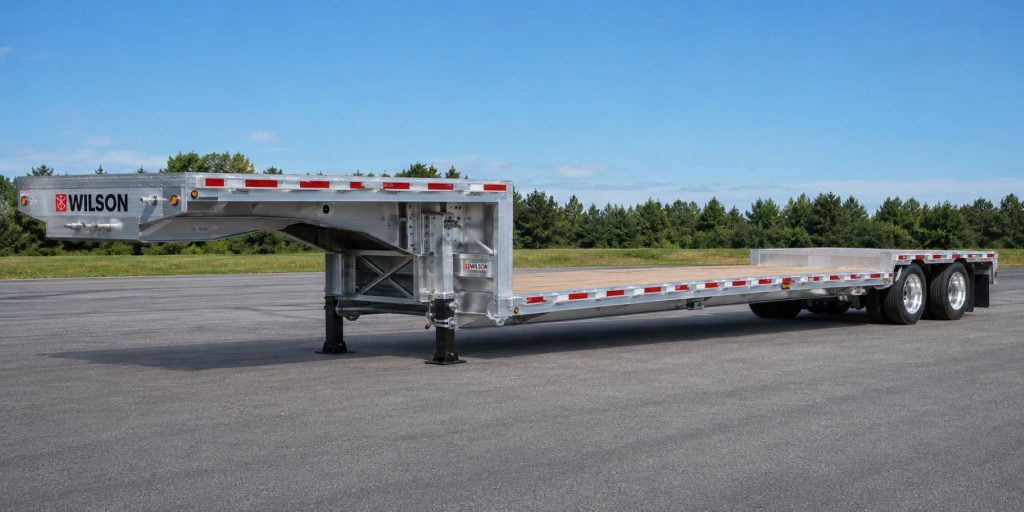
Overview
The Wilson Step Deck Trailer is a lightweight aluminum step deck trailer designed for operators who require maximum payload capacity while maintaining the flexibility needed for specialized freight transportation. Wilson Trailer has built a strong reputation throughout North America for manufacturing durable aluminum trailers that balance strength, longevity, and weight savings.
The step deck configuration allows freight to sit lower than a traditional flatbed trailer, creating additional legal height clearance for taller cargo. This makes the Wilson Step Deck particularly popular among equipment haulers, agricultural carriers, machinery transporters, and specialized freight operators.
Its lightweight aluminum construction helps maximize payload capacity while providing excellent corrosion resistance and long-term durability.
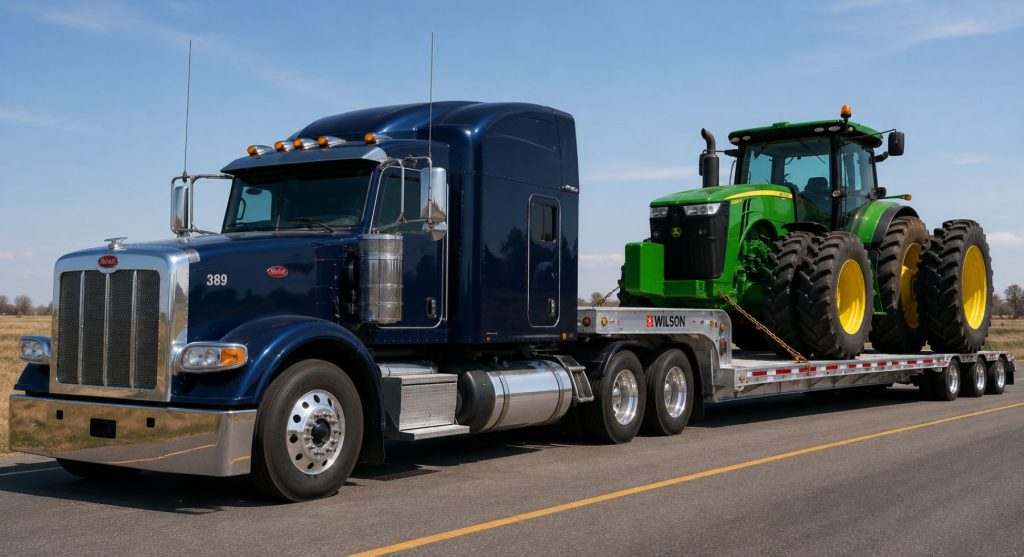
Key Characteristics
The Wilson Step Deck combines the payload advantages of aluminum construction with the versatility of a step deck design. Operators benefit from increased cargo height clearance without moving into specialized trailer categories such as lowboys or RGNs.
Wilson’s engineering focuses heavily on weight reduction while maintaining structural integrity. As a result, many owner operators and fleets choose Wilson trailers when payload efficiency directly impacts profitability.
The trailer is commonly used across agriculture, construction, manufacturing, industrial freight, and equipment transportation sectors.
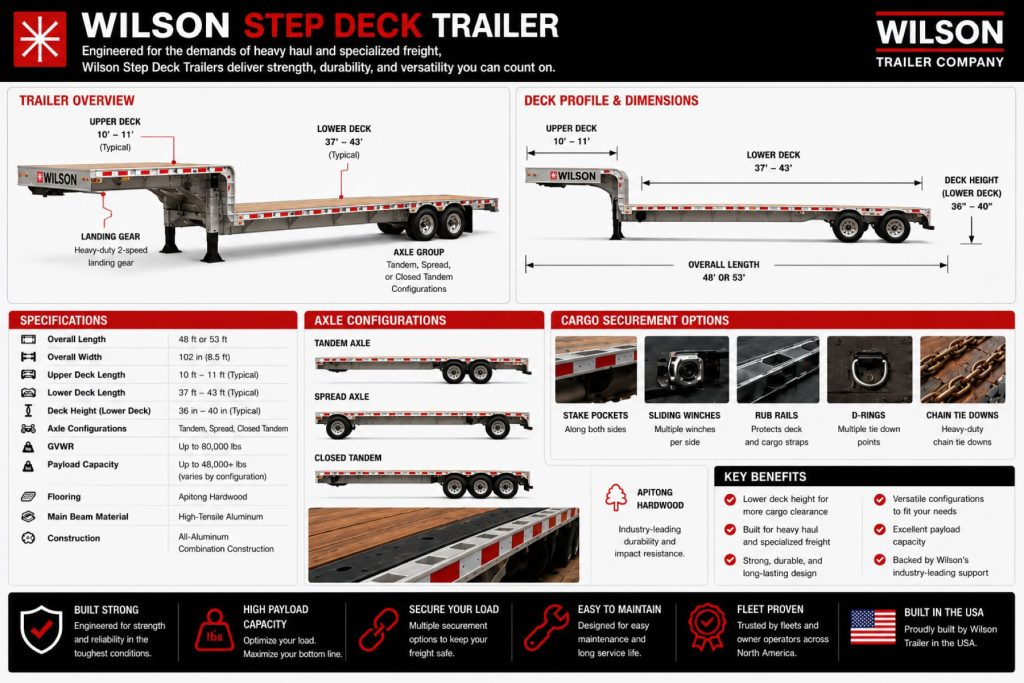
Common Specifications
Overall Length
Available in both 48-foot and 53-foot configurations depending on freight requirements.
Upper Deck
Typically measures approximately 10 to 11 feet in length.
Lower Deck
Generally ranges from 37 to 43 feet depending on trailer specification.
Deck Height
Lower deck height typically falls between 36 and 40 inches, allowing additional freight height clearance.
Construction
All-aluminum trailer construction designed to maximize payload capacity and corrosion resistance.
Flooring
Heavy-duty Apitong hardwood flooring designed for equipment and machinery loading.
Cargo Securement
Available with stake pockets, winches, rub rails, D-rings, chain tie-down points, and additional securement options.
Axle Configurations
Available in tandem axle, spread axle, closed tandem, and triple axle configurations.
Common Applications
- Construction Equipment Transportation
- Agricultural Equipment Hauling
- Machinery Transportation
- Industrial Freight
- Steel Product Transportation
- Building Material Delivery
- Oversized Freight Operations
- Manufactured Product Transportation
- Equipment Rental Fleet Deliveries
- Specialized Freight Operations
Advantages
- Lightweight aluminum construction
- Excellent payload capacity
- Corrosion-resistant design
- Additional cargo height clearance
- Strong resale value
- Excellent durability
- Fleet-proven performance
- Wide freight versatility
Limitations or Considerations
- Higher initial purchase price than some steel trailers
- Aluminum repairs may require specialized facilities
- Not intended for extremely heavy specialized loads handled by lowboys
- Proper securement remains critical for equipment transportation
- Oversized freight may still require permits depending on dimensions
Driver and Operator Considerations
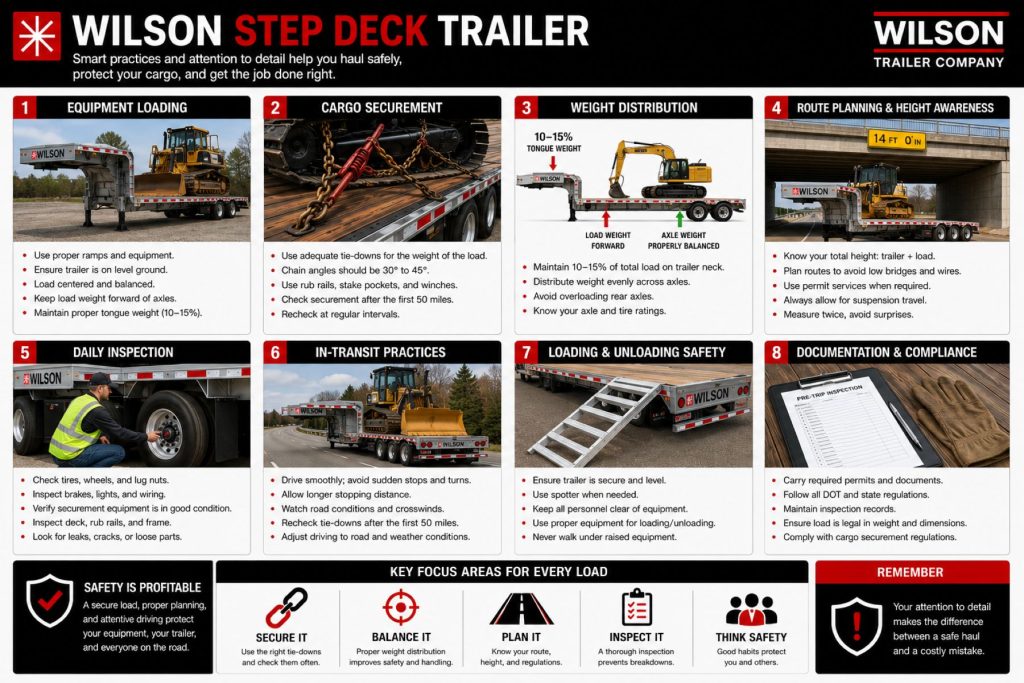
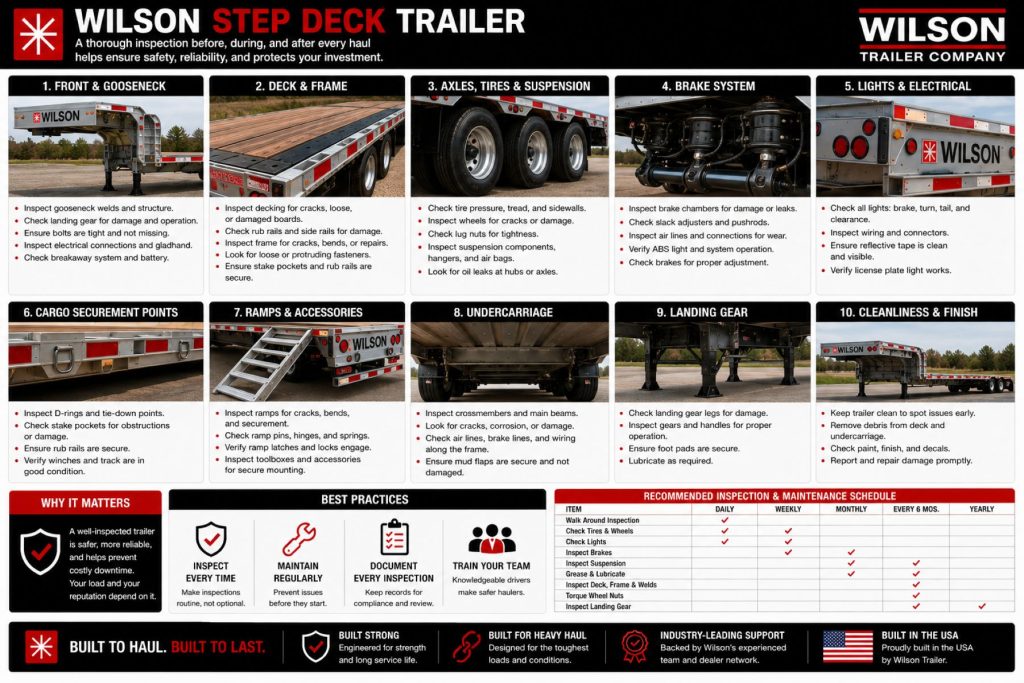
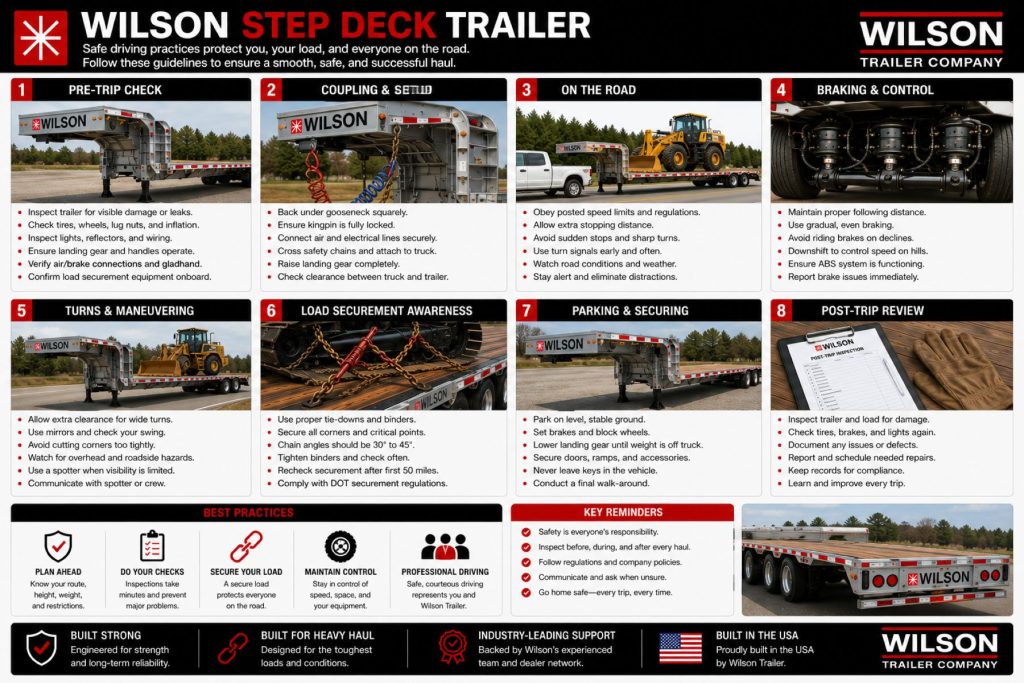
Operating a Wilson Step Deck Trailer requires careful attention to cargo securement, load placement, deck height limitations, and equipment loading procedures. While many operational practices are similar to flatbed hauling, step deck trailers introduce additional considerations involving height management and weight distribution.
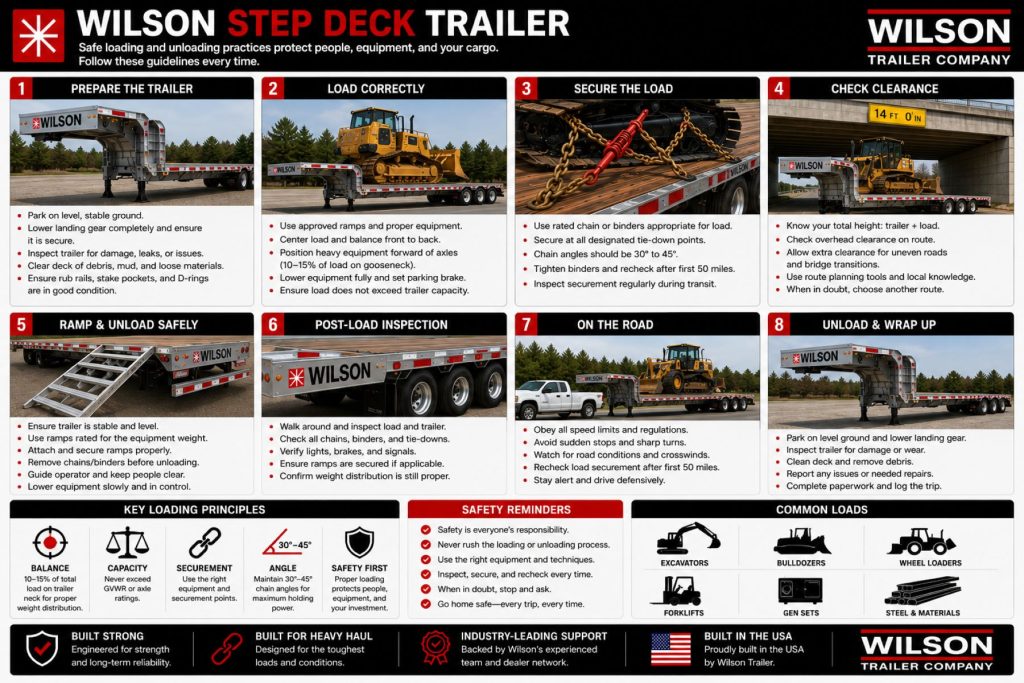
Drivers should verify cargo placement to ensure proper axle loading and maintain compliance with bridge laws and weight regulations. Equipment should be positioned to maximize stability while maintaining safe tongue weight and axle balance.
Pre-trip inspections should include examination of ramps, tie-down points, chains, binders, winches, D-rings, tires, brakes, suspension systems, lighting systems, decking, and securement equipment. Drivers should recheck securement devices periodically during transit, particularly after the first 50 miles.
The Wilson Step Deck’s lightweight construction makes proper weight distribution especially important for maintaining optimal handling and braking performance.
Maintenance and Ownership Notes
Wilson Step Deck trailers are known for their lightweight aluminum construction and excellent corrosion resistance. Routine maintenance should focus on suspension systems, brake systems, wheel ends, tires, decking, lighting systems, cargo securement equipment, and structural inspection points.
Owners should regularly inspect welds, crossmembers, rub rails, stake pockets, D-rings, and ramp assemblies. Preventive maintenance helps maximize trailer lifespan and minimize downtime.
The aluminum construction often results in lower corrosion-related maintenance requirements compared to steel trailers, making Wilson trailers particularly attractive in northern climates and regions where road salt is commonly used.
Many fleets report strong resale value due to Wilson’s reputation for quality construction and long-term durability.
Buying Considerations
- Inspect deck condition and flooring wear
- Verify frame and crossmember integrity
- Check suspension system condition
- Inspect brake components
- Evaluate wheel-end condition
- Inspect aluminum structure for damage
- Review maintenance records
- Inspect ramps and loading equipment
- Check D-rings and securement points
- Verify axle configuration
- Compare payload requirements
- Evaluate resale value
Common Brands or Manufacturers
- Wilson Trailer
- Fontaine Trailer
- Transcraft Trailer
- Doonan Specialized Trailers
- Reitnouer Trailers
- MAC Trailer
Variants and Related Configurations
- 48 ft Wilson Step Deck
- 53 ft Wilson Step Deck
- Spread Axle Configuration
- Closed Tandem Configuration
- Triple Axle Configuration
- Equipment Hauler Package
- Agricultural Equipment Configuration
- Owner Operator Specification Package
Comparison to Similar Trailers
The Wilson Step Deck is commonly compared to the Fontaine Velocity Step Deck, Transcraft Eagle Step Deck, Doonan BlackGold Step Deck, and MAC Step Deck trailers.
Wilson’s primary advantage is its lightweight all-aluminum construction, which can provide additional payload capacity compared to some steel or mixed-construction competitors. This makes the trailer especially attractive for operators whose profitability depends on maximizing cargo weight.
While every fleet’s requirements differ, Wilson has established itself as one of the industry’s premier aluminum trailer manufacturers and remains a popular choice among owner operators and specialized freight carriers.
Best Fit For
- Owner Operators
- Agricultural Equipment Haulers
- Construction Equipment Carriers
- Machinery Transport Companies
- Industrial Freight Operations
- Specialized Freight Carriers
- Regional Equipment Haulers
- Long-Haul Equipment Transport Companies
- Steel Product Haulers
- Payload-Sensitive Freight Operations
Related Equipment
- Cargo Securement Systems
- Trailer Axles
- Trailer Suspension Systems
- Trailer Brake Systems
- Trailer Tires
- Trailer Lighting Systems
- Loading Ramps
- D-Ring Tie Downs
- Chain Tie Downs
- Winch Systems
Related Freight Types
- Heavy Equipment Freight
- Machinery Freight
- Construction Freight
- Agricultural Freight
- Industrial Freight
- Oversized Freight
- Steel Freight
- Specialized Freight
Related Trailer Types
Related Trailer Models
- Fontaine Velocity Step Deck
- Transcraft Eagle Step Deck
- Doonan BlackGold Step Deck
- MAC Step Deck Trailer
- Wilson Flatbed Trailer
Related Guides
- Complete Guide to Trailer Types
- Flatbed vs Step Deck vs Double Drop
- Choosing the Right Trailer for Your Freight
Regulatory and Compliance Notes
Wilson Step Deck trailers must comply with all applicable federal and state regulations governing trailer inspections, brake systems, lighting systems, cargo securement requirements, axle weight limitations, and overall vehicle dimensions.
Operators transporting oversized equipment or over-height loads must also comply with permit requirements and route restrictions when applicable.
Cargo securement must follow FMCSA cargo securement standards and industry best practices.
Real World Operating Notes
Wilson Step Deck trailers are commonly found in agricultural, construction, industrial, and specialized freight operations throughout North America.
Many operators appreciate the combination of lightweight aluminum construction and Wilson’s reputation for long-term durability. The additional payload capacity can provide meaningful advantages for operators hauling freight where every pound matters.
The trailer’s versatility allows it to handle everything from tractors and skid steers to industrial machinery and steel products, making it a valuable asset across multiple freight sectors.
Wilson’s strong dealer network and reputation for quality construction have helped maintain the brand’s popularity among both owner operators and large fleets.
Frequently Asked Questions
What is a Wilson Step Deck Trailer?
The Wilson Step Deck is an aluminum step deck trailer designed for hauling equipment, machinery, industrial freight, agricultural equipment, and specialized cargo.
Why choose a Wilson Step Deck?
Wilson trailers are known for lightweight aluminum construction, corrosion resistance, strong resale value, and excellent payload capacity.
What freight can a Wilson Step Deck haul?
Common freight includes tractors, skid steers, excavators, machinery, industrial equipment, steel products, building materials, and oversized freight.
Is the Wilson Step Deck suitable for long-haul operations?
Yes. The trailer is commonly used in both regional and long-haul specialized freight operations.
What axle configurations are available?
Wilson Step Deck trailers are commonly available in tandem axle, spread axle, closed tandem, and triple axle configurations.
How does the Wilson Step Deck compare to the Fontaine Velocity?
The Wilson emphasizes lightweight aluminum construction and payload efficiency, while the Fontaine Velocity is often recognized for its broader fleet presence and mixed-construction durability.
Are Wilson Step Deck trailers still in production?
Yes. Wilson Trailer Company continues to manufacture and support step deck trailer models.
Do Wilson trailers have strong resale value?
Yes. Wilson trailers are widely recognized for maintaining strong resale value due to their reputation, construction quality, and durability.
What industries commonly use Wilson Step Deck trailers?
Agriculture, construction, manufacturing, industrial transportation, machinery hauling, equipment rental operations, and specialized freight carriers commonly utilize Wilson Step Deck trailers.
Availability and Where to Find
Wilson Step Deck trailers are available through authorized Wilson Trailer dealers, commercial trailer dealerships, fleet resale programs, equipment auctions, used trailer marketplaces, and equipment brokers throughout North America. Availability varies based on configuration, age, condition, and market demand.
Support Trucking Families
Truck Equipment Atlas supports the mission of Grey Cross, a nonprofit dedicated to helping families of truck drivers who lose their lives while on the road. As the site grows, part of its mission is to bring awareness and support to these families.
Podcast or Video Section
Learn More Through Audio and Video
Truck Equipment Atlas will continue expanding with podcast episodes, interviews, and equipment breakdowns to help drivers and fleets better understand trucks and equipment.
Follow the Growth of Truck Equipment Atlas
Truck Equipment Atlas continues to expand with new truck profiles, trailer coverage, diesel engine pages, equipment system resources, manufacturer information, and educational guides.
Visit our Site Updates page to explore recent additions, project milestones, and upcoming resources as we continue building one of the industry’s growing commercial trucking equipment reference libraries.
View the Latest Site Updates: Truck Equipment Atlas Site Updates