
Choosing the Right Trailer for Your Freight
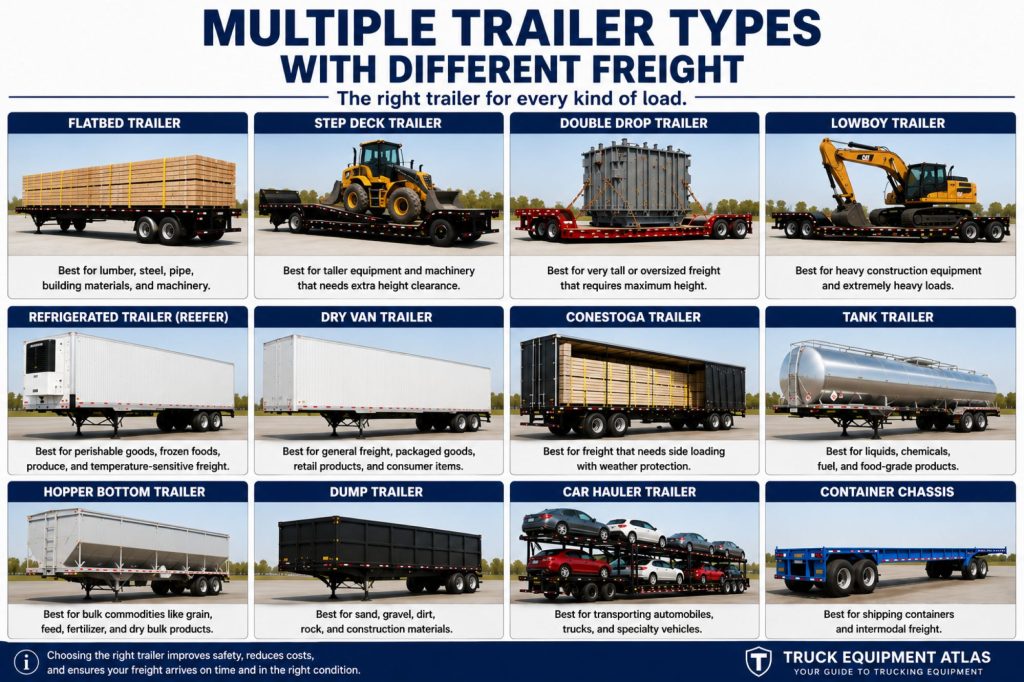
Selecting the right trailer is one of the most important decisions in freight transportation. The trailer you choose affects safety, loading efficiency, permit requirements, operating costs, and whether your cargo can be legally transported.
A trailer that works perfectly for one load may be completely unsuitable for another. For example, a load of lumber may move efficiently on a flatbed trailer, while a tall piece of industrial equipment may require a step deck or double drop trailer. Likewise, food products may require refrigerated trailers, and bulk grain may need hopper bottom trailers.
Understanding trailer types and matching them to the freight being hauled helps carriers, owner-operators, shippers, dispatchers, and equipment buyers make better transportation decisions.
This guide explains the major factors involved in selecting the proper trailer and provides practical examples for various freight types.
Why Trailer Selection Matters
Choosing the wrong trailer can lead to:
- Additional permits
- Delays and reloading
- Increased transportation costs
- Cargo damage
- Reduced safety
- Inability to legally transport the freight
Choosing the correct trailer can improve:
- Operational efficiency
- Safety
- Fuel economy
- Load security
- Driver productivity
- Customer satisfaction
Questions to Ask Before Choosing a Trailer
Before selecting a trailer, ask several important questions.
What Is the Freight?
Different products require different trailer types.
Examples include:
- Building materials
- Machinery
- Food products
- Bulk commodities
- Automobiles
- Hazardous materials
How Much Does It Weigh?
Freight weight determines:
- Trailer capacity requirements
- Axle configurations
- Permit requirements
How Tall Is the Freight?
Height often determines whether a load can move on:
- Flatbed Trailers
- Step Deck Trailers
- Double Drop Trailers
How Will It Be Loaded?
Loading methods may include:
- Forklift loading
- Crane loading
- Ground loading
- Ramp loading
Does the Freight Need Protection?
Some freight requires:
- Temperature control
- Weather protection
- Specialized securement
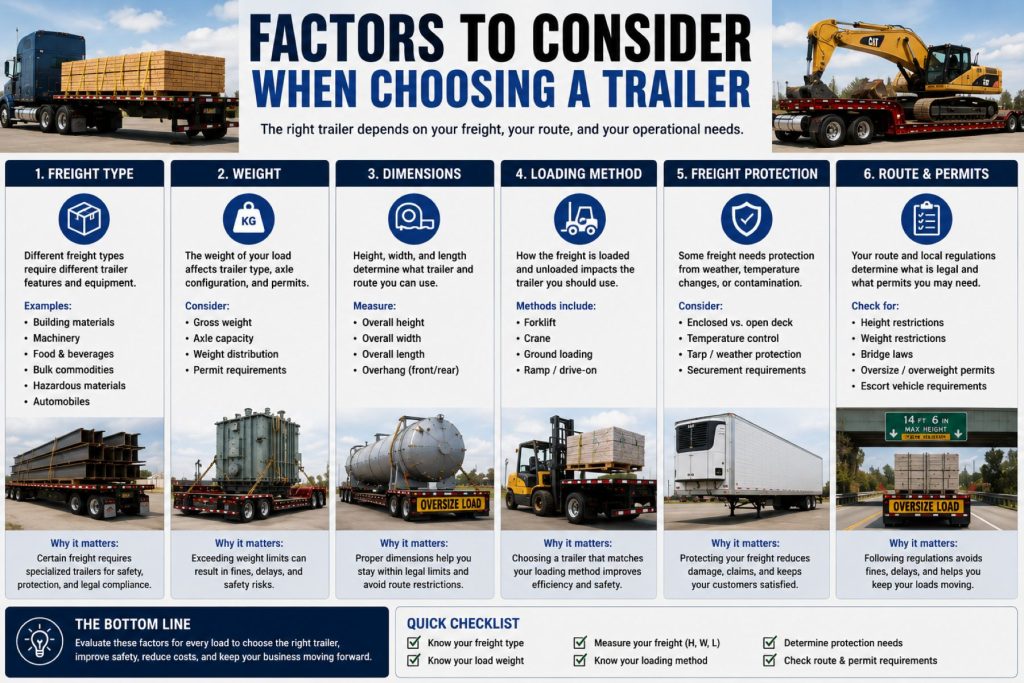
Factor 1: Freight Dimensions
Dimensions are often the biggest factor when choosing a trailer.
Height
Tall freight often requires:
- Step Deck Trailers
- Double Drop Trailers
- Lowboy Trailers
Width
Wide loads may require:
- Oversize permits
- Escort vehicles
- Specialized trailers
Length
Long freight may require:
- Extendable trailers
- Specialized heavy-haul equipment
Factor 2: Freight Weight
Weight determines:
- Trailer type
- Axle requirements
- Legal routing
Standard Freight
Many loads move legally on standard trailers.
Heavy Freight
Heavy loads may require:
- Lowboy Trailers
- RGN Trailers
- Multi-axle specialized trailers
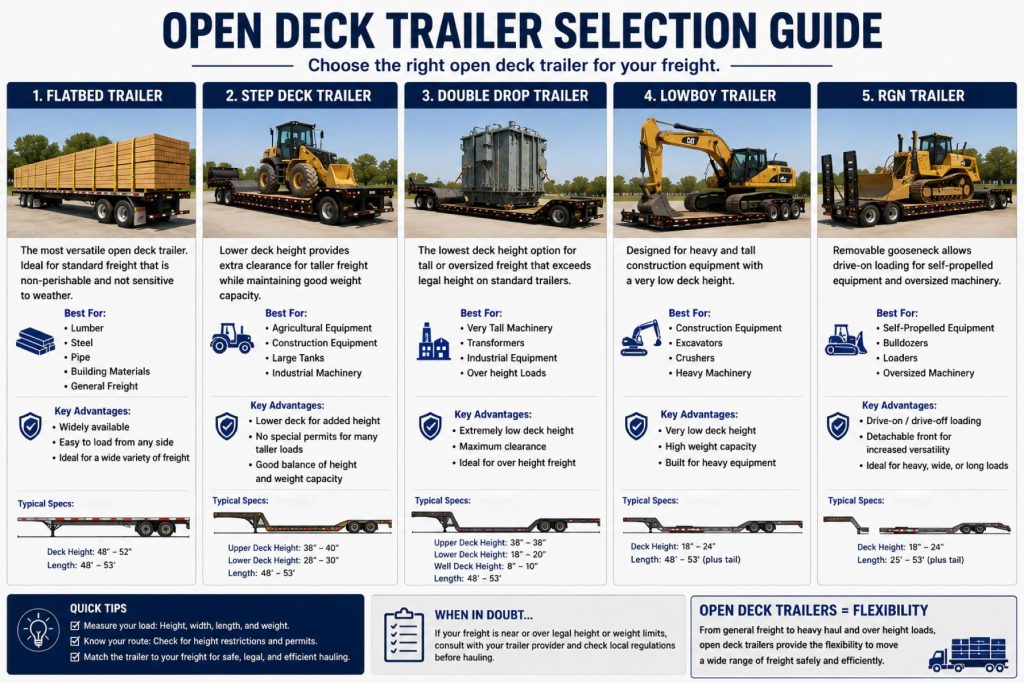
Choosing an Open-Deck Trailer
Open-deck trailers are among the most common trailer types.
Flatbed Trailer
Best for:
- Lumber
- Steel
- Pipe
- Building materials
- Machinery
Advantages:
- Versatile
- Easy loading
- Widely available
Step Deck Trailer
Best for:
- Taller machinery
- Agricultural equipment
- Large tanks
Advantages:
- Lower deck height
- Reduced permit requirements
Double Drop Trailer
Best for:
- Very tall freight
- Industrial equipment
- Oversized machinery
Advantages:
- Extremely low center well
- Maximum height capability
Lowboy Trailer
Best for:
- Construction equipment
- Extremely heavy machinery
Advantages:
- Very low deck height
- Heavy load capability
RGN Trailer
Best for:
- Self-propelled equipment
- Large machinery
Advantages:
- Detachable front section
- Easy loading
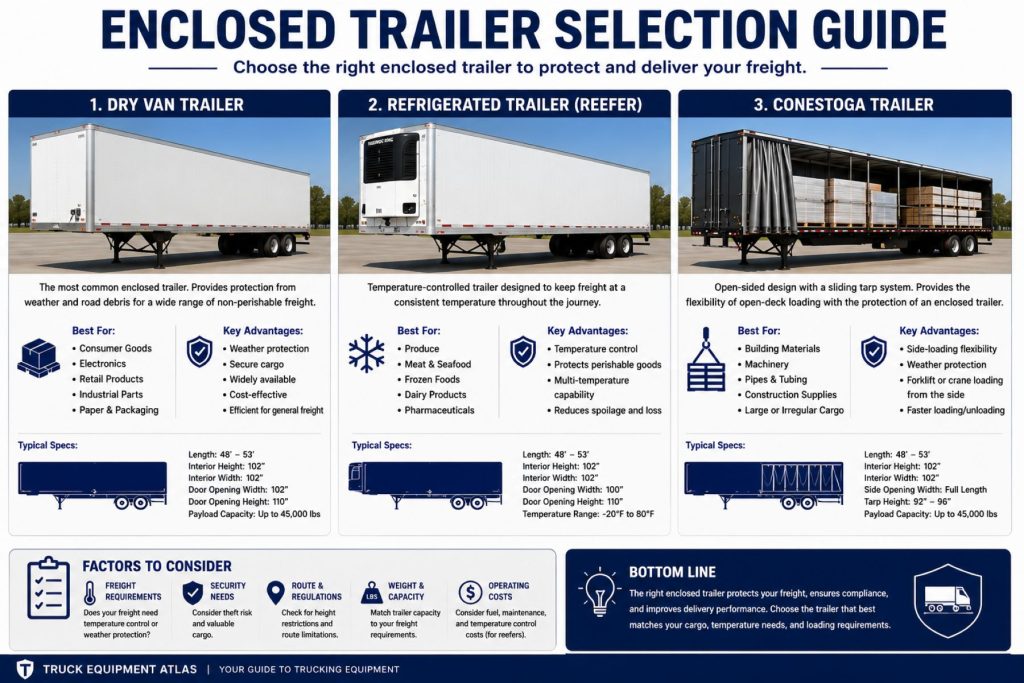
Choosing an Enclosed Trailer
Some freight requires protection from weather, contamination, or temperature changes.
Dry Van Trailer
Best for:
- Consumer goods
- Electronics
- Packaged products
Advantages:
- Weather protection
- Secure transportation
Refrigerated Trailer
Best for:
- Produce
- Frozen foods
- Pharmaceuticals
Advantages:
- Temperature control
- Product protection
Conestoga Trailer
Best for:
- Machinery
- Building materials
- Freight requiring weather protection
Advantages:
- Open-deck loading with cargo protection
Choosing Specialized Trailers
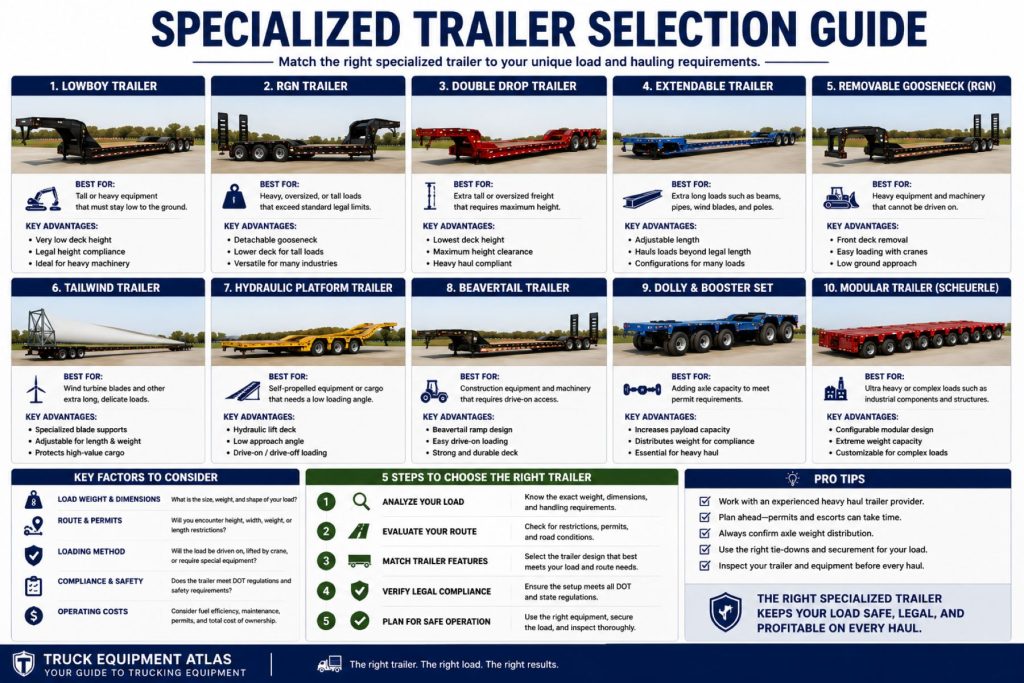
Some freight requires highly specialized equipment.
Tank Trailer
Best for:
- Petroleum products
- Chemicals
- Food-grade liquids
Hopper Bottom Trailer
Best for:
- Grain
- Feed
- Fertilizer
Dump Trailer
Best for:
- Sand
- Gravel
- Construction materials
Car Hauler Trailer
Best for:
- Automobiles
- Specialty vehicles
Container Chassis
Best for:
- Shipping containers
- Intermodal freight
Freight-to-Trailer Examples
| Freight | Recommended Trailer |
|---|---|
| Lumber | Flatbed Trailer |
| Steel Beams | Flatbed Trailer |
| Excavator | Lowboy Trailer |
| Transformer | Double Drop Trailer |
| Produce | Refrigerated Trailer |
| Consumer Goods | Dry Van Trailer |
| Gasoline | Tank Trailer |
| Grain | Hopper Bottom Trailer |
| Shipping Container | Container Chassis |
| Automobiles | Car Hauler Trailer |
Permit Considerations
Trailer selection can directly affect permit requirements.
Height Permits
Lower deck trailers may reduce permit requirements.
Weight Permits
Heavy loads may require:
- Additional axles
- Specialized equipment
- State permits
Route Restrictions
Certain routes may limit:
- Height
- Weight
- Length
Loading and Unloading Considerations
Forklift Loading
Works well with:
- Dry Van Trailers
- Flatbed Trailers
- Step Deck Trailers
Crane Loading
Works well with:
- Flatbed Trailers
- Double Drop Trailers
Drive-On Loading
Works well with:
- RGN Trailers
- Lowboy Trailers
Simple Trailer Selection Process
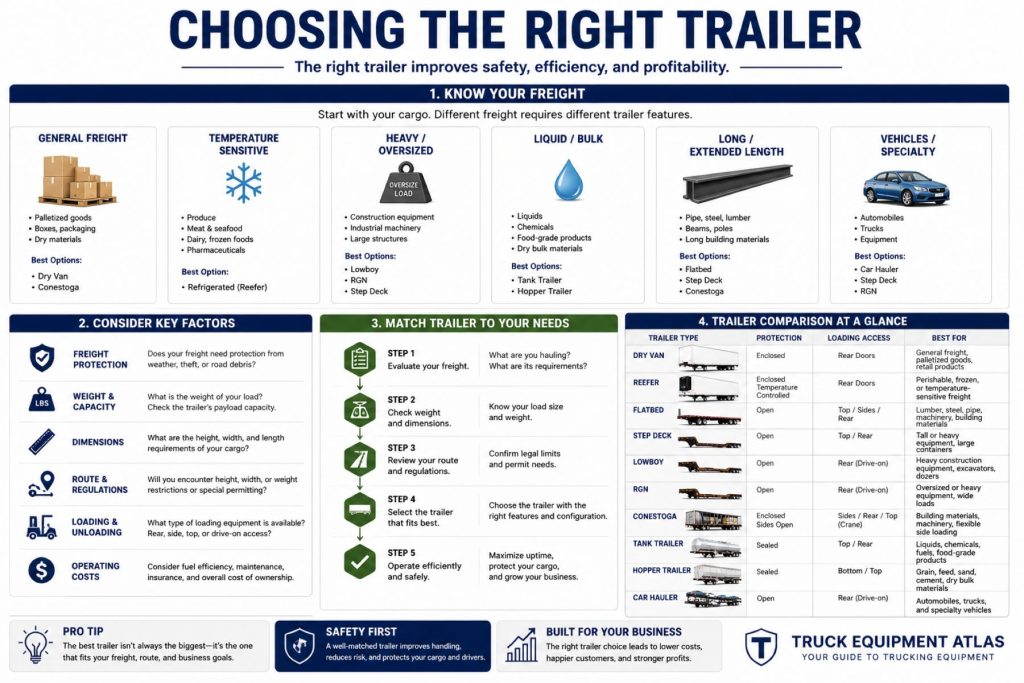
Step 1
Determine:
- Weight
- Height
- Length
- Width
Step 2
Determine:
- Freight protection requirements.
Step 3
Determine:
- Loading and unloading methods.
Step 4
Determine:
- Permit requirements.
Step 5
Choose the trailer that safely and legally accommodates the freight.
Common Mistakes When Choosing a Trailer
Focusing Only on Weight
Dimensions matter just as much.
Ignoring Height Restrictions
Height is often the deciding factor.
Choosing the Cheapest Option
The wrong trailer can cost more in delays, permits, and lost productivity.
Not Considering Loading Equipment
Loading requirements should always be evaluated.
Ignoring Future Flexibility
Some operators benefit from owning more versatile trailers.
Frequently Asked Questions
What is the most versatile trailer?
Flatbed trailers are among the most versatile trailer types.
What trailer is best for tall freight?
Step deck and double drop trailers are commonly used.
What trailer is best for heavy equipment?
Lowboy and RGN trailers are commonly used.
What trailer is best for food products?
Refrigerated trailers.
What trailer is best for grain?
Hopper bottom trailers.
What trailer is best for liquids?
Tank trailers.
Related Trailer Types
Related Freight Types
- Heavy Haul Freight
- Construction Freight
- Machinery Freight
- Temperature-Controlled Freight
- Bulk Agricultural Freight
Related Guides
- Complete Guide to Trailer Types
- Flatbed vs Step Deck vs Double Drop: Which Trailer Is Right for Your Freight?
- Complete Guide to Freight Types
Final Thoughts
Choosing the right trailer for your freight is about much more than simply finding equipment that can carry the load. Dimensions, weight, loading methods, weather protection, permits, and operational efficiency all play important roles.
Understanding the strengths and limitations of each trailer type helps carriers, owner-operators, dispatchers, and shippers make informed decisions that improve safety, reduce costs, and keep freight moving efficiently across North America.
The right trailer selection can increase profitability, reduce risk, and ensure freight reaches its destination safely and legally.