
Fifth Wheels & Coupling Equipment
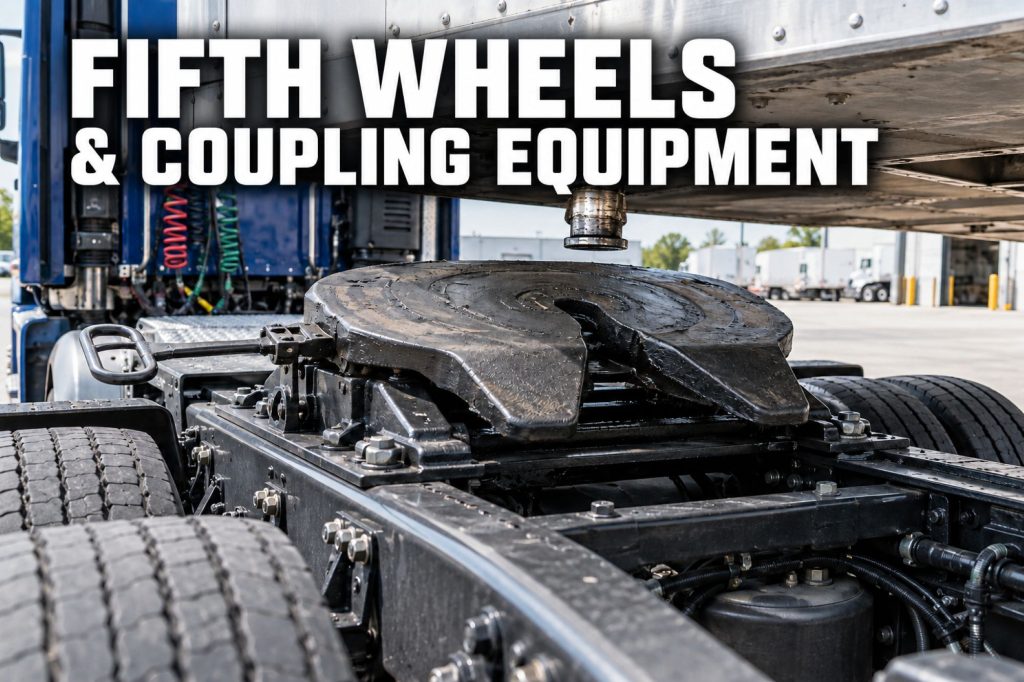
Fifth wheels and coupling equipment create the mechanical connection between commercial trucks, tractors, semitrailers, full trailers, converter dollies, and other towed equipment.
Truck Equipment Atlas covers standard fifth wheels, sliding fifth wheels, heavy-duty fifth wheels, terminal-tractor coupling systems, trailer kingpins, upper couplers, pintle hooks, drawbar eyes, and specialized commercial towing systems used throughout highway, vocational, terminal, construction, heavy-haul, intermodal, and severe-service applications.
The Fifth Wheel and Coupling Equipment Library includes individual equipment profiles, coupling categories, manufacturer coverage, weight ratings, mounting configurations, tractor and trailer compatibility, maintenance considerations, and educational information designed to help readers understand these essential commercial-vehicle connection systems.
Explore Fifth Wheel and Coupling Categories
Commercial fifth wheels and coupling equipment can be classified by connection type, mounting system, load capacity, articulation, and intended operating application. Explore the major fifth-wheel and coupling categories on Truck Equipment Atlas:
Commercial Truck Fifth Wheels
Commercial truck fifth wheels connect highway and vocational tractors with semitrailers. This category includes standard-duty, lightweight, low-lubrication, air-release, sensor-equipped, and fleet-oriented fifth wheels.
Fifth Wheel Sliders & Mounting Systems
Slider and mounting systems attach the fifth wheel to the tractor frame. This category covers air sliders, manual sliders, stationary mounts, mounting brackets, slide rails, locking pins, and fifth-wheel height configurations.
Heavy-Haul & Severe-Duty Fifth Wheels
Heavy-haul and severe-duty fifth wheels are designed for higher vertical loads, greater gross combination weights, uneven terrain, and demanding vocational environments. This category includes fully oscillating, blocked, reinforced, and high-capacity fifth wheels.
Terminal Tractor & Yard Coupling Systems
Terminal tractors and yard trucks use specialized coupling systems designed for frequent trailer movement. This category includes elevated fifth wheels, hydraulic lifting systems, air-release mechanisms, and high-cycle yard-tractor fifth wheels.
Trailer Kingpins & Upper Couplers
Trailer kingpins enter the fifth-wheel locking mechanism and transfer towing forces between the tractor and trailer. This category covers weld-in, replaceable, removable, mushroom, double-spool, cruciform, 2-inch, 3.5-inch, and intermodal kingpins, along with upper-coupler structures.
Pintle Hooks & Drawbar Couplings
Pintle hooks and drawbar couplings connect trucks with full trailers, converter dollies, construction equipment, military trailers, and specialized towing equipment. This category includes rigid pintle hooks, swivel hooks, drawbar eyes, lunette rings, slack-reducing couplings, and air-compensated systems.
Fifth Wheel and Coupling Guides
The Fifth Wheel and Coupling Guides section provides educational resources covering coupling operation, fixed and sliding fifth wheels, kingpins, inspection, maintenance, safe coupling procedures, weight distribution, equipment identification, and common coupling problems.
Fifth Wheels and Coupling Equipment on Truck Equipment Atlas
Truck Equipment Atlas includes a growing library of individual fifth-wheel, kingpin, mounting-system, pintle-hook, and drawbar-coupling profiles from leading manufacturers serving the commercial trucking industry.
Explore the equipment models and product families being added to the library:
SAF-Holland
- Holland FW35 Fifth Wheel
- Holland FW33 Low-Lube Fifth Wheel
- Holland FW17 Lightweight Fifth Wheel
- Holland FWAL Aluminum Fifth Wheel
- Holland FW70 Heavy-Duty Fifth Wheel
- Holland FW2080 Fully Oscillating Fifth Wheel
- Holland Mushroom Series Kingpin
- Holland Replaceable Series Kingpin
Fontaine Fifth Wheel
- Fontaine No-Slack 6000 Fifth Wheel
- Fontaine No-Slack 7000 Fifth Wheel
- Fontaine No-Slack 7000CC Clean Connect Fifth Wheel
- Fontaine H7 Heavy-Duty Fifth Wheel
JOST International
- JOST JSK37U Fifth Wheel
- JOST JSK36N Lightweight Fifth Wheel
- JOST JSK3CN Ultralight Fifth Wheel
- JOST JSK37Y Terminal Tractor Fifth Wheel
Premier Manufacturing
Additional fifth wheels, slider systems, kingpins, upper couplers, pintle hooks, drawbar eyes, and specialized commercial coupling systems will be added as the Truck Equipment Atlas Fifth Wheel and Coupling Equipment Library continues to expand.
Fifth Wheel and Coupling Guides on Truck Equipment Atlas
Truck Equipment Atlas is also developing educational guides that explain how fifth wheels and commercial coupling systems work and how they affect vehicle operation.
- Fifth Wheel System Explained
- Fixed vs Sliding Fifth Wheels
- How to Couple and Uncouple a Semi-Trailer Safely
- How to Inspect and Maintain a Fifth Wheel and Kingpin
- How to Choose a Commercial Truck Fifth Wheel
Understanding Commercial Fifth Wheel Types
Commercial fifth wheels are available in several fundamentally different configurations.
Standard Fifth Wheels
Standard fifth wheels are commonly installed on highway tractors, regional tractors, and vocational trucks pulling conventional semitrailers.
They use a top plate, throat, locking jaws or lock bar, release mechanism, pivot brackets, and mounting system to secure the trailer kingpin while allowing tractor-trailer articulation.
Sliding Fifth Wheels
Sliding fifth wheels allow the coupling position to move forward or rearward along a rail assembly.
Changing the fifth-wheel position can adjust weight distribution between the tractor’s steer and drive axles. It can also change the clearance between the tractor cab and trailer.
Sliding systems may use manual release mechanisms or air-operated locking pins.
Stationary Fifth Wheels
Stationary fifth wheels remain in one fixed position on the tractor frame.
They are commonly used when the tractor operates with consistent trailer configurations and does not require routine fifth-wheel-position adjustments.
Lightweight Fifth Wheels
Lightweight fifth wheels use optimized castings, fabricated components, aluminum, or other weight-saving designs to reduce tractor weight.
Reducing fifth-wheel weight may increase available payload, but the selected system must still meet the required vertical-load and gross-combination-weight ratings.
Low-Lubrication Fifth Wheels
Low-lubrication fifth wheels use replaceable liners, wear plates, or specialized surfaces to reduce the amount of grease required on the top plate.
The locking mechanism and other internal components may still require lubrication according to the manufacturer’s service instructions.
Heavy-Duty Fifth Wheels
Heavy-duty fifth wheels are designed for higher loads and more demanding operating environments.
They may use reinforced top plates, heavier mounting systems, larger kingpins, additional articulation, or specialized blocking arrangements.
Fully Oscillating Fifth Wheels
Fully oscillating fifth wheels permit movement in multiple directions to help accommodate uneven terrain.
These systems are commonly associated with off-highway, construction, mining, logging, oilfield, military, and severe-service applications.
Terminal-Tractor Fifth Wheels
Terminal-tractor fifth wheels are designed for frequent coupling cycles and trailer movement within yards, ports, warehouses, distribution centers, and manufacturing facilities.
Many terminal tractors use hydraulic lifting systems that raise the trailer without requiring the operator to lower or raise the trailer landing gear for every short-distance move.
Understanding Commercial Coupling Types
Commercial vehicles use several coupling systems beyond the conventional tractor fifth wheel.
Trailer Kingpins
A trailer kingpin extends downward from the trailer’s upper-coupler structure and enters the fifth-wheel locking mechanism.
The standard 2-inch kingpin is widely used in highway semitrailer applications. Larger 3.5-inch kingpins may be used in certain severe-duty or specialized applications.
Upper Couplers
The upper coupler includes the trailer plate, kingpin, and supporting structure that transfer towing and vertical forces into the trailer.
Its flatness, thickness, condition, and structural integrity affect coupling performance and fifth-wheel operation.
Pintle Hooks
A pintle hook is mounted on the towing vehicle and connects with a drawbar eye or lunette ring on the trailer.
Pintle systems are widely used with full trailers, converter dollies, construction equipment, military trailers, utility equipment, and municipal vehicles.
Drawbar Eyes and Lunette Rings
A drawbar eye or lunette ring is installed on the trailer’s drawbar and fits inside the pintle-hook opening.
The drawbar eye and pintle hook must be matched according to dimensions, load ratings, articulation requirements, and intended application.
Slack-Reducing Couplings
Slack-reducing couplings are designed to limit excessive movement between the coupling and drawbar eye.
Reducing connection movement can help control noise, impact loading, component wear, and vehicle response during acceleration and braking.
Air-Compensated Couplings
Air-compensated couplings use pneumatic pressure to help maintain contact between coupling components.
These systems may be used in demanding applications where controlling slack and impact loading is especially important.
Common Fifth Wheel and Coupling Configurations
Commercial coupling arrangements vary according to truck type, trailer design, weight requirements, operating environment, and service application.
Common configurations include:
- Stationary fifth wheels
- Manual sliding fifth wheels
- Air-release sliding fifth wheels
- Lightweight fifth wheels
- Low-lubrication fifth wheels
- Grease-free top-plate systems
- Heavy-duty fifth wheels
- Fully oscillating fifth wheels
- Blocked or non-tilting fifth wheels
- Terminal-tractor lifting fifth wheels
- Sensor-equipped fifth wheels
- Air-release fifth wheels
- 2-inch trailer kingpins
- 3.5-inch trailer kingpins
- Weld-in kingpins
- Replaceable kingpins
- Removable kingpins
- Rigid pintle hooks
- Swivel pintle hooks
- Air-compensated pintle hooks
- Slack-reducing couplings
- Combination hitch systems
- Drawbar-eye connections
- Converter-dolly couplings
The connection type alone does not determine whether a system is suitable for a particular application. Vertical-load rating, gross combination weight, drawbar pull, kingpin size, mounting-system capacity, frame strength, trailer design, articulation, operating terrain, and applicable regulations must also be considered.
Fifth Wheel Position and Weight Distribution
Fifth-wheel position affects weight distribution between the tractor’s steer and drive axles.
Moving a sliding fifth wheel forward generally transfers more trailer weight toward the steer axle. Moving it rearward generally transfers weight toward the drive axles while increasing clearance between the tractor cab and trailer.
The correct position depends on:
- Tractor wheelbase
- Trailer kingpin location
- Trailer design
- Cargo placement
- Steer-axle rating
- Drive-axle rating
- Tire and wheel capacity
- Suspension capacity
- Frame specifications
- Cab-to-trailer clearance
- Landing-gear clearance
- Applicable axle-weight regulations
Sliding the fifth wheel cannot correct a trailer that is improperly loaded or exceeds its axle, tire, suspension, frame, or gross vehicle weight ratings.
Certified scale measurements should be used to confirm axle weights after fifth-wheel adjustments.
Highway and Vocational Applications
Fifth-wheel and coupling requirements change significantly according to vehicle type and operating environment.
Highway tractors generally require fifth wheels that provide reliable coupling, controlled articulation, appropriate weight ratings, and compatibility with common semitrailer kingpins.
Weight reduction, low-lubrication designs, air release, sensor systems, and slider operation may be particularly valuable in long-haul and regional fleets.
Vocational vehicles may experience rough terrain, frequent coupling cycles, uneven loading, contamination, tight maneuvering, and higher impact forces.
For this reason, coupling equipment should be selected according to the complete vehicle application rather than connection type or capacity alone.
Heavy-Haul and Specialized Applications
Heavy-haul and severe-service operations can place especially demanding loads on fifth wheels, kingpins, mounting systems, and truck frames.
Common applications include:
- Heavy-equipment transportation
- Construction hauling
- Mining
- Oilfield transportation
- Logging
- Military transportation
- Multi-axle heavy-haul combinations
- Specialized lowboy trailers
- Converter dollies
- Industrial equipment
- Terminal and port operations
- Severe off-highway service
Equipment selection may depend on vertical load, gross combination weight, drawbar pull, kingpin size, articulation, oscillation, fifth-wheel height, frame strength, mounting configuration, terrain, trailer design, and coupling frequency.
Advantages of Modern Fifth Wheels and Coupling Equipment
Modern fifth-wheel and coupling technology can provide several operational advantages:
- Secure truck-to-trailer connection
- Controlled articulation during turns
- Proper transfer of towing and braking forces
- Support for trailer vertical loads
- Adjustable weight distribution
- Lightweight construction
- Reduced-lubrication options
- Air-release operation
- Coupling-status sensors
- Replaceable wear components
- Heavy-duty and severe-service configurations
- Reduced coupling slack
- Specialized terminal-tractor operation
- Compatibility with multiple commercial applications
The actual benefits depend on equipment design, vehicle configuration, trailer type, load, operating environment, maintenance, and driver practices.
Fifth Wheel and Coupling Limitations and Considerations
No single fifth wheel or coupling system is ideal for every commercial vehicle.
Important considerations include:
- Initial purchase cost
- Equipment weight
- Vertical-load rating
- Gross combination weight rating
- Drawbar-pull rating
- Fifth-wheel height
- Kingpin size
- Mounting-system compatibility
- Tractor-frame compatibility
- Trailer upper-coupler condition
- Slider travel
- Cab-to-trailer clearance
- Lubrication requirements
- Locking-mechanism wear
- Kingpin wear
- Pintle-hook and drawbar-eye wear
- Replacement-parts availability
- Repair and rebuilding requirements
- Highway or off-road application
- Inspection requirements
A lightweight fifth wheel intended for highway operation may not be the correct choice for a construction truck, logging tractor, oilfield vehicle, terminal tractor, mining application, or heavy-haul combination.
Driver and Operator Considerations
Fifth-wheel and coupling condition directly affects trailer security, vehicle handling, turning clearance, and weight distribution.
Drivers should verify that the trailer kingpin is completely secured by the fifth-wheel locking mechanism before moving the vehicle.
The coupling procedure should include a visual inspection, tug test, landing-gear check, air-line connection, electrical connection, trailer-brake test, and final walk-around.
Drivers using sliding fifth wheels should confirm that all locking pins are fully engaged after adjustment.
Operators should also monitor for:
- Excessive coupling movement
- Difficult locking or release
- Unusual noise
- Damaged release handles
- Incomplete slider engagement
- Air leaks in release systems
- Cracked or distorted components
- Insufficient tractor-to-trailer clearance
- Worn pintle hooks
- Damaged drawbar eyes
- Missing safety equipment
Maintenance and Ownership
Commercial fifth wheels and coupling equipment require proper maintenance to provide reliable service.
Important maintenance areas can include:
- Cleaning the fifth-wheel assembly
- Lubricating the top plate
- Lubricating the locking mechanism
- Inspecting low-lube liners
- Checking locking jaws or lock bars
- Inspecting the release handle
- Testing air-release systems
- Checking slider rails
- Inspecting slider locking pins
- Checking mounting brackets
- Inspecting frame fasteners
- Measuring kingpin wear
- Inspecting the trailer upper coupler
- Checking pintle-hook wear
- Measuring drawbar-eye wear
- Inspecting coupling latches
- Testing coupling sensors
- Monitoring cracks, distortion, corrosion, or looseness
Maintenance requirements vary significantly between manufacturers and coupling designs. Owners and technicians should follow the inspection, lubrication, rebuilding, and replacement procedures specified for the exact equipment model and application.
Major Fifth Wheel and Coupling Manufacturers
Truck Equipment Atlas covers fifth wheels and commercial coupling systems from manufacturers that have played important roles throughout the trucking industry.
Current and planned coverage includes:
- SAF-Holland
- Fontaine Fifth Wheel
- JOST International
- Premier Manufacturing
- Buyers Products
- Wallace Forge
- Ringfeder
- V.Orlandi
Manufacturer coverage will continue to expand as additional fifth wheels, slider systems, mounting equipment, kingpins, upper couplers, pintle hooks, drawbar eyes, and specialized commercial towing systems are added.
Related Truck Equipment Resources
A fifth wheel or coupling assembly is only one part of the complete commercial truck and trailer connection.
Explore related Truck Equipment Atlas resources:
- Commercial Trucks
- Commercial Trailers
- Suspension Systems
- Axles & Differentials
- Brake Systems
- Tires & Wheels
- Electrical Systems
- Safety Systems
- Equipment Systems
- Equipment System Guides
Understanding how the truck frame, fifth wheel, mounting system, kingpin, upper coupler, suspension, axles, brakes, tires, landing gear, air system, and trailer structure work together is essential when evaluating commercial coupling equipment.
How to Use the Fifth Wheel and Coupling Equipment Library
Individual Truck Equipment Atlas fifth-wheel and coupling profiles provide deeper information about specific models and product families.
Depending on the equipment, these pages may include:
- Fifth-wheel or coupling overview
- Manufacturer information
- Equipment type
- Load ratings
- Mounting configurations
- Slider options
- Kingpin compatibility
- Drawbar-eye compatibility
- Release and locking systems
- Lubrication requirements
- Compatible truck and trailer applications
- Highway and vocational use
- Driver considerations
- Maintenance information
- Common problems
- Ownership considerations
- Availability and replacement considerations
Readers can begin with one of the fifth-wheel and coupling categories above or explore individual equipment profiles by manufacturer.
Fifth Wheel and Coupling Equipment Library Expansion
The Truck Equipment Atlas Fifth Wheel and Coupling Equipment Library will continue to grow with additional standard fifth wheels, sliding fifth wheels, heavy-duty fifth wheels, terminal-tractor systems, mounting assemblies, kingpins, upper couplers, pintle hooks, drawbar eyes, and specialized commercial coupling profiles.
Future development will also expand the connections between coupling systems and the trucks, trailers, suspensions, axles, brakes, frames, manufacturers, and applications in which they are used.
The goal is to build an organized commercial fifth-wheel and coupling reference that helps drivers, owner-operators, fleets, technicians, students, equipment buyers, and industry professionals understand how these systems work and where different coupling platforms fit within the trucking industry.
Follow the Growth of Truck Equipment Atlas
Truck Equipment Atlas continues to expand with new trucks, trailers, diesel engines, transmissions, axles, differentials, suspension systems, brakes, fifth wheels, coupling equipment, manufacturer information, freight resources, and educational guides.