
Fifth Wheel System Explained: How Semi Trucks Connect to Trailers
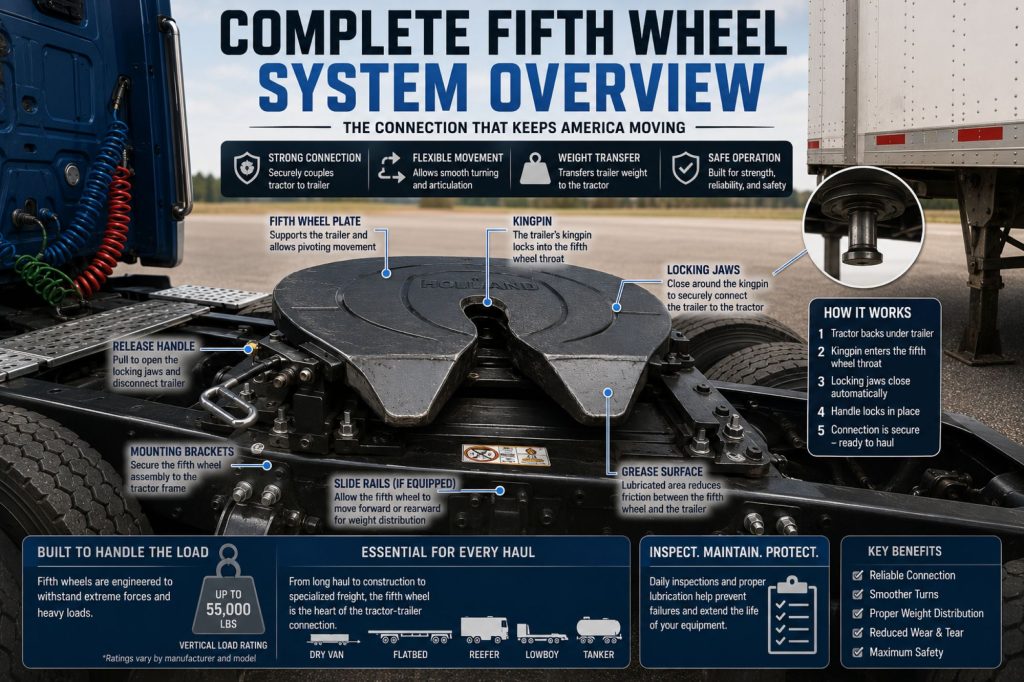
The fifth wheel is one of the most important components on a semi truck. It serves as the connection point between the tractor and trailer, allowing the truck to pull heavy loads safely while providing flexibility for turning and maneuvering.
Although it may appear simple from the outside, the fifth wheel is a sophisticated system consisting of multiple components that must work together properly to ensure safe operation.
Understanding how the fifth wheel works can help drivers perform better inspections, prevent equipment failures, and improve overall safety.
This guide explains the major components of the fifth wheel system, how coupling and uncoupling work, and common maintenance practices.
What Is a Fifth Wheel?
The fifth wheel is the coupling device mounted to the tractor frame that connects to the trailer’s kingpin.
It allows:
- Secure connection between tractor and trailer
- Articulation during turns
- Weight transfer to the tractor
- Controlled pivoting movement
Without a properly functioning fifth wheel, safe operation of a semi truck would not be possible.
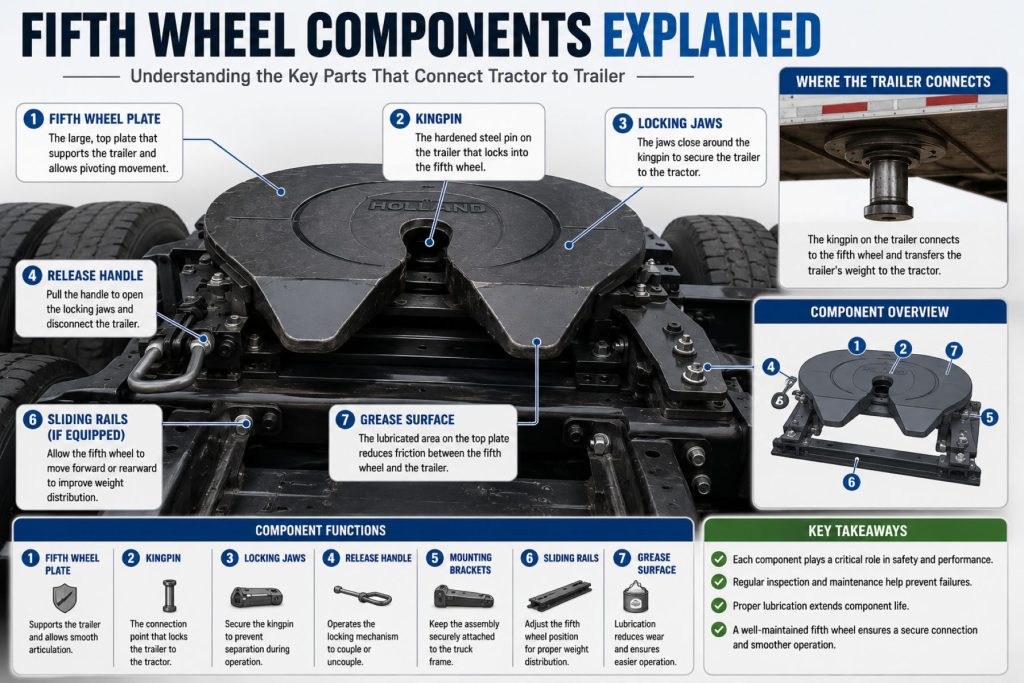
Major Fifth Wheel Components
Fifth Wheel Plate
The large steel plate that supports the trailer.
Kingpin
The hardened steel pin mounted to the trailer.
Locking Jaws
The mechanism that secures the kingpin.
Release Handle
Allows the driver to release the locking jaws.
Mounting Brackets
Attach the fifth wheel assembly to the truck frame.
Sliding Rails (If Equipped)
Allow the fifth wheel position to be adjusted.
Grease Surface
Provides lubrication between the tractor and trailer.
How the Fifth Wheel Works
The fifth wheel allows the trailer to pivot while maintaining a secure connection.
As the tractor backs under the trailer:
- The kingpin enters the throat of the fifth wheel.
- The locking jaws close around the kingpin.
- The release handle locks into place.
- The trailer becomes securely attached to the tractor.
Proper coupling is essential to prevent trailer separation.
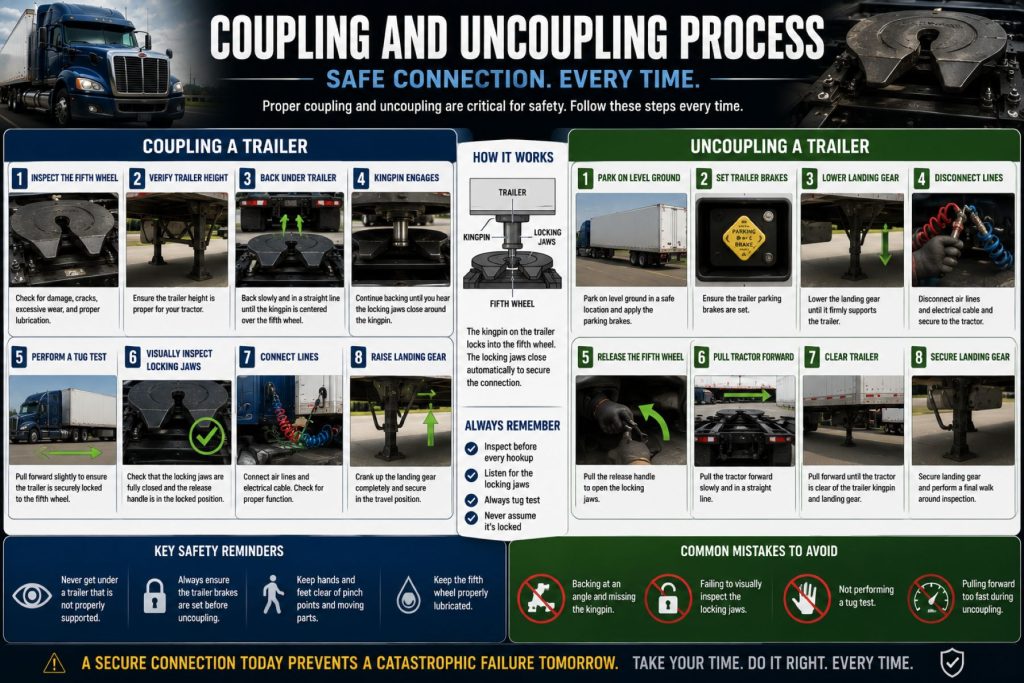
Coupling a Trailer
Step 1
Inspect the fifth wheel.
Step 2
Verify trailer height.
Step 3
Back slowly under the trailer.
Step 4
Listen for the locking jaws to engage.
Step 5
Perform a tug test.
Step 6
Visually inspect the locking mechanism.
Step 7
Connect airlines and electrical lines.
Step 8
Raise landing gear.
Uncoupling a Trailer
Step 1
Park on level ground.
Step 2
Set trailer brakes.
Step 3
Lower landing gear.
Step 4
Disconnect air and electrical lines.
Step 5
Pull the release handle.
Step 6
Slowly pull the tractor forward.
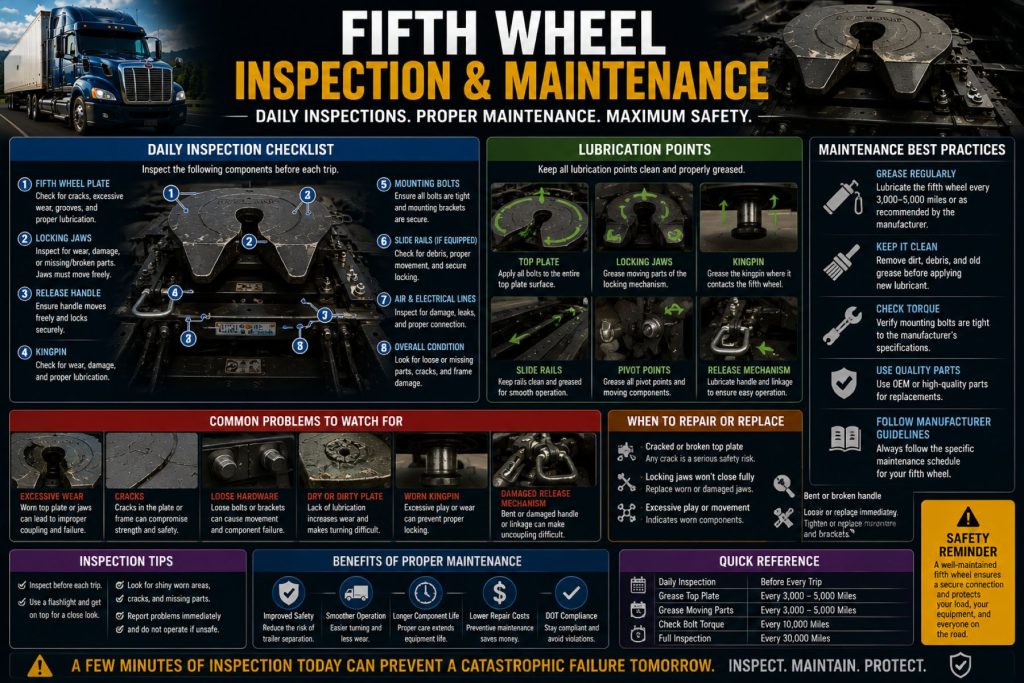
Daily Fifth Wheel Inspections
Drivers should inspect:
- Fifth wheel plate condition
- Locking jaws
- Kingpin condition
- Mounting bolts
- Release handle
- Air lines and electrical lines
- Lubrication condition
Proper inspections can prevent serious failures.
Common Fifth Wheel Problems
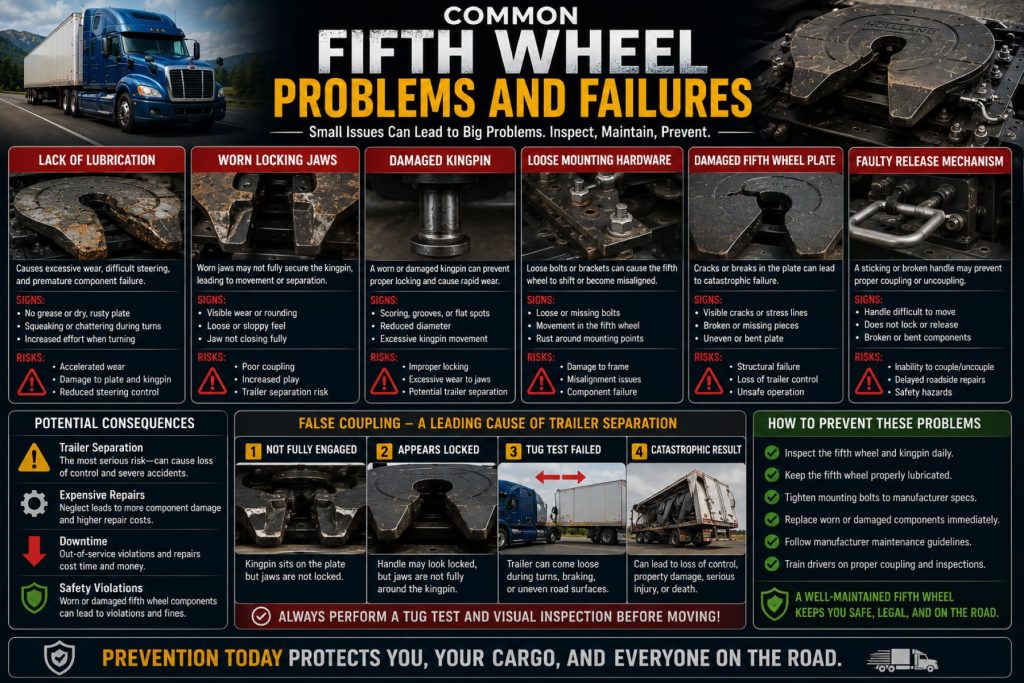
Lack of Lubrication
Can cause:
- Excessive wear
- Difficult steering
- Premature component failure
Worn Locking Jaws
Can result in:
- Excessive play
- Improper coupling
- Safety hazards
Damaged Kingpin
Can cause:
- Improper locking
- Excessive wear
- Trailer separation risk
Loose Mounting Hardware
Can lead to:
- Component movement
- Frame damage
- Safety issues
Fifth Wheel Lubrication
Proper lubrication is critical.
Benefits include:
- Reduced wear
- Easier steering
- Improved component life
- Better trailer articulation
Many fleets lubricate:
- Fifth wheel top plate
- Locking mechanism
- Slide rails
- Pivot points
Common Coupling Mistakes
High Hook
Occurs when the trailer is too high.
False Coupling
The jaws appear locked but are not fully engaged.
Failure to Perform Tug Test
Can result in trailer separation.
Improper Trailer Height
May damage equipment.
Failure to Visually Inspect
Always inspect the locking jaws.
Sliding Fifth Wheels
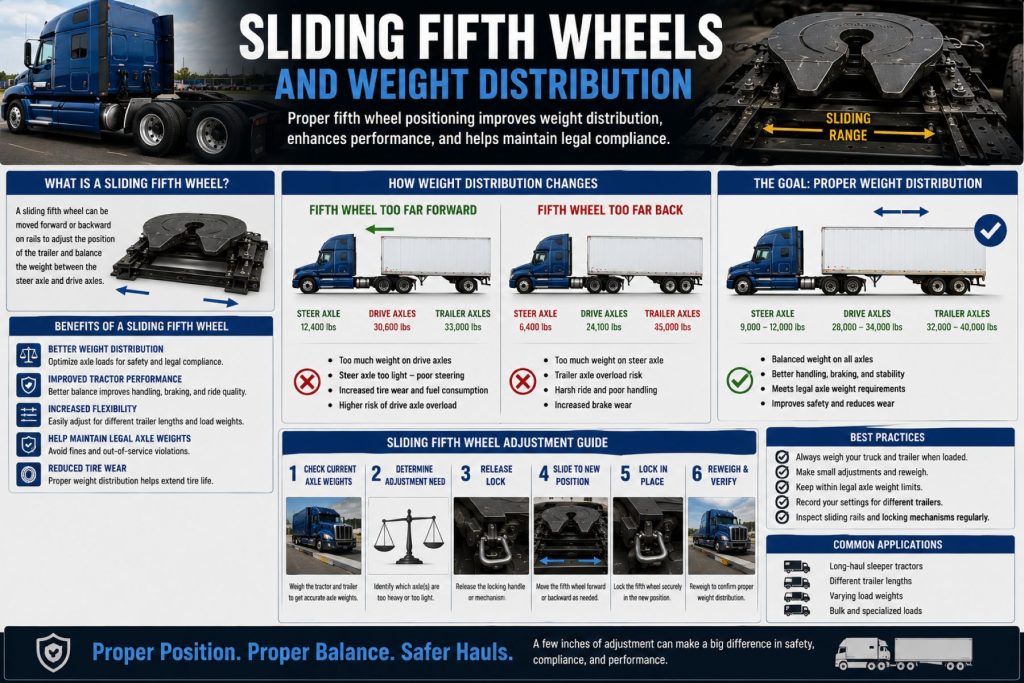
Many tractors use sliding fifth wheels.
Benefits include:
- Better weight distribution
- Improved axle loading
- Greater operational flexibility
Sliding fifth wheels are commonly found on:
- Sleeper trucks
- Long-haul tractors
- Fleet tractors
Weight Distribution Considerations
Proper fifth wheel positioning affects:
- Steering axle weight
- Drive axle weight
- Turning characteristics
- Ride quality
- Legal axle compliance
Improper adjustment can result in:
- Overweight violations
- Reduced handling
- Poor ride quality
Fifth Wheel Safety Tips
- Perform Daily Inspections
- Always Conduct a Tug Test
- Verify Locking Jaw Engagement
- Keep the Fifth Wheel Properly Lubricated
- Inspect the Kingpin
- Address Wear Immediately
Frequently Asked Questions
Why is it called a fifth wheel?
Early wagons had four wheels and the coupling mechanism became known as the “fifth wheel.”
What does the fifth wheel do?
It connects the tractor and trailer while allowing pivoting movement.
How often should a fifth wheel be greased?
Follow manufacturer recommendations and fleet maintenance schedules.
What is a high hook?
A coupling mistake where the trailer is too high and the kingpin does not properly engage.
What is a sliding fifth wheel?
A movable fifth wheel that can change position to improve weight distribution.
Related Truck Types
Related Trailer Types
Related Equipment Systems
- Air Brake Systems
- Suspension Systems
- Driveline Systems
- Steering Systems
Related Guides
- Air Brake System Explained
- Flatbed vs Step Deck vs Double Drop
- How to Choose the Right Commercial Truck
Final Thoughts
The fifth wheel is one of the most important safety systems on a commercial truck. Understanding how it works, how to inspect it, and how to properly couple and uncouple trailers is essential for every driver.
Proper maintenance and inspections can significantly reduce equipment failures, improve safety, and help ensure reliable operation throughout the life of the truck.