
Day Cab vs Sleeper Truck: Which Is Right for Your Operation?
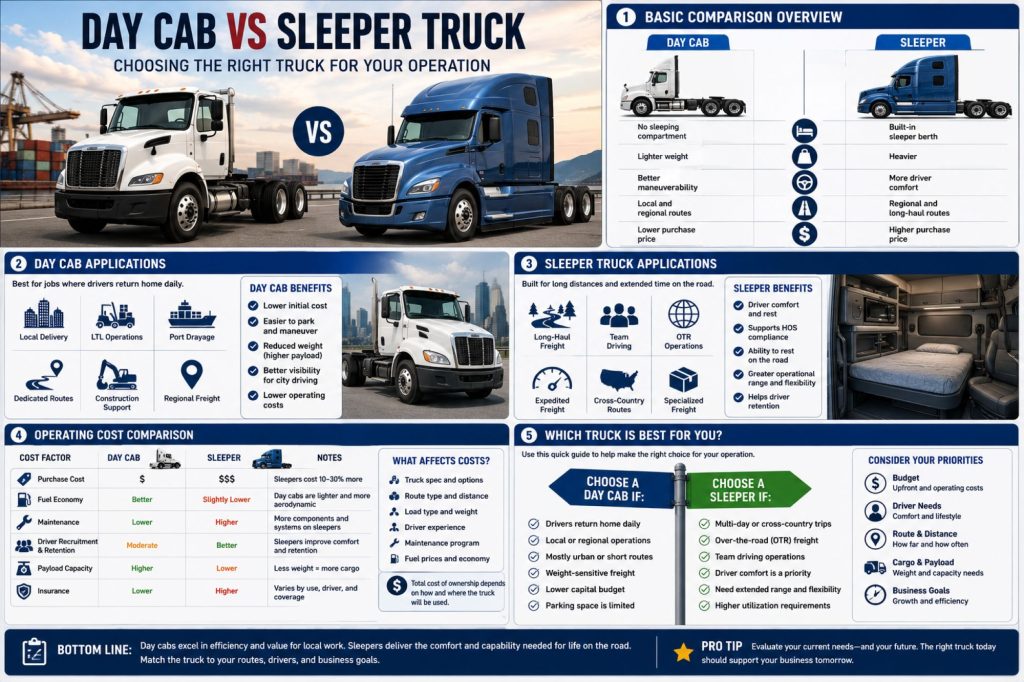
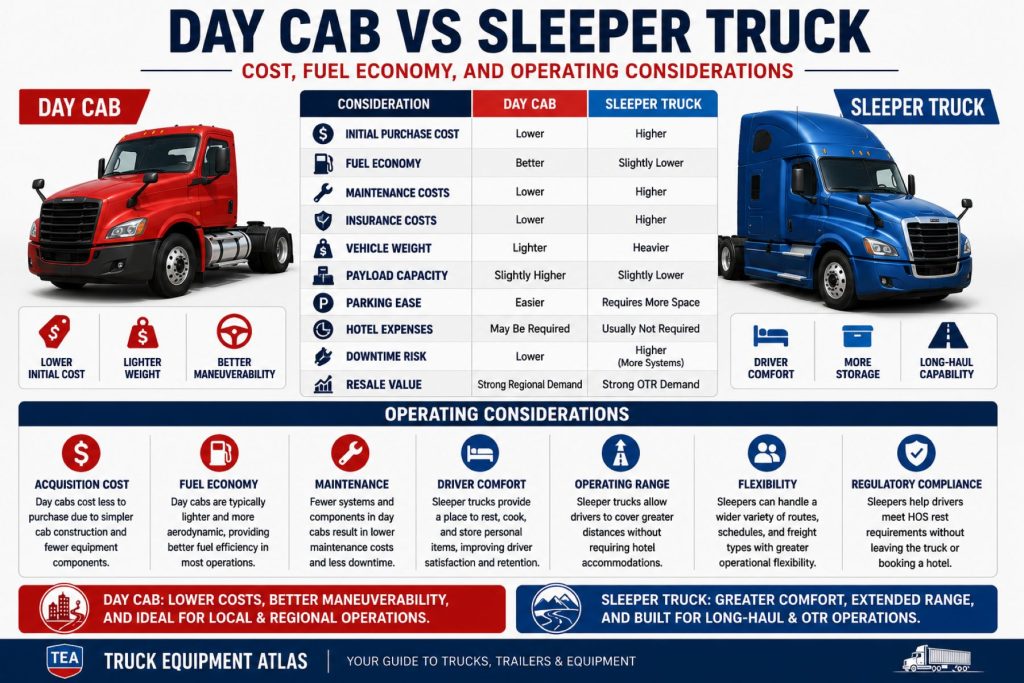
A modern day cab tractor positioned beside a modern sleeper tractor. The image should clearly show the physical differences between the two configurations and establish the purpose of the guide.
Choosing between a day cab and a sleeper truck is one of the most important decisions facing owner-operators, fleet managers, and trucking companies. While both configurations are capable of hauling the same trailers and freight, they are designed for very different operating environments.
A day cab is optimized for local and regional work where drivers return home regularly, while a sleeper truck is designed for operations that require overnight travel and extended time away from home.
Understanding the differences in cost, comfort, maneuverability, operating range, and driver requirements can help determine which truck is best suited for your operation.
What Is a Day Cab Truck?
A day cab truck is a semi-truck that does not include a sleeping compartment behind the driver and passenger seats. The cab ends directly behind the seats, creating a shorter overall truck length and wheelbase.
Day cabs are commonly used in local delivery, LTL, drayage, construction, and regional freight operations where drivers return home daily.
Key Characteristics
- No sleeper berth
- Shorter wheelbase
- Lower vehicle weight
- Lower purchase cost
- Improved maneuverability
- Easier parking
- Typically home-daily operations
What Is a Sleeper Truck?
A sleeper truck includes a dedicated sleeping compartment behind the driver compartment. Depending on the truck model and sleeper size, this area may include beds, storage cabinets, refrigerators, microwaves, televisions, inverters, and additional living space.
Sleeper trucks are designed for drivers who spend multiple days on the road and require accommodations for federally mandated rest periods.
Key Characteristics
- Integrated sleeper compartment
- Longer wheelbase
- Increased vehicle weight
- Greater driver comfort
- Additional storage capacity
- Designed for extended trips
- Common in OTR operations
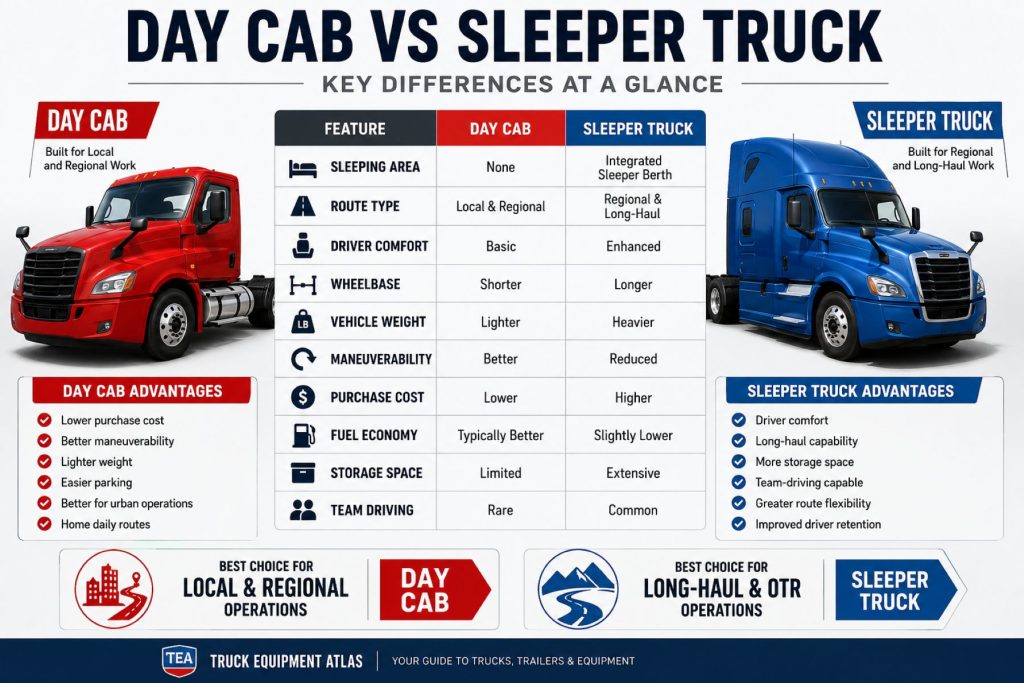
Day Cab vs Sleeper Truck Comparison
| Feature | Day Cab | Sleeper Truck |
|---|---|---|
| Primary Purpose | Local and regional operations | Regional and long-haul operations |
| Sleeping Area | None | Integrated sleeper berth |
| Vehicle Weight | Lighter | Heavier |
| Wheelbase | Shorter | Longer |
| Overall Length | Shorter | Longer |
| Driver Comfort | Basic cab environment | Enhanced comfort and living space |
| Maneuverability | Excellent in tight areas | Reduced due to longer wheelbase |
| Purchase Price | Lower | Higher |
| Maintenance Costs | Lower | Higher |
| Fuel Economy | Typically better | Slightly lower |
| Payload Capacity | Slightly higher | Slightly lower |
| Storage Space | Limited | Extensive storage options |
| Team Driving Capability | Rare | Common |
| Driver Retention Potential | Moderate | Generally higher |
| Parking Requirements | Easier | Requires more space |
| Hotel Expenses | May be required on overnight trips | Usually unnecessary |
| Home Time | Often daily | Frequently multiple days away |
| Best Route Length | Local and regional | Regional and cross-country |
| Urban Operation Suitability | Excellent | Fair |
| Construction Applications | Common | Less common |
| Port Drayage Applications | Common | Rare |
| LTL Operations | Common | Less common |
| OTR Freight Operations | Rare | Common |
| Refrigerated Freight | Sometimes | Common |
| Flatbed Long-Haul Operations | Sometimes | Common |
| Heavy Haul Operations | Sometimes | Common |
| Expedited Freight | Limited | Common |
| Initial Acquisition Cost | Lower | Higher |
| Resale Market | Strong regional demand | Strong OTR demand |
| Best Fit For | Home-daily operations | Extended route operations |
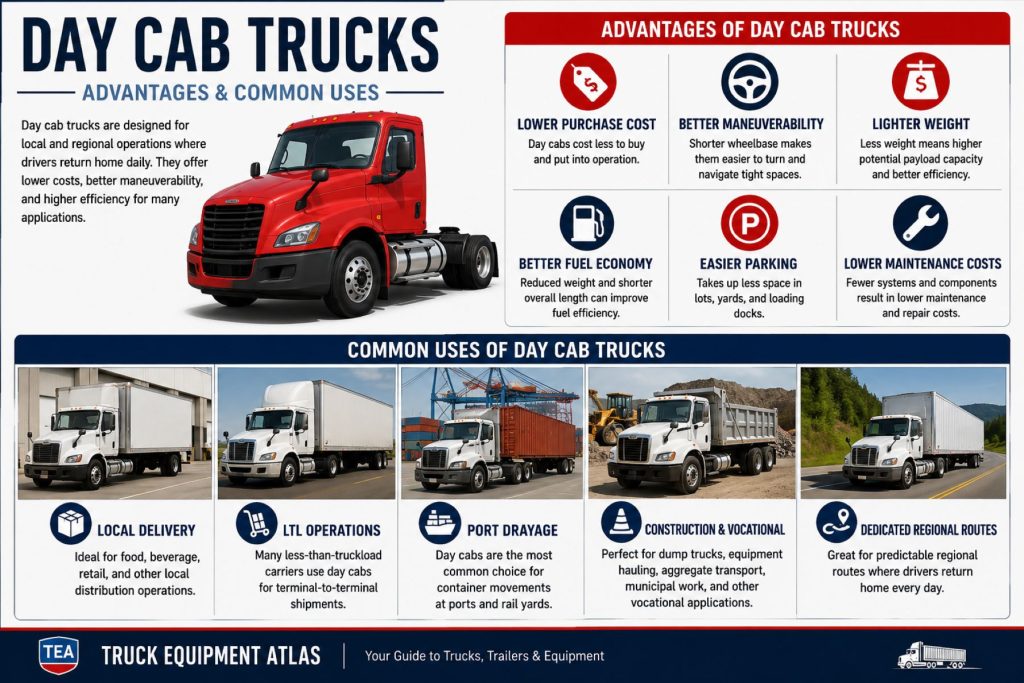
Advantages of Day Cab Trucks
Lower Purchase Cost
Day cabs generally cost less than comparable sleeper trucks because they require fewer components and less overall cab structure.
Improved Maneuverability
The shorter wheelbase makes day cabs easier to operate in:
- Urban environments
- Distribution centers
- Ports
- Construction sites
- Tight customer facilities
Reduced Vehicle Weight
Without a sleeper compartment, day cabs typically weigh less, which may allow for additional payload capacity depending on the application.
Better Fuel Efficiency
Reduced weight and shorter configurations can improve fuel economy in many operations.
Easier Parking
Day cabs require less parking space and are easier to maneuver in crowded terminals and loading areas.
Common Day Cab Applications
Local Delivery
Food, beverage, and retail distribution fleets frequently utilize day cabs.
LTL Freight
Many less-than-truckload carriers operate day cabs because drivers return to terminals daily.
Port Drayage
Container transportation around seaports commonly utilizes day cab tractors.
Construction Operations
Day cabs are often paired with dump trailers, equipment trailers, and vocational applications.
Dedicated Regional Routes
Operations with predictable schedules and daily home time are ideal for day cab trucks.
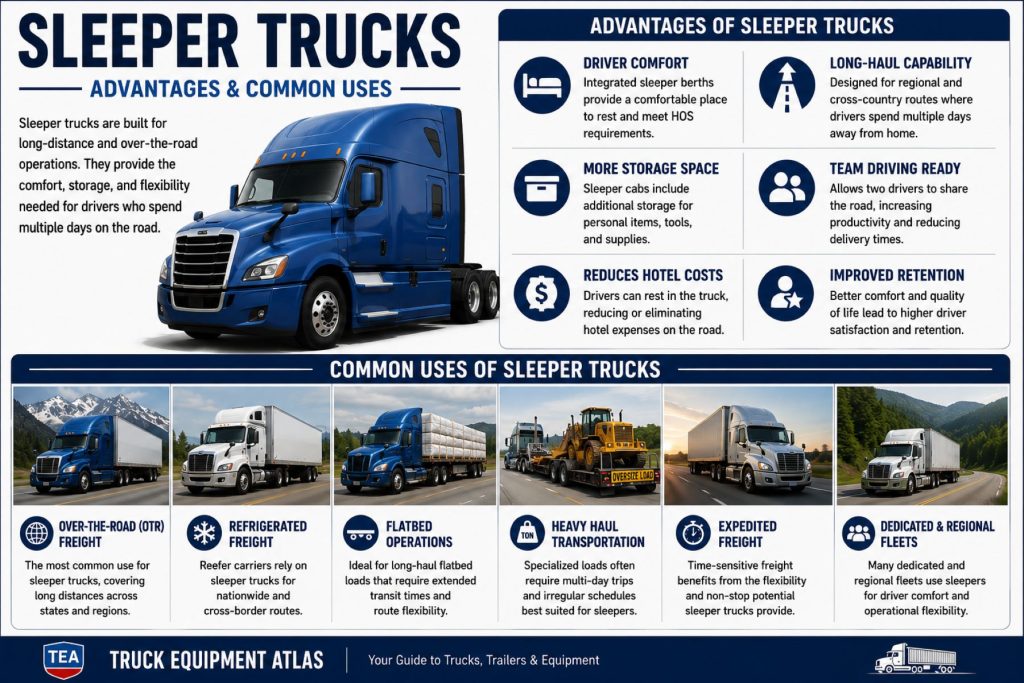
Advantages of Sleeper Trucks
Driver Comfort
Sleeper trucks provide drivers with a comfortable place to rest during required off-duty periods.
Extended Operating Range
Drivers can remain with the truck and freight without requiring hotel accommodations.
Greater Operational Flexibility
Sleeper-equipped trucks can handle a wide variety of route lengths and freight types.
Improved Driver Recruitment
Many drivers prefer sleeper trucks because they offer:
- Additional living space
- More storage
- Greater comfort
- Better quality of life while traveling
Team Driving Capability
Sleeper trucks allow team drivers to alternate driving and resting while keeping freight moving.
Common Sleeper Truck Applications
Over-the-Road Freight
Long-distance freight movement remains the most common sleeper truck application.
Refrigerated Freight
Many refrigerated carriers operate nationwide networks requiring sleeper-equipped tractors.
Flatbed Operations
Long-haul flatbed carriers frequently utilize sleeper trucks due to route length and schedule flexibility.
Heavy Haul Transportation
Specialized hauling operations often involve extended trips and irregular schedules.
Expedited Freight
Time-sensitive freight often requires the flexibility and extended operating range provided by sleeper trucks.
Cost Considerations
Purchase Price
Sleeper trucks generally cost more due to:
- Larger cab structures
- Sleeper equipment
- Additional HVAC systems
- Storage systems
- Electrical systems
Fuel Economy
Day cabs often provide slightly better fuel economy due to lower weight and reduced aerodynamic drag.
Maintenance Costs
Sleeper trucks typically require additional maintenance for:
- HVAC systems
- Auxiliary power equipment
- Appliances
- Electrical components
- Interior systems
Insurance Costs
Insurance premiums vary by operation but sleeper trucks generally carry higher replacement values.
Driver Comfort and Retention
Driver recruitment and retention remain major concerns throughout the trucking industry.
For fleets operating long-distance routes, providing comfortable sleeper trucks can improve driver satisfaction and retention.
For local operations, a day cab often provides all necessary functionality while reducing operating costs.
Regulatory Considerations
Federal Hours of Service regulations frequently influence truck configuration decisions.
Drivers operating extended routes must obtain required off-duty rest periods. Sleeper trucks allow those rest periods to occur within the vehicle while remaining close to the freight.
Although day cabs can legally perform longer routes when hotel accommodations are used, sleeper trucks often provide greater efficiency and flexibility.
Which Truck Is Right for Your Fleet?
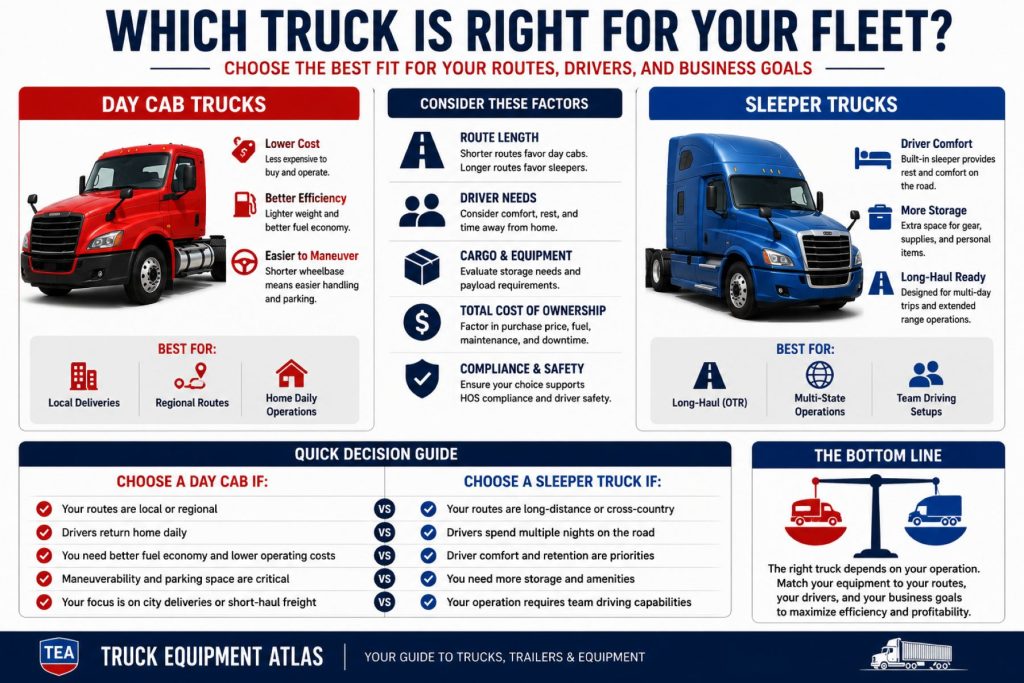
Choose a Day Cab If:
- Drivers return home daily
- Operations are primarily local
- Routes are regional and predictable
- Maneuverability is important
- Payload capacity matters
- Lower acquisition costs are preferred
Choose a Sleeper Truck If:
- Drivers spend multiple days on the road
- Routes cover long distances
- Team driving is common
- Driver comfort is a priority
- Operational flexibility is important
- Long-haul freight is your primary focus
Frequently Asked Questions
Can a day cab be used for long-haul trucking?
Yes. However, overnight accommodations may be required if drivers must remain away from home.
Are day cabs cheaper than sleeper trucks?
Generally yes. Day cabs typically cost less to purchase, maintain, and operate.
Which configuration provides better fuel economy?
Day cabs often provide slightly better fuel economy due to lower weight and shorter wheelbase configurations.
Which truck is easier to maneuver?
Day cabs are generally easier to maneuver because of their shorter wheelbase and overall length.
Are sleeper trucks only used for long-haul freight?
No. Many regional and dedicated fleets operate sleeper trucks for operational flexibility and driver comfort.
Bottom Line
Neither truck configuration is inherently better than the other.
Day cabs excel in local and regional operations where maneuverability, lower operating costs, and daily home time are priorities.
Sleeper trucks dominate long-haul and multi-day operations where driver comfort, operational flexibility, and extended range are essential.
Selecting the right configuration depends on your routes, freight, drivers, and long-term business goals.
Related Truck Types
Related Freight Types
Related Guides
- Choosing the Right Trailer for Your Freightelated Guides
- Complete Guide to Semi Truck Types
- Complete Guide to Trailer Types
- Complete Guide to Freight Types
- Class 6 vs Class 7 vs Class 8 Trucks
- Dry Van vs Refrigerated Trailer
- How Diesel Truck Engines Work
- Air Brake Systems Explained
- How Semi Truck Transmissions Work
- How to Choose the Right Commercial Truck