
Complete Guide to Semi Truck Types
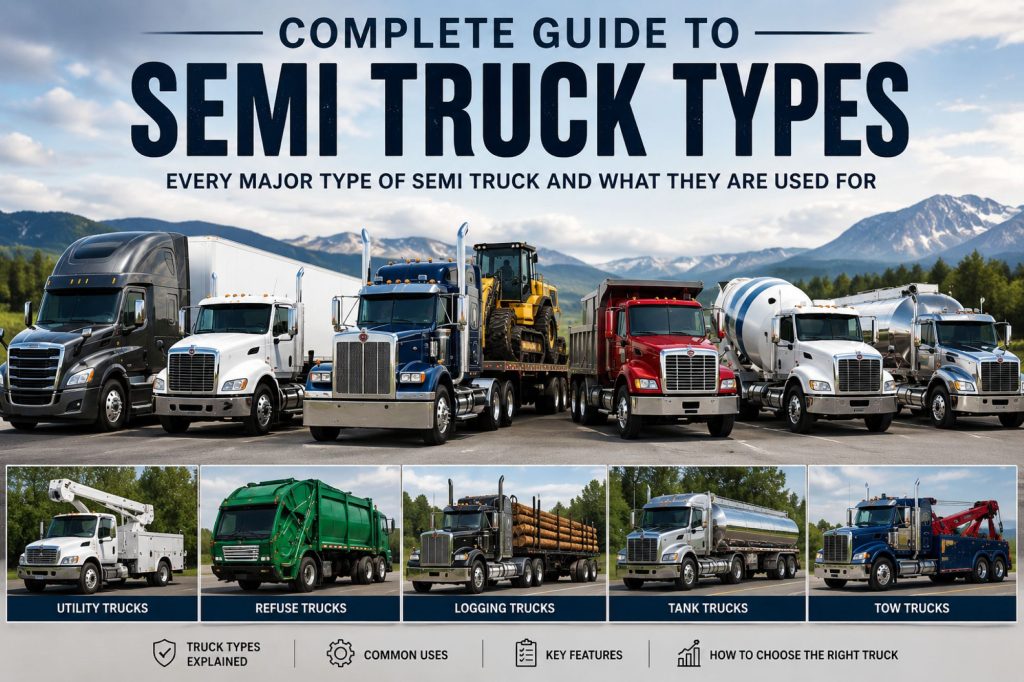
Multiple commercial truck types lineup including sleeper truck, day cab, dump truck, tank truck, and heavy-haul truck
Commercial trucks are responsible for moving the vast majority of freight throughout North America. From consumer goods and food products to construction equipment and fuel, commercial trucks play a critical role in keeping supply chains operating efficiently.
While many people use the term “semi truck” to describe any large truck, the commercial transportation industry relies on numerous truck configurations designed for specific applications, industries, and freight requirements.
This guide explores the major truck types used throughout the industry, how they differ, and which applications they are best suited for.
What Is a Semi Truck?
A semi truck, often called a tractor or truck tractor, is a powered vehicle designed to pull a semi-trailer using a fifth wheel connection. Semi trucks can be configured for long-haul freight transportation, regional operations, specialized hauling, vocational work, and countless other commercial applications.
Most commercial trucks fall into several major categories based on their intended use, operating environment, and equipment configuration.
Major Truck Categories
The most common truck categories include:
Each truck type offers advantages and limitations depending on the freight being transported and the operating environment.

Sleeper Trucks
Sleeper Trucks are designed for long-distance freight transportation where drivers may spend multiple days away from home. These trucks include a sleeping compartment behind the cab that allows drivers to rest while complying with hours-of-service regulations.
Common Applications
Advantages
- Extended operating range
- Improved driver comfort
- Reduced lodging costs
- Greater flexibility for long-distance routes
Limitations
- Higher purchase cost
- Increased vehicle weight
- Larger overall footprint
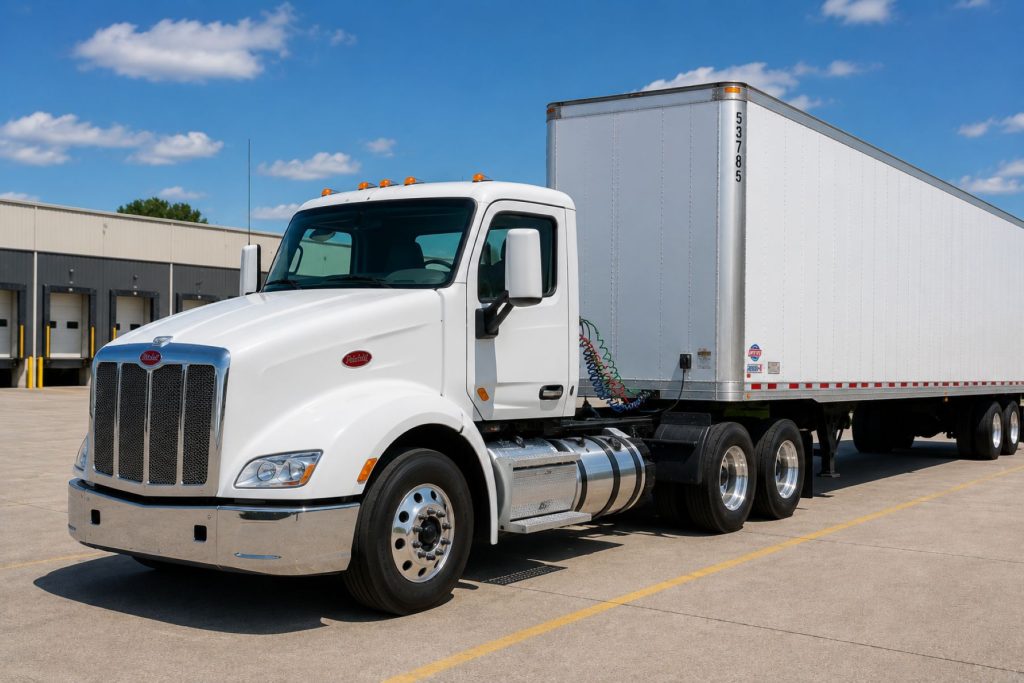
Day Cab Trucks
Day Cab Trucks eliminate the sleeper compartment and focus on maximizing maneuverability, payload capacity, and operational efficiency for shorter routes.
Common Applications
- Local delivery
- Dedicated routes
- Port operations
- Intermodal transportation
- Regional freight
Advantages
- Lower purchase cost
- Reduced weight
- Better visibility
- Improved maneuverability
Limitations
- Not designed for overnight travel
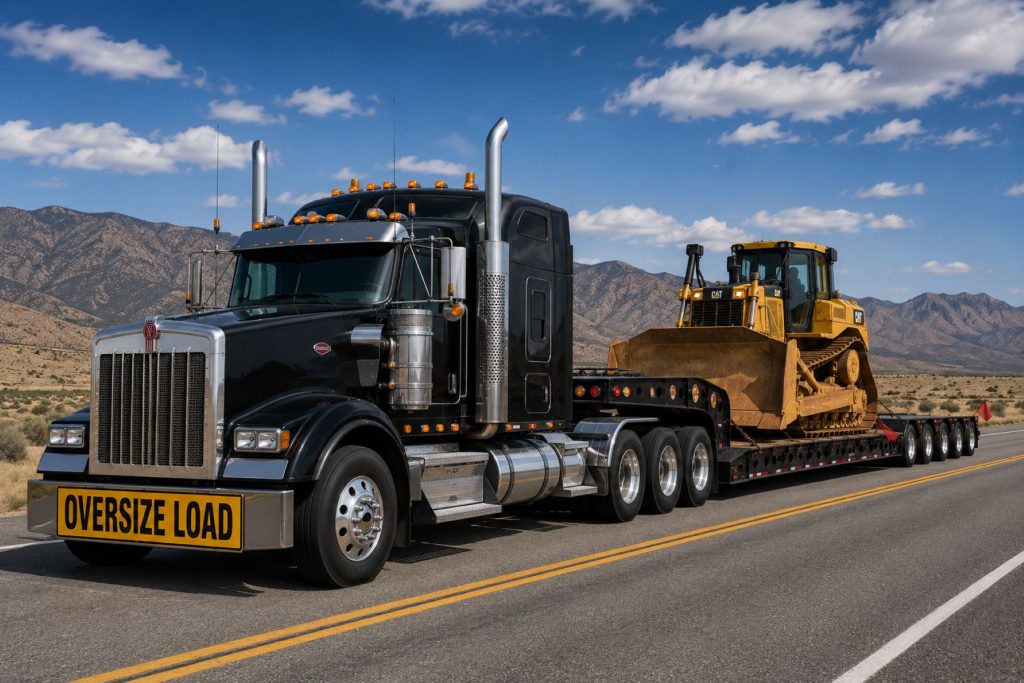
Heavy Haul Trucks
Heavy Haul Trucks are built to transport oversized and overweight loads that exceed standard legal dimensions or weight limits.
These trucks are commonly paired with:
Common Freight
- Construction equipment
- Mining equipment
- Industrial machinery
- Transformers
- Wind energy components
Key Characteristics
- High horsepower engines
- Reinforced frames
- Additional axle configurations
- Specialized drivetrains
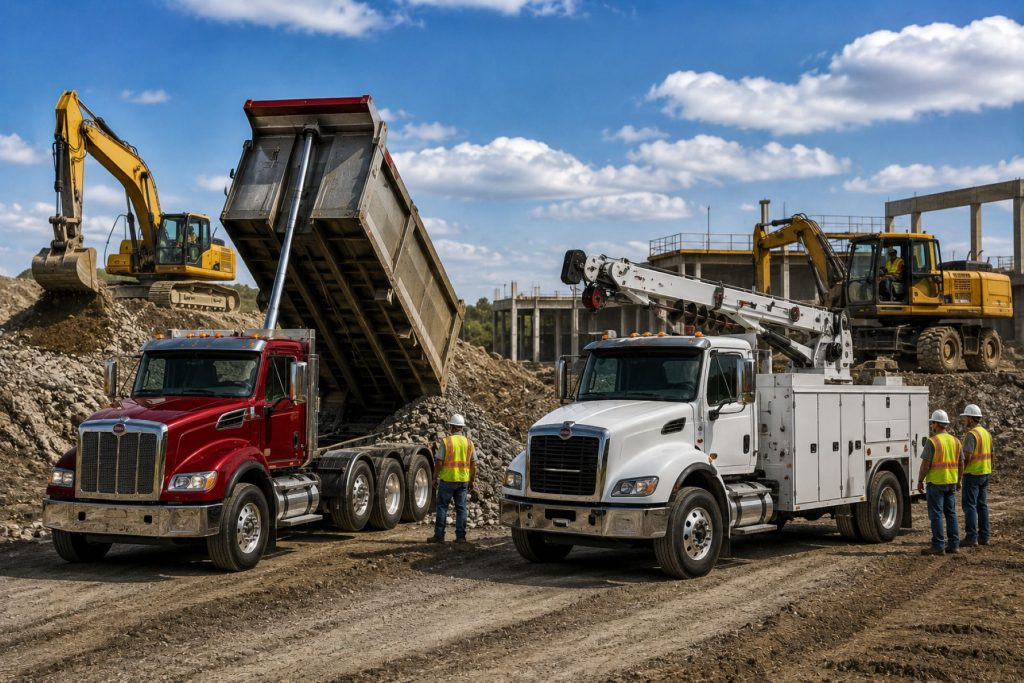
Vocational Trucks
Vocational Trucks are specialized commercial vehicles designed to perform specific work-related tasks rather than general freight transportation.
Common vocational truck types include:
These vehicles are frequently used in construction, municipal operations, utilities, mining, and infrastructure projects.
Dump Trucks
Dump Trucks transport loose materials such as gravel, dirt, sand, asphalt, demolition debris, and construction materials.
Common Industries
- Construction
- Road building
- Mining
- Site development
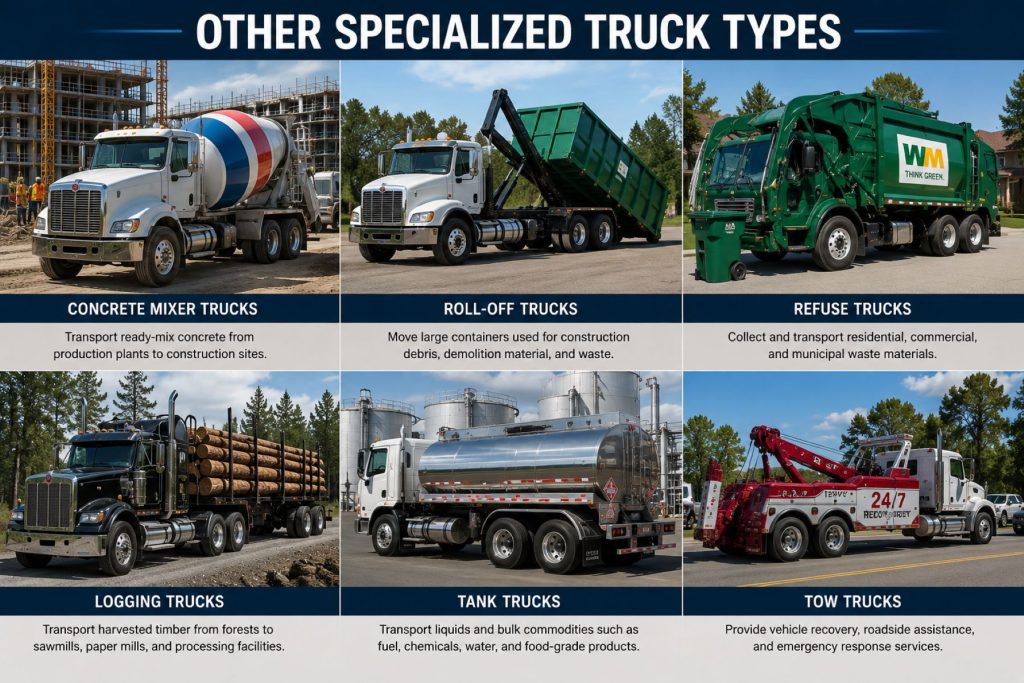
Other Specialized Truck Types
In addition to sleeper trucks, day cabs, heavy haul trucks, and dump trucks, the trucking industry uses many specialized vehicles designed for specific jobs and operating environments.
Concrete Mixer Trucks transport ready-mix concrete from production plants to construction sites and are commonly used in road building, commercial construction, and residential concrete work.
Roll-Off Trucks move large open-top containers used for construction debris, demolition material, scrap, and waste management operations.
Refuse Trucks are designed for residential, commercial, and municipal waste collection. These trucks may use rear-loading, front-loading, or side-loading body configurations depending on the route and application.
Logging Trucks transport harvested timber from forests to sawmills, paper mills, and processing facilities. These trucks are built to handle long, heavy timber loads and often operate in rugged forestry environments.
Tank Trucks transport liquids and bulk commodities such as fuel, water, milk, chemicals, food-grade products, and industrial liquids. Some tank trucks are designed for hazardous materials, while others are built for non-hazardous or food-grade service.
Tow Trucks provide vehicle recovery, roadside assistance, equipment transport, and emergency response services. Common configurations include flatbed carriers, wheel-lift tow trucks, integrated recovery units, and heavy-duty wreckers.
Choosing the Right Truck Type
Selecting the proper truck depends on several important factors:
- Freight type
- Operating region
- Weight requirements
- Trailer compatibility
- Driver requirements
- Regulatory compliance
- Ownership costs
- Equipment specialization
Understanding these factors helps carriers, owner-operators, and fleet managers choose equipment that best fits their operational needs.
Related Truck Equipment Atlas Resources
Continue your research by exploring:
- Truck Types
- Trailer Types
- Commercial Truck Engines
- Equipment Systems
- Freight Types
- Manufacturers
- Trucking Equipment Guides
Final Thoughts
Commercial trucking relies on a diverse range of equipment designed to perform specific transportation and vocational tasks. Whether hauling freight across the country, delivering construction materials to a jobsite, transporting fuel, or recovering disabled vehicles, each truck type serves an important role within the transportation industry.
Understanding the strengths, limitations, and applications of each truck category can help drivers, fleet owners, equipment buyers, and industry professionals make more informed equipment decisions.
Related Guides
- Complete Guide to Trailer Types
- Complete Guide to Freight Types
- Day Cab vs Sleeper Truck
- Class 6 vs Class 7 vs Class 8 Trucks
- Dry Van vs Refrigerated Trailer
- How Diesel Truck Engines Work
- Air Brake Systems Explained
- How Semi Truck Transmissions Work
- How to Choose the Right Commercial Truck
- Buying Your First Semi Truck
- New vs Used Commercial Trucks
- Choosing the Right Trailer for Your Freight