
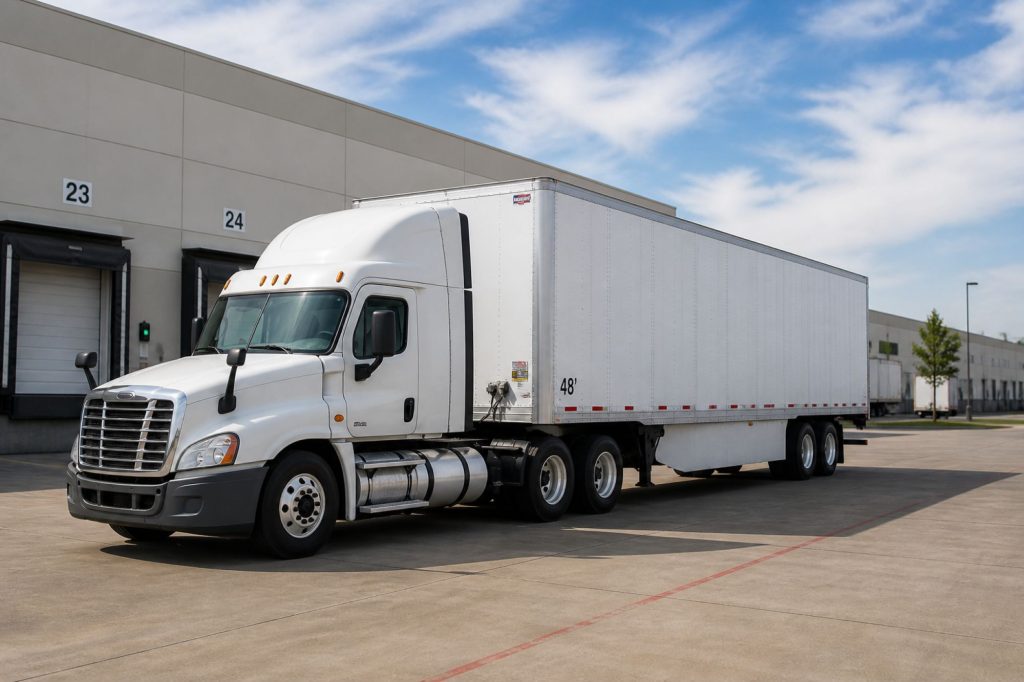
48 ft Dry Van Trailer
Quick Facts
Length: 48 feet
Trailer Type: Enclosed dry van
Primary Use: General freight transportation
Capacity: Typically 22–24 standard pallets
Common Height: 13 ft 6 in overall
Door Type: Swing doors (most common)
Overview
The 48 ft dry van trailer is a standard enclosed trailer used for transporting general freight, offering a balance between cargo capacity and maneuverability. While slightly shorter than the 53 ft trailer, it remains widely used in regional distribution, urban deliveries, and operations where tighter space constraints are a factor.
Its versatility makes it a practical option for carriers operating in areas with restricted access while still maintaining strong freight capacity.
Key Characteristics
- Flexible for a wide range of cargo types
- Fully enclosed trailer protects cargo from weather
- More maneuverable than 53 ft trailers
- Compatible with standard loading docks
- Ideal for regional and urban freight operations
Common Cargo
The 48 ft dry van trailer is used for:
- Packaged goods
- Retail products
- Consumer goods
- Electronics
- Non-perishable food
- Household items
- General freight shipments
Advantages
- Versatile across multiple industries
- Improved maneuverability in tighter environments
- Suitable for urban and regional routes
- Compatible with most warehouse facilities
- Lower space requirements for loading and parking
Limitations and Considerations
- Limited access points (rear loading only)
- Reduced cargo capacity compared to 53 ft trailers
- Less efficient for high-volume long-haul freight
- Still requires dock access for optimal loading
- Not suitable for temperature-sensitive cargo
Equipment and Systems
The 48 ft dry van trailer operates alongside key systems:
Operational Use Cases
The 48 ft dry van trailer is commonly used in:
- Regional dry van freight
- Dedicated dry van freight
- Urban and local distribution
- Short-haul freight operations
Industry Applications
- Retail distribution
- Manufacturing supply chains
- Local and regional logistics
- Consumer goods delivery
- Warehouse-to-store transport
Comparison to 53 ft Dry Van Trailer
Compared to the 53 ft dry van trailer, the 48 ft trailer offers improved maneuverability and is better suited for tighter delivery environments. However, it sacrifices overall cargo capacity, making it less efficient for long-haul, high-volume freight operations.
Popular Trailer Models
Related Trailer Types
Related Freight Types
FAQ
Why use a 48 ft trailer instead of 53 ft?
A 48 ft trailer provides better maneuverability and is often used in areas where space is limited.
How many pallets fit in a 48 ft trailer?
Typically between 22 and 24 standard pallets, depending on configuration.
Is 48 ft still commonly used?
Yes, especially in regional and specialized operations where flexibility is important.
Availability and Industry Demand
While 53 ft trailers dominate long-haul freight, 48 ft dry van trailers remain an important part of regional distribution networks and operations requiring greater maneuverability.
Follow the Growth of Truck Equipment Atlas
Truck Equipment Atlas continues to expand with new truck profiles, trailer coverage, diesel engine pages, equipment system resources, manufacturer information, freight-sector content, and educational guides.
Visit our Site Updates page to follow major milestones, newly published resources, and future projects as we continue building one of the industry’s growing commercial trucking equipment reference libraries.
From commercial trucks and specialized trailers to diesel engines, equipment systems, and future Truck Stop Atlas resources, new content is being added regularly to help drivers, owner-operators, fleets, technicians, students, and industry professionals better understand the equipment that keeps freight moving.
Explore the Latest Site Updates
Support Trucking Families
Drivers operating 48 ft dry van trailers support critical regional supply chains. Organizations like Grey Cross help trucking families during times of need.