
Specialty Trailers
Overview
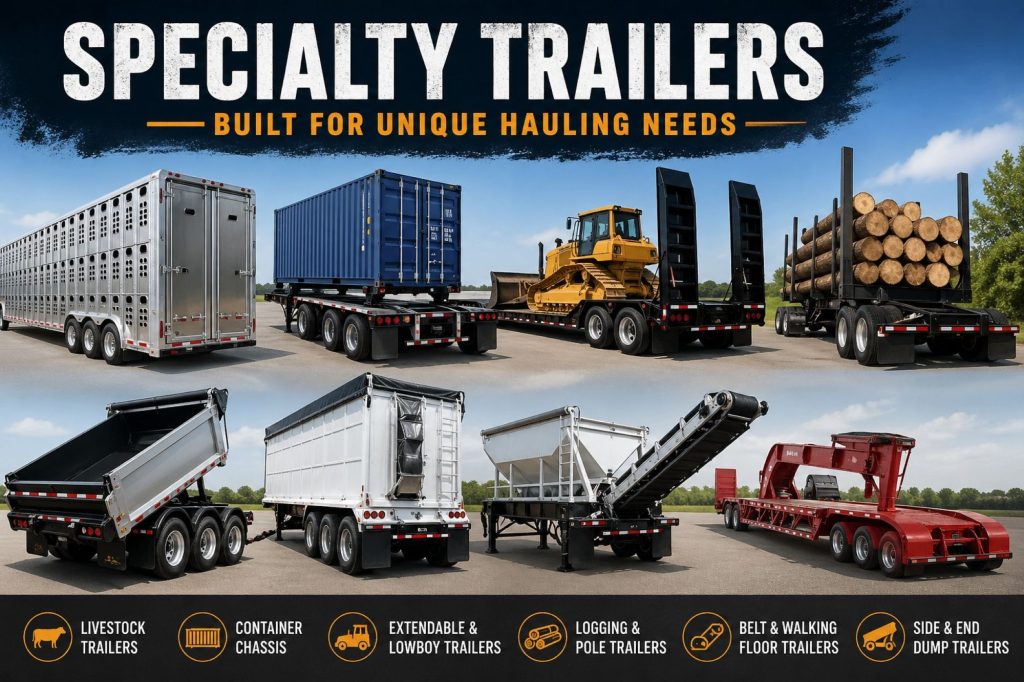
Specialty trailers are designed to handle loads and applications that fall outside standard freight categories. These trailers are built for unique hauling requirements, including oversized loads, irregular cargo, specialized materials, and industry-specific operations.
Unlike dry vans, flatbeds, or tankers, specialty trailers are engineered for specific use cases where standard equipment is not sufficient. They play a critical role in industries such as construction, agriculture, energy, logging, and heavy haul operations.
Specialty trailers represent one part of the broader trailer ecosystem. To explore how they compare with standard trailer categories, visit the Trailer Types page for a complete breakdown of all major trailer configurations.
Key Characteristics
Specialty trailers are defined by their ability to handle non-standard freight and operating conditions.
- Frequently require experienced operators
- Built for specific or niche hauling applications
- Designed to handle irregular, oversized, or specialized loads
- May include custom configurations and attachments
- Often used in combination with specialized truck setups
- Engineered for durability in demanding environments
Common Configurations
Specialty trailers include a wide range of designs depending on the type of cargo and industry requirements.
- Livestock trailers for transporting animals
- Container chassis for intermodal freight movement
- Extendable trailers for oversized loads
- Double drop trailers for tall equipment
- Pole trailers for logs and long materials
- Walking floor trailers for automated unloading
- Belt trailers for controlled bulk material discharge
- Side dump trailers for improved unloading stability
Each configuration is built to solve a specific hauling challenge that standard trailers cannot address.
Common Uses
Specialty trailers are used in industries that require unique hauling solutions.
- Industrial and energy sector hauling
- Agriculture and livestock transport
- Construction and oversized equipment movement
- Logging and forestry operations
- Bulk material handling
- Intermodal container transport
Advantages
Specialty trailers provide capabilities that standard trailers cannot match.
- Flexibility across multiple specialized uses
- Ability to haul unique or non-standard cargo
- Improved efficiency for specific applications
- Custom configurations for specialized industries
- Enhanced performance in niche environments
Limitations
Because they are designed for specific applications, specialty trailers also have limitations.
- Availability can be more limited than standard trailers
- Not suitable for general freight hauling
- Higher acquisition and maintenance costs
- Limited versatility outside intended use
- May require specialized drivers or permits
Driver and Operator Considerations
Operating specialty trailers often requires additional skill and awareness.
Drivers must understand load securement for unusual cargo shapes and weights. Depending on the configuration, operators may need to manage extendable frames, moving floors, or specialized unloading systems.
Some specialty trailers require additional training or experience, especially in industries such as heavy haul, logging, or livestock transport.
Maintenance and Ownership Notes
Specialty trailers often include more complex components than standard trailers.
- Moving parts such as belts or walking floors require regular maintenance
- Structural components must be inspected due to heavy or irregular loads
- Hydraulics and specialized systems require routine checks
- Wear patterns vary depending on application
- Parts availability may differ by manufacturer
Proper maintenance is critical to ensure reliability and safety in specialized operations.
Specialty Trailer Models on Truck Equipment Atlas
Truck Equipment Atlas includes a growing collection of specialty trailer profiles covering equipment designed for machinery transport, heavy haul, oversized freight, equipment loading, and other applications that require specialized trailer configurations.
Explore the specialty trailer models currently available on Truck Equipment Atlas:
- Kalyn Siebert Specialized Trailer
- Landoll Traveling Axle Trailer
- Talbert Traveling Axle Trailer
- Trail King Hydraulic Tail Trailer
- XL Specialized Extendable Trailer
- XL Specialized Hydraulic Detachable Trailer
Additional specialty, heavy-haul, and specialized transport trailer models will be added as the Truck Equipment Atlas trailer library continues to expand.
Freight & Industry Sectors
• Specialty & Niche Freight
• Heavy Haul / Oversized Freight
• Construction & Aggregate Freight
Related Truck Types
• Sleeper Trucks
• Day Cab Trucks
• Heavy Haul Trucks
Related Equipment
• Suspension Systems
• Brake Systems
• Axles & Differentials
• Electrical Systems
• Safety Systems
Related Trailer Types
- Dump Trailers
- Conestoga Trailers
- Dry Van Trailers
- Flatbed Trailers
- Step Deck Trailers
- Lowboy and RGN Trailers
- Refrigerated Trailers
- Tanker Trailers
- Car Hauler Trailers
Related Guides
- Oversize Load Transportation Guide
- Heavy Haul Freight Guide
- Choosing the Right Trailer for Your Freight
How to Use This Section
Each trailer type page is designed to provide a structured overview of its role, configurations, and real-world applications.
As the site expands, additional pages will break down individual specialty trailer types, allowing users to explore specific equipment in more detail.
What You’ll Find on Specialty Trailer Pages
Each specialty trailer page will follow a consistent format to provide clear and useful information.
This includes:
- Related equipment and applications
- Overview and real-world use
- Key characteristics and configurations
- Advantages and limitations
- Driver and operator considerations
- Maintenance and ownership insights
Looking Ahead
The specialty trailers section will continue to expand as new configurations and niche applications are added.
Future content may include:
- Industry-focused insights
- Individual trailer breakdowns
- Application-specific recommendations
- Equipment comparisons
Follow the Growth of Truck Equipment Atlas
Truck Equipment Atlas continues to expand with new truck profiles, trailer coverage, diesel engine pages, equipment system resources, manufacturer information, freight-sector content, and educational guides.
Visit our Site Updates page to follow major milestones, newly published resources, and future projects as we continue building one of the industry’s growing commercial trucking equipment reference libraries.
From commercial trucks and specialized trailers to diesel engines, equipment systems, and future Truck Stop Atlas resources, new content is being added regularly to help drivers, owner-operators, fleets, technicians, students, and industry professionals better understand the equipment that keeps freight moving.
Explore the Latest Site Updates
Stay Connected
As Truck Equipment Atlas continues to grow, the specialty trailers section will evolve into a comprehensive resource for specialized hauling equipment.