
XL Specialized Extendable Trailer
Quick Facts
- Manufacturer: XL Specialized Trailers
- Trailer Type: Extendable Flatbed Trailer
- Model: XL Specialized Extendable Trailer
- Common Lengths: 48 ft, 53 ft, 60 ft, 65 ft, 80 ft+ Extended
- Common Width: 102 inches
- Trailer Construction: High-Strength Steel Construction
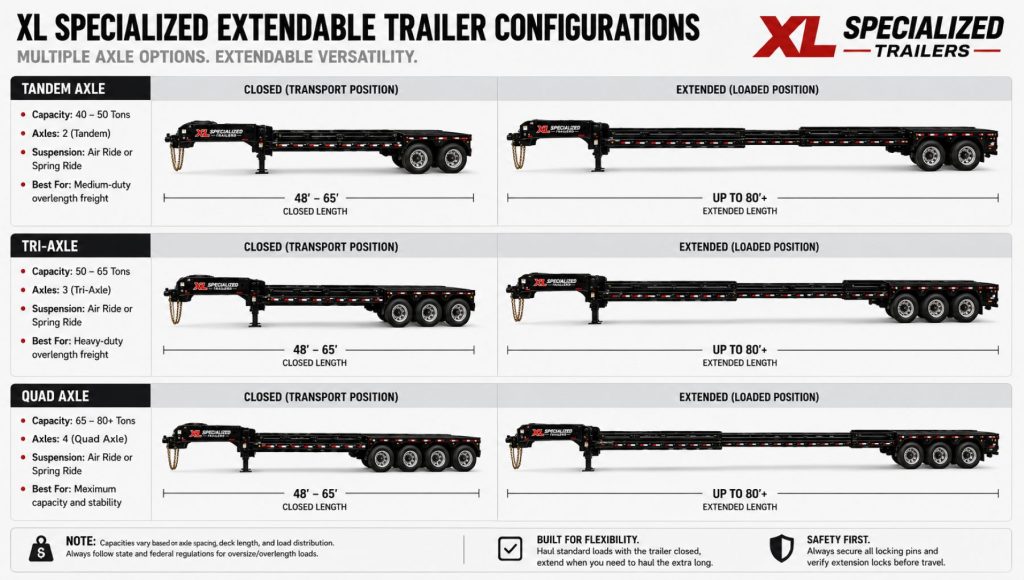
- Common Axle Configurations: Tandem Axle, Tri-Axle, Quad Axle
- Typical Capacity: 40 to 80 Tons Depending on Configuration
- Primary Applications: Long Freight Transport, Construction Equipment Hauling, Structural Steel Transport, Wind Energy Components
- Common Freight Types: Bridge Beams, Steel Pipes, Utility Poles, Wind Turbine Components, Construction Materials, Large Machinery
- Loading System: Sliding Extendable Deck
- Suspension Options: Air Ride or Spring Ride
- Production Status: In Production
Overview
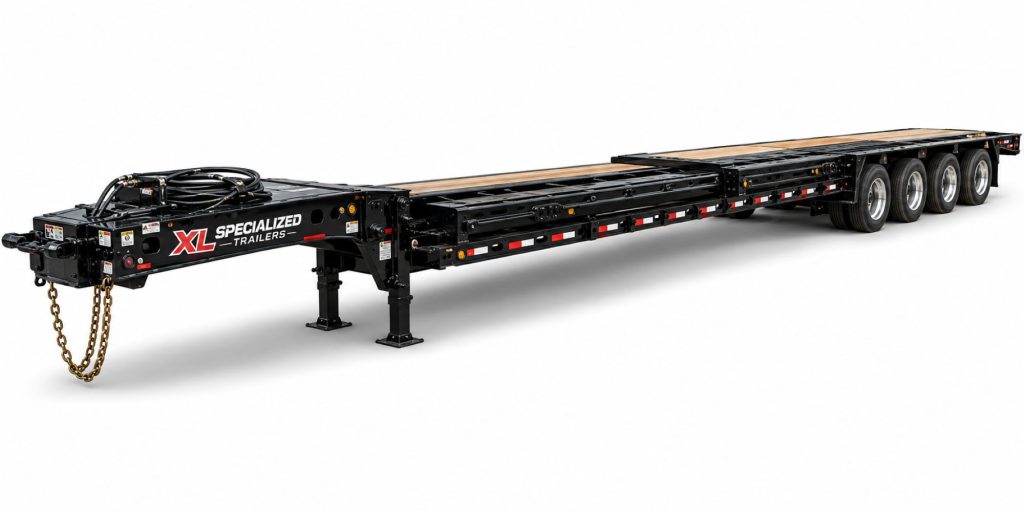
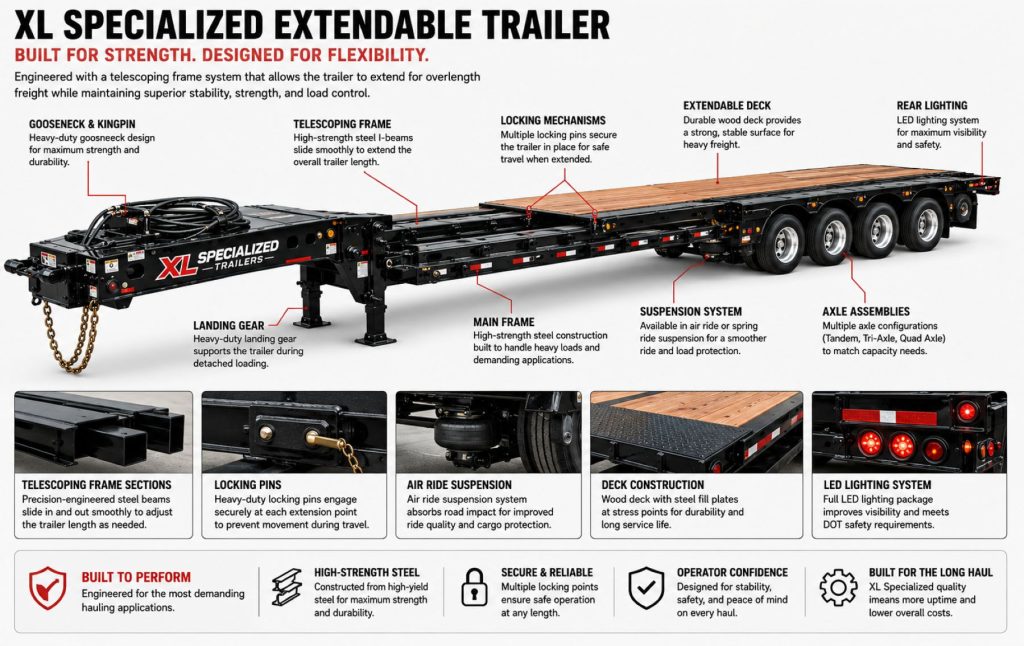
The XL Specialized Extendable Trailer is designed to transport freight that exceeds the length limitations of traditional flatbed trailers. Using a telescoping frame design, the trailer can extend significantly beyond its standard transport length, allowing operators to haul exceptionally long cargo while maintaining proper weight distribution and load stability.
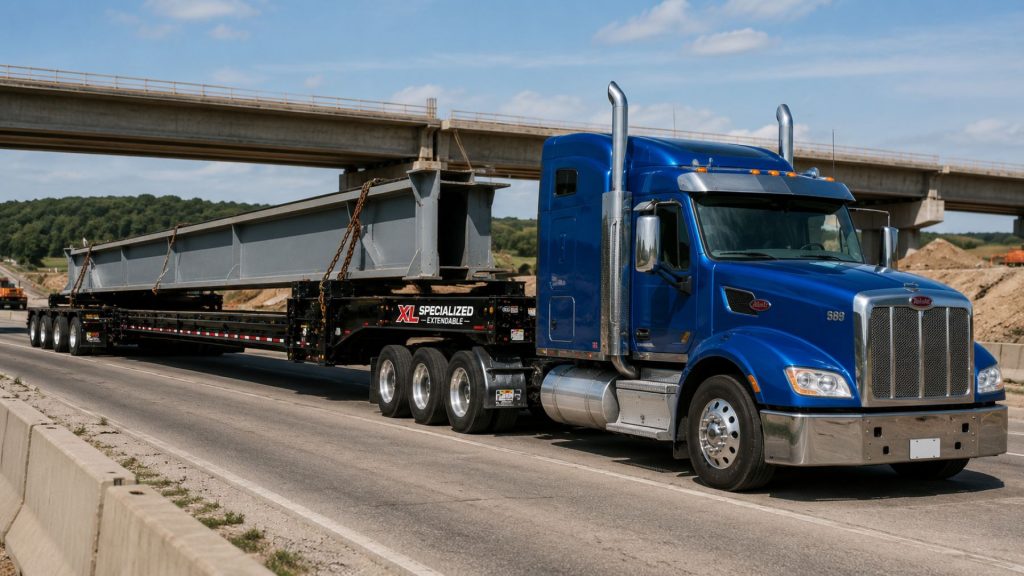
These trailers are commonly used in heavy-haul, construction, utility, infrastructure, and energy industries where oversized or overlength freight must be transported safely and efficiently.
Key Characteristics
The defining feature of an XL Specialized Extendable Trailer is its sliding frame system, which allows the trailer deck to extend and retract depending on freight requirements. This flexibility enables fleets to transport both standard and oversized freight using a single trailer platform.
The design is especially valuable for freight that cannot be legally or safely loaded onto a conventional flatbed trailer due to length restrictions.
Common Specifications
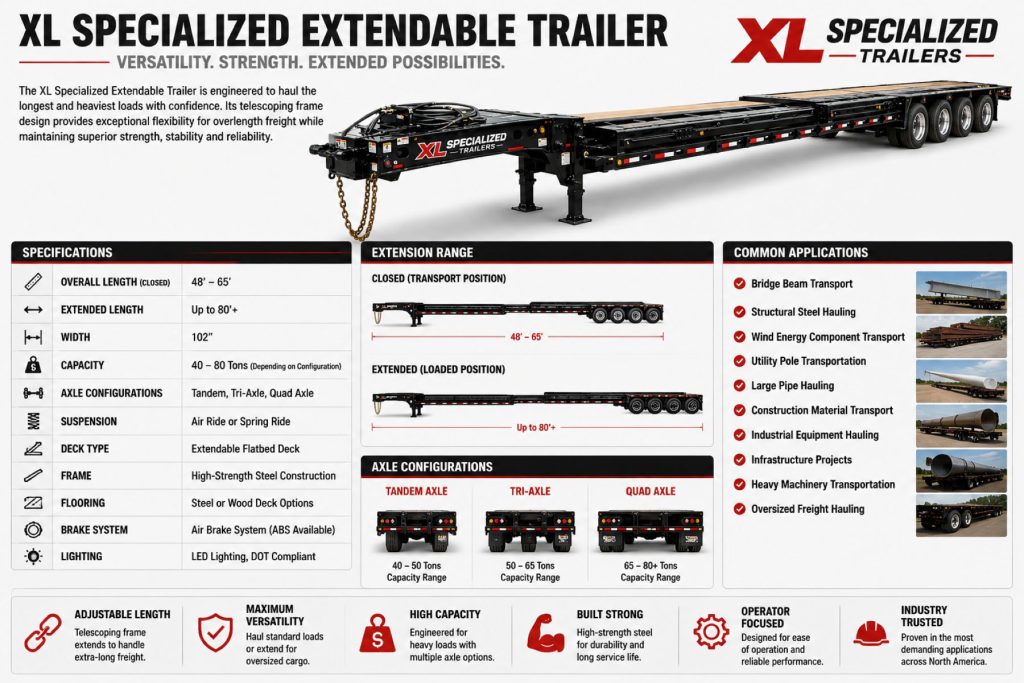
Overall Length
Typically 48 to 65 feet closed, with extension capabilities reaching 80 feet or more depending on model.
Width
Standard legal width of 102 inches.
Trailer Construction
High-strength steel frame designed for heavy-duty hauling applications.
Capacity
Typically 40 to 80 tons depending on model and axle configuration.
Axle Configurations
Available in tandem axle, tri-axle, and quad axle configurations.
Suspension
Air ride or spring ride suspension systems.
Deck Type
Extendable flatbed deck.
Extension System
Telescoping sliding frame mechanism.
Flooring
Steel deck or wood deck options.
Landing Gear
Heavy-duty commercial landing gear.
Brake System
Air brake system compliant with FMCSA and DOT regulations.
Freight Compatibility
Long structural freight, industrial components, utility equipment, and oversized loads.
Common Applications
- Bridge Beam Transport
- Structural Steel Hauling
- Wind Energy Component Transport
- Utility Pole Transportation
- Large Pipe Hauling
- Construction Material Transport
- Industrial Equipment Hauling
- Infrastructure Projects
- Heavy Machinery Transportation
- Oversized Freight Hauling
Advantages
- Adjustable trailer length
- Hauls extremely long freight
- Excellent load flexibility
- Reduces need for specialized trailers
- Strong structural design
- Multiple axle options
- Versatile freight compatibility
- Widely accepted in heavy-haul operations
Limitations or Considerations
- Higher purchase cost
- Heavier empty weight
- More maintenance than standard flatbeds
- Extension system requires inspections
- May require permits for oversized loads
- Complex loading procedures
- Additional moving components
- Longer turning radius when extended
Driver and Operator Considerations
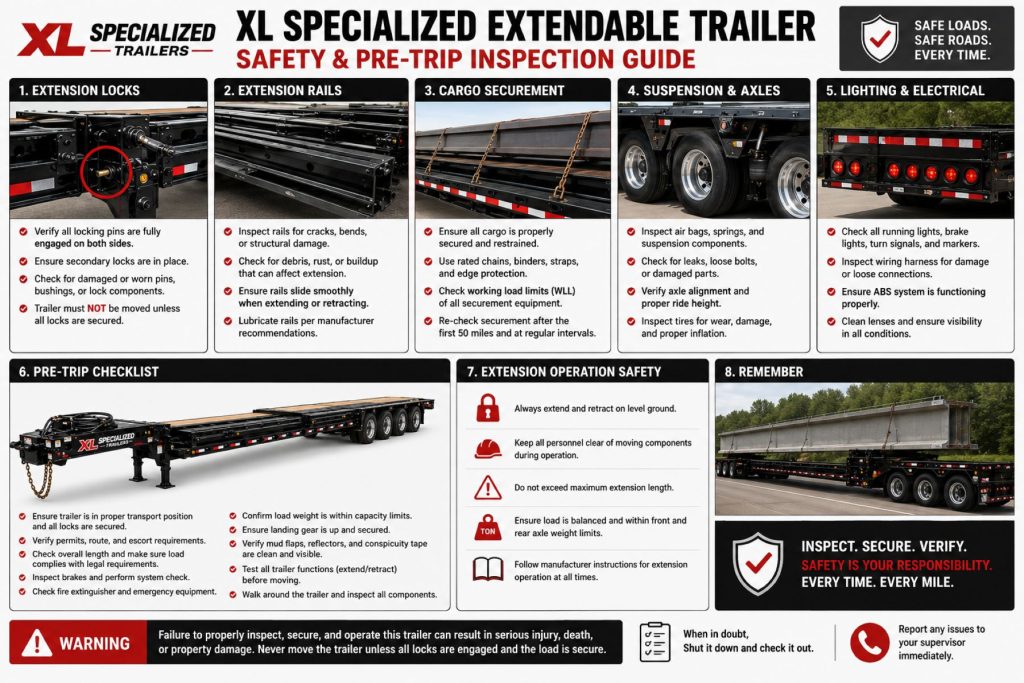
Drivers should inspect extension rails, locking mechanisms, suspension systems, brakes, lighting systems, and cargo securement equipment before each trip. Operators must ensure all extension locks are fully engaged and secured before highway travel.
Long loads often require route planning, escort vehicles, permits, and compliance with state oversize regulations.
Maintenance and Ownership Notes
Routine maintenance includes inspection of sliding frame rails, extension locking systems, hydraulic or mechanical extension components, suspension systems, brakes, wheel ends, tires, lighting systems, and structural frame members.
Proper lubrication of moving extension components is critical for long-term reliability.
Buying Considerations
- Maximum freight length requirements
- Extension range needed
- Weight capacity requirements
- Axle configuration needs
- New versus used pricing
- Maintenance history
- Permit requirements
- Dealer support availability
- Fleet compatibility
- Operating environment
Common Brands or Manufacturers
- XL Specialized Trailers
- Fontaine Trailer
- Trail King Industries
- Talbert Manufacturing
- Reitnouer Trailers
- Doepker Industries
- Dorsey Trailer
Variants and Related Configurations
- Extendable Flatbed Trailer
- Stretch Trailer
- Heavy Haul Extendable Trailer
- Beam Trailer
- Flatbed Trailer
- Specialized Haul Trailer
- Construction Trailer
- Oversized Load Trailer
Comparison to Similar Trailers
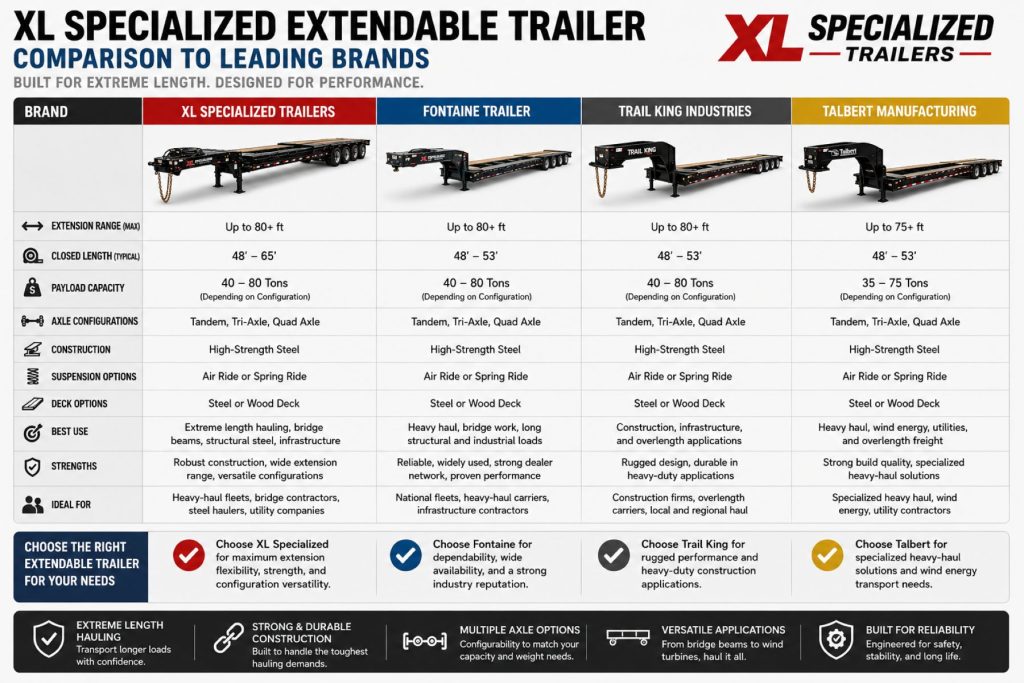
The XL Specialized Extendable Trailer is commonly compared to extendable trailers from Fontaine, Talbert, and Trail King. XL Specialized is well known for robust construction and versatile extension systems. Compared to conventional flatbeds, extendable trailers offer significantly greater flexibility when hauling oversized and overlength freight. Compared to beam trailers, they provide broader freight compatibility across multiple industries.
Best Fit For
- Heavy-haul fleets
- Bridge contractors
- Steel haulers
- Utility contractors
- Wind energy companies
- Infrastructure contractors
- Oversized freight carriers
- Industrial transportation fleets
Related Equipment
- Bridge Sections
- Steel Beams
- Wind Energy Components
- Utility Poles
- Industrial Machinery
- Large Pipe
- Construction Equipment
- Infrastructure Materials
Related Freight Types
- Bridge Beams
- Structural Steel
- Wind Turbine Blades
- Utility Poles
- Large Pipe
- Industrial Equipment
- Construction Materials
- Oversized Components
Related Trailer Types
- Extendable Flatbed Trailers
- Stretch Trailers
- Beam Trailers
- Flatbed Trailers
- Heavy Haul Trailers
- Specialized Trailers
- Oversized Load Trailers
Related Trailer Models
- Fontaine Extendable Trailer
- Talbert Extendable Trailer
- Trail King Extendable Trailer
- Reitnouer Extendable Trailer
- XL Specialized Hydraulic Detachable Trailer
Related Guides
Regulatory and Compliance Notes
XL Specialized Extendable Trailers must comply with FMCSA regulations regarding cargo securement, lighting requirements, braking systems, axle weight limits, overall vehicle dimensions, and oversize load transportation requirements.
Because these trailers frequently transport overlength freight, operators often must obtain state-issued oversize or overlength permits. Depending on cargo dimensions and route requirements, escort vehicles, route surveys, restricted travel times, and additional safety equipment may also be required.
Drivers should always verify permit requirements before moving oversized freight across state lines.
Real World Operating Notes
XL Specialized Extendable Trailers are commonly used by bridge contractors, steel fabricators, utility companies, wind energy contractors, heavy-haul fleets, and infrastructure construction companies throughout North America.
One of the biggest advantages of an extendable trailer is its flexibility. Operators can haul standard-length freight with the trailer retracted and then extend the deck when longer cargo is required. This allows fleets to maximize trailer utilization while reducing the need for multiple specialized trailer types.
These trailers are especially common on bridge projects, utility construction projects, wind farm developments, pipeline construction, and large infrastructure jobs where exceptionally long cargo must be transported safely.
Frequently Asked Questions
What is an XL Specialized Extendable Trailer used for?
It is used to transport freight that exceeds the length capacity of conventional flatbed trailers.
How does an extendable trailer work?
The trailer frame slides outward using a telescoping design, increasing overall deck length for oversized freight.
What freight is commonly hauled on an extendable trailer?
Bridge beams, steel structures, utility poles, wind energy components, large pipes, and other long freight.
Do extendable trailers require permits?
Many loads hauled on extendable trailers require oversize or overlength permits depending on cargo dimensions and state regulations.
Who commonly operates XL Specialized Extendable Trailers?
Heavy-haul fleets, bridge contractors, steel haulers, utility contractors, infrastructure companies, and specialized freight carriers commonly use these trailers.
Availability and Where to Find
XL Specialized Extendable Trailers can be purchased through authorized XL Specialized dealers, commercial trailer dealerships, heavy-haul equipment distributors, trailer auctions, fleet liquidation sales, and used equipment marketplaces throughout North America. Buyers evaluating used units should carefully inspect the trailer’s extension rails, locking mechanisms, structural frame, suspension system, brake components, tires, lighting systems, and maintenance records. Because extendable trailers are frequently used in demanding heavy-haul and oversized freight applications, verifying the condition of the telescoping frame system and overall structural integrity is particularly important before purchase.
Support Trucking Families
Truck Equipment Atlas supports the mission of Grey Cross, a nonprofit dedicated to helping families of truck drivers who lose their lives while on the road. As the site grows, part of its mission is to bring awareness and support to these families.
Podcast or Video Section
Learn More Through Audio and Video
Truck Equipment Atlas will continue expanding with podcast episodes, interviews, and equipment breakdowns to help drivers and fleets better understand trucks and equipment.
Follow the Growth of Truck Equipment Atlas
Truck Equipment Atlas continues to expand with new truck profiles, trailer coverage, diesel engine pages, equipment system resources, manufacturer information, and educational guides.
Visit our Site Updates page to explore recent additions, project milestones, and upcoming resources as we continue building one of the industry’s growing commercial trucking equipment reference libraries.
View the Latest Site Updates: Truck Equipment Atlas Site Updates