
ABS & Electronic Braking Systems
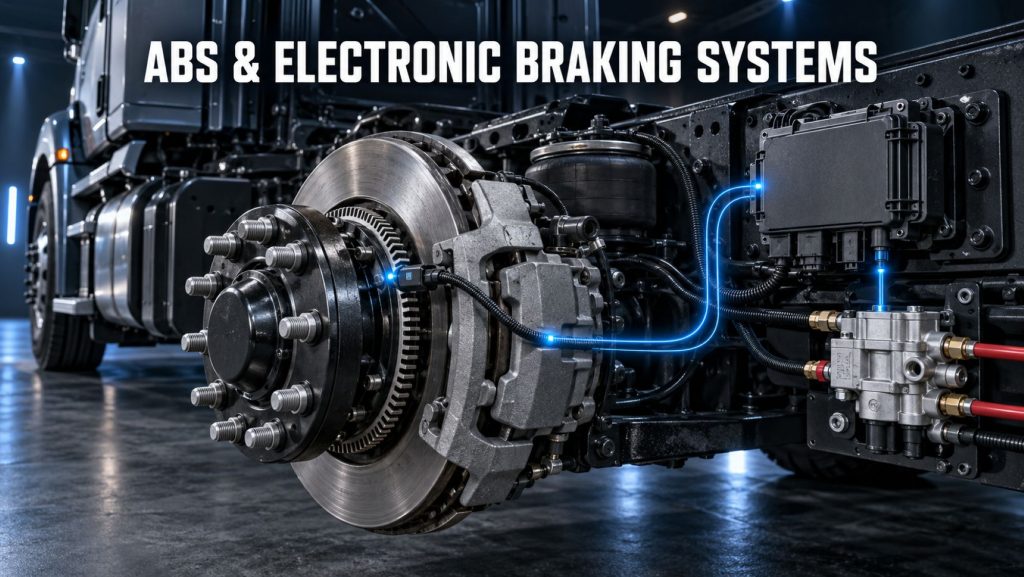
Commercial antilock braking and electronic braking systems use wheel-speed sensors, electronic controllers, modulator valves, and vehicle-network data to help manage braking force and vehicle stability.
Antilock braking systems help prevent excessive wheel lockup during hard braking. More advanced systems can add traction control, rollover mitigation, electronic stability control, brake-force coordination, parking-brake control, and communication between the tractor and trailer.
Truck Equipment Atlas covers truck and trailer ABS, wheel-speed sensors, tone rings, electronic control units, modulator valves, stability-control systems, electronic parking brakes, diagnostic equipment, maintenance considerations, and individual products from major commercial braking manufacturers.
ABS and Electronic Braking Systems on Truck Equipment Atlas
Explore the commercial ABS and electronic braking systems being added to Truck Equipment Atlas:
Bendix
ZF WABCO
Meritor WABCO
Additional truck ABS, trailer ABS, traction-control systems, rollover-mitigation systems, electronic stability controls, electronic parking brakes, brake controllers, sensors, and diagnostic technologies will be added as the Truck Equipment Atlas Brake Systems Library continues to expand.
How Commercial Truck ABS Works
Wheel-speed sensors monitor the rotation of individual wheels or selected wheel positions.
Each sensor reads a rotating tone ring mounted at the wheel end. As the tone-ring teeth pass the sensor, they create an electrical signal corresponding to wheel speed.
The electronic control unit compares the wheel-speed signals. If one wheel begins decelerating much more quickly than the others, the controller may determine that the wheel is approaching lockup.
The controller commands an ABS modulator valve to:
- Hold brake pressure
- Reduce brake pressure
- Reapply brake pressure
This cycle can occur rapidly during a hard stop.
By controlling wheel lockup, ABS can help the driver maintain steering and directional stability. It does not create additional tire traction or eliminate the need for proper stopping distance.
Major ABS and Electronic Braking Components
A commercial electronic braking system may include:
- Wheel-speed sensors
- ABS tone rings
- Electronic control unit
- ABS modulator valves
- Relay modulator valves
- Brake-pressure sensors
- Steering-angle sensor
- Yaw-rate sensor
- Lateral-acceleration sensor
- Tractor ABS warning lamp
- Trailer ABS warning lamp
- Diagnostic connector
- Wiring harnesses
- Electrical power supply
- Ground connections
- Tractor-trailer electrical cable
- Vehicle communication network
- Engine-control connection
- Transmission connection
- Electronic stability-control module
- Trailer stability-control module
- Electronic parking-brake controls
- Dash switches and indicators
Exact equipment depends on the vehicle, number of axles, brake configuration, stability functions, trailer connections, and production year.
Wheel-Speed Sensors
Wheel-speed sensors provide the rotational information used by the ABS controller.
A sensor is normally positioned close to a toothed tone ring at the wheel end. The air gap and mounting arrangement must allow the sensor to produce a reliable signal.
Wheel-speed sensor problems may result from:
- Excessive sensor gap
- Sensor movement
- Damaged sensor
- Broken wiring
- Corroded connectors
- Contaminated connections
- Damaged tone ring
- Loose wheel bearing
- Wheel-end movement
- Metal debris
- Improper installation
- Incorrect replacement components
A weak, irregular, or missing wheel-speed signal may cause the ABS warning lamp to illuminate and can disable functions that depend on that sensor.
ABS Tone Rings
The tone ring rotates with the wheel or hub and provides the toothed surface read by the wheel-speed sensor.
Tone rings should be inspected for:
- Cracked teeth
- Missing teeth
- Bent sections
- Heavy corrosion
- Contamination
- Excessive runout
- Loose mounting
- Incorrect tooth count
- Improper sensor alignment
- Wheel-end movement
A damaged or incorrect tone ring can create an irregular signal even when the sensor and wiring are in good condition.
Tone-ring design and tooth count must match the wheel end and ABS configuration.
Electronic Control Units
The electronic control unit processes sensor information and controls the ABS modulator valves.
Depending on the system, the controller may also manage:
- Automatic traction control
- Drag-torque control
- Rollover mitigation
- Electronic stability control
- Trailer stability functions
- Brake-pressure monitoring
- Electronic parking brakes
- Diagnostic fault storage
- Warning lamps
- Vehicle-network communication
The control unit may store active and inactive diagnostic trouble codes. These codes help technicians identify the circuit or function requiring further inspection.
A diagnostic code identifies the area where a fault was detected. It does not always prove that the named component itself has failed.
ABS Modulator Valves
ABS modulator valves control air pressure to selected brake chambers during an ABS event.
The electronic controller may command a modulator valve to:
- Increase pressure
- Hold pressure
- Reduce pressure
The valve repeatedly adjusts pressure to help keep the wheel from remaining locked.
Potential modulator-valve problems include:
- Internal leakage
- External leakage
- Contamination
- Sticking valves
- Damaged solenoids
- Broken wiring
- Corroded electrical connections
- Restricted air lines
- Incorrect plumbing
- Improper replacement valve
Modulator valves must match the electronic controller, air-system design, plumbing arrangement, axle configuration, and approved vehicle application.
Tractor ABS
Tractor ABS manages wheel lockup on the powered vehicle.
A tractor system may monitor:
- Steer-axle wheels
- Drive-axle wheels
- Multiple rear axles
- Lift or auxiliary axles
- Wheel-speed relationships
- Brake-pressure commands
- Engine and transmission information
The exact sensor and modulator arrangement depends on the vehicle configuration.
Tractor ABS may also communicate with:
- Engine control module
- Transmission control module
- Instrument cluster
- Electronic stability-control system
- Collision-mitigation system
- Trailer ABS
- Diagnostic software
The tractor ABS warning lamp should illuminate during the normal startup check and then turn off if no active fault remains.
Trailer ABS
Trailer ABS monitors selected trailer wheels and controls trailer-brake pressure during a potential lockup event.
A trailer system may include:
- Electronic control unit
- Relay modulator valve
- Wheel-speed sensors
- Tone rings
- Wiring harnesses
- Power connection
- Trailer ABS warning lamp
- Diagnostic connector
- Tractor communication
Common trailer configurations may use different numbers of sensors and modulators depending on the axle count and control strategy.
Explore Trailer Brake Systems for additional information.
ABS Sensor and Modulator Configurations
Commercial ABS systems are often described by the number of wheel-speed sensors and modulator channels.
Possible trailer configurations include:
- Two sensors and one modulator
- Two sensors and two modulators
- Four sensors and two modulators
- Four sensors and three modulators
- Other application-specific arrangements
The first number generally describes the number of wheel-speed sensors. The second describes the number of controlled modulator channels.
A system with more sensors or modulators is not automatically better for every vehicle. The correct arrangement depends on the number of axles, axle spacing, suspension, brake plumbing, trailer design, and approved system configuration.
Automatic Traction Control
Automatic traction control builds on ABS hardware to help limit excessive wheel spin during acceleration.
When a drive wheel begins spinning faster than the others, the system may:
- Apply braking force to the spinning wheel
- Request reduced engine torque
- Coordinate braking and engine controls
- Transfer usable torque across the drive axle
Traction control can help on:
- Wet pavement
- Snow
- Ice
- Gravel
- Mud
- Loose construction surfaces
- Uneven loading surfaces
The system cannot create traction where none exists. Tire condition, axle loading, differential configuration, road surface, and driver operation remain critical.
Rollover Stability Control
Rollover stability systems are designed to recognize conditions that may lead to excessive lateral acceleration and vehicle rollover.
Depending on the system, the controller may monitor:
- Wheel speed
- Vehicle speed
- Lateral acceleration
- Brake pressure
- Steering input
- Trailer movement
- Vehicle-network information
When a potential rollover condition is detected, the system may reduce engine torque and apply selected brakes.
Rollover stability control can help reduce speed during certain developing events, but it cannot prevent every rollover.
Vehicle speed, center of gravity, cargo movement, road shape, tire traction, and driver input remain important.
Electronic Stability Control
Electronic stability control adds directional-control monitoring to the functions provided by ABS and rollover mitigation.
A full-stability system may use:
- Wheel-speed sensors
- Steering-angle sensor
- Yaw-rate sensor
- Lateral-acceleration sensor
- Brake-pressure information
- Electronic control unit
- ABS modulator valves
- Engine communication
The system compares the driver’s intended direction with the vehicle’s actual movement.
If the vehicle begins understeering, oversteering, or entering a potential rollover condition, the system may reduce engine torque and apply individual brakes to help stabilize the vehicle.
Electronic stability control supports the driver but does not replace safe speed selection, proper steering, good tires, correct loading, or adequate following distance.
Electronic Parking-Brake Systems
Electronic parking-brake systems use electronic controls to manage the pneumatic parking-brake circuit.
Depending on the vehicle and system, functions may include:
- Electronic parking-brake switch
- Automatic parking-brake application
- Automatic parking-brake release
- Rollaway prevention
- Driver-door monitoring
- Seat-occupancy monitoring
- Transmission-position monitoring
- Ignition-state monitoring
- Warning indicators
- Diagnostic monitoring
- Interlocks with other vehicle systems
An electronic parking-brake system still relies on pneumatic valves and spring-brake chambers to apply or release the physical brakes.
Electrical and electronic controls add functionality but also introduce sensors, wiring, switches, software, and communication networks that require correct diagnosis.
Electronic Braking Platforms
An electronic braking platform can combine multiple braking and stability functions within one coordinated architecture.
Possible functions include:
- Antilock braking
- Automatic traction control
- Electronic stability control
- Rollover mitigation
- Brake-pressure management
- Electronic parking-brake control
- Trailer brake coordination
- Collision-mitigation integration
- Engine torque requests
- Transmission communication
- Diagnostic reporting
- Vehicle-network communication
Modular platforms may allow vehicle manufacturers to select functions appropriate for specific truck, tractor, bus, or vocational applications.
The exact capabilities depend on the hardware, sensors, software, vehicle configuration, and enabled functions.
ABS and Foundation Brakes
ABS controls air pressure but depends on the foundation brakes to create the physical braking force.
ABS may be used with:
The system cannot correct mechanical problems such as:
- Worn brake pads
- Worn brake linings
- Cracked rotors
- Oversized brake drums
- Seized calipers
- Worn camshaft bushings
- Excessive pushrod stroke
- Damaged brake chambers
- Contaminated friction materials
- Air leaks
ABS operation depends on properly maintained pneumatic, mechanical, electrical, and electronic components.
ABS Warning Lamps
Commercial vehicles may use separate warning lamps for the tractor and trailer ABS.
During startup, the lamp normally illuminates as part of a system check. It should turn off after the controller completes its check and confirms normal operation.
An illuminated warning lamp may indicate:
- Active sensor fault
- Wiring fault
- Modulator-valve fault
- Power-supply problem
- Ground problem
- Controller fault
- Communication problem
- Incorrect configuration
- Stored diagnostic condition
The exact lamp behavior depends on the vehicle and system.
An ABS warning lamp does not always mean that all foundation braking has been lost. It may indicate that the antilock or stability function is limited or unavailable. The fault should still be diagnosed promptly.
Diagnostic Trouble Codes
Electronic braking systems store fault information that can be retrieved using:
- Warning-lamp blink codes
- Manufacturer diagnostic software
- Commercial vehicle scan tools
- Trailer diagnostic tools
- Vehicle information displays
- Telematics systems
- Diagnostic connectors
A complete diagnosis may require:
- Active fault codes
- Stored fault codes
- Sensor measurements
- Wiring checks
- Connector inspection
- Air-pressure tests
- Mechanical brake inspection
- Wheel-end inspection
- Controller configuration
- Vehicle-network testing
Technicians should follow the diagnostic process for the exact system rather than replacing components based only on a fault-code description.
Tractor and Trailer Communication
The tractor supplies electrical power to the trailer ABS through the tractor-to-trailer electrical connection.
Modern systems may also exchange information between the tractor and trailer.
Communication can support:
- Trailer ABS warning information
- Diagnostic reporting
- Stability functions
- Brake-system monitoring
- Telematics integration
- Fleet maintenance alerts
- Advanced trailer functions
Connection problems may result from damaged cables, corroded pins, poor grounds, voltage loss, incompatible equipment, or wiring faults.
The tractor and trailer can still use separate controllers even when they communicate with each other.
ABS and Collision-Mitigation Systems
Collision-mitigation systems may request braking through the vehicle’s electronic braking architecture.
Depending on the system, information may come from:
- Forward radar
- Cameras
- Vehicle speed
- Steering input
- Brake pressure
- Engine controls
- Transmission controls
- Stability sensors
- Driver inputs
The electronic braking system helps carry out the braking command, while ABS manages wheel slip.
Collision-mitigation systems are driver-assistance technologies. They do not make the vehicle autonomous or eliminate the driver’s responsibility to control the vehicle.
Highway Applications
Long-haul and regional trucks use ABS and electronic stability systems to support braking performance across high-mileage operation.
Important highway considerations can include:
- Tractor-trailer stability
- Emergency braking
- Wet-road operation
- Snow and ice
- Mountain routes
- Electronic stability control
- Collision-mitigation integration
- Trailer compatibility
- Diagnostic access
- Replacement-parts availability
- Wiring durability
- Sensor reliability
- Vehicle uptime
Highway vehicles frequently connect to different trailers. Tractor and trailer ABS warning systems should be checked during every pre-trip inspection.
Vocational Applications
Vocational trucks may expose electronic braking components to harsh conditions.
Common applications include:
- Dump trucks
- Refuse trucks
- Concrete mixers
- Construction trucks
- Logging trucks
- Heavy-haul tractors
- Utility trucks
- Municipal vehicles
- Snowplows
- Tank trucks
- Oilfield trucks
- Mining vehicles
- Fire apparatus
- Recovery vehicles
- Severe-service equipment
Potential operating challenges include:
- Mud
- Water
- Road salt
- Dust
- Corrosive materials
- Stone impacts
- High vibration
- Repeated low-speed stops
- Uneven surfaces
- Lift-axle operation
- Frequent trailer changes
Sensors, wiring, connectors, valves, and controllers require protection and inspection appropriate for the environment.
Advantages of ABS and Electronic Braking Systems
Depending on their design and application, electronic braking systems can provide:
- Reduced wheel lockup during hard braking
- Improved directional control
- Automatic traction control
- Rollover mitigation
- Electronic stability control
- Individual wheel-brake management
- Engine torque coordination
- Tractor-trailer communication
- Electronic parking-brake functions
- Diagnostic fault storage
- Warning indicators
- Collision-mitigation integration
- Telematics compatibility
- Support for advanced safety technologies
The actual benefits depend on system configuration, vehicle condition, tire traction, brake maintenance, loading, road conditions, and driver operation.
ABS and Electronic Braking Limitations
Electronic braking systems cannot overcome the physical limits of the vehicle.
Important limitations and considerations include:
- Available tire traction
- Vehicle speed
- Following distance
- Vehicle weight
- Cargo position
- Center of gravity
- Road conditions
- Brake condition
- Sensor condition
- Wiring condition
- Electrical power
- Air-system pressure
- Controller configuration
- Software compatibility
- Tractor-trailer compatibility
- Diagnostic capabilities
- Technician training
- Replacement-parts availability
ABS may increase stopping distance on certain loose surfaces while helping the driver retain directional control. Drivers should always operate according to road, weather, traffic, and vehicle conditions.
Driver and Operator Considerations
Drivers should understand the vehicle’s ABS, traction-control, stability-control, and electronic parking-brake indicators.
Important warning signs include:
- Tractor ABS warning lamp
- Trailer ABS warning lamp
- Stability-control warning
- Traction-control warning
- Electronic parking-brake warning
- Brake-system fault message
- Unexpected brake application
- Loss of traction-control operation
- Parking brake failing to apply
- Parking brake failing to release
- Damaged tractor-trailer electrical cable
- Intermittent warning lamps
- Changes in braking response
Drivers should not ignore a warning lamp simply because normal braking appears available. Some advanced safety functions may be disabled even though the foundation brakes continue operating.
Maintenance and Ownership
Commercial ABS and electronic braking systems require regular inspection and accurate diagnosis.
Important maintenance areas can include:
- Wheel-speed sensors
- Sensor mounting
- Sensor air gap
- Tone rings
- Wheel bearings
- Hub movement
- Modulator valves
- Air lines and fittings
- Electronic control unit
- Wiring harnesses
- Electrical connectors
- Power supply
- Ground connections
- Warning lamps
- Tractor-trailer electrical cable
- Diagnostic trouble codes
- Controller configuration
- Steering-angle sensor
- Yaw-rate sensor
- Lateral-acceleration sensor
- Brake-pressure sensors
- Foundation brakes
- Tires and wheel ends
Maintenance requirements vary between manufacturers, models, software versions, vehicle configurations, and duty cycles. Owners and technicians should follow the procedures specified for the exact system.
Choosing an ABS or Electronic Braking System
Selecting or replacing electronic braking equipment requires identifying the complete vehicle and brake configuration.
Important factors include:
- Truck or trailer application
- Vehicle manufacturer
- Model and model year
- Vehicle identification number
- Number of axles
- Axle configuration
- Sensor and modulator arrangement
- Foundation-brake type
- Air-system configuration
- Electronic control unit
- Controller software
- Wiring harness
- Electrical voltage
- Communication network
- Stability-control functions
- Traction-control functions
- Electronic parking-brake functions
- Collision-mitigation integration
- Trailer compatibility
- Diagnostic equipment
- Replacement-parts availability
- Manufacturer support
Electronic controllers, modulator valves, sensors, and wiring components should not be substituted based only on physical appearance. Hardware, software, communication, and system configuration must be compatible.
Related Brake System Categories
Explore additional brake-system categories:
- Air Brake Systems
- Air Disc Brake Systems
- Drum Brake Systems
- Brake Chambers & Actuators
- Trailer Brake Systems
- Brake System Guides
Related Brake System Guides
- Air Brake Systems Explained
- Air Disc Brakes vs Drum Brakes
- How to Inspect and Maintain Commercial Truck Brakes
- Tractor vs Trailer Brake Systems
- How Truck ABS and Electronic Stability Control Work
- Commercial Truck Brake Components Explained
Related Truck Equipment Resources
- Commercial Trucks
- Commercial Trailers
- Brake Systems
- Air Brake Systems
- Axles & Differentials
- Suspension Systems
- Tires & Wheels
- Safety Systems
- Equipment Systems
Understanding how sensors, tone rings, electronic controllers, modulator valves, air systems, foundation brakes, tires, vehicle loading, tractor-trailer communication, and driver operation work together is essential when evaluating commercial ABS and electronic braking systems.
Explore the Complete Brake Systems Library
ABS and electronic braking systems represent one part of the larger commercial braking-equipment landscape.
Visit the Truck Equipment Atlas Brake Systems Library to explore air brake systems, air disc brakes, drum brakes, brake chambers and actuators, ABS and electronic braking systems, trailer brake systems, individual equipment profiles, and educational guides.
Additional ABS controllers, sensors, modulator valves, stability systems, electronic parking brakes, manufacturers, historical technologies, and educational resources will be added as Truck Equipment Atlas continues to expand.