
Telematics & ELD Systems
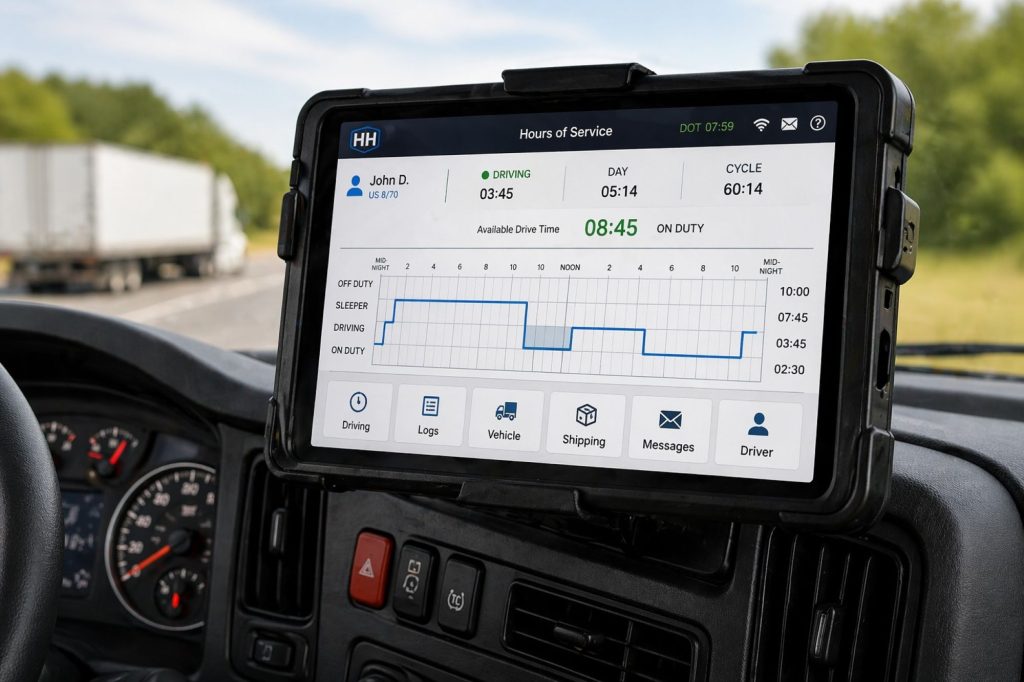
Telematics and electronic logging device systems connect commercial trucks, trailers, drivers, fleet managers, maintenance departments, dispatchers, and safety personnel through vehicle data, wireless communication, location tracking, electronic records, cameras, sensors, and fleet-management software.
Truck Equipment Atlas covers electronic logging devices, vehicle gateways, GPS tracking systems, AI dash cameras, trailer trackers, asset-monitoring devices, driver communication platforms, remote diagnostics, fleet-intelligence systems, and connected technologies used throughout highway, regional, vocational, construction, delivery, and specialized commercial operations.
The Telematics and ELD Systems Library includes individual product profiles, major system categories, installation and compatibility information, compliance considerations, manufacturer coverage, operational guidance, and educational resources designed to help readers understand connected commercial-vehicle technology.
Explore Commercial Telematics and ELD Categories
Commercial telematics systems can be classified according to their primary function, installed location, communication method, connected assets, compliance capabilities, and fleet application. Explore the major telematics and ELD categories on Truck Equipment Atlas:
Electronic Logging Devices & HOS Compliance
Electronic logging devices record driving time, engine status, vehicle movement, mileage, and other information used to support hours-of-service records. This category covers ELD hardware, driver applications, in-cab displays, compliance platforms, data-transfer functions, inspection modes, and supporting fleet software.
Fleet Telematics & Vehicle Gateways
Fleet telematics systems and vehicle gateways collect information from the truck, positioning network, diagnostic systems, sensors, and connected equipment. This category covers vehicle gateways, GPS tracking, engine-data connections, wireless communication, fleet dashboards, utilization reporting, and vehicle-performance monitoring.
AI Dash Cameras & Video Telematics
AI dash cameras and video-telematics systems combine recorded video with vehicle movement, location, driver behavior, and safety-event information. This category covers road-facing cameras, dual-facing cameras, auxiliary cameras, event recording, live viewing, driver alerts, coaching tools, and collision documentation.
Trailer & Asset Tracking Systems
Trailer and asset tracking systems help fleets locate equipment, monitor utilization, identify unauthorized movement, and manage connected trailers and unpowered assets. This category covers cellular trackers, satellite trackers, solar-powered devices, cargo sensors, door sensors, temperature monitoring, and trailer telematics.
Driver Communication & Workflow Systems
Driver communication and workflow systems connect drivers with dispatch, safety, maintenance, payroll, and fleet-management personnel. This category covers in-cab displays, driver applications, messaging, document capture, navigation integration, dispatch workflows, inspection reporting, and electronic forms.
Remote Diagnostics & Fleet Intelligence
Remote diagnostics and fleet-intelligence systems convert vehicle and equipment data into information that can support maintenance planning, fault-code evaluation, fuel management, route analysis, utilization tracking, driver coaching, and operational decision-making.
Telematics and ELD System Guides
The Telematics and ELD System Guides section provides educational resources covering electronic logs, hours-of-service compliance, vehicle gateways, GPS tracking, AI dash cameras, trailer tracking, system selection, installation, data management, driver use, and fleet integration.
Commercial Telematics and ELD Products on Truck Equipment Atlas
Truck Equipment Atlas includes a growing library of individual ELD, telematics, camera, vehicle-gateway, trailer-tracking, and asset-monitoring profiles from manufacturers serving the commercial trucking and trailer industries.
Explore the telematics products and equipment families being added to the library:
Samsara
Motive
Geotab
Omnitracs
ISAAC Instruments
EROAD
Zonar
SkyBitz
Phillips Connect
Powerfleet
Additional ELDs, vehicle gateways, fleet-management platforms, AI dash cameras, trailer trackers, asset monitors, driver displays, remote-diagnostic systems, sensors, and connected-fleet technologies will be added as the Truck Equipment Atlas Telematics and ELD Systems Library continues to expand.
Telematics and ELD Guides on Truck Equipment Atlas
Truck Equipment Atlas is also developing educational guides that explain how commercial telematics, electronic logging, GPS tracking, connected cameras, trailer tracking, and fleet-data systems work.
- How Commercial Truck Telematics Systems Work
- Electronic Logging Devices and Hours-of-Service Compliance Explained
- How to Choose a Commercial Truck ELD and Telematics System
- GPS Fleet Tracking and Vehicle Telematics Explained
- AI Dash Cameras and Video Telematics Explained
- Commercial Trailer and Asset Tracking Systems Explained
How Commercial Telematics Systems Work
A commercial telematics system collects information from a truck, trailer, driver, or piece of equipment and transfers that information to a connected software platform. The system may use engine-network connections, GPS signals, accelerometers, cameras, temperature sensors, door sensors, cargo sensors, or other inputs.
A vehicle gateway or tracking device processes the collected information and transmits it through a cellular, satellite, Wi-Fi, or Bluetooth connection. Fleet personnel can then view supported information through a web dashboard, mobile application, dispatch platform, maintenance system, or integrated fleet-management program.
The information available depends on the installed hardware, software subscription, vehicle connection, sensor package, communications coverage, fleet configuration, and permissions assigned to drivers and administrators.
Electronic Logging Devices and Hours-of-Service Records
An electronic logging device connects with the commercial vehicle to record information associated with driving status and vehicle operation. The driver uses an in-cab display, smartphone, tablet, or dedicated terminal to review logs, change duty status, certify records, add annotations, and present required information during an inspection.
An ELD system may record or manage information that includes:
- Date and time
- Vehicle location
- Engine power status
- Vehicle movement
- Vehicle mileage
- Engine hours
- Driver duty status
- Unidentified driving activity
- Log edits and annotations
- Diagnostic and malfunction events
Using an ELD does not by itself guarantee compliance. Drivers and motor carriers remain responsible for accurate records, proper duty-status selection, required supporting documents, system operation, malfunction procedures, and compliance with applicable regulations.
Vehicle Gateways and Data Connections
A vehicle gateway serves as the connection between the commercial vehicle and the telematics platform. Depending on the system, it may connect to the vehicle diagnostic port, engine data network, electrical system, sensors, cameras, or auxiliary equipment.
Information collected through a gateway may include:
- Vehicle location and movement
- Engine speed and operating hours
- Vehicle speed
- Fuel consumption
- Diagnostic trouble codes
- Battery voltage
- Idle time
- Hard braking or acceleration events
- Power take-off operation
- Connected sensor information
Available information varies by vehicle, engine, model year, diagnostic protocol, installed hardware, cable, software package, and fleet configuration.
GPS Tracking and Fleet Visibility
GPS tracking allows authorized fleet personnel to view the location and movement of connected trucks, trailers, and equipment. Depending on the platform, location information may support dispatching, estimated arrival times, route review, geofencing, theft recovery, detention analysis, equipment utilization, and customer-service updates.
Tracking accuracy and reporting frequency can be affected by antenna placement, surrounding structures, terrain, communications coverage, device power, subscription level, and equipment configuration.
AI Dash Cameras and Video Telematics
Video-telematics systems combine camera footage with information such as location, speed, braking, acceleration, steering movement, and detected driving events. Road-facing cameras record the area ahead of the vehicle, while dual-facing systems can also record or analyze activity inside the cab.
Depending on the product and configuration, camera systems may support:
- Collision recording
- Event-triggered video uploads
- Manual video capture
- Live viewing
- Driver coaching
- Forward-collision warnings
- Following-distance monitoring
- Lane-position monitoring
- Distracted-driving detection
- Drowsiness detection
- Claims investigation
- Driver exoneration
Camera placement, calibration, privacy policies, data retention, driver notification, audio settings, administrator permissions, and applicable laws should be reviewed before a system is deployed.
Trailer and Asset Tracking
Trailer and asset trackers are designed for powered and unpowered equipment that may spend long periods disconnected from a tractor. Devices may use internal batteries, replaceable batteries, solar panels, trailer electrical power, or a combination of power sources.
Connected trailer and asset systems may monitor:
- Current or last-reported location
- Trailer movement
- Geofence entry or exit
- Loaded or unloaded status
- Cargo presence
- Door position
- Temperature
- Tire pressure
- Refrigeration-unit operation
- ABS fault information
- Device battery condition
- Unauthorized movement
The exact information available depends on the tracker, sensors, trailer equipment, power supply, communications network, and fleet subscription.
Driver Communication and Workflow Management
Connected driver platforms can replace or supplement paper logs, printed dispatch instructions, handwritten inspection reports, fuel receipts, delivery documents, and telephone-based communication.
Common driver-workflow functions can include:
- Dispatch assignments
- Two-way messaging
- Navigation and route information
- Electronic vehicle inspections
- Document scanning
- Proof of delivery
- Fuel and expense reporting
- Training and safety messages
- Maintenance reporting
- Customer and stop information
Remote Diagnostics and Maintenance Integration
Remote-diagnostic systems can identify supported vehicle fault information and transmit it to fleet personnel before the truck returns to a maintenance facility. This may help maintenance departments evaluate fault severity, prepare parts, schedule service, communicate with drivers, and decide whether the vehicle should continue operating.
A reported fault code should be treated as diagnostic information rather than a complete repair diagnosis. Technicians may still need physical inspections, manufacturer service information, testing equipment, operating history, and additional troubleshooting before making repairs.
Common Telematics and ELD Configurations
Commercial telematics installations vary according to fleet size, vehicle type, operating area, compliance requirements, equipment age, communication needs, and the information the fleet wants to collect.
Common configurations include:
- Plug-in ELD with a driver smartphone or tablet
- Vehicle gateway with a dedicated in-cab display
- Integrated ELD and fleet-telematics platform
- Road-facing dash camera with vehicle gateway
- Dual-facing AI dash camera
- Multi-camera vehicle-surveillance system
- Battery-powered trailer tracker
- Solar-powered trailer tracker
- Powered trailer telematics gateway
- Refrigerated-trailer monitoring system
- Remote-diagnostic and maintenance platform
- Integrated dispatch and driver-workflow system
Highway, Regional, Vocational, and Trailer Applications
Long-haul fleets may prioritize ELD compliance, dispatch communication, fuel reporting, route visibility, driver workflow, trailer tracking, and nationwide communications coverage.
Regional and delivery operations may place greater emphasis on route progress, geofencing, stop duration, proof of delivery, driver communication, vehicle utilization, and customer arrival information.
Vocational fleets may use telematics to monitor power take-off operation, engine hours, equipment utilization, job-site arrival, idle time, maintenance requirements, and specialized body equipment.
Trailer fleets may prioritize asset location, unauthorized movement, cargo status, door activity, temperature, tire information, ABS faults, detention, utilization, and maintenance planning.
Advantages of Modern Telematics and ELD Systems
Modern connected-vehicle technology can provide several operational advantages:
- Electronic hours-of-service records
- Real-time or scheduled vehicle-location reporting
- Improved dispatch visibility
- Faster communication with drivers
- Trailer and asset-location monitoring
- Remote vehicle diagnostics
- Automated safety-event identification
- Video documentation of roadway incidents
- Driver-coaching support
- Fuel and idle-time reporting
- Maintenance-planning information
- Improved vehicle and trailer utilization
- Electronic inspection and document workflows
The actual benefits depend on product selection, installation, driver training, fleet policies, software configuration, data quality, system integration, cellular or satellite coverage, and consistent use by drivers and fleet personnel.
Telematics and ELD Limitations and Considerations
No single telematics or ELD system is ideal for every commercial fleet.
Important considerations include:
- Hardware purchase or lease cost
- Monthly subscription fees
- Installation requirements
- Vehicle and diagnostic-port compatibility
- Cellular or satellite coverage
- Software integration
- Driver training
- Data accuracy and reporting delays
- Camera and driver-privacy concerns
- Cybersecurity and account security
- Data ownership and retention policies
- Hardware replacement and support
- Regulatory certification and compliance
- Dependence on third-party software services
- Compatibility with older vehicles
Driver and Operator Considerations
Drivers interact directly with many telematics and ELD functions. A system should present required information clearly without creating unnecessary distraction or making normal driving and compliance tasks more difficult.
Drivers should understand:
- How to sign in and select the correct vehicle
- How to update duty status
- How to review and certify logs
- How to add annotations
- How to manage unidentified driving records
- How to transfer or display records during an inspection
- How to recognize diagnostic and malfunction indicators
- How to report damaged hardware or connection problems
- When cameras record and how footage is used
- How to use messaging and workflow features safely
Maintenance and Ownership
Telematics hardware requires inspection and maintenance even when it has no conventional mechanical service interval.
Important maintenance areas can include:
- Inspecting power and diagnostic cables
- Checking connectors and mounting hardware
- Verifying antenna condition and placement
- Cleaning camera lenses
- Checking camera aim and calibration
- Testing driver displays and mobile devices
- Confirming GPS and cellular communication
- Installing approved software and firmware updates
- Reviewing diagnostic and malfunction reports
- Checking trailer-tracker batteries and solar panels
- Maintaining connected sensors
- Managing user accounts and permissions
- Removing access for former drivers and employees
Maintenance and support requirements vary between manufacturers, hardware generations, software platforms, vehicles, trailers, sensors, and subscription packages.
Major Commercial Telematics and ELD Manufacturers
Truck Equipment Atlas covers telematics hardware, ELDs, cameras, vehicle gateways, trailer trackers, asset monitors, and connected-fleet platforms from manufacturers and technology providers serving the commercial trucking industry.
Current and planned coverage includes:
- Samsara
- Motive
- Geotab
- Omnitracs
- ISAAC Instruments
- EROAD
- Zonar
- SkyBitz
- Phillips Connect
- Powerfleet
- Platform Science
- Verizon Connect
- Lytx
- Netradyne
- Solera Fleet Solutions
Manufacturer coverage will continue to expand as additional ELDs, cameras, vehicle gateways, trailer trackers, sensor systems, software platforms, and fleet-management technologies are added.
Related Truck Equipment Resources
Telematics and ELD systems operate as part of the complete commercial truck, trailer, electrical, safety, diagnostic, communication, and fleet-management environment.
Explore related Truck Equipment Atlas resources:
- Commercial Trucks
- Commercial Trailers
- Electrical Systems
- Brake Systems
- Tires & Wheels
- Safety Systems
- Equipment Systems
- Equipment System Guides
Understanding how telematics hardware, vehicle electrical systems, diagnostic networks, cameras, sensors, trailers, fleet software, and driver workflows work together is essential when evaluating connected commercial-vehicle technology.
How to Use the Telematics and ELD Systems Library
Individual Truck Equipment Atlas telematics and ELD profiles provide deeper information about specific devices, platforms, cameras, gateways, tracking systems, and product families.
Depending on the equipment, these pages may include:
- Product overview
- Manufacturer information
- Hardware and software design
- ELD and compliance functions
- GPS and communications capabilities
- Camera and sensor integration
- Vehicle and trailer compatibility
- Installation requirements
- Driver and operator considerations
- Inspection and maintenance information
- Common problems
- Buying and ownership considerations
- Subscription and support considerations
- Availability and replacement information
Readers can begin with one of the telematics and ELD categories above or explore individual product profiles by manufacturer.
Telematics and ELD Systems Library Expansion
The Truck Equipment Atlas Telematics and ELD Systems Library will continue to grow with additional electronic logging devices, vehicle gateways, AI dash cameras, driver displays, trailer trackers, asset monitors, cargo sensors, temperature-monitoring systems, remote-diagnostic platforms, and connected-fleet technologies.
Future development will also expand the connections between telematics systems and the trucks, trailers, electrical systems, safety technologies, manufacturers, freight sectors, and operating applications in which they are used.
The goal is to build an organized commercial telematics and ELD reference that helps drivers, owner-operators, fleets, technicians, safety personnel, dispatchers, students, equipment buyers, and industry professionals understand how these systems work and where different platforms fit within the trucking industry.
Follow the Growth of Truck Equipment Atlas
Truck Equipment Atlas continues to expand with new trucks, trailers, diesel engines, transmissions, axles, differentials, suspension systems, brakes, fifth wheels, tires, wheels, electrical systems, telematics products, manufacturer information, freight resources, and educational guides.
Visit our Site Updates page to explore recent additions, project milestones, and upcoming resources as we continue building one of the industry’s growing commercial trucking equipment reference libraries.