
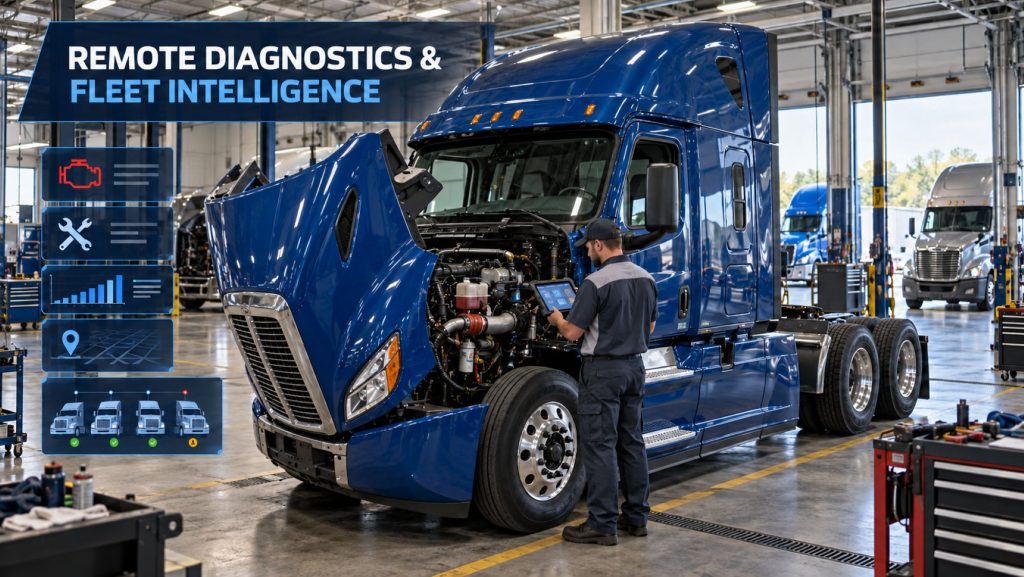
Remote diagnostics and fleet-intelligence systems collect vehicle, engine, driver, location, fuel, maintenance, safety, and operating data from commercial trucks and connected equipment.
These systems transmit information from the vehicle to a cloud-based platform where fleets can review fault codes, maintenance needs, vehicle utilization, fuel consumption, idle time, driver performance, routing activity, equipment condition, and other operating trends.
Truck Equipment Atlas covers vehicle gateways, telematics control units, diagnostic platforms, fleet-management software, predictive-maintenance systems, OEM-connected services, and other technologies used to turn commercial-vehicle data into practical fleet information.
Remote Diagnostics and Fleet-Intelligence Products on Truck Equipment Atlas
Explore the vehicle gateways and telematics products being added to the Truck Equipment Atlas library:
Samsara
Motive
Geotab
Omnitracs
Zonar
Additional diagnostic gateways, connected-maintenance platforms, predictive-maintenance systems, OEM telematics services, fleet-analysis tools, and equipment-monitoring products will be added as the Truck Equipment Atlas Telematics and ELD Systems Library continues to expand.
How Remote Diagnostics Works
A vehicle gateway connects with the truck’s electronic control modules through an approved diagnostic port, vehicle-data network, or factory-installed telematics connection.
The gateway collects supported information from the engine, transmission, aftertreatment system, braking system, electrical system, and other connected controllers. It combines this information with GPS location, mileage, engine hours, vehicle speed, and operating data before transmitting it to the fleet platform.
When a monitored fault occurs, the system may notify fleet personnel and provide the affected vehicle, fault code, time, location, severity, operating conditions, and recommended response. Available information depends on the vehicle, gateway, connected controllers, software platform, and service plan.
How Fleet Intelligence Works
Fleet intelligence combines information from vehicles, drivers, trailers, maintenance systems, fuel records, dispatch platforms, cameras, sensors, and other operating sources.
Software organizes this information into dashboards, alerts, reports, trends, and performance measurements. Fleet managers can compare individual vehicles, drivers, terminals, routes, equipment groups, and operating periods.
The value of fleet intelligence depends on data accuracy, system configuration, vehicle compatibility, reporting methods, and the fleet’s ability to act on the information.
Major System Components
- Vehicle telematics gateway
- GPS receiver
- Cellular or wireless modem
- Vehicle diagnostic connection
- Vehicle-data network interface
- Engine and powertrain control modules
- Connected sensors and accessories
- Cloud-based data platform
- Fleet-management dashboard
- Diagnostic and maintenance software
- Alert and notification tools
- Reporting and analytics tools
- Mobile fleet-management application
- Transportation-management and maintenance integrations
- Application programming interfaces
Vehicle Fault Codes and Diagnostic Information
Modern commercial vehicles use electronic control modules to monitor engines, transmissions, emissions systems, braking equipment, electrical systems, and other electronically managed components.
When a controller detects a condition outside its expected operating range, it may store or broadcast a diagnostic fault code. A connected telematics system can transmit supported code information to the fleet platform.
A fault code identifies a detected condition but does not always identify the failed component by itself. Technicians may need service information, testing equipment, vehicle history, operating data, and physical inspection to determine the actual cause.
Fault Severity and Maintenance Response
Remote-diagnostic platforms may classify faults by severity, urgency, affected system, operating impact, or recommended response.
Depending on the fault and system capabilities, the fleet may be advised to:
- Continue operating while monitoring the condition
- Schedule service at the next practical opportunity
- Route the vehicle to a repair facility
- Reduce vehicle load or operating demand
- Stop the vehicle when it is safe to do so
- Contact roadside assistance
- Arrange towing or mobile service
Drivers must still respond to warning lamps, gauges, unusual sounds, smoke, fluid leaks, reduced performance, and other observable vehicle conditions.
Predictive and Preventive Maintenance
Preventive maintenance uses scheduled intervals such as mileage, engine hours, calendar time, fuel consumption, or duty cycles to determine when service should be performed.
Predictive maintenance adds operating data and condition trends to identify components or systems that may require attention before a breakdown occurs.
Fleet-intelligence platforms may monitor repeated faults, fluid temperature, voltage, idle time, regeneration activity, engine load, fuel consumption, mileage, and other supported measurements. These trends can help maintenance teams prioritize inspections and plan shop capacity.
Engine and Powertrain Monitoring
Depending on the vehicle and installed system, remote monitoring may include information from the engine, transmission, clutch, aftertreatment system, cooling system, electrical charging system, and other powertrain components.
Available information may include:
- Diagnostic fault codes
- Engine speed and operating hours
- Coolant temperature
- Oil-pressure or oil-life information when supported
- Battery voltage
- Transmission condition information
- Aftertreatment and regeneration status
- Fuel consumption
- Idle time
- Power take-off operation
Aftertreatment and Emissions-System Monitoring
Diesel aftertreatment systems may generate faults related to sensors, dosing equipment, diesel particulate filter loading, regeneration, diesel exhaust fluid, selective catalytic reduction, exhaust temperature, and other emissions-system functions.
Remote monitoring can help maintenance personnel identify developing issues and review the vehicle’s operating conditions before it arrives at a service location.
The system should not be used to clear faults, force service procedures, or continue operating damaged equipment unless those actions are supported by approved service instructions and qualified personnel.
Fuel, Idle, and Efficiency Analysis
Fleet-intelligence systems can combine fuel-use information with mileage, route, load, vehicle, driver, terrain, weather, idle time, and operating conditions.
Reports may help fleets identify excessive idling, unusual fuel consumption, route inefficiencies, power take-off use, changes in vehicle performance, and differences between comparable equipment.
Fuel-economy comparisons should account for vehicle configuration, gross weight, road speed, terrain, weather, traffic, duty cycle, tire condition, aerodynamic equipment, and driver assignments.
Driver and Vehicle Performance Analysis
Connected vehicles may provide information about speed, acceleration, braking, cornering, idling, cruise-control use, engine operation, seat-belt status when supported, and other driving events.
Fleet managers may use this information for driver coaching, fuel-efficiency programs, safety reviews, vehicle comparisons, and operational planning.
Performance data should be interpreted in context. A single event may be influenced by traffic, weather, roadway conditions, emergency actions, vehicle loading, or inaccurate system configuration.
Vehicle Utilization and Lifecycle Planning
Fleet-intelligence platforms can help identify how frequently vehicles are used, how far they travel, how long they idle, which routes they serve, and how much time they spend unavailable for service.
Utilization information can support vehicle assignment, replacement planning, fleet sizing, maintenance scheduling, lease decisions, warranty tracking, and equipment purchasing.
Vehicle age alone does not determine replacement timing. Maintenance history, reliability, utilization, operating cost, fuel use, downtime, application, resale value, and future equipment requirements should also be considered.
Maintenance-System and Repair-Facility Integration
Remote diagnostic information may be shared with a fleet-maintenance platform, dealership, repair facility, engine manufacturer, vehicle manufacturer, or roadside-assistance provider.
Integration may allow maintenance teams to create work orders, review vehicle history, identify required parts, schedule appointments, assign technicians, and prepare for the vehicle before it arrives.
Data-sharing permissions should be reviewed so vehicle information is only provided to authorized personnel and service providers.
Common Applications
- Long-haul fleets
- Regional carriers
- Private fleets
- Pickup-and-delivery vehicles
- Vocational trucks
- Construction fleets
- Refuse vehicles
- Utility and service vehicles
- Municipal fleets
- Passenger and bus fleets
- Rental and leasing fleets
- Mixed light-, medium-, and heavy-duty fleets
Advantages
- Provides remote visibility into vehicle condition
- Helps identify developing problems earlier
- Supports maintenance prioritization
- Can reduce unnecessary roadside downtime
- Improves communication with service facilities
- Supports fuel and idle-time analysis
- Provides vehicle-utilization information
- Supports driver coaching and safety programs
- Helps compare vehicles and operating groups
- Can integrate with dispatch, maintenance, and compliance systems
Limitations and Considerations
- Available data varies by vehicle and control system
- A fault code does not always identify the failed component
- Wireless coverage affects reporting speed
- Incorrect vehicle configuration can produce misleading information
- Hardware and software subscriptions add operating costs
- Too many alerts can overwhelm fleet personnel
- Data must be reviewed by trained personnel
- Remote information does not replace physical inspection and testing
- Connected systems require cybersecurity and access controls
- Software integrations require maintenance and verification
Installation and Vehicle Compatibility
The vehicle gateway must be matched to the truck’s manufacturer, model, model year, diagnostic connector, communication protocol, electrical system, and available mounting space.
Installation considerations include:
- Diagnostic-port type and location
- Required wiring harness
- Vehicle-data protocols
- 12- or 24-volt electrical compatibility
- GPS and cellular signal reception
- Protection from moisture, heat, vibration, and impacts
- Driver visibility and access to controls
- Cable routing and strain relief
- Compatibility with ELD and camera equipment
- OEM warranty and service requirements
Inspection and Maintenance
Vehicle gateways and connected components should be inspected for secure mounting, damaged cables, loose connectors, corrosion, moisture, interrupted power, antenna damage, and communication problems.
Fleet personnel should also monitor device-health reports, software versions, vehicle assignments, odometer accuracy, engine-hour information, diagnostic communication, and data-integration status.
A gateway that appears powered may still have a failed GPS connection, interrupted cellular service, missing engine data, incorrect vehicle assignment, or software-configuration problem.
Selecting a Remote Diagnostics and Fleet-Intelligence System
The correct system depends on the vehicles, equipment, operating environment, maintenance program, existing software, diagnostic requirements, and fleet-management goals.
Important selection factors include:
- Vehicle and diagnostic-protocol compatibility
- Supported engine and equipment information
- Fault-code detail and severity information
- Maintenance and work-order integration
- GPS tracking and reporting frequency
- Fuel, idle, and efficiency reporting
- Driver-performance information
- Custom alerts and dashboards
- OEM and third-party system integrations
- Application programming interface access
- Data ownership and cybersecurity
- Hardware, installation, and subscription costs
- Training, warranty, and technical support
Related Telematics and ELD System Categories
- Electronic Logging Devices & HOS Compliance
- Fleet Telematics & Vehicle Gateways
- AI Dash Cameras & Video Telematics
- Trailer & Asset Tracking Systems
- Driver Communication & Workflow Systems
Related Guides
- How Commercial Truck Telematics Systems Work
- Electronic Logging Devices and Hours-of-Service Compliance Explained
- How to Choose a Commercial Truck ELD and Telematics System
- GPS Fleet Tracking and Vehicle Telematics Explained
- AI Dash Cameras and Video Telematics Explained
- Commercial Trailer and Asset Tracking Systems Explained
Related Equipment Systems
Remote Diagnostics and Fleet-Intelligence Library Expansion
Truck Equipment Atlas will continue expanding this section with profiles covering vehicle gateways, OEM-connected services, remote engine diagnostics, transmission-monitoring systems, predictive-maintenance platforms, fleet-analysis software, and connected equipment-management tools.
Future pages will examine diagnostic capabilities, vehicle compatibility, data collection, communication methods, software integration, alert management, maintenance applications, and real-world fleet use.
Explore the Complete Telematics and ELD Systems Hub
Visit the Telematics & ELD Systems hub to explore electronic logging devices, fleet gateways, AI dash cameras, trailer tracking systems, driver communication platforms, remote diagnostics, fleet-intelligence tools, individual product profiles, and educational guides.
Follow the Growth of Truck Equipment Atlas
Truck Equipment Atlas continues to expand with new truck profiles, trailer coverage, diesel engine pages, equipment-system resources, manufacturer information, and educational guides.
Visit our Site Updates page to explore recent additions, project milestones, and upcoming resources as we continue building one of the industry’s growing commercial trucking equipment reference libraries.
View the Latest Site Updates: Truck Equipment Atlas Site Updates