
Utility 3000D Dry Van
Quick Facts
- Manufacturer: Utility Trailer Manufacturing Company
- Trailer Type: Dry Van Trailer
- Model: Utility 3000D
- Common Lengths: 28 ft, 40 ft, 45 ft, 48 ft, 53 ft
- Common Width: 102 inches (8.5 ft)
- Trailer Construction: Aluminum Exterior Panels with High-Strength Steel Components
- Common Axle Configurations: Tandem Axle, Spread Axle
- Typical GVWR: Up to 80,000 lbs Combined Vehicle Weight (subject to applicable regulations)
- Typical Cargo Capacity: Up to 45,000 lbs depending on configuration
- Door Types: Rear Swing Doors, Roll-Up Door Options
- Flooring Types: Hardwood Flooring, Composite Flooring Options
- Primary Applications: General Freight, Retail Distribution, Consumer Goods, Manufacturing Freight
- Common Freight Types: Palletized Freight, Packaged Goods, Dry Consumer Products, E-Commerce Freight
- Production Status: In Production
Overview
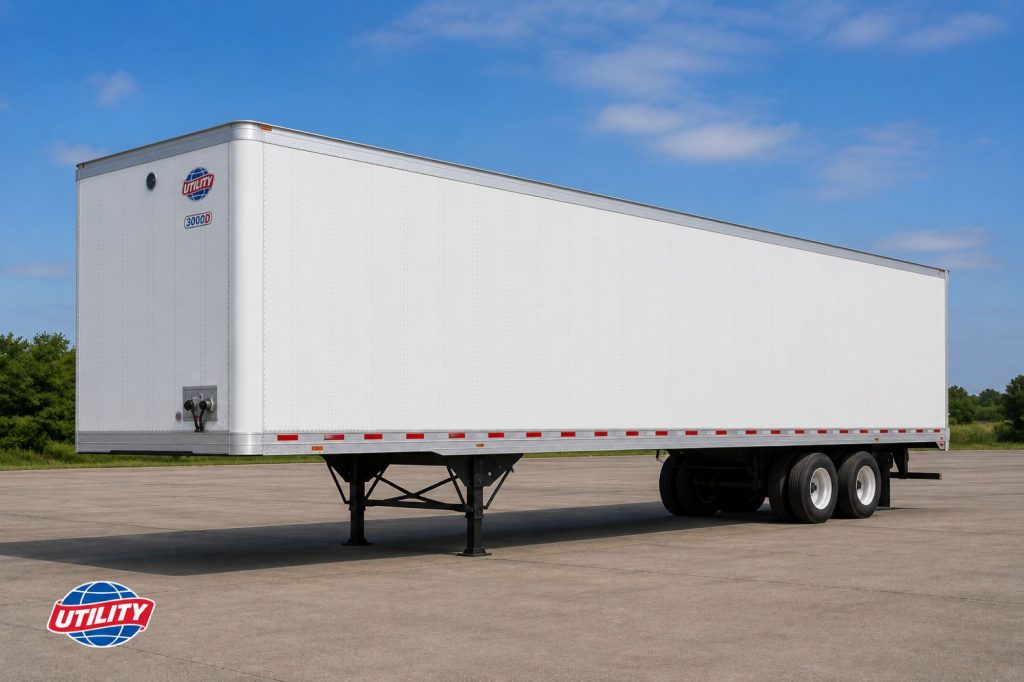
The Utility 3000D is one of the most widely recognized dry van trailers in North America and has become a common sight throughout retail, distribution, manufacturing, and general freight operations. Built by Utility Trailer Manufacturing Company, the 3000D is designed to provide durability, cargo protection, and long service life while maintaining competitive operating costs.
The trailer is frequently used by large fleets, dedicated carriers, private fleets, and owner operators due to its reputation for reliability and strong resale value. Its combination of lightweight construction, cargo capacity, and widespread service support has made it a popular choice across a broad range of freight applications.
Today, the Utility 3000D remains one of the benchmark dry van trailers against which many competing models are measured. From regional distribution fleets to long-haul operations covering hundreds of thousands of miles annually, the trailer has established itself as one of the industry’s most trusted freight-hauling platforms.
Key Characteristics
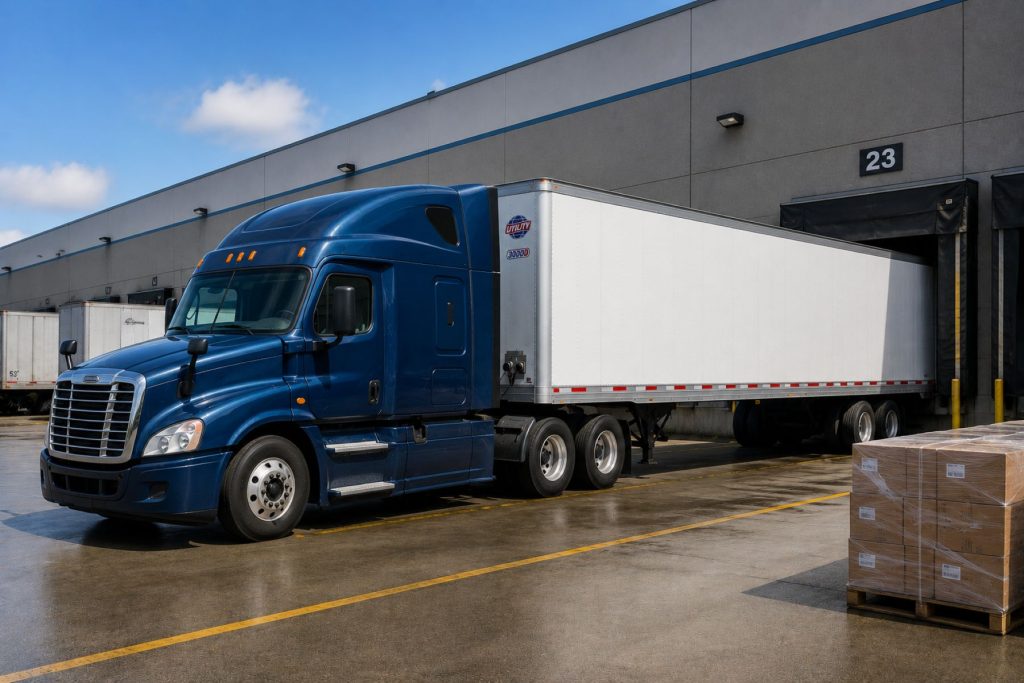
The Utility 3000D is designed to balance durability, payload capacity, and long-term operating efficiency. Its construction focuses on providing reliable cargo protection while maximizing usable trailer space for a wide variety of freight applications. The trailer is engineered to withstand the demands of high-mileage operations and is commonly found in both regional and long-haul fleets throughout North America.
One of the defining characteristics of the Utility 3000D is its reputation for durability and serviceability. The trailer utilizes a combination of aluminum and high-strength steel components to provide structural integrity while maintaining competitive weight characteristics. This design allows fleets to maximize payload capacity while maintaining long service life.
The Utility 3000D is also known for its widespread dealer support, strong resale value, and compatibility with standard loading dock operations. These factors have helped make it one of the most recognized and widely used dry van trailers in the transportation industry.
Common Specifications
Length Options
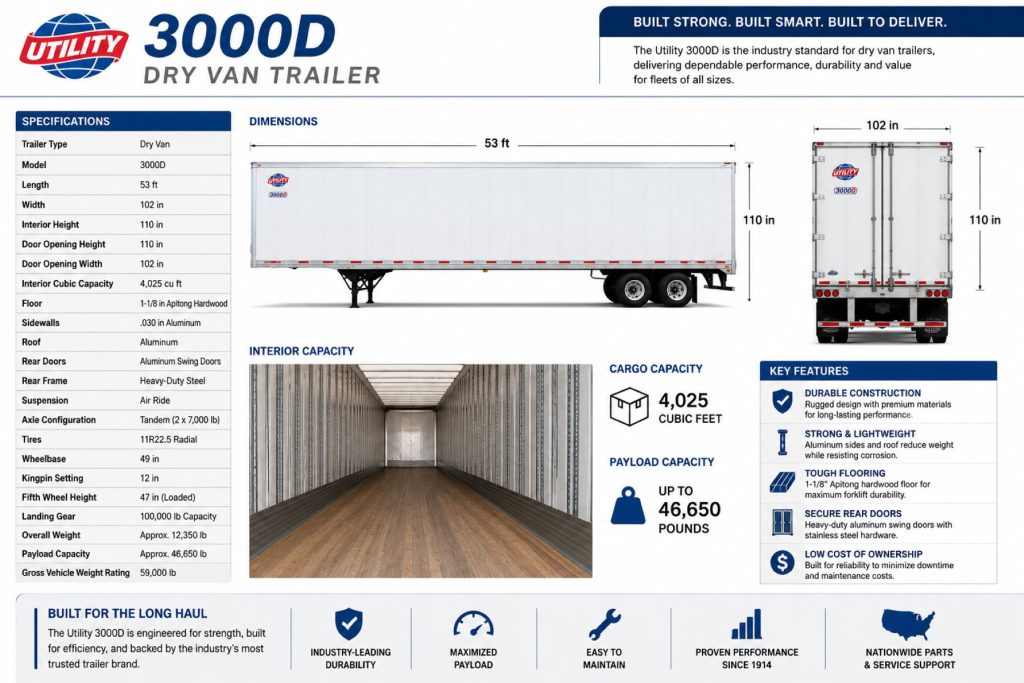
The Utility 3000D is available in multiple lengths, although the 53-foot configuration remains the most common in modern freight operations. Shorter versions are often utilized in regional applications and areas with specific regulatory requirements.
Width and Height
Standard trailer width is 102 inches, maximizing pallet capacity while remaining compliant with highway regulations. Interior heights vary slightly depending on configuration but are designed to maximize cubic cargo capacity.
Trailer Construction
The trailer utilizes a combination of aluminum and high-strength steel components to balance durability with weight savings. This design allows fleets to maximize payload capacity while maintaining structural integrity.
Axle Configurations
Buyers can select tandem axle or spread axle configurations depending on freight requirements, operating regions, and state regulations.
Flooring Systems
Hardwood flooring remains common due to its durability and ability to withstand repeated forklift traffic. Alternative flooring systems may also be available depending on application requirements.
Door Configurations
The Utility 3000D can be equipped with swing doors or roll-up doors depending on customer preference and operational needs.
Common Applications
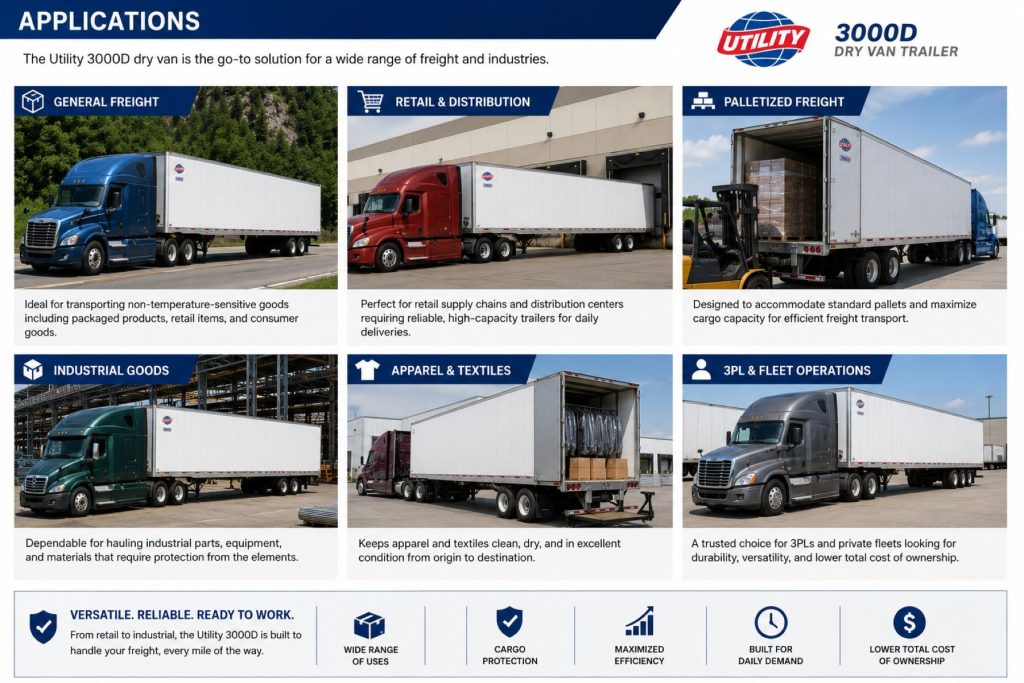
The Utility 3000D is commonly used for:
- General Freight
- Retail Distribution
- Consumer Products
- Manufacturing Freight
- Packaged Goods
- Dedicated Freight
- E-Commerce Shipments
- Warehouse Distribution
- Food Products (Non-Refrigerated)
Advantages
The Utility 3000D offers numerous advantages that have helped establish its position as one of the most popular dry van trailers in North America.
Many fleets view the Utility 3000D as a dependable long-term investment due to its durability, serviceability, and strong market recognition.
- Proven industry reputation
- Strong cargo protection
- Durable construction
- Extensive dealer network
- Excellent parts availability
- Strong resale value
- Broad freight compatibility
- Fleet-proven reliability
Limitations or Considerations
While highly versatile, the Utility 3000D is not suitable for every freight application.
- Cannot transport oversized freight
- Rear loading access only in most configurations
- Not designed for temperature-controlled cargo
- Dock access is often required for efficient loading
- Specialized freight may require alternative trailer designs
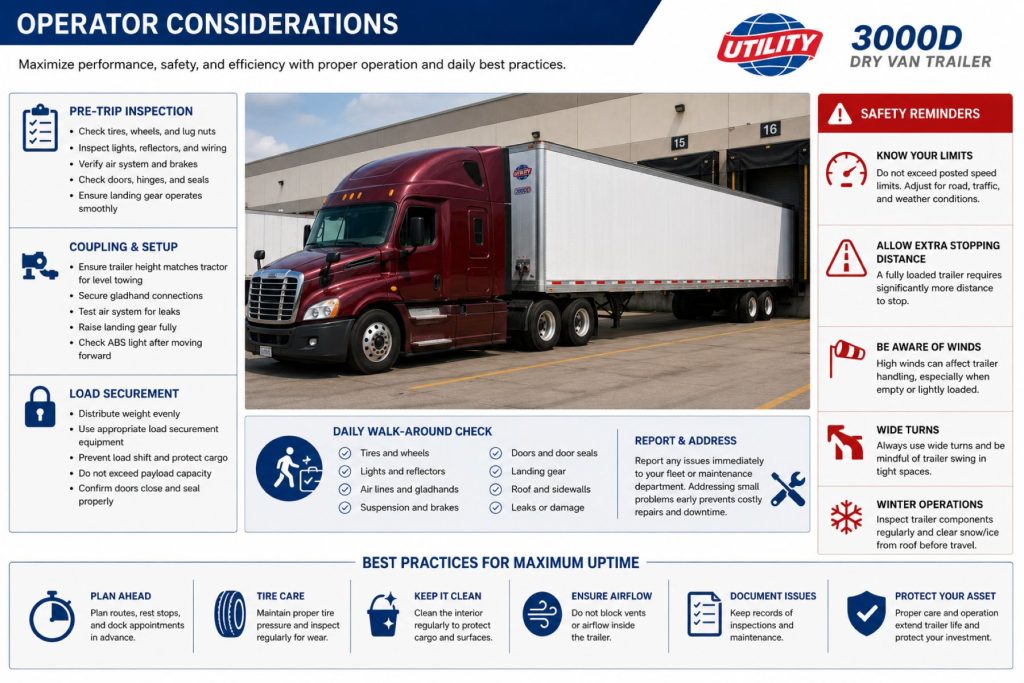
Driver and Operator Considerations
The Utility 3000D is one of the most commonly operated dry van trailers in North America, making it familiar to drivers at nearly every experience level. Its widespread use across retail, manufacturing, distribution, and dedicated freight operations means many drivers spend a significant portion of their careers hauling Utility dry vans.
Because the trailer is designed around standard loading dock operations, backing accuracy is one of the most important operational skills. Drivers frequently encounter crowded distribution centers, tight loading areas, and busy customer facilities where careful trailer positioning is essential. Proper mirror usage, awareness of trailer swing, and patience during backing maneuvers are important for preventing damage and improving efficiency.
Cargo securement remains a key responsibility even though freight is enclosed. Drivers should verify load distribution, inspect load bars or securement devices when applicable, and monitor axle weights to ensure compliance with applicable regulations. Proper weight distribution helps improve trailer handling, braking performance, and tire life.
The Utility 3000D offers predictable road manners and stable highway performance, making it suitable for long-haul, regional, and dedicated freight operations. Combined with its widespread industry acceptance, the trailer provides operators with a familiar and dependable platform for transporting general freight throughout North America.
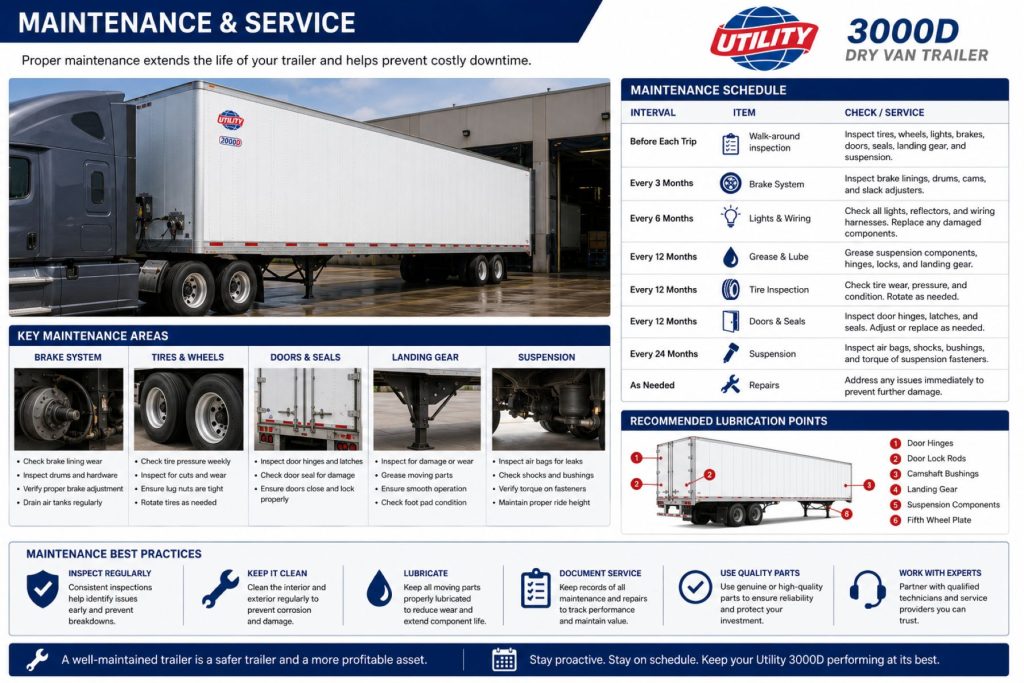
Maintenance and Ownership Notes
Routine maintenance for the Utility 3000D focuses on brakes, tires, suspension components, wheel ends, lighting systems, flooring, roof assemblies, and rear door hardware. Regular inspections help identify wear before it impacts uptime or creates more costly repairs.
The trailer floor is one of the most important areas to monitor, particularly in high-volume freight operations where forklifts frequently enter and exit the trailer. Damaged flooring can create safety concerns and eventually lead to expensive repairs if not addressed early. Rear doors, hinges, and seals should also be inspected regularly to maintain cargo protection and prevent water intrusion.
Owners should pay close attention to suspension wear, brake performance, tire condition, and structural integrity. High-mileage trailers often experience wear in these areas first, particularly when operating in demanding regional distribution environments.
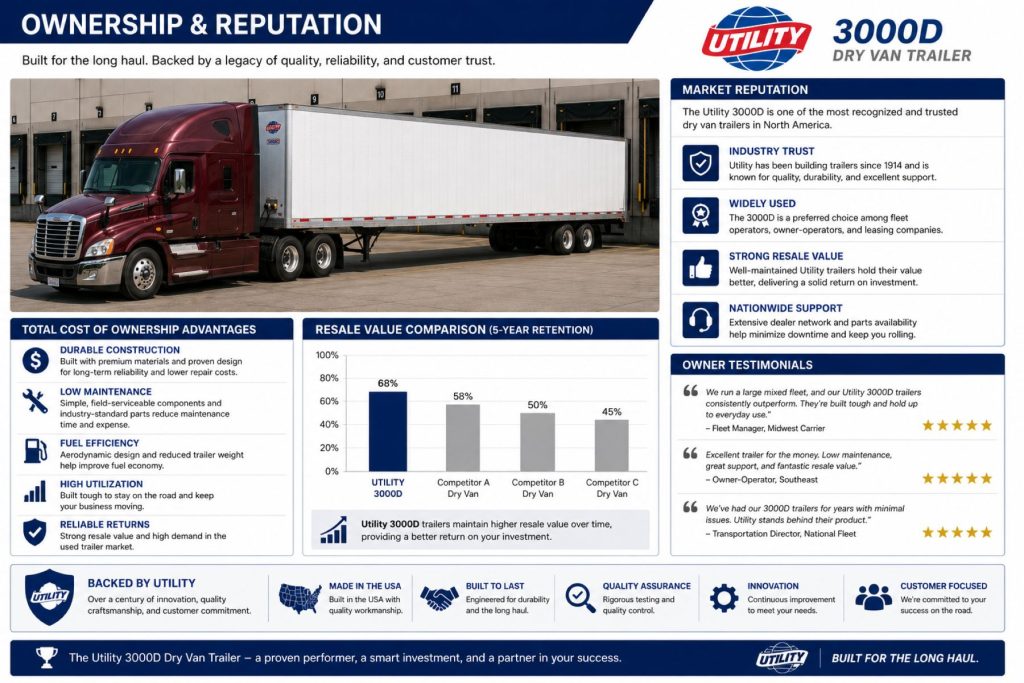
One of the strengths of the Utility 3000D is the extensive dealer and service network available throughout North America. Replacement parts, service expertise, and repair facilities are generally easy to find, helping minimize downtime and supporting long-term ownership. These factors contribute to the trailer’s strong resale value and popularity among fleets and owner operators alike.
Buying Considerations
- Inspect floor condition carefully
- Verify roof integrity and water intrusion history
- Check suspension wear and maintenance records
- Inspect brake system condition
- Evaluate axle and wheel-end condition
- Review tire condition and replacement history
- Confirm door operation and seal condition
- Look for structural damage or corrosion
- Consider dealer and service support availability
- Match trailer specifications to intended freight operations
- Compare new versus used purchase costs
- Evaluate expected resale value
Common Brands or Manufacturers
- Utility Trailer Manufacturing
- Wabash
- Great Dane
- Hyundai Translead
- Stoughton Trailers
- Vanguard National Trailer Corporation
Variants and Related Configurations
- 48 ft Dry Van Configuration
- 53 ft Dry Van Configuration
- Tandem Axle Configuration
- Spread Axle Configuration
- Swing Door Configuration
- Roll-Up Door Configuration
- Liftgate Equipped Configuration
- Fleet-Specific Dry Van Configuration
Comparison to Similar Trailers
The Utility 3000D is commonly compared to the Wabash DuraPlate Dry Van, Great Dane Champion Dry Van, Hyundai Translead Dry Van, and Stoughton Dry Van Trailer. These models represent some of the most widely used dry van trailers operating throughout North America.
Compared to competing trailers, the Utility 3000D is often recognized for its durability, strong dealer support network, and long-standing reputation among major fleets. Many operators view it as a balanced solution that combines cargo capacity, serviceability, and long-term ownership value.
While differences exist between manufacturers in construction methods, specifications, and available options, purchasing decisions often come down to dealer support, maintenance familiarity, operating requirements, and total ownership costs rather than a single defining advantage.
Best Fit For
- General Freight Carriers
- Retail Distribution Fleets
- Dedicated Contract Carriers
- Regional Freight Operations
- Long-Haul Freight Operations
- Private Fleets
- Owner Operators
- Third-Party Logistics Providers
- High-Volume Distribution Networks
- E-Commerce Freight Operations
Related Equipment
- Trailer Brake Systems
- Trailer Suspension Systems
- Trailer Axles
- Trailer Tires
- Trailer Lighting Systems
- Trailer Aerodynamics
- Trailer ABS Systems
- Trailer Telematics Systems
- Cargo Securement Systems
- Trailer Tracking Systems
Related Freight Types
- Dry Van Freight
- Retail Freight
- Consumer Goods Freight
- Manufacturing Freight
- Dedicated Freight
- E-Commerce Freight
- LTL Freight
- Distribution Freight
- Warehouse Freight
- Packaged Goods Freight
Related Trailer Types
- Dry Van Trailers
- 53 ft Dry Van Trailers
- 48 ft Dry Van Trailers
- Refrigerated Trailers
- Flatbed Trailers
- Conestoga Trailers
Related Trailer Models
- Wabash DuraPlate Dry Van
- Great Dane Champion Dry Van
- Hyundai Translead Dry Van
- Stoughton Dry Van Trailer
- Vanguard Dry Van Trailer
- Great Dane FleetDry Van
- Wabash National Dry Van
Related Guides
- Complete Guide to Trailer Types
- Dry Van vs Refrigerated Trailer
- Choosing the Right Trailer for Your Freight
Regulatory and Compliance Notes
The Utility 3000D must comply with all applicable federal and state transportation regulations, including trailer inspection requirements, lighting standards, brake system regulations, cargo securement requirements, and weight limitations. Maximum legal weights and trailer dimensions may vary depending on operating jurisdiction, route restrictions, and permitting requirements.
Operators should routinely inspect the trailer to ensure continued compliance with DOT regulations and company safety standards. Proper cargo securement, lighting functionality, brake performance, and tire condition are particularly important areas of regulatory focus.
Real World Operating Notes
The Utility 3000D is one of the most common dry van trailers operating throughout North America and is frequently found in large fleet, dedicated, and owner-operator operations. Its widespread use has created strong parts availability, broad service support, and familiarity among drivers, technicians, and fleet managers.
Many fleets value the trailer’s durability, straightforward maintenance requirements, and strong resale value. Because of its versatility, the Utility 3000D can be found hauling everything from retail merchandise and consumer products to manufacturing freight and e-commerce shipments.
The trailer’s long-standing reputation and widespread acceptance throughout the transportation industry have helped establish it as one of the benchmark dry van trailers against which competing models are often compared.
Frequently Asked Questions
What is the Utility 3000D?
The Utility 3000D is a dry van trailer manufactured by Utility Trailer Manufacturing Company and designed for general freight transportation. It is one of the most widely used dry van trailers in North America.
What is the most common Utility 3000D length?
The 53-foot configuration is the most common version used throughout North American freight operations, although other lengths are available for specialized applications.
What freight can a Utility 3000D haul?
The Utility 3000D is commonly used to transport retail goods, consumer products, manufacturing freight, palletized shipments, e-commerce freight, and other general dry freight.
Is the Utility 3000D suitable for long-haul operations?
Yes. The trailer is widely used in both long-haul and regional operations due to its durability, cargo capacity, and widespread service support network.
How does the Utility 3000D compare to the Wabash DuraPlate?
Both are among the most popular dry van trailers in the trucking industry. The choice often comes down to fleet preferences, specifications, dealer support, maintenance considerations, and operating requirements.
Does the Utility 3000D require a loading dock?
While a loading dock is not always required, most Utility 3000D trailers are loaded and unloaded through standard warehouse and distribution center dock facilities.
What is the typical cargo capacity of a Utility 3000D?
Cargo capacity varies depending on configuration, axle setup, and trailer specifications, but many Utility 3000D trailers can haul up to approximately 45,000 pounds of freight.
Are Utility 3000D trailers available with different axle configurations?
Yes. Buyers can choose between tandem axle and spread axle configurations depending on operational requirements and state regulations.
Availability and Where to Find
Utility 3000D trailers are available through Utility Trailer dealerships, authorized trailer distributors, commercial equipment dealers, fleet resale programs, trailer auctions, and used equipment marketplaces throughout North America. Availability will vary based on configuration, age, condition, and market demand.
Support Trucking Families
Truck Equipment Atlas supports the mission of Grey Cross, a nonprofit dedicated to helping families of truck drivers who lose their lives while on the road. As the site grows, part of its mission is to bring awareness and support to these families.
Podcast or Video Section
Learn More Through Audio and Video
Truck Equipment Atlas will continue expanding with podcast episodes, interviews, and equipment breakdowns to help drivers and fleets better understand trucks and equipment.
Follow the Growth of Truck Equipment Atlas
Truck Equipment Atlas continues to expand with new truck profiles, trailer coverage, diesel engine pages, equipment system resources, manufacturer information, and educational guides.
Visit our Site Updates page to explore recent additions, project milestones, and upcoming resources as we continue building one of the industry’s growing commercial trucking equipment reference libraries.
View the Latest Site Updates: Truck Equipment Atlas Site Updates