
Yokohama 101ZL Steer Tire
Quick Facts
- Manufacturer: Yokohama Tire Corporation
- Product Family: 101ZL
- Current Version: 101ZL Spec-2
- Product Type: Commercial truck radial tire
- Primary Position: Steer axle
- Position Classification: Steer and all-position
- Service Category: Long-haul highway service
- Tire Construction: Radial, tubeless
- Common Sizes: 295/75R22.5, 11R22.5, 285/75R24.5, and 11R24.5
- Load Range: Primarily Load Range H, depending on size and specification
- SmartWay Status: SmartWay verified
- Retreadable: Yes, when the casing passes inspection
- Primary Applications: Long-haul sleeper tractors, highway day-cab tractors, and high-mileage fleet trucks
- Production Status: The original 101ZL was superseded by the current 101ZL Spec-2
Overview
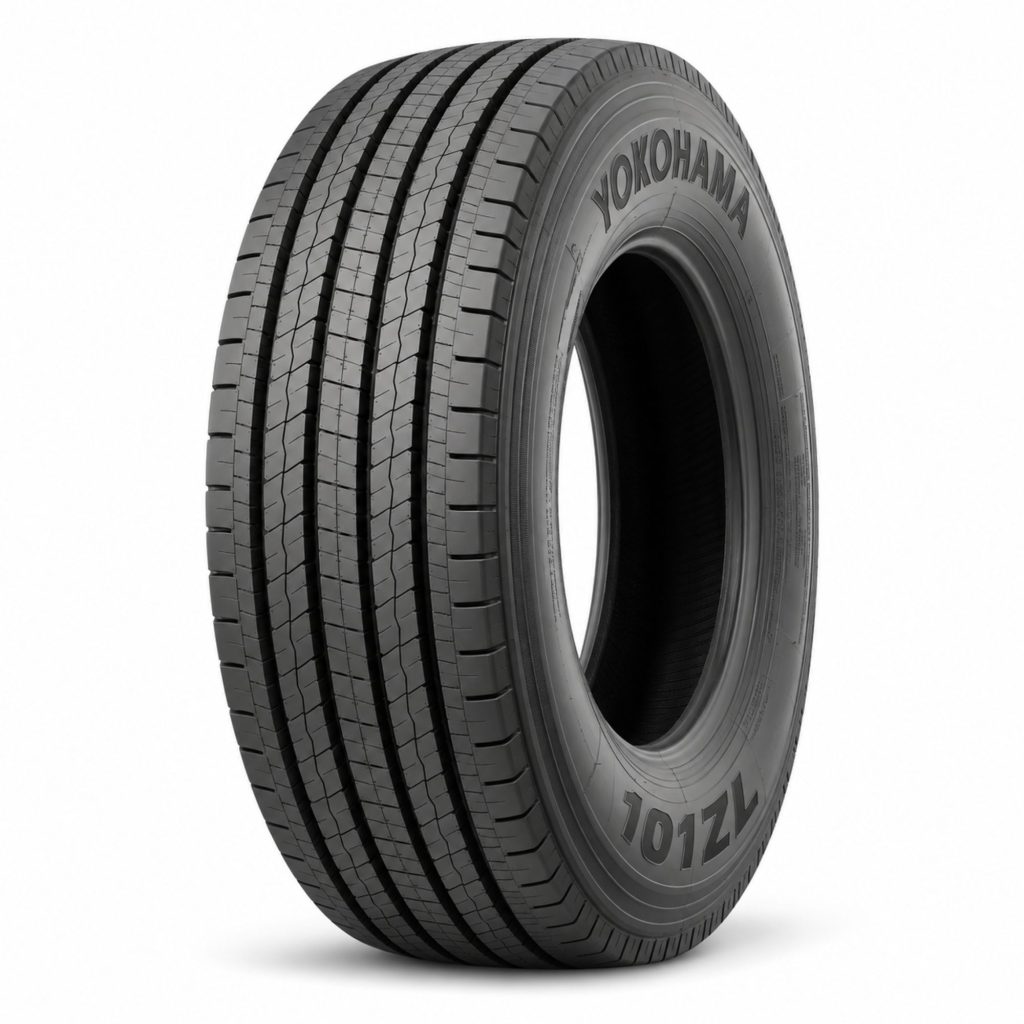
The Yokohama 101ZL is a premium long-haul commercial truck tire developed for steer and all-position service. The original 101ZL introduced Yokohama’s fuel-efficient Zenvironment technology to long-haul fleets, while the current 101ZL Spec-2 builds on that design with an updated casing, wider belt package, advanced tread compound, and improved retreadability.
The tire is intended for tractors and trucks that accumulate substantial mileage on paved highways. Its rib-style tread pattern supports directional stability, water evacuation, predictable steering response, and even wear across the tire’s contact patch.
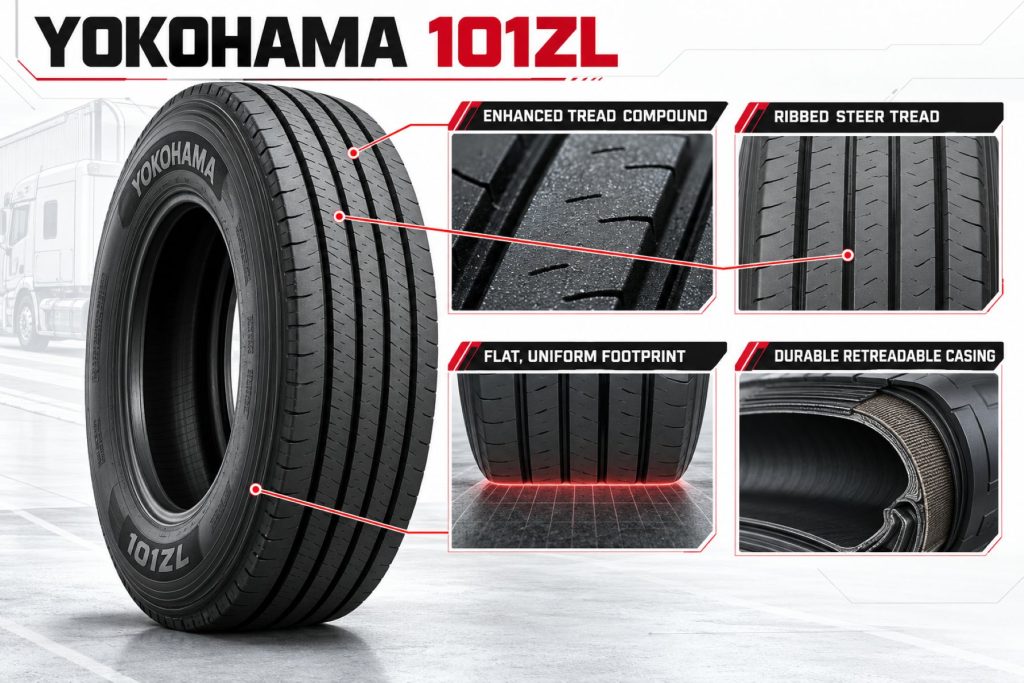
Yokohama equips the current Spec-2 version with contact-pressure-equalizer sipes and stress-equalizer ribs. These features help distribute pressure across the tread, reduce shoulder step-down wear, and improve wet handling and braking.
Key Characteristics
- Long-haul steer and all-position commercial tire
- SmartWay-verified fuel-efficient design
- Advanced high-elongation tread compound
- Proprietary casing profile
- Wide belt package
- Uniform footprint designed for long, even wear
- Contact-pressure-equalizer sipes
- Stress-equalizer shoulder ribs
- Highly reinforced bead construction
- Load Range H capacity in current primary configurations
- Designed to support multiple retread lives
- Seven-year unlimited-mileage casing warranty on eligible current tires
Major Components
- High-elongation tread compound
- Longitudinal highway ribs
- Contact-pressure-equalizer sipes
- Stress-equalizer shoulder ribs
- Circumferential water-evacuation grooves
- Wide steel-belt package
- Proprietary radial casing
- Reinforced bead package
- Steel bead chafer
- Sidewalls
- Inner liner
- Wear indicators
Product Type and Construction
The 101ZL is a radial, tubeless commercial truck tire. Its steel-belted casing supports the vehicle load while helping the tread maintain a stable footprint as the tire rotates through the road-contact area.
The current Spec-2 uses a wider belt package supported by a proprietary casing profile. This combination is designed to distribute pressure more evenly, promote consistent tread wear, and protect the casing for future retreading.
A reinforced bead and extended steel chafer help control stress and heat in the bead area. This is particularly important in steer applications because the tire must withstand vehicle loading, steering input, braking force, and repeated lateral movement.
How the Tire Works
Compressed air inside the mounted tire and wheel assembly supports the front of the truck. As the tire rotates, the casing flexes through the contact patch while the tread ribs maintain contact with the pavement.
The circumferential grooves move water away from the footprint. Contact-pressure-equalizer sipes help distribute pressure across the tread ribs while providing additional edges for wet-road traction and braking.
Stress-equalizer ribs control pressure near the shoulder edges. This helps reduce shoulder step-down wear that can develop on free-rolling steer tires during extended highway service.
Position and Function Within the Vehicle
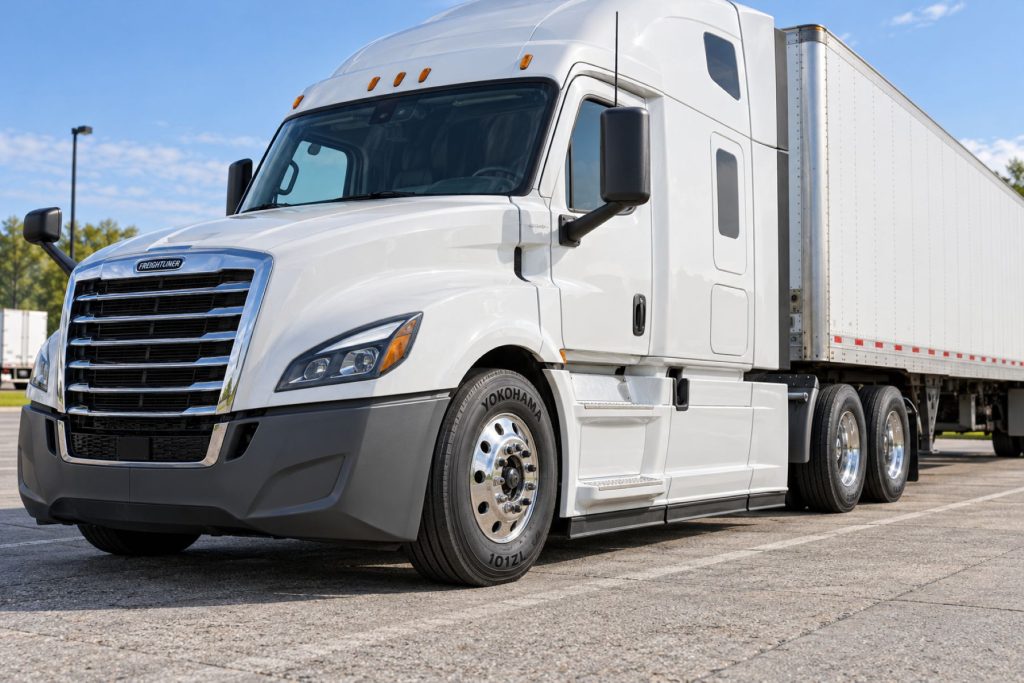
The 101ZL is used primarily on a truck or tractor’s front steer axle. In this position, the tires influence steering response, directional stability, braking control, ride quality, and the driver’s ability to maintain the intended path.
Yokohama classifies the current 101ZL Spec-2 as an all-position and steer tire. Any use outside the steer position should still be confirmed against the manufacturer’s application guidance, tire size, load requirements, and fleet operating conditions.
Common Specifications
- 295/75R22.5: Available in application-specific Load Range H configurations for long-haul steer and all-position service.
- 11R22.5: Available as a full-profile commercial-truck size in Load Range H configurations.
- 285/75R24.5: Available for trucks using low-profile 24.5-inch wheel equipment.
- 11R24.5: Available for full-profile 24.5-inch commercial wheel applications.
- Primary Load Rating: Load Range H for current Spec-2 configurations, with exact maximum load and pressure depending on tire size.
- Tread Pattern: Rib-style highway tread with pressure-equalizing sipes and stress-equalizer shoulder ribs.
- Recommended Service: Long-haul steer and approved all-position highway operation.
- Warranty: Current eligible 101ZL Spec-2 casings are supported by Yokohama’s seven-year unlimited-mileage casing warranty, subject to the manufacturer’s terms and exclusions.
Specifications can change. Confirm the exact tire size, load index, speed symbol, maximum pressure, approved rim width, article number, and load capacity using the tire sidewall and current Yokohama commercial-tire data.
Size, Load Range, and Operating Capacity
The correct 101ZL size and load range depend on the vehicle’s steer-axle rating, actual scale weight, wheel capacity, operating pressure, speed, and manufacturer requirements.
Load Range H configurations provide additional carrying capacity for properly equipped vehicles. Installing a higher-capacity tire does not increase the truck’s certified front-axle or gross vehicle weight rating.
The maximum load shown on the sidewall applies only when the tire is operated at the corresponding pressure and within its approved operating limits. Fleet inflation should be established using actual axle weights and the current Yokohama load-and-inflation information.
Intended Axle Position and Service
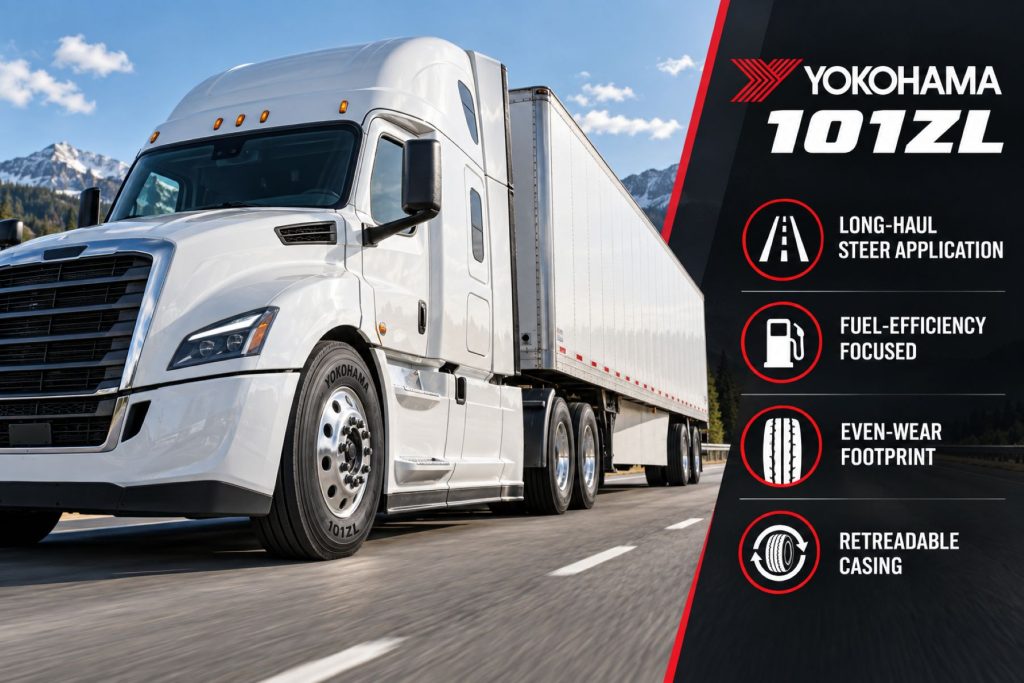
The 101ZL was developed for long-haul highway operation, including tractors that spend substantial time at sustained road speeds on paved interstate and regional routes.
Its tread design is optimized for free-rolling steer service rather than the high torque applied through a drive axle. Fleets considering another wheel position should verify that the tire is approved for the intended application.
Tread Design and Traction Features
The rib-style tread provides a continuous road-contact surface that supports directional stability and predictable highway steering. Circumferential grooves create channels for water evacuation and help reduce the amount of water trapped beneath the footprint.
Contact-pressure-equalizer sipes allow controlled movement within the tread ribs. Yokohama designed these sipes to combat uneven wear while improving wet handling and braking.
Stress-equalizer ribs help maintain consistent shoulder contact pressure. This can reduce shoulder step-down wear and support more complete use of the original tread.
Casing and Sidewall Construction
The proprietary casing supports a wider belt package and more uniform footprint. Its construction is intended to manage casing stress, limit unnecessary heat buildup, and preserve the structure for multiple retread lives.
The high-elongation tread compound is designed to withstand the wear and tearing forces created by steering movement. The reinforced bead reduces heat in the bead area and supports casing durability under heavy vehicle loads.
Inflation Pressure and Load Management
Inflation pressure should be based on actual cold axle weight, tire size, load range, vehicle speed, and Yokohama’s published load table. The maximum pressure molded into the sidewall is not automatically the proper fleet operating pressure.
Underinflation increases casing flex, heat buildup, rolling resistance, and shoulder wear. It can also damage a casing that might otherwise have been suitable for retreading.
Overinflation may reduce ride quality, increase sensitivity to impact damage, and concentrate loading toward the center of the tread. Both steer tires should be maintained at the specified cold pressure unless the approved load calculation requires otherwise.
Rolling Resistance and Fuel-Efficiency Design
The 101ZL family was developed as part of Yokohama’s Zenvironment line of low-rolling-resistance commercial tires. The current Spec-2 combines its advanced tread compound with a proprietary casing intended to reduce energy loss while supporting long tread life.
Actual fuel savings depend on inflation pressure, vehicle alignment, speed, route, weather, loading, aerodynamics, driver operation, and the tires installed at every wheel position.
Weather and Road-Surface Performance
The tread grooves and pressure-equalizer sipes support water evacuation, wet handling, and wet braking. Drivers must still adjust speed and following distance for rain, standing water, snow, ice, and other reduced-traction conditions.
The tire is intended primarily for paved long-haul routes. Regular exposure to construction debris, sharp rock, severe curb contact, demolition sites, or unimproved roads may justify a vocational or severe-service tire.
Mounting and Installation
Commercial tires should be mounted only by trained personnel using approved tools, procedures, inflation restraints, and personal protective equipment. The tire size, rim diameter, rim width, wheel load rating, wheel pressure rating, valve hardware, and vehicle application must be compatible.
Inspect the tire, bead area, wheel, valve, fasteners, and mounting surfaces before assembly. Do not mount a tire on a cracked, distorted, heavily corroded, incorrectly sized, or otherwise damaged wheel.
After installation, verify wheel centering, balance, radial runout, lateral runout, inflation pressure, and fastener torque according to the applicable manufacturer procedures.
Vehicle and Operating Compatibility
Compatibility depends on the truck manufacturer, model, model year, steer-axle rating, suspension, steering geometry, brake package, wheel size, wheel width, wheel offset, fender clearance, and intended operating weight.
The selected tire should match the vehicle certification label or an approved replacement specification. Changing overall tire diameter can affect ground clearance, speedometer accuracy, electronic safety systems, ride height, and tractor-to-trailer geometry.
Tire and Wheel Compatibility
The wheel must have the correct diameter, approved width, mounting type, offset, load capacity, and inflation-pressure rating for the selected 101ZL configuration.
Compatible aluminum or steel commercial wheels may be used when their specifications meet the vehicle and tire requirements. The capacity of the complete assembly is limited by its lowest-rated component.
Common Applications
- Long-haul sleeper tractors
- Long-haul day-cab tractors
- Interstate truckload fleets
- Less-than-truckload linehaul fleets
- Dry-van operations
- Refrigerated freight operations
- Highway tanker fleets
- High-mileage regional operations
- Private highway fleets
- Owner-operator tractors
Advantages
- Designed specifically for long-haul steer service
- SmartWay-verified fuel-efficient design
- Uniform footprint promotes even wear
- Pressure-equalizer sipes help control irregular wear
- Stress-equalizer ribs reduce shoulder step-down wear
- Advanced compound resists lateral wear and tearing
- Wide belt package supports casing stability
- Reinforced bead helps control bead-area heat
- Load Range H configurations support heavier steer-axle applications
- Premium casing designed for multiple retreads
- Seven-year casing warranty on eligible current products
Limitations or Considerations
- The original 101ZL has been replaced by the 101ZL Spec-2
- Primarily intended for paved long-haul operation
- Not a dedicated off-road or severe-service tire
- Fuel savings depend on inflation and vehicle maintenance
- Steer-tire wear is highly sensitive to alignment problems
- Not every available size fits every truck or wheel
- Retread eligibility depends on casing condition
- Warranty coverage is subject to Yokohama’s terms and exclusions
- Regional availability may vary by size
Driver and Operator Experience
A properly maintained 101ZL should provide stable highway tracking, predictable steering response, and a controlled ride. The rib-style tread is designed for free-rolling operation without the aggressive block movement associated with many drive tires.
Drivers should report steering pull, vibration, shimmy, unusual road noise, repeated pressure loss, visible damage, or sudden changes in wear. Early inspection may prevent additional tire, wheel, suspension, or steering damage.
Inspection and Wear Points
- Tread depth across all major grooves
- Inside and outside shoulder wear
- Shoulder step-down wear
- River wear along rib edges
- Feathering and diagonal wear
- Cupping or scalloping
- Flat spotting
- Cuts, punctures, and embedded debris
- Sidewall abrasion, cracking, bulges, and exposed cords
- Bead-area damage
- Valve stems, cores, extensions, and caps
- Wheel cracks, corrosion, and damaged mounting surfaces
- Evidence of overheating or low-pressure operation
Tire Rotation and Position Management
Steer-tire rotation depends on fleet policy, tread condition, wear pattern, vehicle alignment, and regulatory requirements. Any tire moved to another position must remain approved for that position, load, wheel, and operating condition.
Rotation should not be used to hide an unresolved alignment or mechanical problem. The cause of unusual wear should be identified before the tire is repositioned.
Balancing, Alignment, and Runout
Wheel balance, tire uniformity, radial runout, lateral runout, axle alignment, and steering geometry directly affect ride quality and tire wear. Vibration should be diagnosed systematically instead of automatically being attributed to the tire.
Toe, caster, camber, thrust angle, wheel-bearing adjustment, steering linkage, suspension bushings, shock absorbers, wheel centering, and brake drag can influence steer-tire performance.
Retreadability and Casing Life
Retreadability is a major part of the 101ZL Spec-2 design. Its proprietary casing, wider belt package, and reinforced bead are intended to preserve structural integrity through the original tread life and subsequent retread cycles.
The current product is supported by a seven-year unlimited-mileage casing warranty for eligible applications. Warranty eligibility does not guarantee that every casing can be retreaded. Each casing must pass inspection for heat damage, impact breaks, separations, improper repairs, moisture intrusion, bead damage, and excessive fatigue.
Maintenance and Ownership Notes
Check cold inflation pressure with a calibrated gauge and investigate repeated pressure loss. Regular pressure management protects fuel efficiency, tread life, handling, and casing value.
Record installation date, tire position, mileage, pressure history, tread depth, repairs, rotations, removal reason, and casing disposition. These records help determine the tire’s true cost per mile.
Inspect alignment and steering components when irregular wear appears, after suspension or steering repairs, following a collision or curb impact, or when the driver reports pulling or unstable tracking.
Common Tire Problems
- Shoulder step-down wear: Alignment, shoulder loading, pressure variation, or worn steering components may create different wear levels between adjacent ribs.
- River wear: Narrow channels may form along rib edges during extended free-rolling highway service.
- Feathered wear: Incorrect toe or loose steering components can create sharp edges across the tread ribs.
- Cupping or scalloping: Worn shocks, imbalance, runout, bearing looseness, or suspension movement may produce alternating high and low tread areas.
- Center wear: Excessive pressure, an incorrect wheel width, or application conditions may concentrate wear toward the tread center.
- Both-shoulder wear: Underinflation, overloading, or repeated low-pressure operation may accelerate wear along both shoulders.
- Steering pull: Pressure differences, tire conicity, alignment, brake drag, suspension damage, or mismatched steer tires may pull the vehicle to one side.
- Repeated pressure loss: Punctures, valve leakage, damaged beads, rim corrosion, improper repairs, or cracked wheels may allow air to escape.
Safety and Service Precautions
Commercial tire and wheel assemblies contain substantial stored energy. Mounting, demounting, inflation, inspection, and repair should be performed by trained personnel using approved equipment and safety procedures.
A tire operated while flat or severely underinflated may contain hidden internal damage. It should be removed from the wheel and inspected by a qualified commercial-tire professional before reinflation or return to service.
Remove tires with exposed cords, bulges, tread separation, severe impact damage, improper repairs, or damage that exceeds accepted repair limits.
Identification Information
Identification information is molded into the tire sidewall. Record the complete designation before ordering a replacement or comparing specifications.
- Yokohama manufacturer name
- 101ZL or 101ZL Spec-2 model designation
- Complete tire size
- Load range
- Load index and speed symbol
- Maximum load and inflation markings
- DOT tire identification number
- Production date code
- Radial and tubeless markings
- Article or product number
- Country of manufacture
- SmartWay identification where applicable
Buying Considerations
- Confirm whether the tire is an original 101ZL or current 101ZL Spec-2
- Verify the vehicle’s approved tire size
- Check the steer-axle rating and actual scale weight
- Select the correct load range and service description
- Verify wheel diameter, width, load capacity, and pressure rating
- Confirm steering, suspension, brake, and fender clearance
- Compare expected mileage and fuel efficiency
- Review Yokohama casing-warranty terms
- Consider casing value and local retread support
- Check the DOT production date
- Verify dealer inventory and replacement availability
- Compare total cost per mile rather than purchase price alone
Variants and Configurations
- Original Yokohama 101ZL
- Current Yokohama 101ZL Spec-2
- 295/75R22.5
- 11R22.5
- 285/75R24.5
- 11R24.5
- Application-specific Load Range H configurations
Article numbers, dimensions, load ratings, and regional availability can change. Verify current specifications before ordering.
Comparison to Similar Equipment
Compared with the Michelin X Line Energy Z Steer Tire, the 101ZL provides Yokohama’s alternative combination of low rolling resistance, long-haul tread life, and retreadable casing construction.
Compared with the Bridgestone R213 Ecopia Steer Tire, the 101ZL uses Yokohama’s proprietary casing, pressure-equalizer sipes, stress-equalizer ribs, and high-elongation tread compound.
Compared with the Goodyear Fuel Max RSA Steer Tire, both are intended for fuel-conscious highway fleets. Dealer support, casing programs, size availability, and fleet performance should guide selection.
Compared with the Continental Conti EcoPlus HS3+ Steer Tire, both products emphasize fuel efficiency, even wear, wet-road performance, and premium casing value.
Best Fit For
- Long-haul fleets operating primarily on paved highways
- High-mileage sleeper tractors
- Fuel-conscious fleet operations
- Fleets tracking tire cost per mile
- Vehicles requiring Load Range H steer tires
- Fleets that preserve casings for retreading
- Operations with structured pressure and alignment programs
- Owner-operators seeking a premium long-haul steer tire
Related Vehicle and Trailer Types
- Complete Guide to Semi Truck Types
- Sleeper Cab Trucks
- Day Cab Trucks
- Dry Van Trailers
- Refrigerated Trailers
- Tank Trailers
- Flatbed Trailers
Related Truck and Trailer Models
- Freightliner Cascadia
- Kenworth T680
- Peterbilt 579
- Volvo VNL
- International LT Series
- Mack Anthem
- Western Star 57X
Related Tire Types
- Steer & All-Position Truck Tires
- Drive Tires
- Trailer Tires
- Vocational & Severe-Service Tires
- Commercial Truck Wheels
- Tire Pressure Monitoring & Inflation Systems
Related Tire and Wheel Products
- Michelin X Line Energy Z Steer Tire
- Bridgestone R213 Ecopia Steer Tire
- Goodyear Fuel Max RSA Steer Tire
- Continental Conti EcoPlus HS3+ Steer Tire
- Yokohama 104ZR Steer Tire
- Yokohama 108R All-Position Tire
- Yokohama 709ZL Drive Tire
- Yokohama RY617 Steer Tire
Related Equipment Systems
- Tires & Wheels
- Suspension Systems
- Axles & Differentials
- Brake Systems
- Electrical Systems
- Telematics & ELD Systems
- Safety Systems
- Equipment Systems
Related Guides
- Tire & Wheel Guides
- Commercial Truck Tire Types Explained
- Steer vs Drive vs Trailer Tires
- How to Read Commercial Truck Tire Sizes and Ratings
- How to Inspect and Maintain Commercial Truck Tires
- Aluminum vs Steel Commercial Truck Wheels
Regulatory and Compliance Notes
Commercial tires must comply with applicable federal, state, provincial, and local requirements governing load capacity, inflation pressure, condition, repairs, and minimum tread depth.
For commercial vehicles with a gross vehicle weight rating above 10,000 pounds, tires on the front wheels must generally be removed from service when tread depth reaches 4/32 inch at the required measurement locations. Operators should verify the exact regulations governing their vehicles and jurisdictions.
The tire’s carrying capacity does not increase the truck’s certified front-axle or gross vehicle weight rating. The complete vehicle remains limited by its lowest-rated component.
Real World Operating Notes
Long-haul steer-tire performance depends heavily on inflation and alignment. Even a premium tire can develop rapid irregular wear when the steer axle has incorrect toe, worn kingpins, loose wheel bearings, damaged shocks, or uncorrected runout.
Fleets should evaluate the 101ZL using removal mileage, fuel consumption, casing acceptance, retread performance, irregular-wear rate, and road-service history. Purchase price alone does not show the tire’s complete operating value.
The original 101ZL may still be found on older equipment or in historical fleet records. Current replacement purchases will generally involve the updated 101ZL Spec-2 rather than the original version.
Frequently Asked Questions
What is the Yokohama 101ZL?
The 101ZL is a fuel-efficient commercial truck tire developed primarily for long-haul steer and approved all-position highway service.
Is the original 101ZL still current?
The original 101ZL was superseded by the updated Yokohama 101ZL Spec-2, which is the current version of the product family.
Is the 101ZL SmartWay verified?
Yes. Both the original 101ZL and current 101ZL Spec-2 have been identified as SmartWay-verified commercial tires.
What sizes are available?
Common published sizes include 295/75R22.5, 11R22.5, 285/75R24.5, and 11R24.5.
Can the 101ZL be retreaded?
Yes. The current Spec-2 casing is designed for multiple retreads when it remains serviceable and passes professional inspection.
What is the casing warranty?
Eligible current 101ZL Spec-2 tires carry Yokohama’s seven-year unlimited-mileage casing warranty, subject to the complete warranty requirements and exclusions.
Can the tire be used in positions other than the steer axle?
Yokohama classifies the current product as steer and all-position. The proposed position must still be approved for the tire size, vehicle load, wheel equipment, and operating application.
What causes uneven wear on a 101ZL?
Possible causes include incorrect inflation, improper alignment, worn steering or suspension components, wheel imbalance, runout, loose bearings, brake drag, and mismatched steer tires.
Does the 101ZL increase the truck’s front-axle capacity?
No. A higher-capacity tire does not change the vehicle’s certified axle, wheel, suspension, brake, frame, or gross vehicle weight rating.
How should the correct replacement be identified?
Use the complete tire size, load range, service description, DOT information, wheel specifications, axle rating, and Yokohama product number.
Availability and Where to Find
The current Yokohama 101ZL Spec-2 may be available through authorized Yokohama commercial-tire dealers, fleet-tire suppliers, truck dealers, heavy-duty service centers, and commercial retread networks.
Availability depends on tire size, load range, production schedules, and regional inventory. The original 101ZL may now be encountered primarily as an older installed tire, used casing, or historical fleet specification.
Current product information, warranty details, and dealer resources are available through the Yokohama 101ZL Spec-2 product page.
Support Trucking Families
Truck Equipment Atlas supports the mission of Grey Cross, a nonprofit dedicated to helping families of truck drivers who lose their lives while on the road. As the site grows, part of its mission is to bring awareness and support to these families.
Podcast or Video Section
Learn More Through Audio and Video
Truck Equipment Atlas will continue expanding with podcast episodes, interviews, and equipment breakdowns to help drivers and fleets better understand trucks and equipment.
Follow the Growth of Truck Equipment Atlas
Truck Equipment Atlas continues to expand with new truck profiles, trailer coverage, diesel engine pages, equipment system resources, manufacturer information, and educational guides.
Visit our Site Updates page to explore recent additions, project milestones, and upcoming resources as we continue building one of the industry’s growing commercial trucking equipment reference libraries.
View the Latest Site Updates: Truck Equipment Atlas Site Updates