
Wabash DuraPlate Dry Van
Quick Facts
- Manufacturer: Wabash
- Trailer Type: Dry Van Trailer
- Model: DuraPlate Dry Van
- Common Lengths: 28 ft, 45 ft, 48 ft, 53 ft
- Common Width: 102 inches (8.5 ft)
- Trailer Construction: Composite DuraPlate Sidewall Construction with High-Strength Steel Components
- Common Axle Configurations: Tandem Axle, Spread Axle
- Typical GVWR: Up to 80,000 lbs Combined Vehicle Weight (subject to applicable regulations)
- Typical Cargo Capacity: Up to 45,000 lbs depending on configuration
- Door Types: Rear Swing Doors, Roll-Up Door Options
- Flooring Types: Hardwood Flooring, Composite Flooring Options
- Primary Applications: General Freight, Retail Distribution, Consumer Goods, Manufacturing Freight
- Common Freight Types: Palletized Freight, Packaged Goods, Consumer Products, E-Commerce Freight
- Production Status: In Production
Overview
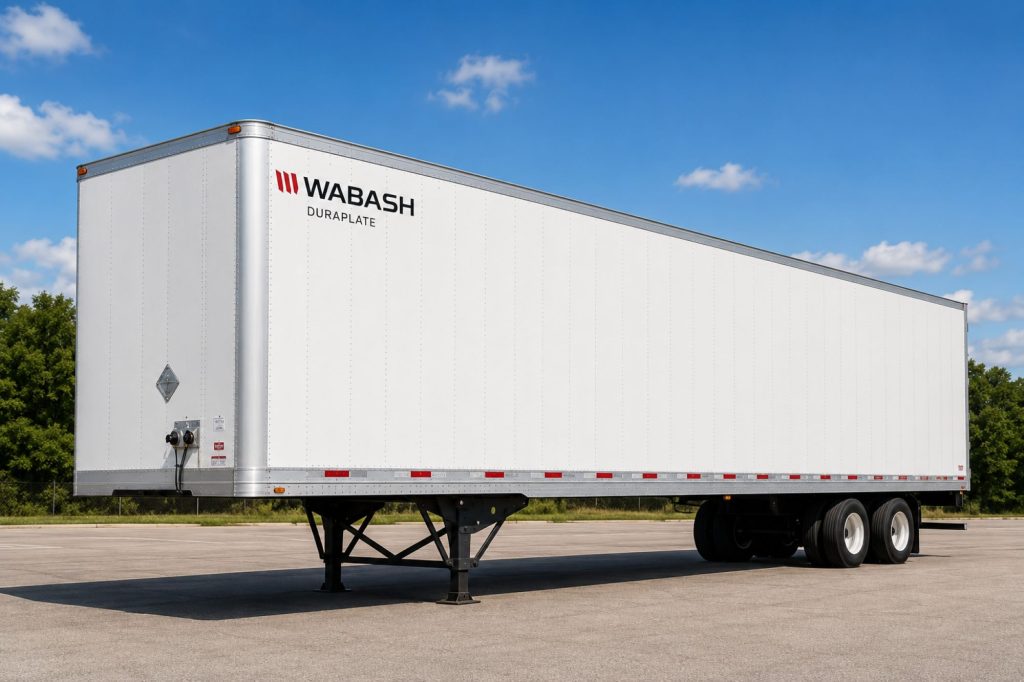
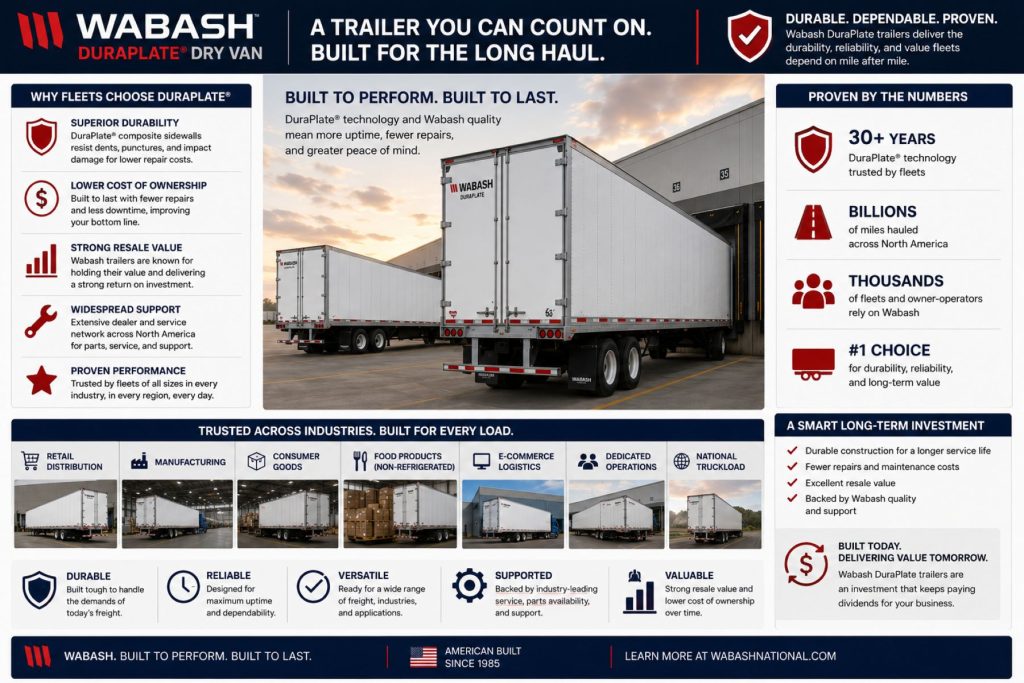
The Wabash DuraPlate Dry Van is one of the most recognized dry van trailers operating throughout North America and is widely known for its innovative composite sidewall construction. Manufactured by Wabash, the DuraPlate has become a popular choice among large fleets, private carriers, dedicated operations, and owner operators seeking durability, cargo protection, and long-term operating efficiency.
A defining feature of the trailer is Wabash’s proprietary DuraPlate composite panel system, which combines strength and durability while reducing maintenance requirements commonly associated with traditional trailer wall construction. This design has helped make the DuraPlate one of the most widely adopted dry van trailers in modern freight transportation.
Today, the Wabash DuraPlate serves a broad range of industries and remains one of the benchmark dry van trailers against which many competing models are evaluated.
Key Characteristics
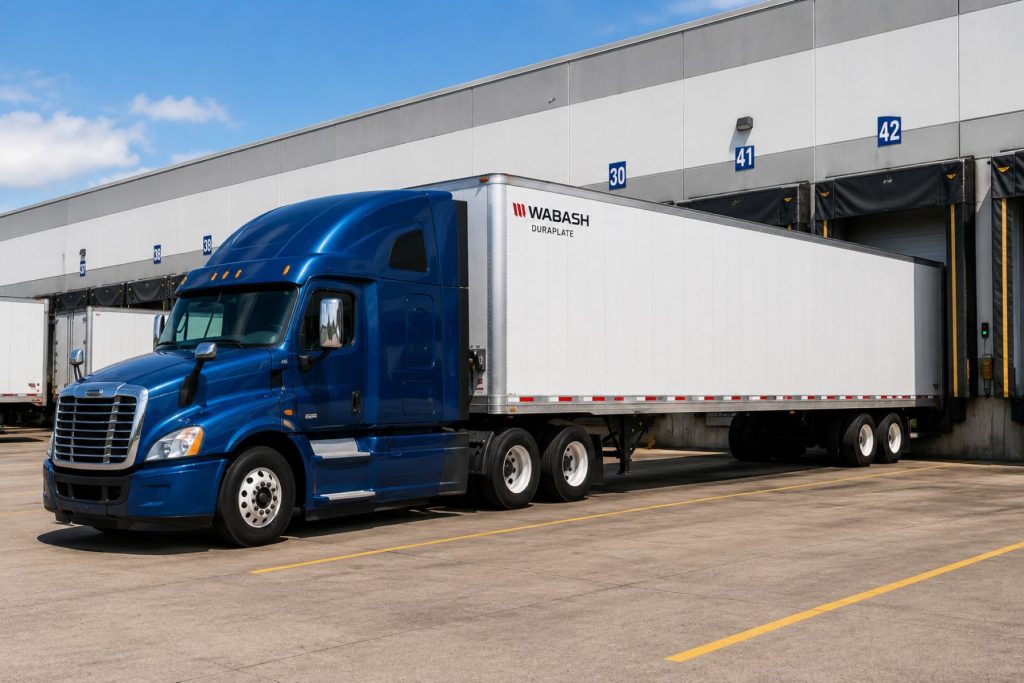
The Wabash DuraPlate is designed to maximize durability, cargo protection, and long-term operating efficiency. Its signature DuraPlate composite sidewall construction provides exceptional resistance to damage while helping reduce maintenance costs over the life of the trailer. The trailer is engineered to handle the demands of high-mileage freight operations while maintaining strong cargo capacity and structural integrity.
The DuraPlate’s reputation for durability, widespread service support, and strong resale value has made it a popular choice among both large fleets and independent operators. Combined with multiple configuration options and broad freight compatibility, the trailer continues to be one of the most successful dry van platforms in North America.
Common Specifications
Length Options
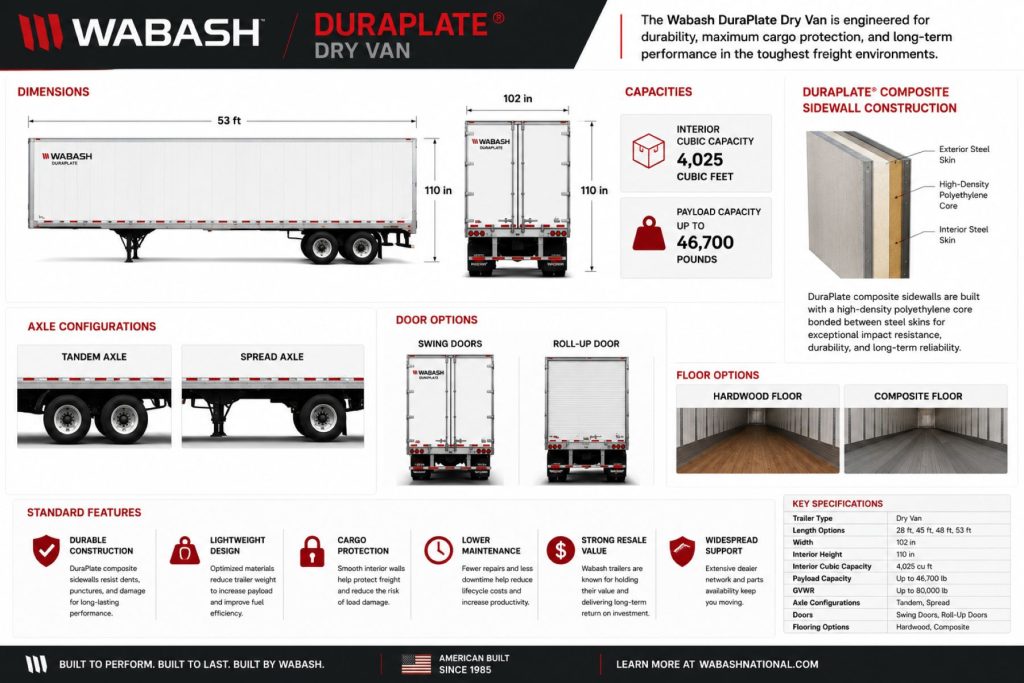
The Wabash DuraPlate is available in several lengths, although the 53-foot configuration remains the most common in modern freight operations. Shorter versions are commonly utilized in regional operations and specialized freight applications where maneuverability or operational requirements favor a shorter trailer.
Width and Height
Standard trailer width is 102 inches, allowing operators to maximize pallet capacity while remaining compliant with highway regulations. Interior dimensions vary slightly depending on specifications and options but are designed to maximize cubic cargo capacity.
DuraPlate Construction
One of the defining features of the Wabash DuraPlate is its proprietary composite sidewall construction. The DuraPlate design combines a high-density polyethylene core bonded between steel skins, creating a durable sidewall system that resists dents, punctures, and damage commonly encountered in freight operations.
Axle Configurations
The trailer is available in tandem axle and spread axle configurations depending on freight requirements, operating regions, and customer preferences. Fleets can select the configuration that best aligns with payload requirements and regulatory considerations.
Flooring Systems
Hardwood flooring remains common in many DuraPlate configurations due to its durability and ability to withstand repeated forklift traffic. Various flooring options may be available depending on cargo type and fleet specifications.
Door Configurations
Customers can select from swing doors or roll-up doors depending on operational requirements. Rear swing doors remain the most common configuration in long-haul freight operations due to their durability and cargo access advantages.
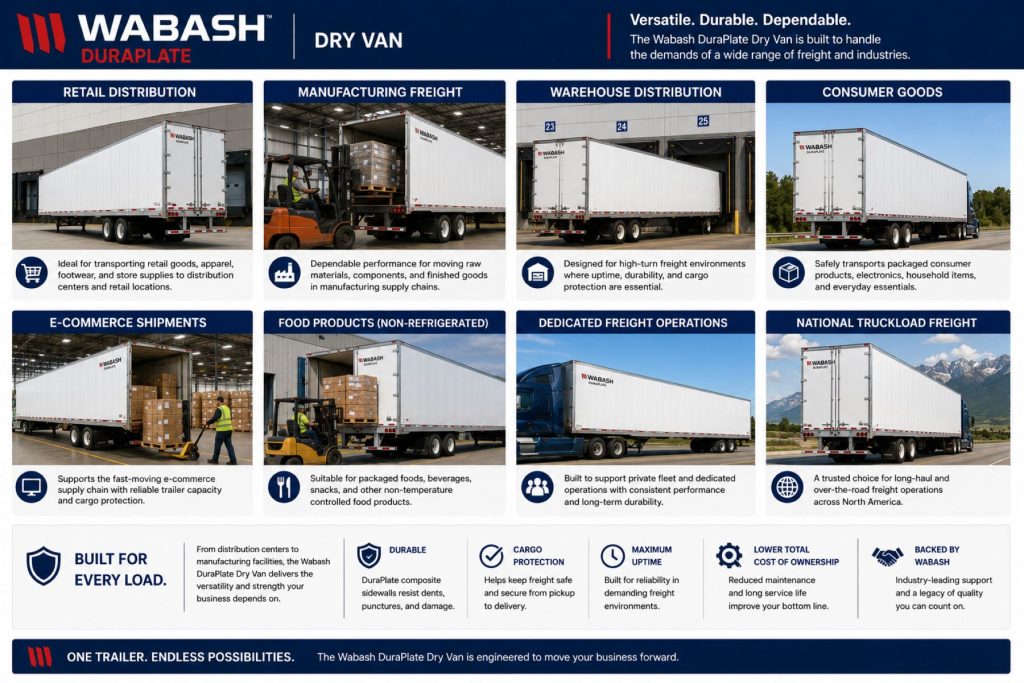
Common Applications
- General Freight
- Retail Distribution
- Consumer Products
- Manufacturing Freight
- Warehouse Distribution
- Dedicated Freight
- E-Commerce Shipments
- Regional Freight Operations
- National Truckload Freight
Advantages
- Durable DuraPlate composite sidewall construction
- Strong cargo protection
- Reduced maintenance requirements
- Excellent parts availability
- Wide dealer and service network
- Strong resale value
- Fleet-proven reliability
- Broad freight compatibility
Limitations or Considerations
- Not designed for oversized freight
- Cannot transport temperature-controlled cargo
- Loading typically requires dock facilities
- Specialized freight may require alternative trailer types
- Repair procedures for composite panels may differ from traditional trailer construction
Driver and Operator Considerations
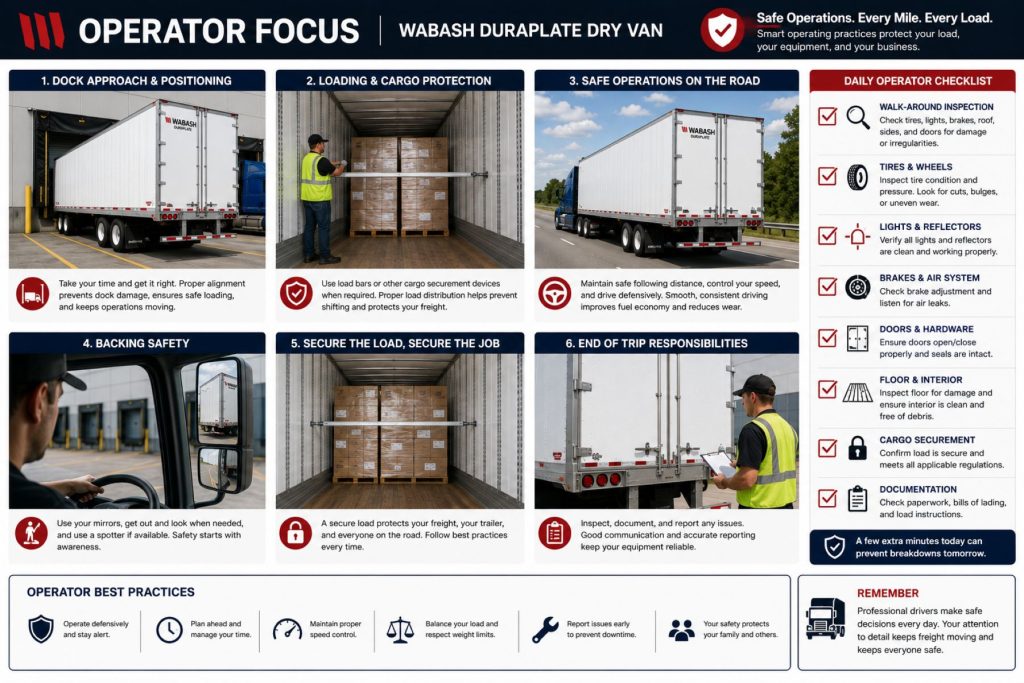
The Wabash DuraPlate is one of the most common dry van trailers operating throughout North America, making it familiar to drivers across virtually every segment of the trucking industry. From large national fleets to independent owner operators, many drivers spend a significant portion of their careers pulling DuraPlate trailers.
Because the trailer is designed around standard loading dock operations, drivers must pay close attention to backing accuracy, trailer positioning, and dock approach procedures. Distribution centers, warehouses, and retail facilities often require precise trailer placement to maximize loading and unloading efficiency.
Cargo securement remains important even though freight is enclosed. Operators should verify proper load distribution, inspect load bars or cargo securement devices when applicable, and ensure axle weights remain compliant with applicable regulations. Properly balanced freight improves handling, braking performance, and tire life.
The DuraPlate’s predictable handling characteristics and widespread industry acceptance make it well suited for regional, dedicated, and long-haul freight operations throughout North America.
Maintenance and Ownership Notes
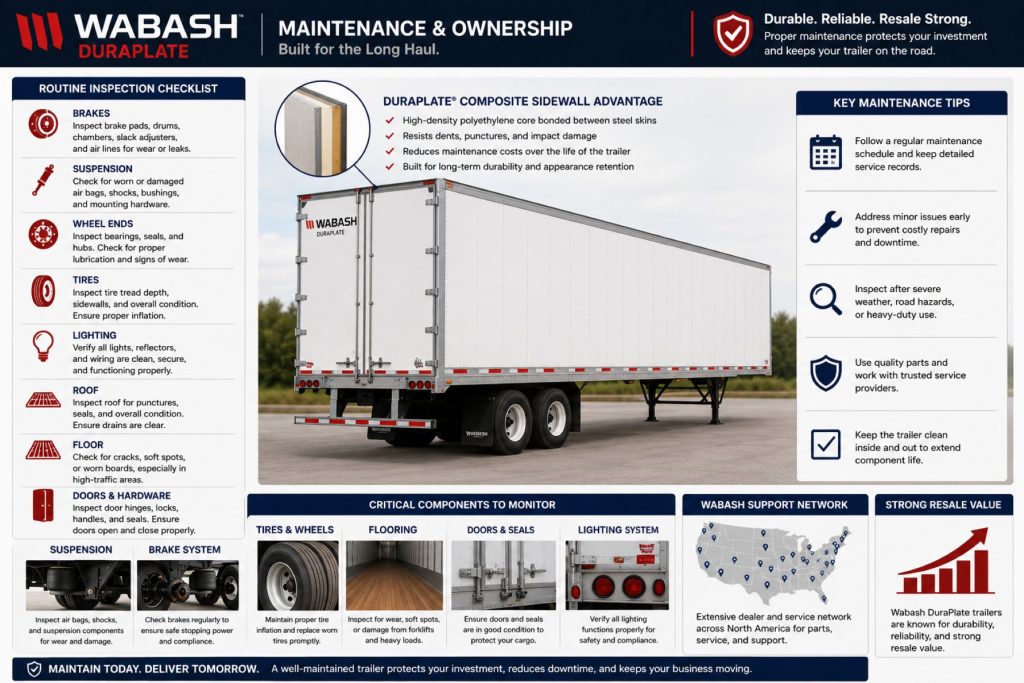
Routine maintenance for the Wabash DuraPlate focuses on brakes, tires, wheel ends, suspension components, lighting systems, roof assemblies, flooring, and rear door hardware. Regular inspections help identify wear before it creates costly downtime or repair expenses.
The DuraPlate sidewall system is one of the trailer’s most significant advantages. The composite construction helps resist dents and damage commonly associated with traditional trailer walls, reducing long-term maintenance requirements in many operating environments.
Owners should routinely inspect flooring condition, suspension wear, brake performance, lighting systems, and door seals. Particular attention should be given to areas that experience frequent loading and unloading activity, as these components typically see the highest wear rates.
The extensive Wabash dealer and service network throughout North America contributes to strong parts availability and service support, helping minimize downtime and support long-term ownership.
Buying Considerations
- Inspect DuraPlate sidewall condition
- Verify floor integrity and forklift wear
- Check suspension condition and maintenance records
- Inspect brake system components
- Evaluate wheel-end condition
- Review tire condition and replacement history
- Inspect rear door operation and seals
- Look for structural damage or excessive corrosion
- Confirm trailer specifications match intended freight
- Compare new versus used purchase costs
- Evaluate dealer support availability
- Consider expected resale value
Common Brands or Manufacturers
- Wabash
- Utility Trailer Manufacturing
- Great Dane
- Hyundai Translead
- Stoughton Trailers
- Vanguard National Trailer Corporation
Variants and Related Configurations
- 53 ft DuraPlate Configuration
- 48 ft DuraPlate Configuration
- Tandem Axle Configuration
- Spread Axle Configuration
- Swing Door Configuration
- Roll-Up Door Configuration
- Liftgate Equipped Configuration
- Fleet-Specific DuraPlate Configuration
Comparison to Similar Trailers
The Wabash DuraPlate is commonly compared to the Utility 3000D, Great Dane Champion Dry Van, Hyundai Translead Dry Van, and Stoughton Dry Van Trailer. These models represent some of the most widely used dry van trailers operating throughout North America.
The DuraPlate’s primary distinction is its composite sidewall construction, which has become one of the most recognizable trailer technologies in the industry. Many fleets value the trailer for its durability, resistance to sidewall damage, and long-term maintenance advantages.
While purchasing decisions often come down to dealer support, fleet preferences, operating environment, and maintenance familiarity, the DuraPlate remains one of the most respected dry van trailers in the market due to its proven performance and widespread adoption.
Best Fit For
- Large Fleets
- Dedicated Contract Carriers
- Regional Freight Operations
- Long-Haul Freight Operations
- Private Fleets
- Owner Operators
- Third-Party Logistics Providers
- Retail Distribution Networks
- Manufacturing Supply Chains
- High-Volume Freight Operations
Related Equipment
- Trailer ABS Systems
- Trailer Brake Systems
- Trailer Suspension Systems
- Trailer Axles
- Trailer Tires
- Trailer Lighting Systems
- Trailer Aerodynamics
- Telematics and Tracking Systems
Related Freight Types
- Dry Van Freight
- Dedicated Freight
- LTL Freight
- Retail Freight
- Manufacturing Freight
Related Trailer Types
- Dry Van Trailers
- 53 ft Dry Van Trailers
- 48 ft Dry Van Trailers
- Refrigerated Trailers
- Flatbed Trailers
- Conestoga Trailers
Related Trailer Models
- Utility 3000D Dry Van
- Great Dane Champion Dry Van
- Hyundai Translead Dry Van
- Stoughton Dry Van Trailer
- Vanguard Dry Van Trailer
Related Guides
- Choosing the Right Trailer for Your Freight
- Dry Van vs Refrigerated Trailer
- Complete Guide to Trailer Types
Regulatory and Compliance Notes
The Wabash DuraPlate must comply with all applicable federal and state transportation regulations regarding trailer inspections, lighting systems, brake systems, cargo securement requirements, and weight limitations. Length and weight restrictions may vary depending on the operating jurisdiction and route being traveled.
Operators should routinely inspect the trailer to ensure continued compliance with DOT regulations and company safety requirements. Proper cargo securement, brake performance, lighting functionality, tire condition, and structural integrity remain critical areas of regulatory focus.
Real World Operating Notes
The Wabash DuraPlate is one of the most common dry van trailers operating throughout North America and is frequently found in large fleet, dedicated, private fleet, and owner-operator operations. Its reputation for durability and long-term reliability has helped make it one of the most recognizable trailer models in the transportation industry.
Many fleet managers specifically seek out DuraPlate trailers because of the composite sidewall construction and proven performance record. The trailer’s widespread use has also created excellent parts availability, strong service support, and familiarity among technicians and drivers.
Because of its versatility, the Wabash DuraPlate can be found hauling everything from retail merchandise and consumer products to manufacturing freight and dedicated contract shipments. Its broad acceptance throughout the industry has helped establish it as one of the benchmark dry van trailers in North America.
Frequently Asked Questions
What is the Wabash DuraPlate Dry Van?
The Wabash DuraPlate is a dry van trailer manufactured by Wabash and known for its proprietary composite sidewall construction and long-term durability.
What makes the DuraPlate different from other dry van trailers?
Its primary distinction is the DuraPlate composite sidewall system, which helps resist dents, punctures, and damage while reducing maintenance requirements.
What freight can a Wabash DuraPlate haul?
The trailer is commonly used for retail goods, consumer products, manufacturing freight, palletized shipments, e-commerce freight, and general dry freight.
Is the Wabash DuraPlate suitable for long-haul operations?
Yes. The trailer is widely used in both regional and long-haul operations due to its durability, cargo capacity, and proven reliability.
How does the Wabash DuraPlate compare to the Utility 3000D?
Both are among the most popular dry van trailers in North America. The DuraPlate is best known for its composite sidewall construction, while the Utility 3000D is recognized for its durability, service support, and strong fleet reputation.
What is the most common DuraPlate configuration?
The 53-foot tandem axle configuration is the most common version found in freight operations throughout North America.
Are Wabash DuraPlate trailers still in production?
Yes. Wabash continues to manufacture and support DuraPlate dry van trailers for fleets and owner operators.
Do DuraPlate trailers have good resale value?
Yes. The Wabash DuraPlate is generally considered one of the strongest resale-value dry van trailers due to its reputation, durability, and widespread industry acceptance.
Availability and Where to Find
Wabash DuraPlate trailers are available through authorized Wabash dealerships, commercial trailer dealers, fleet resale programs, trailer auctions, equipment marketplaces, and used trailer inventories throughout North America. Availability varies based on configuration, age, condition, and market demand.
Support Trucking Families
Truck Equipment Atlas supports the mission of Grey Cross, a nonprofit dedicated to helping families of truck drivers who lose their lives while on the road. As the site grows, part of its mission is to bring awareness and support to these families.
Podcast or Video Section
Learn More Through Audio and Video
Truck Equipment Atlas will continue expanding with podcast episodes, interviews, and equipment breakdowns to help drivers and fleets better understand trucks and equipment.
Follow the Growth of Truck Equipment Atlas
Truck Equipment Atlas continues to expand with new truck profiles, trailer coverage, diesel engine pages, equipment system resources, manufacturer information, and educational guides.
Visit our Site Updates page to explore recent additions, project milestones, and upcoming resources as we continue building one of the industry’s growing commercial trucking equipment reference libraries.
View the Latest Site Updates: Truck Equipment Atlas Site Updates