
Isuzu FTR
Quick Facts
- Manufacturer: Isuzu Commercial Truck of America
- Truck Class: Medium Duty Class 6 Truck
- Common Configurations: Regular Cab, Crew Cab, Chassis Cab, Box Truck, Reefer Truck, Flatbed, Stake Bed, Utility Body
- Primary Applications: Urban Delivery, Beverage Distribution, Refrigerated Freight, Landscaping, Municipal Service, Moving Trucks, Regional Commercial Delivery
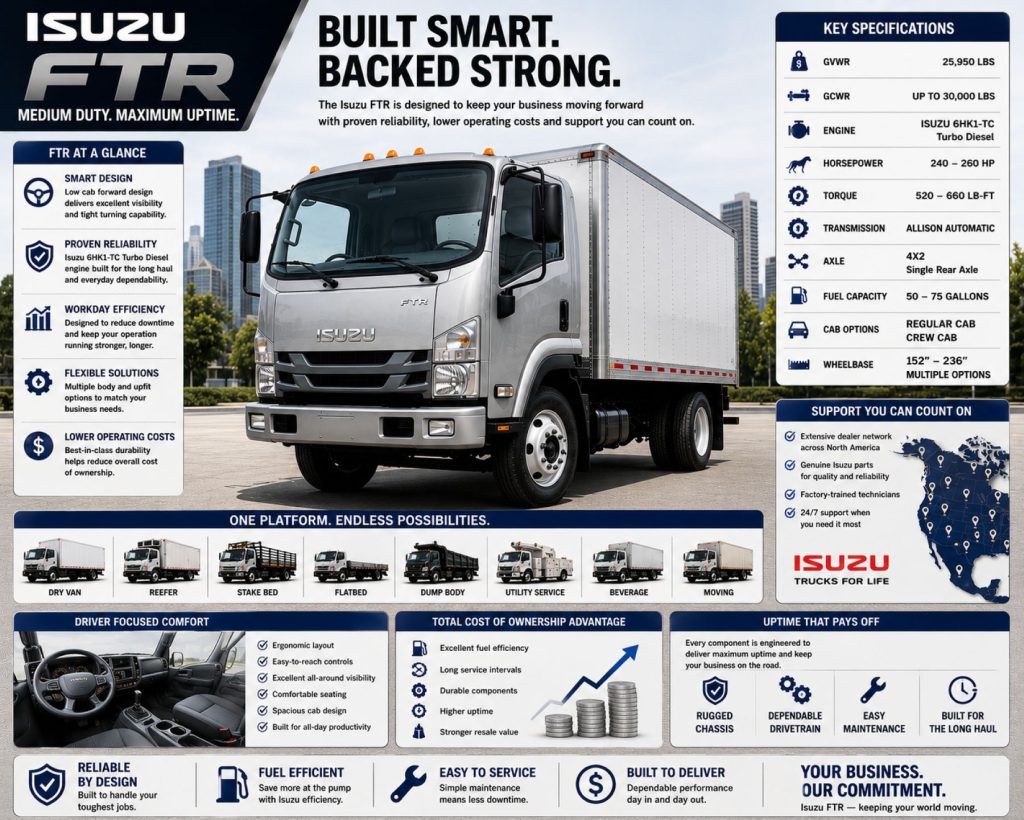
- Common Engine Options: Isuzu 6HK1-TC Turbo Diesel
- Typical Transmission Options: Allison Automatic Transmission
- Common Axle Setups: 4×2, Single Rear Axle
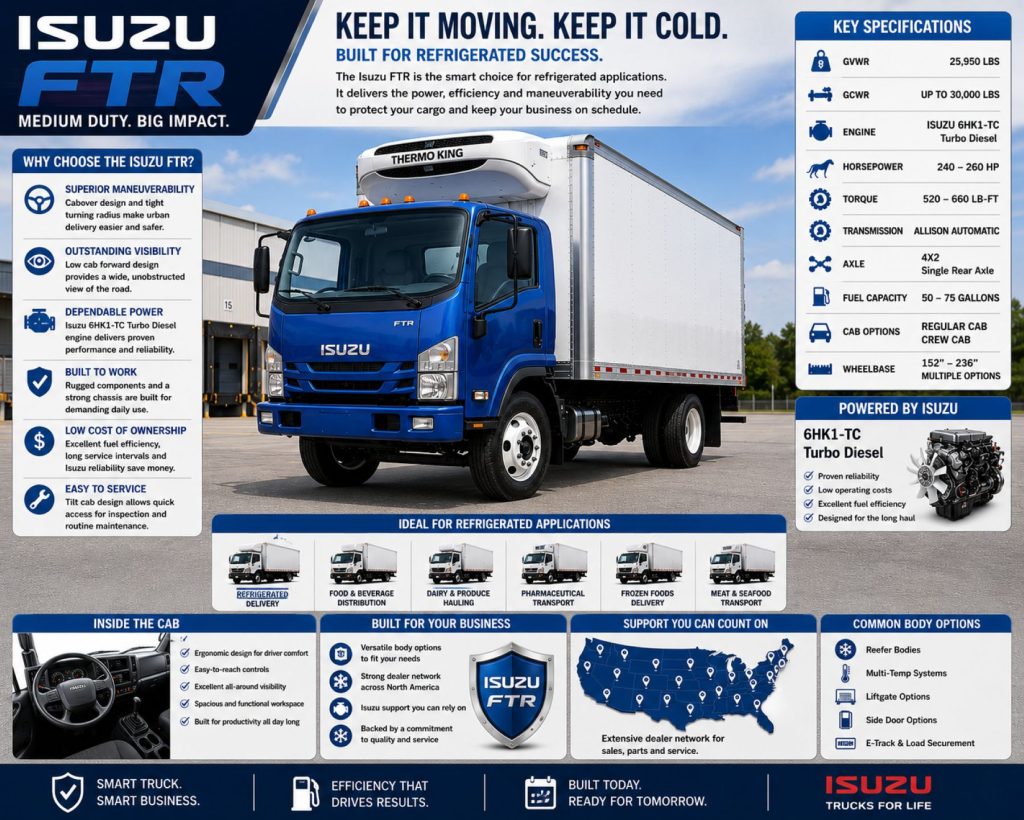
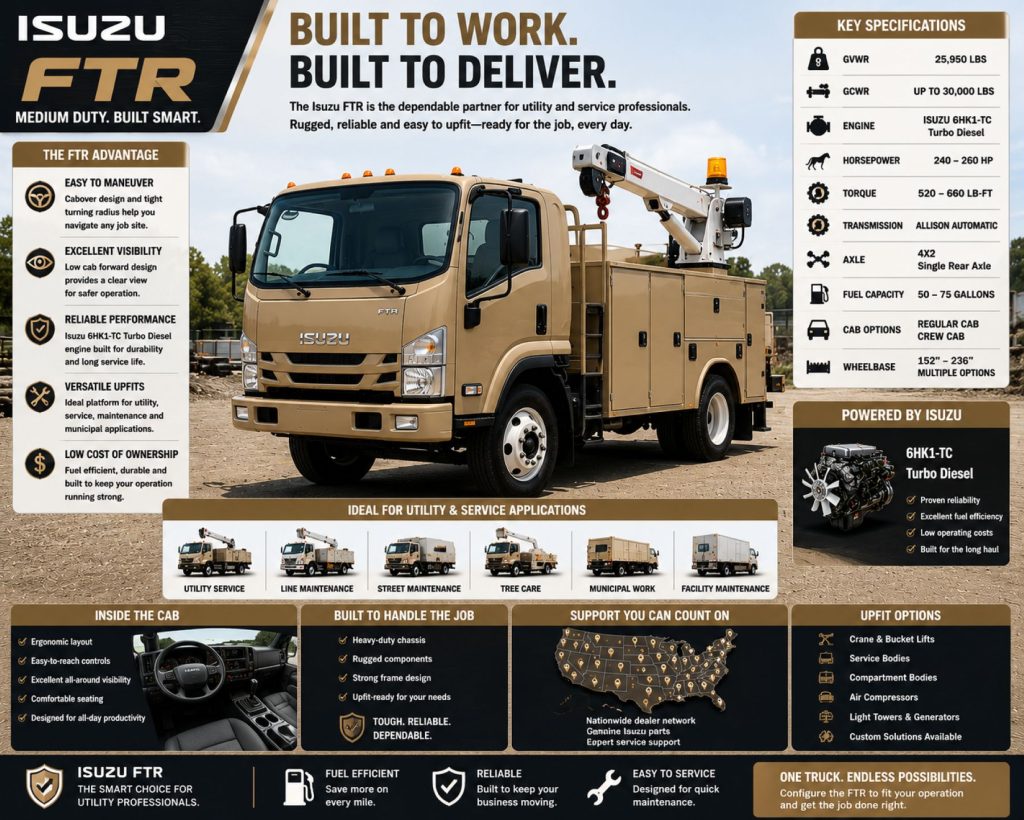
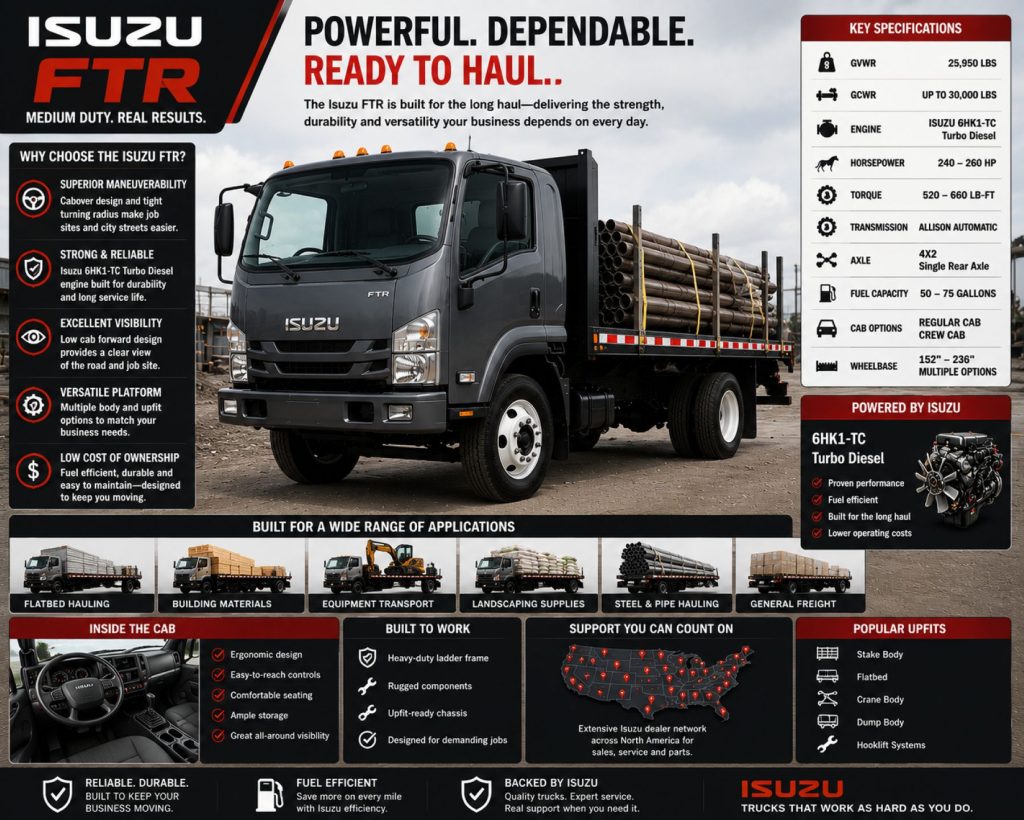
- GVWR Range: Approximately 25,950 lbs
- GCWR Range: Up to approximately 30,000 lbs depending on configuration
- Cab Style: Low Cab Forward (LCF) Cabover Design
- Production Status: Active Production
- Best Fit: Urban delivery, city routing, refrigerated transport, and regional fleet operations
Overview
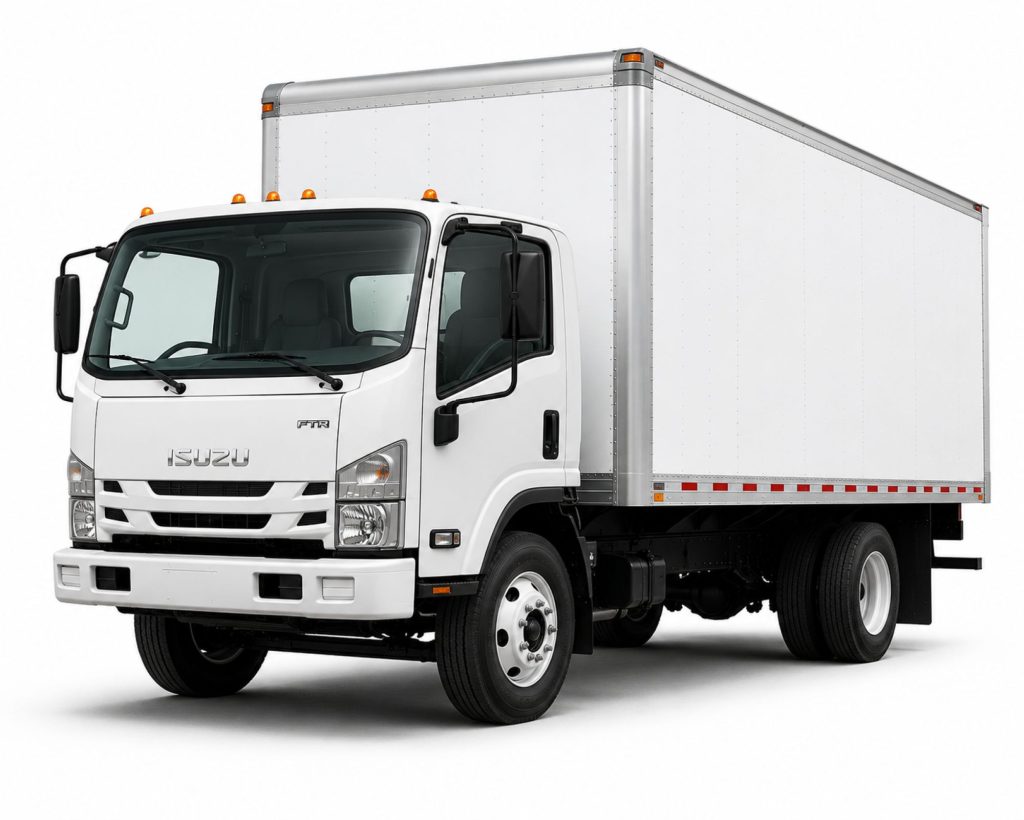
The Isuzu FTR is a medium-duty low cab forward commercial truck platform designed primarily for urban delivery, regional freight distribution, refrigerated transport, and commercial fleet operations.
The Isuzu FTR is especially recognized for its cabover design, exceptional maneuverability, visibility, and compact turning radius, making it highly effective in dense urban environments and tighter commercial delivery operations.
The truck is widely used across box truck fleets, beverage delivery operations, moving companies, reefer applications, landscaping fleets, and municipal service operations where operational efficiency and maneuverability are major priorities.

Key Characteristics
The Isuzu FTR is built around urban commercial efficiency, low cab forward visibility, and delivery-focused maneuverability. The chassis supports multiple body configurations while maintaining a compact operational footprint for city and regional delivery environments.
Its cabover design allows operators to maximize cargo space while improving turning capability and visibility in congested commercial areas.

Common Specifications
Engine Options
The Isuzu FTR commonly uses the Isuzu 6HK1-TC turbo diesel engine designed for medium-duty commercial delivery operations and regional fleet service.
Transmission Options
Most Isuzu FTR trucks are paired with Allison automatic transmissions optimized for stop-and-go urban and regional delivery routing.
Axle Configurations
The Isuzu FTR is commonly configured as a 4×2 single rear axle commercial platform with medium-duty suspension systems.
Cab Configurations
The truck is available in both Regular Cab and Crew Cab configurations depending on operational and passenger requirements.
Wheelbase Range
Wheelbase options vary depending on cargo body requirements, delivery applications, and vocational equipment integration.
Common Applications
The Isuzu FTR is commonly used in:
- Box truck fleets
- Refrigerated delivery operations
- Beverage distribution
- Moving truck fleets
- Urban freight delivery
- Landscaping operations
- Municipal service fleets
- Utility applications
- Commercial rental fleets
- Food service distribution
Advantages
Advantages include:
- Excellent urban maneuverability
- Tight turning radius
- Strong visibility from cabover design
- Efficient city delivery capability
- Good cargo space utilization
- Reliable medium-duty diesel platform
- Commercial fleet flexibility
- Strong stop-and-go operational performance
- Compact operational footprint
- Driver-friendly urban handling
Limitations or Considerations
Limitations and considerations include:
- Cabover ride quality differs from conventional trucks
- Limited heavy vocational capability compared to larger platforms
- Diesel emissions systems require maintenance attention
- Long-distance driver comfort may be lower than conventional cab trucks
- Payload capability lower than heavier Class 7–8 trucks
- Certain rural service areas may have fewer dealer locations
Driver and Operator Experience
The Isuzu FTR is highly regarded for urban maneuverability and visibility. Drivers operating in congested city environments often value the truck’s compact turning capability and ease of navigation through tighter streets and loading zones.
The low cab forward design improves driver visibility while maximizing usable cargo body length within overall vehicle dimensions.
Maintenance and Ownership Notes
Maintenance planning commonly focuses on emissions systems, brakes, cooling systems, liftgate equipment, suspension wear, and body-mounted delivery equipment depending on truck configuration.
Fleet operators frequently value the Isuzu FTR for its reliability in regional and urban commercial delivery environments.
Buying Considerations
When evaluating an Isuzu FTR, buyers should consider route density, delivery environment, body configuration, payload requirements, refrigerated needs, service support availability, and driver operational preferences.
For used trucks, buyers should inspect drivetrain service history, emissions system maintenance, suspension condition, body integrity, and liftgate operation if equipped.
Variants and Configurations
The Isuzu FTR is commonly configured as:
- Box trucks
- Refrigerated trucks
- Flatbed trucks
- Stake bed trucks
- Moving trucks
- Landscaping trucks
- Utility service vehicles
- Municipal fleet trucks
- Commercial delivery vehicles
Comparison to Similar Trucks
The Isuzu FTR is commonly compared to the Hino L Series, International MV Series, Freightliner M2 106, Ford F-650, and Chevrolet 6500XD depending on delivery application and fleet requirements.
Compared to conventional medium-duty trucks, the Isuzu FTR offers superior maneuverability and cargo efficiency in urban environments due to its cabover layout.
Best Fit For
The Isuzu FTR is best suited for:
- Urban delivery fleets
- Regional freight distribution
- Refrigerated delivery operations
- Moving companies
- Commercial rental fleets
- Food service distribution
- Beverage delivery operations
- Municipal fleet applications
- Landscaping companies
Regulatory and Compliance Notes
The Isuzu FTR incorporates modern diesel emissions systems and commercial vehicle technologies designed to comply with current transportation regulations.
Depending on configuration, operators may need to comply with CDL requirements, DOT inspections, ELD mandates, refrigerated transport standards, emissions requirements, and commercial vehicle safety regulations.
Real World Operating Notes
In real-world operation, the Isuzu FTR has developed a strong reputation as an efficient urban delivery and regional freight platform with exceptional maneuverability and visibility.
The truck is especially common in city delivery environments where tighter turning radius, compact overall length, and improved visibility provide major operational advantages.
Fleet operators often value the FTR for its delivery efficiency, compact footprint, and suitability for dense commercial routing environments.
Related Truck Types
Related Freight Types
Related Trailer Types
Related Equipment Systems
- Engines
- Transmissions
- Suspension Systems
- Safety Systems
- Telematics & ELD Systems
- Brake Systems
- Electrical Systems
- Tires & Wheels
Related Guides
- Complete Guide to Freight Types
- Class 6 vs Class 7 vs Class 8 Trucks
- How to Choose the Right Commercial Truck
Frequently Asked Questions
What type of truck is the Isuzu FTR?
The Isuzu FTR is a medium-duty low cab forward commercial delivery truck.
Is the Isuzu FTR good for city delivery?
Yes. The FTR is especially well known for urban maneuverability and compact delivery routing capability.
Does the Isuzu FTR use a diesel engine?
Yes. Most FTR trucks use the Isuzu 6HK1-TC turbo diesel engine.
Is the Isuzu FTR used for refrigerated delivery?
Yes. Reefer body configurations are common within food service and cold-chain delivery operations.
Availability and Where to Find
The Isuzu FTR is available through Isuzu commercial truck dealerships, medium-duty truck distributors, fleet resale operations, used commercial truck dealers, and vocational upfit providers throughout North America.
Support Trucking Families
Truck Equipment Atlas supports the mission of Grey Cross, a nonprofit dedicated to helping families of truck drivers who lose their lives while on the road. As the site grows, part of its mission is to bring awareness and support to these families.
Podcast or Video Section
Learn More Through Audio and Video
Truck Equipment Atlas will continue expanding with podcast episodes, interviews, and equipment breakdowns to help drivers and fleets better understand trucks and equipment.
Follow the Growth of Truck Equipment Atlas
Truck Equipment Atlas continues to expand with new truck profiles, trailer coverage, diesel engine pages, equipment system resources, manufacturer information, and educational guides.
Visit our Site Updates page to explore recent additions, project milestones, and upcoming resources as we continue building one of the industry’s growing commercial trucking equipment reference libraries.
View the Latest Site Updates: Truck Equipment Atlas Site Updates