
Transcraft Eagle II Flatbed Trailer
Quick Facts
- Manufacturer: Transcraft Trailer
- Trailer Type: Flatbed Trailer
- Model: Eagle II Flatbed
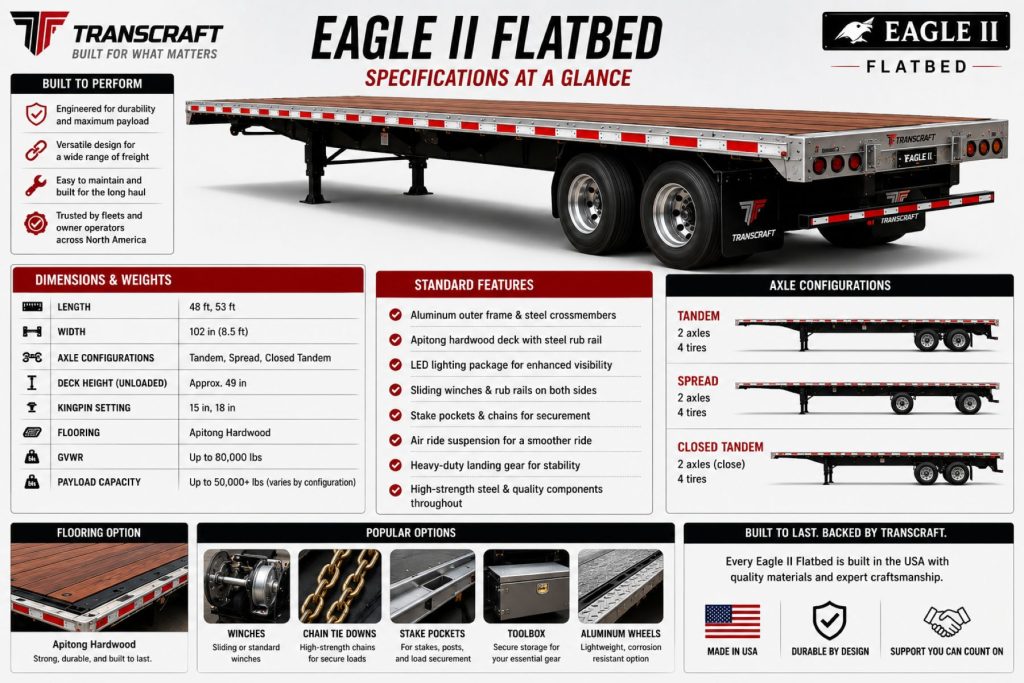
- Common Lengths: 48 ft, 53 ft
- Common Width: 102 inches (8.5 ft)
- Trailer Construction: Aluminum and Steel Combination Construction
- Common Axle Configurations: Tandem Axle, Spread Axle, Closed Tandem
- Typical GVWR: Up to 80,000 lbs Combined Vehicle Weight (subject to applicable regulations)
- Typical Cargo Capacity: Up to 50,000+ lbs depending on configuration
- Flooring Types: Apitong Hardwood Flooring
- Primary Applications: General Flatbed Freight, Building Materials, Steel Products, Machinery Transportation, Industrial Freight
- Common Freight Types: Lumber, Steel, Pipe, Machinery, Building Materials, Manufactured Products
- Load Securement Options: Stake Pockets, Winches, Sliding Winches, Rub Rails, Chain Tie Downs
- Production Status: In Production
Overview
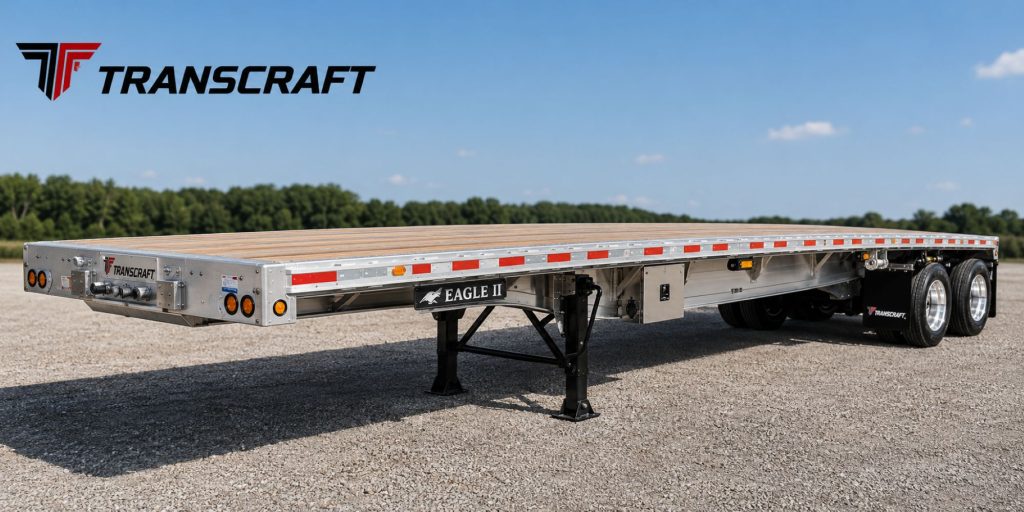
The Transcraft Eagle II Flatbed Trailer is one of the most recognized flatbed trailers operating throughout North America. Built by Transcraft Trailer, the Eagle II has earned a strong reputation for durability, freight versatility, and dependable performance across a wide variety of transportation applications.
The Eagle II was designed to provide fleets and owner operators with a reliable platform capable of handling demanding flatbed freight while maintaining competitive payload capacity and long-term ownership value. Its proven design has made it a common sight throughout the construction, manufacturing, agricultural, and industrial transportation sectors.
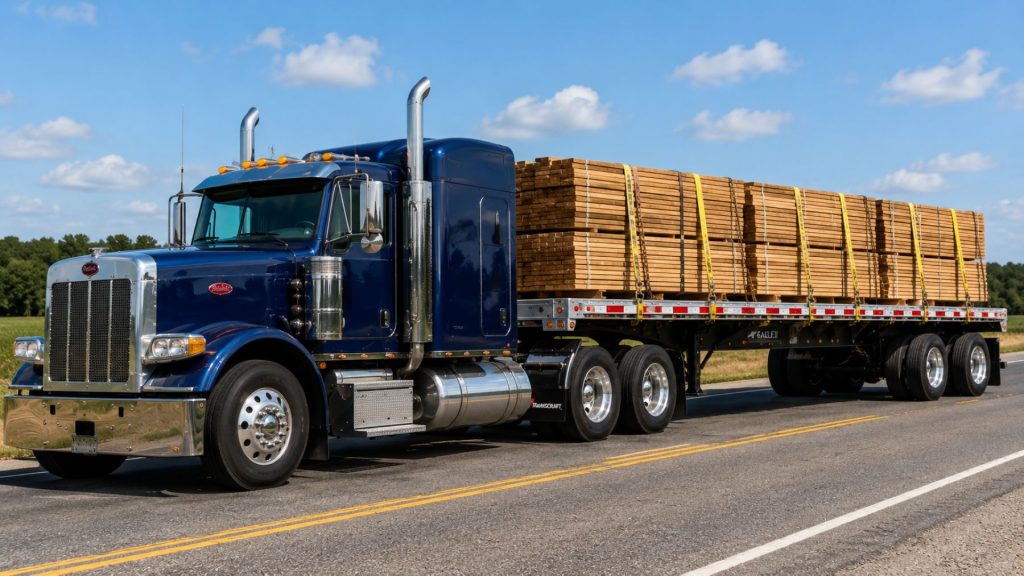
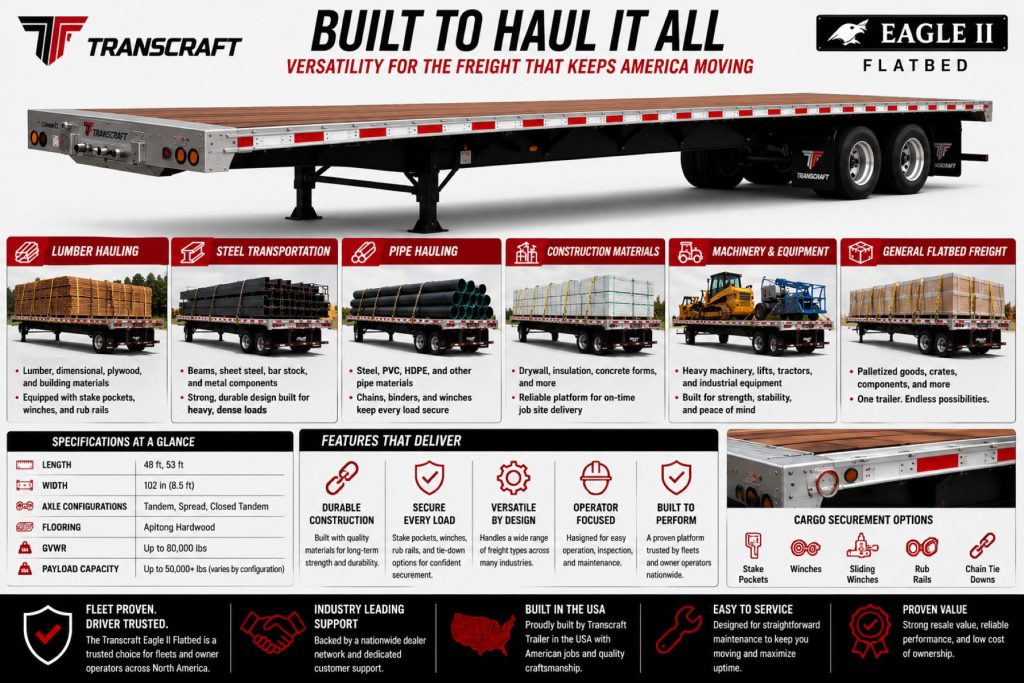
Today, Eagle II trailers are frequently used to transport lumber, steel products, pipe, machinery, building materials, and general flatbed freight across North America.
Key Characteristics
The Transcraft Eagle II is engineered to provide a balance of durability, payload capacity, and operational flexibility. The trailer’s design allows it to handle a broad range of freight types while maintaining the strength required for demanding flatbed operations.
One of the Eagle II’s primary strengths is its versatility. Whether hauling building materials, steel products, machinery, or agricultural equipment, the trailer provides the cargo securement options and structural integrity required for modern freight transportation.
Combined with Transcraft’s reputation within the trailer industry, the Eagle II remains one of the most widely utilized flatbed trailer platforms operating today.
Common Specifications
Length Options
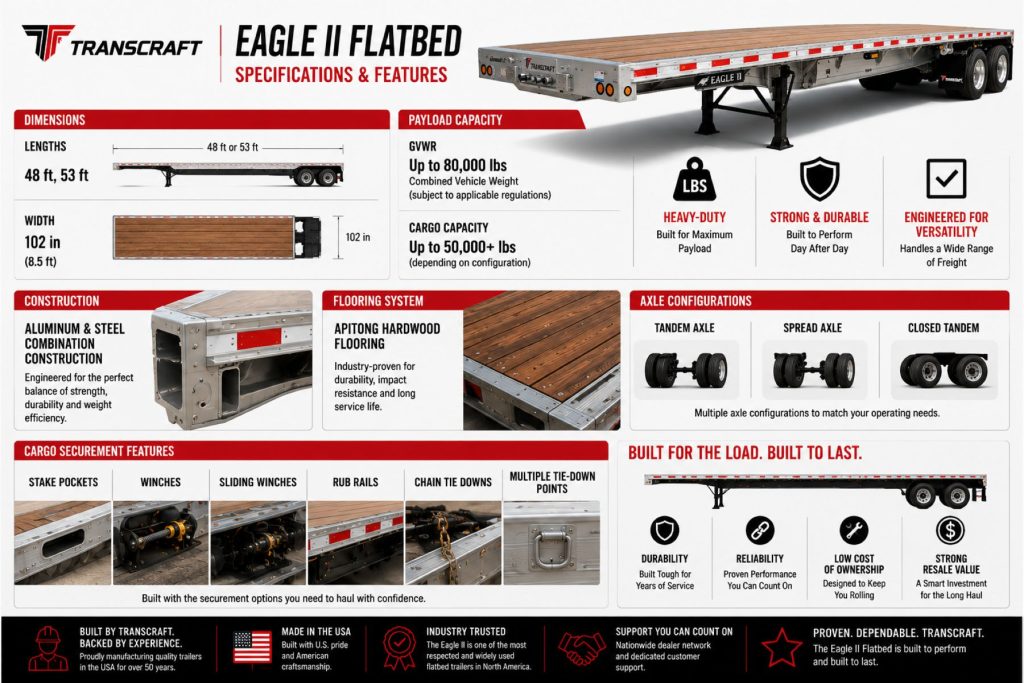
The Eagle II is commonly available in 48-foot and 53-foot configurations. The 53-foot model remains the most popular choice for long-haul flatbed freight operations.
Width and Deck Design
The trailer utilizes a standard 102-inch width and a flat deck design that supports a broad range of freight and loading requirements.
Construction Design
The Eagle II utilizes a combination of aluminum and steel components designed to balance durability, strength, and weight efficiency.
Flooring Systems
Apitong hardwood flooring is commonly utilized because of its proven durability, impact resistance, and long service life in flatbed applications.
Axle Configurations
Available axle configurations include tandem axle, spread axle, and closed tandem arrangements depending on customer requirements and operating environments.
Cargo Securement Systems
The trailer can be equipped with stake pockets, winches, sliding winches, rub rails, chain tie-down points, and additional securement options to support multiple freight categories.
Common Applications
- General Flatbed Freight
- Lumber Transportation
- Steel Product Transportation
- Construction Material Delivery
- Pipe Transportation
- Industrial Equipment Transportation
- Machinery Hauling
- Manufactured Product Transportation
- Agricultural Equipment Transportation
- Building Supply Distribution
Advantages
- Strong and durable construction
- Versatile freight compatibility
- Excellent cargo securement flexibility
- Fleet-proven reliability
- Strong resale value
- Wide dealer support network
- Suitable for regional and long-haul operations
- Industry-recognized platform
Limitations or Considerations
- Heavier than some premium aluminum flatbed trailers
- Cargo requires proper securement
- Open deck design provides no weather protection
- Some freight may require specialized securement equipment
- Regular cargo inspections are required during transport
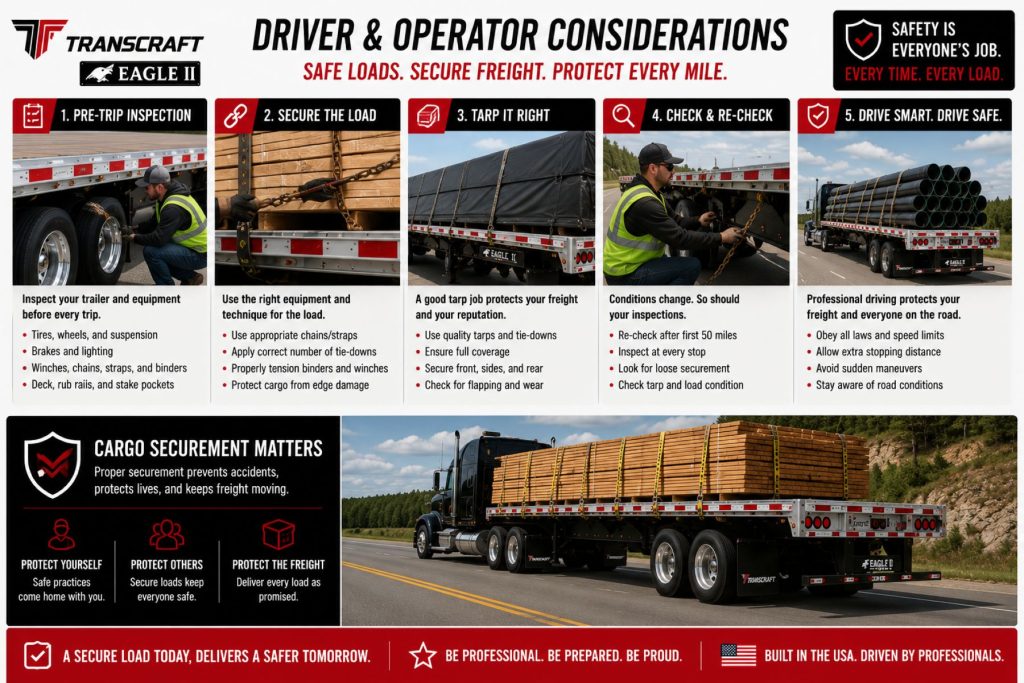
Driver and Operator Considerations
Operating a flatbed trailer requires significantly more driver involvement than enclosed freight operations. Drivers must properly secure cargo, inspect tie-down equipment, monitor load stability, and comply with cargo securement regulations throughout the trip.
Pre-trip inspections should include examination of chains, binders, straps, winches, stake pockets, rub rails, tires, brakes, suspension systems, lighting systems, and flooring condition. Operators should verify that all securement devices remain properly tensioned before departure and during transit.
Because flatbed cargo is exposed to weather and road conditions, drivers must regularly inspect loads for movement, shifting, loose securement devices, and tarp integrity when applicable. Proper cargo securement remains one of the most important responsibilities in flatbed transportation.
The Eagle II’s versatility and proven design have made it a popular choice among both owner operators and fleet operators throughout North America.
Maintenance and Ownership Notes
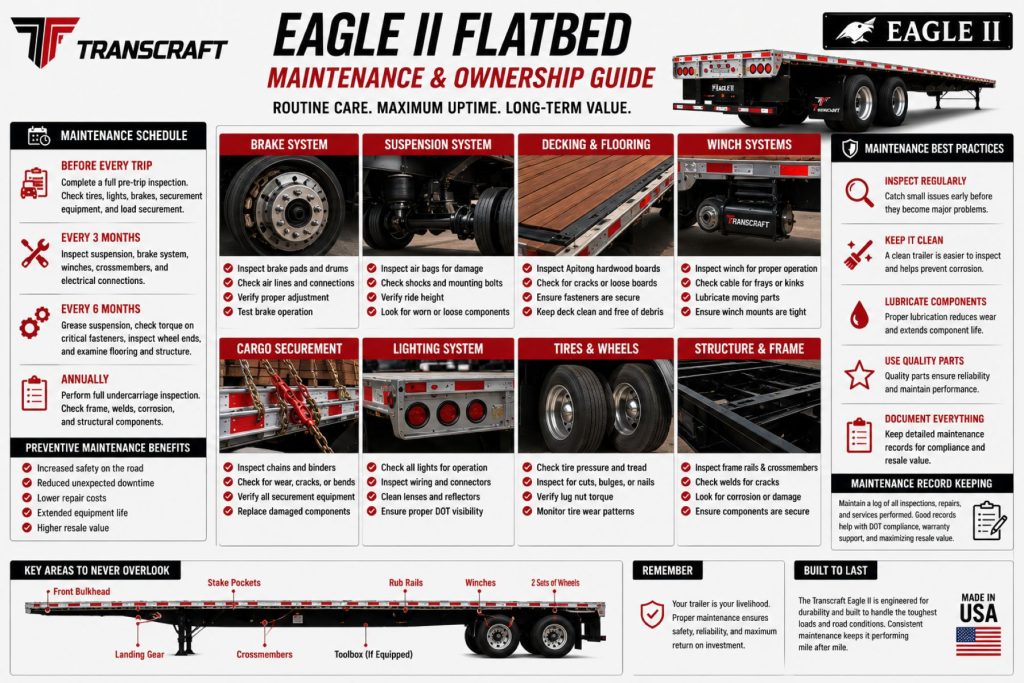
Routine maintenance for the Transcraft Eagle II includes inspection of brakes, suspension systems, tires, wheel ends, lighting systems, flooring, securement equipment, stake pockets, rub rails, and structural components. Regular preventive maintenance helps maximize uptime and extend service life.
Owners should routinely inspect frame components, crossmembers, deck surfaces, winches, tie-down points, suspension assemblies, and cargo securement systems. These components experience significant stress during normal flatbed operations and should be monitored regularly.
The Eagle II has developed a reputation for durability and dependable service. Many fleets appreciate its ability to withstand demanding freight applications while maintaining long-term ownership value.
Buying Considerations
- Inspect deck condition and wear
- Verify frame and crossmember integrity
- Check suspension components
- Inspect brake system condition
- Evaluate wheel-end condition
- Inspect tires and maintenance records
- Check winches and securement equipment
- Inspect stake pockets and rub rails
- Review axle configuration
- Compare payload requirements
- Evaluate dealer support availability
- Review expected resale value
Common Brands or Manufacturers
- Transcraft Trailer
- Fontaine Trailer
- Reitnouer Trailers
- Wilson Trailer
- Benson Trailers
- MAC Trailer
Variants and Related Configurations
- 53 ft Eagle II Configuration
- 48 ft Eagle II Configuration
- Spread Axle Configuration
- Closed Tandem Configuration
- Lumber Hauling Configuration
- Steel Hauling Configuration
- Heavy-Duty Flatbed Configuration
- Owner Operator Specification Package
Comparison to Similar Trailers
The Transcraft Eagle II is commonly compared to the Fontaine Revolution, Reitnouer MaxMiser, Benson Aluminum Flatbed, Wilson Flatbed Trailer, and MAC Flatbed. These trailers represent many of the most respected flatbed platforms operating throughout North America.
The Eagle II is particularly known for its durability, versatility, and ability to handle a broad range of freight types. Many fleets select the Eagle II because it provides dependable performance without sacrificing operational flexibility.
While purchasing decisions often depend on freight requirements, payload goals, dealer relationships, and fleet preferences, the Eagle II remains one of the benchmark flatbed trailers in the industry.
Best Fit For
- Owner Operators
- Flatbed Fleets
- Building Material Carriers
- Steel Haulers
- Machinery Transport Companies
- Industrial Freight Operations
- Agricultural Equipment Haulers
- Regional Flatbed Operations
- Long-Haul Flatbed Operations
- Specialized Freight Carriers
Related Equipment
- Cargo Securement Systems
- Trailer Axles
- Trailer Suspension Systems
- Trailer Brake Systems
- Trailer Tires
- Trailer Lighting Systems
- Winch Systems
- Chain Tie Downs
- Load Binders
- Flatbed Tarp Systems
Related Freight Types
- Flatbed Freight
- Building Materials Freight
- Steel Freight
- Machinery Freight
- Construction Freight
- Industrial Freight
- Heavy Haul Freight
- Agricultural Freight
Related Trailer Types
Related Trailer Models
- Fontaine Revolution Flatbed
- Reitnouer MaxMiser Flatbed
- Benson Aluminum Flatbed
- Wilson Flatbed Trailer
- MAC Flatbed Trailer
Related Guides
- Complete Guide to Trailer Types
- Flatbed vs Step Deck vs Double Drop
- Choosing the Right Trailer for Your Freight
Regulatory and Compliance Notes
The Transcraft Eagle II must comply with all applicable federal and state transportation regulations regarding trailer inspections, lighting systems, brake systems, cargo securement requirements, axle weight limitations, and vehicle dimensions.
Flatbed operators must follow Federal Motor Carrier Safety Administration (FMCSA) cargo securement standards. Proper use of chains, straps, binders, edge protection, and tie-down devices is essential for safe and compliant operation.
Real World Operating Notes
The Transcraft Eagle II is one of the most common flatbed trailers operating throughout North America and is widely utilized by owner operators, regional carriers, and large flatbed fleets.
Many operators appreciate the trailer’s versatility and ability to handle multiple freight categories. From lumber and steel products to machinery and building materials, the Eagle II has proven itself across a wide variety of transportation environments.
Its widespread adoption has also resulted in strong parts availability, broad service support, and familiarity among drivers and maintenance personnel throughout the trucking industry.
Frequently Asked Questions
What is the Transcraft Eagle II?
The Transcraft Eagle II is a flatbed trailer designed for hauling lumber, steel products, machinery, construction materials, pipe, and general flatbed freight.
What freight can a Transcraft Eagle II haul?
The trailer commonly transports lumber, steel, pipe, machinery, industrial equipment, agricultural equipment, construction materials, and manufactured products.
Is the Eagle II suitable for long-haul operations?
Yes. The Eagle II is widely used in both regional and long-haul flatbed freight operations throughout North America.
What flooring is commonly used on the Eagle II?
Most Eagle II trailers utilize Apitong hardwood flooring because of its durability, strength, and long service life.
How does the Eagle II compare to the Fontaine Revolution?
Both are highly respected flatbed trailers. The Eagle II is known for versatility and durability, while the Revolution is known for its strong fleet reputation and widespread industry adoption.
What is the most common Eagle II configuration?
The 53-foot spread axle configuration is one of the most common versions operating in today’s flatbed freight market.
Are Transcraft Eagle II trailers still in production?
Yes. Transcraft continues to manufacture and support Eagle II flatbed trailers.
Do Transcraft Eagle II trailers have strong resale value?
Yes. The Eagle II generally maintains strong resale value due to its reputation, durability, and broad acceptance throughout the industry.
What industries commonly use Transcraft Eagle II trailers?
Construction, manufacturing, steel transportation, agriculture, machinery hauling, industrial freight operations, and building materials distribution commonly utilize Eagle II trailers.
Availability and Where to Find
Transcraft Eagle II flatbed trailers are available through authorized Transcraft dealers, commercial trailer dealerships, fleet resale programs, equipment auctions, trailer marketplaces, and used equipment inventories throughout North America. Availability varies based on age, configuration, condition, and market demand.
Support Trucking Families
Truck Equipment Atlas supports the mission of Grey Cross, a nonprofit dedicated to helping families of truck drivers who lose their lives while on the road. As the site grows, part of its mission is to bring awareness and support to these families.
Podcast or Video Section
Learn More Through Audio and Video
Truck Equipment Atlas will continue expanding with podcast episodes, interviews, and equipment breakdowns to help drivers and fleets better understand trucks and equipment.
Follow the Growth of Truck Equipment Atlas
Truck Equipment Atlas continues to expand with new truck profiles, trailer coverage, diesel engine pages, equipment system resources, manufacturer information, and educational guides.
Visit our Site Updates page to explore recent additions, project milestones, and upcoming resources as we continue building one of the industry’s growing commercial trucking equipment reference libraries.
View the Latest Site Updates: Truck Equipment Atlas Site Updates