
Ford F-750
Quick Facts
- Manufacturer: Ford Motor Company
- Truck Class: Medium Duty Class 6–7 Truck
- Common Configurations: Regular Cab, SuperCab, Crew Cab, Chassis Cab, Box Truck, Flatbed, Dump Body, Utility Body, Rollback Tow Truck
- Primary Applications: Regional Delivery, Utility Service, Municipal Operations, Construction Support, Landscaping, Beverage Distribution, Towing & Recovery
- Common Engine Options: Ford 6.7L Power Stroke Diesel, Ford 7.3L Gas V8
- Typical Transmission Options: TorqShift Automatic Transmission
- Common Axle Setups: 4×2, 6×4, Single Rear Axle, Tandem Rear Axle
- GVWR Range: Approximately 25,999–37,000 lbs depending on configuration
- GCWR Range: Up to approximately 50,000 lbs depending on setup
- Cab Style: Conventional Medium Duty Cab
- Production Status: Active Production
- Best Fit: Vocational fleets, delivery operations, municipal service, and medium-duty commercial applications
Overview
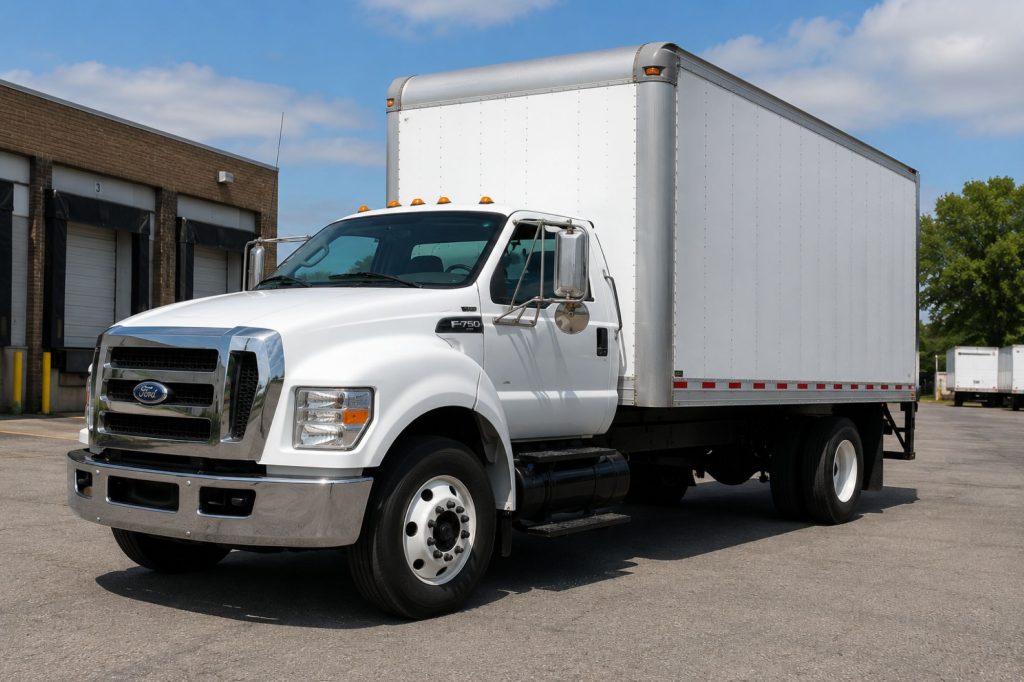
The Ford F-750 is a versatile medium-duty commercial truck platform designed for delivery operations, vocational applications, utility service, towing, construction support, and municipal fleet use.
As part of Ford’s Super Duty medium-duty lineup, the F-750 combines commercial-grade durability with flexible body configurations and broad vocational adaptability. The truck is widely used across delivery fleets, utility companies, municipalities, construction operations, and towing applications throughout North America.
The Ford F-750 is especially recognized for its conventional cab layout, broad body compatibility, and ability to support a wide range of medium-duty commercial operations.
Key Characteristics
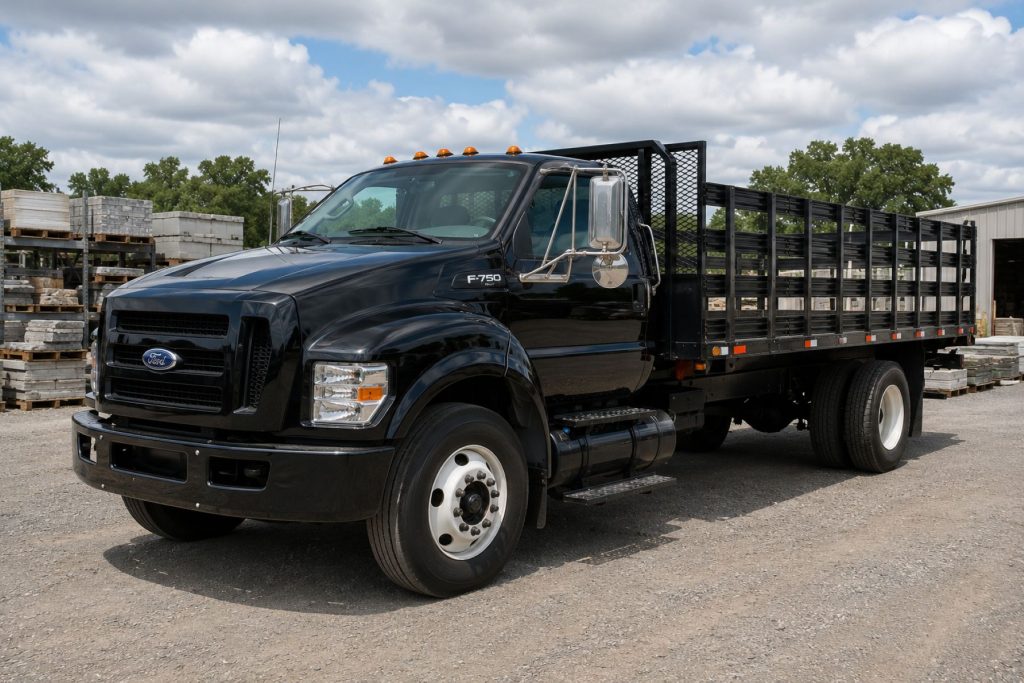
The Ford F-750 is engineered around durability, vocational flexibility, and broad operational capability. The truck supports multiple cab layouts, drivetrain configurations, wheelbases, and vocational upfits depending on fleet requirements.
Its conventional truck design provides a more traditional driving experience compared to cabover platforms while supporting numerous commercial body applications.
Common Specifications
Engine Options
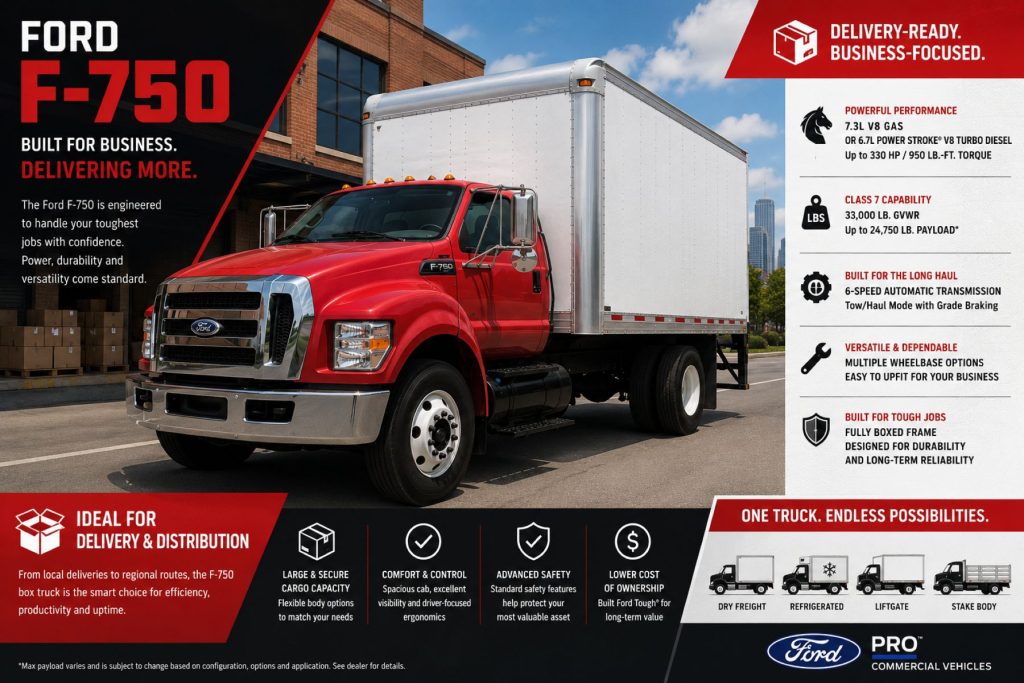
The Ford F-750 commonly uses the Ford 6.7L Power Stroke diesel engine or the Ford 7.3L gas V8 depending on operational requirements and fleet preferences.
Transmission Options
Most F-750 trucks use Ford’s TorqShift automatic transmission designed for medium-duty commercial applications.
Axle Configurations
The truck is available in multiple axle configurations including single rear axle and tandem axle vocational layouts.
Cab Configurations
The Ford F-750 is available in Regular Cab, SuperCab, and Crew Cab configurations depending on operational needs and passenger requirements.
Wheelbase Range
Wheelbase lengths vary depending on body style, vocational equipment, towing configuration, and payload requirements.
Common Applications
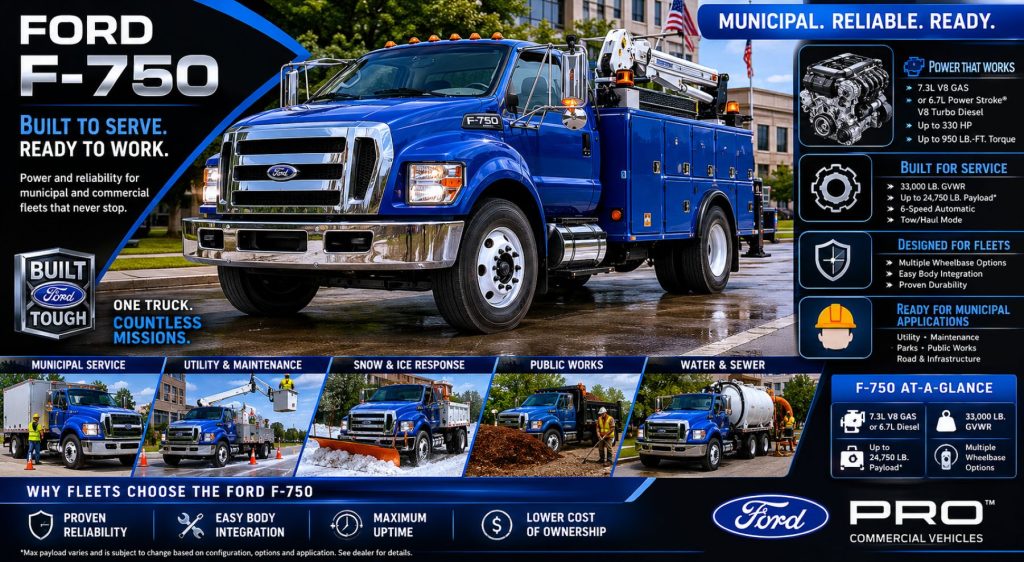
The Ford F-750 is commonly used in:
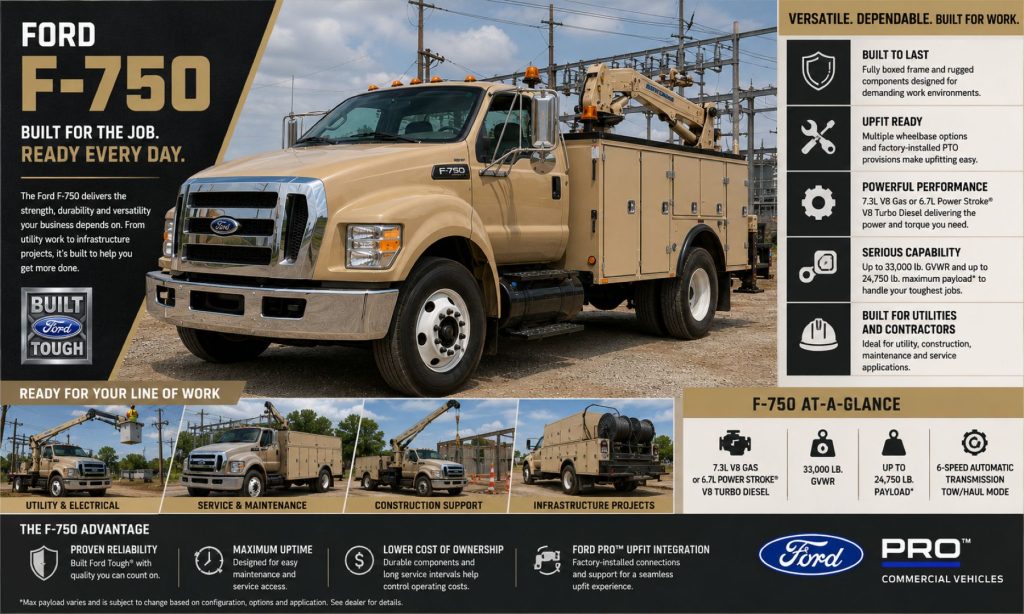
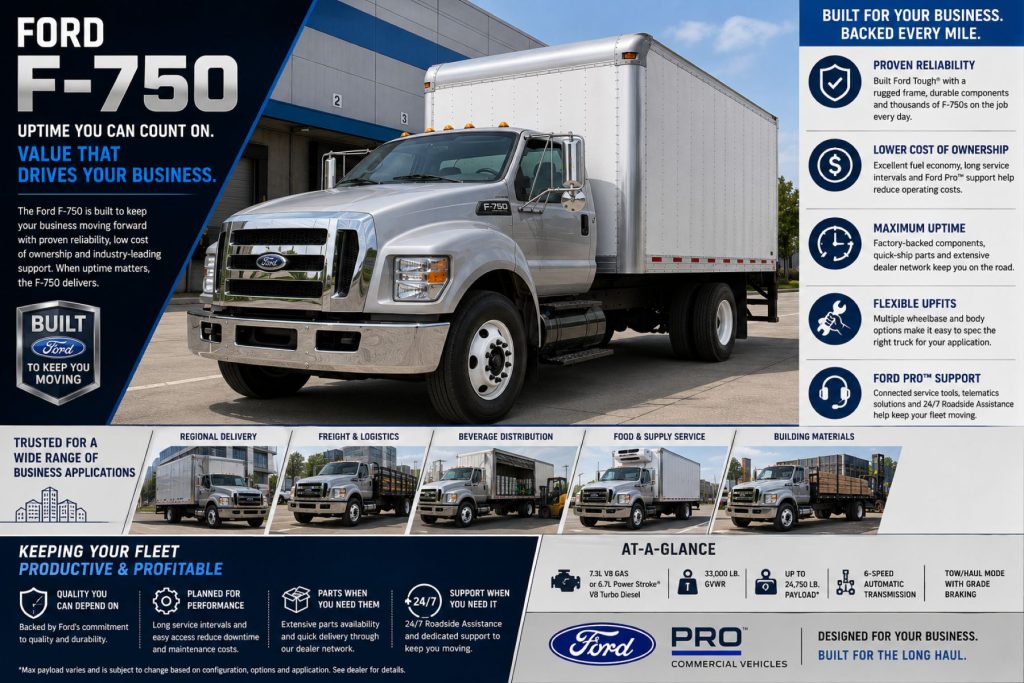
- Box truck fleets
- Rollback towing operations
- Utility service fleets
- Municipal service applications
- Construction support fleets
- Dump truck configurations
- Landscaping operations
- Beverage distribution
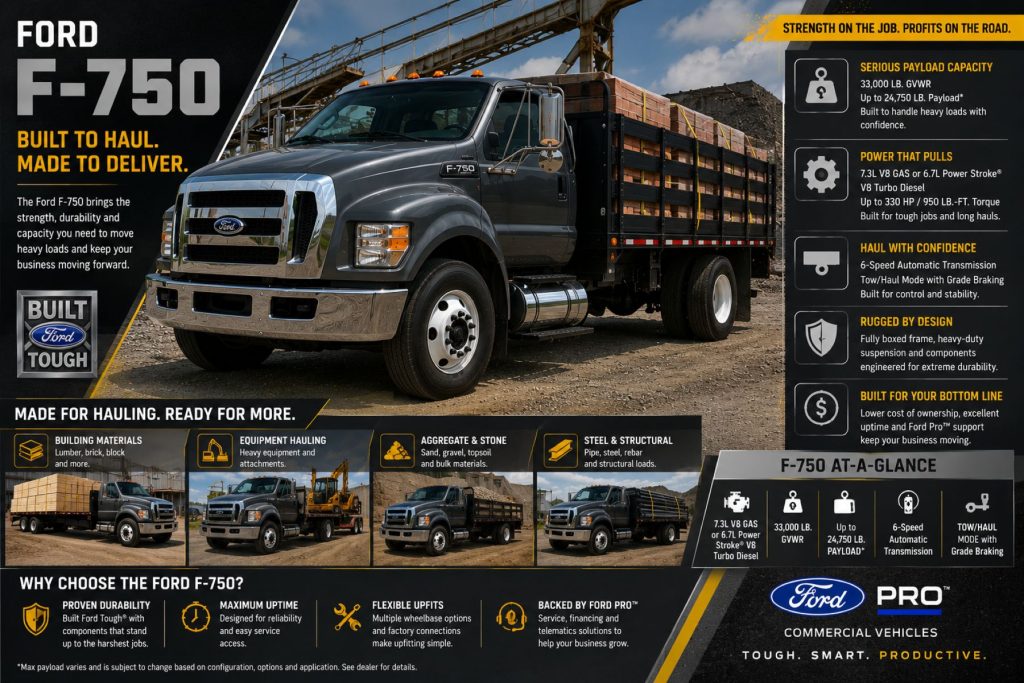
- Flatbed hauling
- Commercial delivery operations
Advantages
Advantages include:
- Strong vocational flexibility
- Broad commercial body compatibility
- Conventional truck driving experience
- Multiple cab configurations
- Gas and diesel engine availability
- Strong towing capability
- Good regional delivery performance
- Wide dealer support network
- Strong municipal fleet presence
- Commercial fleet adaptability
Limitations or Considerations
Limitations and considerations include:
- Larger turning radius than cabover trucks
- Fuel economy varies heavily by application
- Diesel emissions systems require maintenance attention
- Heavier vocational applications may require Class 8 trucks
- Maintenance costs increase in severe-duty service
- Urban maneuverability lower than low cab forward platforms
Driver and Operator Experience
The Ford F-750 provides a conventional medium-duty driving experience with strong visibility, comfortable cab layouts, and broad vocational capability.
Drivers operating in regional delivery, utility service, and municipal environments often value the familiar Super Duty-inspired cab ergonomics and straightforward operation.
Maintenance and Ownership Notes
Maintenance planning commonly focuses on emissions systems, suspension wear, brakes, PTO systems, cooling systems, hydraulic equipment, and vocational body integration depending on configuration.
Fleet operators often value the F-750 for broad service support availability and flexibility across commercial applications.
Buying Considerations
When evaluating a Ford F-750, buyers should consider intended body configuration, payload requirements, towing needs, route density, engine selection, and vocational application requirements.
For used trucks, buyers should inspect drivetrain maintenance history, suspension condition, body integrity, hydraulic systems, and vocational equipment wear if equipped.
Variants and Configurations
The Ford F-750 is commonly configured as:
- Box trucks
- Flatbed trucks
- Rollback tow trucks
- Dump trucks
- Utility service trucks
- Municipal fleet vehicles
- Landscaping trucks
- Construction support trucks
- Commercial delivery vehicles
Comparison to Similar Trucks
The Ford F-750 is commonly compared to the Freightliner M2 106, International MV Series, Chevrolet 6500XD, Peterbilt 536, and Kenworth T280 depending on application requirements.
Compared to cabover medium-duty trucks, the F-750 offers a more traditional driving layout but generally requires more operating space in urban environments.
Best Fit For
The Ford F-750 is best suited for:
- Regional delivery fleets
- Utility companies
- Municipal operations
- Construction support fleets
- Towing operations
- Commercial rental fleets
- Landscaping companies
- Vocational fleet applications
- Beverage distribution
Regulatory and Compliance Notes
The Ford F-750 incorporates modern emissions systems and commercial vehicle technologies designed to comply with current transportation regulations.
Depending on configuration, operators may need to comply with CDL requirements, DOT inspections, ELD mandates, emissions regulations, towing regulations, and vocational safety requirements.
Real World Operating Notes
In real-world operation, the Ford F-750 has developed a strong reputation as a flexible medium-duty commercial platform capable of handling a wide range of vocational and delivery applications.
The truck is especially common in utility fleets, towing operations, municipal service, and regional delivery environments where durability and vocational flexibility are major priorities.
Fleet operators often value the F-750 for strong dealer support, broad body compatibility, and operational versatility across multiple industries.
Related Truck Types
Related Freight Types
- Dry Van Freight
- Refrigerated (Reefer) Freight
- Construction & Aggregate Freight
- Specialized & Niche Freight
Related Trailer Types
Related Equipment Systems
- Engines
- Transmissions
- Suspension Systems
- Safety Systems
- Telematics & ELD Systems
- Brake Systems
- Electrical Systems
- Tires & Wheels
Related Guides
- Complete Guide to Freight Types
- How to Choose the Right Commercial Truck
- Class 6 vs Class 7 vs Class 8 Trucks
Frequently Asked Questions
What engines are available in the Ford F-750?
Common engine options include the Ford 6.7L Power Stroke diesel and Ford 7.3L gas V8.
Is the Ford F-750 used for towing operations?
Yes. Rollback tow truck and recovery configurations are common for the F-750.
Is the Ford F-750 a CDL truck?
Many F-750 configurations require a CDL depending on GVWR and local regulations.
Can the Ford F-750 be configured as a box truck?
Yes. Box truck and delivery fleet configurations are widely used.
Availability and Where to Find
The Ford F-750 is available through Ford commercial truck dealerships, medium-duty truck distributors, fleet resale operations, used commercial truck dealers, and vocational upfit providers throughout North America.
Support Trucking Families
Truck Equipment Atlas supports the mission of Grey Cross, a nonprofit dedicated to helping families of truck drivers who lose their lives while on the road. As the site grows, part of its mission is to bring awareness and support to these families.
Podcast or Video Section
Learn More Through Audio and Video
Truck Equipment Atlas will continue expanding with podcast episodes, interviews, and equipment breakdowns to help drivers and fleets better understand trucks and equipment.
Follow the Growth of Truck Equipment Atlas
Truck Equipment Atlas continues to expand with new truck profiles, trailer coverage, diesel engine pages, equipment system resources, manufacturer information, and educational guides.
Visit our Site Updates page to explore recent additions, project milestones, and upcoming resources as we continue building one of the industry’s growing commercial trucking equipment reference libraries.
View the Latest Site Updates: Truck Equipment Atlas Site Updates