
PTO System Explained: How Power Take-Off Systems Work on Commercial Trucks

Power Take-Off (PTO) systems allow a truck’s engine and transmission to power auxiliary equipment such as dump bodies, hydraulic pumps, winches, vacuum systems, and cranes.
Without PTO systems, many vocational trucks and specialized equipment would not be able to perform their intended functions.
Although PTO systems are extremely common throughout the trucking industry, many drivers only have a basic understanding of how they operate.
This guide explains what PTO systems are, how they work, the different types of PTOs, and the common applications found throughout commercial trucking.
What Is a PTO System?
A Power Take-Off (PTO) is a mechanical device that transfers engine power from the truck’s transmission to auxiliary equipment.
PTO systems allow a truck to operate equipment without needing a separate engine.
Common examples include:
- Dump truck hydraulic systems
- Concrete mixer drums
- Roll-off systems
- Vacuum pumps
- Winches
- Cranes
- Air compressors
- Hydraulic systems
Why PTO Systems Are Important
PTO systems provide:
- Efficient power transfer
- Reduced equipment complexity
- Lower maintenance costs
- Improved fuel efficiency
- Simplified equipment operation
They are essential on many vocational trucks.
Types of PTO Systems
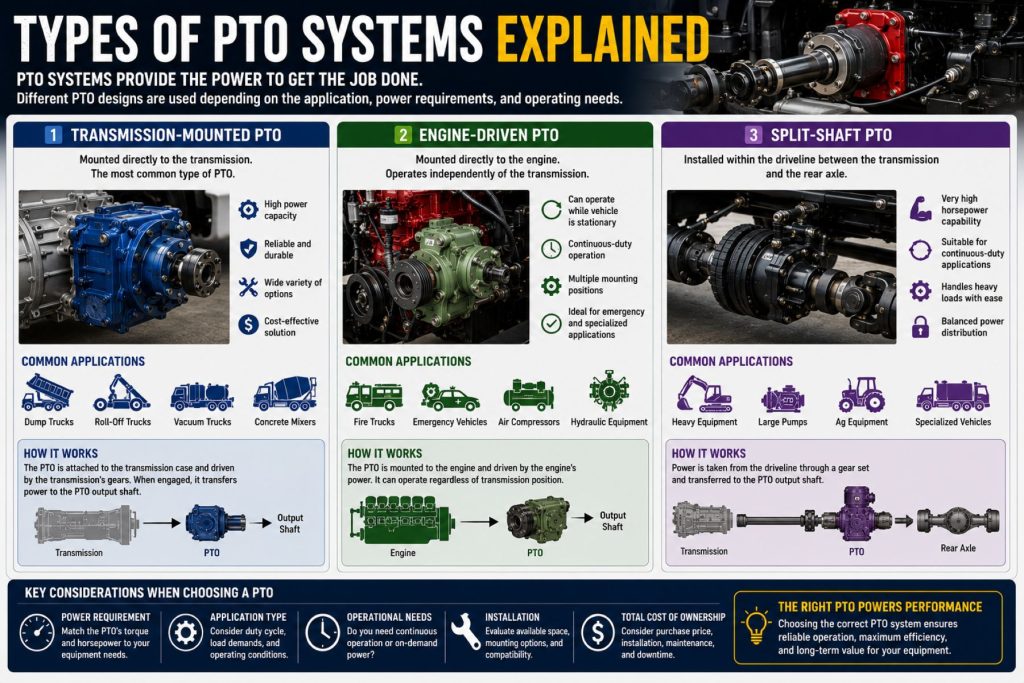
Transmission-Mounted PTO
The most common PTO design.
Mounted directly to the transmission.
Common applications:
- Dump trucks
- Roll-off trucks
- Vacuum trucks
Advantages:
- High power capacity
- Reliable operation
- Widely available
Transmission design affects PTO installation and operation. Compare manual, automated manual, and automatic transmissions and review the PTO compatibility checks in How to Choose a Commercial Truck Transmission.
Engine-Driven PTO
Mounted directly to the engine.
Common applications:
- Fire trucks
- Emergency vehicles
- Hydraulic equipment
Advantages:
- Can operate independently of transmission position
- Continuous operation capability
Split-Shaft PTO
Installed within the driveline.
Common applications:
- Heavy equipment
- Specialized vehicles
- Large pumps
Advantages:
- Extremely high horsepower capability
- Suitable for continuous-duty applications
How a PTO System Works
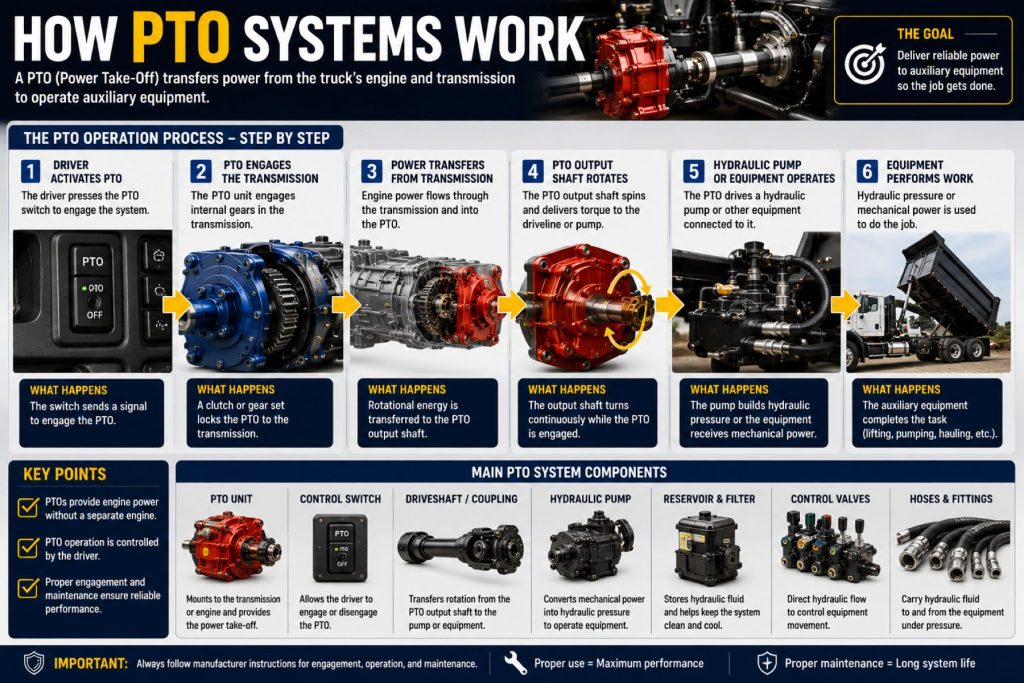
The basic operating sequence:
Step 1
Driver activates PTO switch.
Step 2
PTO engages the transmission gear.
Step 3
Power transfers from the transmission.
Step 4
PTO output shaft rotates.
Step 5
Hydraulic pump or equipment operates.
Step 6
Equipment performs work.
Main PTO Components
- PTO unit
- Control switch
- Hydraulic pump
- Driveshaft
- Hydraulic reservoir
- Control valves
- Hoses and fittings
Common Applications of PTO Systems
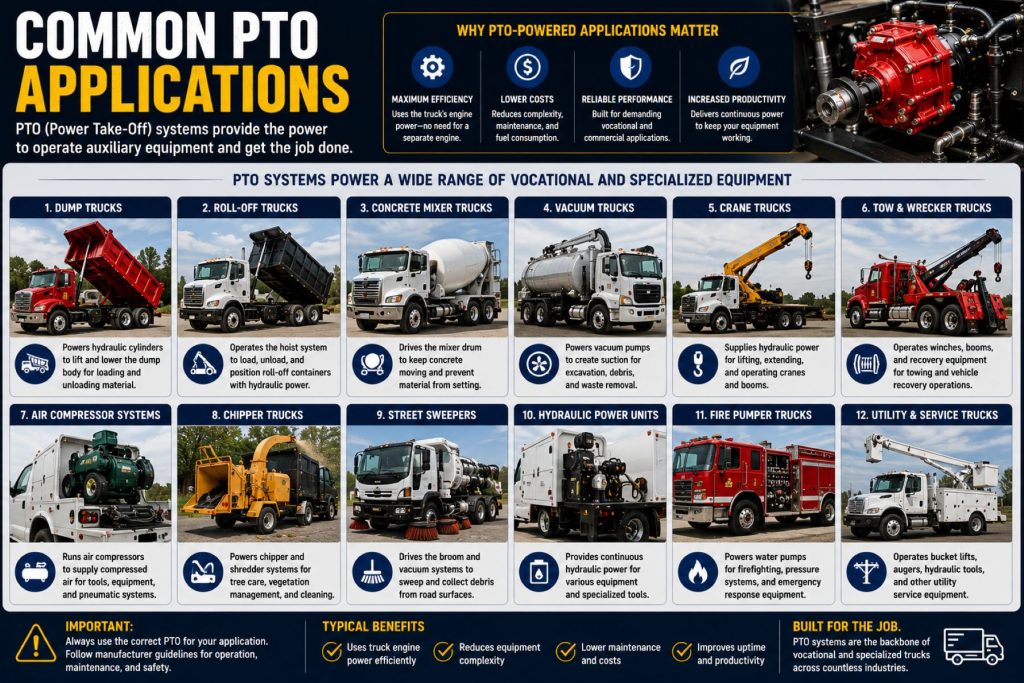
Dump Trucks
Power hydraulic cylinders to raise dump bodies.
Roll-Off Trucks
Operate hoists and container systems.
Concrete Mixer Trucks
Rotate mixer drums.
Vacuum Trucks
Drive vacuum pumps.
Crane Trucks
Power hydraulic lifting systems.
Tow Trucks
Operate winches and recovery equipment.
Utility Trucks
Power specialized tools and equipment.
Fire Apparatus
Operate pumps and emergency systems.
PTO Engagement Methods
Mechanical Controls
Traditional lever-operated systems.
Electric Controls
Push-button engagement.
Electronic Controls
Computer-controlled PTO operation.
Automatic Systems
Integrated vehicle control systems.
Common PTO Problems
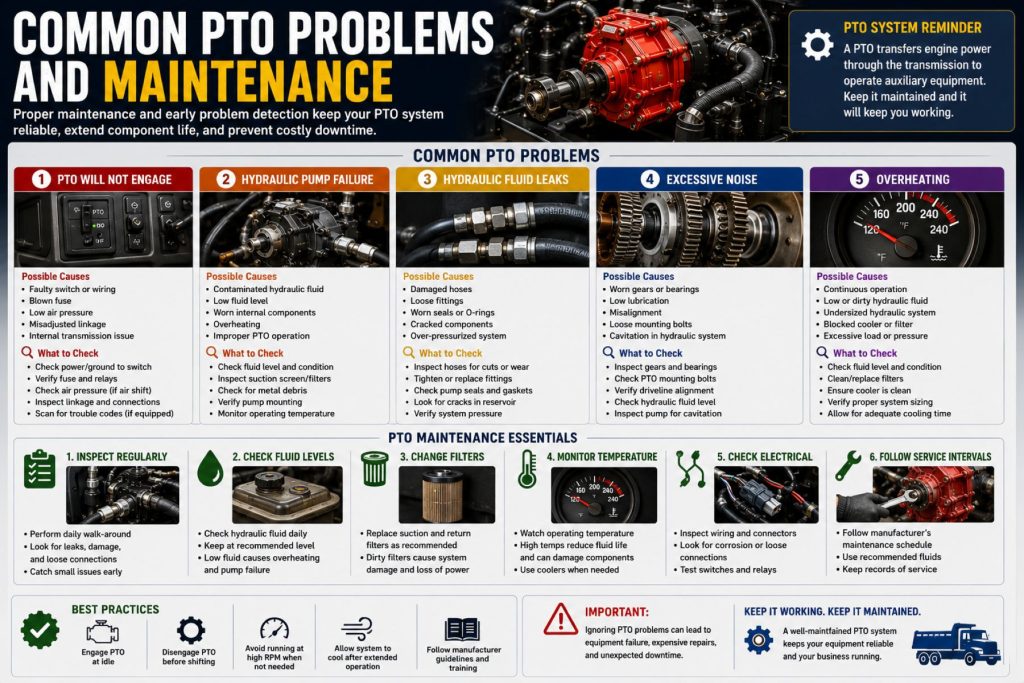
PTO Will Not Engage
Possible causes:
- Electrical problems
- Air system problems
- Improper setup
Hydraulic Pump Failure
Possible causes:
- Contaminated fluid
- Excessive wear
- Improper operation
Fluid Leaks
Possible causes:
- Damaged hoses
- Loose fittings
- Seal failures
Excessive Noise
Possible causes:
- Gear wear
- Low lubrication
- Misalignment
Overheating
Possible causes:
- Continuous operation
- Low fluid levels
- Improper sizing
PTO Maintenance Tips
- Inspect hydraulic hoses regularly
- Check fluid levels
- Replace filters
- Monitor operating temperatures
- Inspect wiring and controls
- Follow manufacturer service intervals
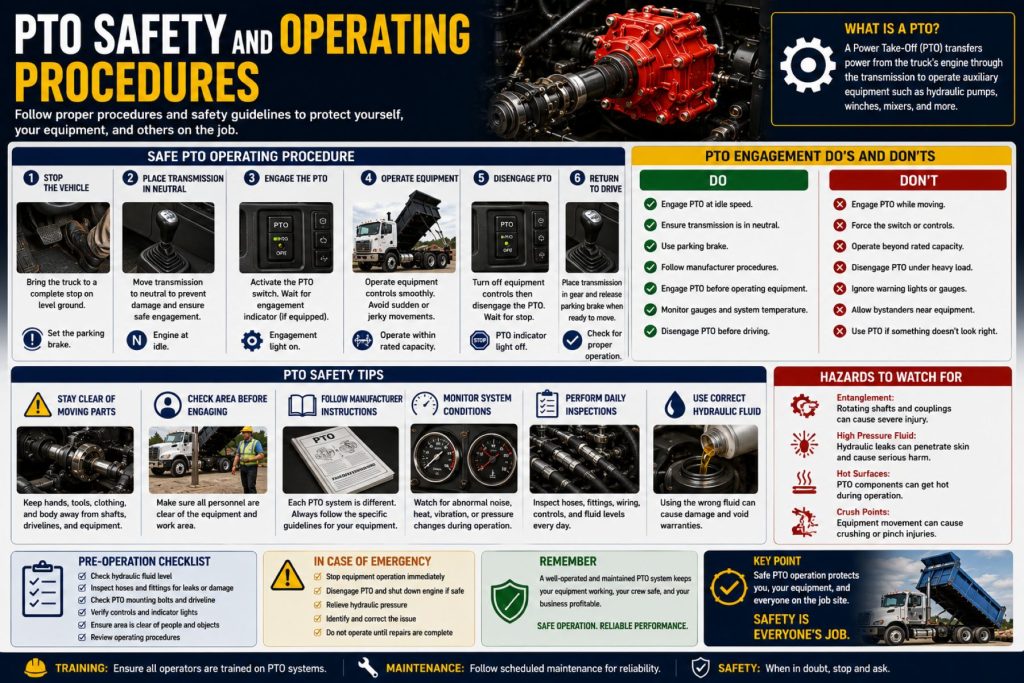
PTO Safety Tips
Never Operate Beyond Rated Capacity
Overloading can damage equipment.
Follow Proper Engagement Procedures
Improper operation can damage transmissions.
Keep Clear of Moving Components
Rotating equipment can cause severe injury.
Inspect Equipment Daily
Small problems can become major failures.
Use Proper Hydraulic Fluid
Fluid quality directly affects component life.
Follow Manufacturer Instructions
Different systems have unique requirements.
Frequently Asked Questions
What does PTO stand for?
Power Take-Off.
What does a PTO do?
Transfers engine power to auxiliary equipment.
Can a PTO run hydraulic pumps?
Yes. This is one of the most common PTO applications.
Do all commercial trucks have PTO systems?
No. PTO systems are primarily used on vocational and specialized trucks.
Can PTO systems be damaged?
Yes. Improper operation and poor maintenance can lead to expensive failures.
Are PTO systems hydraulic?
The PTO itself is mechanical, but it commonly powers hydraulic systems.
Related Truck Types
- Dump Trucks
- Roll-Off Trucks
- Crane Trucks
- Concrete Mixer Trucks
- Vacuum Trucks
Related Equipment Systems
- Lift Axles
- Fifth Wheel Systems
- Air Brake Systems
- Hydraulic Systems
Related Guides
Final Thoughts
Power Take-Off systems are the backbone of many vocational trucks and specialized commercial vehicles. They allow trucks to perform tasks far beyond simple transportation by providing power to hydraulic and mechanical equipment.
Understanding how PTO systems work, how they are maintained, and how they should be operated can help improve equipment reliability, reduce downtime, and extend component life.