
Peterbilt 389
Quick Facts
- Manufacturer: Peterbilt Motors Company
- Truck Class: Class 8 Conventional Highway Truck
- Common Configurations: Day Cab, Flat Top Sleeper, Raised Roof Sleeper, Extended Hood Configurations, Tandem Axle
- Primary Applications: Long Haul Freight, Flatbed Operations, Heavy Haul, Livestock Hauling, Specialized Freight, Owner Operator Applications
- Common Engine Options: Cummins X15, PACCAR MX-13
- Typical Transmission Options: Eaton Fuller Manual, Eaton Endurant Automated, Allison Automatic
- Common Axle Setups: 6×4, Tandem Axle, Lift Axle Configurations
- GVWR Range: Up to 80,000+ lbs depending on configuration
- Front Axle Capacity: Up to 14,600 lbs
- Rear Axle Capacity: Up to 46,000 lbs
- Cab Style: Conventional Long Hood Aluminum Cab with Sleeper Options
- Production Status: Active Production
Overview
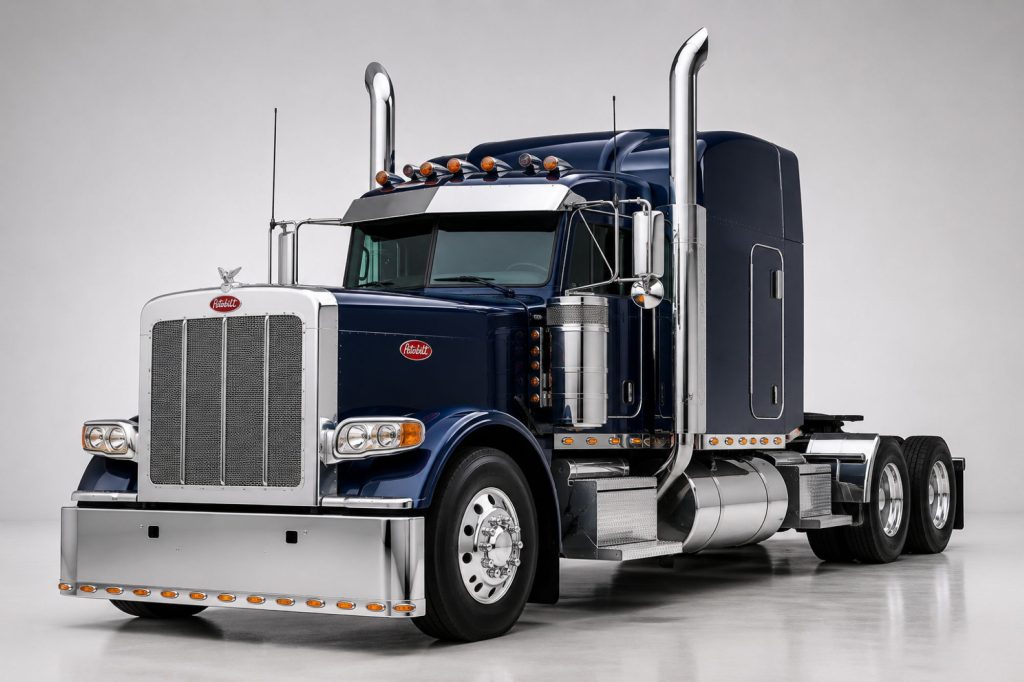
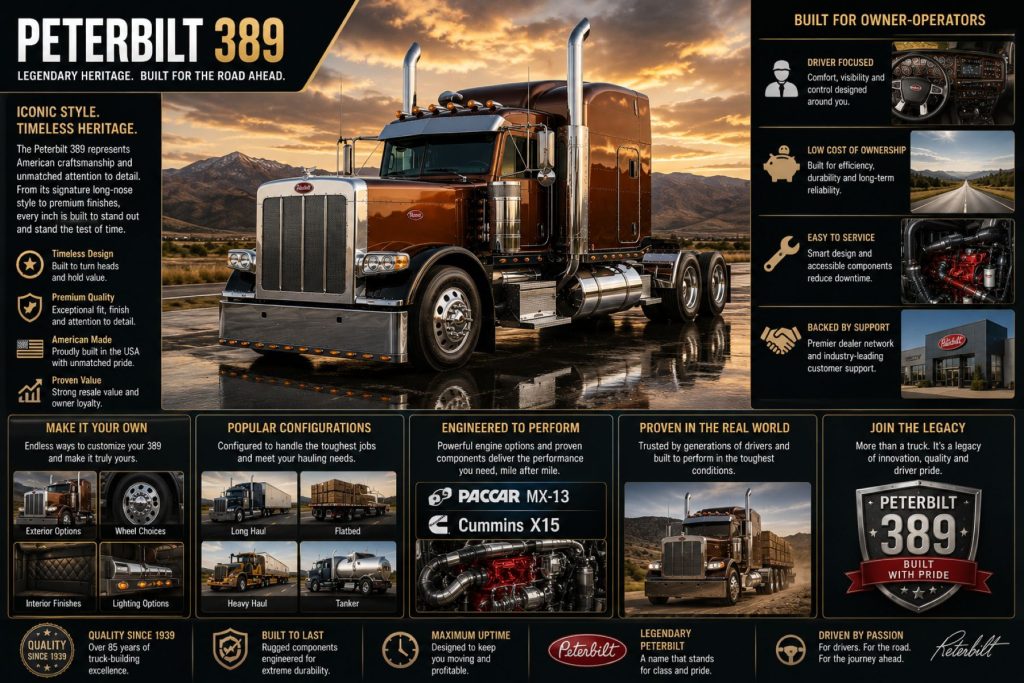
The Peterbilt 389 is one of the most recognizable Class 8 trucks on the road, known for its long-nose styling, premium construction, and strong presence within the owner operator market. The platform continues Peterbilt’s traditional design legacy while integrating modern engines, drivetrains, and emissions systems for current commercial trucking operations.
Unlike highly aerodynamic fleet-focused trucks, the 389 emphasizes classic styling, customization, and a conventional long-hood platform that remains popular across long haul, heavy haul, and specialized freight applications.
The truck has developed a strong reputation within the trucking industry for durability, appearance, and overall road presence, making it one of the most iconic conventional trucks still in production.
Key Characteristics
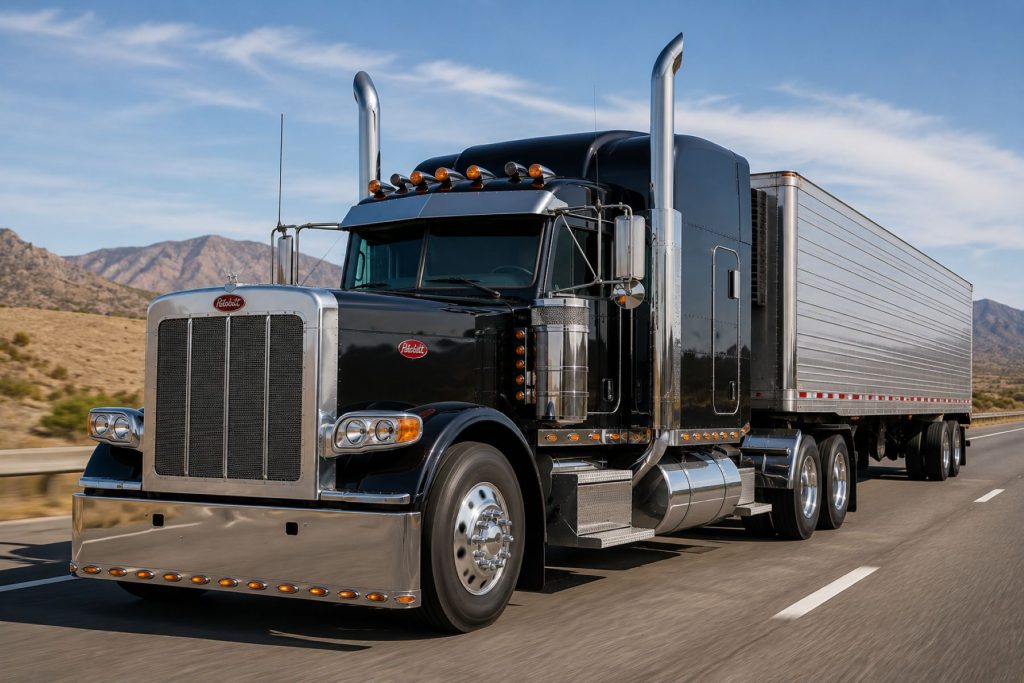
The Peterbilt 389 stands out for its classic styling, long hood, and strong driver appeal. Unlike aerodynamic trucks designed primarily for fleet efficiency, the 389 focuses on durability, comfort, and customization.
Key characteristics include a spacious cab layout, multiple sleeper size options, and a design that allows for easier access to components for maintenance. The long wheelbase and hood provide a distinct ride quality that many drivers prefer for long-distance hauling.
The truck is also known for its high level of customization, allowing owners to spec everything from interior finishes to drivetrain components.
Common Specifications
Engine Options
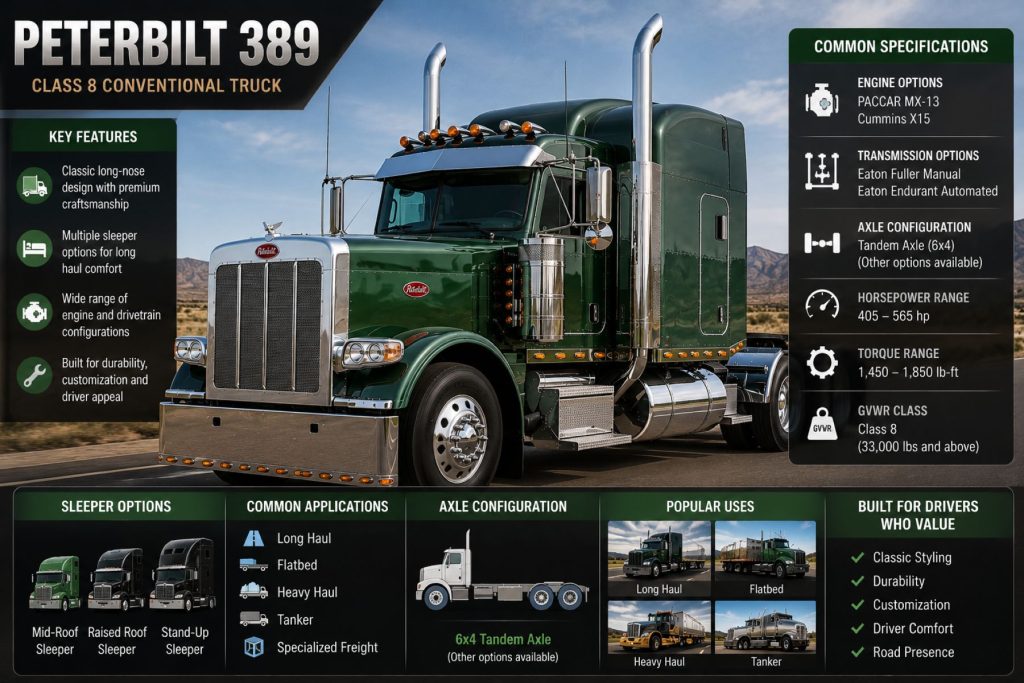
The Peterbilt 389 is most commonly equipped with the PACCAR MX-13 or Cummins X15, both of which are widely used in long haul and heavy-duty applications.
Transmission Options
Transmission choices typically include Eaton Fuller manual transmissions or Eaton Endurant automated transmissions, depending on driver preference and fleet requirements.
Axle Configurations
Most 389 Sleeper trucks are configured as tandem axle (6×4), providing the traction and weight distribution needed for heavy loads.
Wheelbase Range
Wheelbase varies widely depending on application, with longer configurations common for owner operators and specialized freight setups.
Sleeper Options
Available sleeper sizes typically range from mid-roof sleepers to larger stand-up sleepers designed for long haul comfort.
Common Applications
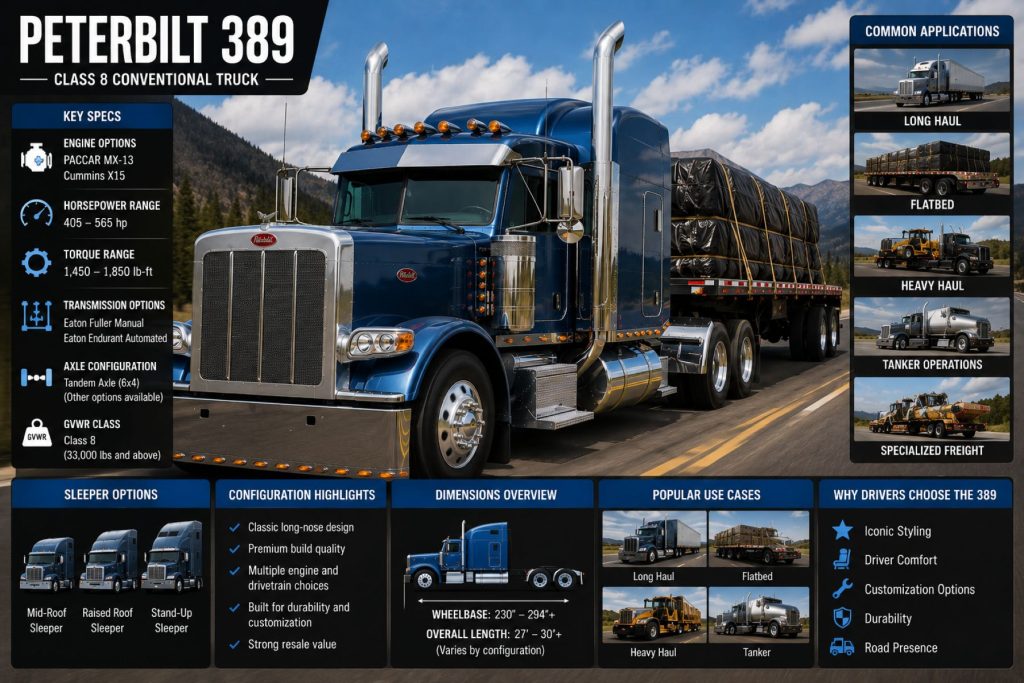
The Peterbilt 389 is used across a wide range of freight applications, particularly where durability and driver comfort are priorities.
- Long haul freight
- Flatbed operations
- Heavy haul
- Tanker operations
- Specialized freight
Advantages
The 389 offers several advantages that make it a top choice among owner operators and specialized carriers.
- Strong resale value
- High driver appeal
- Durable construction
- Customization options
- Comfortable long haul platform
- Established brand reputation
Limitations or Considerations
Despite its strengths, the 389 does have tradeoffs compared to more aerodynamic trucks.
- Lower fuel efficiency compared to aero trucks
- Higher upfront cost
- Longer wheelbase can limit maneuverability
- Heavier overall weight in some configurations
- Not ideal for tight urban routes
Driver and Operator Experience
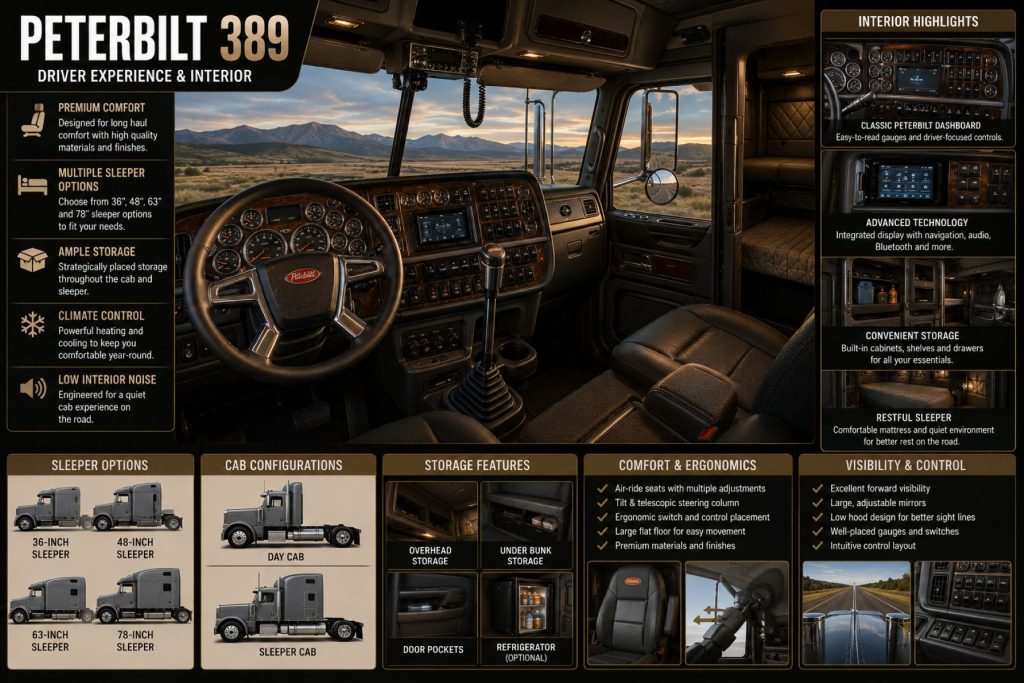
The Peterbilt 389 is designed for drivers who spend extended time on the road and prefer a more traditional driving experience. The long hood, spacious cab layouts, and available sleeper configurations contribute to a driving environment that many operators find comfortable for long-distance hauling.
Drivers often appreciate the visibility, ride quality, storage options, and overall feel of the platform compared to more aerodynamic fleet-oriented trucks. The truck’s customization flexibility also allows operators to configure interiors, sleeper sizes, and driveline components around specific operational preferences.
For many owner operators, the 389 represents both a working truck and a long-term investment in comfort, appearance, and personal specification choices.
Maintenance and Ownership Notes
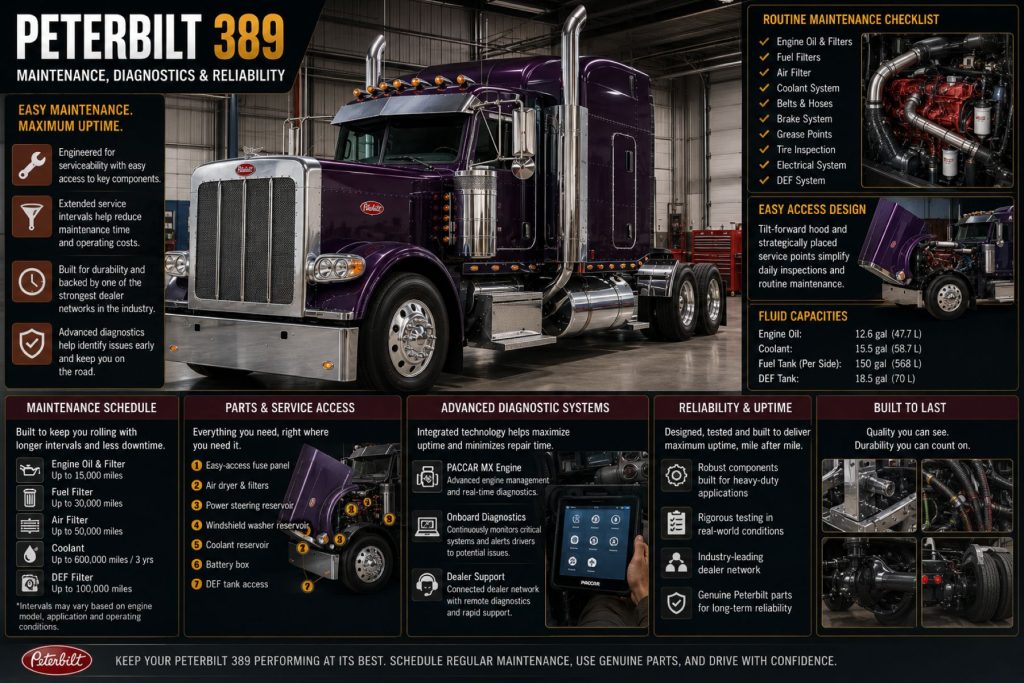
Maintenance on the 389 is generally straightforward due to its conventional layout. The long hood allows for easier access to the engine and key components compared to more compact designs.
Parts availability is strong, supported by Peterbilt’s dealer network. However, maintenance costs can be higher depending on configuration and usage, particularly for owner operators running high mileage routes.
Routine service intervals and proper spec selection play a major role in long-term ownership costs.
Buying Considerations
When purchasing a Peterbilt 389, buyers should consider whether they are buying new or used, as well as how the truck was previously operated.
Key factors include engine choice, transmission type, mileage, maintenance history, and overall configuration. Fleet-maintained trucks may offer consistency, while owner operator trucks may include higher-end customizations.
Matching the truck’s specifications to the intended freight type is critical for long-term performance and profitability.
Variants and Configurations
The Peterbilt 389 platform is available in multiple configurations to suit different applications.
- Day cab version
- Sleeper version
- Heavy haul configurations
- Dump truck setups
- Vocational configurations
Comparison to Similar Trucks
The Peterbilt 389 is often compared to other long-nose, traditional trucks such as the Kenworth W900.
Compared to aerodynamic trucks like the Freightliner Cascadia or Volvo VNL, the 389 prioritizes driver experience and styling over fuel efficiency. It is best suited for operators who value durability, customization, and road presence.
Best Fit For
The Peterbilt 389 is best suited for:
- Owner operators seeking a premium truck
- Long haul drivers
- Flatbed and heavy haul operations
- Drivers who prefer traditional styling and customization
Regulatory and Compliance Notes
The 389 operates within Class 8 regulations and must meet emissions standards based on model year. Configuration choices may impact compliance depending on state regulations and application.
Operators should also consider weight distribution and axle configuration to remain compliant with federal and state requirements.
Real World Operating Notes
In real-world use, the Peterbilt 389 is known for its durability and driver satisfaction. It performs well in long haul and heavy-duty applications, particularly when properly spec’d for the job.
While it may not match the fuel efficiency of newer aerodynamic models, many drivers accept that tradeoff for comfort, reliability, and overall driving experience.
Video Overview
Related Truck Types
Related Freight Types
Related Trailer Types
Related Equipment Systems
Related Guides
- Understanding Horsepower vs Torque
- Day Cab vs Sleeper Truck: Which Is Right for Your Operation?
- Fifth Wheel System Explained
Frequently Asked Questions
Is the Peterbilt 389 good for long haul trucking?
Yes, it is widely used for long haul due to its comfort and durability.
What engine is most common in the 389?
The Cummins X15 and PACCAR MX-13 are the most common options.
Is the 389 better for owner operators or fleets?
It is more commonly preferred by owner operators, though some fleets use it.
Is the Peterbilt 389 fuel efficient?
It is less fuel efficient than aerodynamic trucks but offers other advantages.
Availability and Where to Find
The Peterbilt 389 can be purchased through authorized Peterbilt dealerships, used truck dealers, and online marketplaces. Availability varies depending on configuration and demand.
Support Trucking Families
Truck Equipment Atlas supports the mission of Grey Cross, a nonprofit dedicated to helping families of truck drivers who lose their lives while on the road. As the site grows, part of its mission is to bring awareness and support to these families.
Follow the Growth of Truck Equipment Atlas
Truck Equipment Atlas continues to expand with new truck profiles, trailer coverage, diesel engine pages, equipment system resources, manufacturer information, and educational guides.
Visit our Site Updates page to explore recent additions, project milestones, and upcoming resources as we continue building one of the industry’s growing commercial trucking equipment reference libraries.
View the Latest Site Updates: Truck Equipment Atlas Site Updates