
Peterbilt 567
Quick Facts
- Manufacturer: Peterbilt Motors Company
- Truck Class: Severe Duty Vocational Truck
- Common Configurations: Day Cab, Set Back Axle, Set Forward Axle, Tandem Axle, Tri Axle
- Primary Applications: Construction, Heavy Haul, Dump Operations, Logging, Oilfield, Concrete Mixer, Crane Operations, Municipal Service
- Common Engine Options: PACCAR MX-13, Cummins X15, Cummins X12
- Typical Transmission Options: Eaton Fuller Manual, Eaton Endurant HD, Allison Automatic
- Common Axle Setups: 6×4, 8×4, Tandem Axle, Lift Axle Configurations
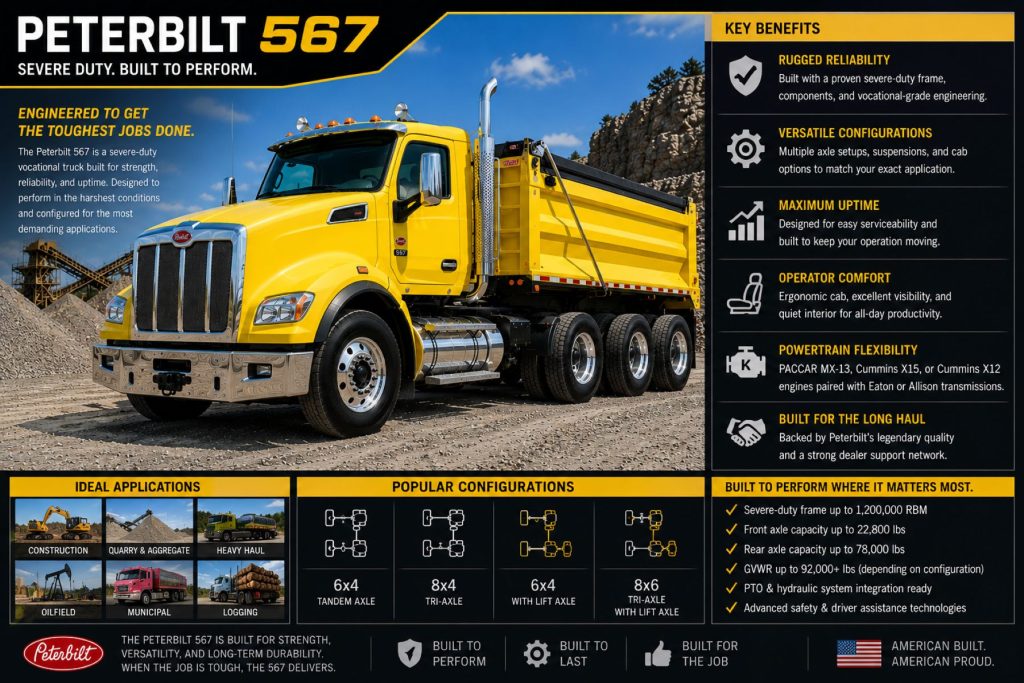
- GVWR Range: Up to 92,000+ lbs depending on configuration
- Front Axle Capacity: Up to 22,800 lbs
- Rear Axle Capacity: Up to 78,000 lbs
- Cab Style: Aluminum Cab with Vocational Reinforcements
- Production Status: Active Production
Overview
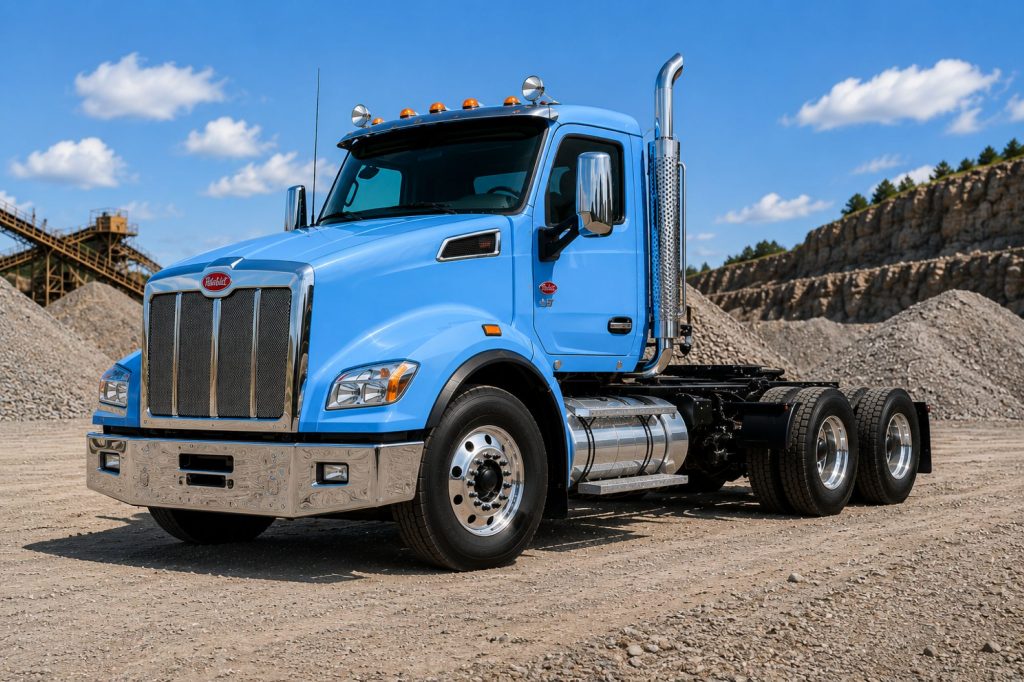
The Peterbilt 567 is a severe-duty vocational truck platform designed for demanding commercial applications that require durability, flexibility, and high-capacity performance. Positioned as one of Peterbilt’s primary vocational truck offerings, the 567 is commonly used in construction, dump operations, heavy haul transportation, logging, oilfield service, concrete mixer applications, and municipal fleet operations.
The platform combines traditional Peterbilt styling with modern vocational engineering, improved aerodynamics, advanced electronics, and updated driver comfort systems. Unlike highway-focused aerodynamic tractors designed primarily around fuel efficiency, the Peterbilt 567 emphasizes rugged chassis capability, vocational customization, and severe-duty operational performance.
The Peterbilt 567 is especially known for its strong vocational frame options, broad configuration flexibility, heavy-duty suspension setups, and compatibility with PTO-driven vocational equipment.
Key Characteristics
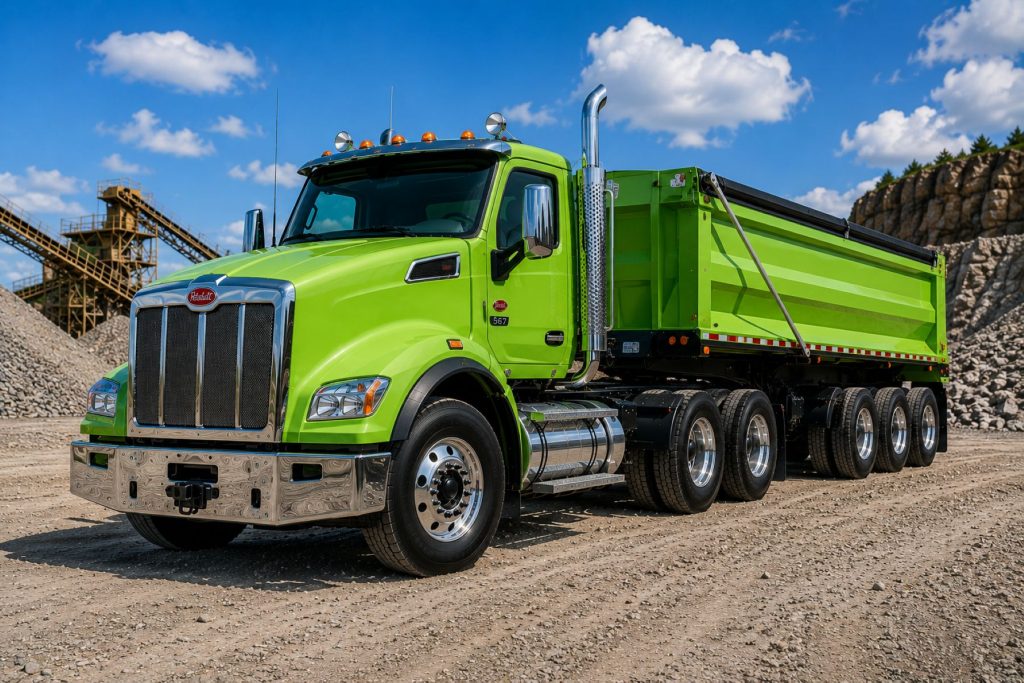
The Peterbilt 567 is engineered around durability, vocational adaptability, and severe-duty performance. The truck features reinforced frame construction, multiple axle configurations, heavy-duty suspension systems, and extensive vocational customization capability designed for demanding operating environments.
The platform also incorporates advanced driver assistance technologies, improved visibility, modern cab ergonomics, and compatibility with a wide range of vocational body and equipment applications.
Common Specifications
Engine Options
The Peterbilt 567 is commonly equipped with the PACCAR MX-13, Cummins X15, or Cummins X12. Engine selection typically depends on terrain, hauling requirements, PTO demands, and application type.
Transmission Options
Common transmission choices include Eaton Fuller manual transmissions, Eaton Endurant HD automated manuals, and Allison automatic transmissions. Transmission selection varies depending on driver preference, vocational requirements, and low-speed operational needs.
Axle Configurations
The Peterbilt 567 is commonly configured with 6×4 tandem axle setups, 8×4 heavy-duty layouts, lift axle configurations, and tri axle vocational arrangements. Axle choices depend heavily on body setup, state weight regulations, and intended application.
Cab Configurations
Most Peterbilt 567 models are configured as vocational day cabs focused on durability, visibility, and operational flexibility. Both set back axle and set forward axle configurations are available depending on vocational requirements.
Wheelbase Range
Wheelbase lengths vary significantly depending on vocational body application, axle configuration, suspension setup, and operational requirements.
Common Applications
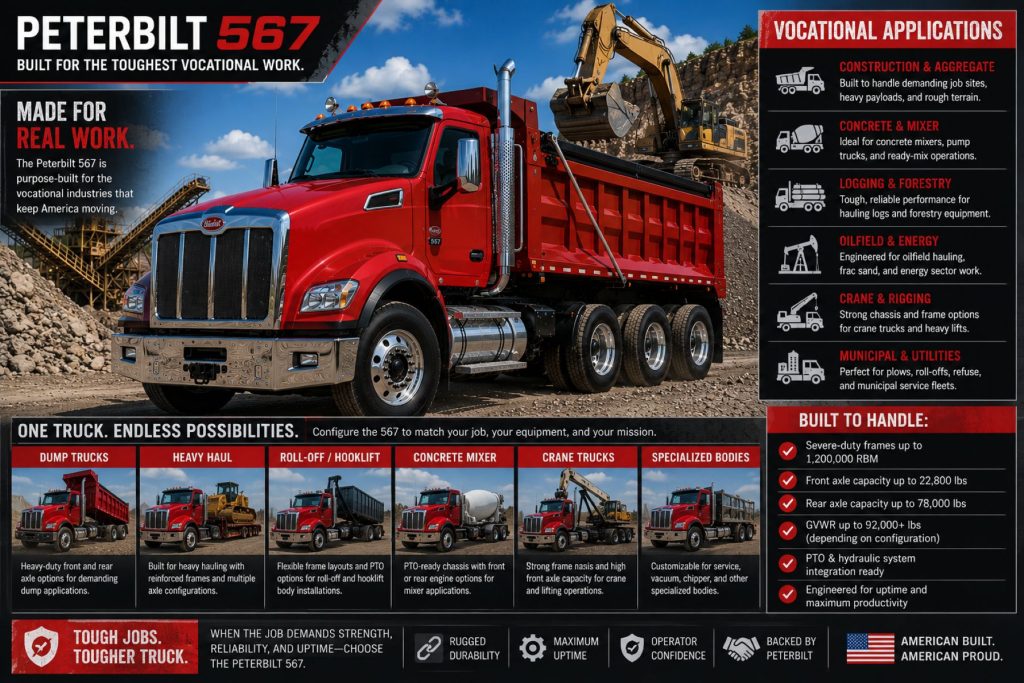
The Peterbilt 567 is commonly used in:
- Construction operations
- Dump truck fleets
- Heavy haul transportation
- Logging and forestry work
- Oilfield operations
- Concrete mixer applications
- Crane and rigging operations
- Municipal service fleets
- Utility service operations
- Specialized vocational hauling
Advantages
The Peterbilt 567 offers several advantages for vocational operators and severe-duty fleets.
Advantages include:
- Strong vocational chassis durability
- Broad customization flexibility
- Excellent visibility options
- Heavy-duty frame availability
- Premium interior quality
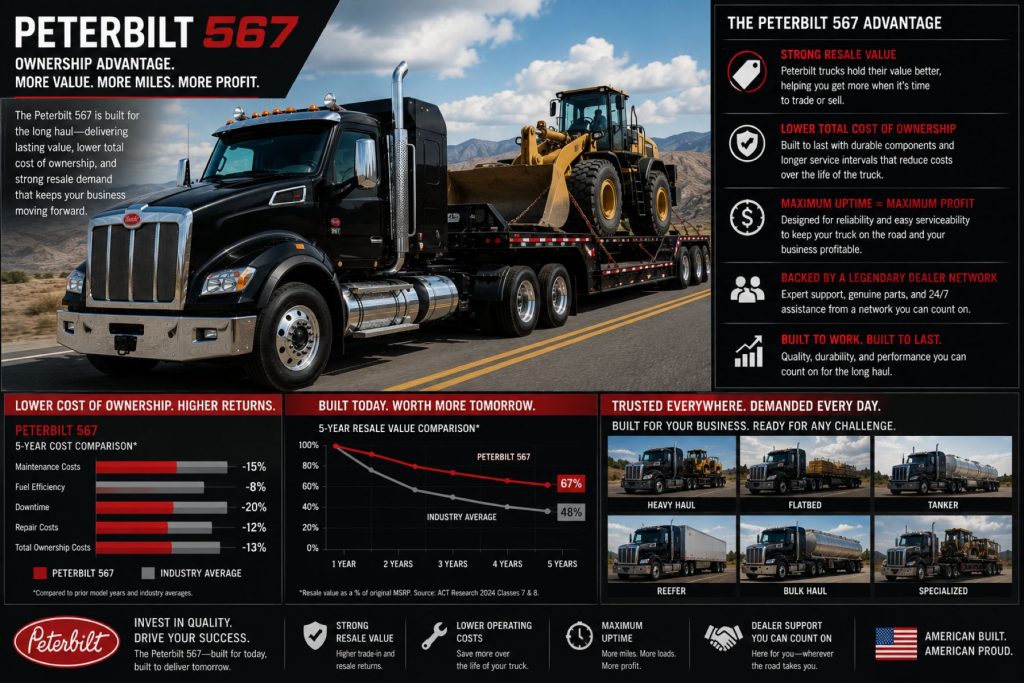
- Strong resale reputation
- Compatibility with PTO systems
- Good dealer support network
- Multiple suspension and axle options
- Advanced safety technology availability
Limitations or Considerations
Despite its strengths, the Peterbilt 567 also has operational tradeoffs.
Limitations and considerations include:
- Lower fuel economy compared to aerodynamic highway tractors
- Higher purchase costs in specialized configurations
- Increased empty weight in severe-duty setups
- Larger configurations may reduce maneuverability
- Vocational maintenance costs can increase in severe-duty environments
- Specialized components may increase repair complexity
Driver and Operator Experience
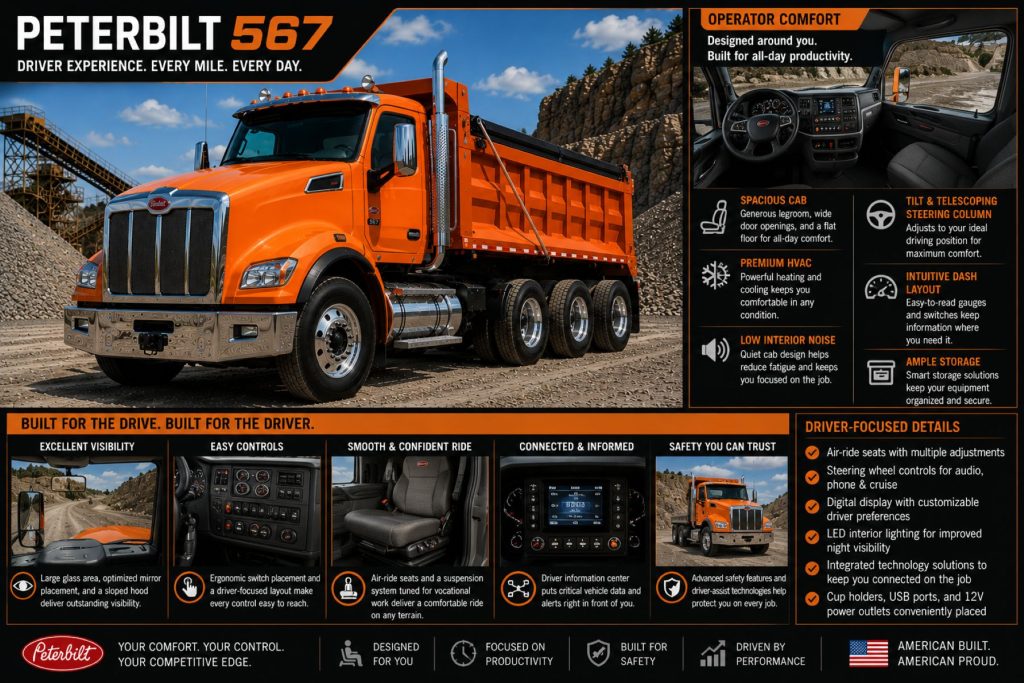
The Peterbilt 567 is designed around driver visibility, durability, and vocational functionality. Drivers commonly appreciate the truck’s elevated seating position, premium interior materials, ergonomic dashboard layout, and overall cab comfort.
Compared to older vocational platforms, the 567 offers improved insulation, updated electronics integration, enhanced ride quality, and more modern driver-assistance technology depending on configuration. Operators working in demanding vocational industries often prioritize the truck for its balance of capability and driver comfort.
Maintenance and Ownership Notes
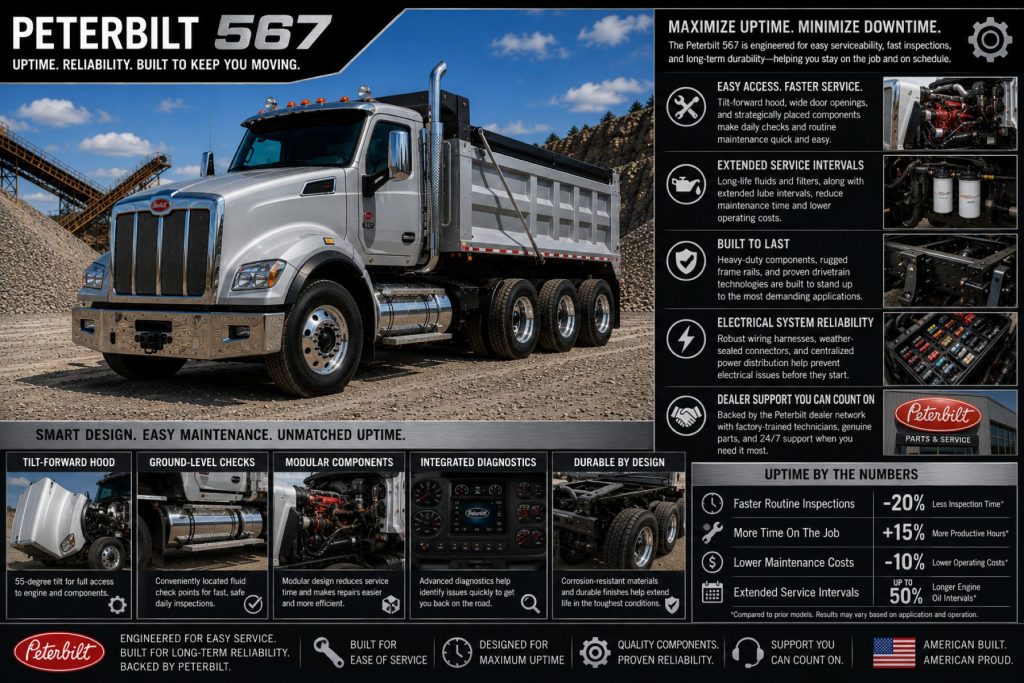
Maintenance requirements for the Peterbilt 567 vary significantly depending on application type, operating conditions, and vocational setup. Trucks operating in off-road environments, construction sites, heavy haul operations, and logging applications often experience increased wear on suspension, braking, chassis, and driveline components.
Operators commonly monitor PTO systems, hydraulic equipment, cooling systems, suspension components, frame integrity, and axle alignment closely due to the demanding nature of severe-duty vocational work. Preventative maintenance and proper vocational specification are especially important for maximizing uptime and long-term durability.
Buying Considerations
When evaluating a Peterbilt 567, buyers should consider intended vocational application, suspension setup, axle requirements, drivetrain configuration, PTO compatibility, and body integration needs. Because the platform is highly customizable, proper specification can significantly impact long-term operational performance and maintenance costs.
Factors such as wheelbase length, front axle ratings, cooling capacity, transmission type, and vocational body compatibility should all be carefully evaluated before purchase.
Variants and Configurations
The Peterbilt 567 platform is available in multiple vocational configurations including:
- Dump truck configurations
- Heavy haul tractor setups
- Concrete mixer applications
- Crane truck configurations
- Roll off truck bodies
- Logging truck setups
- Municipal service vehicles
- Utility service configurations
Comparison to Similar Trucks
The Peterbilt 567 is commonly compared to severe-duty vocational trucks such as the Kenworth T880, Freightliner 122SD, Western Star 49X, Mack Granite, and International HX Series.
Compared to aerodynamic highway-focused trucks, the Peterbilt 567 places much greater emphasis on vocational durability, severe-duty flexibility, chassis strength, and operational adaptability.
Best Fit For
The Peterbilt 567 is best suited for:
- Construction fleets
- Heavy haul operations
- Dump truck applications
- Logging operations
- Oilfield service fleets
- Concrete and mixer operations
- Municipal and utility fleets
- PTO intensive vocational applications
Regulatory and Compliance Notes
The Peterbilt 567 incorporates modern emissions systems and advanced safety technologies designed to comply with current commercial trucking regulations.
Weight laws, axle spacing requirements, emissions standards, and vocational equipment regulations may vary depending on truck configuration and operating region.
Real World Operating Notes
In real-world operations, the Peterbilt 567 has developed a strong reputation as a versatile and highly durable vocational truck platform capable of handling demanding severe-duty applications.
The truck is commonly seen in construction fleets, dump operations, heavy haul environments, logging operations, and municipal service fleets throughout North America. Many operators prioritize the 567 for its customization flexibility, premium interior quality, and strong vocational capability.
Related Truck Types
Related Freight Types
- Construction & Aggregate Freight
- Logging & Forestry Freight
- Heavy Haul Freight
- Specialized & Niche Freight
Related Trailer Types
Related Equipment Systems
- Engines
- Transmissions
- Suspension Systems
- Safety Systems
- Brake Systems
- Tires & Wheels
- Axles & Differentials
Related Guides
Frequently Asked Questions
Is the Peterbilt 567 a vocational truck?
Yes. The Peterbilt 567 is specifically designed as a severe-duty vocational truck platform for demanding commercial applications.
What engines are commonly used in the Peterbilt 567?
Common engine options include the PACCAR MX-13, Cummins X15, and Cummins X12.
Is the Peterbilt 567 used for heavy haul operations?
Yes. The Peterbilt 567 is commonly configured for heavy haul applications with specialized axle and suspension setups.
Is the Peterbilt 567 available as a day cab?
Yes. Most Peterbilt 567 configurations are vocational day cab setups.
Availability and Where to Find
The Peterbilt 567 is available through Peterbilt dealerships, vocational truck distributors, used commercial truck dealers, fleet resellers, and heavy-duty equipment marketplaces throughout North America.
Support Trucking Families
Truck Equipment Atlas supports the mission of Grey Cross, a nonprofit dedicated to helping families of truck drivers who lose their lives while on the road. As the site grows, part of its mission is to bring awareness and support to these families.
Podcast or Video Section
Learn More Through Audio and Video
Truck Equipment Atlas will continue expanding with podcast episodes, interviews, and equipment breakdowns to help drivers and fleets better understand trucks and equipment.
Follow the Growth of Truck Equipment Atlas
Truck Equipment Atlas continues to expand with new truck profiles, trailer coverage, diesel engine pages, equipment system resources, manufacturer information, and educational guides.
Visit our Site Updates page to explore recent additions, project milestones, and upcoming resources as we continue building one of the industry’s growing commercial trucking equipment reference libraries.
View the Latest Site Updates: Truck Equipment Atlas Site Updates