
Refrigerated Freight Guide: Understanding Temperature-Controlled Transportation
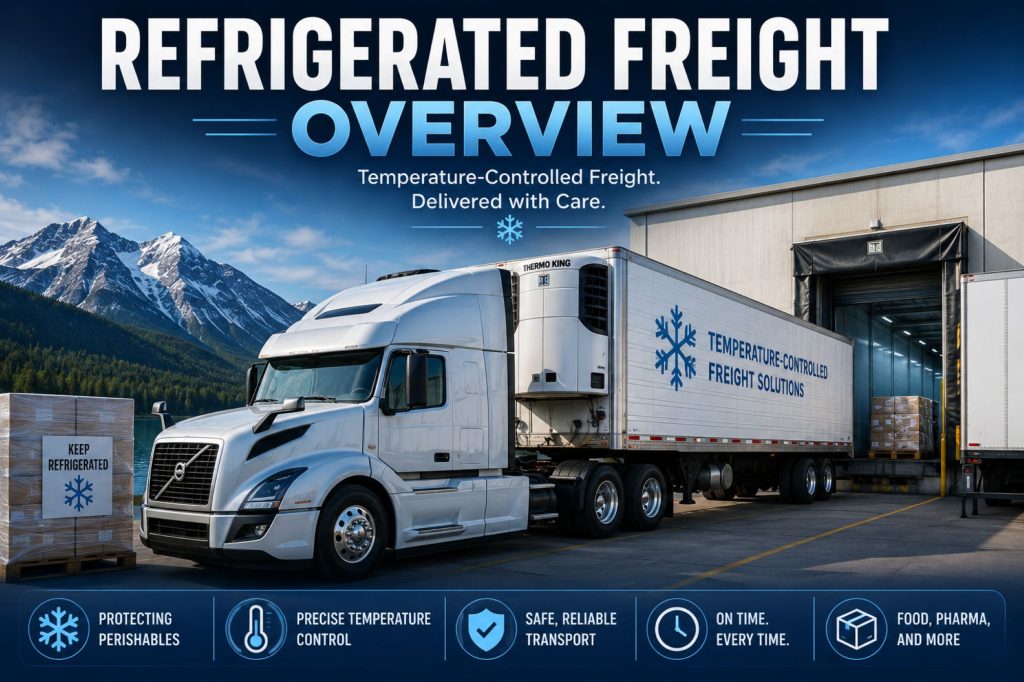
Refrigerated freight, often called reefer freight, involves transporting temperature-sensitive products that must remain within a specific temperature range during transit.
From fresh produce and frozen foods to pharmaceuticals and chemicals, refrigerated transportation plays a critical role in keeping products safe and maintaining quality from origin to destination.
This guide explains how refrigerated freight works, the types of products commonly shipped, the equipment involved, and the challenges associated with temperature-controlled transportation.
What Is Refrigerated Freight?
Refrigerated freight is cargo that requires temperature control during transportation.
Unlike dry van freight, reefer loads depend on specialized trailers equipped with refrigeration units that can heat or cool the cargo area.
Temperature requirements can range from:
- Deep frozen products below 0°F
- Standard frozen products around 0°F
- Refrigerated products between 34°F and 40°F
- Controlled room temperature products
- Heated products during winter conditions
Maintaining the proper temperature is critical to product quality and safety.
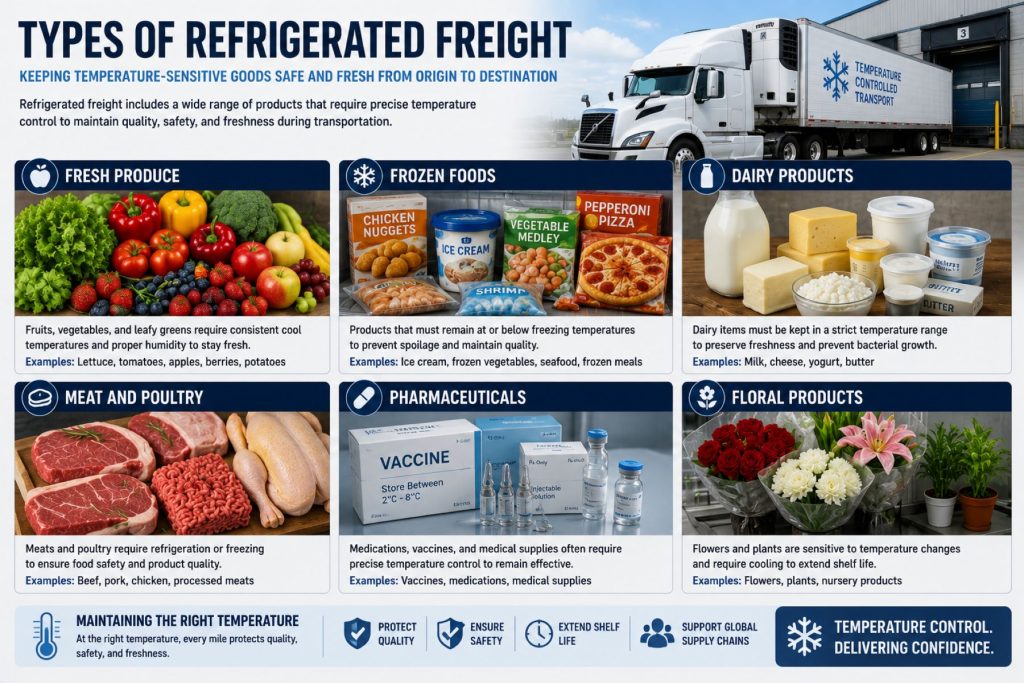
Common Types of Refrigerated Freight
Fresh Produce
- Lettuce
- Tomatoes
- Apples
- Berries
- Potatoes
Frozen Foods
- Frozen vegetables
- Ice cream
- Frozen meals
- Seafood
- Meat products
Dairy Products
- Milk
- Cheese
- Yogurt
- Butter
Meat and Poultry
- Beef
- Pork
- Chicken
- Processed meats
Pharmaceuticals
- Vaccines
- Medications
- Medical supplies
Floral Products
- Flowers
- Plants
- Nursery products
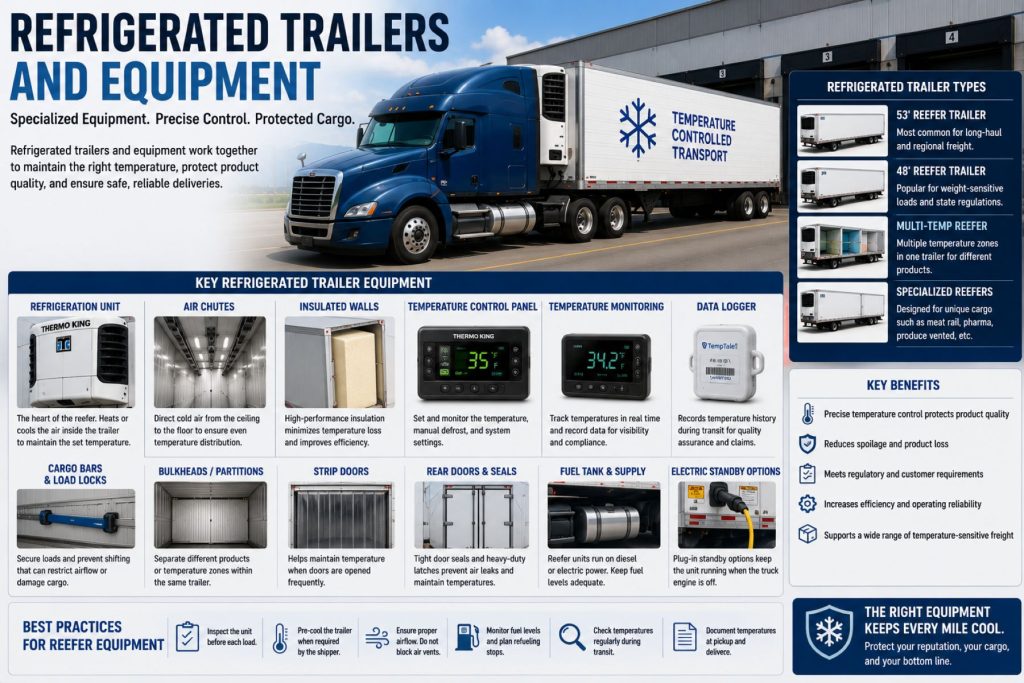
Equipment Used in Refrigerated Freight
Refrigerated Trailers (Reefers)
Specialized insulated trailers equipped with refrigeration units.
Refrigeration Units
Control trailer temperature through cooling or heating.
Air Chutes
Help distribute airflow evenly throughout the trailer.
Temperature Monitoring Systems
Track temperatures during transit.
Bulkheads
Separate products requiring different temperatures.
Data Loggers
Record temperature history for compliance purposes.
How Refrigerated Trailers Work
Reefer units:
- Pull air from the trailer
- Cool or heat the air
- Circulate conditioned air throughout the cargo area
- Maintain the desired temperature
Proper airflow is just as important as the actual temperature setting.
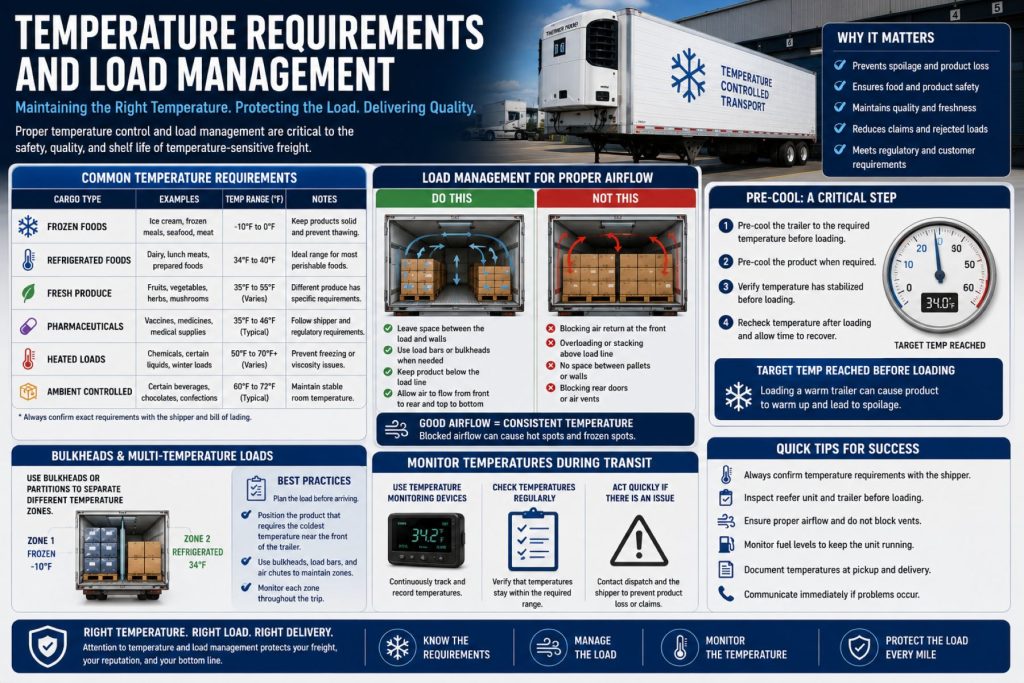
Common Temperature Ranges
Frozen Freight
-10°F to 0°F
Refrigerated Food
34°F to 40°F
Produce
35°F to 55°F depending on the product.
Pharmaceuticals
Often require highly specific temperature ranges.
Heated Loads
May require temperatures above 50°F during winter.
Importance of Pre-Cooling
Many products require:
- Trailer pre-cooling
- Product pre-cooling
- Stable loading temperatures
Improper loading temperatures can damage cargo.
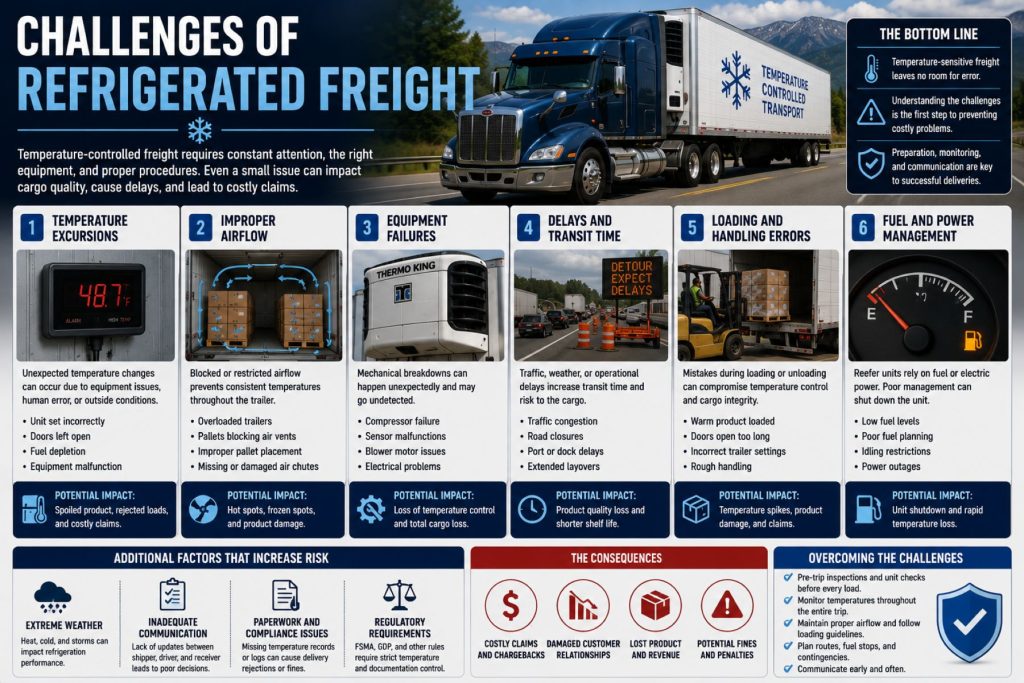
Common Challenges in Refrigerated Transportation
Temperature Excursions
Unexpected temperature changes can ruin products.
Improper Airflow
Blocked airflow can create hot spots.
Equipment Failures
Refrigeration unit failures can result in cargo loss.
Delays
Extended transit times may impact product quality.
Loading Errors
Improper loading practices affect temperature consistency.
Fuel Management
Reefer units require additional fuel and maintenance.
Product Claims and Cargo Loss
Cargo claims can result from:
- Improper temperatures
- Mechanical failures
- Delayed deliveries
- Product contamination
- Incorrect trailer settings
Temperature documentation is often essential during claims investigations.
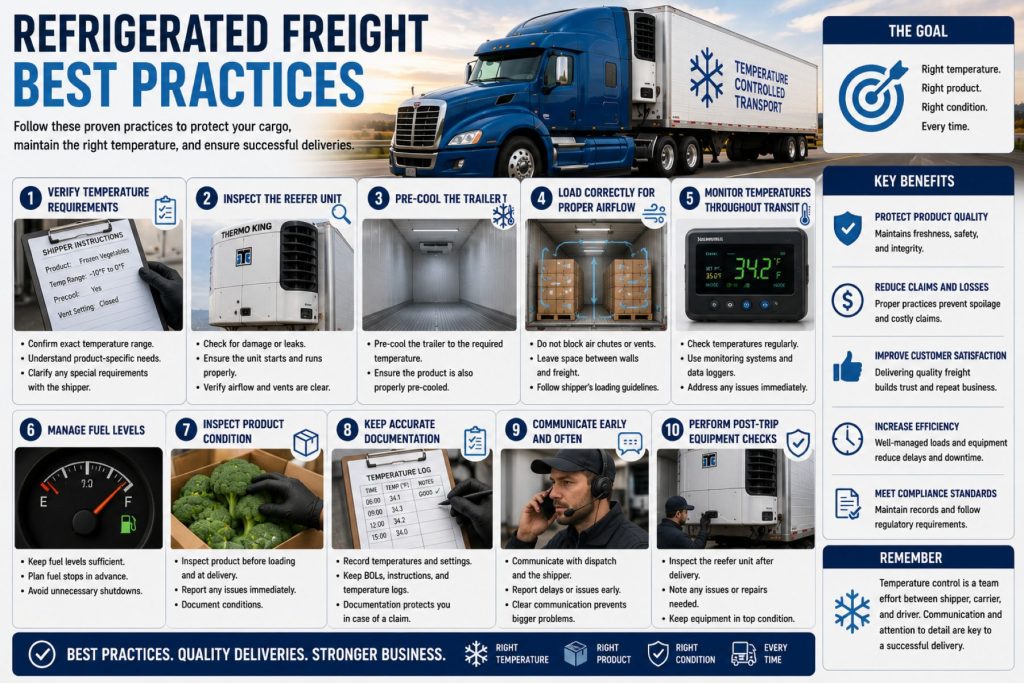
Best Practices for Refrigerated Freight
Verify Temperature Requirements
Always confirm shipper instructions.
Inspect the Reefer Unit
Check operation before loading.
Pre-Cool the Trailer
When required by the shipper.
Monitor Fuel Levels
Avoid reefer shutdowns.
Maintain Proper Airflow
Do not block air channels.
Monitor Temperatures Throughout Transit
Use temperature monitoring systems.
Inspect Product Condition
Before and after delivery.
Keep Accurate Documentation
Temperature records can protect carriers during claims.
Industries That Depend on Refrigerated Freight
- Grocery Distribution
- Food Manufacturing
- Agriculture
- Pharmaceutical Industry
- Healthcare
- Floral Industry
- Restaurant Supply Chains
- Beverage Industry
Frequently Asked Questions
What is reefer freight?
Freight requiring temperature-controlled transportation.
What products require refrigerated transportation?
Food, pharmaceuticals, flowers, chemicals, and certain medical products.
What temperature do reefer trailers run?
Anywhere from below 0°F to over 60°F depending on the cargo.
Why is airflow important?
Proper airflow helps maintain consistent temperatures throughout the trailer.
Can reefer trailers provide heat?
Yes. Most modern reefer units can both cool and heat.
Are reefer loads more expensive?
Generally yes, due to specialized equipment and operating costs.
Related Truck Types
Related Trailer Types
- Refrigerated Trailers
- Insulated Trailers
- Dry Van Trailers
Related Freight Types
- Food Freight
- Agricultural Freight
- Pharmaceutical Freight
- Beverage Freight
Related Guides
- Choosing the Right Trailer for Your Freight
- Refrigerated Trailer Guide
- Heavy Haul Freight Guide
Final Thoughts
Refrigerated freight is one of the most important sectors of the trucking industry because it keeps food, medicine, and other temperature-sensitive products moving safely throughout the supply chain.
Understanding how refrigerated transportation works, proper temperature management, and best operating practices can help carriers, drivers, and shippers protect valuable cargo and reduce the risk of costly claims.