
Quick Facts
- Manufacturer: Continental
- Product Name: Conti HSC 3
- Product Type: Intelligent construction steer and all-position tire
- Recommended Position: Steer axle and approved all-position applications
- Service Category: On-road and off-road construction service
- Primary Applications: Concrete mixers, dump trucks, construction-material transport, logging, heavy vocational trucks, and severe regional service
- Construction: Radial commercial-truck tire
- Published Sizes: 11R22.5, 11R24.5, and 315/80R22.5
- Original Tread Depth: 24/32 inch
- Casing Technology: Continental Conti 3G casing with off-road belt package
- Digital Technology: Factory-installed Continental tire sensor
- Retreadability: Retreadable when the casing remains eligible
- Primary Benefit: Combines steer-axle stability, construction-site durability, casing protection, and digital tire monitoring
Overview
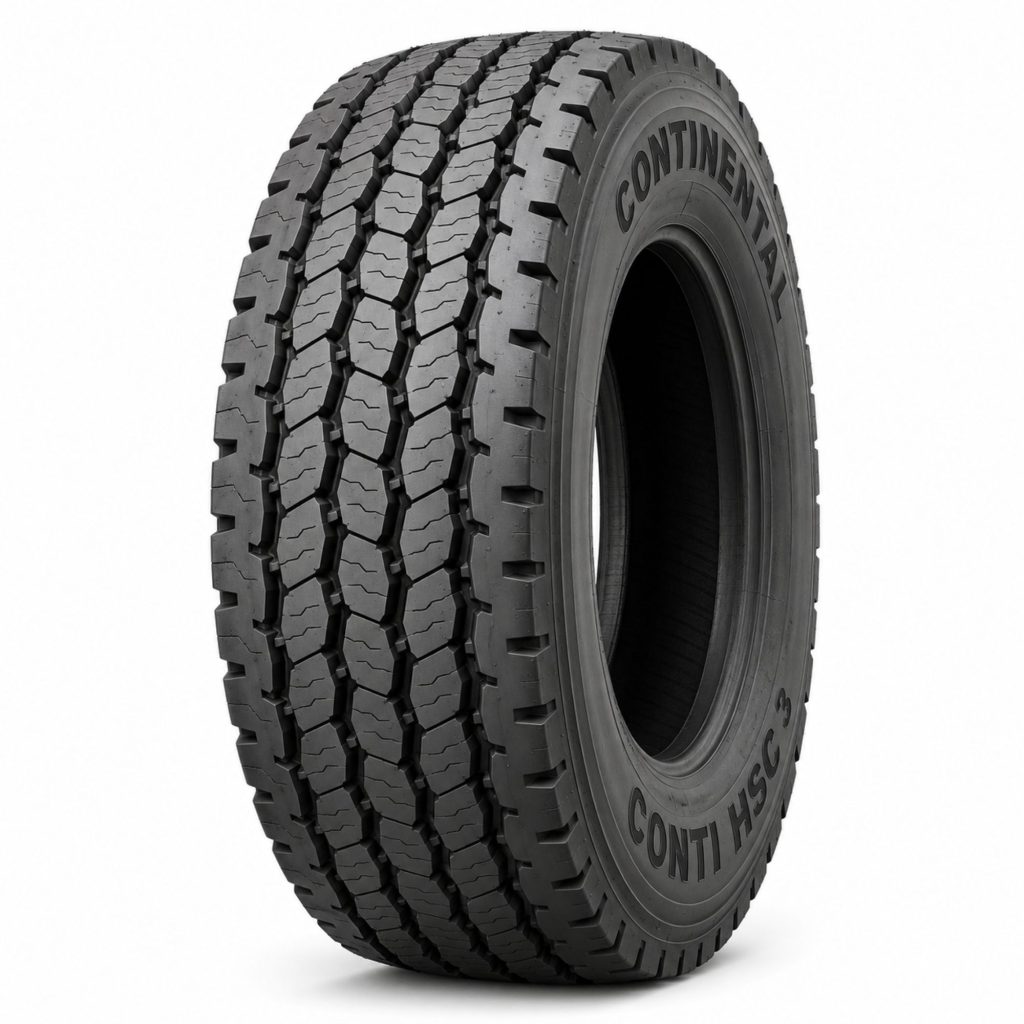
The Continental Conti HSC 3 is a steer and all-position commercial tire developed for construction fleets and severe vocational trucks. It is designed for vehicles that travel on paved roads while regularly entering jobsites, quarries, gravel roads, and other rugged environments.
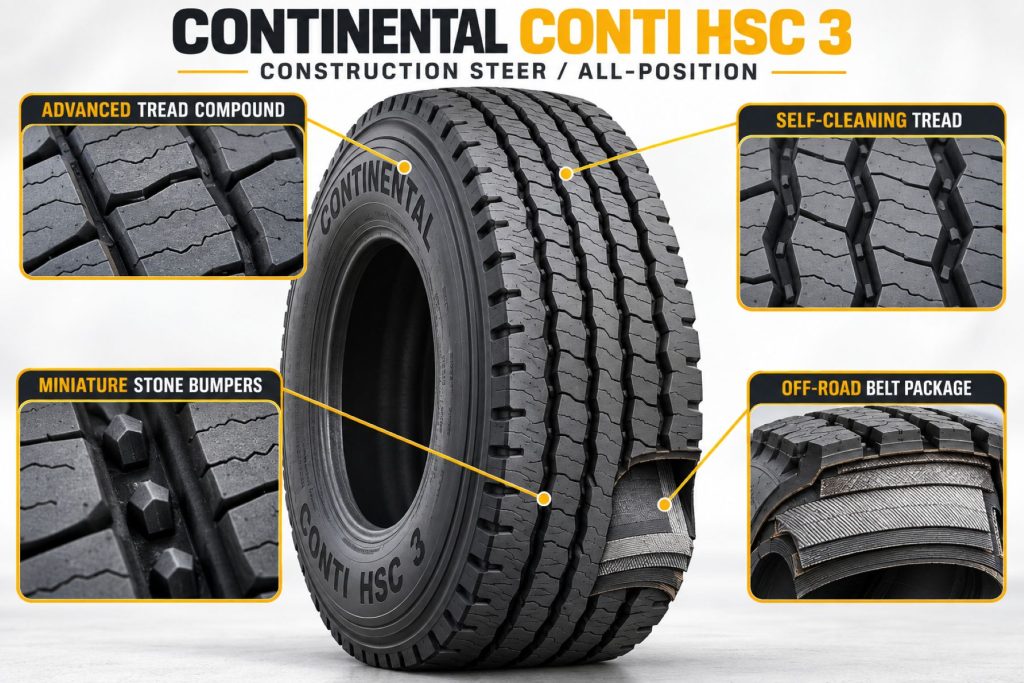
A wide tread platform supports mileage and footprint stability. Its advanced compound is designed to resist cutting and chipping, while a self-cleaning tread and miniature stone bumpers help reduce stone retention and protect the casing.
The tire uses Continental’s Conti 3G casing with a premium off-road belt package for penetration resistance, heat management, casing life, and retreadability. It is also pre-equipped with a tire sensor for integration with compatible Continental digital tire-management systems.
Key Characteristics
- Steer and all-position construction tire
- Designed for on-road and off-road operation
- Wide tread platform
- 24/32-inch original tread depth
- Cut-and-chip-resistant tread compound
- Self-cleaning tread design
- Miniature stone bumpers
- Premium off-road belt package
- Maximum sidewall protection
- Conti 3G commercial casing
- Factory-installed tire sensor
- Compatible with Continental digital tire-management solutions
- Retreadable commercial casing
Major Components
- Advanced construction tread compound
- Wide tread platform
- Central tread ribs and blocks
- Shoulder ribs
- Self-cleaning grooves
- Miniature stone bumpers
- Premium off-road belt package
- Conti 3G radial casing
- Heat-dissipating casing materials
- Protective sidewall gauge
- Inner liner
- Bead bundles
- Factory-installed Continental tire sensor
Product Type and Construction
The Conti HSC 3 is a radial commercial tire designed for steer and all-position service. Its radial body cords extend between the bead areas, while a reinforced off-road belt package stabilizes the crown and helps protect the casing against impacts and penetrations.
The Conti 3G casing uses increased belt stiffness, heat-controlling materials, a wide casing platform, and a structurally durable bead core to support mileage, casing life, and future retreading.
How the Tire Works
Compressed air inside the tire supports the truck and its load. The tread maintains contact with paved and unpaved surfaces while transmitting steering, braking, cornering, and limited traction forces.
The wide footprint distributes load across the tread. Self-cleaning grooves release loose material, stone bumpers discourage trapped stones from drilling toward the belts, and the reinforced casing absorbs repeated loading and surface impacts.
Position and Function Within the Vehicle
The Conti HSC 3 is primarily suited to steer-axle service but is classified for approved all-position applications. On a steer axle, it supports the front of the vehicle, responds to steering input, transmits braking force, and helps maintain directional stability.
When installed at another position, the tire’s size, load capacity, wheel requirements, spacing, and tread characteristics must match the vehicle and operating application.
Common Specifications
- Service Position: Steer and all position
- Construction: Radial
- Application: Construction and mixed on-road/off-road vocational service
- Published Sizes: 11R22.5, 11R24.5, and 315/80R22.5
- Load Ranges: Load Range H for 11R sizes and Load Range L for 315/80R22.5
- Original Tread Depth: 24/32 inch
- Maximum Listed Speed: 68 mph
- 11R22.5 Overall Diameter: Approximately 41.7 inches
- 11R22.5 Approved Wheels: 8.25 and 7.50 inches
- 11R22.5 Maximum Single-Tire Load: 6,610 pounds at 120 psi
- Casing: Continental Conti 3G casing
- Sensor Equipment: Pre-equipped with an internal Continental tire sensor
- Exact Dimensions and Ratings: Verify the current Continental product data guide for the selected size and article number
Size, Load Capacity, and Speed Rating
The Conti HSC 3 is offered in conventional 11R sizes and a higher-capacity 315/80R22.5 configuration. The correct tire must support the maximum actual load carried at its wheel position while remaining within its specified pressure and speed limits.
Tire capacity does not increase the certified rating of the wheel, steering axle, suspension, brakes, frame, or completed vehicle. Every component must be suitable for the intended operating weight.
Intended Axle Position and Service
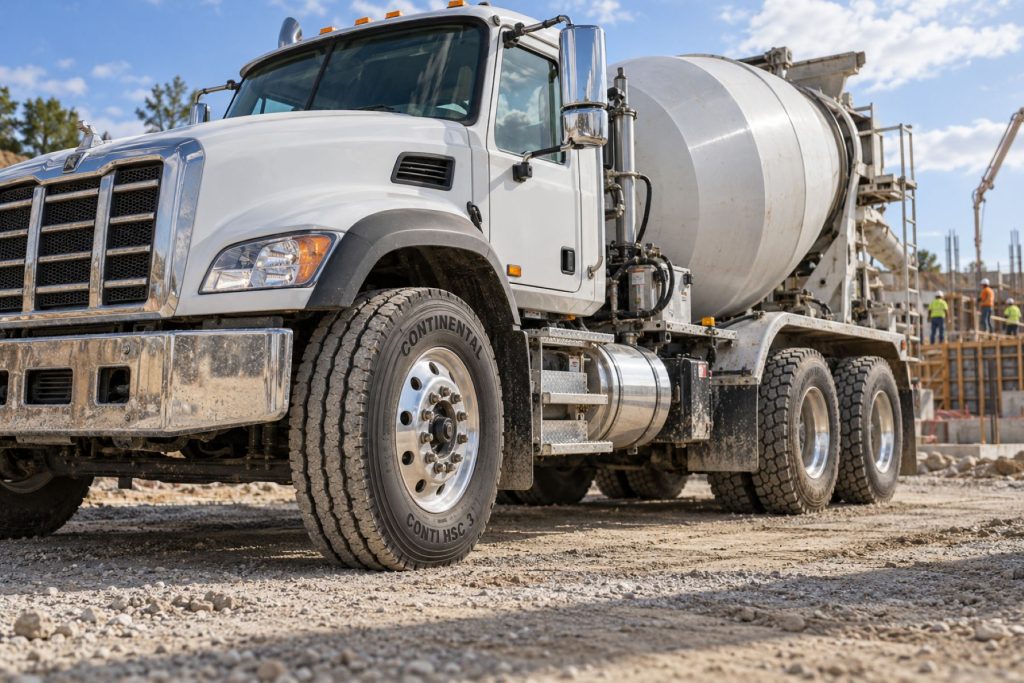
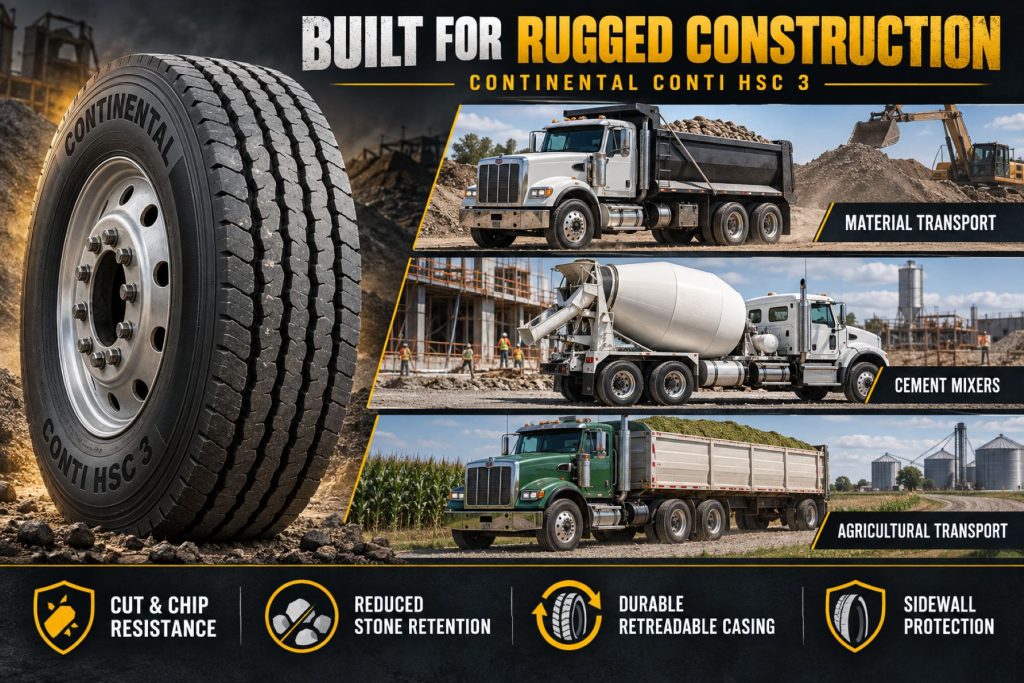
The Conti HSC 3 is designed primarily for the steer axles of construction and vocational trucks operating on paved roads, gravel routes, construction entrances, quarries, transfer stations, lumber yards, and similar severe environments.
Its all-position designation permits additional approved applications, but a dedicated drive tire may provide better traction when sustained drive-axle operation is the primary requirement.
Tread Design and Traction
The wide tread platform creates a stable footprint for steering and braking. Its groove pattern provides channels for water and loose material while helping the tread clean itself during mixed-service operation.
Miniature stone bumpers reduce stone retention, helping protect the casing and preserve retreadability. Actual traction depends on tread depth, pressure, loading, surface conditions, vehicle speed, and axle position.
Casing and Sidewall Design
The Conti 3G casing uses a premium off-road belt package designed to increase stiffness and penetration resistance while reducing internal movement and heat. These characteristics support footprint stability and casing life.
Additional sidewall protection improves resistance to curbing, cuts, and abrasion. Severe impacts and deep cuts can still cause internal damage and require immediate inspection.
Inflation Pressure and Load Management
Cold inflation pressure should be established using actual axle or wheel-position weights and Continental’s current load-and-inflation tables. The maximum sidewall pressure is not automatically the correct daily operating pressure.
Underinflation increases heat, casing flex, rolling resistance, steering response time, and impact vulnerability. Overinflation can increase ride harshness, reduce impact compliance, and concentrate wear within the footprint.
Rolling Resistance and Fuel Efficiency
The Conti HSC 3 prioritizes construction durability, mileage, and casing protection. The Conti 3G casing is designed to control heat and internal movement, which can support operating efficiency during road travel.
Actual fuel consumption depends on inflation pressure, axle alignment, load, terrain, route, speed, vehicle configuration, idle time, and the tires installed at other axle positions.
Weather, Road, and Terrain Performance
The Conti HSC 3 is intended for paved roads and rugged construction environments, including gravel, compacted soil, uneven access roads, quarries, and material yards.
Performance in snow, ice, deep mud, loose rock, or extreme off-road conditions depends on the exact tire markings, remaining tread, loading, speed, and use of legally required traction equipment.
Sensor Programming and Tire-Position Assignment
The Conti HSC 3 is supplied with a factory-installed sensor capable of measuring tire pressure and internal temperature. Compatible Continental equipment can transmit this information to a ContiConnect monitoring system.
Each sensor must be correctly assigned to its vehicle and wheel position. Incorrect assignment can cause alerts or readings to appear at the wrong location. Sensor commissioning and replacement should follow Continental procedures.
Mounting and Installation
Commercial tires should be mounted by trained technicians using approved equipment. Tire diameter, wheel width, rim contour, offset, load capacity, valve equipment, and operating pressure must be compatible.
The internal sensor must not be damaged during mounting or demounting. Technicians should know that the tire contains sensor equipment before beginning service.
Vehicle and Truck Compatibility
Compatibility depends on the vehicle manufacturer’s approved tire size, front-axle rating, wheel specification, steering clearance, brake clearance, suspension geometry, turning angle, and intended operating weight.
Overall diameter, loaded radius, section width, wheel offset, load range, and fender clearance must be verified before changing sizes or replacing another tire family.
Tire, Wheel, and Monitoring-System Compatibility
The wheel must provide the correct diameter, width, contour, offset, and load and pressure ratings. Valve equipment and any external monitoring components must also match the tire and wheel assembly.
Use of the internal sensor requires compatible Continental receiving or ContiConnect equipment. The tire can still perform its mechanical function without an active digital subscription, but connected monitoring features require the appropriate system.
Common Applications
- Dump trucks
- Concrete mixers
- Construction trucks
- Material-hauling trucks
- Logging trucks
- Refuse trucks
- Roll-off trucks
- Heavy vocational tractors
- Utility trucks
- Municipal trucks
- Quarry-support vehicles
- Aggregate-hauling trucks
Advantages
- Designed for steer and approved all-position service
- Suitable for road and construction-site operation
- Wide tread platform supports mileage
- Compound resists cutting and chipping
- Self-cleaning grooves reduce material retention
- Stone bumpers help protect the belt package
- Off-road belts improve penetration resistance
- Protective sidewalls resist curbing and abrasion
- Factory-installed sensor supports connected monitoring
- Conti 3G casing supports retreadability
Limitations or Considerations
- Not as highway-efficiency-focused as a long-haul steer tire
- Not as traction-focused as a dedicated drive tire
- Maximum listed speed is 68 mph
- Size selection is limited
- Protective construction cannot prevent every impact or cut
- Sensor functions require compatible monitoring equipment
- Sensors require correct programming and wheel-position assignment
- Severe impacts can cause hidden casing damage
- Retread acceptance depends on casing condition
Driver and Operator Experience
Drivers can expect a more substantial construction-tire character than from a highway-only steer tire. Properly installed HSC 3 tires should provide stable road tracking while tolerating loose and uneven jobsite surfaces.
Connected monitoring can warn fleets about pressure loss or elevated internal temperature before the condition produces visible damage. Drivers must still complete normal pre-trip tire inspections.
Inspection and Wear Points
- Tread depth across all major grooves
- Shoulder and center-rib wear
- Chipping, tearing, and chunking
- Stones retained in the tread
- Cuts, punctures, and embedded debris
- Sidewall scuffing and impact damage
- Bulges or casing distortion
- Bead and wheel damage
- Valve leakage
- Sensor warnings or missing readings
- Heat discoloration
- Irregular wear caused by alignment or wheel-end problems
Tire Rotation and Position Management
Rotation may help control irregular wear when allowed by vehicle configuration and fleet policy. Size, tread depth, load capacity, condition, wheel compatibility, and intended axle service must be reviewed before changing positions.
If a sensor-equipped tire is moved, the digital system must be updated so its new wheel position is correctly identified.
Balancing, Alignment, and Runout
Correct steer-axle alignment is essential for directional stability and uniform wear. Toe, camber, caster, axle setback, steering linkage, suspension bushings, wheel bearings, and ride height should be checked when abnormal wear develops.
Tire and wheel runout, improper bead seating, imbalance, bent wheels, and wheel-end looseness can create vibration. Mechanical defects should be corrected before balancing is treated as the final remedy.
Retreadability and Casing Life
The Conti HSC 3 is built on Continental’s Conti 3G casing and is designed for multiple-life commercial service. Its off-road belt package, stone bumpers, heat-management features, and sidewall protection help preserve casing integrity.
Retread eligibility depends on inflation history, operating temperature, repairs, impact damage, bead condition, moisture intrusion, age, and professional inspection. Continental offers a matching ContiTread HSC 3 retread for eligible casings.
Maintenance and Ownership Notes
Check cold inflation pressure regularly, inspect tread and sidewalls during pre-trip inspections, measure tread depth across the footprint, and remove deeply embedded stones before they damage the belt package.
Fleets should monitor connected pressure and temperature data, investigate repeated alerts, maintain correct sensor assignments, and preserve installation, repair, alignment, removal, and retread records.
Common Tire Problems
- Chip and tear damage: Sharp rocks, severe abrasion, overloading, incorrect pressure, or unsuitable operation can damage the tread.
- Stone drilling: Stones retained in the grooves can work toward the belt package if they are not released or removed.
- Irregular steer wear: Incorrect alignment, improper inflation, worn steering parts, imbalance, runout, or wheel-end looseness may cause uneven wear.
- Shoulder wear: Underinflation, overloading, frequent turning, and alignment problems can accelerate shoulder wear.
- Sidewall damage: Rocks, curbs, demolition debris, and worksite contact can cut or abrade the sidewall.
- Heat damage: Underinflation, overloading, dragging brakes, or failing wheel bearings can overheat the casing.
- Sensor communication fault: Incorrect assignment, damaged sensor hardware, incompatible receiving equipment, or communication problems may prevent readings.
Safety and Service Precautions
Commercial tire mounting, demounting, inflation, inspection, and repair should be performed by trained personnel using approved equipment. Technicians must know that the tire contains an internal sensor before servicing it.
Digital pressure and temperature monitoring does not replace physical inspections. Do not exceed the lowest-rated tire, wheel, valve, axle, steering, suspension, or vehicle component.
Identification Information
Identification is molded into the sidewall. Record the Continental Conti HSC 3 name, complete size, load range, service description, load index, speed symbol, DOT tire-identification number, production date code, article number, and retreadable markings.
Sensor identification and wheel-position assignment should also be documented when the tire is connected to a Continental monitoring system.
Buying Considerations
- Confirm the complete tire size and load range
- Verify steer or approved all-position use
- Match capacity to actual axle weights
- Confirm wheel size, width, offset, and rating
- Evaluate paved-road and jobsite mileage
- Review expected cut, impact, and stone exposure
- Determine whether ContiConnect monitoring will be used
- Confirm sensor compatibility and commissioning support
- Review dealer and emergency-service coverage
- Evaluate casing value and retread options
Variants and Configurations
- 11R22.5 Load Range H
- 11R24.5 Load Range H
- 315/80R22.5 Load Range L
- Single-tire steer-axle installation
- Approved all-position installation
- Dual installation where correctly specified
- Sensor-connected fleet configuration
- Original Conti HSC 3 tread
- Matching ContiTread HSC 3 retread
Comparison to Similar Equipment
Compared with the Michelin X Works Z2 Tire, the Conti HSC 3 adds a factory-installed sensor and Continental’s Conti 3G casing, off-road belt package, and stone-management design.
Compared with the Bridgestone M863 Severe-Service Tire, the HSC 3 emphasizes intelligent monitoring, a wider tread platform, and Continental-specific casing technology.
Compared with the Continental Conti HAC 3 Tire, the HSC 3 is a conventional-size steer/all-position construction tire. The HAC 3 serves high-capacity all-position applications in wide-base sizes.
Compared with the Continental Conti HDC 3 Drive Tire, the HSC 3 is optimized for steer and all-position use, while the HDC 3 is a dedicated construction drive tire.
Best Fit For
- Construction fleets
- Dump-truck operators
- Concrete and aggregate haulers
- Logging operations
- Refuse and recycling fleets
- Vocational trucks operating on roads and jobsites
- Vehicles exposed to stones, curbs, and surface debris
- Fleets using connected tire monitoring
- Operators prioritizing casing protection
- Fleets preserving casings for retreading
Related Vehicle and Trailer Types
- Dump Trucks
- Concrete Mixer Trucks
- Logging Trucks
- Refuse Trucks
- Roll-Off Trucks
- Heavy-Haul Trucks
- Vocational Trucks
- Complete Guide to Semi-Truck Types
Related Truck and Trailer Models
- Mack Granite
- Kenworth T880
- Peterbilt 567
- Western Star 49X
- Western Star 47X
- Freightliner 114SD
- International HX Series
- Volvo VHD
Related Tire Types
- Vocational and Severe-Service Tires
- Steer and All-Position Truck Tires
- Drive Tires
- Trailer Tires
- Commercial Truck Wheels
- Tire Pressure Monitoring and Inflation Systems
Related Tire Products
- Continental Conti HAC 3 Tire
- Continental Conti HDC 3 Drive Tire
- Continental HCS Severe-Service Tire
- Continental Conti HSR 3 Tire
- Michelin X Works Z2 Tire
- Bridgestone M863 Severe-Service Tire
- Goodyear Armor Max MSA Tire
- Yokohama 114R All-Position Tire
Related Equipment Systems
- Tires and Wheels
- Tire Pressure Monitoring and Inflation Systems
- Suspension Systems
- Steering Systems
- Brake Systems
- Axles and Differentials
- Telematics and ELD Systems
- Equipment Systems
Related Guides
- Tire and Wheel Guides
- Commercial Truck Tire Types Explained
- Steer vs Drive vs Trailer Tires
- How to Read Commercial Truck Tire Sizes and Ratings
- How to Inspect and Maintain Commercial Truck Tires
- How to Choose Vocational and Severe-Service Tires
- Aluminum vs Steel Commercial Truck Wheels
Regulatory and Compliance Notes
Commercial tires must comply with applicable requirements governing load capacity, inflation, tread depth, condition, repairs, and roadside operation. Tire-pressure monitoring does not replace required inspections or driver responsibilities.
The tire’s load capacity does not override the ratings of the wheel, axle, steering system, suspension, brakes, frame, or completed vehicle. Tire service must follow applicable workplace-safety procedures.
Real World Operating Notes
Construction steer tires must remain stable during road travel while resisting cuts, stones, curbs, abrasion, and impacts at jobsites. The HSC 3 combines tread and casing features intended to address both operating environments.
Connected pressure and temperature data can help identify developing problems, but fleets must respond to alerts promptly. Correct inflation, alignment, stone removal, and impact inspections remain critical to tread and casing life.
Frequently Asked Questions
What is the Continental Conti HSC 3?
It is an intelligent steer and all-position tire designed for construction and mixed on-road/off-road vocational service.
Can the Conti HSC 3 be used on a steer axle?
Yes. Steer-axle service is one of its primary applications when the size, load rating, wheel, and vehicle requirements match.
What sizes are available?
Published North American sizes include 11R22.5, 11R24.5, and 315/80R22.5.
What is the original tread depth?
The published Conti HSC 3 configurations use a 24/32-inch original tread depth.
Does the tire include a sensor?
Yes. Continental identifies the HSC 3 as pre-equipped with an internal tire sensor for compatible digital monitoring systems.
What do the miniature stone bumpers do?
They help reduce stone retention and limit the chance of trapped stones drilling toward the tire’s belt package.
Can the Conti HSC 3 be retreaded?
Yes. Eligible casings may be retreaded after professional inspection, and Continental offers a matching ContiTread HSC 3 retread design.
Does sensor monitoring replace manual pressure checks?
No. Connected monitoring supplements normal inspections but does not replace pressure checks, tread inspections, or driver pre-trip responsibilities.
What causes irregular steer-tire wear?
Common causes include incorrect inflation, axle misalignment, worn steering or suspension components, imbalance, runout, wheel-end looseness, and overloading.
How can the correct replacement tire be identified?
Use the full product name, complete size, load range, article number, wheel specification, axle rating, sensor information, and intended application.
Availability and Where to Find
Continental Conti HSC 3 tires may be available through Continental commercial-tire dealers, vocational-truck tire centers, fleet-service providers, retread partners, and regional distributors.
Before ordering, confirm the complete size, load range, article number, wheel requirements, sensor compatibility, manufacturing date, warranty coverage, and retread program. Current product information is available through the official Continental Conti HSC 3 product page.
Support Trucking Families
Truck Equipment Atlas supports the mission of Grey Cross, a nonprofit dedicated to helping families of truck drivers who lose their lives while on the road. As the site grows, part of its mission is to bring awareness and support to these families.
Podcast or Video Section
Learn More Through Audio and Video
Truck Equipment Atlas will continue expanding with podcast episodes, interviews, and equipment breakdowns to help drivers and fleets better understand trucks and equipment.
Follow the Growth of Truck Equipment Atlas
Truck Equipment Atlas continues to expand with new truck profiles, trailer coverage, diesel engine pages, equipment system resources, manufacturer information, and educational guides.
Visit our Site Updates page to explore recent additions, project milestones, and upcoming resources as we continue building one of the industry’s growing commercial trucking equipment reference libraries.
View the Latest Site Updates: Truck Equipment Atlas Site Updates