
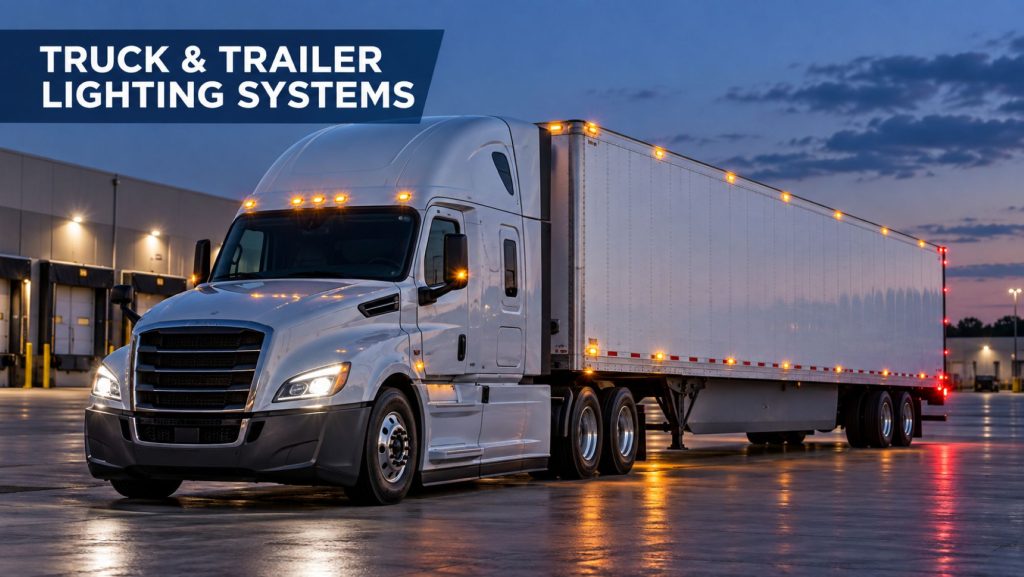
Commercial truck and trailer lighting systems provide forward illumination, vehicle identification, position marking, braking signals, turn indications, hazard warnings, reversing illumination, license-plate lighting, and work-area visibility.
These systems help drivers see the road while allowing surrounding motorists to recognize a commercial vehicle’s size, position, direction, and operating intentions. Lighting equipment must remain compatible with the vehicle’s electrical system, mounting locations, wiring, connectors, and applicable safety requirements.
Truck Equipment Atlas covers commercial headlamps, stop-turn-tail lamps, clearance and marker lamps, identification lamps, work lights, warning lights, trailer lighting systems, LED technologies, wiring connections, mounting equipment, inspection practices, and individual lighting products from major manufacturers.
Truck and Trailer Lighting Products on Truck Equipment Atlas
Explore the commercial truck and trailer lighting products being added to Truck Equipment Atlas:
Truck-Lite
Grote
Additional headlamps, fog lamps, stop-turn-tail lamps, clearance lamps, identification lamps, work lights, scene lights, warning lamps, trailer-lighting systems, wiring products, and smart-lighting technologies will be added as the Truck Equipment Atlas Electrical Systems Library expands.
How Commercial Vehicle Lighting Systems Work
A commercial vehicle’s electrical system supplies power to lighting circuits through batteries, alternators, switches, relays, control modules, fuses, circuit breakers, wiring harnesses, connectors, and grounding paths.
When a driver operates the headlamp, turn-signal, brake, hazard, reverse, or work-light control, electrical power is directed to the appropriate lamps. Electronically controlled vehicles may use body controllers, multiplex networks, lighting modules, and trailer-control systems to manage these functions.
Incandescent lamps produce light by heating a filament. LED lamps use semiconductor light-emitting diodes and electronic circuitry. LED lighting generally offers reduced current draw, faster illumination, longer service life, and greater resistance to vibration when the lamp and electrical system are correctly designed and installed.
Truck Lighting and Trailer Lighting
Truck and tractor lighting includes equipment mounted on the cab, hood, chassis, body, mirrors, bumpers, fenders, headache rack, and other vehicle structures. These lamps may provide road illumination, vehicle identification, signaling, warning, or work-area visibility.
Trailer lighting receives power and control signals through the tractor-to-trailer electrical connection. The trailer wiring system distributes those signals to its stop, turn, tail, clearance, identification, side-marker, license-plate, and auxiliary lamps.
A lighting problem on a combination vehicle may originate in the tractor, electrical cable, receptacle, trailer connector, junction box, wiring harness, grounding circuit, control module, or individual lamp. Diagnosis should evaluate the complete circuit rather than automatically replacing the lamp.
Major Commercial Vehicle Lamp Types
- Headlamps
- Daytime running lamps
- Fog lamps
- Driving lamps
- Stop lamps
- Turn-signal lamps
- Combination stop-turn-tail lamps
- Tail lamps
- Clearance lamps
- Identification lamps
- Side-marker lamps
- License-plate lamps
- Reverse lamps
- Work and utility lamps
- Scene lights
- Warning and emergency lamps
- Interior and cargo lamps
Headlamps and Forward Lighting
Headlamps illuminate the roadway ahead and help make the vehicle visible to approaching traffic. Commercial trucks may use replaceable-bulb housings, sealed-beam lamps, projector assemblies, LED modules, or manufacturer-specific integrated headlamp systems.
Forward-lighting performance depends on lamp output, beam pattern, aim, mounting height, lens condition, system voltage, electrical connections, and environmental conditions. A high-output lamp with poor aim or excessive voltage drop may still provide inadequate road illumination.
Headlamp replacement must account for the approved lamp type, connector, voltage, mounting system, beam orientation, left- or right-side application, and vehicle-control compatibility.
Stop, Turn, and Tail Lamps
Stop-turn-tail lamps combine several rear-lighting functions within one housing. Their brighter stop and turn functions communicate braking or directional intent, while the lower-intensity tail function identifies the vehicle during nighttime operation.
Commercial lamps are available in round, oval, rectangular, and application-specific shapes. They may use flange mounting, grommet mounting, surface mounting, or integrated body and trailer assemblies.
Replacement lamps must match the required functions, voltage, connector pattern, mounting dimensions, orientation, photometric approval, and vehicle wiring. A lamp that physically fits may not provide the correct electrical or signaling performance.
Clearance, Identification, and Side-Marker Lamps
Clearance lamps help indicate the overall width of a truck, trailer, or body. Identification lamps are commonly arranged as a group of three to identify a large commercial vehicle. Side-marker lamps show the vehicle’s presence and length when viewed from the side.
These lamps are installed in prescribed locations and use colors appropriate to their position and function. Replacement equipment should preserve the original mounting location, visibility, color, orientation, and electrical connection.
Small marker lamps are particularly vulnerable to corrosion, road spray, damaged wiring, loose mounting, lens damage, and grounding problems. Sealed connectors and properly routed wiring can reduce repeat failures.
LED and Incandescent Lighting
Incandescent commercial lamps are mechanically simple and may have a lower initial replacement cost. Their filaments, however, can be affected by shock, vibration, heat, voltage conditions, and normal service wear.
LED lamps normally draw less current and illuminate more quickly than incandescent lamps. Properly designed LED assemblies can also provide longer service life and improved resistance to vibration.
Converting an older vehicle from incandescent to LED lighting may require more than installing replacement lamps. Flashers, control modules, warning circuits, trailer-monitoring systems, connectors, polarity, resistance, and diagnostic logic may also require evaluation.
Lighting Wiring, Connectors, and Grounds
Lighting reliability depends on the condition of the complete electrical path. That path can include switches, controllers, protective devices, harnesses, junction boxes, connectors, terminals, grounds, and the lamp itself.
Common electrical trouble areas include:
- Corroded terminals
- Loose or poorly crimped connections
- Damaged insulation
- Chafed wiring harnesses
- Water-contaminated connectors
- Broken grounding paths
- Overloaded circuits
- Incorrect replacement fuses
- Poor trailer-plug contact
- Improper aftermarket splices
Sealed connectors, supported harness routing, proper strain relief, correctly sized conductors, circuit protection, and dependable grounding are essential to long-term lighting performance.
Trailer Electrical Connections
The tractor-to-trailer electrical connection transfers lighting power and control signals between the two vehicles. A standard commercial arrangement may include a seven-conductor cable, tractor receptacle, trailer plug, junction box, and trailer wiring harness.
Connection failures can cause intermittent lamps, multiple lamps operating together, dim lighting, blown protective devices, or a complete loss of trailer lighting. Dirt, moisture, corrosion, bent contacts, cable strain, poor retention, and damaged seals are frequent causes.
Trailer electrical connections should be secured, kept clean, inspected for wear, and protected from dragging or excessive tension during vehicle articulation.
Work Lights, Scene Lights, and Auxiliary Lighting
Work and scene lighting illuminates areas around vocational trucks, trailers, service bodies, loading equipment, recovery vehicles, emergency apparatus, construction equipment, and material-handling systems.
These lamps may use spot, flood, combination, or wide-area beam patterns. Selection should consider mounting position, intended working distance, light output, beam distribution, electrical load, environmental sealing, vibration exposure, glare, and nearby traffic.
Auxiliary lighting should be installed so that it does not interfere with required lamps, blind other drivers, exceed circuit capacity, damage vehicle electronics, or create unsafe reflections for the operator.
Smart Lighting and Trailer Monitoring
Modern truck and trailer electrical systems may combine lighting with sensors, controllers, multiplex communication, fault detection, telematics, and remote monitoring.
Depending on the system, smart electrical equipment may monitor lamp status, circuit condition, door position, cargo conditions, tire information, braking components, or other trailer functions. Information can be displayed to the driver, recorded by the fleet, or transmitted through a telematics platform.
Electronic monitoring does not eliminate the need for physical inspection. A lamp, connector, mounting bracket, lens, or wiring harness may be damaged even when a system has not stored a fault.
Common Commercial Lighting Problems
- Inoperative lamp
- Dim or inconsistent light output
- Intermittent operation
- Rapid flashing or incorrect flash rate
- Moisture inside the lamp housing
- Corroded terminals or connectors
- Blown fuse or tripped circuit protection
- Poor grounding
- Damaged tractor-to-trailer cable
- Chafed or pinched wiring
- Cracked lens or housing
- Incorrect lamp orientation
- Loose mounting or excessive vibration
- LED compatibility faults
- Control-module or multiplex faults
Repeated lamp failure often indicates an underlying problem involving voltage, wiring, mounting, vibration, water intrusion, grounding, or component compatibility.
Lighting-System Inspection and Maintenance
Commercial lighting should be inspected during required vehicle inspections and as part of the fleet’s preventive-maintenance program.
Important inspection points include:
- Operation of every required lamp
- Correct lamp color and location
- Headlamp aim and beam condition
- Lens cleanliness and visibility
- Cracked housings or lenses
- Loose or missing mounting hardware
- Connector security and corrosion
- Harness routing and support
- Damaged insulation or exposed conductors
- Grounding connections
- Trailer plug and receptacle condition
- Fuse, relay, and circuit-breaker condition
- Warning messages or stored electrical faults
Lighting repairs should preserve the required electrical protection, wire size, connector sealing, harness support, lamp visibility, and mounting integrity.
Selecting Commercial Truck and Trailer Lighting
Lighting products should be selected using verified vehicle, trailer, electrical, environmental, and regulatory requirements.
Important selection factors include:
- Required lighting function
- Vehicle or trailer position
- System voltage
- LED or incandescent design
- Connector and terminal configuration
- Mounting dimensions and method
- Required color
- Lamp orientation
- Photometric and regulatory approval
- Environmental sealing
- Vibration resistance
- Road-salt and chemical exposure
- Electrical-system compatibility
- Replacement availability
- Warranty and manufacturer support
Product appearance alone is not enough to establish compatibility. Part numbers, dimensions, connector styles, electrical ratings, mounting requirements, and approved functions should be confirmed before installation.
Common Applications
- Long-haul highway tractors
- Regional and day-cab tractors
- Dry van trailers
- Refrigerated trailers
- Flatbed and step-deck trailers
- Tank and bulk trailers
- Dump trucks and trailers
- Construction vehicles
- Refuse trucks
- Utility and service trucks
- Recovery and towing vehicles
- Emergency vehicles
- Buses and motorcoaches
- Municipal vehicles
- Specialized commercial equipment
Related Electrical System Categories
- Commercial Truck Batteries & Energy Storage
- Alternators & Charging Systems
- Starters & Starting Systems
- Wiring, Connectors & Power Distribution
- Inverters, Converters & Auxiliary Electrical Power
Related Electrical System Guides
- Electrical System Guides
- How Commercial Truck Electrical Systems Work
- Commercial Truck Batteries Explained
- Commercial Truck Alternators and Charging Systems Explained
- Commercial Truck Starters and Starting Systems Explained
- How to Inspect and Maintain Truck Wiring and Electrical Connections
- Commercial Truck and Trailer Lighting Systems Explained
Related Truck and Equipment Resources
- Electrical Systems
- Equipment Systems
- Commercial Trucks
- Commercial Trailers
- Telematics & ELD Systems
- Safety Systems
Truck and Trailer Lighting Systems Library Expansion
Truck Equipment Atlas will continue expanding its commercial lighting coverage as additional manufacturers, lamp designs, electrical connections, monitoring technologies, and vehicle applications are added.
Future coverage may include:
- Commercial LED headlamps
- Stop-turn-tail lamp families
- Clearance and marker lamps
- Trailer identification lighting
- Work and scene lights
- Warning-light systems
- Trailer wiring harnesses
- Junction boxes and connectors
- Smart trailer-lighting systems
- Lighting diagnostics and testing equipment
- LED conversion considerations
- Commercial lighting product comparisons
The goal is to build an organized lighting reference that helps drivers, fleets, technicians, students, body builders, trailer operators, and equipment buyers understand how commercial lighting systems work and where individual products fit within the trucking industry.
Explore the Complete Electrical Systems Library
Visit the Electrical Systems hub to explore batteries, alternators, charging systems, starters, wiring, connectors, power-distribution equipment, truck and trailer lighting, inverters, converters, auxiliary electrical systems, individual product profiles, and educational guides.
Follow the Growth of Truck Equipment Atlas
Truck Equipment Atlas continues to expand with new truck profiles, trailer coverage, diesel engine pages, equipment-system resources, manufacturer information, and educational guides.
Visit our Truck Equipment Atlas Site Updates page to explore recent additions, project milestones, and upcoming resources.