
Benson Conestoga Trailer
Quick Facts
- Manufacturer: Benson Trailers
- Trailer Type: Conestoga Trailer
- Model: Benson Conestoga Trailer
- Common Lengths: 48 ft, 53 ft
- Common Width: 102 inches
- Trailer Construction: Aluminum Flatbed Platform with Sliding Conestoga Tarp System
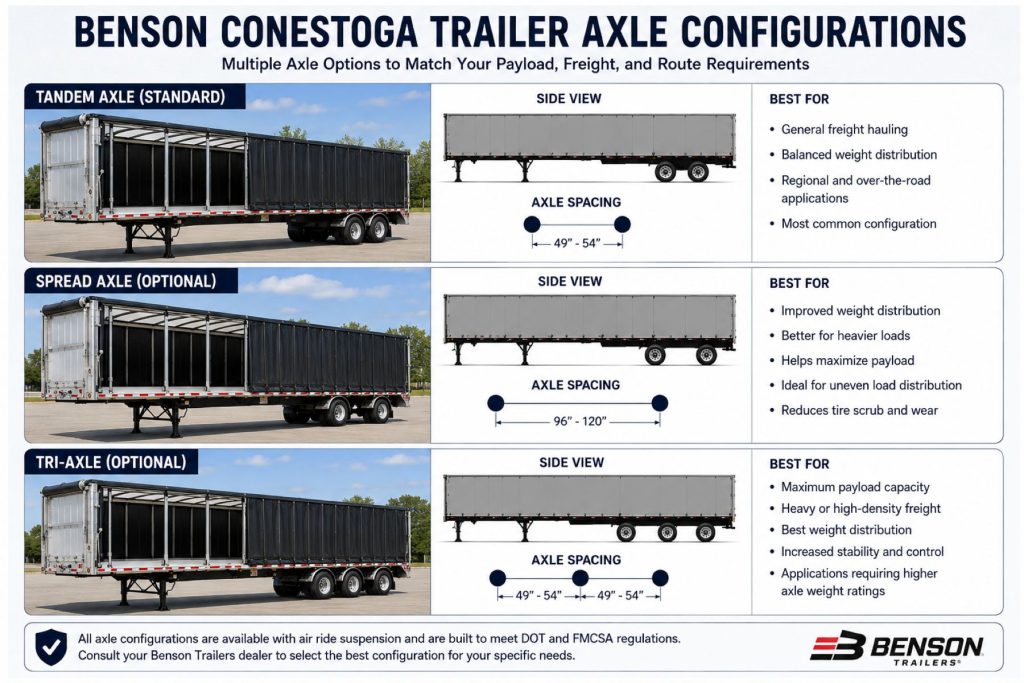
- Common Axle Configurations: Tandem Axle, Spread Axle, Tri-Axle
- Typical Capacity: Up to 44,000 to 48,000 lbs depending on configuration
- Primary Applications: Building Materials, Machinery, Industrial Freight, Steel Products, Weather-Sensitive Cargo
- Common Freight Types: Lumber, Palletized Freight, Machinery, Pipe, Steel Products, Construction Materials
- Cover System: Sliding Conestoga Rolling Tarp System
- Suspension Options: Air Ride
- Production Status: In Production
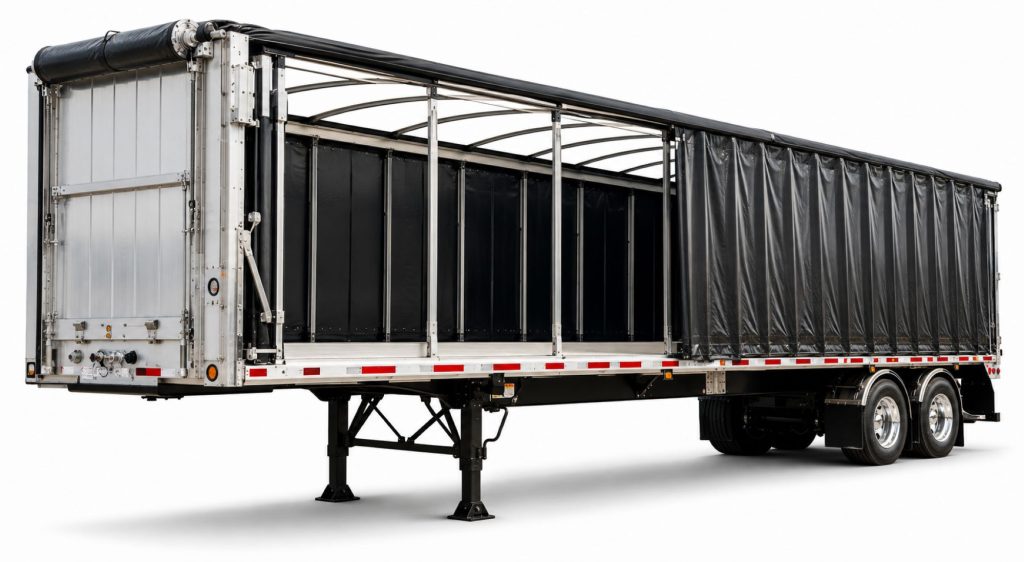
Overview
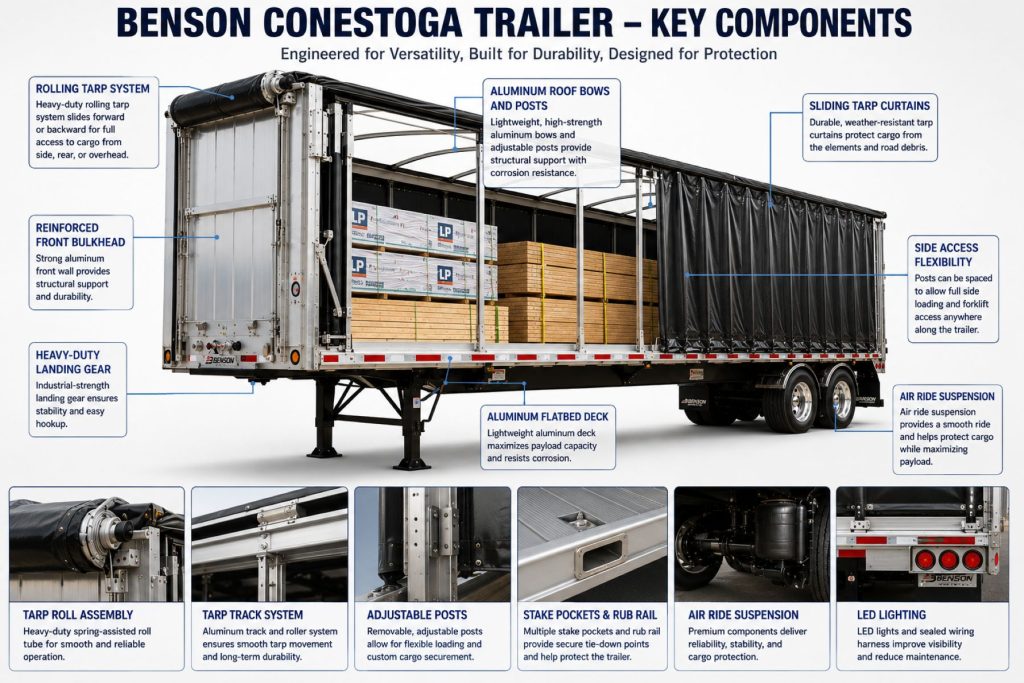
The Benson Conestoga Trailer combines the loading flexibility of a flatbed trailer with the weather protection of an enclosed trailer. Built on Benson’s lightweight aluminum flatbed platform, the trailer utilizes a rolling tarp system that slides forward and backward along the trailer length, allowing cargo to be loaded from the side, rear, or overhead.
This design makes the Benson Conestoga a popular choice for freight that requires protection from weather but still benefits from flatbed-style loading access. Industries such as construction, manufacturing, steel distribution, and industrial equipment transportation frequently utilize Conestoga trailers to move valuable cargo while minimizing exposure to rain, snow, road debris, and UV damage.
The Benson Conestoga is particularly attractive to carriers seeking versatility, cargo protection, and efficient loading operations.
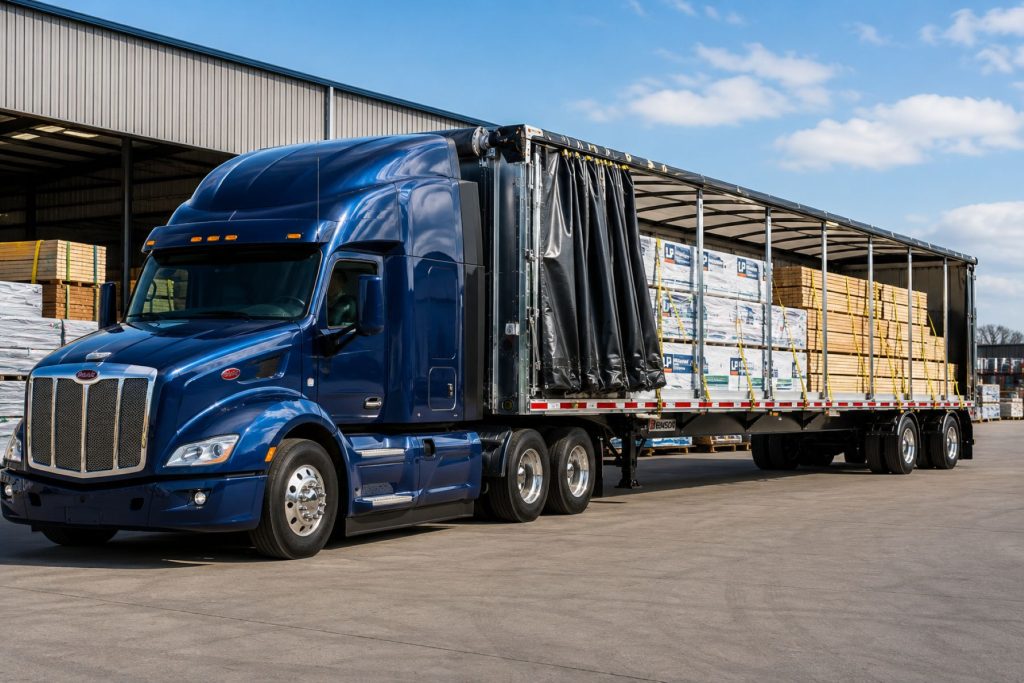
Key Characteristics
The Benson Conestoga Trailer is designed to provide enclosed freight protection without sacrificing loading flexibility.
Its aluminum trailer construction helps maximize payload while reducing overall trailer weight. The sliding Conestoga tarp system allows forklift access from virtually any point along the trailer, eliminating many of the loading restrictions associated with dry van trailers.
Unlike traditional flatbeds that require individual tarping, the Conestoga system provides rapid cargo protection while reducing labor and improving operational efficiency.
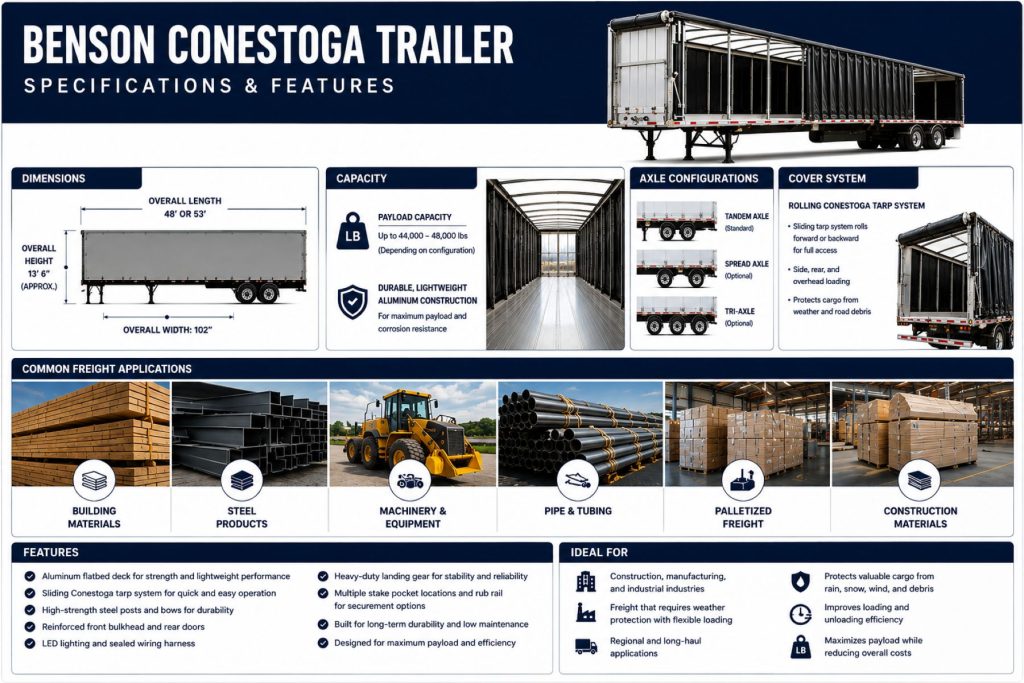
Common Specifications
Overall Length
Typically 48 to 53 feet.
Width
102 inches.
Construction
Aluminum flatbed platform with steel Conestoga frame system.
Capacity
Typically up to 44,000 to 48,000 pounds.
Axle Configurations
Tandem axle, spread axle, and tri-axle.
Suspension
Air ride suspension.
Cover System
Rolling Conestoga tarp system.
Flooring
Aluminum flatbed deck.
Cargo Access
Side, rear, and overhead loading.
Landing Gear
Heavy-duty commercial landing gear.
Common Applications
- Building Materials Transportation
- Steel Product Hauling
- Machinery Transportation
- Industrial Equipment Hauling
- Construction Materials Delivery
- Palletized Freight Transportation
- Manufactured Product Distribution
- Weather-Sensitive Cargo Transport
- Specialized Freight Hauling
- Distribution Center Deliveries
Advantages
- Weather protection without a traditional enclosed trailer
- Side-loading capability
- Faster loading and unloading operations
- Reduces manual tarping requirements
- Protects cargo from rain and debris
- Lightweight aluminum construction
- Excellent freight versatility
- Strong resale value
Limitations or Considerations
- Higher purchase cost than standard flatbeds
- Moving tarp system requires maintenance
- Less internal height than some dry vans
- Tarp systems can be damaged by improper operation
- Not ideal for certain oversized loads
- Additional weight compared to standard flatbeds
- Specialized repair requirements
- Limited availability compared to dry vans
Driver and Operator Considerations
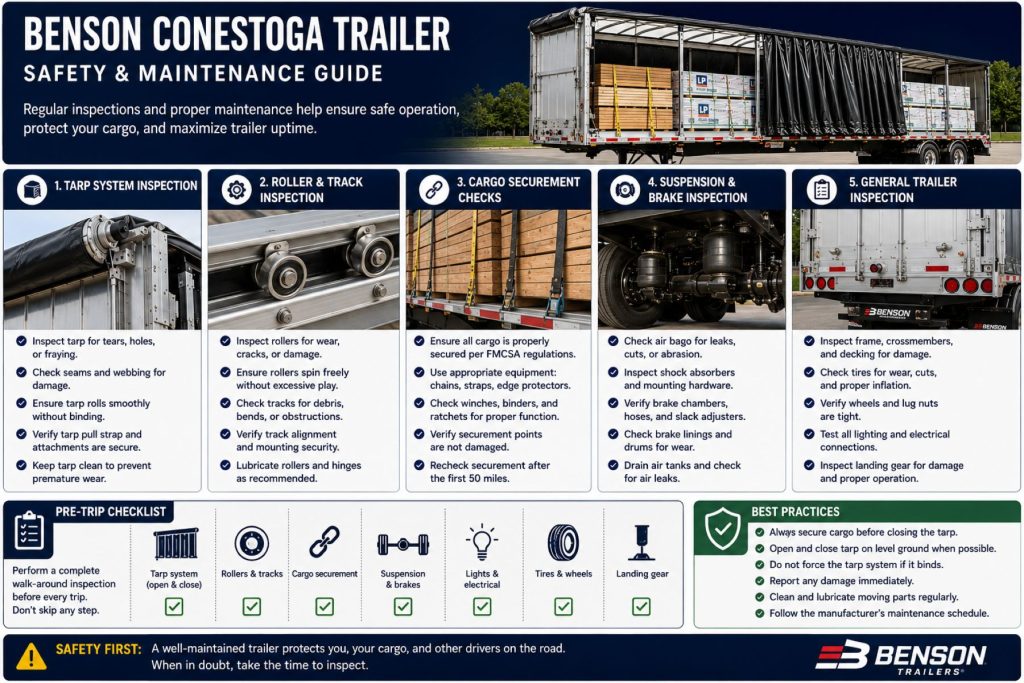
Drivers operating Benson Conestoga trailers must ensure proper operation of the sliding tarp system before loading and unloading. Care should be taken when opening and closing the cover system to avoid damage to the framework, rollers, and tarp material.
Load securement remains critical because the Conestoga cover does not replace cargo securement requirements. Drivers must still properly secure freight using chains, straps, edge protectors, and other approved securement devices.
Maintenance and Ownership Notes
Routine maintenance includes inspection of tarp material, rollers, tracks, frame assemblies, suspension components, wheel ends, tires, brakes, lighting systems, and landing gear.
Special attention should be given to moving tarp components, track alignment, roller wear, and cover integrity. Preventive maintenance helps reduce downtime and extend service life.
Buying Considerations
- Freight type requirements
- Loading and unloading methods
- Payload requirements
- Axle configuration preferences
- Tarp system condition
- New versus used pricing
- Maintenance history
- Fleet compatibility
- Cargo protection requirements
- Operating region
Common Brands or Manufacturers
- Benson Trailers
- Reitnouer
- Fontaine Trailer
- Transcraft
- Doonan
- Wilson Trailer
- Ravens
Variants and Related Configurations
- 48-Foot Conestoga Trailer
- 53-Foot Conestoga Trailer
- Spread Axle Conestoga
- Tri-Axle Conestoga
- Aluminum Conestoga Trailer
- Flatbed Conestoga Trailer
- Specialized Conestoga Trailer
Comparison to Similar Trailers
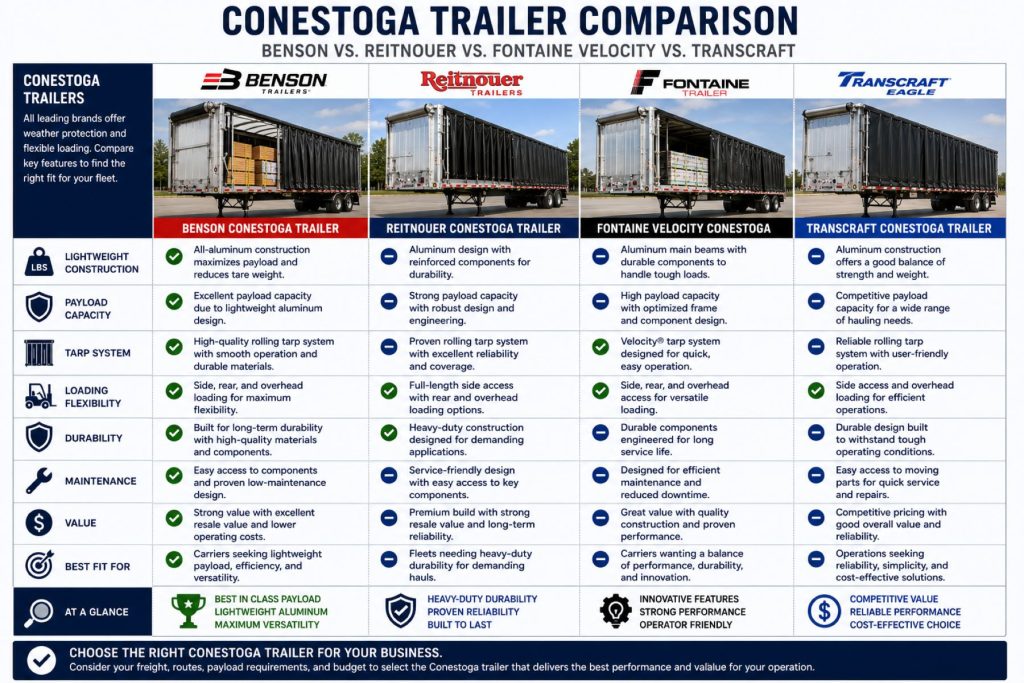
The Benson Conestoga Trailer is commonly compared to Conestoga-equipped trailers from Reitnouer, Fontaine, and Transcraft. Benson is particularly known for lightweight aluminum construction and strong payload capabilities. Compared to traditional flatbeds, the Benson Conestoga offers superior cargo protection while maintaining much of the same loading flexibility. Compared to dry vans, it allows easier side and overhead loading of freight that may be difficult to load through rear doors alone.
Best Fit For
- Flatbed carriers
- Industrial freight haulers
- Building material distributors
- Steel transportation companies
- Machinery haulers
- Manufacturing suppliers
- Regional freight carriers
- Specialized freight operators
Related Equipment
- Peterbilt 579
- Kenworth T680
- Freightliner Cascadia
- Volvo VNL
- International LT Series
- Cargo Securement Equipment
- Forklifts
- Loading Docks
- Industrial Material Handling Equipment
Related Freight Types
- Building Materials
- Steel Products
- Machinery
- Industrial Equipment
- Construction Materials
- Palletized Freight
- Manufactured Products
- Weather-Sensitive Freight
- Pipe and Tubing
- Packaged Industrial Goods
Related Trailer Types
- Conestoga Trailers
- Flatbed Trailers
- Drop Deck Trailers
- Dry Van Trailers
- Curtainside Trailers
- Specialized Freight Trailers
- Aluminum Flatbeds
Related Trailer Models
- Reitnouer Conestoga Trailer
- Fontaine Velocity Conestoga
- Transcraft Conestoga Trailer
- Doonan Conestoga Trailer
- Wilson Conestoga Trailer
- Ravens Conestoga Trailer
Related Guides
- Flatbed vs Step Deck vs Double Drop
- Complete Guide to Trailer Types
- Choosing the Right Trailer for Your Freight
Regulatory and Compliance Notes
Benson Conestoga Trailers must comply with federal, state, and local regulations regarding cargo securement, axle weight limits, braking systems, lighting requirements, and vehicle dimensions. Although the Conestoga cover protects cargo from weather, operators must still comply with all FMCSA cargo securement requirements for the freight being transported.
Real World Operating Notes
Benson Conestoga trailers are widely used by carriers hauling freight that requires both weather protection and flexible loading access. Many fleets utilize these trailers to reduce the labor associated with traditional flatbed tarping while providing customers with improved cargo protection.
Operators often find that Conestoga trailers increase efficiency during loading and unloading operations, especially when handling palletized freight, building materials, and industrial products.
Video Overview
Frequently Asked Questions
What is a Benson Conestoga Trailer used for?
Benson Conestoga Trailers are used to haul freight that requires weather protection while maintaining flatbed-style loading flexibility.
Does a Conestoga trailer eliminate the need for tarps?
Yes. The integrated rolling tarp system typically eliminates the need for traditional flatbed tarping.
What freight is commonly hauled on a Benson Conestoga?
Building materials, machinery, steel products, industrial freight, construction materials, and weather-sensitive cargo are common loads.
Is a Conestoga trailer considered a flatbed?
Yes. A Conestoga trailer is generally built on a flatbed platform with a movable tarp enclosure system.
Who commonly operates Benson Conestoga trailers?
Flatbed carriers, specialized freight haulers, industrial transportation companies, building material distributors, and regional freight fleets commonly operate Benson Conestoga trailers.
Availability and Where to Find
Benson Conestoga Trailers can be purchased through authorized Benson dealers, commercial trailer dealerships, specialized flatbed trailer distributors, equipment auctions, fleet liquidation sales, and used equipment marketplaces. Buyers considering used Conestoga trailers should inspect the tarp system, roller assemblies, frame structure, suspension components, brakes, tires, lighting systems, and overall trailer condition before purchase.
Support Trucking Families
Truck Equipment Atlas supports the mission of Grey Cross, a nonprofit dedicated to helping families of truck drivers who lose their lives while on the road. As the site grows, part of its mission is to bring awareness and support to these families.
Follow the Growth of Truck Equipment Atlas
Truck Equipment Atlas continues to expand with new truck profiles, trailer coverage, diesel engine pages, equipment system resources, manufacturer information, and educational guides.
Visit our Site Updates page to explore recent additions, project milestones, and upcoming resources as we continue building one of the industry’s growing commercial trucking equipment reference libraries.
View the Latest Site Updates: Truck Equipment Atlas Site Updates