
Wabash ArcticLite Refrigerated Trailer
Quick Facts
- Manufacturer: Wabash
- Trailer Type: Refrigerated Trailer
- Model: ArcticLite Refrigerated Trailer
- Common Lengths: 28 ft, 40 ft, 45 ft, 48 ft, 53 ft
- Common Width: 102 inches (8.5 ft)
- Trailer Construction: Advanced Composite Insulated Wall Construction with Lightweight Aluminum Components
- Common Axle Configurations: Tandem Axle, Spread Axle
- Typical GVWR: Up to 80,000 lbs Combined Vehicle Weight (subject to applicable regulations)
- Typical Cargo Capacity: Up to 44,000 lbs depending on configuration and refrigeration unit
- Refrigeration Unit Options: Carrier Transicold, Thermo King
- Temperature Range: Frozen, Refrigerated, Multi-Temperature Applications
- Flooring Types: Aluminum Duct Floor, Insulated Floor Systems
- Primary Applications: Grocery Distribution, Frozen Food Transportation, Produce Hauling, Pharmaceutical Logistics
- Common Freight Types: Frozen Foods, Refrigerated Foods, Dairy Products, Produce, Pharmaceuticals
- Production Status: In Production
Overview
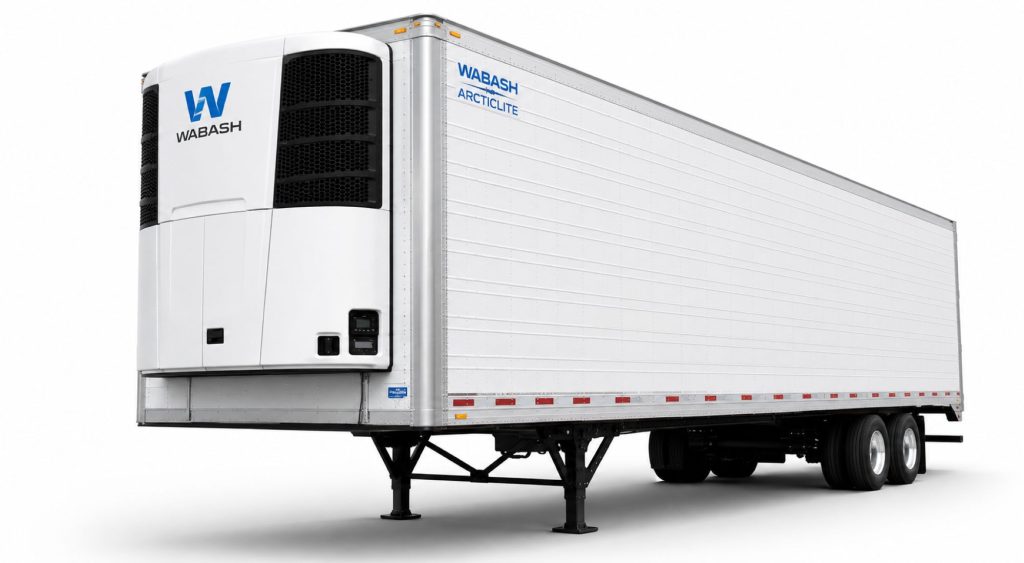
The Wabash ArcticLite Refrigerated Trailer is one of the most recognized temperature-controlled transportation platforms operating throughout North America. Designed specifically for refrigerated freight applications, the ArcticLite combines advanced insulation technology, lightweight construction, and dependable thermal performance to support demanding cold-chain logistics operations.
The ArcticLite has become a popular choice among grocery carriers, food distributors, dedicated refrigerated fleets, and owner operators due to its reputation for durability, cargo protection, and operating efficiency. Wabash engineered the trailer to help maximize payload capacity while maintaining precise temperature control across a variety of freight applications.
Today, ArcticLite trailers can be found transporting frozen foods, fresh produce, dairy products, pharmaceuticals, and temperature-sensitive consumer goods throughout North America.
Key Characteristics
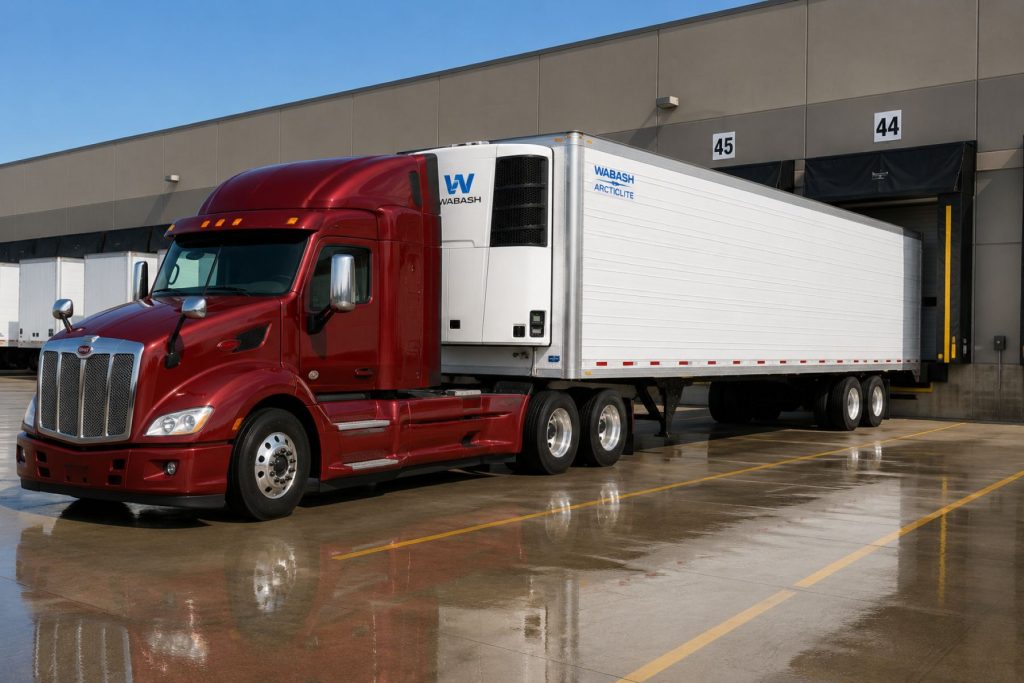
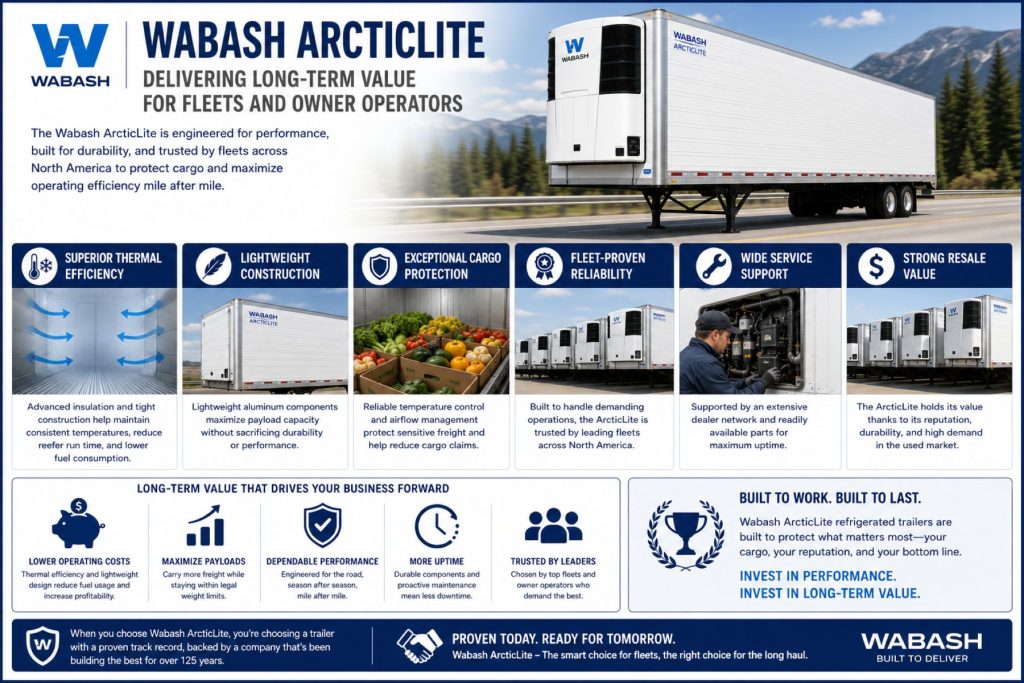
The Wabash ArcticLite is engineered to provide a balance of thermal efficiency, durability, and lightweight construction. Advanced insulation systems throughout the walls, roof, and floor help minimize temperature transfer while maintaining cargo integrity across long-haul and regional operations.
One of the ArcticLite’s primary advantages is its ability to support temperature-controlled freight while maintaining competitive payload capabilities. The trailer’s lightweight construction allows carriers to maximize freight capacity without sacrificing durability or refrigeration performance.
Combined with Wabash’s extensive support network and strong reputation within the trailer industry, the ArcticLite remains one of the benchmark reefer trailers operating in North America today.
Common Specifications
Length Options
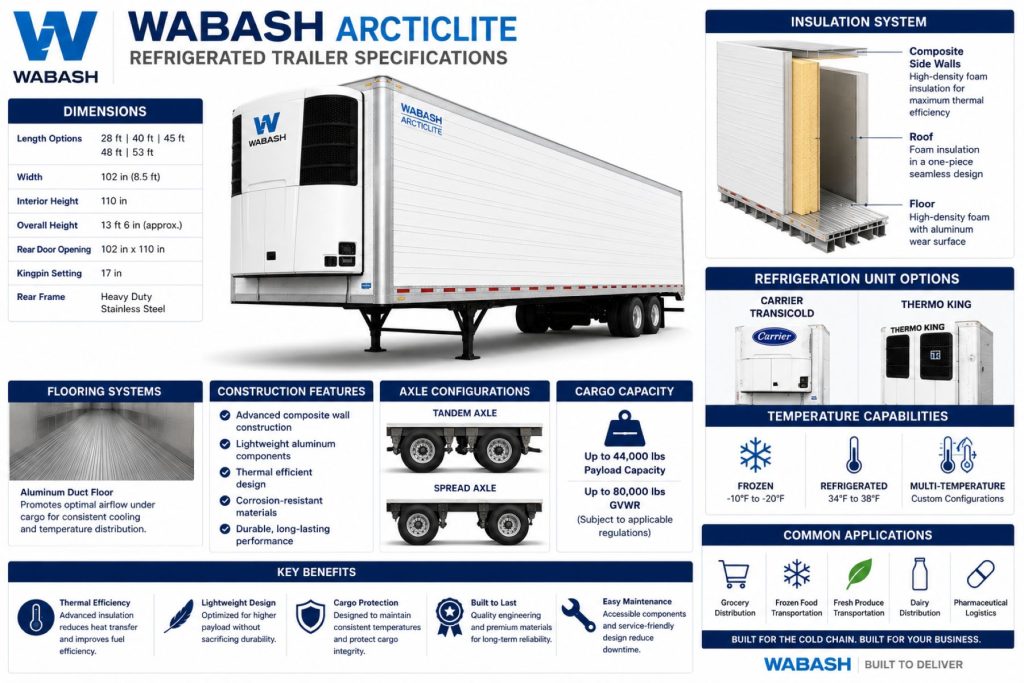
The ArcticLite is available in several trailer lengths, with the 53-foot configuration serving as the most common option for long-haul refrigerated freight operations. Shorter configurations are available for regional distribution and specialized transportation applications.
Width and Height
Standard trailer width is 102 inches, maximizing cargo capacity while remaining compliant with transportation regulations. Interior dimensions are designed to optimize refrigerated freight volume while maintaining efficient airflow.
Insulation Construction
The ArcticLite utilizes advanced insulated wall, roof, and floor systems engineered to minimize thermal transfer and improve refrigeration efficiency. These systems help maintain consistent temperatures while reducing refrigeration workload.
Refrigeration Units
The trailer is commonly paired with Carrier Transicold and Thermo King refrigeration systems depending on fleet preferences, operating requirements, and customer specifications.
Flooring Systems
Aluminum duct flooring promotes proper airflow beneath cargo and helps support consistent temperature distribution throughout the trailer interior.
Temperature Capabilities
The ArcticLite is designed to support frozen, refrigerated, and multi-temperature applications depending on refrigeration unit configuration and customer requirements.
Common Applications
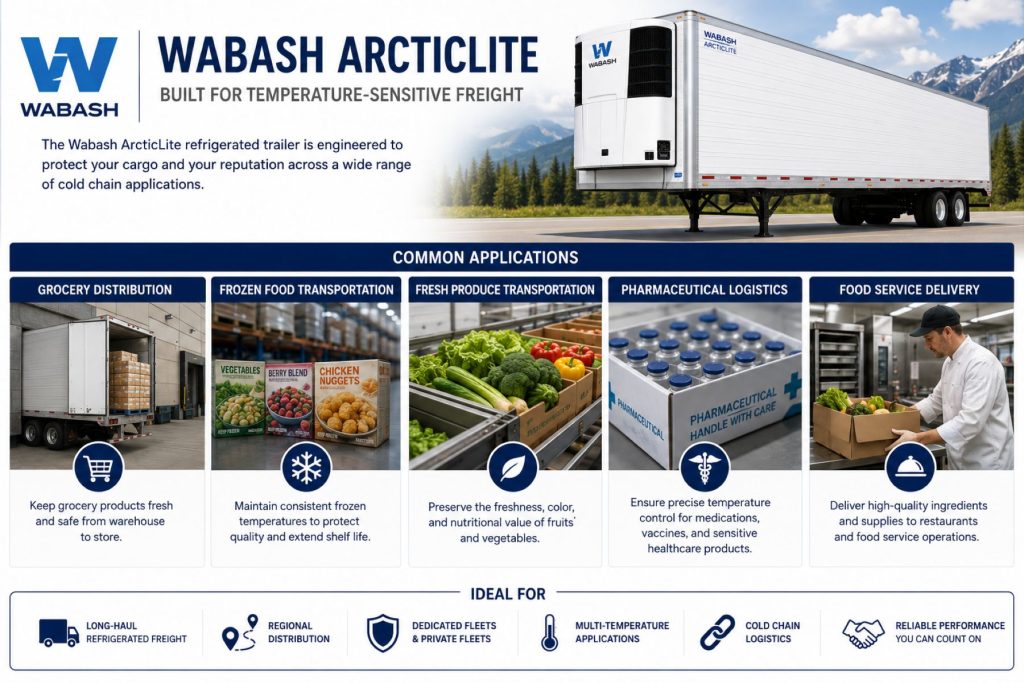
- Grocery Distribution
- Frozen Food Transportation
- Fresh Produce Transportation
- Dairy Distribution
- Pharmaceutical Logistics
- Restaurant Supply Distribution
- Cold Chain Logistics
- Dedicated Refrigerated Freight
- Temperature-Controlled Truckload Freight
Advantages
- Excellent thermal efficiency
- Lightweight trailer construction
- Strong cargo protection
- Fleet-proven reliability
- Excellent resale value
- Wide service and support network
- Compatible with major refrigeration systems
- Strong reputation within refrigerated freight markets
Limitations or Considerations
- Higher purchase cost than dry van trailers
- Additional refrigeration maintenance requirements
- Higher operating costs than standard dry vans
- Requires temperature monitoring and management
- More complex operating systems
- Specialized repair requirements for refrigeration equipment
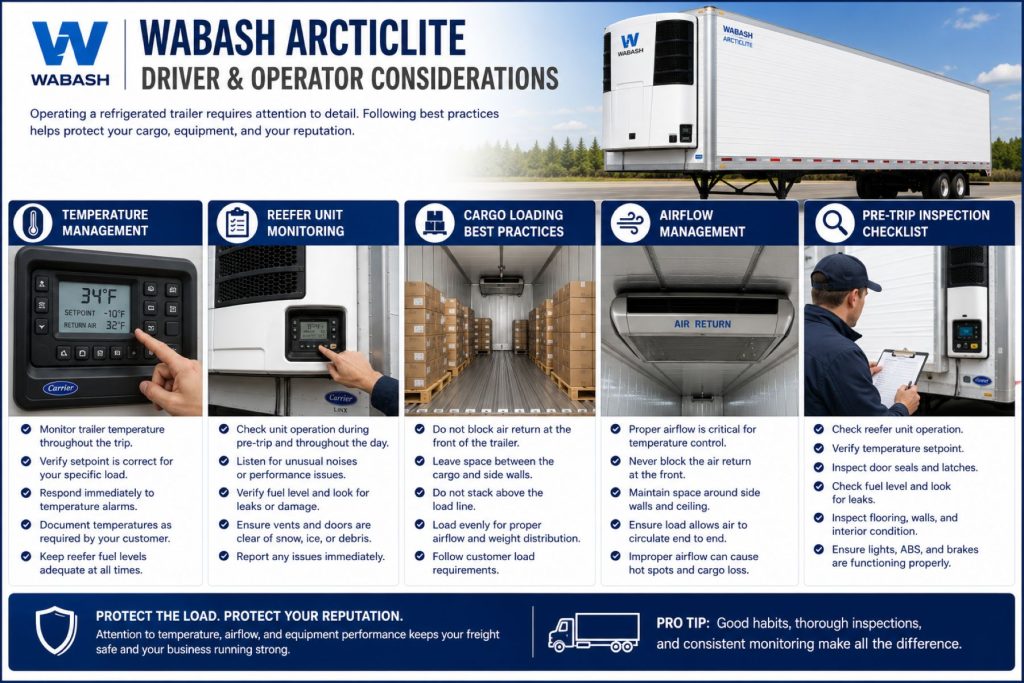
Driver and Operator Considerations
Operating a refrigerated trailer requires additional attention beyond standard dry van operations. Drivers must continuously monitor cargo temperatures, refrigeration unit performance, fuel levels, and temperature records to ensure cargo integrity and compliance with customer requirements.
Pre-trip inspections should include refrigeration unit operation, temperature settings, fuel levels, door seals, airflow channels, and overall trailer condition. Proper loading techniques are especially important because blocked airflow can negatively impact cooling performance and lead to cargo damage.
Drivers hauling temperature-sensitive freight must remain alert to reefer alarms, temperature fluctuations, and equipment performance throughout the trip. Maintaining accurate temperature documentation and responding quickly to potential issues helps protect cargo and reduce claims exposure.
The ArcticLite’s dependable thermal performance and lightweight design make it a popular choice among refrigerated freight carriers operating in both regional and long-haul environments.
Maintenance and Ownership Notes
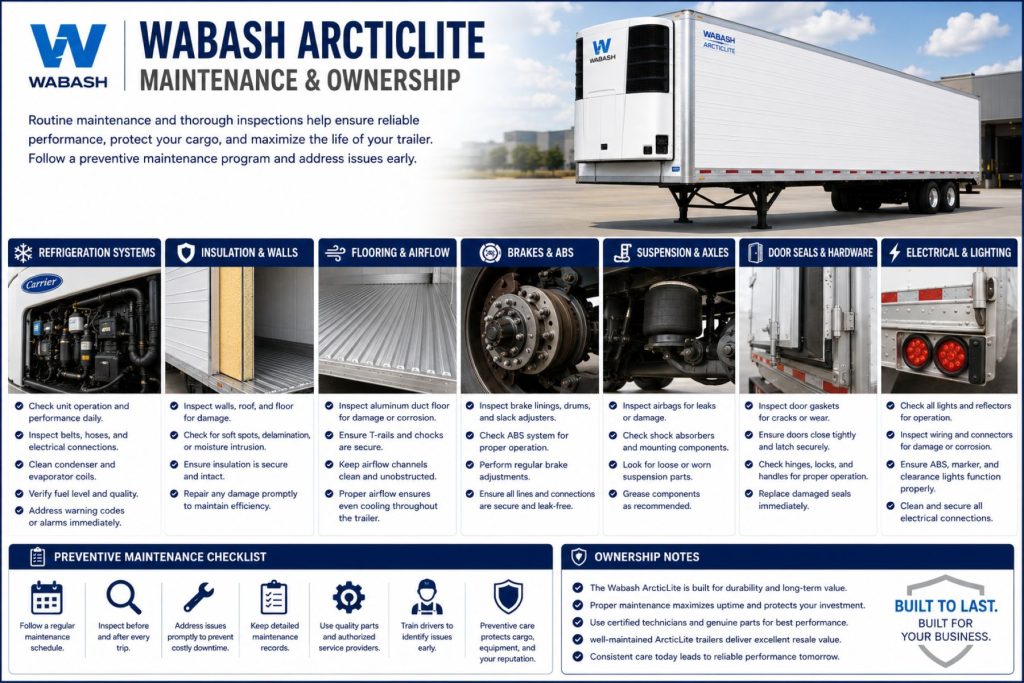
Routine maintenance for the Wabash ArcticLite includes inspection of refrigeration units, insulation systems, flooring, suspension components, brakes, electrical systems, lighting, and door seals. Preventive maintenance is especially important because refrigeration failures can result in cargo loss and costly downtime.
Owners should routinely inspect evaporators, refrigeration unit components, fuel systems, door gaskets, insulation integrity, airflow channels, and temperature monitoring equipment. Maintaining these systems helps maximize trailer uptime and cargo protection.
The ArcticLite has earned a strong reputation for durability and long-term ownership value. Combined with Wabash’s extensive service network and parts availability, many fleets consider the ArcticLite a premium refrigerated transportation solution.
Buying Considerations
- Inspect refrigeration unit service history
- Verify insulation condition throughout trailer
- Check door seals and gasket integrity
- Review reefer unit operating hours
- Inspect flooring and airflow channels
- Evaluate suspension and brake condition
- Inspect temperature monitoring systems
- Review maintenance records
- Compare Carrier and Thermo King configurations
- Evaluate operating costs and fuel efficiency
- Consider dealer support availability
- Review expected resale value
Common Brands or Manufacturers
- Wabash
- Great Dane
- Utility Trailer Manufacturing
- Hyundai Translead
- Stoughton Trailers
- Vanguard National Trailer Corporation
Variants and Related Configurations
- 53 ft ArcticLite Configuration
- 48 ft ArcticLite Configuration
- Tandem Axle Configuration
- Spread Axle Configuration
- Carrier Refrigeration Configuration
- Thermo King Refrigeration Configuration
- Multi-Temperature Configuration
- Dedicated Grocery Fleet Configuration
Comparison to Similar Trailers
The Wabash ArcticLite is commonly compared to the Utility 3000R, Great Dane Everest, Hyundai Translead Reefer, and Stoughton Refrigerated Trailer. These trailers represent some of the most widely used refrigerated transportation platforms operating throughout North America.
The ArcticLite is particularly recognized for its lightweight construction, thermal efficiency, and strong cargo protection capabilities. Many refrigerated fleets select the trailer because it offers an attractive combination of payload capacity and temperature-control performance.
While purchasing decisions often depend on dealer relationships, refrigeration unit preferences, maintenance considerations, and fleet operating requirements, the ArcticLite remains one of the benchmark refrigerated trailers in the transportation industry.
Best Fit For
- Refrigerated Fleets
- Grocery Distribution Carriers
- Food Service Distributors
- Produce Haulers
- Pharmaceutical Logistics Providers
- Dedicated Temperature-Controlled Operations
- Long-Haul Reefer Operations
- Regional Reefer Operations
- Private Fleets
- Owner Operators
Related Equipment
- Trailer Refrigeration Units
- Trailer Brake Systems
- Trailer Suspension Systems
- Trailer Axles
- Trailer Tires
- Trailer Lighting Systems
- Trailer ABS Systems
- Temperature Monitoring Systems
- Cargo Tracking Systems
- Trailer Telematics Systems
Related Freight Types
- Refrigerated Freight
- Frozen Freight
- Food Grade Freight
- Produce Freight
- Pharmaceutical Freight
- Dedicated Freight
Related Trailer Types
- Refrigerated Trailers
- 53 ft Refrigerated Trailers
- 48 ft Refrigerated Trailers
- Dry Van Trailers
- Insulated Trailers
Related Trailer Models
- Utility 3000R Refrigerated Trailer
- Great Dane Everest Refrigerated Trailer
- Hyundai Translead Reefer
- Stoughton Refrigerated Trailer
- Wabash DuraPlate Dry Van
Related Guides
Regulatory and Compliance Notes
The Wabash ArcticLite must comply with all applicable federal and state transportation regulations regarding refrigeration equipment, trailer inspections, brake systems, lighting systems, cargo securement requirements, and weight limitations.
Operators transporting food products may also be subject to Food Safety Modernization Act (FSMA) requirements, customer-specific food safety standards, and temperature documentation procedures. Proper equipment maintenance and accurate temperature records remain essential for regulatory compliance and cargo protection.
Real World Operating Notes
The Wabash ArcticLite is one of the most widely recognized refrigerated trailers operating throughout North America and is commonly found in grocery distribution, food service logistics, pharmaceutical transportation, and dedicated refrigerated freight operations.
Many fleet managers appreciate the trailer’s balance of lightweight construction, thermal performance, and long-term reliability. Its widespread use has also contributed to strong service support, parts availability, and technician familiarity across the industry.
Because refrigerated freight often involves high-value cargo and strict temperature requirements, equipment reliability is critical. The ArcticLite’s reputation for dependable operation has helped establish it as one of the leading reefer trailers in North America.
Frequently Asked Questions
What is the Wabash ArcticLite?
The Wabash ArcticLite is a refrigerated trailer manufactured by Wabash and designed for temperature-controlled freight transportation.
What freight can a Wabash ArcticLite haul?
The trailer commonly transports frozen foods, refrigerated foods, dairy products, fresh produce, pharmaceuticals, and other temperature-sensitive cargo.
What refrigeration units are commonly used on the ArcticLite?
Most ArcticLite trailers are equipped with Carrier Transicold or Thermo King refrigeration systems.
Is the Wabash ArcticLite suitable for long-haul refrigerated freight?
Yes. The trailer is widely used in both regional and long-haul refrigerated freight operations due to its thermal efficiency, cargo protection capabilities, and lightweight construction.
How does the ArcticLite compare to the Great Dane Everest?
Both are among the leading refrigerated trailers in North America. The ArcticLite is known for lightweight construction and payload efficiency, while the Everest is recognized for advanced insulation systems and durability.
What is the most common ArcticLite configuration?
The 53-foot tandem axle configuration is the most common version operating throughout the refrigerated freight industry.
Are Wabash ArcticLite trailers still in production?
Yes. Wabash continues to manufacture and support ArcticLite refrigerated trailers for fleets and owner operators.
Do Wabash ArcticLite trailers have strong resale value?
Yes. The ArcticLite is generally considered one of the strongest resale-value reefer trailers due to its reputation, durability, and fleet acceptance.
What industries commonly use Wabash ArcticLite trailers?
Grocery distribution, food service logistics, produce transportation, pharmaceutical logistics, cold-chain operations, and dedicated refrigerated freight carriers commonly utilize ArcticLite trailers.
Availability and Where to Find
Wabash ArcticLite refrigerated trailers are available through authorized Wabash dealerships, commercial trailer dealers, fleet resale programs, trailer auctions, equipment marketplaces, and used trailer inventories throughout North America. Availability varies based on age, condition, refrigeration unit specifications, and market demand.
Support Trucking Families
Truck Equipment Atlas supports the mission of Grey Cross, a nonprofit dedicated to helping families of truck drivers who lose their lives while on the road. As the site grows, part of its mission is to bring awareness and support to these families.
Podcast or Video Section
Learn More Through Audio and Video
Truck Equipment Atlas will continue expanding with podcast episodes, interviews, and equipment breakdowns to help drivers and fleets better understand trucks and equipment.
Follow the Growth of Truck Equipment Atlas
Truck Equipment Atlas continues to expand with new truck profiles, trailer coverage, diesel engine pages, equipment system resources, manufacturer information, and educational guides.
Visit our Site Updates page to explore recent additions, project milestones, and upcoming resources as we continue building one of the industry’s growing commercial trucking equipment reference libraries.
View the Latest Site Updates: Truck Equipment Atlas Site Updates