
Fontaine Magnitude Lowboy Trailer
Quick Facts
- Manufacturer: Fontaine Specialized
- Trailer Type: Lowboy Trailer
- Model: Magnitude Lowboy
- Common Lengths: Varies by configuration, typically 48 ft to 65+ ft overall
- Common Width: 102 inches standard, expandable options available
- Trailer Construction: High-Strength Steel Construction
- Common Axle Configurations: Tandem Axle, Tri-Axle, Quad-Axle, Jeep and Booster Compatible Configurations
- Deck Height: Approximately 18–24 inches loaded depending on configuration
- Typical GVWR: Varies significantly by configuration and permits
- Typical Payload Capacity: 55 Tons to 100+ Tons depending on model
- Flooring Types: Apitong Hardwood Decking
- Primary Applications: Heavy Equipment Transport, Construction Equipment, Mining Equipment, Industrial Machinery, Energy Sector Freight
- Common Freight Types: Excavators, Bulldozers, Wheel Loaders, Cranes, Mining Equipment, Transformers
- Load Securement Options: D-Rings, Chain Slots, Tie-Down Points, Heavy-Duty Securement Systems
- Loading Method: Detachable Gooseneck (RGN) Front Loading
- Production Status: In Production
Overview
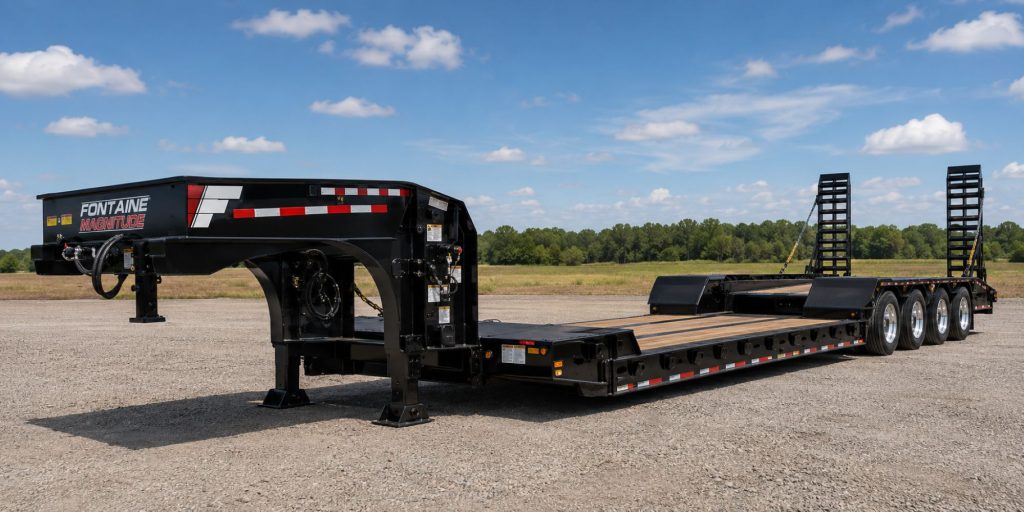
The Fontaine Magnitude Lowboy is one of the most recognized heavy-haul trailers operating throughout North America. Designed specifically for oversized and overweight freight, the Magnitude series is built to transport loads that exceed the capabilities of traditional flatbeds and step deck trailers.
Unlike a step deck trailer, the Magnitude utilizes an extremely low deck height and detachable gooseneck design that allows equipment to be driven directly onto the trailer from the front. This configuration makes it ideal for transporting large construction equipment, mining equipment, industrial machinery, transformers, and specialized heavy-haul freight.
The Magnitude platform is widely used by specialized carriers, heavy-haul operators, construction companies, energy contractors, and infrastructure transportation providers.
Key Characteristics
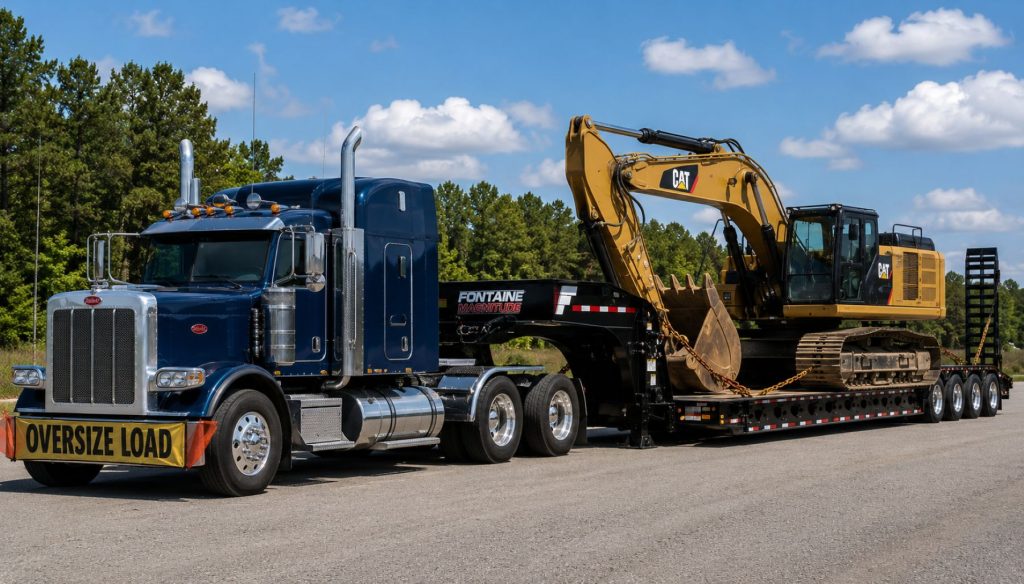
The Fontaine Magnitude is engineered specifically for extreme-duty transportation applications. Its low deck profile allows carriers to transport taller equipment while remaining within legal height restrictions whenever possible.
The detachable gooseneck design significantly improves loading efficiency by allowing equipment to be driven directly onto the trailer rather than requiring cranes or external loading systems.
Numerous axle configurations are available, allowing operators to tailor the trailer to specific weight requirements and permit regulations across various jurisdictions.
The Magnitude has become one of the most respected names in the heavy-haul industry due to its durability, versatility, and long-term reliability.
Common Specifications
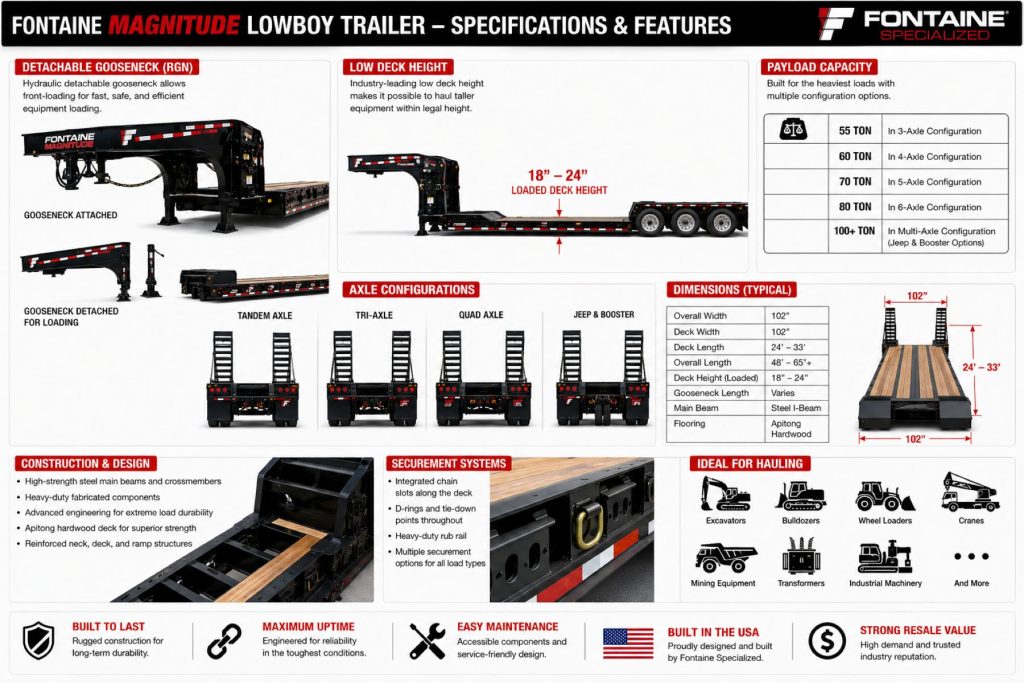
Overall Length
Available in multiple configurations depending on deck length, axle count, and specialized applications.
Deck Height
Typically ranges from approximately 18 to 24 inches, significantly lower than a step deck trailer.
Construction
High-strength steel frame construction designed for extreme load conditions.
Gooseneck Design
Hydraulic detachable gooseneck allowing front-loading operations.
Decking
Heavy-duty Apitong hardwood decking designed for concentrated equipment loads.
Axle Configurations
Available in tandem, tri-axle, quad-axle, and specialized multi-axle arrangements.
Payload Capacity
Depending on configuration, payload ratings can exceed 100 tons.
Securement Systems
Heavy-duty chain slots, D-rings, tie-down points, and specialized securement equipment.
Common Applications
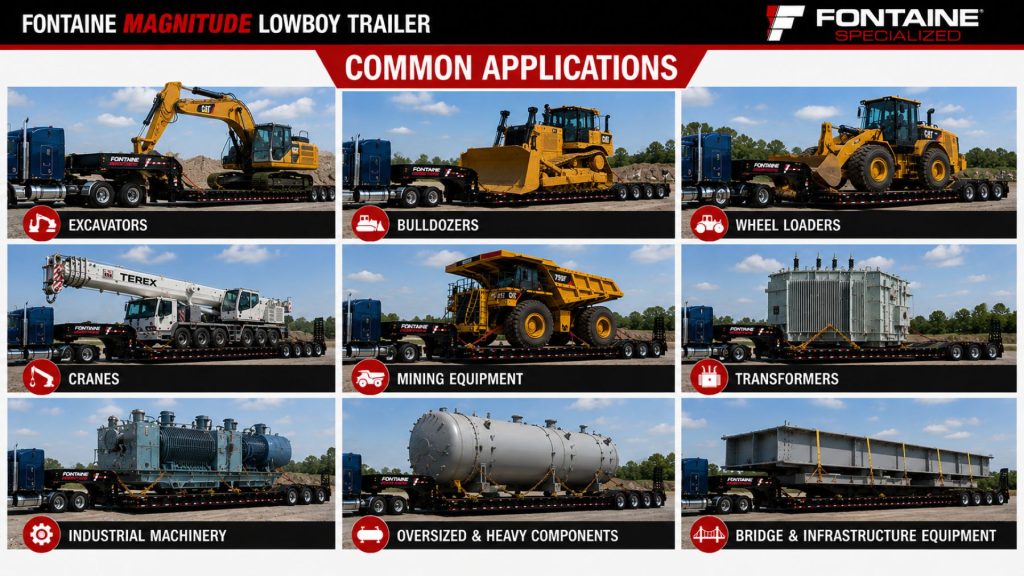
- Excavator Transportation
- Bulldozer Hauling
- Wheel Loader Transport
- Crane Transportation
- Mining Equipment Movement
- Transformer Transport
- Energy Sector Equipment
- Industrial Machinery Transport
- Bridge Construction Equipment
- Oversized Freight Operations
Advantages
- Extremely low deck height
- Detachable gooseneck loading
- Exceptional payload capacity
- Multiple axle configurations
- Heavy-haul specialization
- Excellent equipment loading capability
- Strong industry reputation
- High durability
Limitations or Considerations
- Higher acquisition cost
- Requires specialized operating knowledge
- Permit requirements often apply
- Increased maintenance complexity
- Not practical for general freight operations
- Additional axle configurations increase operating costs
Driver and Operator Considerations
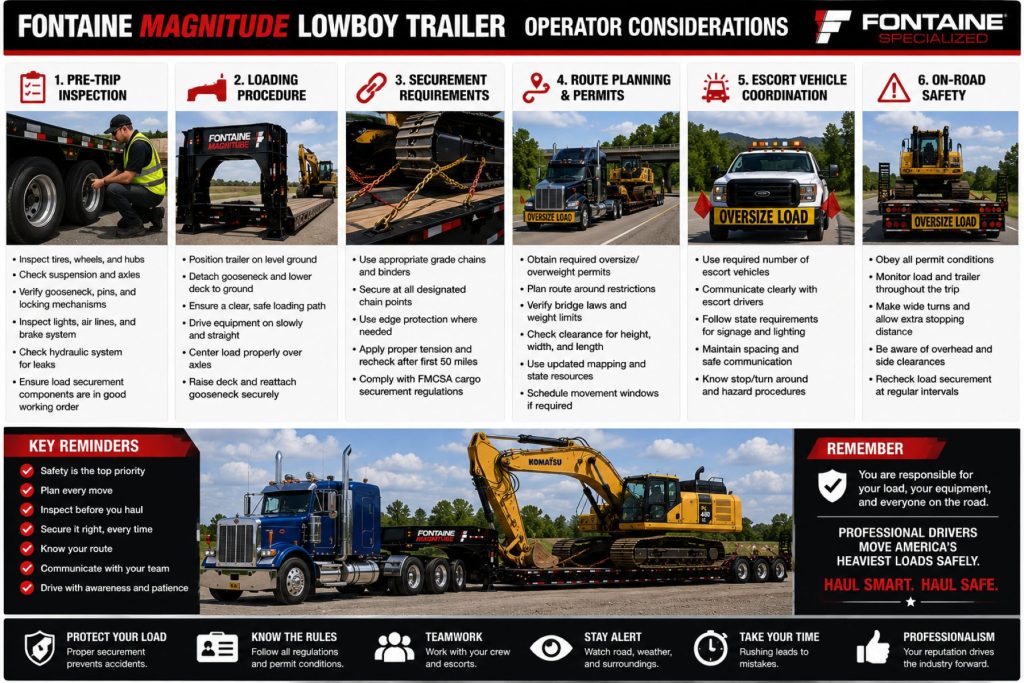
Operating a Fontaine Magnitude Lowboy requires specialized heavy-haul knowledge beyond what is typically required for flatbed or step deck operations. Drivers must understand permit requirements, route restrictions, bridge laws, axle weight distribution, escort vehicle coordination, and equipment securement procedures.
Loading operations begin with detaching the gooseneck and lowering the trailer deck to ground level, allowing equipment to be driven directly onto the trailer. Proper loading procedures are critical to maintaining axle balance and ensuring legal weight distribution.
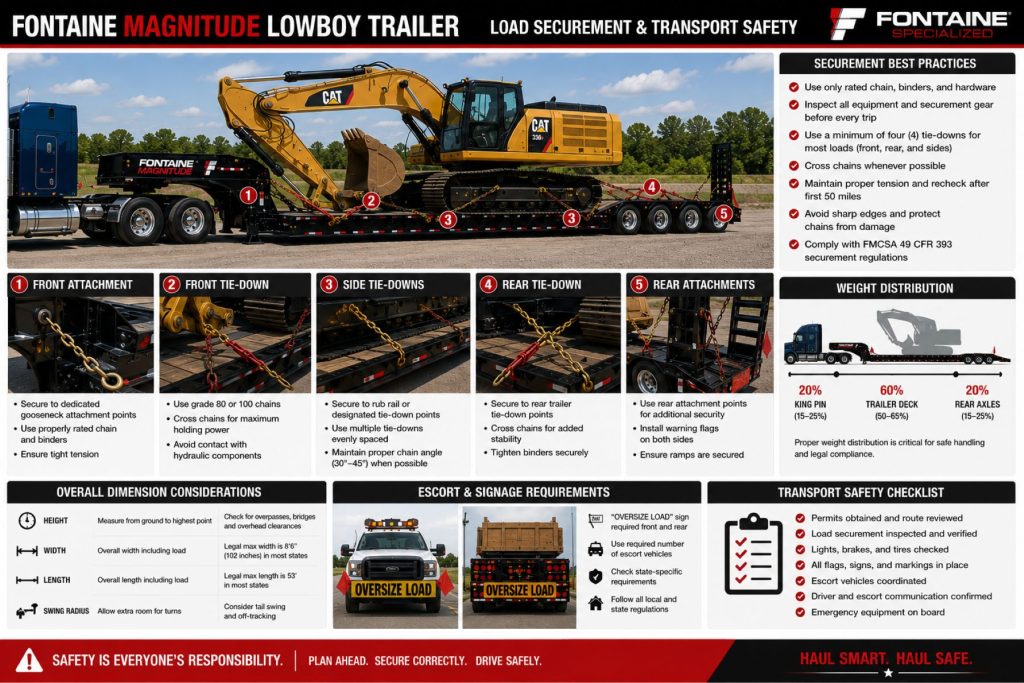
Drivers should carefully inspect chains, binders, D-rings, tie-down points, hydraulic systems, ramps, lighting systems, air lines, and suspension components before every trip. Heavy-haul freight often requires multiple securement points and frequent load checks throughout transit.
Route planning is especially important since many heavy-haul loads involve height, width, weight, or length restrictions that may require permits and designated travel routes.
Maintenance and Ownership Notes
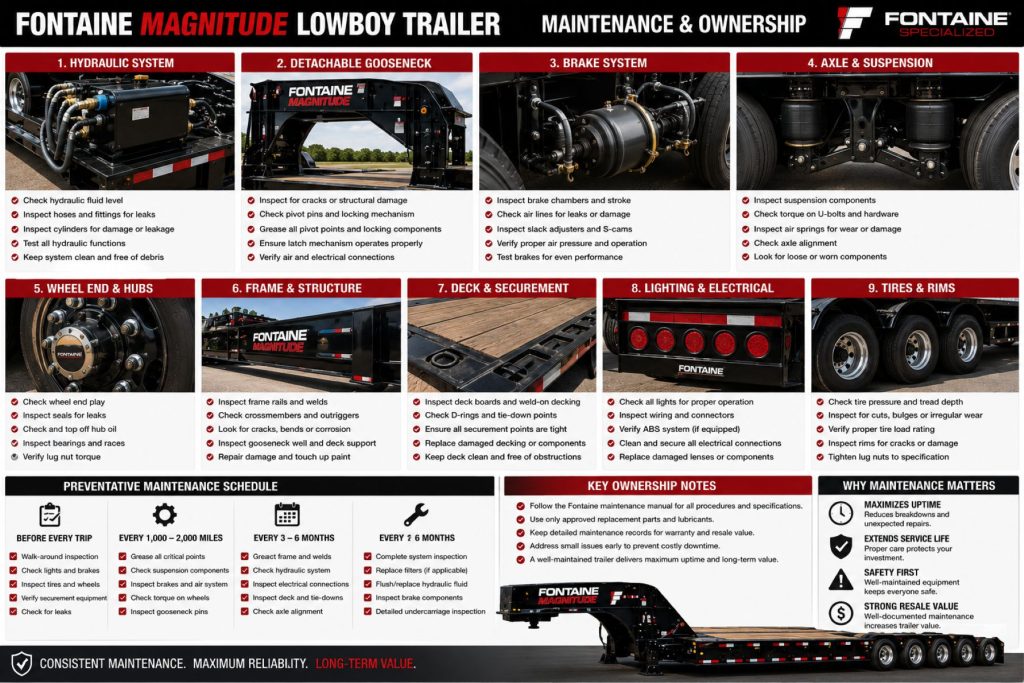
The Fontaine Magnitude is engineered for demanding heavy-haul applications and requires consistent preventative maintenance to maximize reliability and service life.
Routine maintenance should include inspections of hydraulic systems, detachable gooseneck components, suspension systems, axle assemblies, wheel ends, brake systems, decking, securement points, and structural welds.
Because these trailers frequently carry extremely heavy concentrated loads, operators should regularly inspect crossmembers, frame rails, kingpin assemblies, hydraulic cylinders, and axle alignment.
Many heavy-haul fleets choose Fontaine Magnitude trailers because of their durability, dealer support network, and strong long-term reputation throughout the specialized transportation industry.
When maintained properly, Magnitude trailers often remain productive assets for decades.
Buying Considerations
- Verify payload requirements
- Determine required axle configuration
- Inspect hydraulic gooseneck system
- Evaluate frame condition
- Inspect deck structure and flooring
- Review suspension condition
- Inspect wheel ends and hubs
- Verify brake system performance
- Check maintenance records
- Confirm permit compatibility
- Review state axle regulations
- Evaluate resale value
Common Brands or Manufacturers
- Fontaine Specialized
- Trail King
- Talbert Manufacturing
- Kalyn Siebert
- Rogers Brothers
- Etnyre
- XL Specialized Trailers
- Murray Trailers
Variants and Related Configurations
- 55 Ton Magnitude
- 60 Ton Magnitude
- 70 Ton Magnitude
- 80 Ton Magnitude
- 100 Ton Magnitude
- Hydraulic Detachable Gooseneck (HDG)
- Mechanical Detachable Gooseneck (MDG)
- Tri-Axle Configuration
- Quad-Axle Configuration
- Jeep and Booster Configurations
Comparison to Similar Trailers
The Fontaine Magnitude is commonly compared to the Trail King TK Series, Talbert Lowboy Series, Kalyn Siebert Lowboy, Rogers Brothers detachable lowboys, and XL Specialized heavy-haul trailers.
The Magnitude is known for its combination of durability, detachable gooseneck efficiency, dealer support, and extensive configuration options. It has become one of the most widely recognized names in the heavy-haul trailer market.
Many fleets choose the Magnitude because it offers a balance of payload capability, reliability, and long-term operating value while maintaining broad support throughout North America.
Best Fit For
- Heavy-Haul Carriers
- Construction Equipment Transport Companies
- Mining Equipment Transporters
- Industrial Machinery Movers
- Energy Sector Contractors
- Bridge Construction Contractors
- Infrastructure Projects
- Specialized Freight Companies
- Oversized Load Carriers
- Owner Operators Specializing in Heavy Haul
Related Equipment
- Hydraulic Detachable Gooseneck Systems
- Jeep Axles
- Booster Axles
- Trailer Axles
- Trailer Suspension Systems
- Trailer Brake Systems
- Heavy-Duty Cargo Securement Systems
- Chain Tie Downs
- Load Binders
- D-Ring Securement Systems
- Hydraulic Steering Axles
- Trailer Lighting Systems
- Heavy-Haul Permitting Equipment
- Oversize Load Signage
- Escort Vehicle Equipment
Related Freight Types
- Heavy Equipment Freight
- Oversized Freight
- Construction Freight
- Mining Freight
- Industrial Freight
- Energy Sector Freight
- Infrastructure Freight
- Project Cargo
Related Trailer Types
Related Trailer Models
- Trail King TK Series
- Talbert Lowboy Series
- Kalyn Siebert Lowboy
- Rogers Brothers Lowboy
- XL Specialized Lowboy
Related Guides
Regulatory and Compliance Notes
The Fontaine Magnitude frequently operates under oversize and overweight permit requirements depending on load dimensions and weight.
Operators must comply with FMCSA cargo securement regulations, bridge formulas, state axle weight laws, escort vehicle requirements, route restrictions, and permit conditions.
Many loads transported on Magnitude trailers require advance route planning and coordination with state transportation agencies.
Compliance requirements vary significantly by state and by load characteristics.
Real World Operating Notes
The Fontaine Magnitude is a common sight in construction, mining, energy, and infrastructure projects throughout North America.
These trailers routinely transport some of the largest equipment legally moved on public roadways, including excavators, bulldozers, wheel loaders, cranes, transformers, and mining equipment.
Heavy-haul operators appreciate the Magnitude’s ability to combine high payload capacities with efficient loading procedures through its detachable gooseneck design.
Its reputation for durability, flexibility, and industry support has helped make it one of the most trusted lowboy platforms available today.
Frequently Asked Questions
What is a Fontaine Magnitude Lowboy?
The Fontaine Magnitude is a specialized lowboy trailer designed for transporting oversized and overweight equipment and machinery.
Is the Fontaine Magnitude a lowboy or a step deck?
The Magnitude is a true lowboy trailer featuring a detachable gooseneck and extremely low deck height.
What equipment can a Magnitude haul?
Common freight includes excavators, bulldozers, wheel loaders, cranes, mining equipment, transformers, and industrial machinery.
What makes a lowboy different from a step deck?
A lowboy uses a much lower deck height and detachable gooseneck design, allowing transportation of taller and heavier equipment than a typical step deck.
Do Fontaine Magnitude trailers require permits?
Many loads hauled on Magnitude trailers require oversize or overweight permits depending on dimensions and weight.
What payload capacities are available?
Depending on configuration, capacities range from approximately 55 tons to well over 100 tons.
Are Fontaine Magnitude trailers still in production?
Yes. Fontaine Specialized continues to manufacture and support the Magnitude series.
Why are Magnitude trailers popular with heavy-haul fleets?
Their durability, payload capability, detachable gooseneck design, and strong industry reputation make them a popular choice among heavy-haul operators.
What industries commonly use Fontaine Magnitude trailers?
Construction, mining, energy, infrastructure, industrial transportation, and specialized heavy-haul operations commonly utilize Magnitude trailers.
Availability and Where to Find
Fontaine Magnitude Lowboy trailers are available through authorized Fontaine Specialized dealers, heavy-haul equipment dealerships, fleet resale programs, transportation equipment brokers, equipment auctions, and specialized trailer marketplaces throughout North America. Availability varies by axle configuration, capacity rating, age, condition, and market demand.
Support Trucking Families
Truck Equipment Atlas supports the mission of Grey Cross, a nonprofit dedicated to helping families of truck drivers who lose their lives while on the road. As the site grows, part of its mission is to bring awareness and support to these families.
Podcast or Video Section
Learn More Through Audio and Video
Truck Equipment Atlas will continue expanding with podcast episodes, interviews, and equipment breakdowns to help drivers and fleets better understand trucks and equipment.
Follow the Growth of Truck Equipment Atlas
Truck Equipment Atlas continues to expand with new truck profiles, trailer coverage, diesel engine pages, equipment system resources, manufacturer information, and educational guides.
Visit our Site Updates page to explore recent additions, project milestones, and upcoming resources as we continue building one of the industry’s growing commercial trucking equipment reference libraries.
View the Latest Site Updates: Truck Equipment Atlas Site Updates