
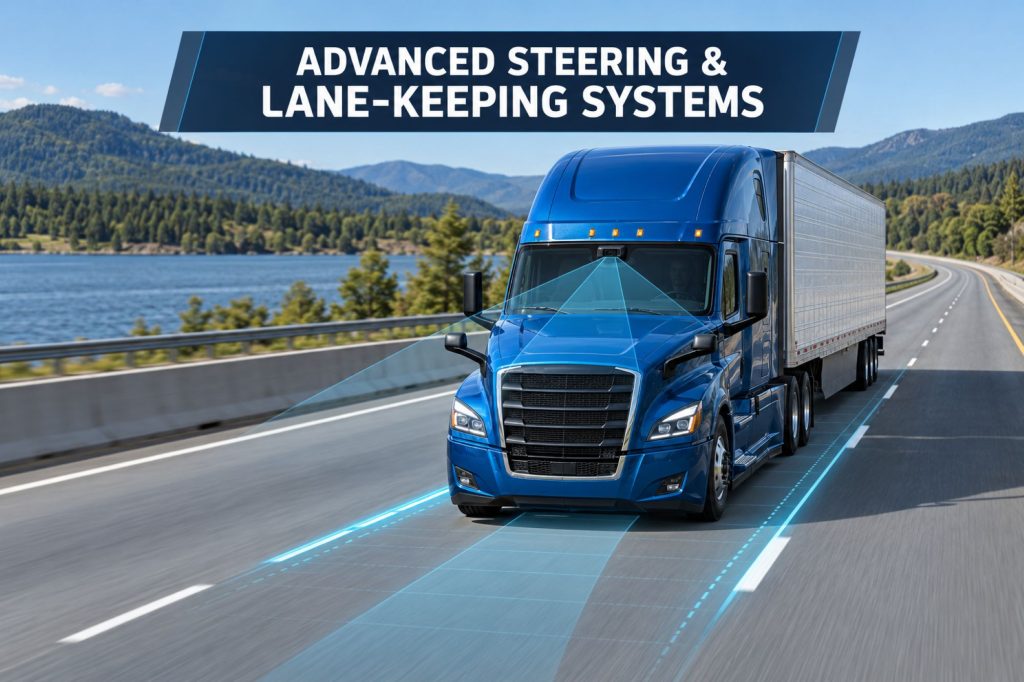
Advanced steering and lane-keeping systems combine mechanical steering components with electronic sensors, control modules, cameras, and steering actuators. These technologies can improve directional control, reduce driver workload, provide lane-departure warnings, and apply limited steering assistance under approved operating conditions.
This section of Truck Equipment Atlas covers adaptive steering, electric-over-hydraulic steering assistance, lane-departure warning, lane-keeping assistance, steering-angle sensors, forward-facing cameras, driver-monitoring features, and related commercial-vehicle technologies.
How Advanced Commercial Truck Steering Works
Advanced steering systems add electronic control to a truck’s conventional mechanical or hydraulic steering system. Sensors monitor steering-wheel position, vehicle speed, yaw, lane position, and other operating information.
A control module evaluates this information and may command an electric motor, hydraulic control unit, or other steering actuator. Depending on the system, the assistance may change steering effort, help return the wheels toward center, compensate for crosswinds or road crown, or provide limited lane-centering support.
The driver remains responsible for controlling the vehicle unless the vehicle manufacturer specifically identifies a different level of automated operation.
Lane-Departure Warning Systems
A lane-departure warning system uses a forward-facing camera or another road-monitoring sensor to identify visible lane markings. If the truck begins leaving its lane without an activated turn signal, the system may warn the driver through an audible alert, visual indicator, seat vibration, steering-wheel vibration, or another notification.
Lane-departure warning normally alerts the driver but does not steer the vehicle back into the lane. Performance depends on visible lane markings, camera condition, weather, road construction, lighting, and proper system calibration.
Lane-Keeping and Lane-Centering Assistance
Lane-keeping assistance can apply limited steering input when the vehicle approaches or crosses a detected lane boundary. Lane-centering assistance may provide continuous minor steering corrections to help keep the truck near the center of a recognized lane.
These systems are driver-assistance technologies. They may disengage or become unavailable when lane markings cannot be detected, vehicle speed falls outside the operating range, the driver overrides the system, a fault is present, or operating conditions do not meet system requirements.
Adaptive and Active Steering Systems
Adaptive steering systems can change the amount of steering assistance according to vehicle speed and operating conditions. Greater assistance may be provided during low-speed maneuvering, while firmer steering may be used at highway speeds.
More advanced systems may add controlled steering torque to improve directional stability, compensate for side winds, reduce driver effort, support lane-keeping functions, or help the vehicle return toward a centered position after a turn.
Major System Components
- Steering wheel and steering column
- Mechanical or hydraulic steering gear
- Electric steering actuator or assist motor
- Steering-angle sensor
- Steering-torque sensor
- Forward-facing camera
- Lane-detection software
- Yaw-rate and lateral-acceleration sensors
- Wheel-speed information
- Electronic control module
- Vehicle communication network
- Driver-warning indicators
- Hands-on-wheel or driver-monitoring sensors when equipped
- Diagnostic and calibration software
System Inputs and Vehicle Integration
Advanced steering and lane-support systems may exchange information with several other vehicle systems. Integration allows the vehicle to compare driver input, vehicle movement, road position, and operating conditions before providing a warning or steering correction.
- Antilock braking system
- Electronic stability control
- Collision-mitigation system
- Adaptive cruise control
- Vehicle-speed sensors
- Turn-signal controls
- Transmission and engine controls
- Driver-information display
- Telematics and diagnostic systems
Driver Alerts and Steering Intervention
System response varies by vehicle and technology. Some systems only warn the driver, while others can apply limited steering torque.
- Audible lane-departure warning
- Dashboard warning light or message
- Steering-wheel vibration
- Seat vibration or directional alert
- Corrective steering torque
- Lane-centering assistance
- Hands-on-wheel warning
- Driver-attention warning
- Temporary system disengagement notification
Common System Configurations
- Camera-based lane-departure warning
- Lane-departure warning with steering-wheel vibration
- Lane-keeping assistance with corrective steering torque
- Lane-centering assistance integrated with adaptive cruise control
- Electric-over-hydraulic steering assistance
- Speed-sensitive steering assistance
- Crosswind and road-crown compensation
- Driver-monitoring integration
- Highway pilot or assisted-driving packages
Common Applications
- Long-haul highway tractors
- Regional-haul tractors
- Commercial straight trucks
- Transit and motorcoach applications
- Electric commercial vehicles
- New-generation vocational trucks
- Vehicles equipped with advanced driver-assistance systems
- Commercial vehicles operating on marked highways
Vehicle and System Compatibility
Advanced steering and lane-keeping equipment must be integrated with the vehicle’s steering gear, electrical system, communication network, braking controls, sensors, and software.
Compatibility may depend on the truck manufacturer, model, model year, steering system, axle configuration, electronic architecture, camera mounting, windshield design, braking system, safety-system package, and installed software.
These systems should not be installed or substituted solely because their individual components appear physically compatible.
Calibration and Alignment Requirements
Proper wheel alignment, steering-wheel centering, ride height, tire condition, and sensor calibration are essential to advanced steering-system performance.
Calibration may be required after:
- Front-end alignment
- Steering-gear or steering-column replacement
- Steering-angle sensor replacement
- Windshield or forward-camera replacement
- Suspension repair or ride-height adjustment
- Collision repair
- Changes to tire size or vehicle configuration
- Control-module replacement or software updates
Operating Limitations
Advanced steering and lane-support systems have operating limits. Drivers must understand when assistance may be reduced or unavailable.
- Faded, missing, or temporary lane markings
- Snow, ice, heavy rain, fog, glare, or darkness
- Dirty, damaged, obstructed, or misaligned cameras
- Sharp curves or complex road geometry
- Construction zones
- Narrow lanes or shoulders
- Incorrect wheel alignment
- System faults or communication failures
- Vehicle speeds outside the approved operating range
- Driver override or use of the turn signal
Inspection and Maintenance
Maintenance includes both conventional steering inspection and electronic-system diagnosis.
- Inspect steering gears, linkage, columns, shafts, and mounting components
- Check tires, wheel alignment, suspension condition, and ride height
- Keep cameras, radar sensors, and windshields clean
- Inspect sensor brackets and wiring
- Check electrical connectors and communication networks
- Review active and stored diagnostic fault codes
- Verify warning indicators during vehicle startup
- Perform required static or dynamic calibrations
- Install approved software updates when required
- Confirm normal operation with an appropriate road test
Common Advanced Steering Problems
Common problems affecting advanced steering and lane-keeping systems include:
- Camera unable to detect lane markings
- Steering-angle sensor out of calibration
- Incorrect wheel alignment or steering-wheel position
- Damaged camera or sensor mounting bracket
- Electrical or communication-network faults
- Intermittent warning messages
- Unexpected system disengagement
- Uneven or excessive steering assistance
- Driver-monitoring or hands-on-wheel sensor faults
- Software or control-module problems
- Mechanical steering wear affecting electronic performance
Advanced Steering and Lane-Support Products
Truck Equipment Atlas will continue expanding its coverage of active steering, lane-departure warning, lane-keeping assistance, and integrated commercial-vehicle safety technologies.
- ZF ReAX Adaptive Steering System
- Volvo Dynamic Steering
- Bendix AutoVue Lane-Departure Warning System
- Detroit Assurance Lane Keep Assist
- Bendix Wingman Fusion
Related Driveline and Steering Categories
- Commercial Truck Driveshafts
- Universal Joints, Slip Yokes & Center Bearings
- Steering Gears & Steering Linkage
- Power Steering Pumps & Hydraulic Assist
- Steering Columns & Driver Controls
Related Equipment Systems
- Drivelines & Steering Systems
- Safety Systems
- Electrical Systems
- Brake Systems
- Suspension Systems
- Telematics & ELD Systems
Related Guides
- How Commercial Truck Steering Systems Work
- Hydraulic vs Electric-Assisted Commercial Truck Steering
- Common Commercial Truck Driveline Vibrations and Steering Problems
- How Truck ABS and Electronic Stability Control Work
- Driveline & Steering System Guides
Explore Drivelines & Steering Systems
Visit the Drivelines & Steering Systems hub to explore commercial truck driveshafts, steering gears, hydraulic-assist systems, steering columns, driver controls, and advanced steering technologies.
Follow the Growth of Truck Equipment Atlas
Truck Equipment Atlas continues to expand with new truck profiles, trailer coverage, diesel engine pages, equipment-system resources, manufacturer information, and educational guides.
Visit our Site Updates page to explore recent additions, project milestones, and upcoming resources as we continue building one of the industry’s growing commercial trucking equipment reference libraries.
View the Latest Site Updates: Truck Equipment Atlas Site Updates