
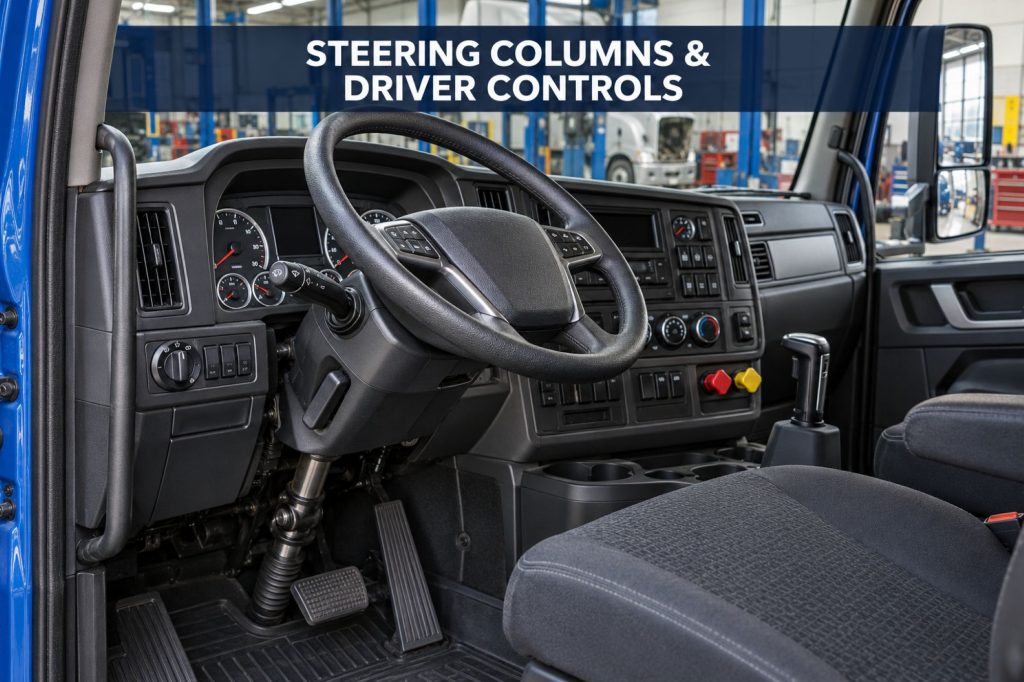
Steering columns and driver controls connect the steering wheel to the truck’s steering system while providing the driver with a stable, adjustable, and accessible operating position. These assemblies transfer steering input, support tilt and telescoping adjustment, and may integrate switches, electronic sensors, steering locks, and other vehicle controls.
This section of Truck Equipment Atlas covers commercial-truck steering columns, intermediate shafts, steering-wheel controls, adjustment mechanisms, universal joints, electronic steering sensors, and related driver-interface components.
How Commercial Truck Steering Columns Work
When the driver turns the steering wheel, the steering column transfers that movement through one or more shafts and universal joints to the steering gear. The steering gear then converts the driver’s rotational input into movement of the steering linkage and steer tires.
The column must transmit steering input without excessive looseness, binding, vibration, or unwanted movement. Collapsible sections and energy-absorbing components may also help manage forces during a collision.
Major Steering Column Components
- Steering wheel
- Upper steering shaft
- Steering-column housing
- Column bearings and bushings
- Tilt adjustment mechanism
- Telescoping adjustment mechanism
- Adjustment lever or release pedal
- Intermediate steering shaft
- Steering-shaft universal joints
- Slip or collapsible shaft section
- Column mounting brackets
- Steering-angle sensor when equipped
- Clock spring or electrical connection assembly
- Steering-wheel switches and controls
Tilt and Telescoping Steering Columns
A tilt steering column allows the driver to change the steering wheel’s angle. A telescoping column allows the steering wheel to move closer to or farther away from the driver.
These adjustments help accommodate different driver sizes, seating positions, cab configurations, and operating preferences. The locking mechanism must hold the selected position securely during vehicle operation.
Intermediate Steering Shafts and Universal Joints
The intermediate shaft connects the steering column to the steering gear. One or more universal joints allow the shaft to operate through the angles created by the cab, chassis, column, and steering-gear mounting positions.
Some shafts incorporate a slip section that accommodates movement between the cab and chassis. Other designs use a collapsible section intended to reduce the transfer of collision forces toward the driver.
Steering-Wheel and Driver Controls
Modern commercial trucks may integrate several driver controls into the steering wheel or steering column. The exact controls depend on the vehicle, model year, trim level, and electronic architecture.
- Horn control
- Cruise-control switches
- Audio and communication controls
- Driver-information display controls
- Headlight and turn-signal controls
- Windshield-wiper controls
- Engine-brake controls
- Transmission controls on applicable vehicles
- Driver-assistance controls
- Hands-on-wheel or driver-monitoring sensors when equipped
Steering-Angle Sensors and Electronic Integration
A steering-angle sensor measures steering-wheel position, direction, and rate of movement. This information may be shared with other vehicle systems through the truck’s electronic network.
Depending on the vehicle, steering information may support antilock braking, electronic stability control, lane-keeping assistance, collision-mitigation systems, adaptive steering, and other safety technologies.
Some sensors require calibration after steering-column, alignment, suspension, steering-gear, or electronic-control repairs.
Common Steering Column Configurations
- Fixed steering column
- Tilt steering column
- Telescoping steering column
- Tilt-and-telescoping steering column
- Floor-mounted adjustment control
- Column-mounted adjustment lever
- Single-shaft column assembly
- Multi-piece intermediate-shaft system
- Mechanically controlled steering column
- Electronically integrated steering column
Driver Position and Cab Ergonomics
The steering column works with the driver’s seat, pedals, dashboard, mirrors, and instrument panel to establish the driver’s operating position. Proper adjustment can improve steering control, visibility, comfort, and access to frequently used controls.
The driver should be able to reach the steering wheel and controls without leaning excessively or interfering with normal pedal operation. Adjustment mechanisms must be locked before the vehicle is driven.
Common Applications
- Highway tractors
- Regional and local-delivery trucks
- Medium-duty commercial trucks
- Dump trucks
- Concrete mixers
- Refuse trucks
- Heavy-haul tractors
- Fire and emergency vehicles
- Transit and school buses
- Motorhomes
- Terminal tractors
- Specialty and vocational vehicles
Vehicle and Steering-System Compatibility
A replacement steering column, intermediate shaft, universal joint, switch assembly, or sensor must match the vehicle’s original steering geometry and electronic configuration.
Compatibility may depend on the truck manufacturer, model, model year, cab design, steering-gear position, column length, shaft diameter, spline count, universal-joint orientation, mounting brackets, wiring connectors, steering-angle sensor, and integrated driver controls.
A component should not be selected by appearance alone. Small differences in shaft engagement, collapse length, spline design, wiring, or mounting geometry can affect safe steering operation.
Inspection and Maintenance
Steering-column and driver-control components should be inspected whenever the driver reports looseness, binding, noise, vibration, difficult adjustment, or inconsistent electronic-control operation.
- Check the steering wheel for excessive free movement
- Inspect column bearings and bushings
- Test tilt and telescoping adjustments
- Confirm that the adjustment lock holds securely
- Inspect mounting brackets and fasteners
- Check intermediate shafts for looseness, corrosion, or binding
- Inspect universal joints and shaft splines
- Check wiring, connectors, switches, and clock-spring components
- Verify steering-angle sensor operation and calibration when applicable
- Confirm adequate clearance around pedals, dashboard components, and cab structures
Common Steering Column Problems
Common steering-column and driver-control problems include:
- Excessive steering-wheel free play
- Worn column bearings or bushings
- Loose column mounting brackets
- Binding intermediate shaft
- Worn steering-shaft universal joints
- Loose or damaged shaft splines
- Tilt or telescoping mechanism that will not lock
- Steering wheel that will not remain in position
- Rattling, clicking, or clunking noises
- Damaged wiring or electrical connectors
- Inoperative steering-wheel switches
- Steering-angle sensor faults or incorrect calibration
Steering Column and Driver-Control Products
Truck Equipment Atlas will continue expanding its coverage of commercial steering columns, intermediate shafts, adjustment systems, sensors, and integrated driver controls.
- Douglas Autotech Commercial Truck Steering Column
- Douglas Autotech Tilt-and-Telescoping Steering Column
- ZF Commercial Vehicle Steering Column
- Commercial Truck Intermediate Steering Shafts
Related Driveline and Steering Categories
- Commercial Truck Driveshafts
- Universal Joints, Slip Yokes & Center Bearings
- Steering Gears & Steering Linkage
- Power Steering Pumps & Hydraulic Assist
- Advanced Steering & Lane-Keeping Systems
Related Equipment Systems
- Drivelines & Steering Systems
- Axles & Differentials
- Suspension Systems
- Tires & Wheels
- Electrical Systems
- Safety Systems
Related Guides
- How Commercial Truck Steering Systems Work
- Hydraulic vs Electric-Assisted Commercial Truck Steering
- Common Commercial Truck Driveline Vibrations and Steering Problems
- Driveline & Steering System Guides
Explore Drivelines & Steering Systems
Visit the Drivelines & Steering Systems hub to explore commercial truck driveshafts, universal joints, steering gears, hydraulic-assist systems, steering columns, driver controls, and advanced steering technologies.
Follow the Growth of Truck Equipment Atlas
Truck Equipment Atlas continues to expand with new truck profiles, trailer coverage, diesel engine pages, equipment-system resources, manufacturer information, and educational guides.
Visit our Site Updates page to explore recent additions, project milestones, and upcoming resources as we continue building one of the industry’s growing commercial trucking equipment reference libraries.
View the Latest Site Updates: Truck Equipment Atlas Site Updates