
Wabash Chassis Trailer
Quick Facts
- Manufacturer: Wabash
- Trailer Type: Container Chassis Trailer
- Model: Wabash Chassis Trailer
- Common Lengths: 20 ft, 40 ft, 45 ft, 48 ft, 53 ft
- Common Width: 96 to 102 inches
- Trailer Construction: High-Strength Steel
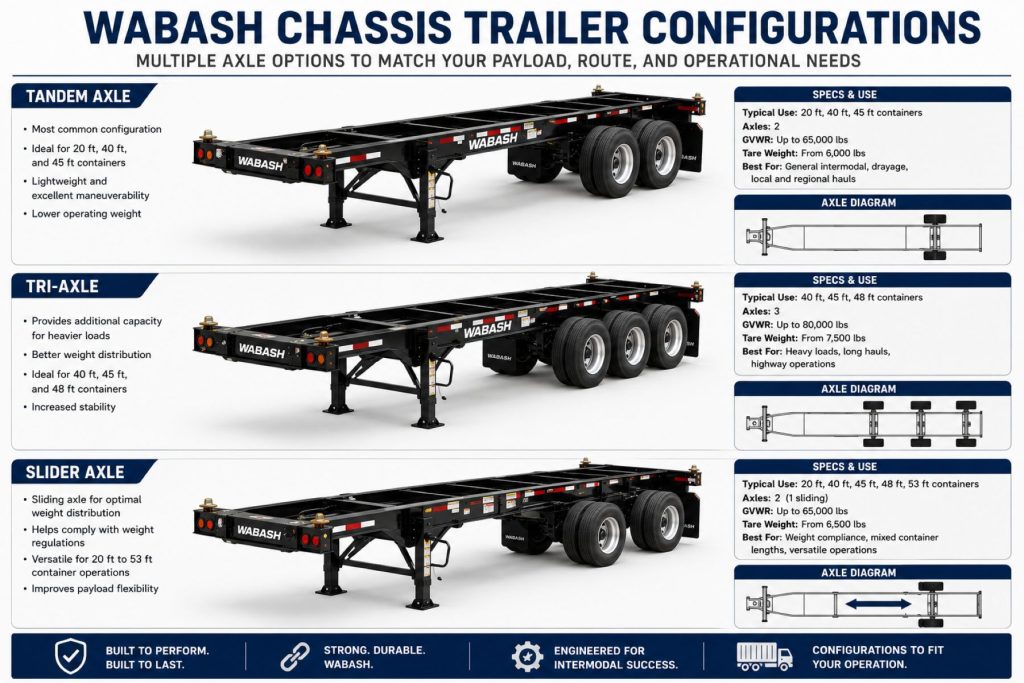
- Common Axle Configurations: Tandem Axle, Tri-Axle, Slider Axle
- Typical Capacity: Varies by container size and axle configuration
- Primary Applications: Intermodal Transportation, Port Operations, Rail Yard Operations, Container Hauling
- Common Freight Types: Shipping Containers, Imported Goods, Export Freight, Retail Products, Consumer Goods
- Container Compatibility: 20 ft, 40 ft, 45 ft, 48 ft, and 53 ft Containers
- Suspension Options: Air Ride or Spring Ride
- Production Status: In Production
Overview
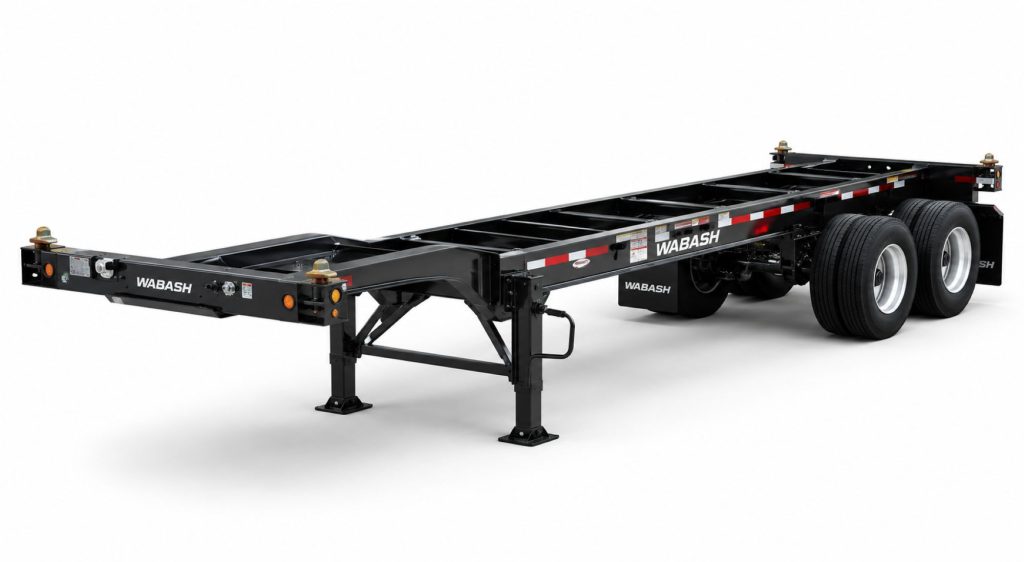
The Wabash Chassis Trailer is designed to transport shipping containers efficiently between ports, rail yards, warehouses, and distribution centers. Built for the demanding intermodal transportation industry, these chassis trailers provide the structural strength and reliability necessary for containerized freight movement throughout North America.
Wabash chassis trailers are commonly operated by intermodal carriers, drayage fleets, port operators, logistics providers, and owner-operators serving container freight markets. Their durable steel construction and container-locking systems allow safe transportation of a wide variety of container sizes and freight types.
As intermodal transportation continues to grow, chassis trailers remain a critical piece of equipment within modern supply chains.
Key Characteristics
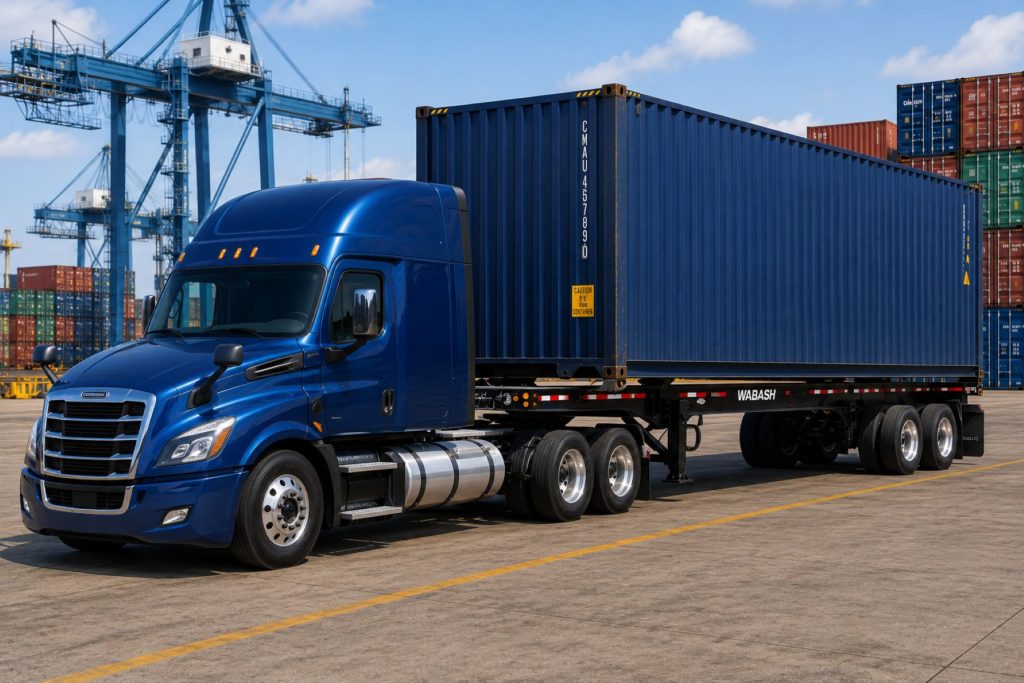
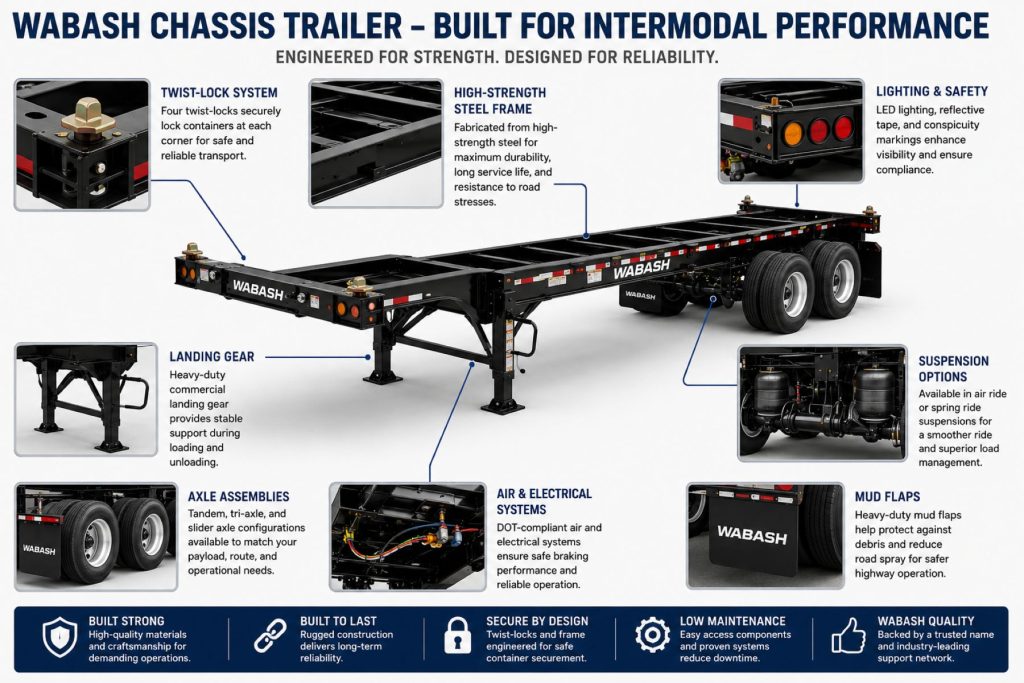
The Wabash Chassis Trailer is engineered specifically for container transportation.
Its frame design incorporates container locking systems that securely hold shipping containers during transport. Multiple length and axle configurations allow operators to handle various container sizes while maintaining compliance with weight regulations.
Designed for frequent loading and unloading operations, Wabash chassis trailers provide dependable performance in port, rail, and warehouse environments where efficiency is critical.
Common Specifications
Overall Length
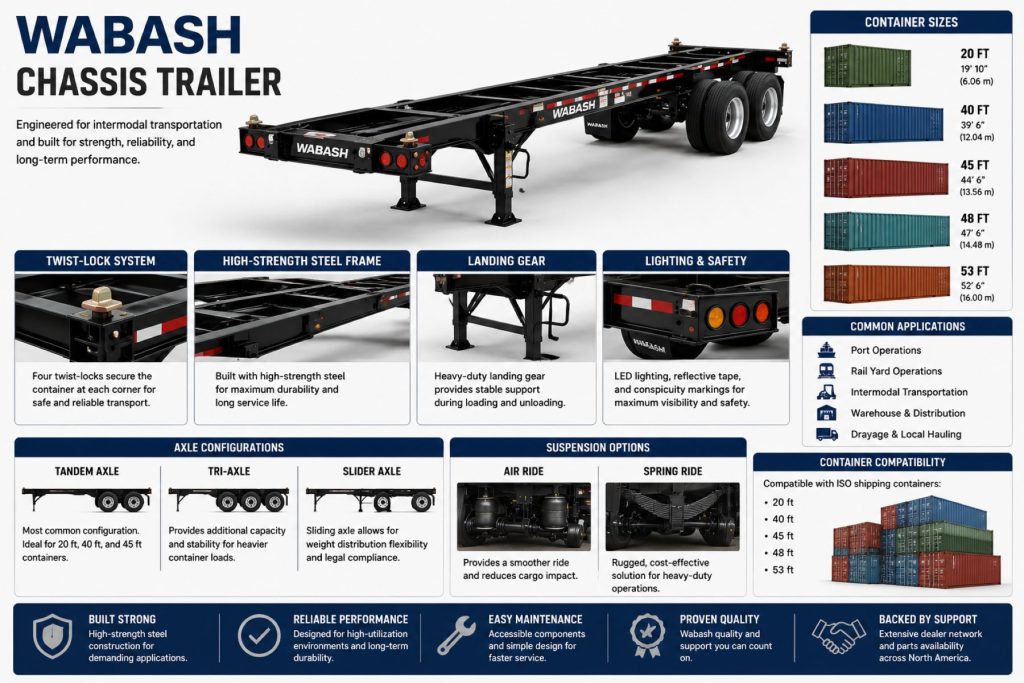
Typically 20 to 53 feet depending on configuration.
Width
96 to 102 inches.
Construction
High-strength steel construction.
Capacity
Varies based on container size and legal weight limits.
Axle Configurations
Tandem axle, tri-axle, and slider axle.
Suspension
Air ride or spring ride systems.
Container Compatibility
20 ft, 40 ft, 45 ft, 48 ft, and 53 ft containers.
Trailer Style
Container chassis trailer.
Container Locks
Twist-lock securement systems.
Landing Gear
Heavy-duty commercial landing gear.
Common Applications
- Port Transportation
- Intermodal Freight Movement
- Container Hauling
- Rail Yard Operations
- Import Freight Transportation
- Export Freight Transportation
- Distribution Center Deliveries
- Warehouse Transfers
- Retail Freight Movement
- Drayage Operations
Advantages
- Designed specifically for container transportation
- Compatible with multiple container sizes
- Strong and durable steel construction
- Efficient loading and unloading operations
- Reliable container securement systems
- Widely used throughout intermodal markets
- Available in multiple configurations
- Strong parts and service support
Limitations or Considerations
- Limited use outside container transportation
- Requires compatible container handling equipment
- Intermodal operations can create high equipment utilization
- Heavy-duty service can accelerate wear
- Dependent on container freight demand
- May require specialized maintenance procedures
- Not suitable for many standard freight applications
- Container weight restrictions vary by region
Driver and Operator Considerations
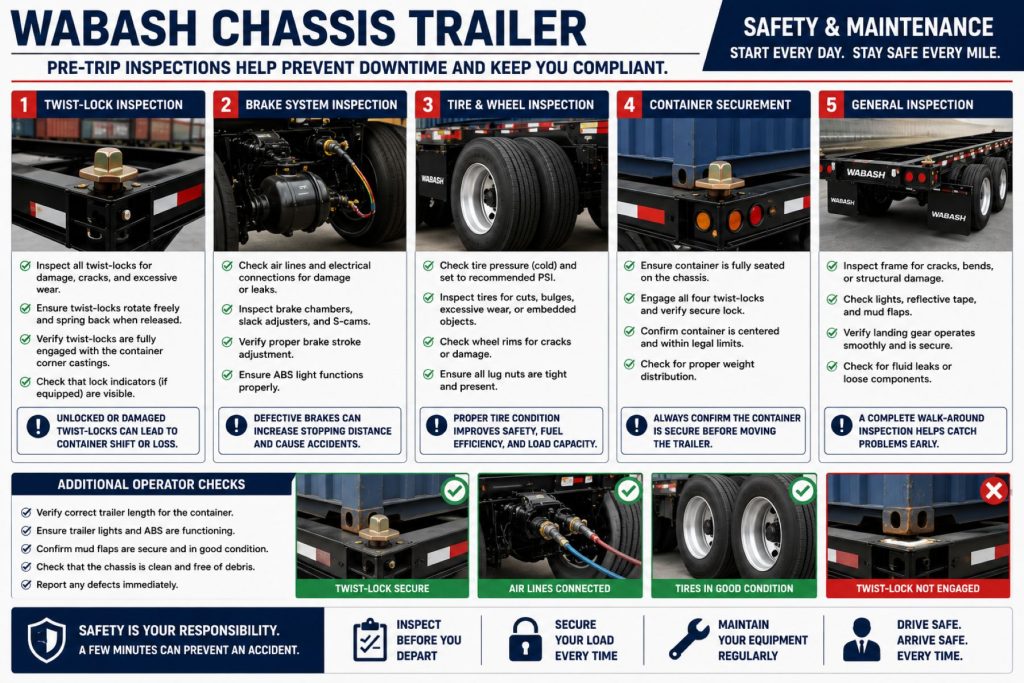
Drivers operating chassis trailers must verify container securement before transport. Proper engagement of twist-lock systems is critical to safe operation and regulatory compliance.
Operators should routinely inspect locking mechanisms, suspension components, brakes, tires, lighting systems, and landing gear. Careful route planning is also important because container weights can vary significantly between loads.
Maintenance and Ownership Notes
Routine maintenance should include inspection of twist-lock assemblies, frame components, suspension systems, wheel ends, brakes, tires, lighting systems, and landing gear.
Particular attention should be given to corrosion, structural stress points, locking mechanisms, and container contact surfaces. Regular inspections help maximize safety and equipment lifespan.
Buying Considerations
- Container sizes being hauled
- Axle configuration requirements
- Port and terminal compatibility
- Weight capacity requirements
- Suspension preferences
- New versus used pricing
- Frame condition
- Twist-lock condition
- Maintenance history
- Regional operating requirements
Common Brands or Manufacturers
- Wabash
- CIMC Intermodal Equipment
- Cheetah Chassis
- Pratt Industries
- Stoughton
- Hyundai Translead
- Pioneer Chassis
Variants and Related Configurations
- 20-Foot Container Chassis
- 40-Foot Container Chassis
- 45-Foot Container Chassis
- 48-Foot Container Chassis
- 53-Foot Container Chassis
- Extendable Chassis Trailer
- Slider Chassis Trailer
- Tri-Axle Chassis Trailer
Comparison to Similar Trailers
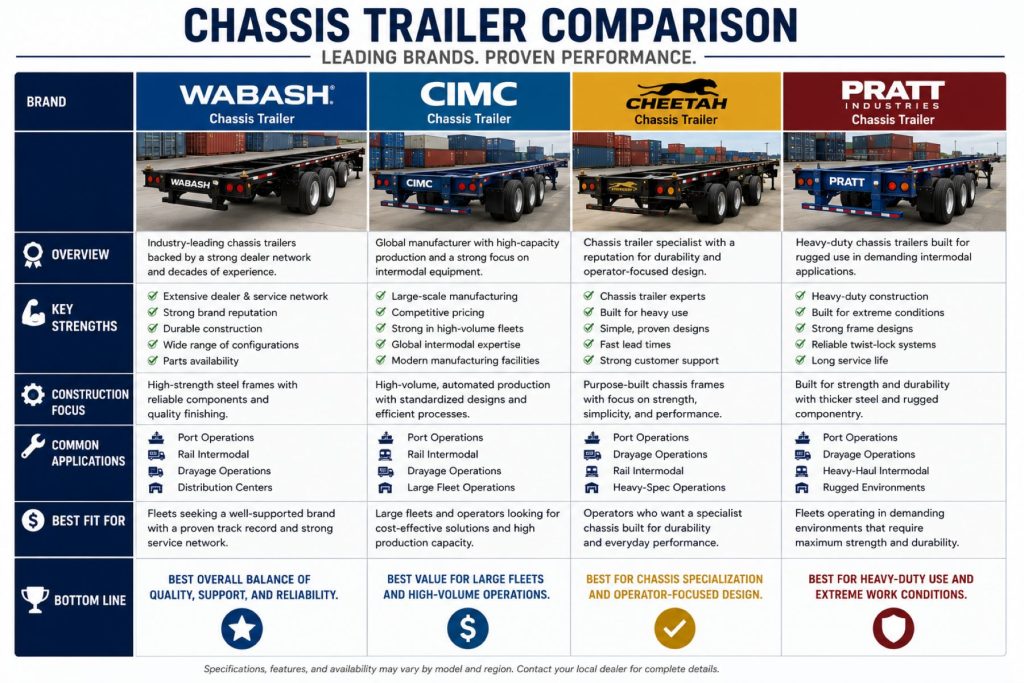
The Wabash Chassis Trailer is commonly compared to chassis trailers from CIMC, Cheetah, and Pratt. Compared to many competitors, Wabash is known for its extensive dealer network, durable construction, and reputation within the commercial trailer industry. CIMC often emphasizes large-scale intermodal fleet applications, while Cheetah focuses heavily on chassis-specific manufacturing. Wabash remains a strong choice for fleets seeking dependable performance, parts availability, and long-term durability in container transportation operations.
Best Fit For
- Intermodal carriers
- Drayage fleets
- Port operators
- Rail yard operators
- Logistics providers
- Container transportation companies
- Owner-operators serving ports
- Distribution center operations
Related Equipment
- Freightliner Cascadia
- Kenworth T680
- Peterbilt 579
- International LT Series
- Volvo VNL
- Container Cranes
- Reach Stackers
- Container Handlers
- Rail Intermodal Equipment
- Port Terminal Equipment
Related Freight Types
- Shipping Containers
- Imported Goods
- Export Freight
- Consumer Products
- Retail Freight
- Industrial Goods
- Warehouse Freight
- Distribution Freight
Related Trailer Types
- Container Chassis Trailers
- Intermodal Chassis Trailers
- Extendable Chassis Trailers
- Tri-Axle Chassis Trailers
- Port Chassis Trailers
- Container Transport Equipment
Related Trailer Models
- CIMC Chassis Trailer
- Cheetah Chassis Trailer
- Pratt Chassis Trailer
- Hyundai Chassis Trailer
- Stoughton Chassis Trailer
- Pioneer Chassis Trailer
Related Guides
- Choosing the Right Trailer for Your Freight
- Complete Guide to Trailer Types
- Complete Guide to Freight Types
Regulatory and Compliance Notes
Wabash Chassis Trailers must comply with federal, state, and local regulations governing axle weights, gross vehicle weights, braking systems, lighting requirements, conspicuity markings, and container securement standards. Operators must ensure containers are properly secured using approved twist-lock systems and that all equipment remains compliant with applicable transportation regulations.
Real World Operating Notes
Wabash chassis trailers are commonly found operating around major ports, rail terminals, and distribution centers throughout North America. They are frequently used in high-utilization environments where trailers may complete multiple container moves per day. Operators value these trailers for their durability, ease of use, and compatibility with modern intermodal freight operations.
Frequently Asked Questions
What is a Wabash Chassis Trailer used for?
Wabash Chassis Trailers are designed to transport shipping containers between ports, rail yards, warehouses, and distribution centers.
What container sizes can a Wabash Chassis Trailer carry?
Depending on configuration, they can carry 20-foot, 40-foot, 45-foot, 48-foot, and 53-foot shipping containers.
What is a twist-lock system?
A twist-lock system is a container securement device that locks the container to the chassis frame during transport.
Who commonly operates Wabash Chassis Trailers?
Intermodal carriers, drayage fleets, logistics providers, port operators, and owner-operators commonly use Wabash chassis trailers.
Are chassis trailers only used for containers?
Yes. Chassis trailers are specifically designed for transporting shipping containers and are generally not used for standard freight hauling.
Availability and Where to Find
Wabash Chassis Trailers can be purchased through authorized Wabash dealers, commercial trailer dealerships, intermodal equipment suppliers, fleet liquidation sales, equipment auctions, and used equipment marketplaces. Buyers considering used chassis trailers should carefully inspect the frame, twist-lock systems, suspension components, wheel ends, brakes, tires, lighting systems, and structural condition before purchase.
Support Trucking Families
Truck Equipment Atlas supports the mission of Grey Cross, a nonprofit dedicated to helping families of truck drivers who lose their lives while on the road. As the site grows, part of its mission is to bring awareness and support to these families.
Podcast or Video Section
Learn More Through Audio and Video
Truck Equipment Atlas will continue expanding with podcast episodes, interviews, and equipment breakdowns to help drivers and fleets better understand trucks and equipment.
Follow the Growth of Truck Equipment Atlas
Truck Equipment Atlas continues to expand with new truck profiles, trailer coverage, diesel engine pages, equipment system resources, manufacturer information, and educational guides.
Visit our Site Updates page to explore recent additions, project milestones, and upcoming resources as we continue building one of the industry’s growing commercial trucking equipment reference libraries.
View the Latest Site Updates: Truck Equipment Atlas Site Updates