
Cheetah Chassis Trailer
Quick Facts
- Manufacturer: Cheetah Chassis Corporation
- Trailer Type: Container Chassis Trailer
- Model: Cheetah Chassis Trailer
- Common Lengths: 20 ft, 40 ft, 45 ft, 48 ft, 53 ft
- Common Width: 96 to 102 inches
- Trailer Construction: High-Strength Steel
- Common Axle Configurations: Tandem Axle, Tri-Axle, Slider Axle
- Typical Capacity: Varies by container size and axle configuration
- Primary Applications: Intermodal Transportation, Port Operations, Rail Yard Operations, Container Hauling
- Common Freight Types: Shipping Containers, Consumer Goods, Imported Products, Export Freight, Industrial Products
- Container Compatibility: 20 ft, 40 ft, 45 ft, 48 ft, and 53 ft Containers
- Suspension Options: Air Ride or Spring Ride
- Production Status: In Production
Overview
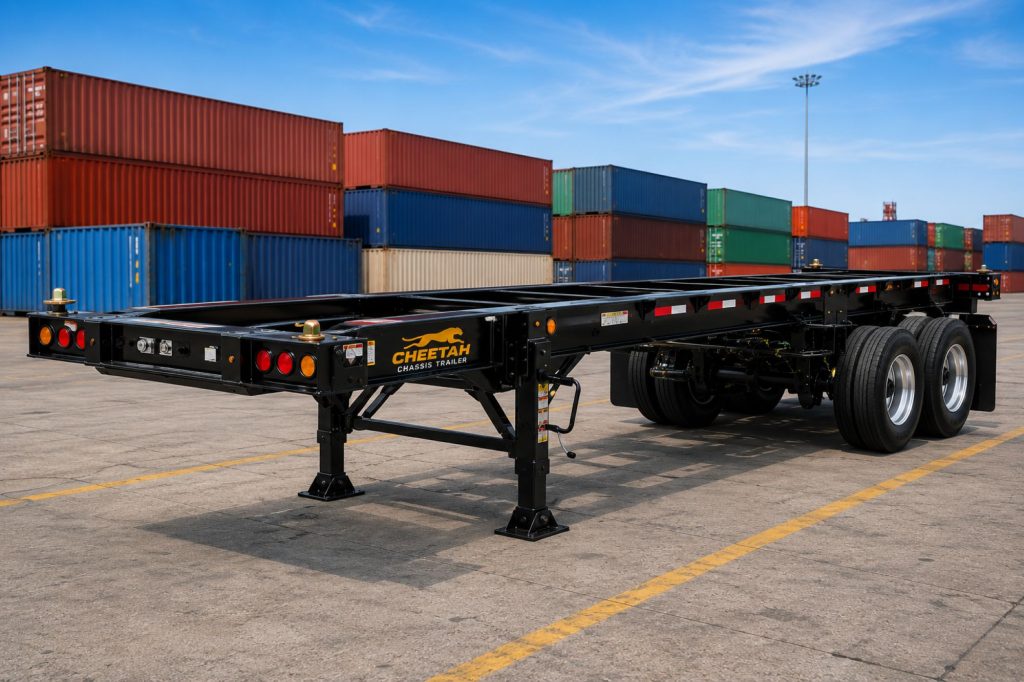
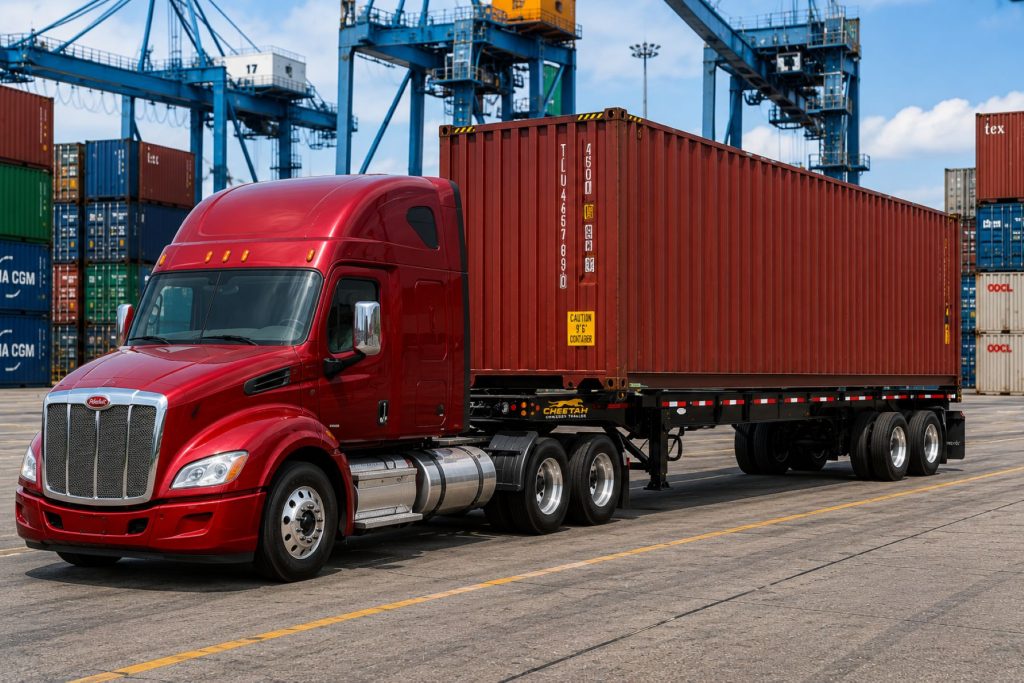
The Cheetah Chassis Trailer is one of the most recognized container chassis platforms operating throughout North America’s intermodal transportation industry. Manufactured by Cheetah Chassis Corporation, these trailers are specifically engineered for the efficient movement of shipping containers between ports, rail terminals, warehouses, and distribution centers.
Cheetah has built a strong reputation by focusing exclusively on chassis trailer production. This specialization has allowed the company to develop equipment designed specifically for the demands of container transportation, including durability, operational efficiency, and ease of maintenance.
Today, Cheetah chassis trailers are commonly used by drayage carriers, intermodal fleets, logistics companies, port operators, and owner-operators serving major transportation hubs across North America.
Key Characteristics
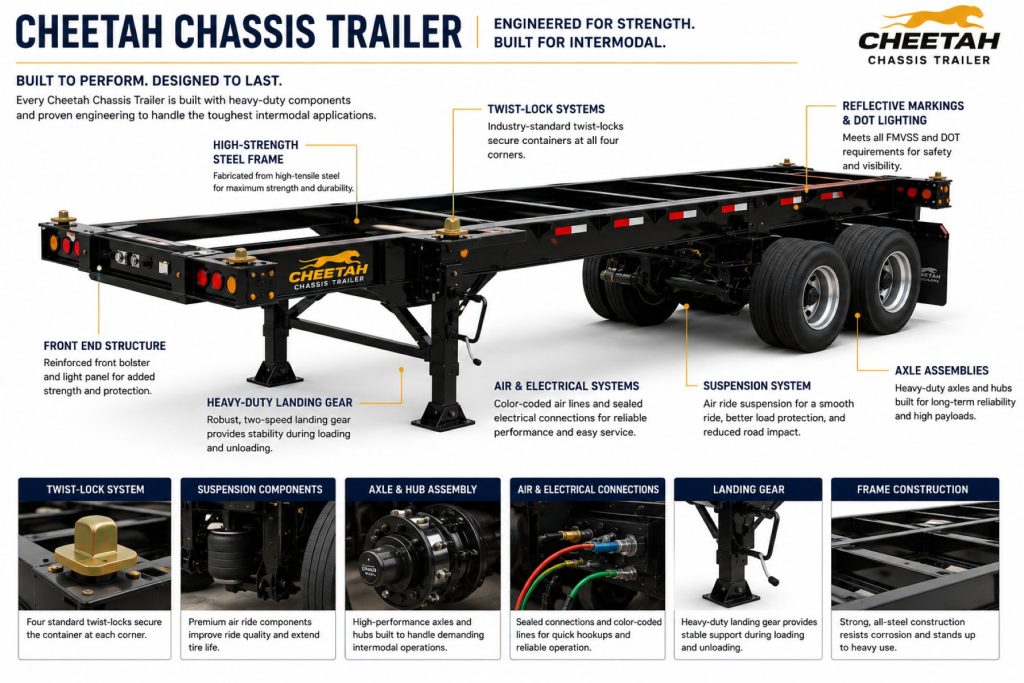
The Cheetah Chassis Trailer is engineered specifically for intermodal container transportation.
Its durable steel frame and container securement systems allow operators to safely transport a wide range of container sizes while maintaining compliance with federal and state weight regulations. The trailer is designed to withstand high utilization environments where equipment may be loaded and unloaded multiple times per day.
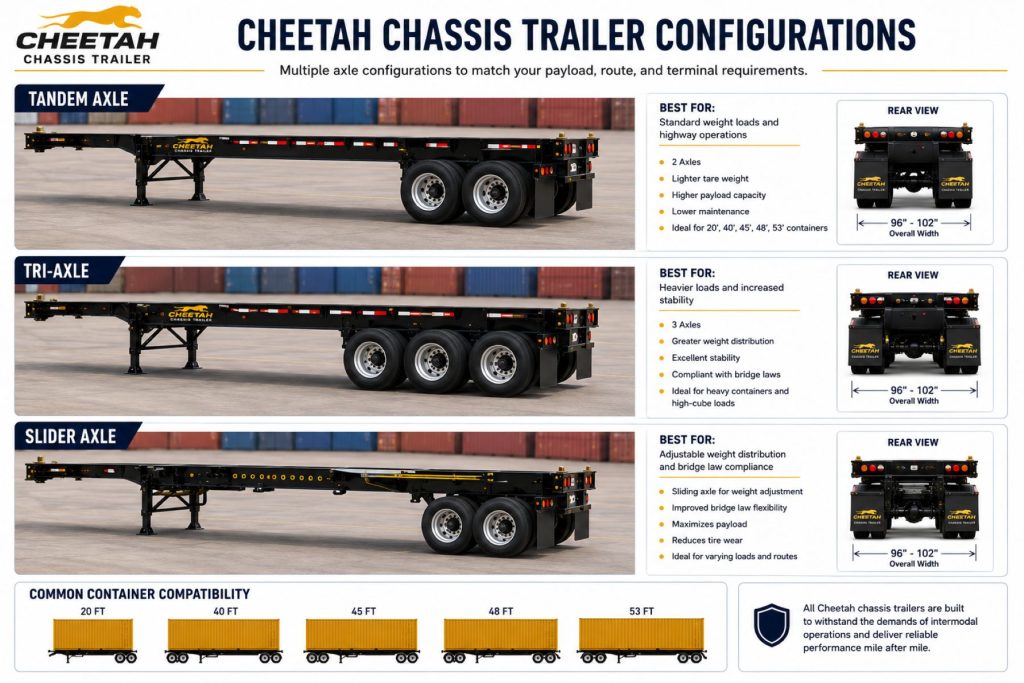
Multiple chassis configurations allow operators to match equipment to specific freight requirements, port operations, and container lengths.
Common Specifications
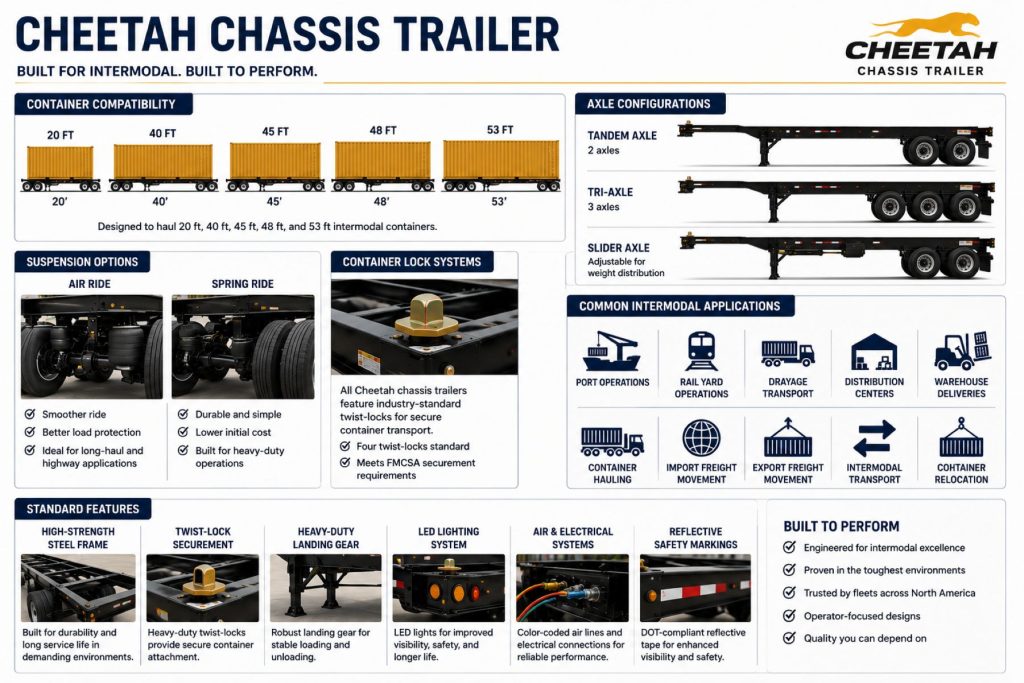
Overall Length
Typically 20 to 53 feet depending on configuration.
Width
96 to 102 inches.
Construction
High-strength steel construction.
Capacity
Varies based on container size and legal weight limits.
Axle Configurations
Tandem axle, tri-axle, and slider axle.
Suspension
Air ride or spring ride systems.
Container Compatibility
20 ft, 40 ft, 45 ft, 48 ft, and 53 ft containers.
Trailer Style
Container chassis trailer.
Container Locks
Twist-lock securement systems.
Landing Gear
Heavy-duty commercial landing gear.
Common Applications
- Port Transportation
- Container Hauling
- Intermodal Transportation
- Rail Yard Operations
- Import Freight Movement
- Export Freight Movement
- Warehouse Deliveries
- Distribution Center Transfers
- Drayage Operations
- Container Relocation Services
Advantages
- Built specifically for chassis applications
- Strong reputation in intermodal transportation
- Durable steel construction
- Reliable twist-lock systems
- Multiple container configurations available
- Strong performance in high-utilization operations
- Easy maintenance access
- Wide industry acceptance
Limitations or Considerations
- Limited use outside container transportation
- Requires container handling equipment
- Heavy utilization can accelerate wear
- Dependent on container freight demand
- May require specialized maintenance procedures
- Container size restrictions vary by configuration
- Limited versatility outside intermodal operations
- Weight regulations vary by jurisdiction
Driver and Operator Considerations
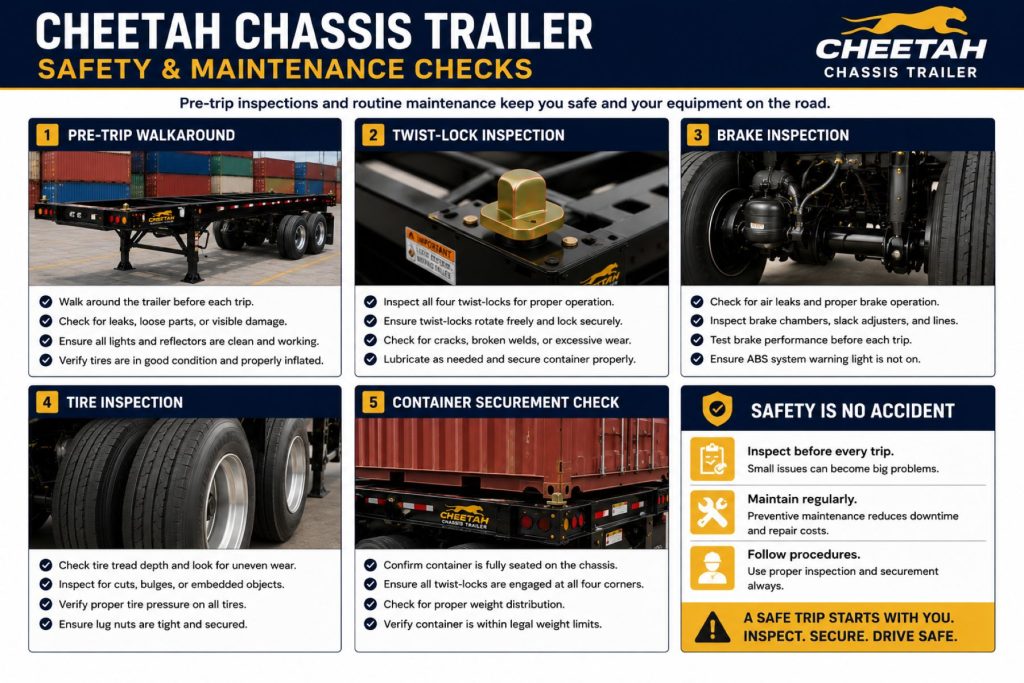
Drivers operating Cheetah chassis trailers must verify proper container securement before transport. Twist-lock systems should be inspected before each trip to ensure containers remain properly attached to the chassis.
Routine inspections of brakes, suspension components, tires, wheel ends, lighting systems, and landing gear are critical for safe operation. Drivers should also verify container weight distribution to maintain safe handling characteristics.
Maintenance and Ownership Notes
Routine maintenance includes inspection of twist-lock systems, suspension components, wheel ends, tires, brakes, lighting systems, frame structure, and landing gear assemblies.
Particular attention should be given to corrosion, locking mechanisms, frame stress points, electrical systems, and air brake components. Preventive maintenance programs can help reduce downtime and extend equipment life.
Buying Considerations
- Container sizes being hauled
- Port and terminal compatibility
- Axle configuration requirements
- Weight capacity needs
- Suspension preferences
- New versus used pricing
- Frame condition
- Twist-lock condition
- Maintenance history
- Regional operating requirements
Common Brands or Manufacturers
- Cheetah Chassis Corporation
- Wabash
- CIMC Intermodal Equipment
- Pratt Industries
- Hyundai Translead
- Stoughton
- Pioneer Chassis
Variants and Related Configurations
- 20-Foot Container Chassis
- 40-Foot Container Chassis
- 45-Foot Container Chassis
- 48-Foot Container Chassis
- 53-Foot Container Chassis
- Slider Chassis Trailer
- Extendable Chassis Trailer
- Tri-Axle Chassis Trailer
Comparison to Similar Trailers
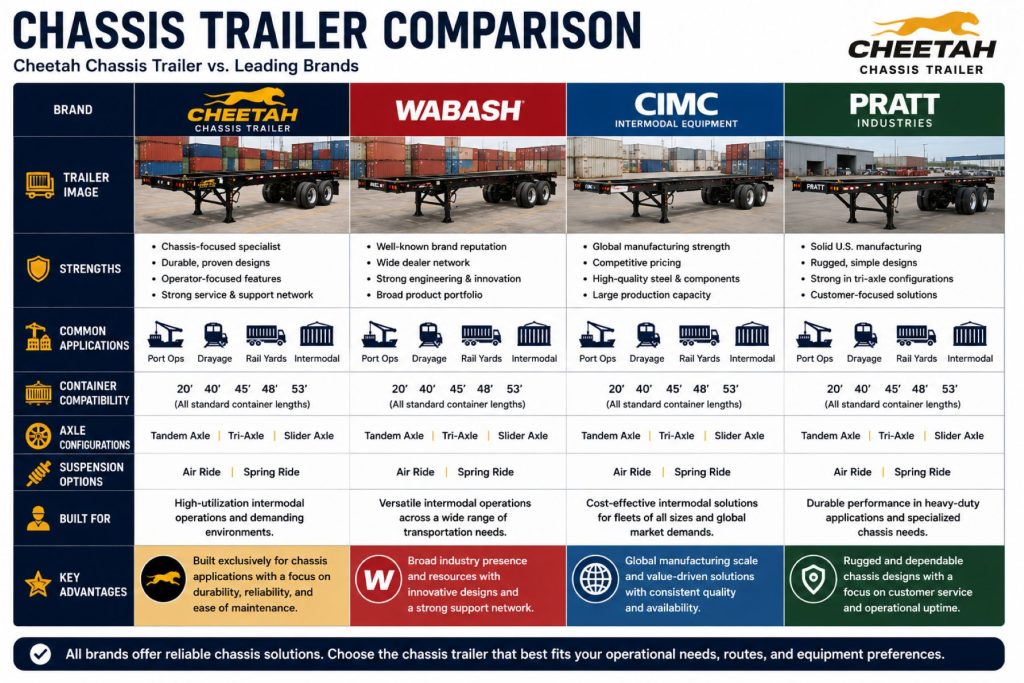
The Cheetah Chassis Trailer is commonly compared to chassis trailers from Wabash, CIMC, and Pratt. Compared to Wabash, Cheetah is often viewed as a chassis-focused specialist with extensive experience in intermodal equipment. Compared to CIMC, Cheetah frequently emphasizes durable designs and operator-focused engineering. When compared to Pratt chassis trailers, Cheetah typically offers a balance of durability, serviceability, and operational efficiency. Its specialization in chassis manufacturing has helped establish a strong reputation throughout the intermodal transportation industry.
Best Fit For
- Drayage carriers
- Intermodal fleets
- Port operators
- Rail terminal operators
- Logistics providers
- Container transportation companies
- Owner-operators serving ports
- Distribution center operations
Related Equipment
- Freightliner Cascadia
- Kenworth T680
- Peterbilt 579
- International LT Series
- Volvo VNL
- Container Cranes
- Reach Stackers
- Container Handlers
- Rail Intermodal Equipment
- Port Terminal Equipment
Related Freight Types
- Shipping Containers
- Imported Goods
- Export Freight
- Consumer Products
- Industrial Goods
- Retail Freight
- Warehouse Freight
- Distribution Freight
Related Trailer Types
- Container Chassis Trailers
- Intermodal Chassis Trailers
- Extendable Chassis Trailers
- Tri-Axle Chassis Trailers
- Port Chassis Trailers
- Container Transport Equipment
Related Trailer Models
- Wabash Chassis Trailer
- CIMC Chassis Trailer
- Pratt Chassis Trailer
- Hyundai Chassis Trailer
- Stoughton Chassis Trailer
- Pioneer Chassis Trailer
Related Guides
- Complete Guide to Freight Types
- Complete Guide to Trailer Types
- Choosing the Right Trailer for Your Freight
Regulatory and Compliance Notes
Cheetah Chassis Trailers must comply with federal, state, and local regulations governing gross vehicle weights, axle weight limits, brake systems, lighting requirements, conspicuity markings, and container securement standards. Operators must ensure all twist-lock systems are functioning properly and that containers are secured in accordance with applicable transportation regulations.
Real World Operating Notes
Cheetah chassis trailers are commonly found operating at major ports, rail terminals, and logistics hubs throughout North America. Many intermodal fleets choose Cheetah because of the company’s focus on chassis equipment and its reputation for durability in demanding container transportation environments.
Operators often report that proper maintenance of twist-lock systems, brakes, and suspension components is critical to maximizing uptime and long-term equipment reliability.
Frequently Asked Questions
What is a Cheetah Chassis Trailer used for?
Cheetah Chassis Trailers are designed to transport shipping containers between ports, rail terminals, warehouses, and distribution centers.
What container sizes can a Cheetah Chassis Trailer carry?
Depending on the configuration, they can transport 20-foot, 40-foot, 45-foot, 48-foot, and 53-foot shipping containers.
What is a twist-lock system?
A twist-lock system is a securement device that locks a shipping container to the chassis during transport.
Who commonly operates Cheetah Chassis Trailers?
Drayage fleets, intermodal carriers, port operators, logistics providers, rail operators, and owner-operators commonly use Cheetah chassis trailers.
Are Cheetah chassis trailers only used for container transportation?
Yes. They are specifically designed for transporting shipping containers and are generally not used for traditional freight hauling applications.
Availability and Where to Find
Cheetah Chassis Trailers can be purchased through authorized Cheetah dealers, commercial trailer dealerships, intermodal equipment suppliers, fleet liquidation sales, equipment auctions, and used equipment marketplaces. Buyers evaluating used chassis trailers should inspect the frame structure, twist-lock systems, suspension components, wheel ends, brakes, tires, lighting systems, and overall structural condition before purchase.
Support Trucking Families
Truck Equipment Atlas supports the mission of Grey Cross, a nonprofit dedicated to helping families of truck drivers who lose their lives while on the road. As the site grows, part of its mission is to bring awareness and support to these families.
Podcast or Video Section
Learn More Through Audio and Video
Truck Equipment Atlas will continue expanding with podcast episodes, interviews, and equipment breakdowns to help drivers and fleets better understand trucks and equipment.
Follow the Growth of Truck Equipment Atlas
Truck Equipment Atlas continues to expand with new truck profiles, trailer coverage, diesel engine pages, equipment system resources, manufacturer information, and educational guides.
Visit our Site Updates page to explore recent additions, project milestones, and upcoming resources as we continue building one of the industry’s growing commercial trucking equipment reference libraries.
View the Latest Site Updates: Truck Equipment Atlas Site Updates