
Detroit Series 60
Quick Facts
- Manufacturer: Detroit Diesel
- Component Type: Heavy-Duty Diesel Engine
- Common Applications: Long Haul Freight, Fleet Trucks, Owner-Operator Trucks
- Power Range: 350–575 horsepower
- Torque Range: Up to 1,850 lb-ft
- Fuel Type: Diesel
- Common Pairings: Eaton Fuller Manual Transmissions
- Production Status: Legacy Platform / No Longer Produced
Overview
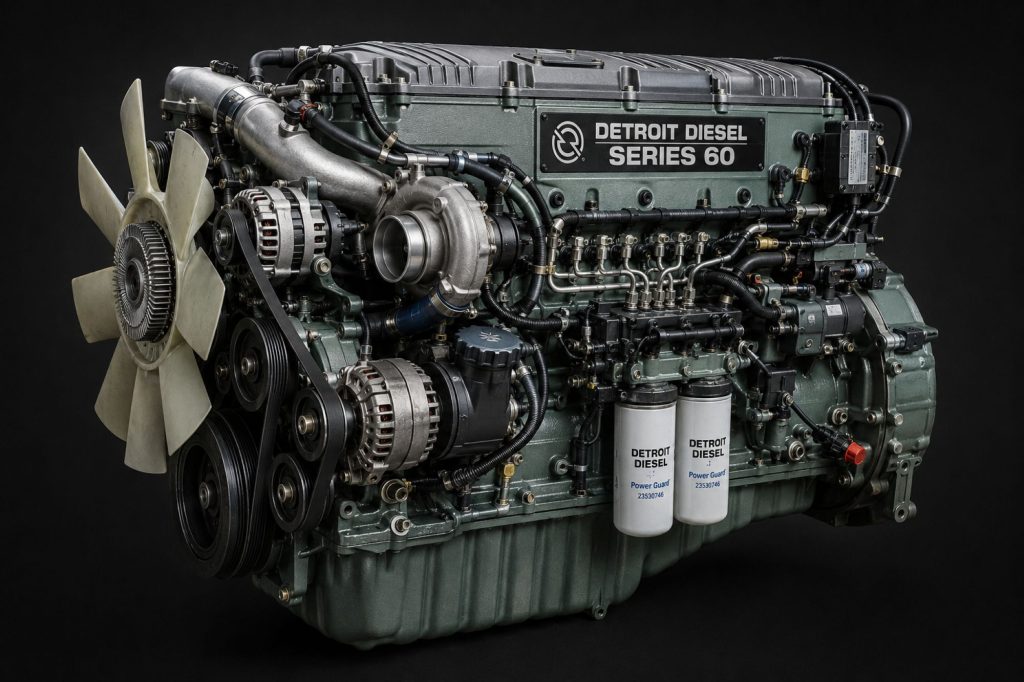
The Detroit Series 60 is one of the most influential diesel engines in North American trucking history. Introduced by Detroit Diesel in the late 1980s, the Series 60 helped redefine heavy-duty trucking with its electronic controls, strong fuel economy, and dependable long-haul performance.
The engine quickly became one of the most widely adopted heavy-duty diesel platforms among fleets and owner-operators across the United States and Canada. It earned a reputation for reliability, efficiency, and ease of service while powering millions of highway miles over several decades.
Even after production ended, the Detroit Series 60 remains highly respected throughout the trucking industry due to its durability, rebuild potential, and massive aftermarket support network.
Key Characteristics
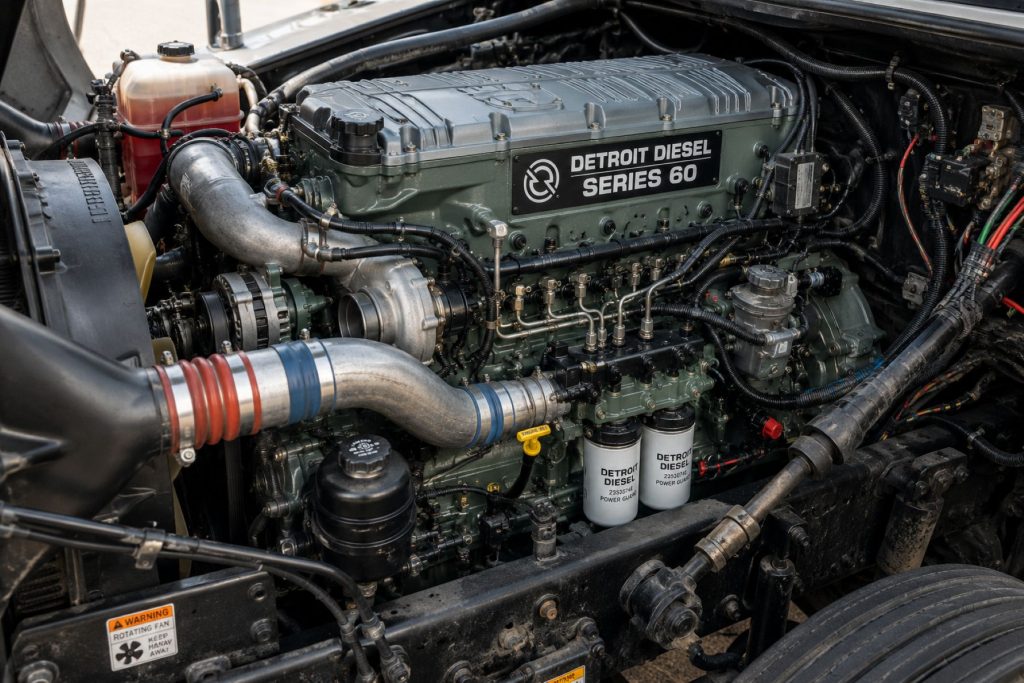
The Detroit Series 60 is designed to provide dependable long-haul performance while maintaining strong fuel economy and operational reliability. One of its defining characteristics was its early adoption of advanced electronic engine controls, which helped improve diagnostics and engine management.
The engine also became known for its balance of durability, serviceability, and fuel efficiency.
Its widespread fleet adoption created one of the largest service and support ecosystems in heavy-duty trucking history.
Technical Specifications
Power Ratings
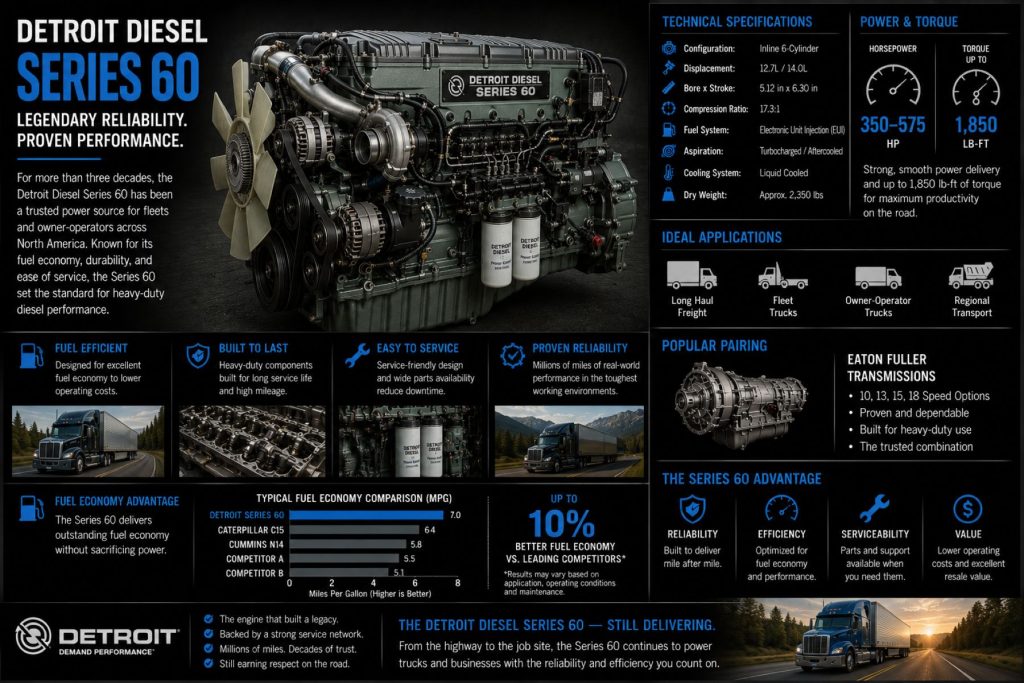
The Detroit Series 60 is commonly available in horsepower ratings ranging from 350 to 575 horsepower depending on configuration.
Torque Output
Torque ratings can reach up to 1,850 lb-ft for demanding freight applications.
Engine Configuration
The Series 60 is an inline 6-cylinder heavy-duty diesel engine.
Fuel System
The engine uses electronically controlled fuel injection systems designed for efficiency and reliability.
Cooling System
Heavy-duty cooling systems support long-haul freight operations and high-mileage use.
Engine Weight
The Series 60 is a durable heavy-duty engine platform designed for long service life.
Common Applications
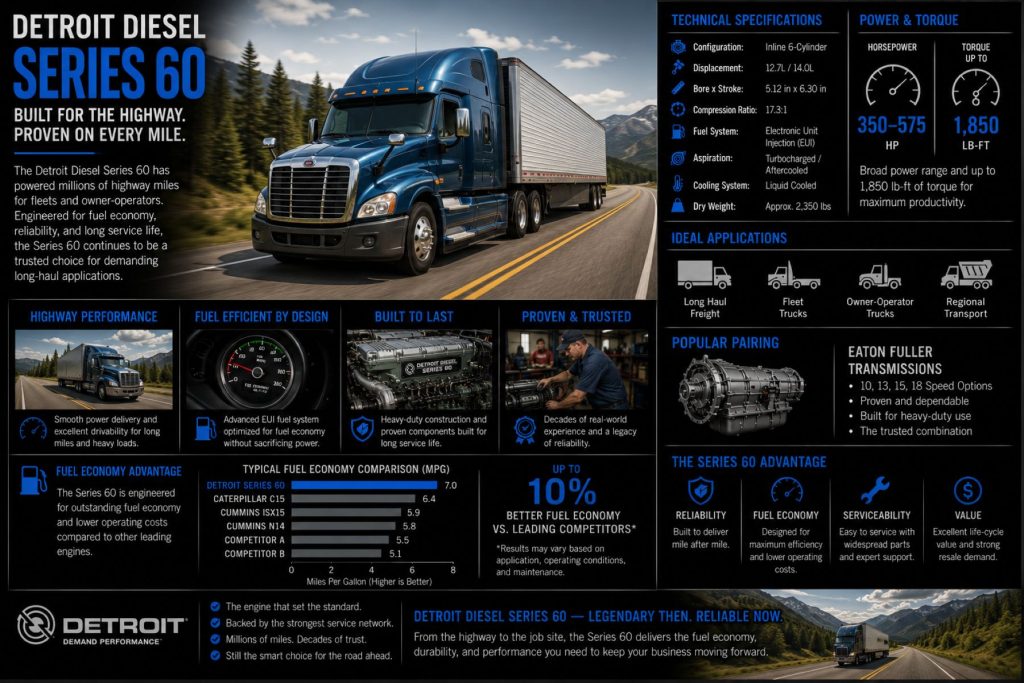
The Detroit Series 60 is commonly used in:
- Long-haul freight operations
- Fleet trucking
- Owner-operator trucks
- Regional transportation
- Dry van freight operations
Advantages
The Detroit Series 60 provides several advantages for fleets and owner-operators.
- Strong fuel economy
- Excellent long-haul reliability
- Large service network
- Broad parts availability
- Strong rebuild reputation
Limitations and Considerations
While highly respected, the Series 60 does have operational considerations.
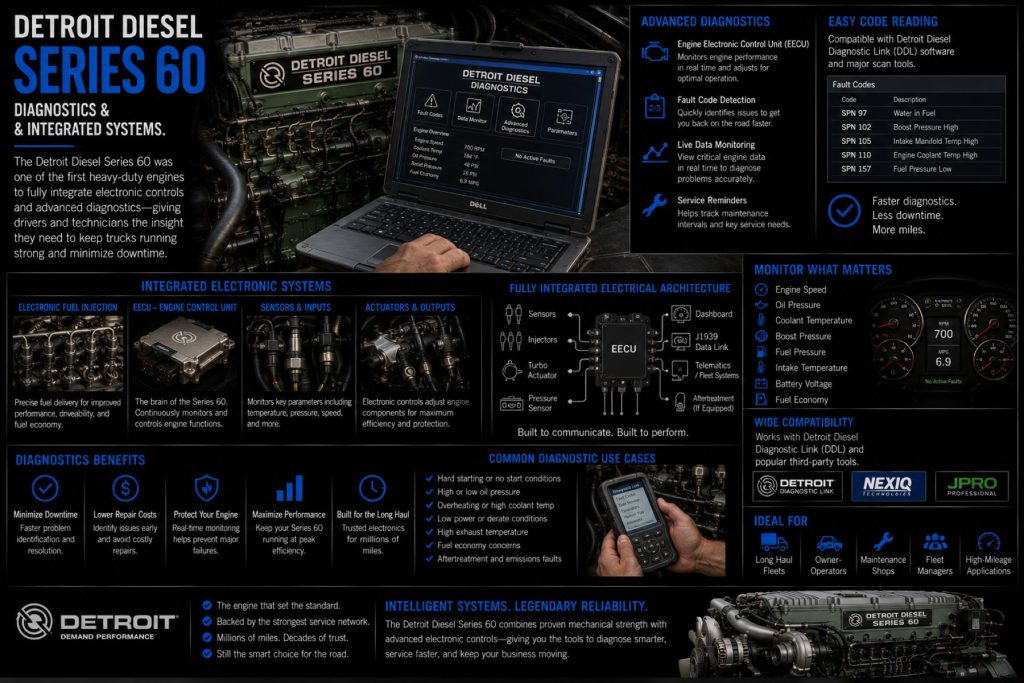
- Older electronics may require specialized troubleshooting
- Many units now have very high mileage
- Parts availability varies by generation
- Some older emissions-era configurations require careful inspection
Maintenance and Ownership Notes
Routine maintenance for the Detroit Series 60 includes oil service, cooling system maintenance, injector inspections, turbocharger service, and electronic diagnostics. Preventative maintenance is critical for maximizing engine life and reliability.
Because of the engine’s widespread use, many independent diesel shops remain highly familiar with the Series 60 platform.
Performance and Fuel Efficiency
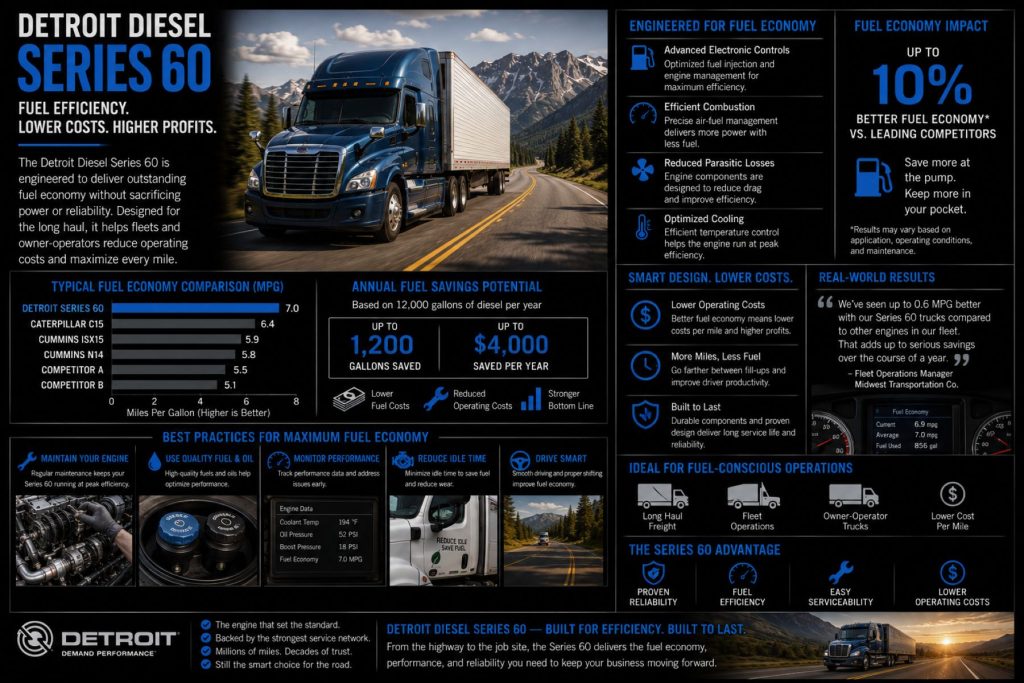
The Detroit Series 60 became especially respected for balancing dependable power with strong fuel economy. Many fleets adopted the engine because it helped reduce operating costs while maintaining long-haul reliability.
Even by modern standards, many operators continue to praise the Series 60 for its efficient highway performance and durability.
Driver and Operator Considerations
Drivers often appreciate the Detroit Series 60 for its smooth highway performance, predictable power delivery, and fuel economy. The engine became especially popular among fleet operators focused on efficiency and uptime.
Many owner-operators also value the engine for its simplicity compared to some newer emissions-heavy platforms.

Buying Considerations
When selecting a Detroit Series 60, buyers should carefully evaluate mileage, rebuild history, maintenance records, electronic system condition, and cooling system maintenance. Well-maintained units can continue operating successfully for very high mileage.
Buyers should also inspect transmission pairings and overall truck condition before purchase.
Compatibility and Related Systems
The Detroit Series 60 is commonly paired with:
- Eaton Fuller manual transmissions
- Fleet telematics systems
- Heavy-duty driveline systems
- Electronic diagnostics systems
- Long-haul truck configurations
Variants and Configurations
The Detroit Series 60 is available in multiple configurations designed for different operations.
- 12.7-liter variants
- 14-liter variants
- Fleet fuel-efficiency setups
- Owner-operator horsepower configurations
- Different electronic control generations
Comparison to Similar Equipment
The Detroit Series 60 is commonly compared to engines such as the Caterpillar C15, Cummins N14, and Cummins ISX15.
Compared to the Caterpillar C15, the Series 60 is often favored for fuel economy and operational simplicity. Compared to the Cummins N14, it is known for stronger electronic integration and highway efficiency. Compared to the ISX15, it generally represents an earlier generation focused on durability and mechanical longevity.
Each engine offers different strengths depending on operational goals and driver preferences.
Best Fit For
The Detroit Series 60 is best suited for:
- Long-haul trucking
- Fleet operations
- Owner-operator trucks
- Fuel-efficiency focused operations
- High-mileage applications
Related Truck Types
Related Freight Types
Related Equipment Systems
Related Guides
Regulatory and Compliance Notes
Later versions of the Detroit Series 60 incorporated emissions-control technologies to meet evolving EPA requirements during its production lifecycle.
Maintenance and emissions requirements vary depending on engine generation and configuration.
Real World Operating Notes
In real-world trucking operations, the Detroit Series 60 remains one of the most respected legacy diesel engines ever used in North American freight transportation. Many fleets and owner-operators continue operating Series 60-powered trucks successfully today.
Its reputation for reliability, fuel economy, and rebuild longevity helped establish it as one of the most successful diesel engine platforms in trucking history.
Frequently Asked Questions
Is the Detroit Series 60 reliable?
Yes, the Series 60 is widely considered one of the most reliable heavy-duty diesel engines ever built when properly maintained.
Why is the Detroit Series 60 so popular?
The engine became popular because of its fuel economy, reliability, long-haul durability, and widespread fleet adoption.
Is the Detroit Series 60 still made?
No, Detroit Diesel no longer produces the Series 60 engine platform.
What transmission is commonly paired with the Series 60?
Eaton Fuller manual transmissions are among the most common pairings.
Availability and Where to Find
The Detroit Series 60 remains widely available through the used truck market, rebuilders, salvage operations, and aftermarket engine suppliers throughout North America.
Support Trucking Families
Truck Equipment Atlas supports the mission of Grey Cross, a nonprofit dedicated to helping families of truck drivers who lose their lives while on the road. As the site grows, part of its mission is to bring awareness and support to these families.
Podcast or Video Section
Learn More Through Audio and Video
Truck Equipment Atlas will continue expanding with podcast episodes, interviews, and equipment breakdowns to help drivers and fleets better understand trucks and equipment.
Follow the Growth of Truck Equipment Atlas
Truck Equipment Atlas continues to expand with new truck profiles, trailer coverage, diesel engine pages, equipment system resources, manufacturer information, and educational guides.
Visit our Site Updates page to explore recent additions, project milestones, and upcoming resources as we continue building one of the industry’s growing commercial trucking equipment reference libraries.
View the Latest Site Updates: Truck Equipment Atlas Site Updates