
CIMC Chassis Trailer
Quick Facts
- Original Manufacturer: CIMC Intermodal Equipment
- Current Manufacturer Name: CIE Manufacturing
- Trailer Type: Intermodal Container Chassis
- Common Model: Revere 20 ft / 40 ft City Combo
- Container Compatibility: One 20-Foot or One 40-Foot ISO Container
- Construction: High-Strength Steel Frame
- Common Width: 96 inches
- Common Axle Configuration: Tandem Axle
- Suspension: Mechanical Spring Suspension
- Container Securement: ISO-Compatible Twist Locks
- Primary Applications: Port Drayage, Rail Intermodal, Container Transportation, and Regional Distribution
- Brand Status: CIMC Intermodal Equipment was renamed CIE Manufacturing in 2020
- Production Status: Current successor models are manufactured by CIE Manufacturing
Overview
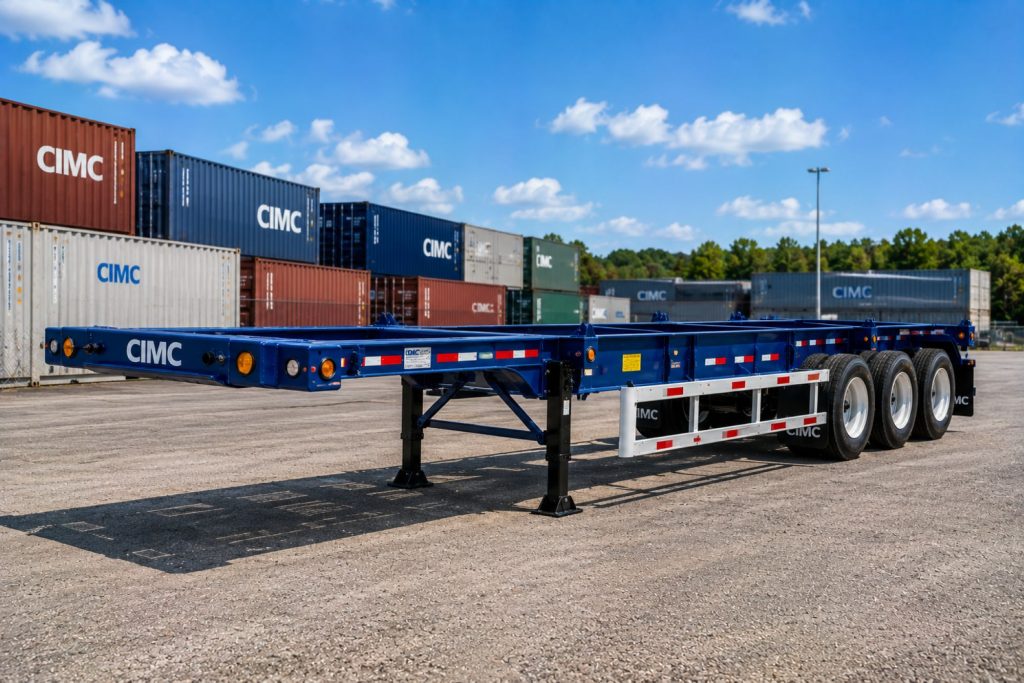
The CIMC Chassis Trailer is a skeletal intermodal trailer designed to transport standardized shipping containers between ports, rail terminals, distribution facilities, warehouses, and customer locations.
One of the best-known CIMC configurations is the Revere 20-foot/40-foot City Combo chassis. Its adjustable frame allows one chassis to transport either a loaded 20-foot ISO container or a loaded 40-foot ISO container.
Unlike a flatbed trailer, a chassis does not have a conventional cargo deck. It uses structural frame rails, bolsters, and twist locks positioned to support and secure the container at its lower corner castings.
CIMC Intermodal Equipment changed its name to CIE Manufacturing in 2020 as the business expanded its North American manufacturing capabilities. Current successor products are marketed under the CIE Manufacturing name.
Key Characteristics
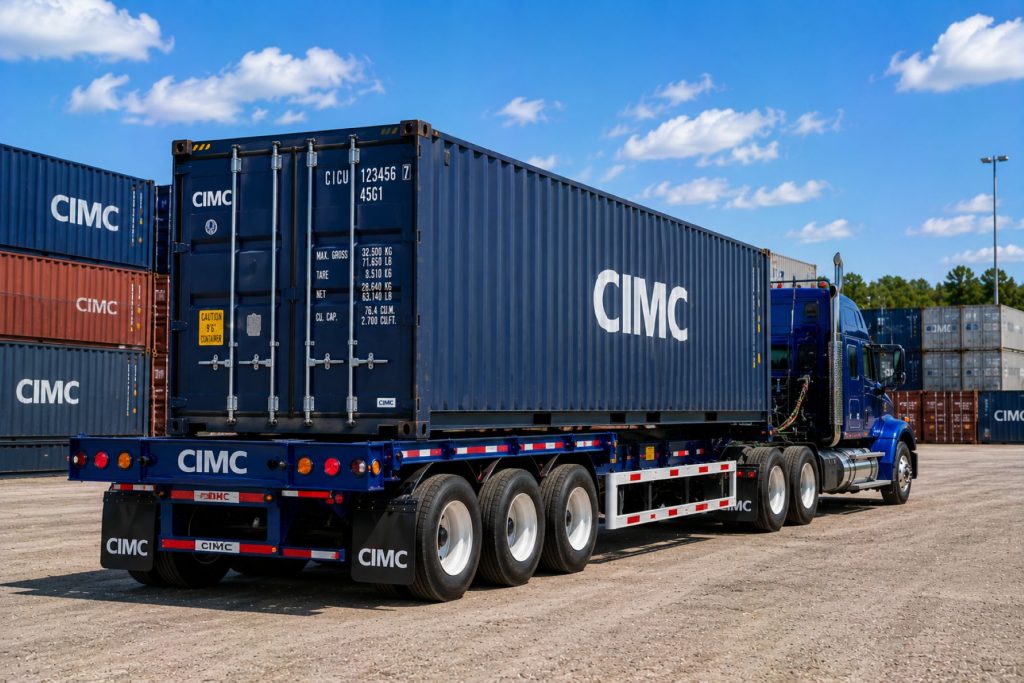
The CIMC chassis is designed around standardized intermodal container dimensions. A container can be lifted onto or removed from the chassis using a port crane, gantry crane, reach stacker, or container handler.
The Revere City Combo uses an extendable frame that changes length for 20-foot or 40-foot container operation. Locking pins secure the chassis in its selected position.
Twist locks engage the container’s corner castings and prevent it from separating from the chassis during transportation.
The open skeletal frame reduces empty weight compared with a conventional platform trailer. Because the container serves as the cargo enclosure, the chassis only needs to support, secure, and distribute its weight.
CIMC promoted advanced corrosion protection, robotic welding, laser metal cutting, premium components, radial tires, LED lighting, and ABS equipment on later Revere chassis.
Common Specifications
Container Compatibility
The Revere 20-foot/40-foot City Combo is designed to transport:
- One loaded 20-foot ISO container
- One loaded 40-foot ISO container
- One loaded 40-foot high-cube container when properly configured
Other CIMC and successor chassis configurations were developed for 20-foot, 40-foot, 45-foot, and 53-foot containers.
Frame Construction
The chassis uses high-strength steel main rails, crossmembers, front and rear bolsters, and an upper coupler assembly.
A combo chassis includes telescoping or sliding frame sections that allow its overall length to change.
Width
A nominal width of approximately 96 inches is common for North American container chassis.
The container itself is typically approximately eight feet wide.
Chassis Length
A 20-foot/40-foot city combo chassis operates in two primary positions.
The shorter position supports a 20-foot container.
The extended position supports a 40-foot container.
Exact retracted and extended dimensions vary according to the chassis model.
Axles
A tandem-axle arrangement is common on city-combo chassis.
Tri-axle configurations are available for dense containers and operations requiring additional weight distribution.
Suspension
The Revere City Combo commonly uses a mechanical spring suspension.
Later premium configurations used Hutchens mechanical suspension components.
Air-ride suspension may be available on selected chassis types.
Brakes and ABS
Commercial air brakes and an antilock braking system are commonly installed.
Later Revere specifications included premium brake chambers, slack adjusters, air valves, and electronic ABS controls.
Wheels and Tires
Radial commercial trailer tires are standard on later configurations.
Steel wheels are common, with aluminum wheels available on certain lightweight or premium chassis.
Landing Gear
Two-speed landing gear supports the chassis when it is disconnected from the tractor.
Later Revere specifications included premium intermodal landing gear designed for repeated port and rail-yard use.
Twist Locks
Container twist locks are positioned at the chassis bolsters.
Available styles include:
- Fixed twist locks
- Retractable twist locks
- Flip-up twist locks
- Drop-in twist locks
Twist locks must fully engage the container’s corner castings before transportation.
Sliding and Locking System
A combo chassis uses a telescoping frame with mechanical or air-assisted locking pins.
The driver must confirm that all frame-locking pins have fully engaged before moving the container.
Electrical System
A modular electrical harness supports:
- LED marker lights
- Tail lights
- Brake lights
- Turn signals
- ABS equipment
- Identification lights
- Optional telematics
Corrosion Protection
Later CIMC chassis used a cathodic electrocoating or KTL coating process designed to protect steel surfaces against corrosion.
Road salt, port environments, standing water, and coastal air still make regular corrosion inspection necessary.
Specifications differ across production years and configurations. Current successor products and technical information are available through CIE Manufacturing.
Common Applications
- Port drayage
- Rail intermodal transportation
- Shipping container transportation
- Port-to-warehouse transportation
- Rail-ramp-to-distribution-center transportation
- International freight transportation
- Import freight movement
- Export freight movement
- Regional container distribution
- Warehouse transfer operations
- Transloading operations
- Marine terminal operations
- Domestic intermodal transportation
- Short-haul container delivery
Advantages
- Transports standardized ISO containers
- Combo chassis can carry more than one container length
- Skeletal frame reduces empty trailer weight
- Twist locks provide standardized container securement
- Compatible with port and rail container-handling equipment
- Well suited for short-haul and regional drayage
- Tandem-axle design provides good maneuverability
- Tri-axle versions are available for heavier containers
- Later models use radial tires, LED lighting, and ABS
- Corrosion-resistant coating supports longer service life
- Replaceable container and chassis components are widely available
- Telematics can improve chassis tracking and maintenance planning
- One combo chassis can replace multiple fixed-length units in certain fleets
Limitations or Considerations
- Cannot transport conventional freight without a container
- Container weight may exceed legal axle limits
- 20-foot containers can contain extremely dense cargo
- Extendable frames require additional inspection
- Locking pins can become difficult to operate when corroded or damaged
- Twist-lock failure can create a serious cargo-separation hazard
- Chassis used in shared pools may receive inconsistent maintenance
- Port and rail environments accelerate corrosion and component wear
- Bare chassis can be difficult to see when backing
- Tire, brake, and lighting defects are common concerns in high-use drayage operations
- Drivers may need to inspect several chassis before finding a roadworthy unit
- Container position can significantly affect kingpin and axle weights
Driver and Operator Considerations
The driver should verify that the chassis is set to the correct length before a container is placed on it.
All twist locks must be fully engaged and secured. The driver should walk around the container and inspect every connection point before leaving the terminal.
Extendable chassis locking pins should be checked visually. Air-assisted systems must release and re-engage correctly.
Container identification numbers, seals, shipping documents, placards, and gross weight information should be confirmed before departure.
Drivers should pay particular attention to tires, brakes, lights, mudflaps, frame damage, and conspicuity markings because intermodal chassis often experience frequent drop-and-hook cycles.
Maintenance and Ownership Notes
The frame rails, bolsters, crossmembers, slider sections, locking pins, and twist locks should be inspected for cracks, corrosion, bending, impact damage, and wear.
Telescoping frame surfaces should remain clean and properly lubricated according to the manufacturer’s procedures.
Twist locks should move freely and fully engage the container corner castings.
Landing gear requires inspection of the gearbox, crank handle, legs, shoes, cross-shaft, and mounting brackets.
Suspension components, axles, brakes, ABS equipment, tires, wheels, lights, and the chassis electrical system require routine preventive maintenance.
Corrosion should receive immediate attention, especially around bolsters, suspension mounts, crossmembers, locking-pin holes, and electrical grounding points.
Buying Considerations
- Identify the exact CIMC or CIE model
- Confirm the supported container sizes
- Determine whether the chassis is fixed or extendable
- Verify the retracted and extended lengths
- Confirm the GVWR and frame rating
- Inspect the main rails and crossmembers
- Check the front and rear bolsters
- Inspect every twist lock
- Operate the sliding frame
- Verify that all locking pins engage
- Inspect the kingpin and upper coupler
- Check the landing gear
- Inspect the suspension and axle alignment
- Test the brakes and ABS equipment
- Inspect the tires and wheel ends
- Test all lights and electrical connections
- Look for corrosion beneath paint and coating
- Review maintenance and repair records
- Confirm compatibility with the intended container and terminal operation
- Verify all ratings using the VIN and certification plate
Common Brands or Manufacturers
- CIMC Intermodal Equipment
- CIE Manufacturing
- Cheetah Chassis
- Hyundai Translead
- Dorsey Intermodal
- Stoughton Trailers
- Pratt Industries
- Pitts Enterprises
- Direct ChassisLink
- Wabash
Variants and Related Configurations
- Revere 20-foot/40-foot City Combo
- Fixed 20-foot chassis
- Fixed 40-foot chassis
- 20-foot/40-foot combo chassis
- 40-foot/45-foot extendable chassis
- 53-foot domestic container chassis
- Tandem-axle chassis
- Tri-axle chassis
- Spread-axle chassis
- Heavy-haul container chassis
- Tank-container chassis
- Lightweight chassis
- Gooseneck chassis
- Slider chassis
- B-train container chassis
Comparison to Similar Trailers
Compared with a fixed 20-foot chassis, the CIMC City Combo can also extend to transport a 40-foot container. The combo design adds versatility but also introduces slider components and locking pins that require maintenance.
Compared with a fixed 40-foot chassis, the shorter 20-foot position can improve maneuverability when transporting a single 20-foot container.
Compared with a tri-axle chassis, the tandem City Combo is generally lighter and easier to maneuver. A tri-axle chassis may provide better weight distribution for dense cargo.
Compared with a conventional flatbed trailer, the CIMC chassis provides faster container transfer and standardized twist-lock securement. A flatbed can transport a wider variety of non-containerized freight.
Compared with a specialty trailer, the chassis is focused specifically on port, rail, and container operations.
Best Fit For
- Port drayage carriers
- Rail intermodal carriers
- Container leasing companies
- Ocean carriers
- Chassis pool operators
- Third-party logistics providers
- Distribution-center fleets
- Import and export operations
- Regional intermodal carriers
- Warehouse transfer operations
- Short-haul container transportation
- Fleets handling both 20-foot and 40-foot containers
- Operators requiring standardized ISO container securement
Related Equipment
- Brake Systems
- Suspension Systems
- Axles and Differentials
- Tires and Wheels
- Electrical Systems
- Safety Systems
- Telematics and ELD Systems
- Container Twist Locks
- Slider Locking Systems
- Landing Gear
- Automatic Tire-Inflation Systems
- Chassis Tracking Systems
Related Freight Types
- Intermodal and Container Freight
- Port Drayage Freight
- Rail Intermodal Freight
- Import Freight
- Export Freight
- International Container Freight
- Domestic Container Freight
- Warehouse Transfer Freight
- Retail Import Freight
- Industrial Container Freight
- Specialty and Niche Freight
Related Trailer Types
- Chassis Trailers
- Intermodal Container Chassis
- 20-Foot Container Chassis
- 40-Foot Container Chassis
- 53-Foot Domestic Chassis
- Combo Chassis
- Extendable Chassis
- Tank-Container Chassis
- Tri-Axle Chassis
- Flatbed Trailers
- Specialty Trailers
Related Trailer Models
- CIMC Revere City Combo Chassis
- CIE Pioneer 20/40 City Combo
- CIE Pioneer 20/40 Combo Tridem
- Cheetah 20/40 Combo Chassis
- Dorsey Intermodal Chassis
- Pratt Container Chassis
- Stoughton Container Chassis
- Hyundai Translead Container Chassis
Related Guides
- Complete Guide to Trailer Types
- Choosing the Right Trailer for Your Freight
- Complete Guide to Freight Types
Regulatory and Compliance Notes
The CIMC Chassis Trailer must comply with federal, state, provincial, port, rail, and intermodal requirements governing trailer dimensions, axle weights, brakes, ABS equipment, tires, lighting, container securement, and inspections.
Intermodal equipment providers are responsible for systematic inspection, repair, and maintenance programs for chassis offered to motor carriers.
Drivers must complete an appropriate pre-trip inspection and report defects found on intermodal equipment.
Container gross weight does not determine whether the combination is legal. Operators must account for chassis tare weight, tractor weight, axle spacing, cargo distribution, bridge laws, and individual axle limits.
Hazardous materials transported inside a container require appropriate shipping papers, placards, emergency information, and driver qualifications.
Real World Operating Notes
CIMC chassis are commonly used in repeated drop-and-hook operations where the trailer may be shared among several drivers and carriers.
The chassis condition can vary considerably in a shared pool. Drivers should not assume that another operator or facility has completed the required inspection.
Twenty-foot containers frequently carry dense commodities. A container that is not filled by volume can still exceed legal axle or gross-weight limits.
City-combo chassis improve fleet flexibility, but the sliding system must remain clean and operational. Corrosion, debris, bent locking pins, and frame misalignment can make adjustment difficult.
Frequently Asked Questions
What is a CIMC Chassis Trailer?
It is a skeletal intermodal trailer designed to transport standardized shipping containers between ports, rail terminals, warehouses, and customer locations.
Is CIMC Intermodal Equipment still operating under that name?
No. CIMC Intermodal Equipment changed its name to CIE Manufacturing in 2020. Current successor chassis are marketed under the CIE name.
What containers can the Revere City Combo carry?
It is designed to carry one loaded 20-foot ISO container or one loaded 40-foot ISO container.
How is the container secured?
Twist locks engage the container’s lower corner castings and secure it to the chassis.
Why does the chassis extend?
The frame changes length so the chassis can correctly support either a 20-foot or 40-foot container.
Does a container need additional straps?
Standard ISO containers are normally secured with the chassis twist locks. Specialized cargo or unusual container conditions may require additional procedures.
Are tri-axle versions available?
Yes. Tri-axle chassis are available for heavier containers and operations requiring additional axle-weight distribution.
What is the difference between a chassis and a flatbed?
A chassis is designed specifically to secure standardized containers at their corner castings. A flatbed has a continuous deck for transporting many different types of freight.
What should drivers inspect before leaving a port?
Drivers should inspect the twist locks, frame, locking pins, landing gear, tires, wheels, brakes, ABS, lights, mudflaps, and container condition.
What should buyers inspect on a used CIMC chassis?
Buyers should inspect the frame, bolsters, twist locks, slider system, locking pins, kingpin, landing gear, suspension, brakes, tires, wiring, and corrosion protection.
Availability and Where to Find
Used CIMC Chassis Trailers can be found through intermodal equipment dealers, port and rail fleets, chassis pool operators, leasing companies, commercial auctions, and truck-and-trailer marketplaces.
New successor models are available through CIE Manufacturing and its dealer network.
Availability varies according to container length, fixed or extendable frame design, axle configuration, suspension, frame rating, and regional specifications.
Before purchasing, buyers should verify the manufacturer name, model, VIN, supported container sizes, frame rating, GVWR, slider operation, twist-lock condition, maintenance history, and current inspection status.
Support Trucking Families
Truck Equipment Atlas supports the mission of Grey Cross, a nonprofit dedicated to helping families of truck drivers who lose their lives while on the road. As the site grows, part of its mission is to bring awareness and support to these families.
Podcast or Video Section
Learn More Through Audio and Video
Truck Equipment Atlas will continue expanding with podcast episodes, interviews, and equipment breakdowns to help drivers and fleets better understand trucks and equipment.
Follow the Growth of Truck Equipment Atlas
Truck Equipment Atlas continues to expand with new truck profiles, trailer coverage, diesel engine pages, equipment system resources, manufacturer information, and educational guides.
Visit our Site Updates page to explore recent additions, project milestones, and upcoming resources as we continue building one of the industry’s growing commercial trucking equipment reference libraries.
View the Latest Site Updates: Truck Equipment Atlas Site Updates