
XL Specialized Hydraulic Detachable Trailer
Quick Facts
- Manufacturer: XL Specialized Trailers
- Trailer Type: Hydraulic Detachable Gooseneck Lowboy Trailer
- Common Model Series: XL HDG, XL Low-Profile HDG, XL Guardian HDG, XL HDE, and XL Mini-Deck
- Overall Capacity Range: Approximately 60,000 to 180,000 lbs depending on model and configuration
- Common Main Deck Heights: Approximately 12 to 22 inches loaded depending on model
- Common Main Deck Lengths: Approximately 24 to 33+ ft on fixed-deck configurations
- Extendable Deck Range: Up to approximately 49 ft 11 in on certain HDE configurations
- Common Axle Configurations: Tandem Axle, Tri-Axle, Quad-Axle, Flip-Axle, Booster, and Multi-Axle Configurations
- Gooseneck Type: Hydraulically Detachable Gooseneck
- Ride-Height Positions: Five or seven positions depending on gooseneck design
- Common Flooring: Apitong Hardwood Decking
- Primary Applications: Construction Equipment, Agricultural Machinery, Railroad Equipment, Industrial Machinery, Buses, Excavators, and Heavy-Haul Freight
- Loading Method: Front Loading with the Gooseneck Detached
- Production Status: Active Production
Overview
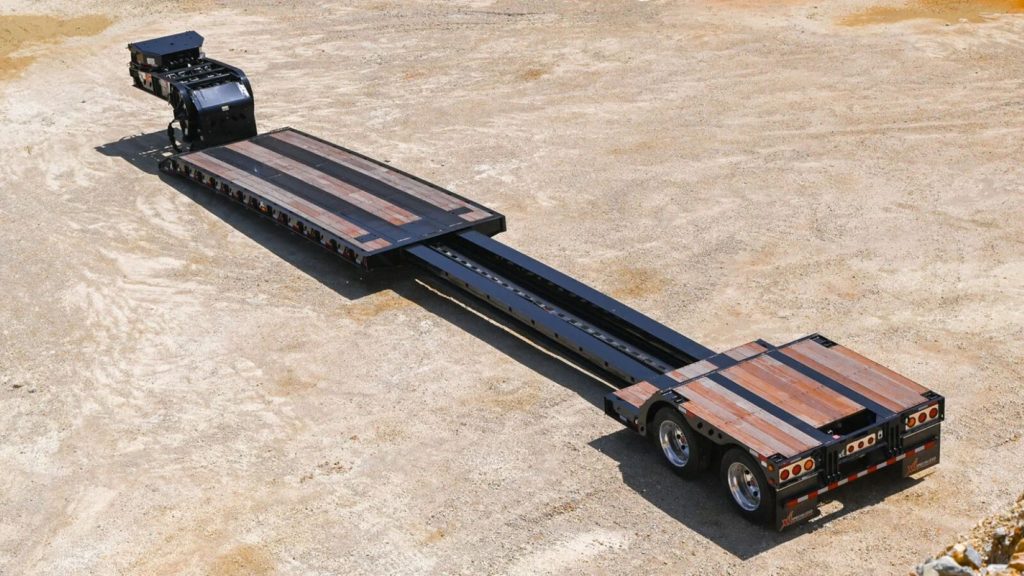
The XL Specialized Hydraulic Detachable Trailer is a heavy-haul lowboy designed to transport construction equipment, agricultural machinery, industrial components, railroad equipment, buses, and other large or heavy loads.
Its hydraulic detachable gooseneck separates from the main deck, allowing equipment to be driven onto the trailer from the front. After loading, the gooseneck reconnects to the deck and raises the front of the trailer into its operating position.
XL Specialized offers multiple hydraulic detachable designs, including its Classic Hydraulic Detachable Gooseneck, Low-Profile HDG, Guardian HDG, Mini-Deck, and Hydraulic Detachable Extendable models. These configurations provide different deck heights, capacities, axle arrangements, and loading features.
Depending on the model, capacities range from approximately 60,000 pounds on lightweight mini-deck configurations to as much as 180,000 pounds on larger multi-axle heavy-haul trailers.
Key Characteristics
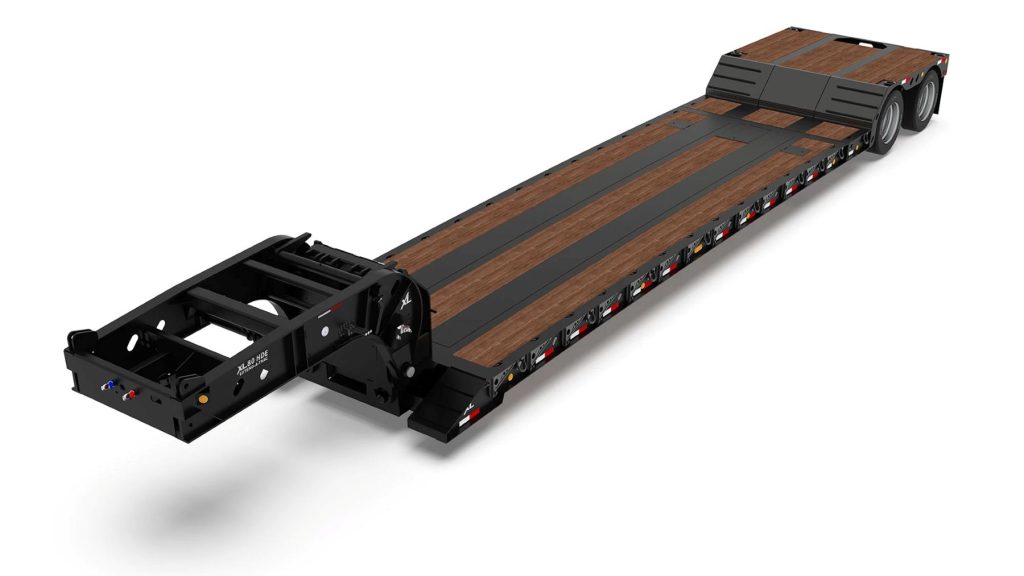
The defining characteristic of the XL Hydraulic Detachable Trailer is its hydraulically operated removable gooseneck. The neck can be lowered, disconnected, and moved away from the main deck so equipment can be driven directly onto the trailer.
XL’s Classic hydraulic neck provides seven variable ride-height positions on applicable models. The Low-Profile HDG uses a more compact design with five ride-height positions and additional tractor clearance.
The low main deck helps reduce the total loaded height of excavators, bulldozers, wheel loaders, agricultural machinery, and industrial equipment. Certain mini-deck configurations provide a loaded deck height as low as approximately 12 inches.
Many configurations include Apitong decking, D-rings, chain drops, swing-out outriggers, boom troughs, bucket wells, front loading ramps, and provisions for additional axles.
Hydraulic Detachable Extendable models add the ability to lengthen the main deck for long machinery, structural components, or other freight that cannot fit on a standard fixed-length lowboy.
Common Specifications
Capacity Range
XL offers hydraulic detachable configurations with overall capacity ratings ranging from approximately 60,000 to 180,000 pounds. Exact ratings depend on the model, axle configuration, deck design, and weight distribution.
Hydraulic Gooseneck
The detachable gooseneck is operated using the tractor’s wet kit or a separate hydraulic power unit. The system raises and lowers the trailer and allows the neck to disconnect from the main deck.
Ride-Height Adjustment
Classic hydraulic goosenecks may provide seven ride-height positions. Low-profile configurations generally provide five positions, allowing the operator to adjust front deck height and ground clearance.
Deck Height
Common loaded deck heights range from approximately 12 inches on certain mini-deck models to approximately 22 inches on heavier configurations. A lower deck provides additional vertical clearance for tall equipment.
Main Deck
The main deck may be configured with Apitong hardwood decking, steel center sections, reinforced flanges, removable outriggers, chain drops, and multiple D-rings.
Extendable Configurations
XL Hydraulic Detachable Extendable trailers can provide a main deck that extends from approximately 28 ft 7 in to as much as 49 ft 11 in on certain models.
Axle Configurations
Available arrangements include tandem, tri-axle, quad-axle, flip-axle, booster, power-booster, and multi-axle configurations. Additional axles help distribute heavy loads across a greater number of contact points.
Boom Trough and Bucket Well
Construction configurations may include an open boom trough and rear bucket well. These areas provide clearance for excavator booms, buckets, and other projecting equipment components.
Outriggers
Swing-out or pull-out outriggers expand the supporting width of the deck for wide equipment. Outriggers do not eliminate oversize permit requirements when the loaded width exceeds legal limits.
Suspension
Air-ride suspension is common on larger configurations. Suspension specifications, axle ratings, controls, and lift-axle availability vary by model.
Brakes and ABS
Commercial air brakes and trailer ABS are used. Multi-axle configurations may include additional control systems based on axle count and operating requirements.
Cargo Securement
Common securement equipment includes bent D-rings, chain drops, chain slots, outriggers, stake pockets, and reinforced anchor points.
Common Applications
- Excavator transportation
- Bulldozer transportation
- Wheel loader transportation
- Motor grader transportation
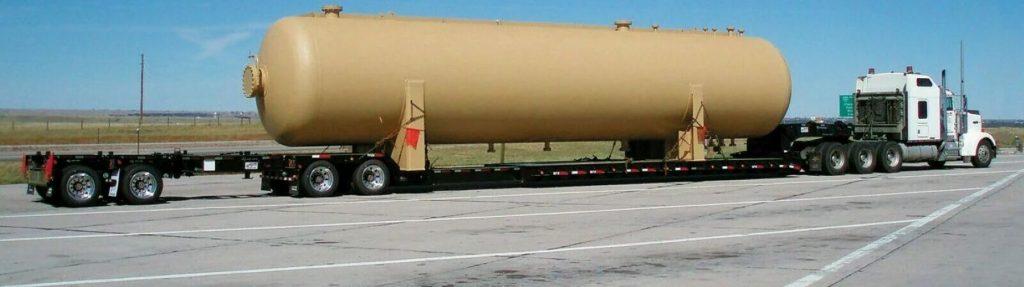
- Crane component hauling
- Agricultural machinery transport
- Railroad equipment transportation
- Industrial machinery hauling
- Bus and recovery-vehicle transport
- Mining equipment transportation
- Forestry equipment hauling
- Energy-sector equipment transportation
- Infrastructure construction projects
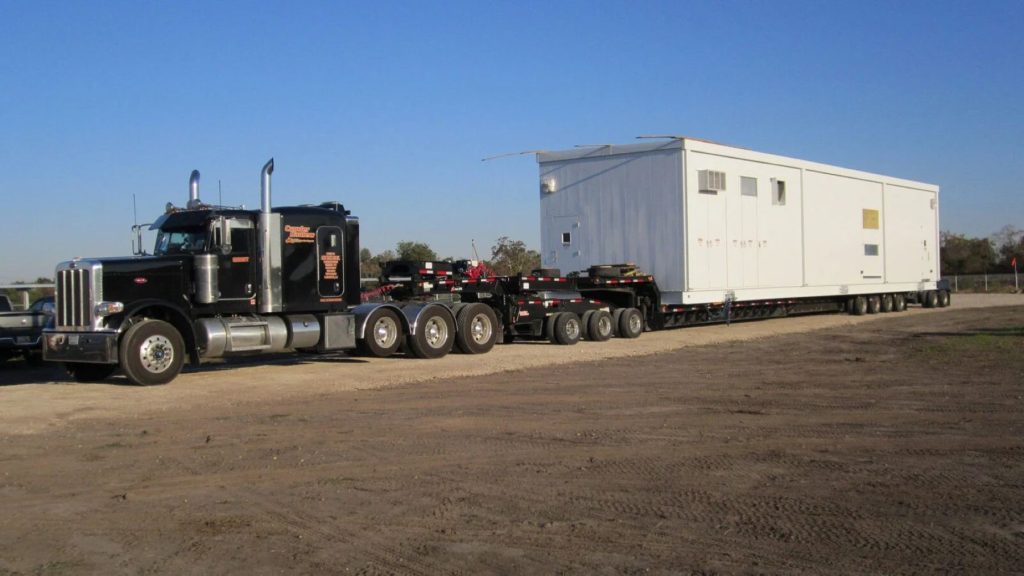
- Oversized and overweight freight
- Long equipment transportation with extendable configurations
Advantages
- Hydraulic gooseneck simplifies front loading
- Equipment can be driven directly onto the main deck
- Low deck height accommodates taller machinery
- Multiple ride-height settings improve operating flexibility
- Wide range of capacity ratings is available
- Fixed and extendable deck configurations are offered
- Compatible with multiple axle arrangements
- Boom trough and bucket well options support excavator transport
- Outriggers accommodate wider equipment
- Apitong decking provides traction and durability
- Numerous securement points are available
- Flip axles and boosters can improve weight distribution
- Custom configurations are available for specialized industries
- Suitable for both construction and commercial heavy hauling
Limitations or Considerations
- Higher purchase cost than a conventional equipment trailer
- Hydraulic components require additional maintenance
- The tractor may need a compatible wet kit
- Low ground clearance increases the risk of bottoming out
- Operating procedures require training and experience
- Large configurations have reduced maneuverability
- Additional axles increase tire and brake maintenance
- Oversize or overweight permits may be required
- Route planning may be necessary for tall or heavy loads
- The trailer is heavier than simpler mechanical configurations
- Hydraulic failures can interrupt loading operations
- Improper ride-height selection can reduce ground clearance
- Deck extensions introduce additional inspection points
- Specialized replacement parts may not be available locally
Driver and Operator Considerations
Drivers must understand the correct procedure for detaching and reconnecting the hydraulic gooseneck. The tractor and trailer should be positioned on firm, reasonably level ground before beginning the loading process.
Before detaching the neck, the operator should inspect the hydraulic hoses, fittings, cylinders, controls, support arms, locking mechanisms, air lines, and electrical connections.
The loading area should provide enough space for the tractor to move away from the deck. Equipment should approach the trailer slowly and remain centered during loading.
Once the equipment is positioned, the driver must reconnect and lock the gooseneck completely. Hydraulic pressure alone should never be treated as a substitute for the trailer’s mechanical locking system.
Ride height should provide sufficient road clearance without unnecessarily increasing the loaded height. Low-clearance trailers require special attention at railroad crossings, steep driveways, uneven job sites, and changes in road elevation.
Cargo securement must be matched to the machine’s weight, dimensions, attachment points, and potential movement during transport.
Maintenance and Ownership Notes
Hydraulic systems should be inspected regularly for leaks, damaged hoses, worn fittings, contaminated fluid, loose connections, and cylinder damage. Hydraulic fluid should be maintained according to the manufacturer’s service requirements.
The gooseneck locking system requires frequent inspection. Pins, hooks, locks, support arms, and connection surfaces should be clean, properly lubricated, and free from excessive wear.
The trailer frame should be inspected for cracking, distortion, corrosion, impact damage, and previous repairs. High-stress areas around the gooseneck connection, main beams, axle mounts, outriggers, and rear transition deserve particular attention.
Apitong decking should be checked for cracked boards, decay, loose fasteners, oil contamination, and damage caused by tracked machinery.
Air-brake components, ABS equipment, suspension systems, wheel ends, tires, and electrical wiring should be included in the preventive-maintenance program.
Extendable configurations require inspection of the rollers, tracks, extension locks, hydraulic or mechanical controls, and air and electrical routing through the moving deck.
Buying Considerations
- Identify the heaviest equipment the trailer will transport.
- Measure the height, width, length, and ground clearance of the intended loads.
- Select a capacity rating that supports both overall and concentrated load requirements.
- Compare Classic, Low-Profile, Guardian, Mini-Deck, and Extendable configurations.
- Determine whether a fixed or extendable main deck is required.
- Confirm the number and placement of axles.
- Evaluate whether a flip axle, booster, jeep, or power booster will be needed.
- Verify tractor wet-kit compatibility.
- Inspect the hydraulic system for leaks and damaged components.
- Operate the detachable neck through a complete loading cycle.
- Inspect all mechanical neck locks and connection points.
- Measure the loaded deck height and available ground clearance.
- Review the boom trough, bucket well, outriggers, and securement equipment.
- Inspect the frame, decking, suspension, brakes, tires, and wheels.
- Confirm parts, dealer, and service support in the operating region.
- Review maintenance records and previous load history when purchasing used equipment.
Common Brands or Manufacturers
- XL Specialized Trailers
- Fontaine Specialized
- Trail King Industries
- Talbert Manufacturing
- Rogers Brothers Corporation
- Kalyn Siebert
- Load King
- Eager Beaver Trailers
- Felling Trailers
- Pitts Trailers
- Landoll
- Towmaster
Variants and Related Configurations
- XL Classic Hydraulic Detachable Gooseneck
- XL Low-Profile Hydraulic Detachable Gooseneck
- XL Guardian Low-Profile HDG
- XL Hydraulic Detachable Extendable
- XL Mini-Deck Hydraulic Detachable
- XL Cheater Hydraulic Detachable Gooseneck
- XL Railroad Special
- XL Bus Hauler
- Construction-Style HDG
- Commercial-Style HDG
- Tandem-Axle Configuration
- Tri-Axle Configuration
- Quad-Axle Configuration
- Flip-Axle Configuration
- Booster-Compatible Configuration
- Multi-Axle Heavy-Haul Configuration
Comparison to Similar Trailers
Compared with a mechanical detachable lowboy, the XL Hydraulic Detachable allows the gooseneck to be raised, lowered, detached, and reconnected using hydraulic power. This generally simplifies loading but adds hydraulic components and maintenance requirements.
Compared with a fixed-neck equipment trailer, the detachable design allows machinery to be loaded from the front at a lower approach angle. Fixed-neck trailers may be less expensive and mechanically simpler but often rely on rear ramps.
Compared with a Step Deck Trailer, the XL Hydraulic Detachable provides a much lower main deck and greater capacity for heavy machinery. The step deck is generally lighter and better suited for freight that does not require front loading.
Compared with a conventional Flatbed Trailer, the XL lowboy sacrifices continuous deck space and loading simplicity to provide lower deck height and significantly greater heavy-equipment capability.
XL’s Classic HDG competes with trailers such as the Fontaine Magnitude, Trail King TK Series, Talbert RGN, Rogers Brothers Detachable Lowboy, and other premium hydraulic detachable trailers.
Best Fit For
- Heavy-haul carriers
- Construction equipment transporters
- Equipment rental companies
- Excavation contractors
- Agricultural machinery dealers
- Railroad contractors
- Mining operations
- Industrial machinery movers
- Bus and recovery-vehicle transporters
- Energy-sector contractors
- Infrastructure construction companies
- Fleets transporting tall or high-center-of-gravity equipment
- Operations requiring front-loading capability
- Carriers needing extendable lowboy configurations
Related Equipment
- Hydraulic Power Units
- Tractor Wet Kits
- Detachable Gooseneck Systems
- Flip Axles
- Jeep Dollies
- Axle Boosters
- Power Boosters
- Outriggers
- D-Rings and Chain Securement
- Boom Troughs
- Bucket Wells
- Brake Systems
- Suspension Systems
- Axles and Differentials
- Tires and Wheels
- Electrical Systems
- Safety Systems
Related Freight Types
- Heavy Haul and Oversized Freight
- Specialized and Niche Freight
- Construction Equipment Freight
- Agricultural Equipment Freight
- Mining Equipment Freight
- Industrial Machinery Freight
- Railroad Equipment Freight
- Energy-Sector Freight
- Infrastructure Freight
- Forestry Equipment Freight
- Oversized Machinery Freight
Related Trailer Types
- Lowboy and RGN Trailers
- Hydraulic Detachable Trailers
- Mechanical Detachable Trailers
- Extendable Lowboy Trailers
- Multi-Axle Trailers
- Step Deck Trailers
- Flatbed Trailers
- Specialty Trailers
Related Trailer Models
- XL Specialized RGN
- XL Classic Hydraulic Detachable Gooseneck
- XL Low-Profile Hydraulic Detachable Gooseneck
- XL Guardian HDG
- XL Hydraulic Detachable Extendable
- Fontaine Magnitude Lowboy Trailer
- Trail King TK Series Lowboy Trailer
- Rogers Brothers Detachable Lowboy
- Talbert RGN Series
- Kalyn Siebert Hydraulic Detachable Trailer
- Load King Hydraulic Detachable Lowboy
Related Guides
Regulatory and Compliance Notes
The XL Hydraulic Detachable Trailer must comply with federal and state regulations governing commercial vehicle dimensions, axle weights, gross vehicle weight, brakes, tires, lighting, cargo securement, and safety equipment.
Many loads transported on this trailer exceed normal legal weight or dimensional limits. These movements may require oversize or overweight permits, approved routes, travel-time restrictions, signs, flags, warning lights, and escort vehicles.
Operators must comply with applicable bridge-formula requirements and state-specific axle-spacing laws. Additional axles do not automatically make a load legal; weight must be distributed correctly across the tractor and trailer.
Construction equipment must be secured according to applicable FMCSA cargo-securement regulations. Articulated components, buckets, booms, blades, and accessories may require separate restraint.
Loaded height should be measured rather than estimated. Route planning must account for bridges, utility lines, railroad crossings, construction zones, narrow roads, and other clearance restrictions.
Real World Operating Notes
In real-world heavy-haul operations, the hydraulic detachable neck can significantly improve loading efficiency. Excavators, bulldozers, wheel loaders, and other self-propelled equipment can be driven onto the low main deck without using rear loading ramps.
The variable ride-height system helps operators balance deck clearance against total loaded height. Running the trailer too low can create clearance problems, while raising it unnecessarily can increase the risk of striking overhead structures.
Lowboy operators must approach railroad crossings, steep driveways, and uneven job-site entrances carefully. The center of the trailer can contact the ground even when the tractor and trailer axles remain on the roadway.
Extendable HDG configurations provide additional flexibility for long loads, but operators must confirm that every extension lock is engaged and that air and electrical connections remain protected.
The trailer’s capacity, low deck height, and configuration flexibility make it suitable for demanding heavy-haul work, but safe operation depends heavily on proper loading, weight distribution, securement, permitting, and route planning.
Frequently Asked Questions
What is an XL Hydraulic Detachable Trailer?
It is a heavy-haul lowboy trailer with a hydraulically operated gooseneck that disconnects from the main deck for front loading.
How does the hydraulic detachable gooseneck work?
Hydraulic power lowers and supports the neck while its mechanical connections are released. The tractor then moves the gooseneck away so equipment can be driven onto the main deck.
What equipment can an XL Hydraulic Detachable carry?
Common loads include excavators, bulldozers, wheel loaders, graders, agricultural machinery, railroad equipment, buses, industrial machinery, and mining equipment.
What capacities are available?
XL offers hydraulic detachable configurations with overall ratings ranging from approximately 60,000 to 180,000 pounds depending on the model and axle arrangement.
How low is the main deck?
Deck heights vary by model. Certain mini-deck configurations are approximately 12 inches loaded, while other low-profile and heavy-duty models commonly range from approximately 15 to 22 inches.
Does the trailer require a tractor wet kit?
Many configurations can use the tractor’s wet kit. A separate hydraulic power unit may also be installed depending on the trailer specification.
What is the difference between the Classic and Low-Profile goosenecks?
The Classic gooseneck is a wide commercial design with up to seven ride-height positions. The Low-Profile design reduces weight, provides additional tractor clearance, and commonly uses five ride-height positions.
Is an extendable version available?
Yes. XL Hydraulic Detachable Extendable models can lengthen the main deck for long equipment and specialized loads.
Can additional axles be added?
Many models can be configured or prepared for flip axles, boosters, power boosters, jeeps, or other axle-distribution equipment.
Availability and Where to Find
XL Hydraulic Detachable Trailers are available through XL Specialized Trailers dealers, heavy-equipment trailer dealerships, rental and leasing companies, used-equipment dealers, auctions, and commercial trailer marketplaces.
Because XL offers numerous capacity, deck, axle, and gooseneck configurations, buyers should match the trailer to their specific equipment and operating territory rather than relying only on the model’s overall capacity rating.
Current models, specifications, options, and dealer availability can be confirmed through XL Specialized Trailers.
Support Trucking Families
Truck Equipment Atlas supports the mission of Grey Cross, a nonprofit dedicated to helping families of truck drivers who lose their lives while on the road. As the site grows, part of its mission is to bring awareness and support to these families.
Podcast or Video Section
Learn More Through Audio and Video
Truck Equipment Atlas will continue expanding with podcast episodes, interviews, and equipment breakdowns to help drivers and fleets better understand trucks and equipment.
Follow the Growth of Truck Equipment Atlas
Truck Equipment Atlas continues to expand with new truck profiles, trailer coverage, diesel engine pages, equipment system resources, manufacturer information, and educational guides.
Visit our Site Updates page to explore recent additions, project milestones, and upcoming resources as we continue building one of the industry’s growing commercial trucking equipment reference libraries.
View the Latest Site Updates: Truck Equipment Atlas Site Updates