
Diesel Emissions Systems Explained: Understanding EGR, DPF, SCR, and DEF
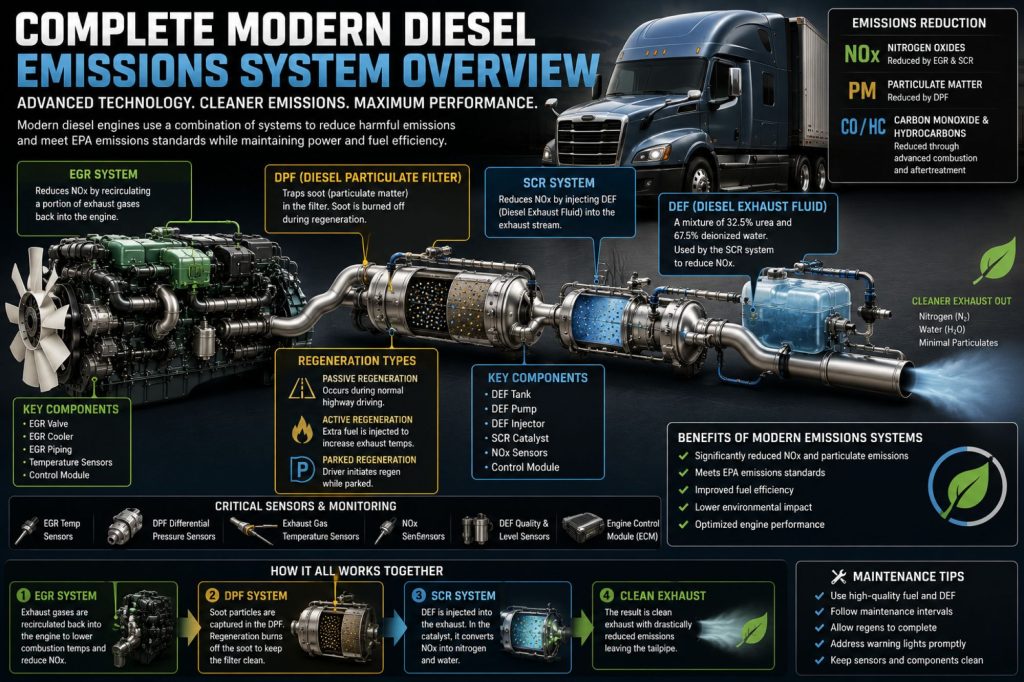
Modern diesel engines are cleaner and more efficient than ever before, thanks in large part to advanced emissions control technologies.
However, terms such as EGR, DPF, SCR, and DEF can be confusing for drivers and owner-operators, especially when emissions-related problems occur.
Understanding how these systems work can help drivers better maintain their trucks, reduce downtime, and make informed equipment decisions.
This guide explains the major components of modern diesel emissions systems, how they work together, and the common issues operators may encounter.
Why Do Diesel Engines Have Emissions Systems?
Diesel engines produce several types of emissions, including:
- Nitrogen Oxides (NOx)
- Particulate Matter (PM)
- Carbon Monoxide (CO)
- Hydrocarbons (HC)
Government regulations have progressively reduced allowable emissions levels, leading manufacturers to develop advanced emissions control systems.
Modern diesel emissions systems are designed to:
- Reduce air pollution
- Improve environmental performance
- Meet federal emissions regulations
- Increase overall engine efficiency
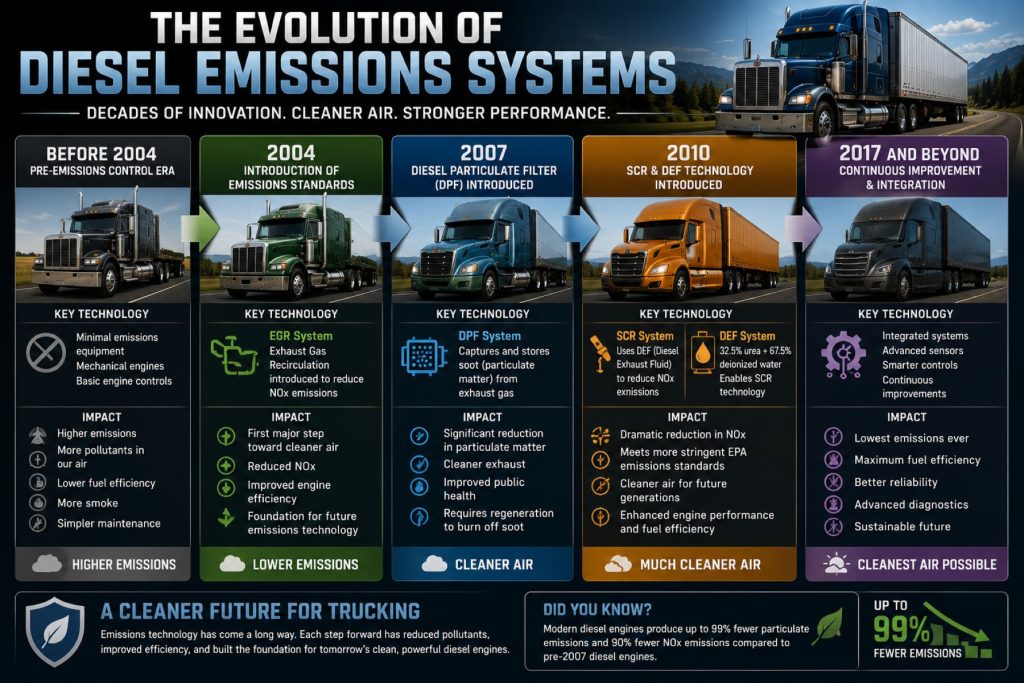
The Evolution of Diesel Emissions Technology
Pre-2004 Engines
- Minimal emissions equipment
- Mechanical simplicity
- Lower operating complexity
2004 Emissions Standards
Introduction of:
- EGR systems
- More advanced engine controls
2007 Emissions Standards
Introduction of:
- Diesel Particulate Filters (DPF)
2010 Emissions Standards
Introduction of:
- Selective Catalytic Reduction (SCR)
- Diesel Exhaust Fluid (DEF)
Modern trucks use multiple systems working together to reduce emissions.
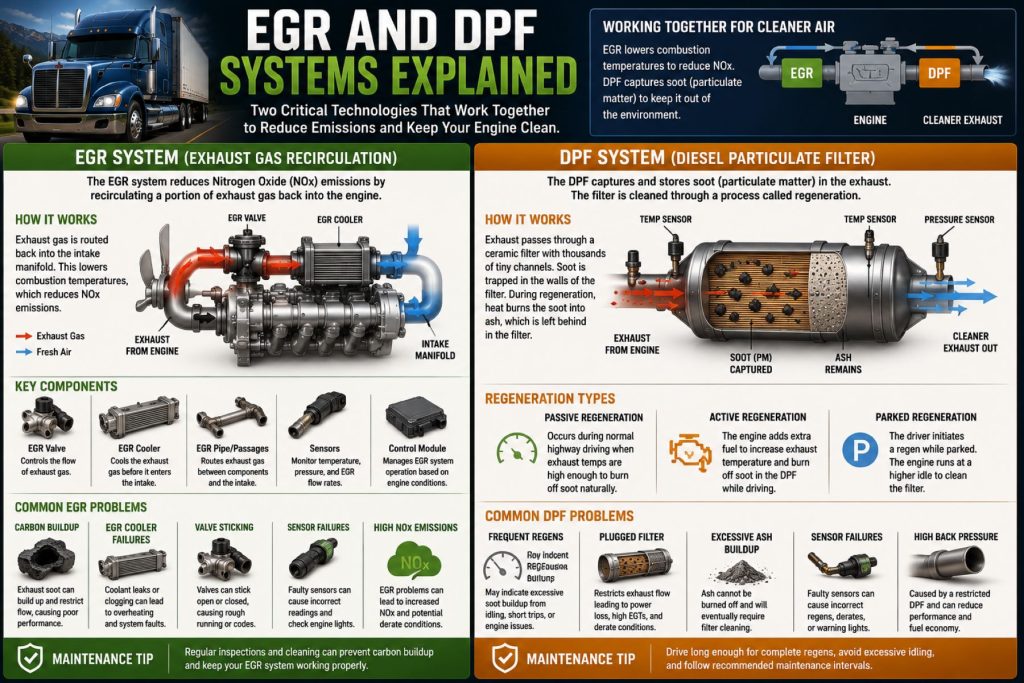
Exhaust Gas Recirculation (EGR)
The EGR system reduces Nitrogen Oxide (NOx) emissions.
How It Works
A portion of exhaust gases is redirected back into the engine’s intake system.
This lowers combustion temperatures and reduces NOx production.
Major Components
- EGR valve
- EGR cooler
- Sensors
- Control module
Common EGR Problems
- Carbon buildup
- EGR cooler failures
- Valve sticking
- Sensor failures
Diesel Particulate Filter (DPF)
The DPF captures soot and particulate matter before it leaves the exhaust system.
How It Works
The filter traps soot particles inside the exhaust system.
Over time, the filter fills and requires cleaning through regeneration.
Types of Regeneration
Passive Regeneration
Occurs automatically during normal highway driving.
Active Regeneration
The truck injects additional fuel to increase exhaust temperatures.
Parked Regeneration
Driver initiates regeneration while parked.
Common DPF Problems
- Frequent regens
- Plugged filters
- Excessive soot accumulation
- Sensor failures
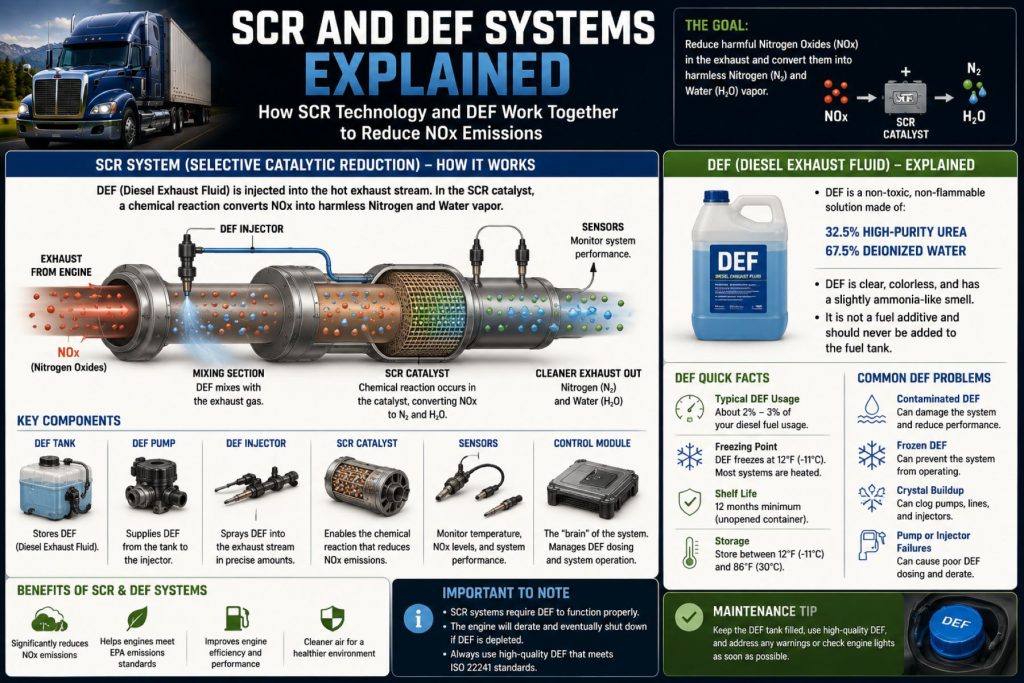
Selective Catalytic Reduction (SCR)
SCR systems reduce NOx emissions after combustion.
How It Works
Diesel Exhaust Fluid (DEF) is injected into the exhaust stream.
A chemical reaction converts harmful NOx into:
- Nitrogen
- Water vapor
Major Components
- DEF tank
- DEF pump
- DEF injector
- SCR catalyst
- Sensors
Diesel Exhaust Fluid (DEF)
DEF is a mixture of:
- 32.5% high-purity urea
- 67.5% deionized water
DEF is:
- Non-toxic
- Non-flammable
- Clear in appearance
DEF Consumption
Most trucks use approximately:
- 2%–3% of diesel fuel consumption
Common DEF Problems
- Frozen DEF
- Contaminated DEF
- Crystal buildup
- Pump failures
- Injector failures
How All the Systems Work Together
Modern emissions systems function as an integrated package.
- EGR reduces combustion temperatures.
- DPF captures soot.
- SCR reduces NOx emissions.
- DEF enables the SCR process.
When functioning properly, these systems dramatically reduce emissions compared to older diesel engines.
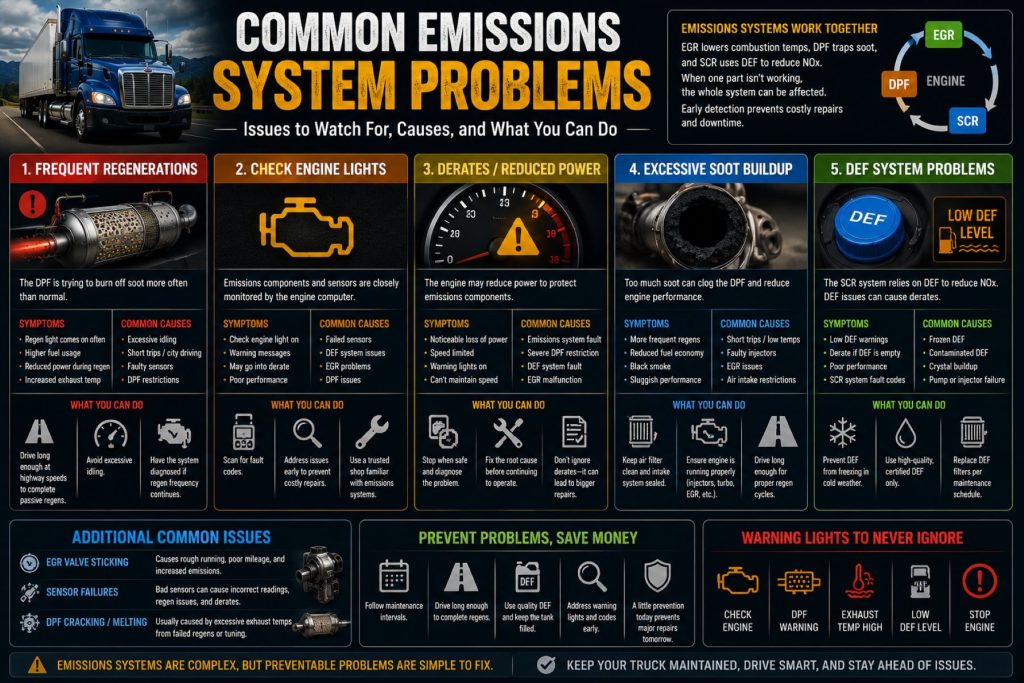
Common Emissions System Failures
Frequent Regenerations
May indicate:
- Excessive idling
- Sensor problems
- DPF restrictions
Check Engine Lights
Often caused by:
- Failed sensors
- DEF issues
- EGR problems
Derates
Modern trucks may reduce power when emissions systems malfunction.
Excessive Soot Buildup
Can result from:
- Engine issues
- Poor driving habits
- Faulty components
How Drivers Can Reduce Emissions Problems
Avoid Excessive Idling
Long periods of idling contribute to soot buildup.
Drive Long Enough to Complete Regens
Frequent short trips can prevent proper regeneration.
Use High-Quality DEF
Poor-quality DEF can damage the SCR system.
Follow Maintenance Intervals
Regular maintenance helps prevent expensive repairs.
Address Warning Lights Quickly
Small issues can become major failures if ignored.
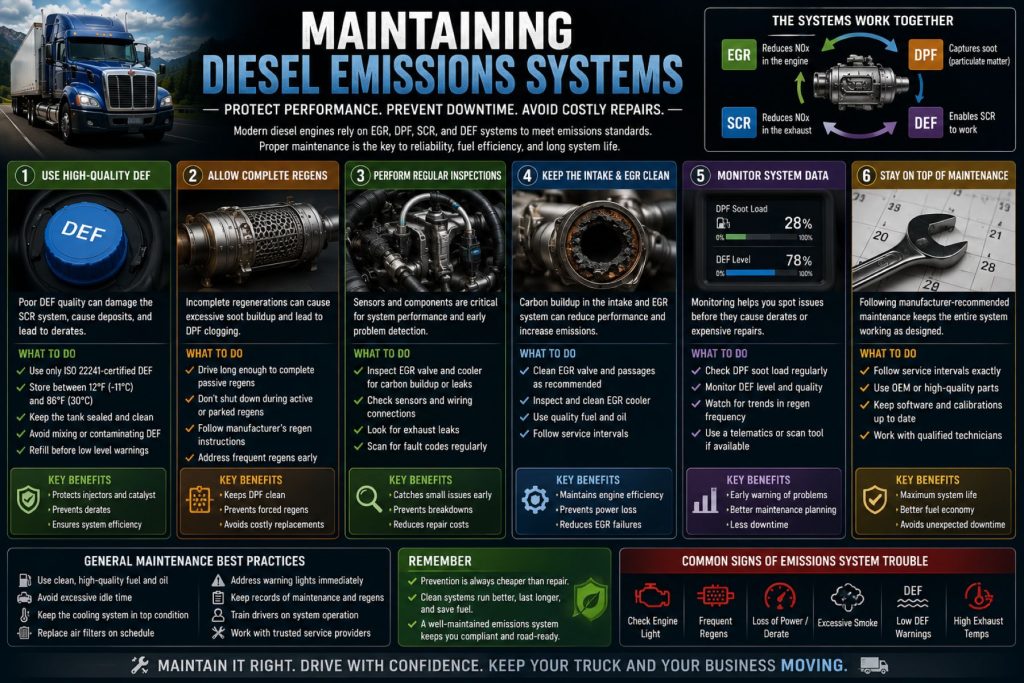
Emissions System Maintenance Tips
Regular DPF Cleaning
Professional cleaning can extend filter life.
Inspect Sensors
Sensors are critical to system operation.
Monitor DEF Quality
Always use properly certified DEF.
Keep Software Updated
Manufacturers frequently release calibration improvements.
Maintain the Entire Engine
Poor engine performance often leads to emissions problems.
Frequently Asked Questions
What does DPF stand for?
Diesel Particulate Filter.
What does SCR stand for?
Selective Catalytic Reduction.
What is DEF?
Diesel Exhaust Fluid used by SCR systems to reduce NOx emissions.
Why does my truck need a parked regeneration?
The DPF has accumulated too much soot to clean itself during normal operation.
Is DEF the same as diesel fuel?
No. DEF should never be added to the diesel fuel tank.
Can emissions systems be expensive to repair?
Yes. Some emissions components can be costly, making preventive maintenance important.
Related Truck Types
Related Engines
Related Equipment Systems
- Diesel Engines
- Air Intake Systems
- Cooling Systems
- Fuel Systems
Related Guides
Final Thoughts
Modern diesel emissions systems have significantly reduced pollution while allowing diesel engines to remain the backbone of the trucking industry.
Although systems such as EGR, DPF, SCR, and DEF add complexity, understanding how they work can help drivers reduce downtime, improve maintenance practices, and keep their trucks operating efficiently and legally.
A basic understanding of emissions systems is now an essential part of owning and operating modern commercial trucks.