
Travis Dump Trailer
Quick Facts
- Manufacturer: Travis Body & Trailer
- Trailer Type: End Dump Trailer
- Model: Travis Dump Trailer
- Common Lengths: 28 ft, 32 ft, 34 ft, 36 ft, 39 ft
- Common Width: 96 to 102 inches
- Trailer Construction: Primarily Aluminum
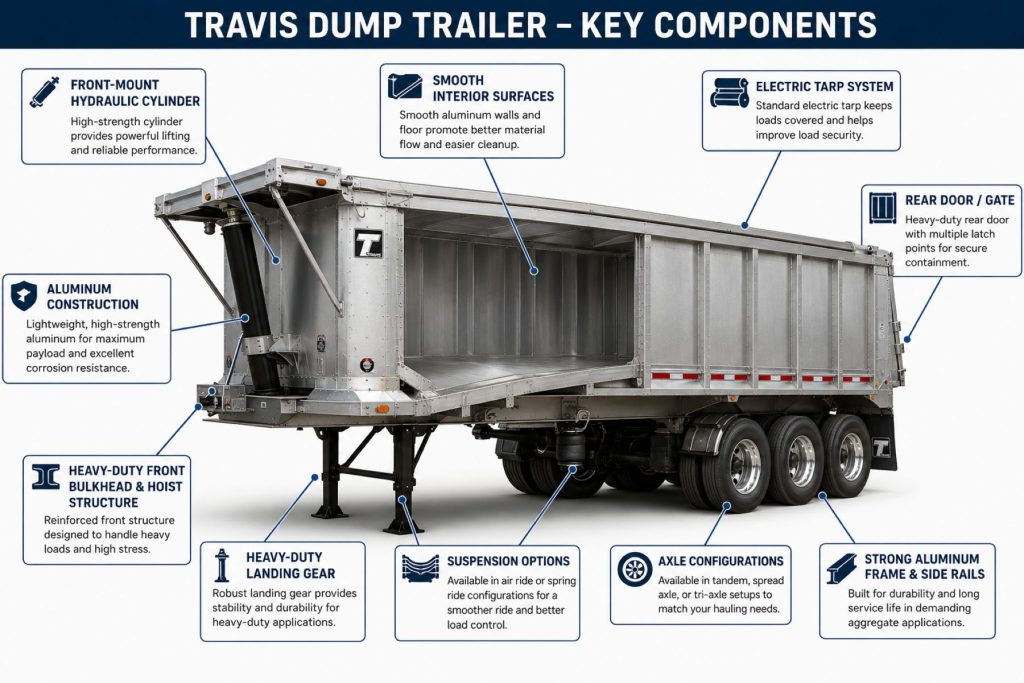
- Common Axle Configurations: Tandem Axle, Spread Axle, Tri-Axle
- Typical Capacity: 20 to 40 Cubic Yards
- Primary Applications: Construction, Aggregates, Sand, Gravel, Asphalt, Quarry Operations
- Common Freight Types: Sand, Gravel, Crushed Stone, Dirt, Asphalt, Limestone, Aggregate Materials
- Dump Style: End Dump
- Lift System: Front-Mount Hydraulic Cylinder
- Suspension Options: Air Ride or Spring Ride
- Production Status: In Production
Overview
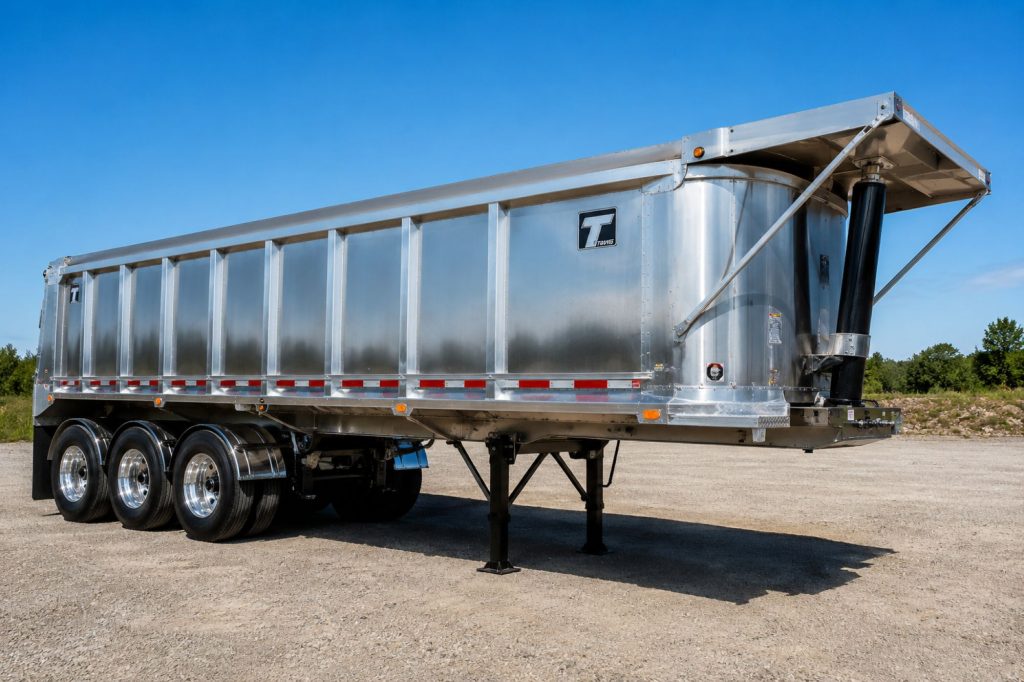
The Travis Dump Trailer has earned a strong reputation throughout the construction and aggregate industries for its lightweight design, dependable performance, and excellent payload capacity. Built primarily from aluminum, Travis trailers are designed to maximize legal payload while maintaining durability in demanding hauling environments.
The trailer is commonly used by aggregate haulers, paving contractors, excavation companies, and owner-operators transporting materials such as gravel, sand, crushed stone, asphalt, and other bulk commodities. Its lightweight construction allows fleets to haul more product per trip while benefiting from corrosion resistance and reduced operating costs.
Over the years, Travis has become one of the most recognized names in aluminum dump trailers, with many units remaining in service for decades when properly maintained.
Key Characteristics
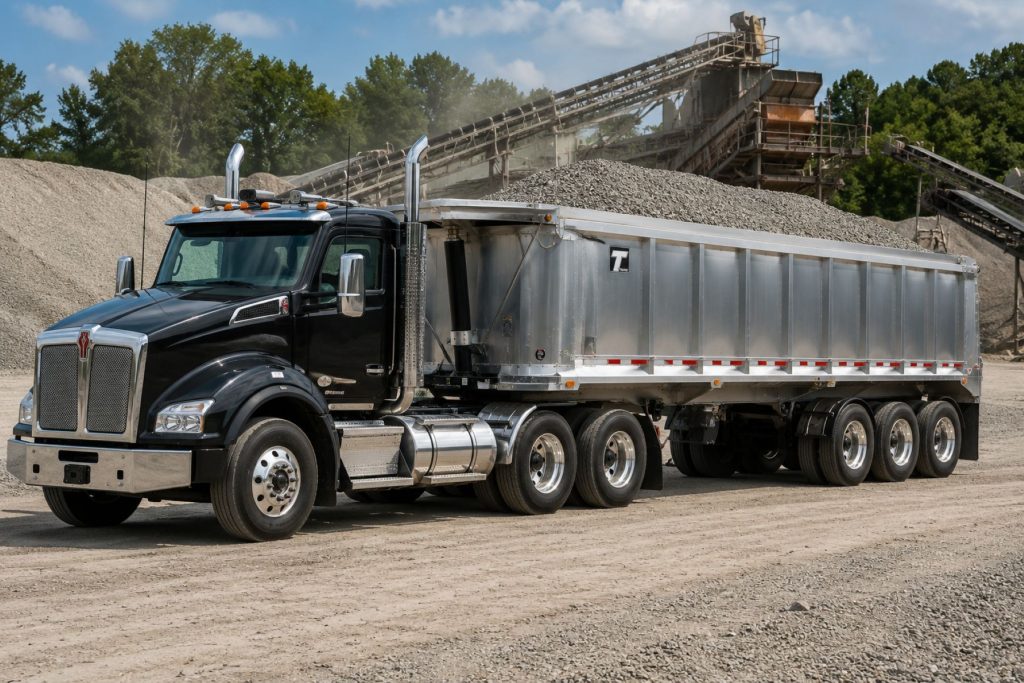
The Travis Dump Trailer is engineered to provide maximum payload efficiency without sacrificing structural strength.
Its aluminum construction helps reduce empty trailer weight while maintaining durability for daily hauling operations. Smooth interior surfaces promote efficient unloading and reduce material buildup inside the trailer body.
The trailer is designed to handle demanding applications involving aggregate products, road construction materials, and excavation work. Strong frame components, proven hydraulic systems, and durable suspension options contribute to the trailer’s reputation for long-term reliability.
Common Specifications
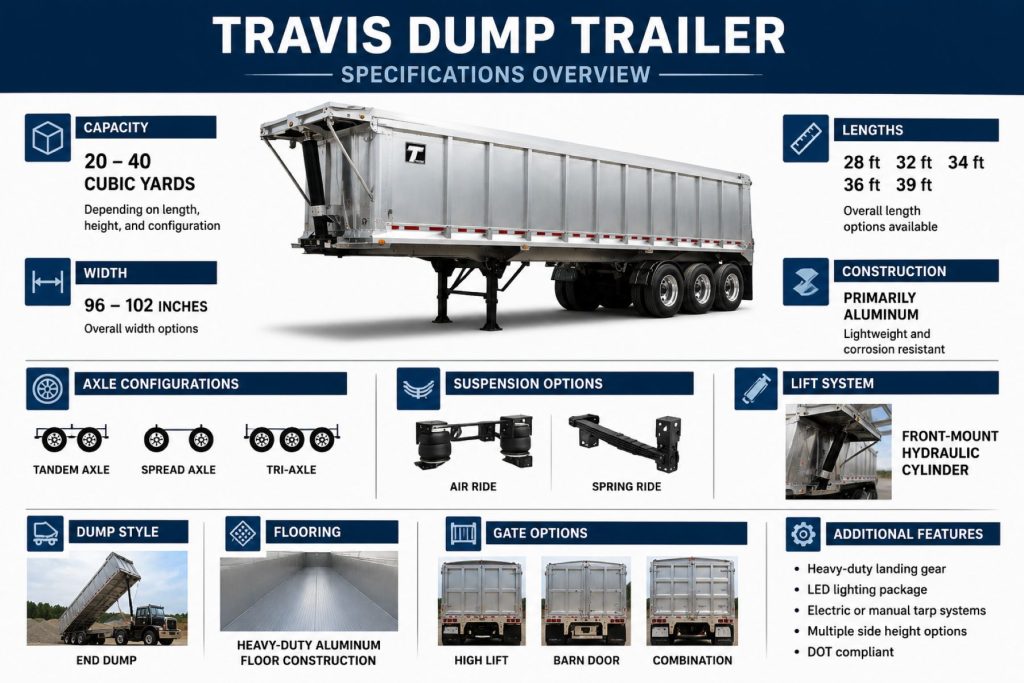
Overall Length
Typically 28 to 39 feet.
Width
96 to 102 inches.
Construction
Primarily aluminum construction.
Capacity
Approximately 20 to 40 cubic yards depending on configuration.
Axle Configurations
Tandem axle, spread axle, and tri-axle.
Suspension
Air ride or spring ride systems.
Dump System
Front-mount hydraulic cylinder.
Body Style
End dump trailer.
Flooring
Heavy-duty aluminum construction designed for aggregate hauling.
Landing Gear
Heavy-duty commercial landing gear.
Common Applications
- Construction Material Hauling
- Sand Transportation
- Gravel Hauling
- Crushed Stone Transportation
- Asphalt Hauling
- Quarry Operations
- Aggregate Transportation
- Excavation Projects
- Road Construction
- Municipal Infrastructure Projects
Advantages
- Lightweight aluminum construction maximizes payload capacity
- Excellent corrosion resistance
- Strong resale value
- Smooth interior surfaces improve material flow
- Reduced empty trailer weight improves hauling efficiency
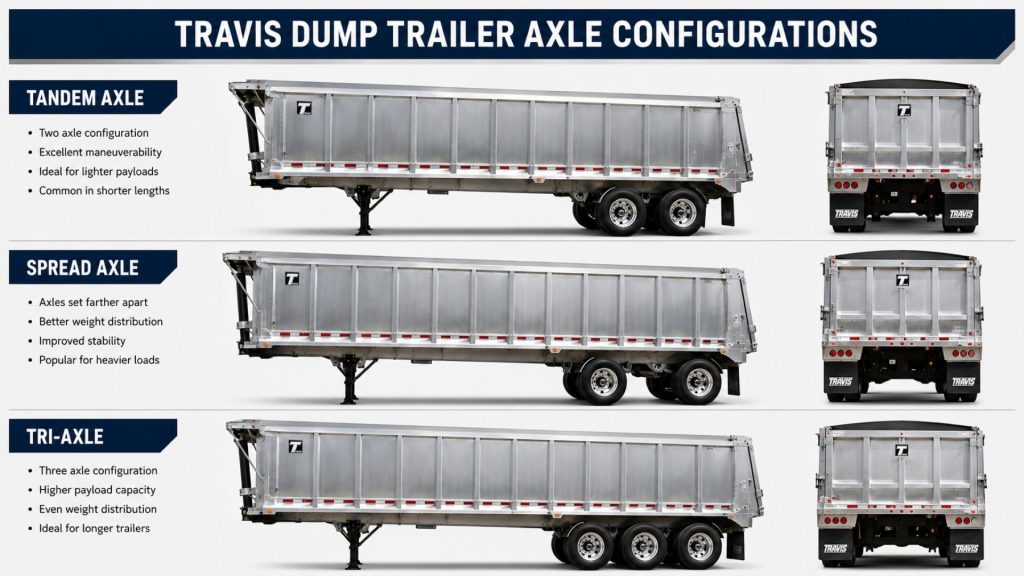
- Available in multiple axle configurations
- Proven durability in aggregate applications
- Widely supported parts and service network
Limitations or Considerations
- Higher initial purchase price than many steel dump trailers
- Aluminum construction may not be ideal for severe demolition debris
- Specialized aluminum welding may be be required for major repairs
- Abrasive materials can accelerate floor wear over time
- Repair costs can be higher than comparable steel trailers
- Not always the preferred choice for extreme mining applications
- Payload advantages can decrease when reinforcement packages are added
- Requires proper loading practices for maximum longevity
Driver and Operator Considerations
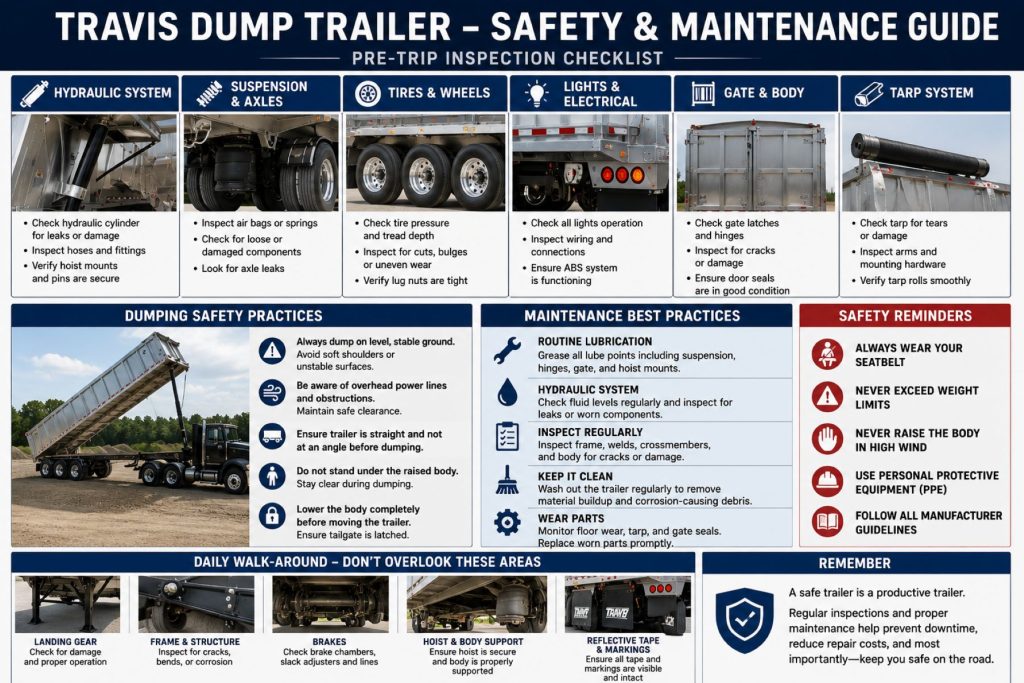
Drivers appreciate the Travis Dump Trailer’s payload efficiency and predictable handling characteristics. Proper load distribution remains critical when transporting heavy aggregate materials, especially during dumping operations.
Operators should always ensure the trailer is positioned on stable, level ground before raising the dump body. Daily inspections of hydraulic systems, tires, suspension components, gates, and tarp systems help improve safety and reduce downtime.
Maintenance and Ownership Notes
Routine maintenance should include inspection of hydraulic cylinders, suspension components, wheel ends, tires, electrical systems, and structural welds.
Special attention should be given to floor wear areas, gate assemblies, tarp systems, and hydraulic connections. Keeping the trailer clean allows operators to identify potential damage before major repairs become necessary.
Buying Considerations
- Payload requirements
- Material type being hauled
- Trailer length requirements
- Axle configuration needs
- Suspension preferences
- New versus used pricing
- Hydraulic system condition
- Floor wear levels
- Tarp system options
- Local weight regulations
Common Brands or Manufacturers
- MAC Trailer
- East Manufacturing
- Trailstar
- Benson Trailers
- Armor Lite
- Ranco Trailers
- Clement Industries
Variants and Related Configurations
- Tandem Axle Dump Trailer
- Spread Axle Dump Trailer
- Tri-Axle Dump Trailer
- Frameless Dump Trailer
- Aggregate Hauling Trailer
- Asphalt Hauling Trailer
- Lightweight Aluminum Dump Trailer
Comparison to Similar Trailers
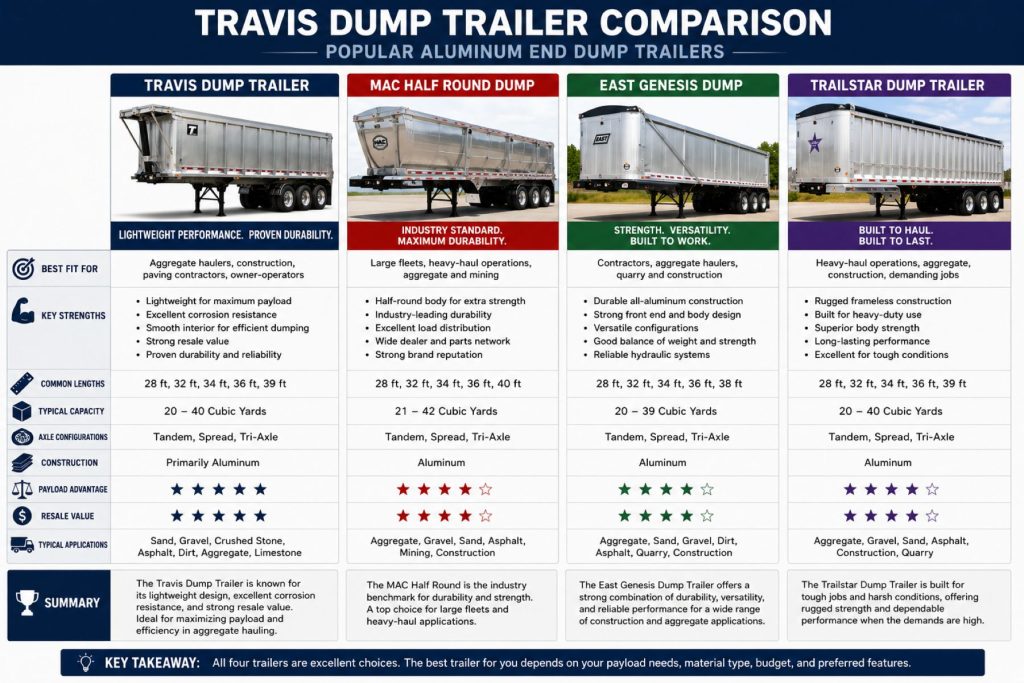
The Travis Dump Trailer is commonly compared to the MAC Half Round Dump Trailer, East Genesis Dump Trailer, and Trailstar Dump Trailer. Compared to the MAC Half Round, the Travis emphasizes lightweight payload capacity and corrosion resistance while still providing excellent durability. Compared to the East Genesis, the Travis offers a long-established reputation and strong resale value. Against the Trailstar, the Travis is generally favored by fleets focused on maximizing payload and efficiency in aggregate hauling applications. All three trailers are widely used throughout the construction and aggregate industries, but the Travis remains especially popular among operators seeking lightweight performance and dependable long-term service.
Best Fit For
- Aggregate haulers
- Construction contractors
- Quarry operators
- Paving companies
- Excavation contractors
- Municipal fleets
- Owner-operators
- Road construction projects
Related Equipment
- Kenworth T880
- Peterbilt 567
- Western Star 47X
- Mack Granite
- Freightliner 114SD
- Volvo VHD
- Wheel Loaders
- Excavators
- Asphalt Plants
- Aggregate Facilities
Related Freight Types
- Sand
- Gravel
- Crushed Stone
- Limestone
- Asphalt
- Dirt
- Fill Material
- Road Base
- Aggregate Products
- Construction Materials
Related Trailer Types
- End Dump Trailers
- Half Round Dump Trailers
- Frameless Dump Trailers
- Quarter Frame Dump Trailers
- Steel Dump Trailers
- Aluminum Dump Trailers
- Side Dump Trailers
- Bottom Dump Trailers
Related Trailer Models
- MAC Half Round Dump Trailer
- East Genesis Dump Trailer
- Trailstar Dump Trailer
- Benson Dump Trailer
- Armor Lite Dump Trailer
- Ranco Dump Trailer
- Clement Dump Trailer
Related Guides
- Choosing the Right Trailer for Your Freight
- Complete Guide to Trailer Types
- Complete Guide to Freight Types
Regulatory and Compliance Notes
Travis Dump Trailers must be operated within federal, state, and local weight regulations. Operators should pay close attention to gross vehicle weight ratings, axle weight limits, bridge law requirements, tarp regulations, lighting requirements, conspicuity tape, brake system compliance, and inspection standards.
Because dump trailers often haul heavy bulk materials, legal payload planning is especially important. Overloading can create safety risks, increase tire and suspension wear, and lead to roadside violations.
Real World Operating Notes
In real-world operation, Travis Dump Trailers are most often used in aggregate, asphalt, road construction, quarry, and excavation work. Their lightweight aluminum construction helps operators maximize payload, but loading practices still matter.
Drivers should avoid uneven loading, dumping on soft ground, or raising the trailer body in high wind conditions. These trailers perform best when matched with proper tractor specifications, experienced operators, and routine maintenance schedules.
Frequently Asked Questions
What is a Travis Dump Trailer used for?
Travis Dump Trailers are primarily used for hauling aggregate materials, gravel, sand, crushed stone, asphalt, and construction materials.
Is the Travis Dump Trailer aluminum?
Most Travis dump trailers are built using aluminum construction to maximize payload and improve corrosion resistance.
What capacities are available?
Depending on configuration, capacities generally range from approximately 20 to 40 cubic yards.
Are Travis trailers good for aggregate hauling?
Yes. They are widely used throughout the aggregate industry because of their lightweight design, payload efficiency, and long service life.
Who commonly operates Travis Dump Trailers?
Aggregate haulers, construction contractors, paving companies, excavation firms, municipalities, and owner-operators commonly use Travis dump trailers.
Availability and Where to Find
Travis Dump Trailers can be found through Travis Body & Trailer dealers, used trailer dealerships, equipment marketplaces, fleet liquidations, auction companies, and private sellers.
Buyers looking at used Travis trailers should inspect the floor, sidewalls, gate, suspension, hydraulic cylinder, hoist mounts, tarp system, brakes, tires, and frame structure before purchase.
Support Trucking Families
Truck Equipment Atlas supports the mission of Grey Cross, a nonprofit dedicated to helping families of truck drivers who lose their lives while on the road. As the site grows, part of its mission is to bring awareness and support to these families.
Podcast or Video Section
Learn More Through Audio and Video
Truck Equipment Atlas will continue expanding with podcast episodes, interviews, and equipment breakdowns to help drivers and fleets better understand trucks and equipment.
Follow the Growth of Truck Equipment Atlas
Truck Equipment Atlas continues to expand with new truck profiles, trailer coverage, diesel engine pages, equipment system resources, manufacturer information, and educational guides.
Visit our Site Updates page to explore recent additions, project milestones, and upcoming resources as we continue building one of the industry’s growing commercial trucking equipment reference libraries.
View the Latest Site Updates: Truck Equipment Atlas Site Updates