
Freightliner M2 106
Quick Facts
- Manufacturer: Freightliner Trucks
- Truck Class: Medium Duty Class 6–7 Truck
- Common Configurations: Regular Cab, Extended Cab, Crew Cab, Chassis Cab, Box Truck, Flatbed, Dump Body, Refrigerated Truck, Utility Body
- Primary Applications: Delivery Operations, Beverage Distribution, Municipal Service, Utility Work, Moving Trucks, Construction Support, Refrigerated Freight
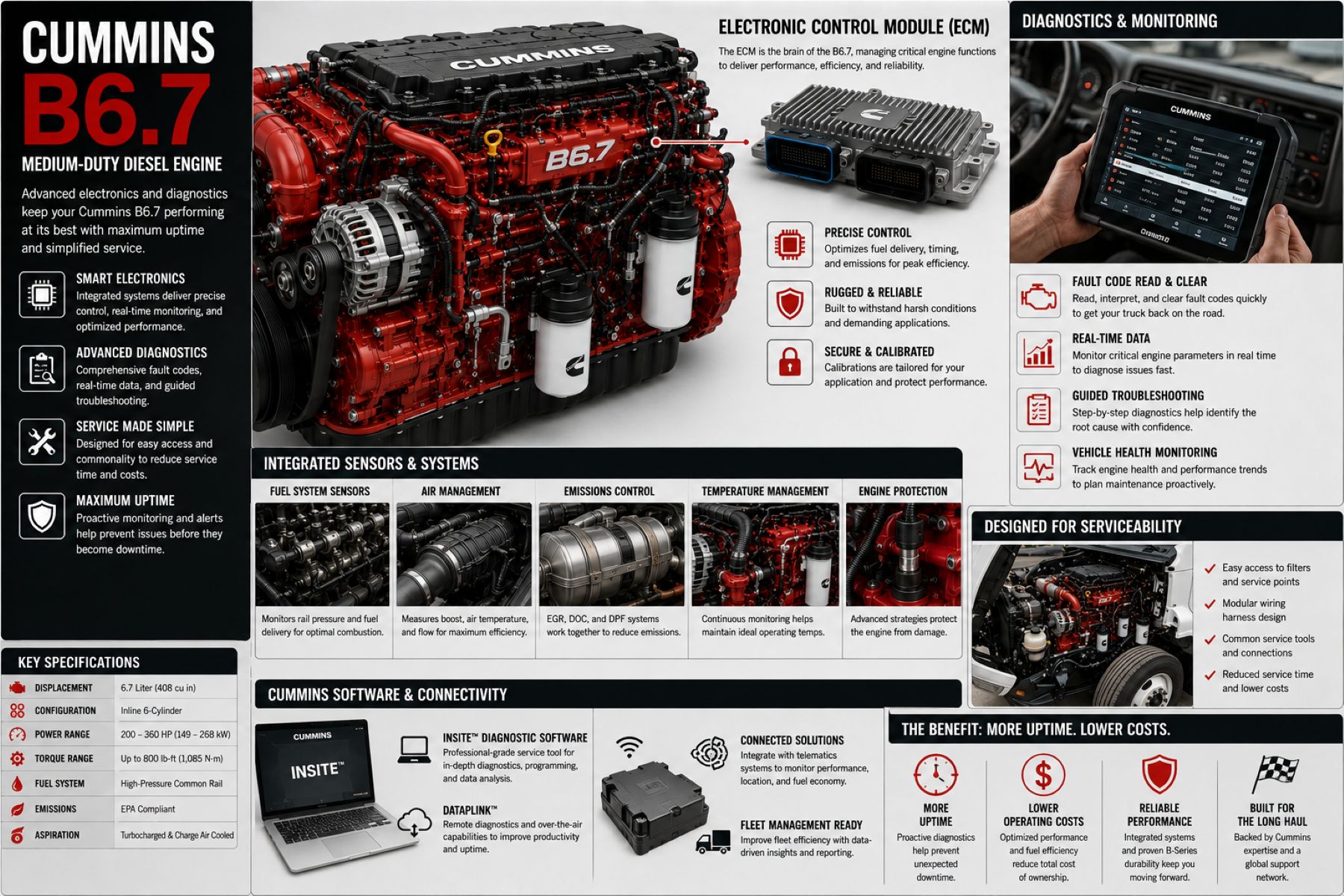
- Common Engine Options: Cummins B6.7, Cummins L9, Detroit DD8
- Typical Transmission Options: Allison Automatic, Eaton Manual, Eaton Automated Manual
- Common Axle Setups: 4×2, 6×4, Single Rear Axle, Tandem Rear Axle
- GVWR Range: Up to 66,000 lbs depending on configuration
- GCWR Range: Up to 80,000 lbs depending on setup
- Cab Style: Conventional Medium Duty Cab
- Production Status: Active Production
- Best Fit: Delivery fleets, vocational service, regional hauling, and commercial upfit operations
Overview
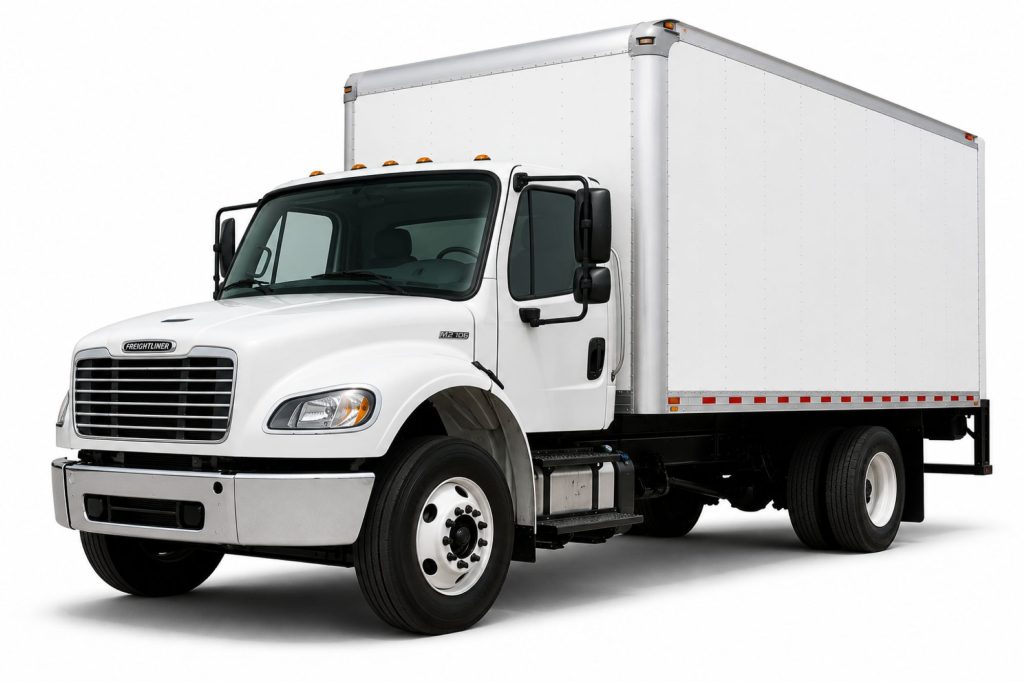
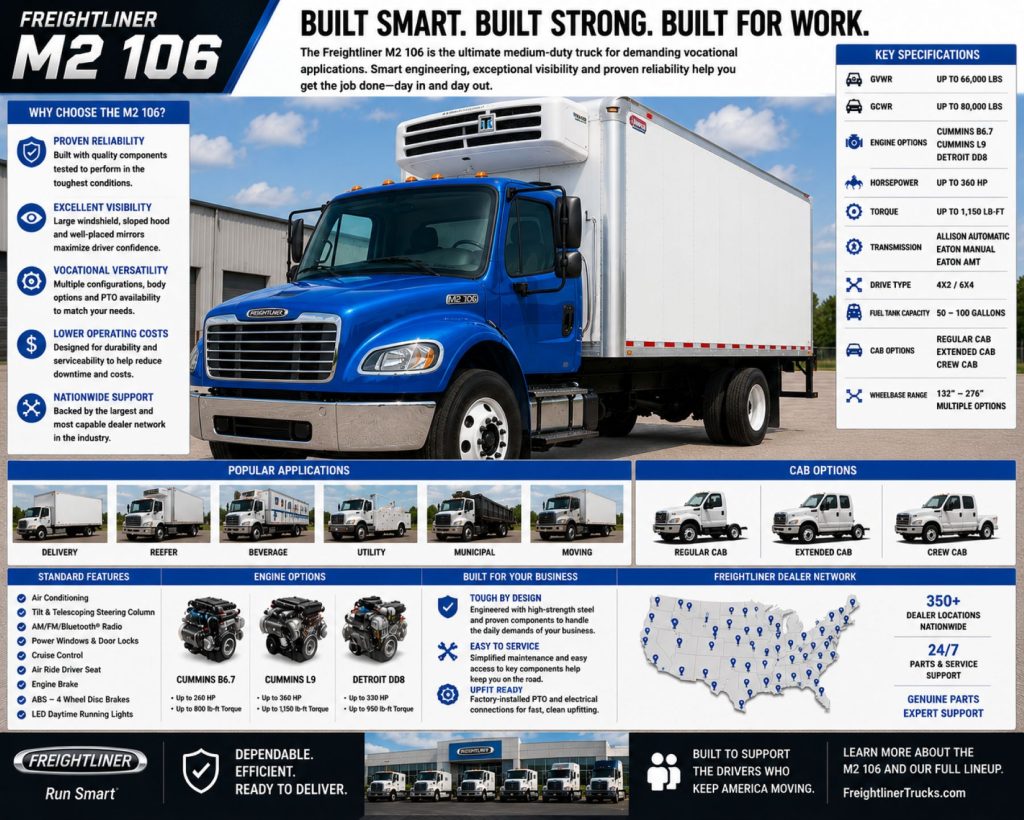
The Freightliner M2 106 is one of the most widely used medium-duty commercial truck platforms in North America, commonly seen in box truck fleets, refrigerated delivery operations, municipal service fleets, utility applications, dump truck setups, and contractor operations.
Part of Freightliner’s Business Class M2 lineup, the M2 106 is designed around commercial flexibility, vocational adaptability, driver visibility, and broad body upfit compatibility. The truck is especially popular among fleet operators because of its strong dealer network, broad drivetrain choices, and ability to support a wide range of commercial industries.
The M2 106 is widely recognized for its maneuverability, clean cab layout, commercial durability, and extensive availability across delivery, municipal, utility, and vocational sectors.
Key Characteristics
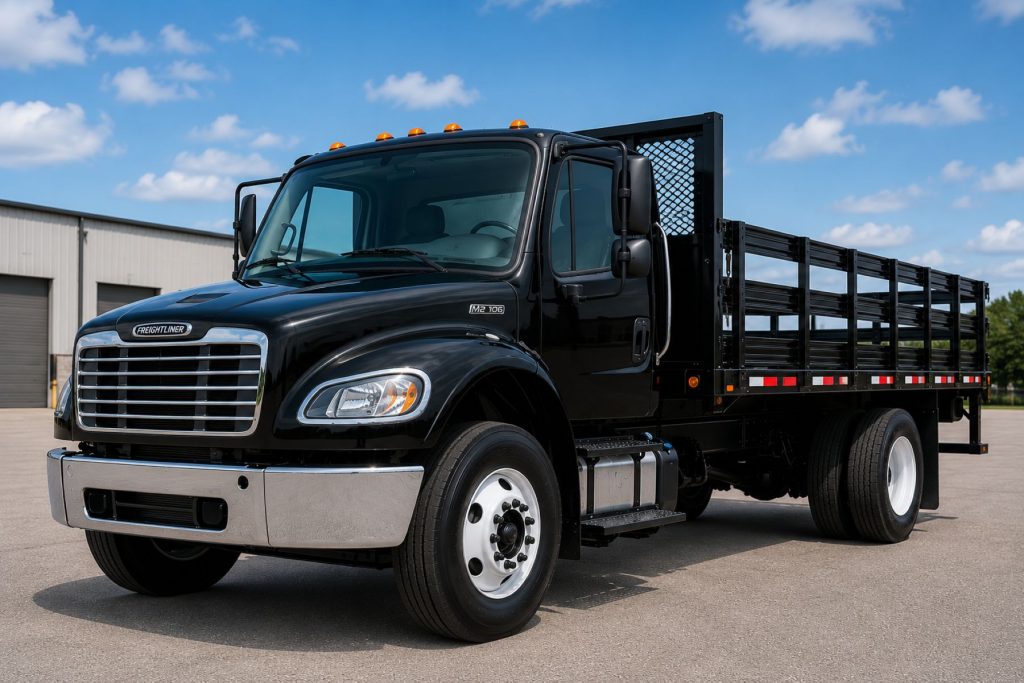
The Freightliner M2 106 is built around versatility, ease of operation, and commercial upfit flexibility. The chassis supports multiple wheelbase lengths, body styles, suspension configurations, and vocational equipment packages depending on operational requirements.
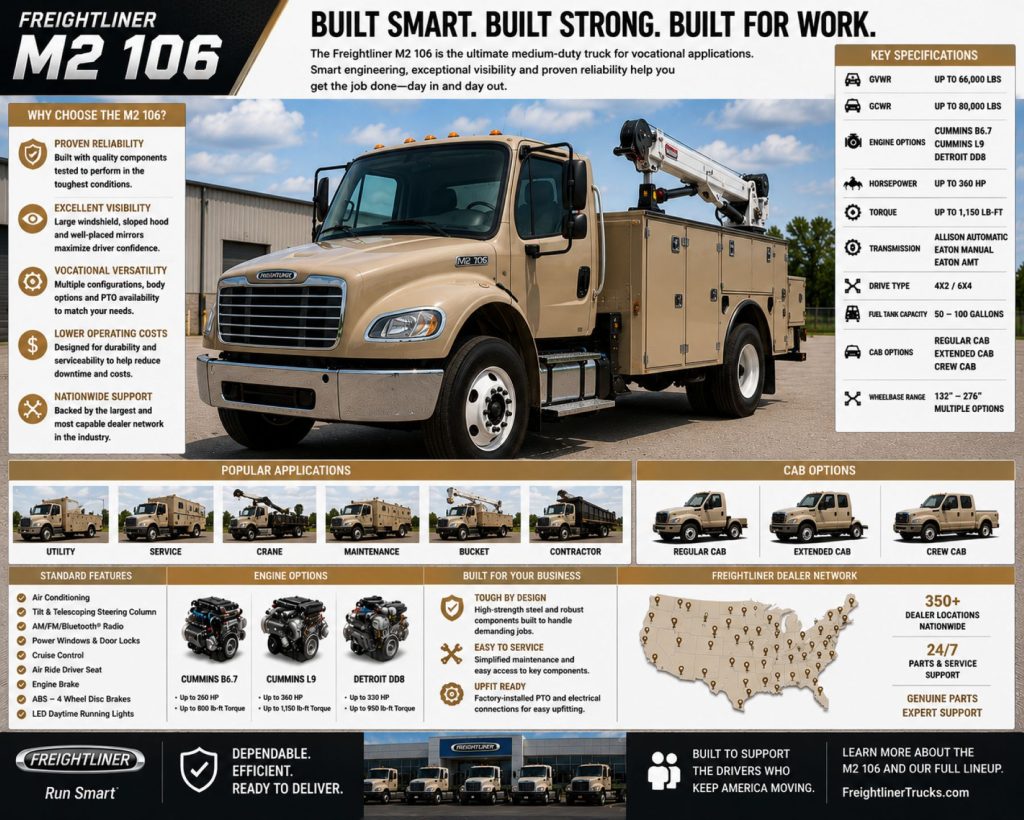
The truck is commonly configured for delivery bodies, reefer bodies, utility service bodies, flatbeds, dump bodies, beverage trucks, and specialized municipal applications. Its wide configuration range makes it one of the most adaptable medium-duty truck platforms available.
Common Specifications
Engine Options
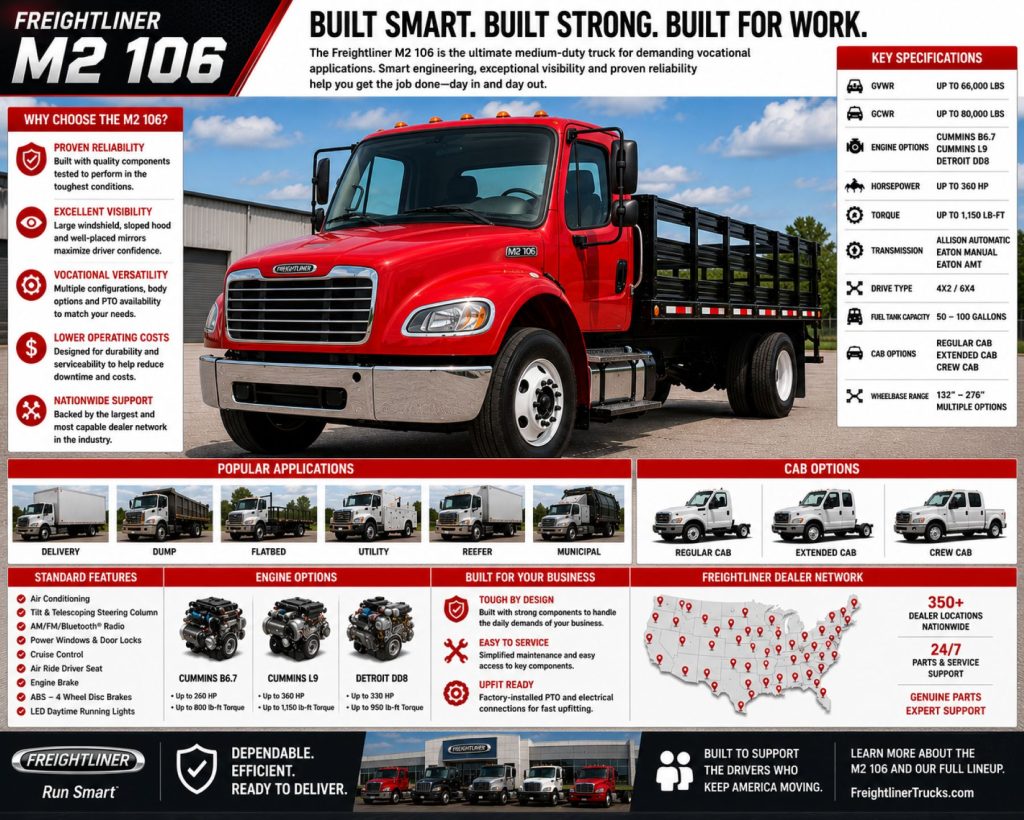
The Freightliner M2 106 is commonly equipped with the Cummins B6.7, Cummins L9, or Detroit DD8 depending on payload requirements, vocational application, and operating environment.
Transmission Options
Transmission choices commonly include Allison automatic transmissions, Eaton manual transmissions, and Eaton automated manual transmissions depending on fleet preference and application type.
Axle Configurations
The Freightliner M2 106 is available in both single axle and tandem axle configurations with multiple suspension and wheelbase options available depending on operational needs.
Cab Configurations
The truck is available in Regular Cab, Extended Cab, and Crew Cab configurations. Cab selection varies depending on passenger requirements and body setup.
Wheelbase Range
Wheelbase lengths vary significantly depending on body type, cargo application, payload requirements, and vocational equipment integration.
Common Applications
The Freightliner M2 106 is commonly used in:
- Box truck fleets
- Refrigerated delivery operations
- Beverage distribution
- Municipal service fleets
- Utility service operations
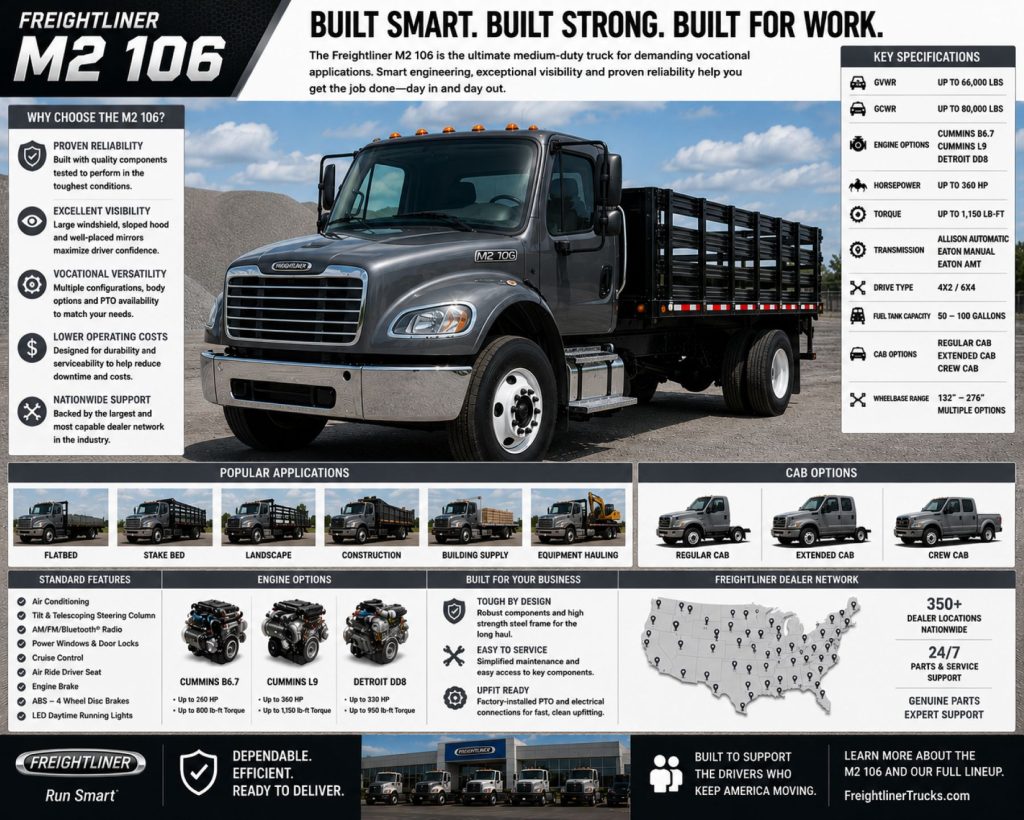
- Flatbed hauling
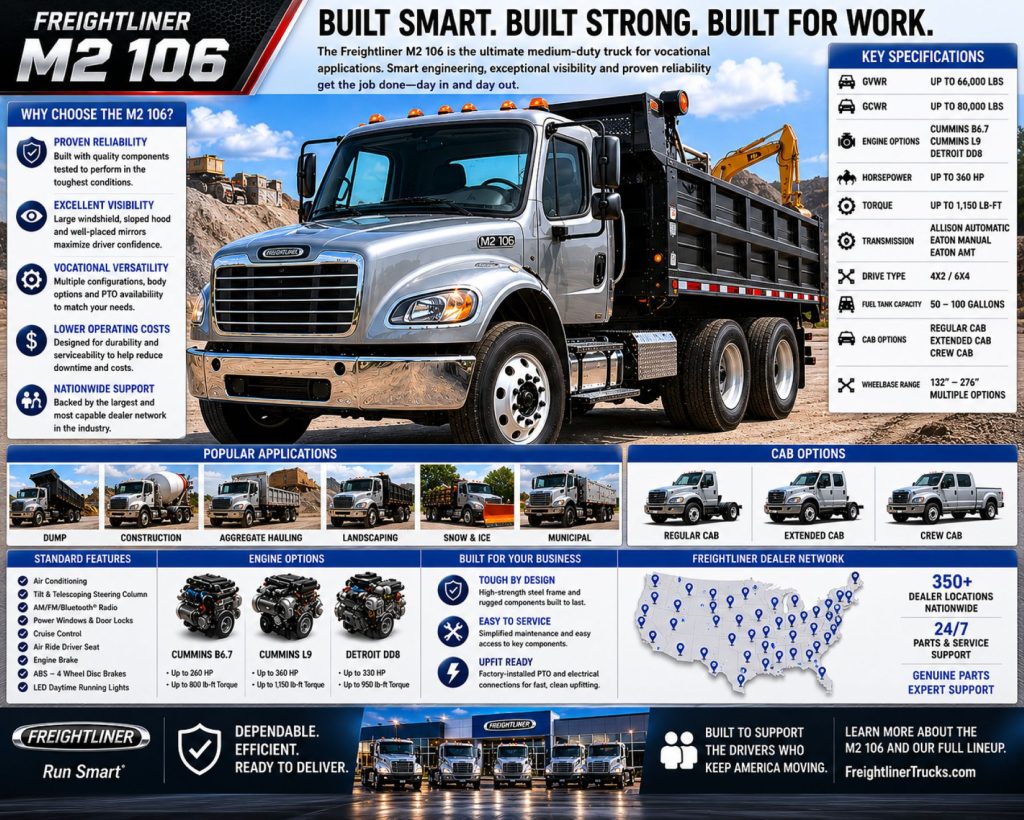
- Dump truck applications
- Moving truck fleets
- Landscaping operations
- Construction support fleets
- Emergency vehicle applications
- Fuel and propane delivery
Advantages
Advantages include:
- Excellent commercial versatility
- Strong dealer support network
- Broad upfit compatibility
- Good visibility and maneuverability
- Multiple drivetrain options
- Strong vocational flexibility
- Reliable commercial parts availability
- Wide fleet adoption across industries
- Comfortable medium-duty cab layout
- Good regional and urban operational capability
Limitations or Considerations
Limitations and considerations include:
- Higher operating costs than smaller commercial trucks
- Fuel economy varies heavily by configuration
- Certain heavy-duty applications may require larger platforms
- Long wheelbase configurations reduce maneuverability
- Diesel emissions systems require maintenance attention
- Complex vocational upfits may increase maintenance costs
Driver and Operator Experience
Higher operating costs than smaller commercial trucks
Fuel economy varies heavily by configuration
Certain heavy-duty applications may require larger platforms
Long wheelbase configurations reduce maneuverability
Diesel emissions systems require maintenance attention
Complex vocational upfits may increase maintenance costs
Maintenance and Ownership Notes
Maintenance requirements vary depending on body style, payload demands, operating environment, and drivetrain configuration. Operators commonly monitor cooling systems, suspension components, emissions systems, brakes, hydraulic equipment, and body-mounted accessories closely in vocational applications.
Because many M2 106 trucks operate in stop-and-go commercial service, preventative maintenance and proper fleet service scheduling are especially important for long-term uptime.
Buying Considerations
When evaluating a Freightliner M2 106, buyers should consider intended application, body configuration, wheelbase length, payload requirements, drivetrain selection, cab style, and service support availability.
For used trucks, buyers should carefully inspect the body condition, frame rails, drivetrain service history, suspension wear, emissions system maintenance records, and any vocational equipment integration.
Variants and Configurations
The Freightliner M2 106 is commonly configured as:
- Box Truck – Used for local and regional delivery, furniture moving, and parcel distribution.
- Flatbed Truck – Configured for construction materials, equipment transport, and building supplies.
- Dump Truck – Equipped with hydraulic dump bodies for construction, landscaping, and municipal applications.
- Rollback/Wrecker – Used for towing, vehicle recovery, and roadside assistance operations.
- Refrigerated Truck – Built for temperature-controlled food and pharmaceutical deliveries.
- Stake Bed Truck – Popular for landscaping, building supply, and agricultural operations.
- Utility and Service Truck – Outfitted with tool bodies, compressors, cranes, and storage compartments for field service work.
- Bucket Truck – Used by utility companies, telecommunications contractors, and municipal agencies.
- Fire and Emergency Apparatus – Frequently used as the chassis for fire engines, rescue vehicles, and specialty emergency equipment.
- Tractor Configuration – Available as a Class 7 or Class 8 day cab tractor for regional hauling, vocational operations, and specialized trailer applications.
- Municipal and Snowplow Configuration – Equipped with plows, spreaders, and other seasonal maintenance equipment for government fleets.
- Expeditor/Straight Truck Configuration – Designed for expedited freight, final-mile logistics, and dedicated delivery services.
Comparison to Similar Trucks
The Freightliner M2 106 is commonly compared to the Ford F-650, International MV Series, Kenworth T280, Peterbilt 536, Hino L Series, and Chevrolet 6500XD depending on application and fleet requirements.
Compared to smaller commercial chassis trucks, the M2 106 offers greater vocational capability and payload flexibility. Compared to larger Class 8 vocational trucks, it is generally easier to maneuver and better suited for regional and urban fleet environments.
Best Fit For
The Freightliner M2 106 is best suited for:
- Commercial delivery fleets
- Municipal operations
- Utility companies
- Refrigerated freight operations
- Moving and rental fleets
- Contractor operations
- Landscaping companies
- Vocational fleet applications
- Regional commercial hauling
Regulatory and Compliance Notes
The Freightliner M2 106 incorporates modern emissions systems and commercial vehicle technologies designed to comply with current transportation and commercial trucking regulations.
Depending on configuration, operators may need to comply with CDL requirements, DOT inspection regulations, emissions standards, ELD requirements, axle weight laws, and specialized vocational safety requirements.
Real World Operating Notes
In real-world operation, the Freightliner M2 106 has developed a reputation as one of the most versatile and commonly deployed medium-duty commercial trucks in North America.
The truck is heavily used across delivery fleets, municipalities, utility companies, refrigerated operations, and contractor service industries because of its broad upfit compatibility, strong dealer support, and adaptable platform design.
Operators often value the M2 106 for its maneuverability, driver comfort, visibility, and ability to serve multiple commercial roles within the same fleet structure.
Related Truck Types
Related Freight Types
- Dry Van Freight
- Refrigerated (Reefer) Freight
- Construction & Aggregate Freight
- Specialized & Niche Freight
Related Trailer Types
Related Equipment Systems
- Engines
- Transmissions
- Suspension Systems
- Safety Systems
- Telematics & ELD Systems
- Brake Systems
- Electrical Systems
- Tires & Wheels
Frequently Asked Questions
Is the Freightliner M2 106 a CDL truck?
Certain configurations may require a CDL depending on GVWR and local regulations.
What engines are available in the Freightliner M2 106?
Common engine options include the Cummins B6.7, Cummins L9, and Detroit DD8.
Is the Freightliner M2 106 used for box trucks?
Yes. The M2 106 is extremely common in commercial box truck and delivery fleet applications.
Can the Freightliner M2 106 be used for refrigerated freight?
Yes. Many M2 106 trucks are configured with reefer bodies for refrigerated and cold-chain delivery operations.
Availability and Where to Find
The Freightliner M2 106 is available through Freightliner dealerships, medium-duty truck distributors, fleet resale channels, used commercial truck dealers, and vocational truck upfit providers throughout North America.
Support Trucking Families
Truck Equipment Atlas supports the mission of Grey Cross, a nonprofit dedicated to helping families of truck drivers who lose their lives while on the road. As the site grows, part of its mission is to bring awareness and support to these families.
Podcast or Video Section
Learn More Through Audio and Video
Truck Equipment Atlas will continue expanding with podcast episodes, interviews, and equipment breakdowns to help drivers and fleets better understand trucks and equipment.
Follow the Growth of Truck Equipment Atlas
Truck Equipment Atlas continues to expand with new truck profiles, trailer coverage, diesel engine pages, equipment system resources, manufacturer information, and educational guides.
Visit our Site Updates page to explore recent additions, project milestones, and upcoming resources as we continue building one of the industry’s growing commercial trucking equipment reference libraries.
View the Latest Site Updates: Truck Equipment Atlas Site Updates